




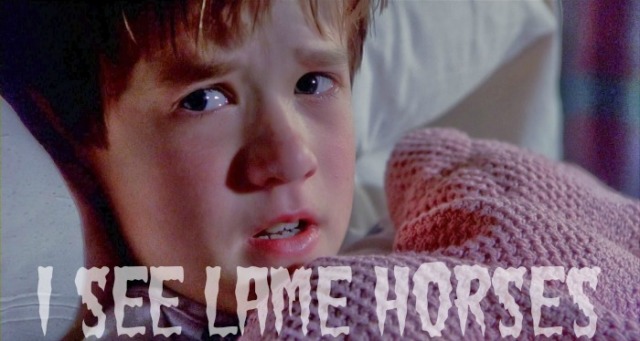
Test (and Improve) Your Lameness-spotting Skills
If a horse looks a little “off,” can you pinpoint what’s going on and where? A new video series by Equine Guelph shows us how, then puts us to the test. (more…)
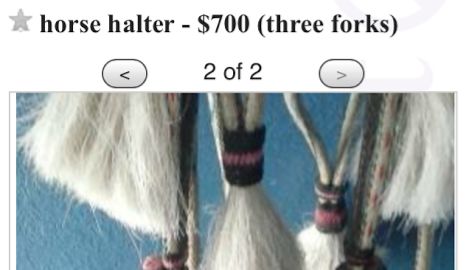
Best of Craigslist: ‘That’s a Real Bargain!’ Edition
Today’s lineup: a $10,000 19-year-old greenbroke pony, a $700 horse halter that isn’t actually a halter, the perfect setup for a “horse walked into a bar” joke, a seller with a death wish, and more!
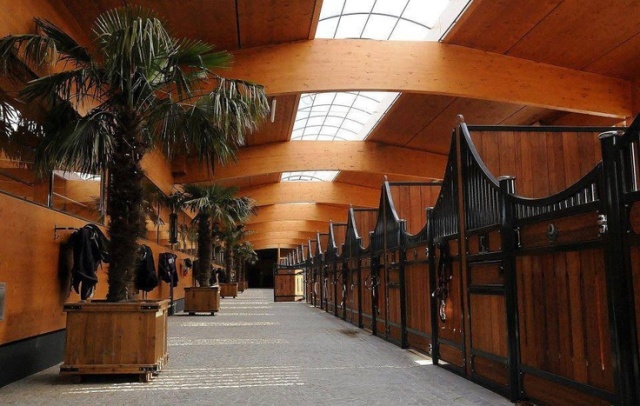
44 Barn Aisles That Will Take Your Breath Away
The sight of your horse’s head poked over its stall door, nickering for breakfast, is enough to make any equestrian happy. But if it just so happened to be in one of these barn aisles? Let the swooning commence.

Ovation Riding’s Friday Standing Ovation: MFFH
This week’s honoree: Maryland Fund for Horses.
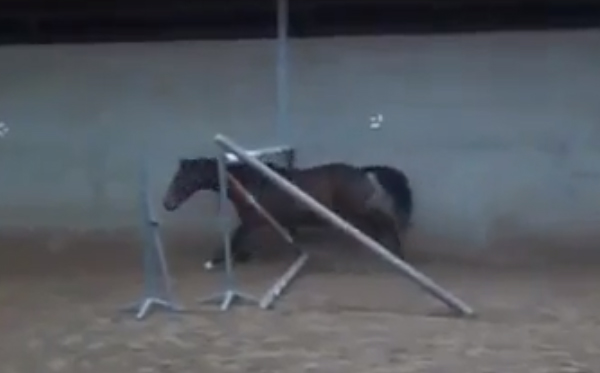
When In Doubt, Just Go Under the Jump
This horse has the right idea. I wouldn’t want to jump that scary vertical either.

SpectraVET Performance of the Week: Avery Klunink’s Amazing AEC Save (As Seen on EN)
When her horse’s hackamore fell off mid-course at the American Eventing Championships last weekend, Avery knew what she had to do. From Eventing Nation…. (more…)

Use Blogging to Groom Your Equine Business for Success
Equestrian marketing specialist Emilie Jones shares some tips for getting started.
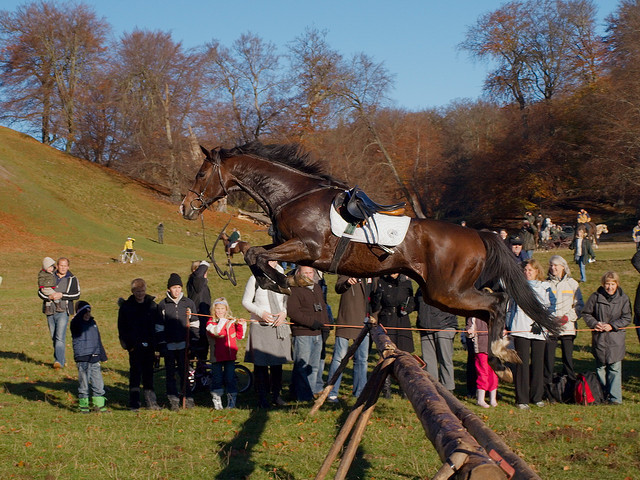
Thursday Morning Feed from Fleeceworks: 4 Extremely Self-motivated Jumpers
Don’t need no stinkin’ rider to tell these horses how to jump!
(more…)
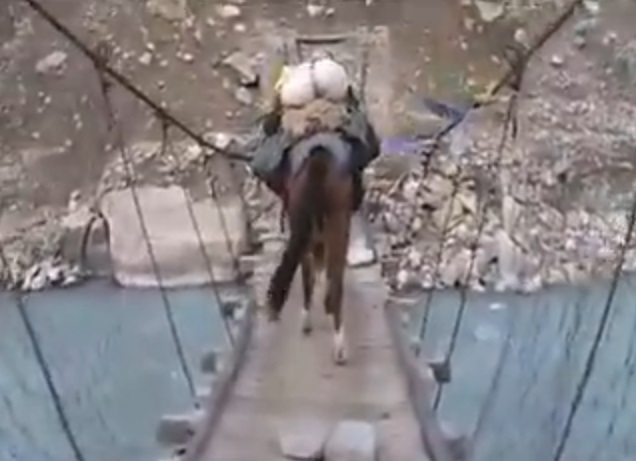

Best of Craigslist: ‘You’re Doing It Wrong’ Edition
Today’s lineup: exercises in creative haltering, a bra that puts the “breast” in breast collar, a “filly colt,” a quarter horse that looks an awful lot like a mule, free horse boarding (but there’s a catch involving a foot fetish) and more! (more…)
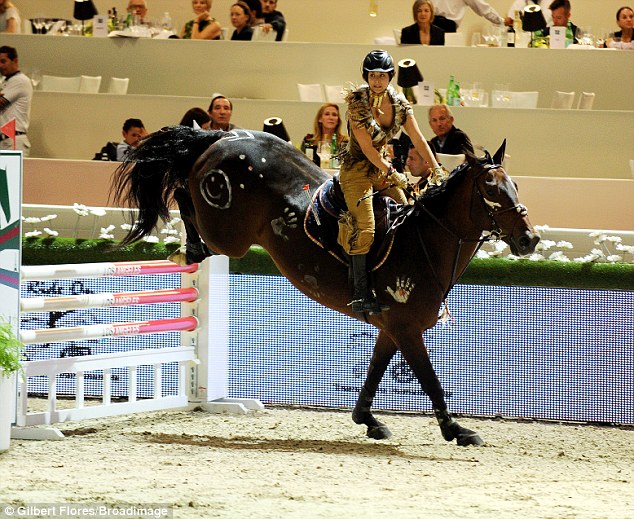
Kaley Cuoco Jumps All The Thingz!
The Big Bang Theory actress, aboard her regular mount Thor, competed in the Longines Los Angeles Masters Charity Pro-Am in Los Angeles last weekend… dressed as Pocahontas.
14 Things I Hate About Braiding
Horse Nation’s illustrious illustrator Morgane Schmidt gives this tedious horse-show task the what-for.

From Morgane:
Braiding is one of those gross tasks that isn’t really that difficult in theory but in practice is actually just another form of masochism (ask my how I know). As I am one of those lucky souls who has braided enough to actually be good at it I thought I’d list some of the highlights (low lights?):
1. Pony manes.
2. Manes two feet long.
3. Yarn breaking.
4. Braids too loose — they fall out.
5. Braids too tight — horse tries to kills you.
6. Braids too long (they look sloppy).
7. Braids too thick (they look sloppy).
8. Blunt cut manes (OMFG kill me now).
9. Not having the right yarn type/color/length.
10. Horses who rub their braids ALL out.
11. Horses who will not stand still.
12. Broken latch hooks that get stuck going through the mane.
13. That person who tries to convince you that rubber band braids are acceptable. 
14. Running out of Quik Braid.

Go Riding!
Morgane Schmidt is a 29-year-old teacher/artist/dressage trainer/show announcer/ who still hasn’t quite decided what she wants to be when she grows up. A native Floridian, she now lives in Reno, NV, where she’s been able to confirm her suspicion that snow is utterly worthless. Though she has run the gamut of equestrian disciplines, her favorite is dressage. This year she was able to complete her USDF bronze medal and is now pursuing her silver. Generally speaking her life is largely ruled by Woody, a 14.2 hand beastly quarter horse, Willie, a gawky three year old Dutch gelding, and Stormy, her friend’s nearly all white paint gelding with a penchant for finding every mud hole and pee spot in existence. Visit her website at www.theideaoforder.com.


6 Free Horses in Need of Loving Homes
All around the nation horses are in search of forever homes. Here are six available today.
Wednesday Helmet Cam from World Equestrian Brands: When It’s Just Not Your Day
We’ve all been there. Hopes are high, then something goes wrong and it all begins to snowball toward some heartbreaking grand finale — like this. (more…)

#TBT: 4 Things Equestrians Say That Could Be Taken Horribly Out of Context
Have you ever wondered what non-equestrians think we’re talking about when they stumble upon us mid conversation? (more…)

Equine Science + Video Game = Horse Nerd Heaven
Rutgers Equine Science Center recently unveiled a website for kids that is pretty fantastic. Let’s check it out.

The Paso Fino Grand National Championship Is Blowing My Mind
[Insert sound of head exploding.]
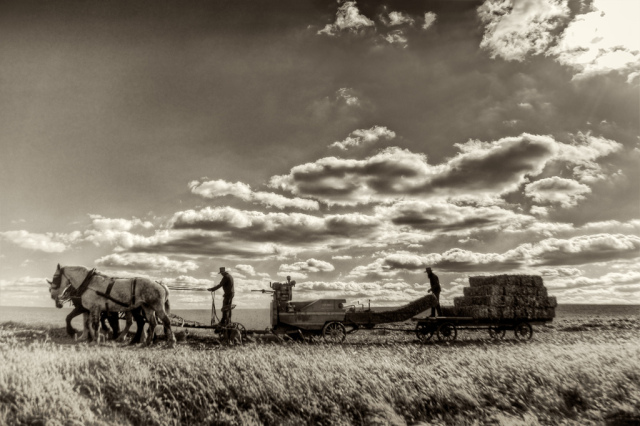
8 Harvest-time Photos of Draft Horses in Their Element
With a few draft mules added in for good measure. Draft animals, autumn is your time to shine in the field.
Tuesday Video from Dubarry: ‘Sea Horses’ Trailer
“The story behind the wild horses of the Outer Banks is one of epic proportions. Sand and salt, winds and tides have come together here along these ribbons of sand that we call barrier islands, to shape and mold one of the most unique horses on Earth.”
What The Muck Is That? ‘Canker’
Each week we investigate one equestrian conundrum in “What the muck is that?” This week we take a look at Canker by reader request.

We recently received this message from a reader:

So… what the muck is that?
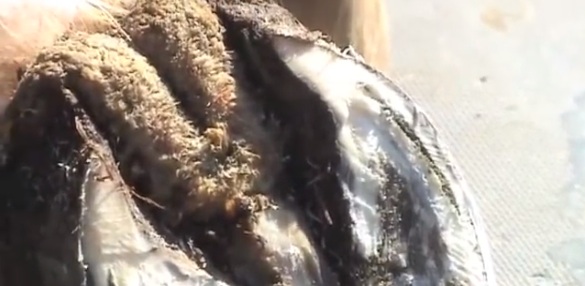
Canker is an infection that results in chronic hypertrophy (over growth or enlargement) of the horn-producing tissues in the hoof. It normally starts in the frog, but can quickly take over the sole, bars, and hoof wall. Canker can be in just one hoof or all four. Any breed, gender, or age of horse is susceptible to the disease, which has no known cause.
Is it like thrush?
Canker is very often misdiagnosed as thrush in its early stages. Thrush is a bacterial infection generally due to unsanitary living conditions or a very wet environment. Canker, on the other hand, is an infection of no known origin (some believe it is caused by the papillomavirus) that can be found in both wet and dry environments and on meticulously cared for equines.
Key Differences:
Thrush = Generally restricted to the clefts of the frog, central sulci, or puncture wounds.
Canker = Invades the horn of the frog anywhere throughout the structure.
Thrush = Damaged tissue turns dark black.
Canker = Damaged tissue turns a pale white or yellow.
Thrush = Loss of tissue.
Canker = Rapid increase of tissue.
What should I look for?
In the early stages you will see a light brown, grey or yellow tissue in the frog that bleeds easily and is painful to the touch. The horse may or may not be lame.

If left untreated the canker will spread rapidly, resulting in a “cauliflower-like” appearance and mild to severe lameness.

Check out this video that shows a farrier’s reaction to canker.
What’s the treatment?
Veterinarian performed radical debridement (cutting away) of the infected tissue down into normal tissue is required. Depending on the depth of the infection, the horse may need to be put under general anesthesia or given a nerve block. Debridement can be done by electric cauterization or a traditional scalpel method followed with cryotherapy.
After debridement, the entire area must be thoroughly cleaned and covered with an antibiotic dressing daily. The wound must be kept clean and dry to heal properly, which may take weeks to months. Systemic antibiotics are generally prescribed.
Have you ever asked, “What the muck is that?” Send us your questions and we will do our best to answer!
Go Riding.
Sources: Merck Manual, Equine Podiatry.
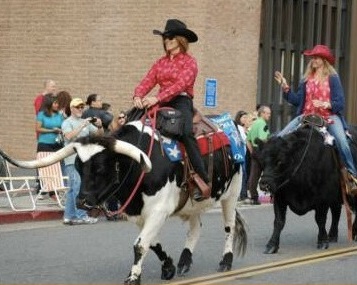
Saddle Your…Cattle? Kimberly Henson’s Saddle-broke Steers
From parades to trail-riding and even team sorting, Dozer and Jazz do it all. (more…)

What I Learned as a Horseback Rider with an Anxiety Disorder
Victoria Shields shares her story.

Best of Craigslist: ‘Oh No They Didn’t’ Edition
Today’s lineup: an appaloosa pony who should be sainted, a $65,000 Shetland pony, a seriously broke paint, “thourghbred stud” a match made in hell and — wait for it! — a “huge genital horse.”

Susanna sent us this ad with the note: “Found this little guy’s ad. I don’t have much to say, except I hope a better home gets him soon!”
Snoopy is 10 years old, around 40″ tall. We have rode this little gelding everywhere you can ride a big horse. He’s very gentle and easy to catch. The kids have took him swimming in the pond. They have rode him down the roads and in the woods. We have even lead little bitty kids around on him. He will lope off and stop good bigger kids have really rode him hard, he’s pretty broke for a pony.


You can’t see it in the photos but I’m pretty sure that pony has a halo. Speaking of ponies, Leah sent us this one from EquineNow.com: “I love the questionable grammar, clearly accidental price, and incongruous photo. It’s the full package!”

Advertising at its finest. Here’s another ad that leaves much to the imagination, from Jeaniene:
 The next one is from Theresa — well broke, indeed!

WHY?!?!?!? This poster of this ad won’t be winning any spelling bees anytime soon:

Casey sent us this one for a yearling that’s for sale because things weren’t working out with its owner, a 9-year-old kid — surprise, surprise!


And now, the grand finale from reader Ella:

Readers, if you run across an “interesting” ad in your Internet wanderings, send it our way! Email the link to [email protected]. Who knows – maybe you’ll help connect a horse with a safe, loving home. Go Riding.

