



Thoroughbred Logic, Presented by Kentucky Performance Products: Track Tight
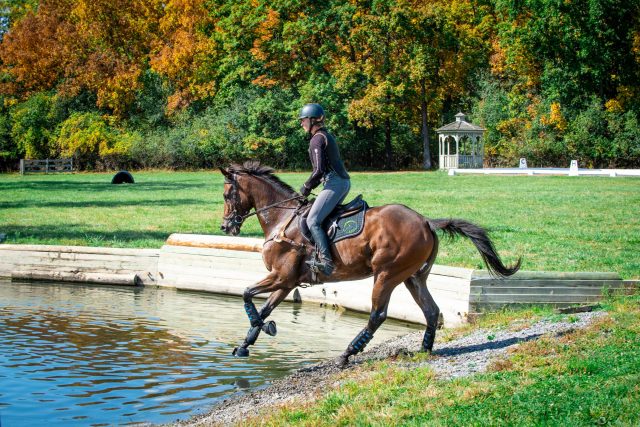
From tight muscles to swinging trots, this week’s article explores what it means when a horse comes off the track ‘track tight’—and how time, turnout, and care transform them into sport horses.
Welcome to the next installment of Thoroughbred Logic. In this weekly series, Anthropologist and trainer Aubrey Graham, of Kivu Sport Horses, offers insight and training experience when it comes to working with Thoroughbreds (although much will apply to all breeds). This week ride along as Aubrey shares her logic on track tight horses and getting them to relax, let down, and feel their best.
In the past month, I have had seven Thoroughbreds arrive straight from the race farm or the back side of the track. (Yes, we have been busy.) But the interesting thing with this sample set is that each has arrived in a slightly different condition. Three that came from a trusted connection in Pennsylvania were ready to ride. And when I hopped on, that first ride felt like a 10th ride. The horses were accustomed to my leg, soft in the bridle, able to swing over their back, and they understood to go forward in the trot. Hell, I felt comfortable jumping all of those three over tiny cross rails and XC logs within the first two rides. Fantastic.
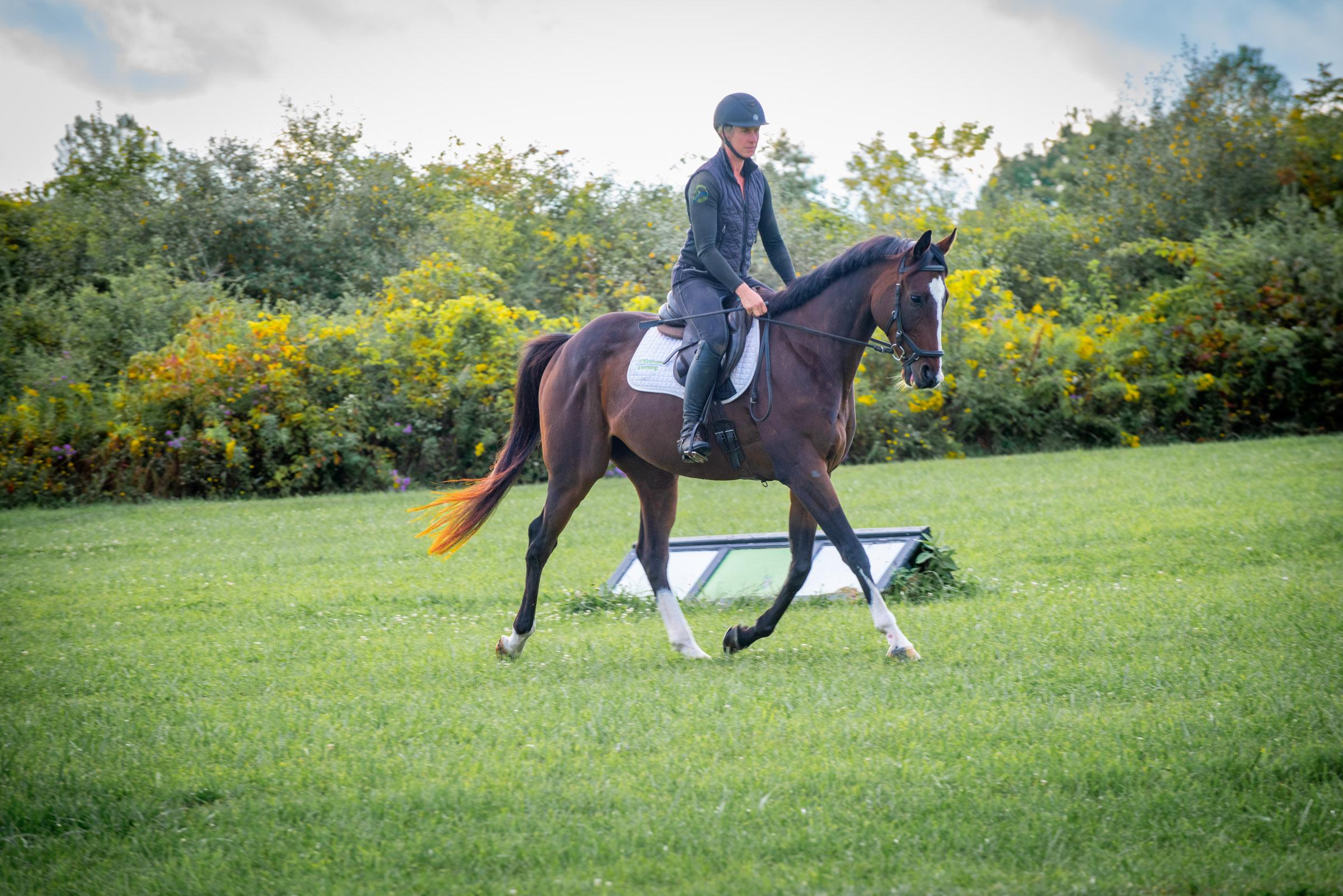
Reese (Risen Savior) on his third post track ride at Kivu. This horse had lovely swing and relaxation coming from a track home that also provided turnout. Photo by Lily Drew.
But that’s not necessarily the norm coming off the track.
The others have needed a bit more time. Their bodies are varying degrees of what the industry refers to as “track tight.” Track tight generally means that their muscles are exactly that — tight. Their hind end is restricted, their back feels like a rock, and such taut-ness may stretch all the way up to their poll. The level of tight can be so severe that while they may have just run, they certainly don’t look great in a straight line jog. Not unsound, necessarily, but shabby and lacking flow and elasticity through their bodies.
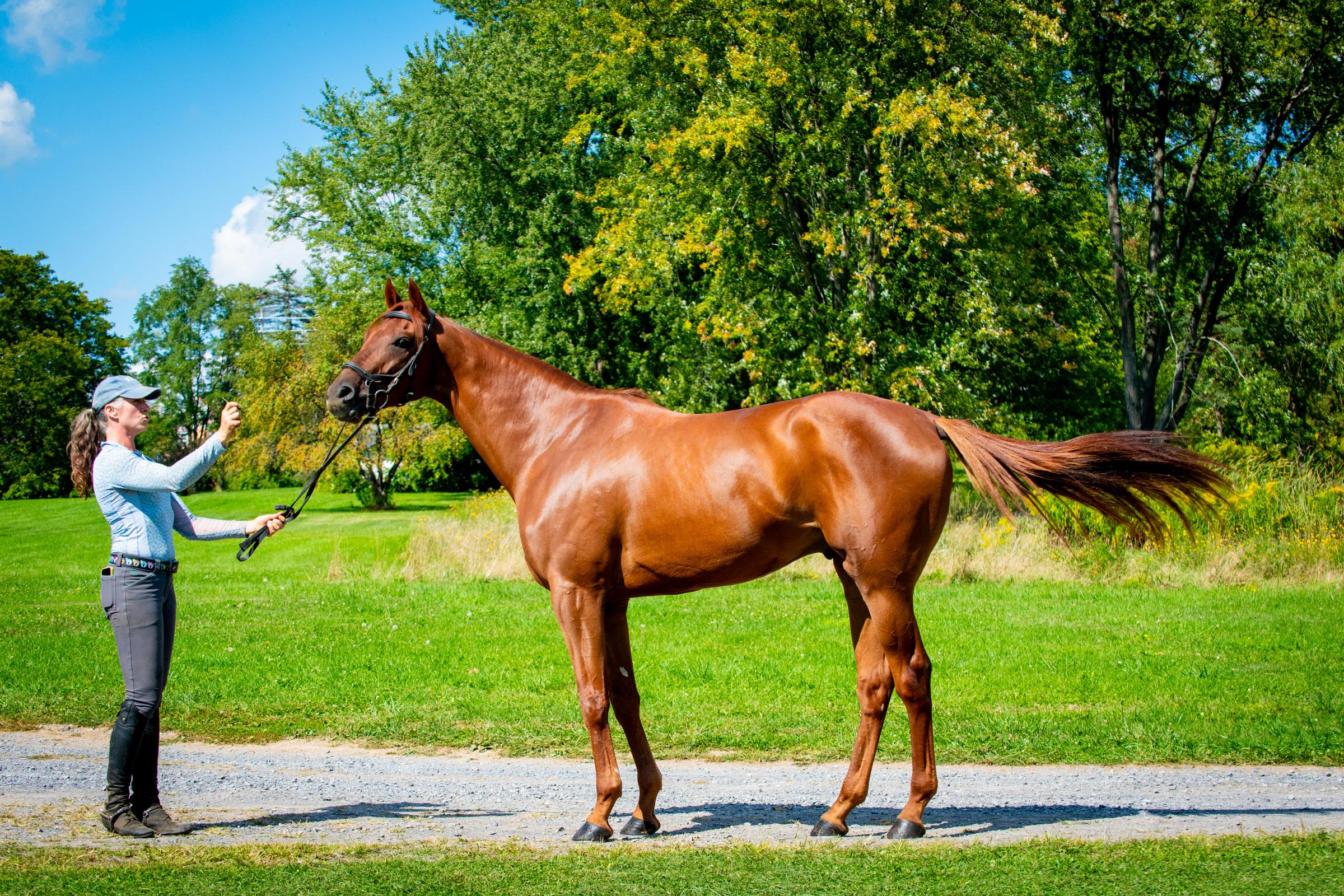
Neon (Liquor Talk) not long after retiring from running at Horseshoe Indianapolis Racecourse and shipping to Kivu. He was “chubby” for a racehorse, but still a bit greyhound shaped. Photo by Lily Drew.
Track tightness ranges in severity and causation. In other words, it is not a one-to-one: horse raced, ergo horse is tight. I have brought some home who have had lovely swing through their bodies and backs and been good to go after only racing a few weeks before. In all likelihood, they were well managed on the track, raced on quality surfaces, and their feet and body were cared for carefully.
Most come off moderately tight despite quality care, but are not difficult to transition into the sport life. Then there are some — especially those who were run on deep tracks or too-hard tracks, or those who perhaps were not adequately prepared for their races — that come off sore. Each horse handles each track surface differently, and often that alone makes a huge difference.
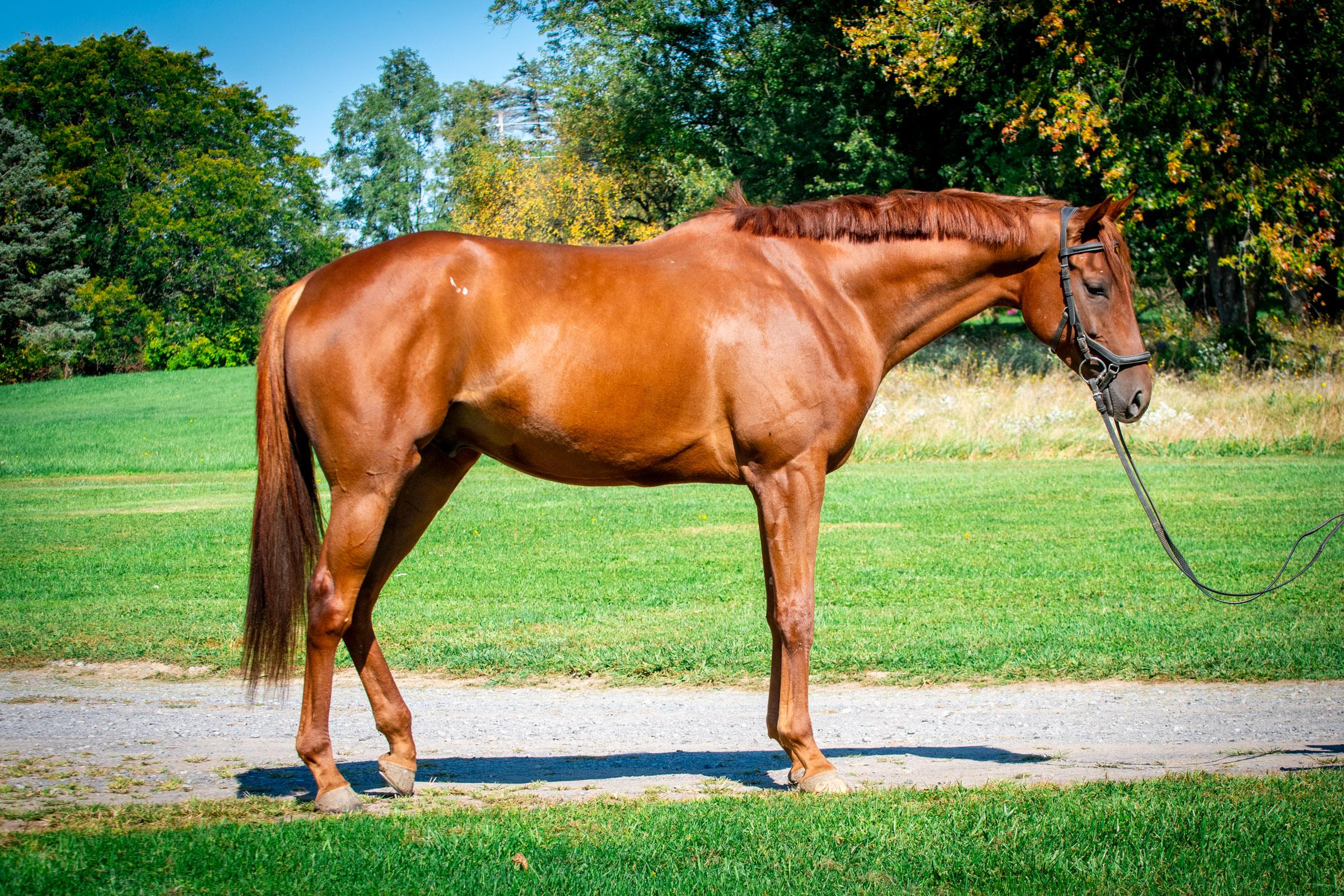
He might be cocking a hip, but after two more weeks of let down from the first image, Neon is a whole lot less tight and his body is beginning to take on a more sport horse shape. Photo by Lily Drew.
For instance, I picked Stimuli up from Finger Lakes Raceway on Monday. He’s a well built Smart Strike x Maclean’s Music. For bloodlines nerds like me, he’s an exciting prospect. The Smart Strikes usually are wildly athletic and good jumpers, while the Maclean’s Music brings a density of bone and a very reasonable brain. He has been well cared for and while he is the usual lean, mean running machine, he’s in good condition and a pretty happy horse. His conformation photos from the track show me what he will look like when he’s ready to do more. And I’m a fan of being able to squint and see the nice horse in there.
His trot video on the other hand left a lot to be desired. And instead of dwelling on it, I decided just to trust the race owner and go with it. The trot video came with the caption “he’s a bit lazy” as they pulled him in a shuffle down the shed row.
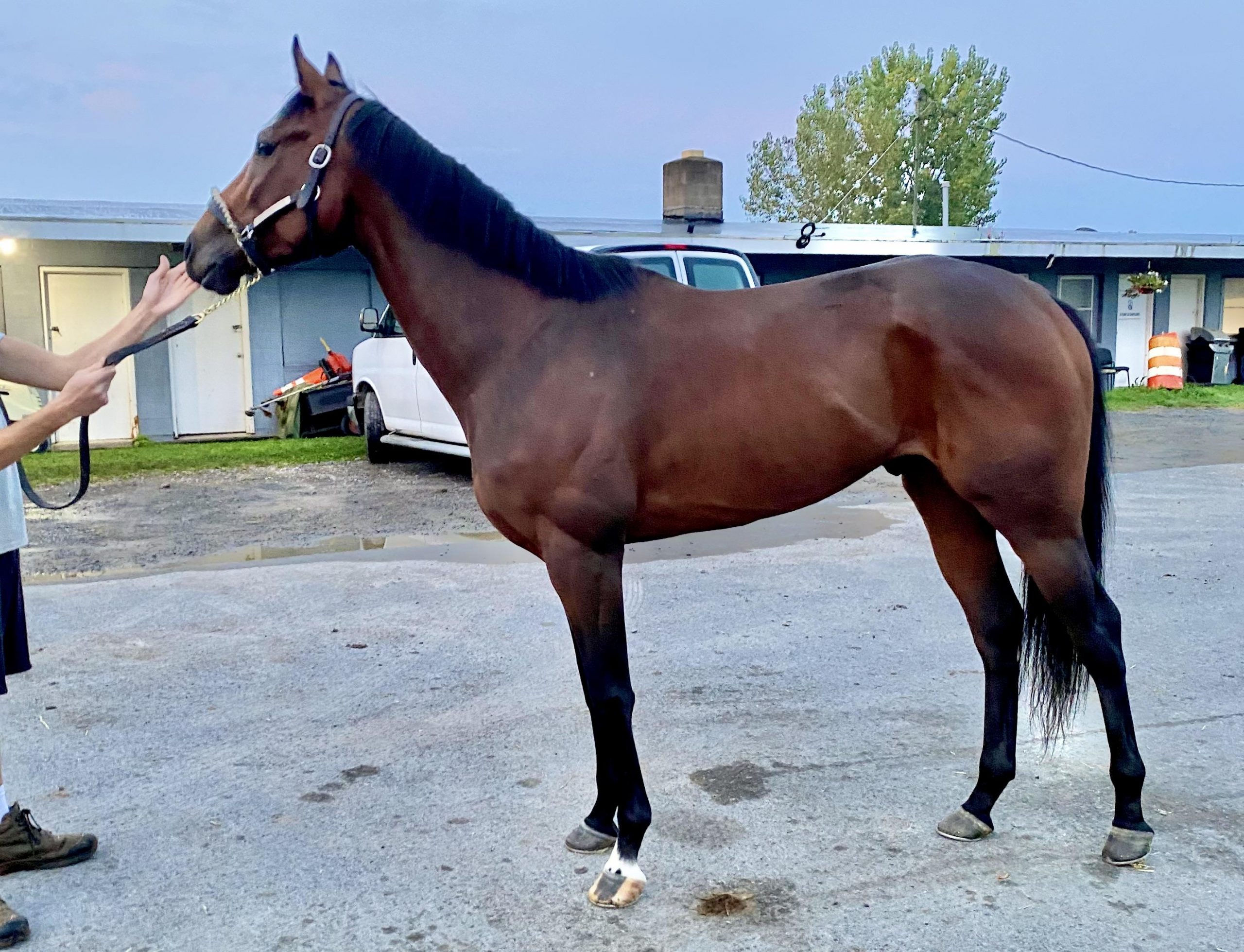
Stimuli on the backside at Finger Lakes Gaming and Raceway. Photo courtesy of his track connections.
A couple caveats:
- I would bet all my money (that’s not much) that this horse is indeed not lazy at all. Rather, he’s likely a bit sore. And he’s tight. Once I fix that, there will be a forward thinking, forward going horse in there. Just give me a little bit of time.
- I like this race trainer and am willing to trust him. But while there are many lovely race trainers out there, I do not recommend just trusting them like this. I mean, the same goes for any horse salesman. I’m one of those, so I respect the role that reputation plays in the industry. Trust those your people trust, and gamble when you’re able to and want to. I can gamble on a horse because it is not the only horse I can have. It’s a bit more precarious when the horse you’re assessing has to be “the one.” In my line of work, if a horse needs a bit of time, some different care and turnout, or even a lower level life, that’s all OK. So long as they’re not irreversibly broken, I can make things work in their favor.
OK., caveats aside, I took the “bit lazy” Stimuli home. After a day in a stall to adjust, I turned him out in a small paddock. He had no issues with this, so I introduced a friend and eventually moved him to a small herd. Watching him interact with the herd, I wished that I had been able to grab video of his movement so that we would have a good “before” video. The trot was so short and stabby that you could almost hear him going “ouch ouch ouch ouch” with each footfall. His canter caused a bunny hop movement behind, where the back legs moved in unison. Track tight and a bit foot sore (my ground is admittedly hard after the recent drought, so fair enough).
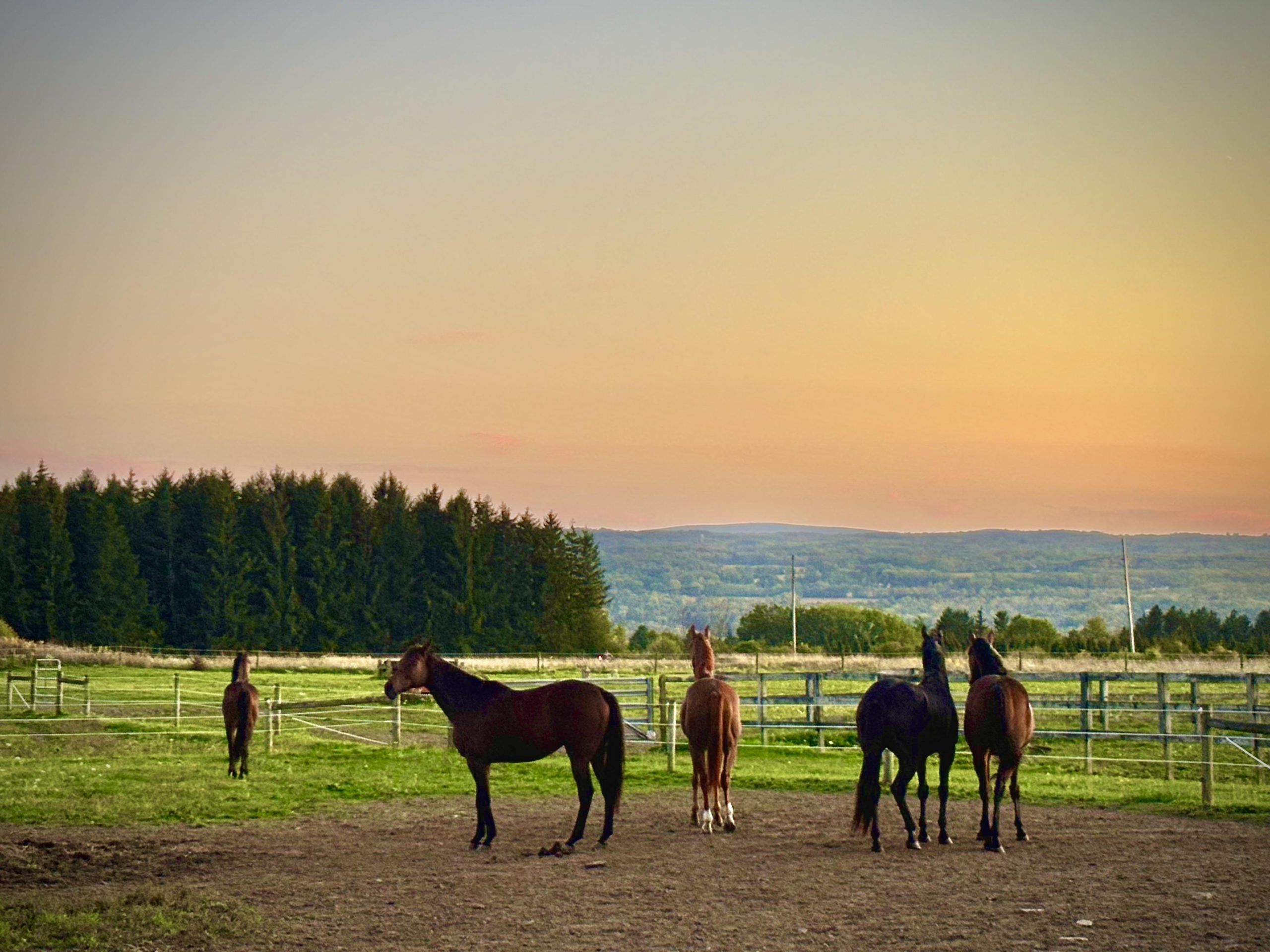
Stimuli (furthest away, left) out with his new herd. There’s a lot of social figuring out to come, but this movement is so, so good for tight horses like him. Photo by author.
But this is fine. It actually is.
I’m not in a rush with him and it will be fun to watch his body adjust and change as he lets down. So when you have one who is track tight, there are a few things that help.
Time is the biggest factor. They just need time to soften, adjust, and “let down” from the track. In that time, their muscles will soften and their bodies will transition from a tucked up bullet-like racing machine to a rounder, longer frame, and even maybe a dad bod. Good. For some this takes a few weeks, for others it might be as long as six months or longer. It all depends on how tight they became, their conformation and genetics, and the care and assistance they receive in helping them to soften.
The other great thing is turnout. While some of these horses have not necessarily seen turnout since before they started training as a two year old, the best thing is to get them out and let them move, mill about, graze. I prefer to move them into a herd as soon as possible as the herd dynamic reduces the likelihood of fence pacing (which helps no one) or simply standing at a gate or in a corner, as many are prone to do in solo turnout. In other words, I end up thinking of turnout as rehab time, physical therapy by way of other horses and open fields. (I have written a lot on turnout elsewhere “Getting Turnout Right” and “Getting Turnout More Right” for instance)
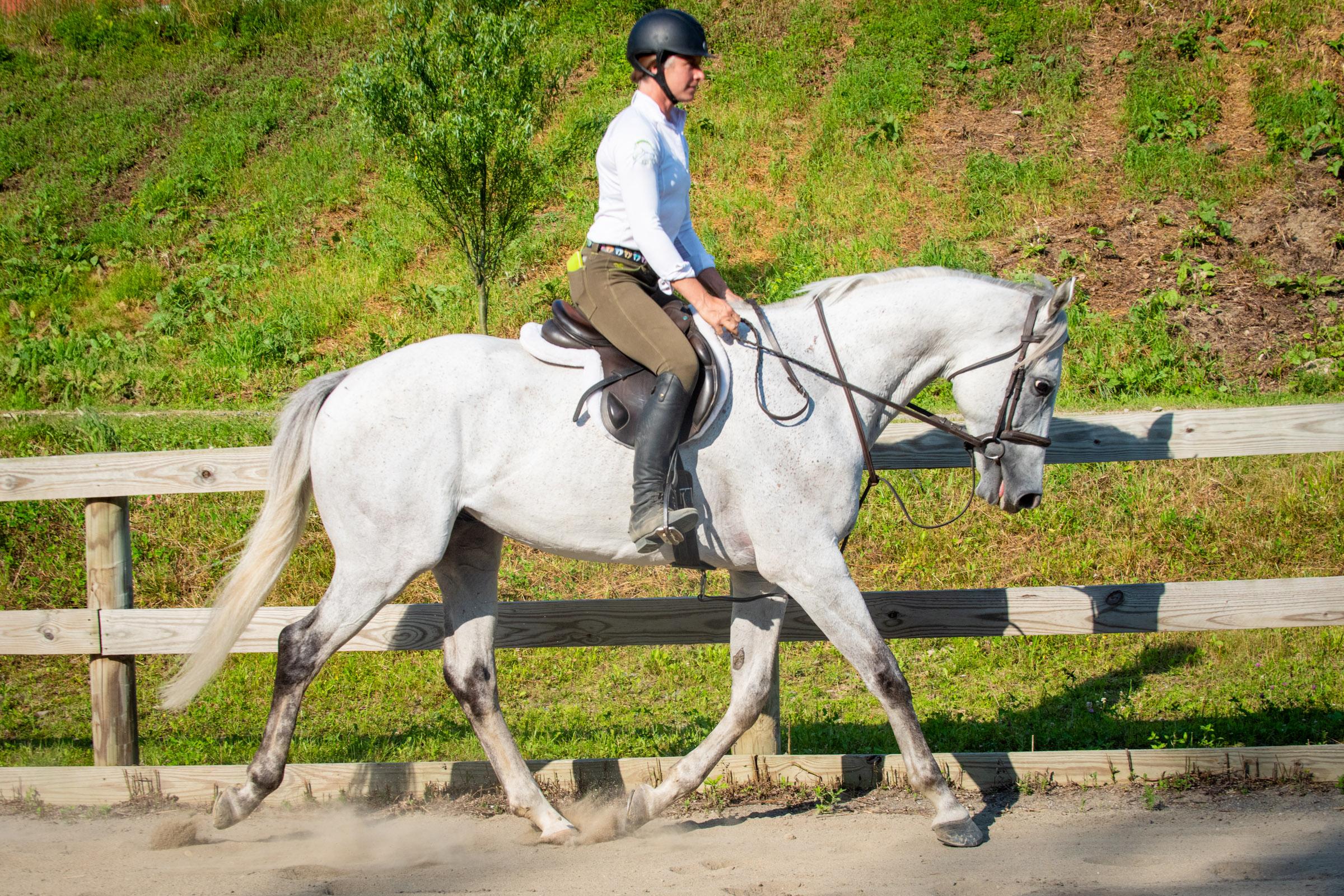
August (Starship Augusto) was a bit of a surprise in terms of how relaxed he was through his body, despite a race career that ended only a couple of months before this photo was taken. Photo by Lily Drew.
Additionally to counter track tightness, I usually keep shoes on them. Yes, this is a debate and my perspective on it is here in “Addressing the Thoroughbred Foot.” In sum, most of my horses here go in all four shoes, even if they are letting down from the track and not in work. The goal is to support them from the bottom up. By keeping shoes (and maybe for some, pads) on and working to get the angles right (toes back, heels growing down), I aim to reduce the potential of new soreness in their feet which can cause compensation up through their body and thus increase the amount of time that they need for the muscles to relax and let down. In other words, I find that four shoes make for happier healthier horses in let down. Sure, there are a lot of ways to do this and many people do successfully take their shoes off. They might need more time and a talented trimmer, but often it can work with the right Thoroughbred feet (not all can go barefoot). That said, if the expectation is to ride them sooner rather than later, I find that shoes do help.
Finally, to help combat track tightness, I aim to provide nutrition that helps their muscles and overall health. My go-tos are Vitamin E, Omega-3 fatty acids, and amino acids – lysine, methionine and threonine. I use supplements that specifically contain these materials, but also I feed a lot of alfalfa and quality forage, which help pass along much of what their body needs to be able to settle into the let down period. Combined, these help build new muscle structures based on their ability to push from behind (not just pull from their forehand) and helping to establish a top line.
Then I wait. And I get to enjoy watching the transformation as they go from bunny hop to swinging trot. From ‘ouch ouch ouch ouch’ to ‘I feel good.’ And in that, I expect the ‘lazy’ horse to become more energized, the short-strided horse to open up, and the quiet, classy, shy personality to transition over to goofy and curious. In the meantime, I might hop on every couple weeks and see how they feel. Once they’re comfortable under saddle, but still tight, I’ll work on teaching them to stretch over their backs and will add in short rides to help build the muscles that will support them in their new line of work.
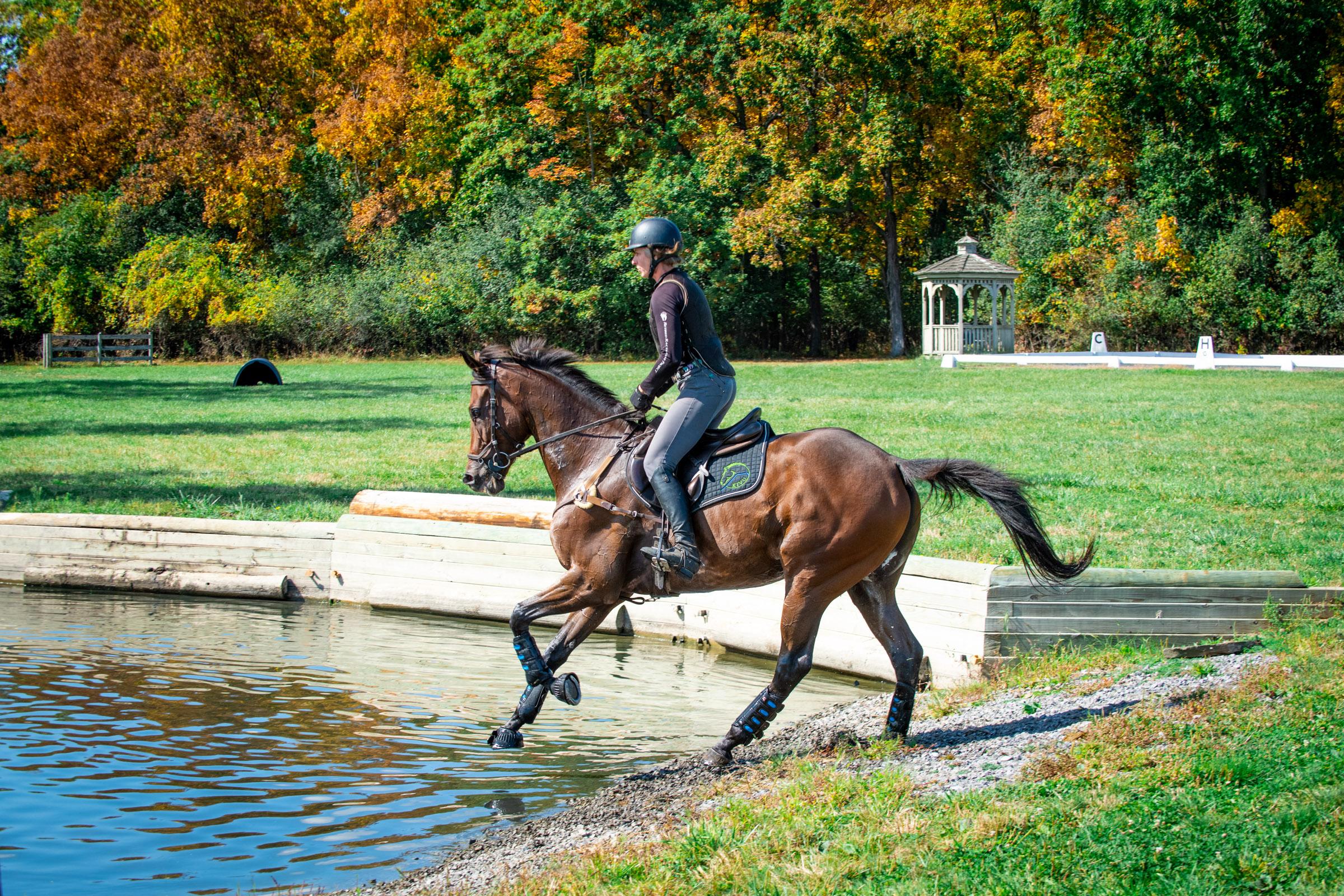
Emmett (Oboy) took a long time to let down and fill out. Now much fatter and freer through his body, he’s ready to take on the Thoroughbred Makeover next week. Photo from schooling at Fox Run Farm by Lily Drew.
But overall, when they come off looking like a hopping square wheel, I don’t worry. I settle in to watch them let down and begin to feel better.
So go ride folks. And if your new Thoroughbred is track tight, go turn them out and enjoy the transformation.
About Kentucky Performance Products, LLC:
Support Normal Insulin Regulation
Metabolic dysregulation is characterized by weight gain and unhealthy insulin levels that can lead to
unsoundness. Maintaining normal metabolic function and sustaining healthy weight through dietary
supplementation will support normal insulin levels and healthy laminae structure in the foot.
- Maintains healthy insulin regulation and normal body weight.
- Supports a decreased risk of laminitis.
- Formulated with a research-proven blend of polyphenols and amino acids.*
* Manfredi JM, Stapley ED, Nash D. Effects of a dietary supplement on insulin and adipokine
concentrations in equine metabolic syndrome/insulin dysregulation. In J Equine Vet Sci 2020:88:102930.
The horse that matters to you matters to us®. KPPVet.com
NEW WINTER STICKER AVAILABLE! Visit https://kppusa.com/winter24/ to grab one for your barn.

