



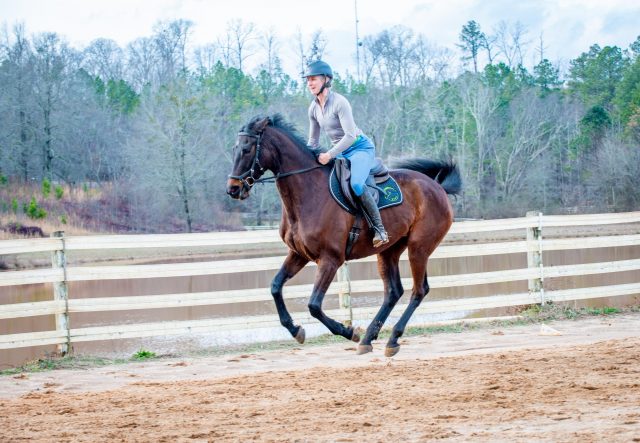
Thoroughbred Logic, Presented by Kentucky Performance Products: The “Survive-a-Ride”
“There’s no amount of reasoning with what is under you, because you can’t reason pain and fear and the eventual lack of self-perseveration that comes with it. But often, you can hunt down the cause, treat it and try again, this time with more data.”
Welcome to the next installment of Thoroughbred Logic. In this weekly series, Anthropologist and trainer Aubrey Graham, of Kivu Sport Horses, offers insight and training experience when it comes to working with Thoroughbreds (although much will apply to all breeds). This week ride along as Aubrey shares her logic on why some rides are about survival only.
The idea of “survive-a-ride” is pretty simple. It means that you lived. That’s about it. You got a leg over a horse, did some things, and made it (hopefully safely) back to the ground. But it’s the type of ride where no training was accomplished. Sure, maybe one managed to walk, trot, and possibly canter — but the ride was so out of hand, so tense, so explosive so … not right… that literally no work was done.
For me, the reality doesn’t take long to sink in: maybe I shouldn’t be up here.
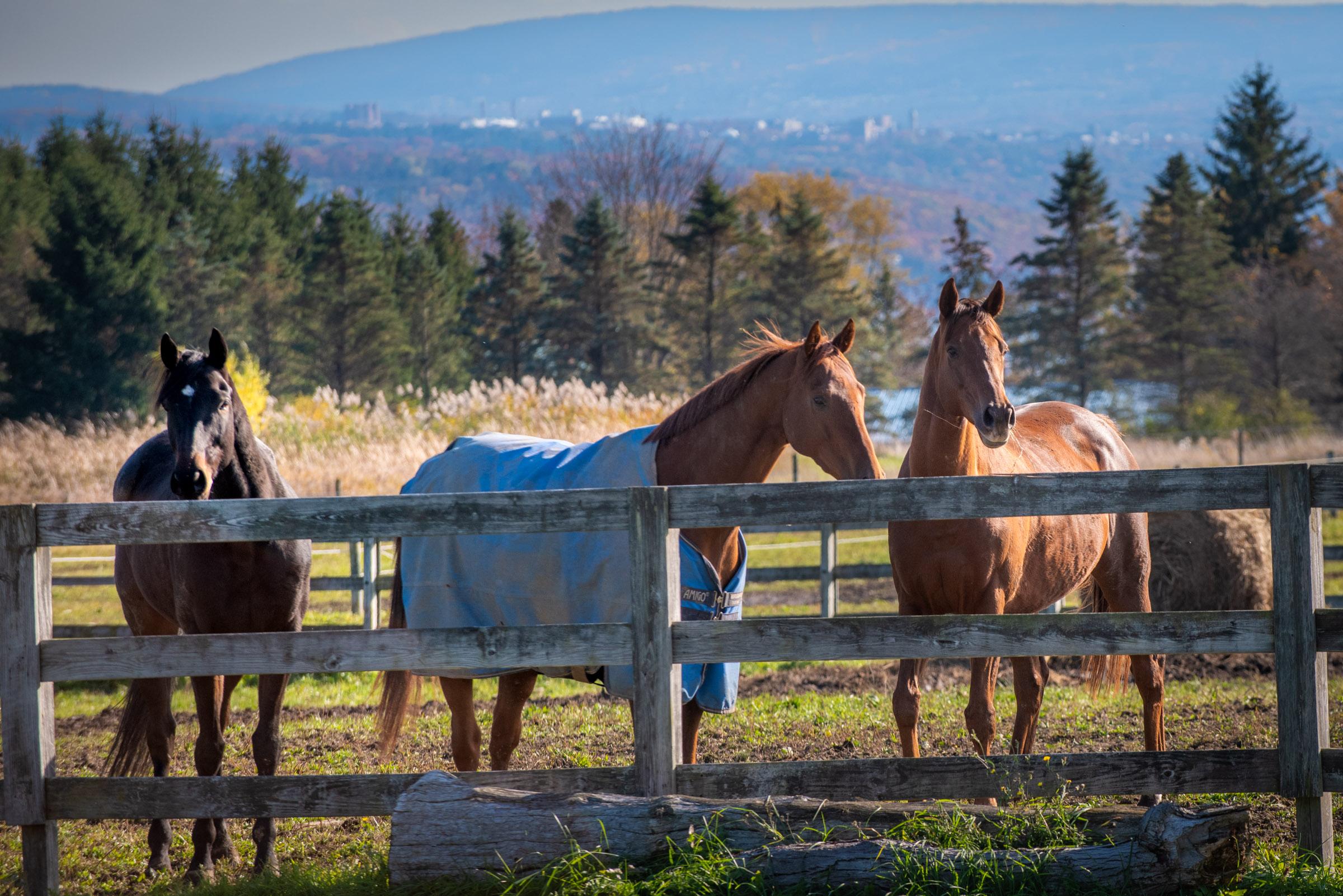
Three NOT survive-a-rides (one toddler and two of my favorite typically challenging OTTB rides), hanging out in the field at Kivu in New York. Photo by Lily Drew.
I have the privilege of getting to get to toss a leg over hundreds of Thoroughbreds. And I love the opportunity to try to figure them out. Many come in upside down, anxious, behind the leg, immature and often with limited boundaries. And it is a huge joy to get to listen to what they communicate and figure out how to make a ride work — how to get them to want to travel the same way I want to travel, how to convince them that using their hind end feels better and will make everything else easier, and how to get them to take a breath, to figure out what their quirks and limits are and their likes and dislikes so that I can get them into the right discipline and to the right home. It is a daily puzzle that keeps my way-overactive brain switched on and clicking.
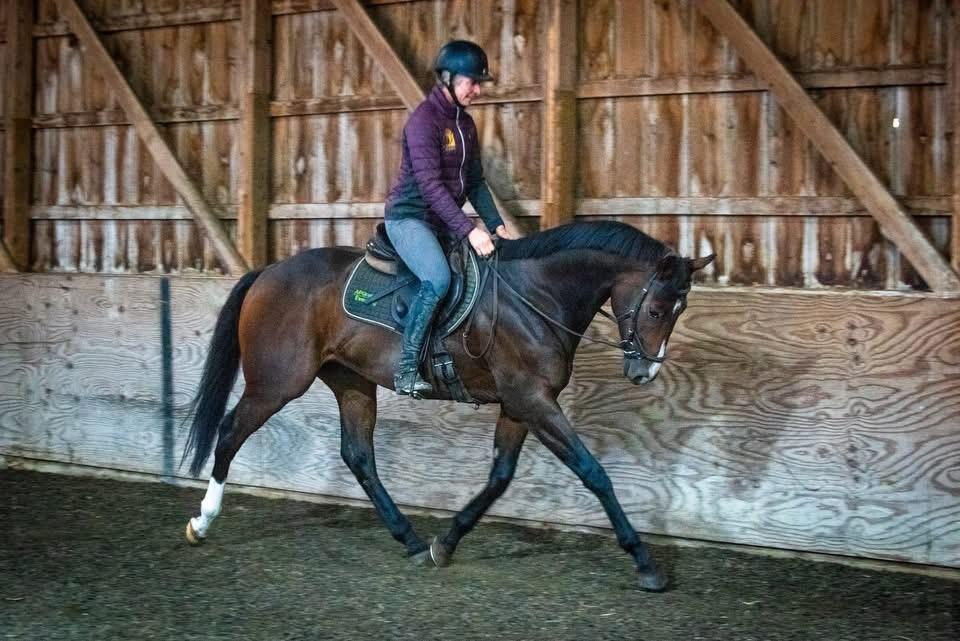
Always Fun clicking around like a pro on his first post track ride at Kivu. If all of them could be this uncomplicated, it would be almost too easy. Photo by Lily Drew.
Most horses that come in — or who I am asked to assess — are categorically not survive-a-rides. They might be tough — they might suck behind the leg and threaten all sorts of things. Sometimes they might even act on them. They might buck, rear, spook and bolt, they might grab the bit and run off. OK fine, we can manage this. But it is when the ride sits at a level of tense, fearful or full of the ever-present looming feeling that something is so not right that I am likely to get hurt due to their lack of self preservation, that we end up in the survive-a-ride category. And here’s the important point:
Survive-a-rides are usually pain-related. There is no training through pain. You can get a horse to accept some discomfort and inconvenience, you can find ways to help them put their feet and body where the act of riding hurts less. But only the most sainted of horses will truly allow you to ride through straight-up pain. And the more they are asked with the same amount of pain, the worse it will get.
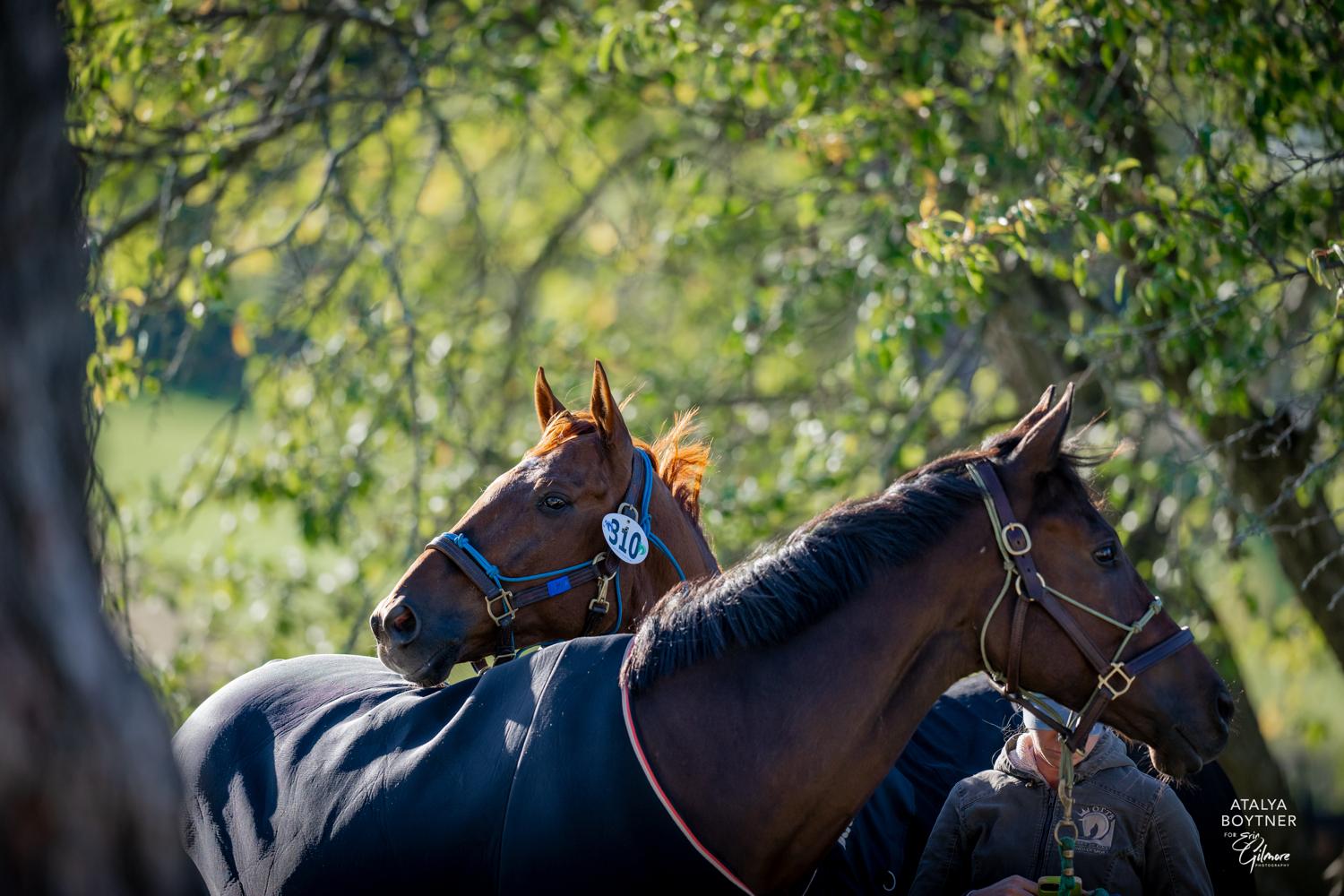
These kids (Artie, aka Reunion Tour, the chestnut and Emmett, Oboy, the bay) might be tough rides when they are telling you that they need maintenance, but they are many miles from being survive-a-rides. Photo by Erin Gilmore Photography.
Because I have always loved the challenges, a (thankfully still small) number of horses who have been sent here over the years have been classic survive-a-rides. The best example was an older Thoroughbred gelding who had a history of “bucking and rearing… just being bad and getting worse” according to his owner. I figured, ahhhh, another smart gelding who got his owner’s number and decided a few antics were easier than plodding along like a good boy. I tossed a leg over expecting to have to kick on, ride out a thing or two, and have him happily trotting around in no time.
Nope. I was very wrong.
I felt like I was astride a lit keg of TNT. His body coiled, his heart rate was high enough that I could feel it in my temples, and each step felt unsure of its direction but was so tense that it felt like it could blow. I was astride fear, not misbehavior.
We halted and he crab-ran backwards. His hind end not keeping up with his front and feeling like we were going to flip. I asked for him to trot forward and the saint of the horse tried. He didn’t kill me, he just gave it the best effort. I halted again to get off, this wasn’t working. The ride was wrong. We both were going to get hurt. The halt was wobbly, heart-rate elevating so I waited and tried to walk forward to hop off with movement — seemed safer. He bronc reared, front legs above his neck, head low, and I emergency dismounted on landing. Well, that was terrifying.
OK. Time to reassess.
I watched him in the paddock — he would stand with his front legs downhill from his hinds, wide legged. On the lunge, he leaned and ran, using speed over balance. I hopped on one more time to see if the ride was a one-off. Of course it wasn’t. And we called the vet.
I walked them through the ride, what I was seeing in the stall and paddock and the history of the horse. The second radiograph they shot showed a severely crimped spinal cord and confirmed that he has very little control of his hind legs. That explained everything. His owner kindly retired him to a flat field and eventually humanely euthanized him when he told her that that situation, too, was too much. But what an amazingly kind horse for still trying for the couple rides I put on and for the various cowboys and trainers that he had been sent to previously.
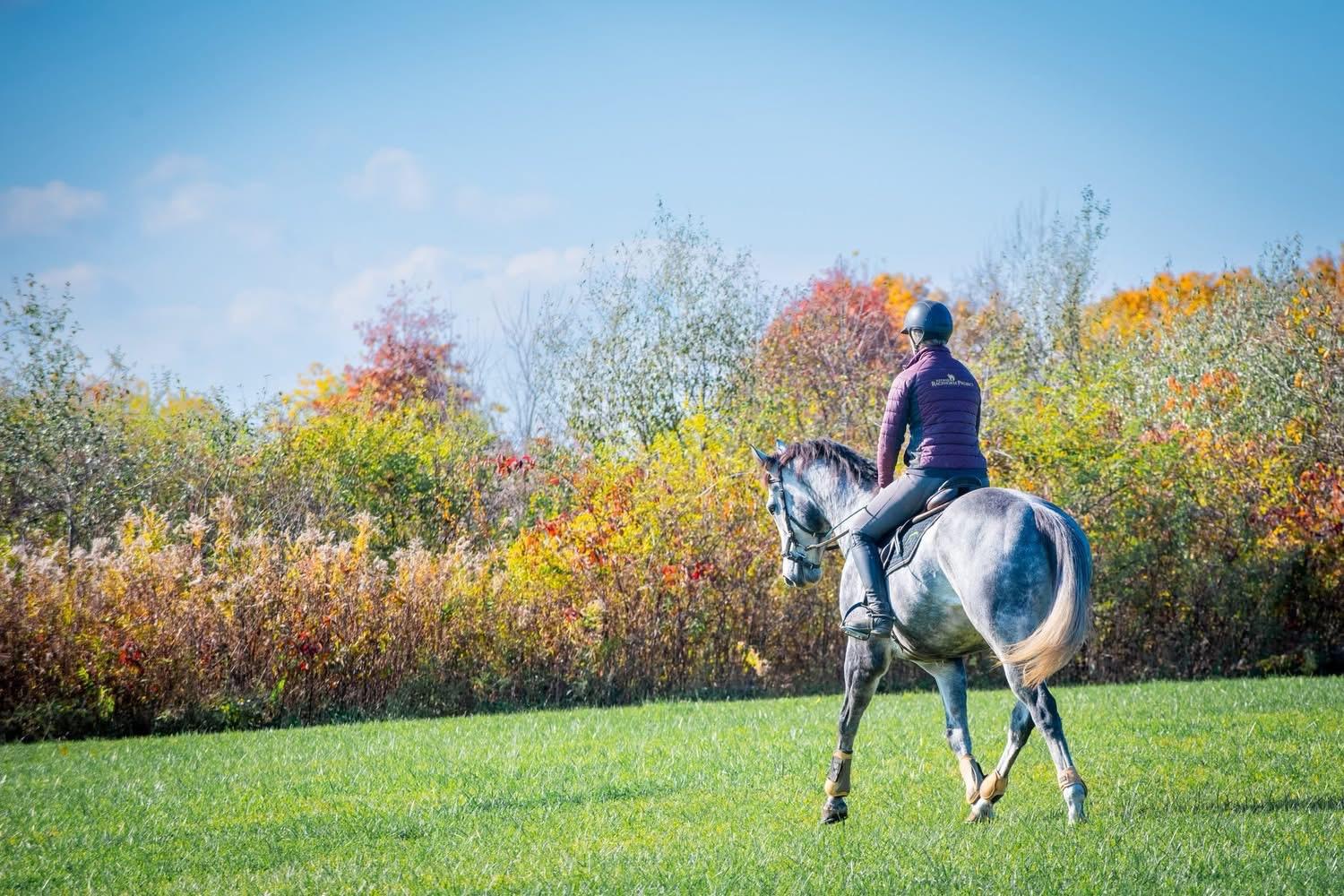
Edward (Exclusive Entry) is not a survive-a-ride, but does need a touch of accommodation to keep him happy and comfortable. Photo by Lily Drew.
I have experienced survive-a-rides for horses with severe ulcers, those with devastating pain in their necks or reproductive systems, extreme hind end pain, neurological symptoms, and sometimes symptoms that owners were not able or willing to hunt down. But the feeling is the same — “this is not trainable.” There’s no amount of reasoning with what is under you, because you can’t reason pain and fear and the eventual lack of self-perseveration that comes with it. But often, you can hunt down the cause, treat it and try again, this time with more data.
When I was in GA, a mare shipped to me from up north. She had had a mild version of kissing spine surgery as a hope that it would fix the problem (bucking, kicking, lack of desire to go forward), but the ride remained a survive-a-ride. I got on and managed to walk, trot and canter, but the mare kept her ears pinned, held that same coiled energy, and kicked out at any use of my left leg. There was no training possible. She basically hung out the “closed” sign and stuck to her guns.
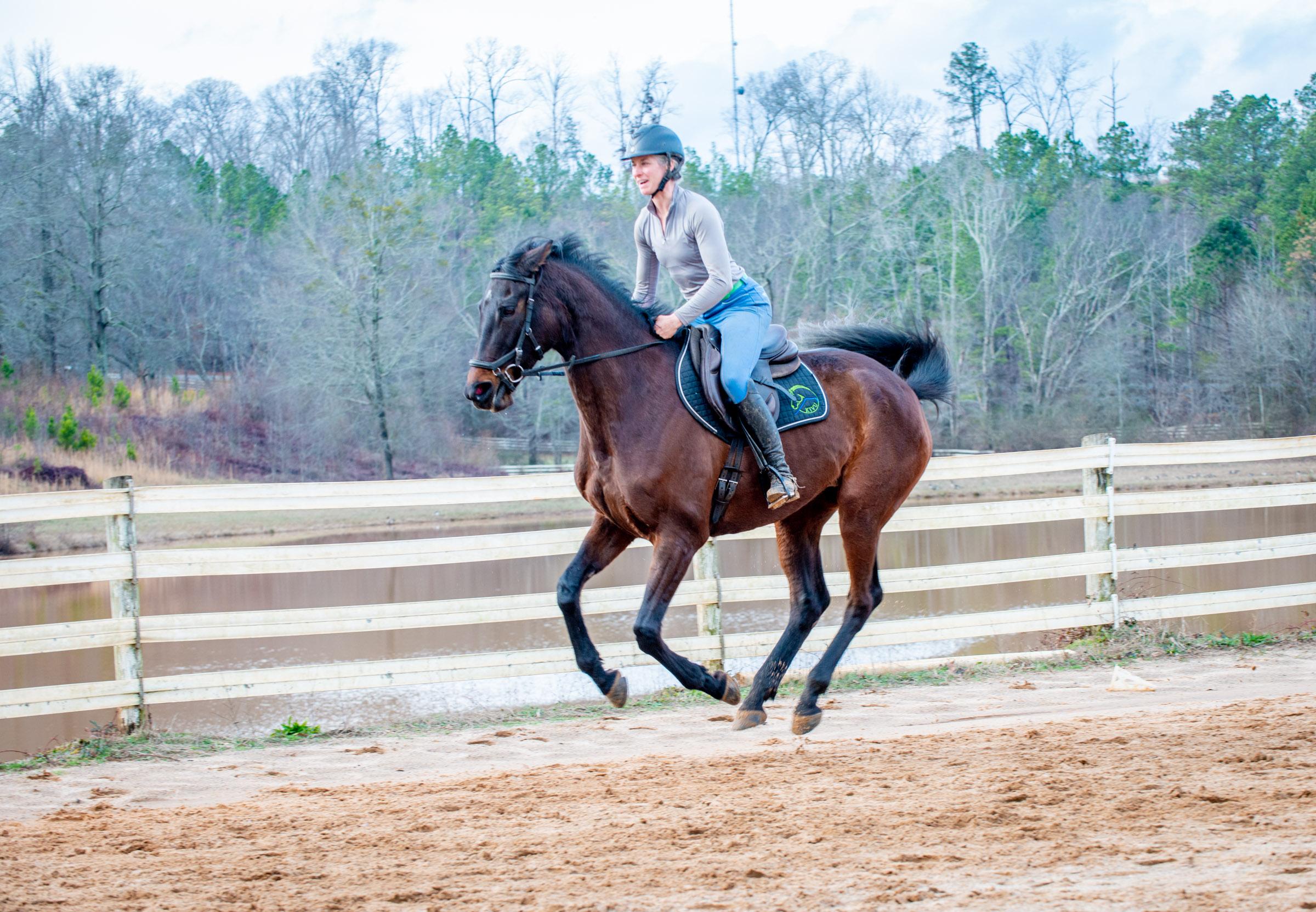
Prim (Pauline’s Raven) first brief WTC ride at Kivu in Georgia, where she made it plainly clear that she wasn’t a happy camper. Photo by Alanah Giltmier.
We scoped for ulcers not long after and then ended up treating one of the most severe cases the vet had seen. Treatment was required for the next three months to fully knock them out. PSA: Gastroguard usually works amazingly well, but sometimes you need more than a month to really clear the stomach. Once she was free of the ulcers, that mare was game to jump whatever I pointed her at and is now out eventing with a young rider. I could not be happier with the whole situation.
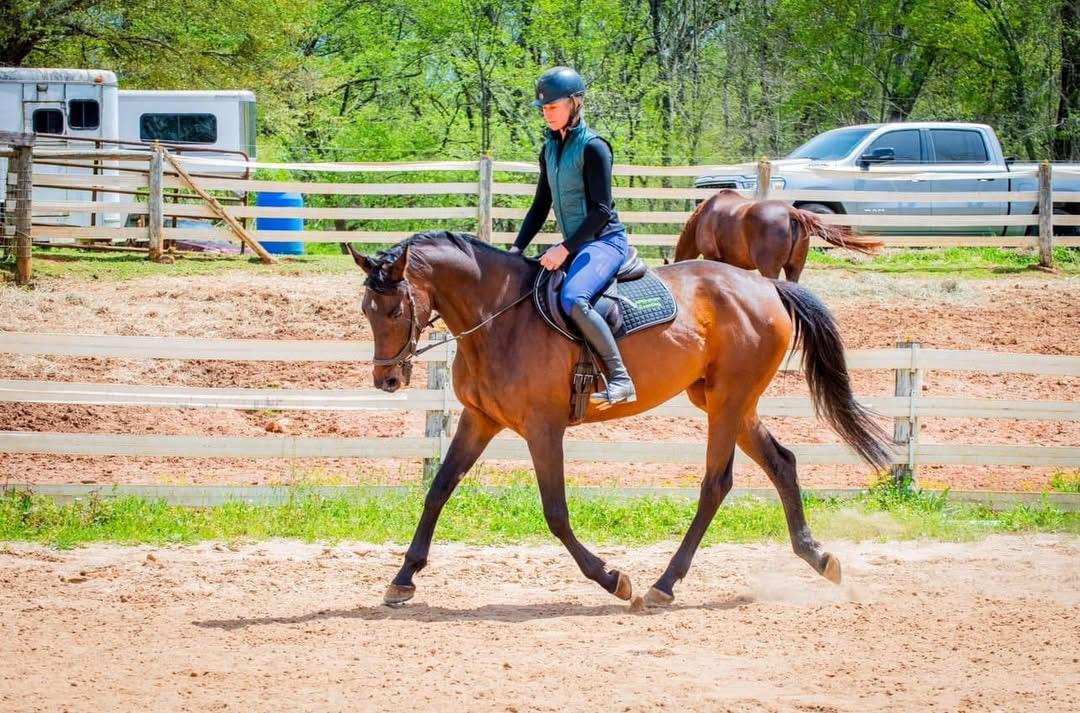
Prim after ulcer treatment a couple months later. Photo by Alanah Giltmier.
On two ends of the spectrum, you have the perfectly happy, easy-to-train horse and the survive-a-ride. In between you’ll find most of the rest of them. Like the rest of us imperfect humans, there’s likely some form of discomfort, some need for maintenance (eventually) or accommodation. But so long as a rider or trainer can figure out how to maintain the horse and ride to keep them happy, the horses tend to be game for their jobs. (I wrote a bunch about this in an earlier article : Making Productive Accommodations.)
And certainly, sometimes the answer is simply that the horse needs a different rider/trainer. Sometimes they just need maintenance or veterinary care, and sometimes they need both. But if you find yourself with a horse who isn’t happy to do the job asked and who feels dangerous, get off and do both things: check with a KNOWLEDGABLE trainer and chat with a vet who is equally knowledgeable about the type of horse, their past, and your discipline.
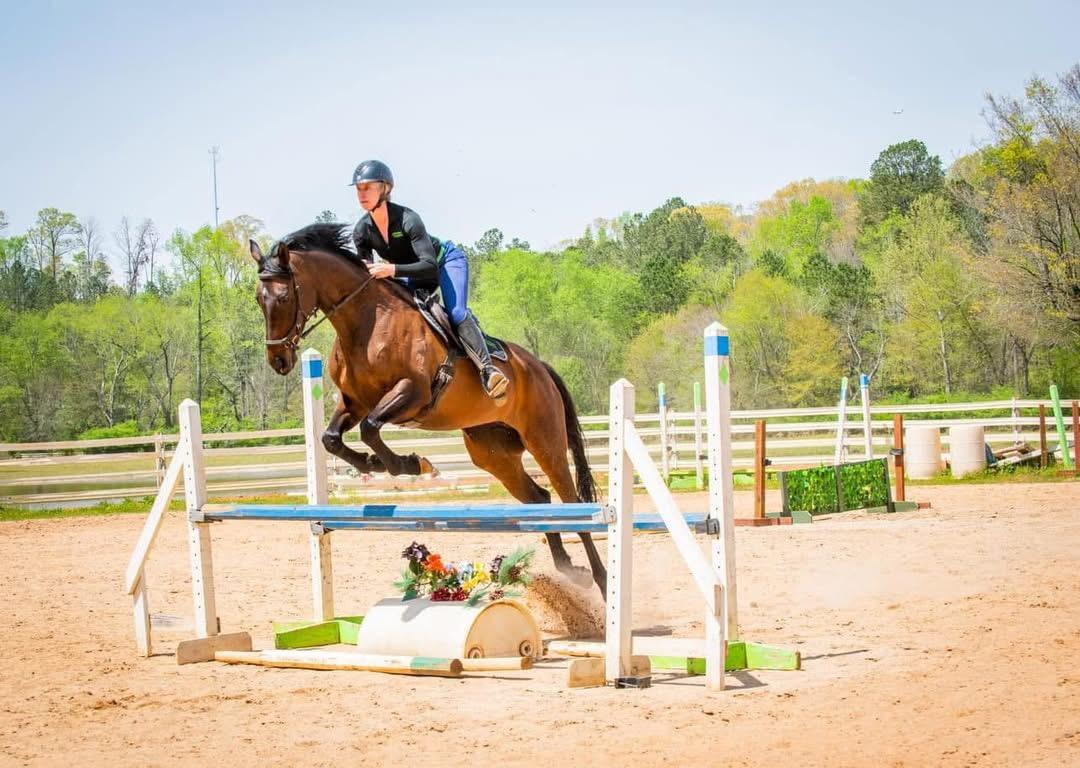
Because sometimes it only takes some medication and confidence to go from unridable to easy-peasy up and over. Photo of Prim by Alanah Giltmier.
So folks, enjoy the late fall riding and the beginning of the end-of-year slow down. And if your ride becomes about survival not about training, hop off and ask all the good questions of all the right people. Otherwise, kick on and enjoy the ride.
About Kentucky Performance Products, LLC:
Is your horse suffering from digestive tract issues, such as diarrhea, colic or hindgut imbalances? Does he need a high-grain diet? Is he under stress? Neigh-Lox® ADVANCED can help.
Neigh-Lox ADVANCED is a scientifically formulated blend of ingredients that works synergistically to maintain a healthy stomach, small intestine, and hindgut. It contains long-acting gastric buffers and coating agents to maintain a normal stomach pH. It provides an effective probiotic to support complete digestion of starch and sugars in the foregut, helping maintain a healthy hindgut. And it supplies broad-spectrum prebiotics to sustain a healthy balance of beneficial microbes and well-balanced microbiome.
The horse that matters to you matters to us®. KPPusa.com

