July 23, 2025 Morgane Schmidt Morgane Schmidt , the idea of order #DRESSAGE #OLYMPICS , #Dressage Showing , #Dressage Training , #Forward Thinking Dressage , #NonTraditionalBreedinDressage , #summer , classical dressage , competition dressage , diet time , dressage levels , Dressage4Kids , going to the barn in the summer , Half halt , reasoning , texts your trainer loves , The Idea of Order Comments Off on The Idea of Order: Dressage PSA…
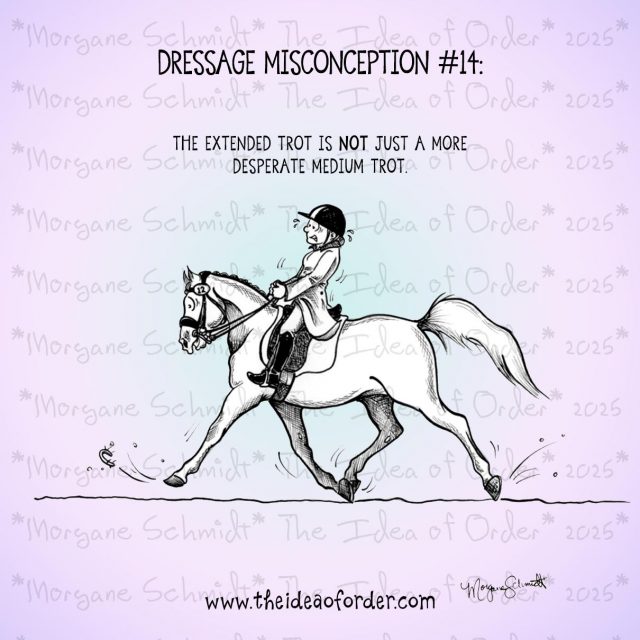
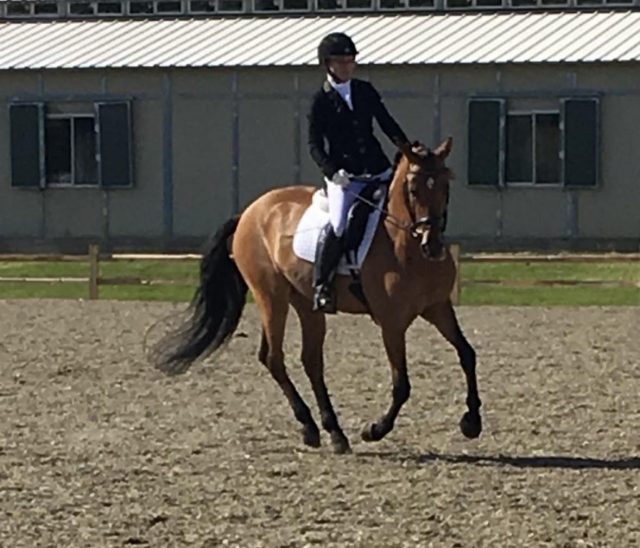
Because I don’t think that trot is the trot you think that is…
(more…)
July 16, 2025 Morgane Schmidt Morgane Schmidt , the idea of order #DRESSAGE #OLYMPICS , #Dressage Showing , #Dressage Training , #Forward Thinking Dressage , #NonTraditionalBreedinDressage , #summer , classical dressage , competition dressage , diet time , dressage levels , Dressage4Kids , going to the barn in the summer , Half halt , reasoning , texts your trainer loves , The Idea of Order Comments Off on The Idea of Order: Late Night Texts Your Trainer LOVES
As they say, timing is everything.
(more…)
July 15, 2025 Gwyneth McPherson Gwyneth McPherson #DRESSAGE #OLYMPICS , #Dressage Showing , #Dressage Training , #Forward Thinking Dressage , #NonTraditionalBreedinDressage , aids , classical dressage , competition dressage , dressage levels , Dressage4Kids , Good side vs Bad side , Half halt Comments Off on Training in the Right Way: The Good Side vs the Bad Side
Here’s a hint: There isn’t one. At least not in the way you think. (more…)
July 9, 2025 Morgane Schmidt Morgane Schmidt , the idea of order #DRESSAGE #OLYMPICS , #Dressage Showing , #Dressage Training , #Forward Thinking Dressage , #NonTraditionalBreedinDressage , #summer , classical dressage , competition dressage , diet time , dressage levels , Dressage4Kids , going to the barn in the summer , Half halt , reasoning , The Idea of Order Comments Off on The Idea of Order: Weather and the Non-Refundable Show Entry
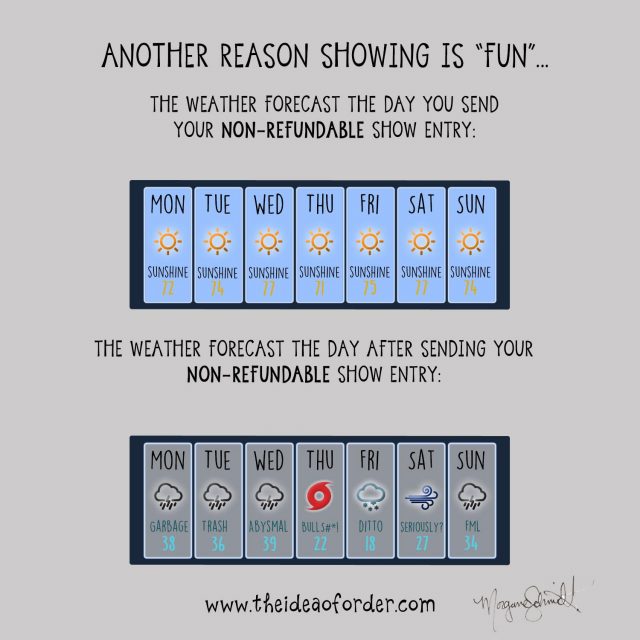
A fine example of Murphy’s Law in action.
(more…)
July 2, 2025 Morgane Schmidt Morgane Schmidt , the idea of order #DRESSAGE #OLYMPICS , #Dressage Showing , #Dressage Training , #Forward Thinking Dressage , #NonTraditionalBreedinDressage , #summer , classical dressage , competition dressage , diet time , dressage levels , Dressage4Kids , going to the barn in the summer , Half halt , reasoning , The Idea of Order Comments Off on The Idea of Order: Heading to the Barn in the Summer…
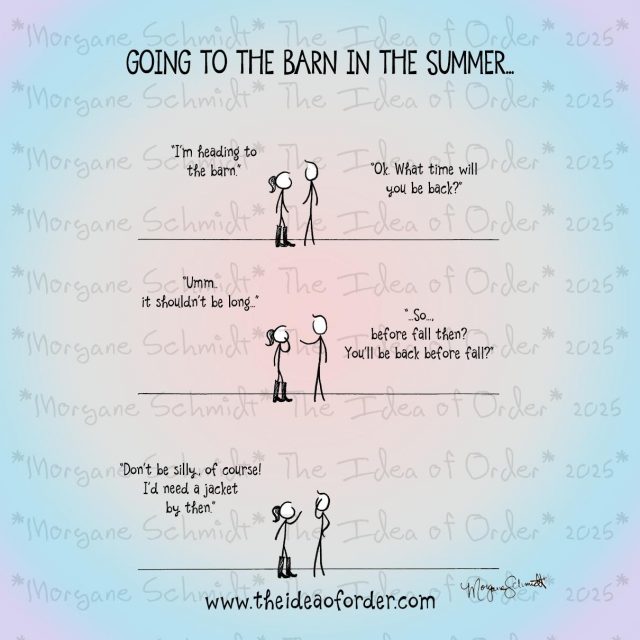
You might as well just call it a wormhole.
(more…)
June 30, 2025 Gwyneth McPherson Gwyneth McPherson , Morgane Schmidt #DRESSAGE #OLYMPICS , #Dressage Showing , #Dressage Training , #Forward Thinking Dressage , #NonTraditionalBreedinDressage , #READER SUBMISSION , aids , classical dressage , competition dressage , dressage levels , Dressage4Kids , Half halt , spurs Comments Off on Training in the Right Way: Let’s Talk About Spurs…
And their purpose and how to use them correctly (rather than like a jerk).(more…)
June 25, 2025 Morgane Schmidt Morgane Schmidt , the idea of order #DRESSAGE #OLYMPICS , #Dressage Showing , #Dressage Training , #Forward Thinking Dressage , #NonTraditionalBreedinDressage , classical dressage , competition dressage , diet time , dressage levels , Dressage4Kids , Half halt , reasoning , The Idea of Order Comments Off on The Idea of Order: Too Much Social Media
When Doom Scrolling hits a little too hard….
(more…)
June 18, 2025 Morgane Schmidt Morgane Schmidt , the idea of order #DRESSAGE #OLYMPICS , #Dressage Showing , #Dressage Training , #Forward Thinking Dressage , #NonTraditionalBreedinDressage , classical dressage , competition dressage , diet time , dressage levels , Dressage4Kids , Half halt , reasoning , The Idea of Order Comments Off on The Idea of Order: Riding in June…
Welcome to the Inferno.
(more…)
June 15, 2025 Gwyneth McPherson Gwyneth McPherson , Morgane Schmidt #DRESSAGE #OLYMPICS , #Dressage Showing , #Dressage Training , #Forward Thinking Dressage , #NonTraditionalBreedinDressage , #READER SUBMISSION , aids , classical dressage , competition dressage , dressage levels , Dressage4Kids , Half halt Comments Off on Training in the Right Way: Why We Don’t Pull in Dressage
This week I’m tackling another reader submitted question, this one focusing on why we pulling on the reins is such an egregious sin in dressage. Spoiler Alert: It kind of is. (more…)
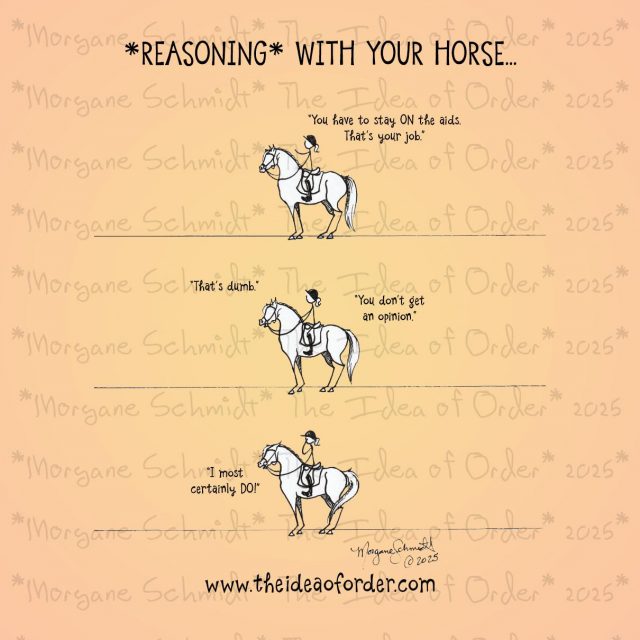
June 11, 2025 Morgane Schmidt Morgane Schmidt , the idea of order #DRESSAGE #OLYMPICS , #Dressage Showing , #Dressage Training , #Forward Thinking Dressage , #NonTraditionalBreedinDressage , classical dressage , competition dressage , diet time , dressage levels , Dressage4Kids , Half halt , reasoning , The Idea of Order Comments Off on The Idea of Order: How Reasoning With Your Horse Would Go…
June 4, 2025 Morgane Schmidt Morgane Schmidt , the idea of order #DRESSAGE #OLYMPICS , #Dressage Showing , #Dressage Training , #Forward Thinking Dressage , #NonTraditionalBreedinDressage , classical dressage , competition dressage , diet time , dressage levels , Dressage4Kids , Half halt , The Idea of Order Comments Off on The Idea of Order: Only Equestrians — Manure Edition
More equestrians really should moonlight as gastroenterologists…
(more…)
June 2, 2025 Gwyneth McPherson Gwyneth McPherson #DRESSAGE #OLYMPICS , #Dressage Showing , #Dressage Training , #Forward Thinking Dressage , #NonTraditionalBreedinDressage , aids , classical dressage , competition dressage , dressage levels , Dressage4Kids , Half halt Comments Off on Training in the Right Way: What Is an Aid?
Aids are meant to tell the horse what to do. They are not meant to MAKE the horse do it. Let’s discuss why this seemingly subtle difference is key to effective training. (more…)
May 28, 2025 Morgane Schmidt Morgane Schmidt , the idea of order #DRESSAGE #OLYMPICS , #Dressage Showing , #Dressage Training , #Forward Thinking Dressage , #NonTraditionalBreedinDressage , classical dressage , competition dressage , diet time , dressage levels , Dressage4Kids , Half halt , The Idea of Order Comments Off on The Idea of Order: Diet Time…
Who’s terrible idea was this anyway?
(more…)
May 21, 2025 Morgane Schmidt Morgane Schmidt , the idea of order #DRESSAGE #OLYMPICS , #Dressage Showing , #Dressage Training , #Forward Thinking Dressage , #NonTraditionalBreedinDressage , classical dressage , competition dressage , dressage levels , Dressage4Kids , Half halt , The Idea of Order Comments Off on The Idea of Order: Clinic Day Conversations With Your Horse…
Because nobody enjoys being the weekend’s entertainment.
(more…)
May 19, 2025 Gwyneth McPherson Gwyneth McPherson #DRESSAGE #OLYMPICS , #Dressage Showing , #Dressage Training , #Forward Thinking Dressage , #NonTraditionalBreedinDressage , classical dressage , competition dressage , dressage levels , Dressage4Kids , Half halt Comments Off on Training in the Right Way: The Rider’s Responsibility vs The Blame Game
Instead of taking or giving all the blame, riders should understand that the results of their aids, good or bad, are always the rider’s responsibility (but not necessarily their “fault”). This focus on responsibility is key. Let’s discuss why. (more…)
May 8, 2025 Gwyneth McPherson Gwyneth McPherson #DRESSAGE #OLYMPICS , #Dressage Showing , #Dressage Training , #Forward Thinking Dressage , #NonTraditionalBreedinDressage , classical dressage , competition dressage , dressage levels , Dressage4Kids , Half halt Comments Off on Training in the Right Way: Ask the Trainer – My Horse Isn’t Forward
This week I thought I’d try something a little different and tackle some reader/rider submitted training questions. This first one focuses on the ‘lazy’ (but not really) horse. (more…)
April 21, 2025 Gwyneth McPherson Gwyneth McPherson #DRESSAGE #OLYMPICS , #Dressage Showing , #Dressage Training , #Forward Thinking Dressage , #NonTraditionalBreedinDressage , classical dressage , competition dressage , dressage levels , Dressage4Kids , Half halt Comments Off on Training in the Right Way: FEI Horses Don’t Grow on Trees…
Just one of the dilemmas when you have FEI aspirations. (more…)
April 11, 2025 Morgane Schmidt Morgane Schmidt #DRESSAGE #OLYMPICS , #Dressage Showing , #Dressage Training , #Forward Thinking Dressage , #NonTraditionalBreedinDressage , classical dressage , competition dressage , dressage levels , Dressage4Kids , Half halt Comments Off on Unpopular Opinion Time: Dressage Needs Another Half Halt
We in the dressage community, specifically in the US, need to have some difficult discussions regarding the lack of correct training at the top of the sport. This isn’t anything new, but it continues to keep rearing its head because we continue to gloss over it.
(more…)
April 7, 2025 Gwyneth McPherson Gwyneth McPherson , Morgane Schmidt #DRESSAGE #OLYMPICS , #Dressage Showing , #Dressage Training , #Forward Thinking Dressage , #NonTraditionalBreedinDressage , classical dressage , competition dressage , dressage levels , Dressage4Kids , Half halt Comments Off on Training in the Right Way: Unraveling the Half Halt
“The half halt is a beautiful, effortless way to ask your horse…” The half halt is many things, and entirely critical to good, effective riding. But it is generally invisible when done well and rarely is it “effortless.” Let’s discuss. (more…)
Those words ALSO do not mean what you think they mean… at least not in the context of effective training.(more…)
Those words do not mean what you think they mean… at least not in the context of effective training. Here’s why. (more…)
Or, rather, why fancy gaits in and of themselves were not the original point of dressage competition (here’s a hint: it was supposed to be about that whole training thing…) (more…)
“Dressage is for all horses, but all horses aren’t for dressage”… sort of. (more…)
January 29, 2025 Morgane Schmidt Morgane Schmidt , the idea of order #DRESSAGE #OLYMPICS , #Dressage Showing , #Dressage Training , #Forward Thinking Dressage , #LAMENESS EXAM , #NonTraditionalBreedinDressage , #THE IDEA OF ORDER , classical dressage , competition dressage , dressage levels , schrodinger Comments Off on The Idea of Order: Schrödinger’s Lameness…
I mean, sure, why not? (more…)
Let’s talk about why you’re more likely to run into Big Foot at Starbucks than find any magical training tactics that produce instant results.(more…)