



Thoroughbred Logic, Presented by Kentucky Performance Products: Get the Right Coach
“Hard work built on constructive criticism is essential. But coaches should like your horse enough to want them to do well. And they should be able to teach to their strengths, not continually bemoan their weaknesses.”
Welcome to the next installment of Thoroughbred Logic. In this weekly series, Anthropologist and trainer Aubrey Graham, of Kivu Sport Horses, offers insight and training experience when it comes to working with Thoroughbreds (although much will apply to all breeds). This week ride along as Aubrey shares her logic on finding the right coach for the rider and the horse.
I promised myself I would not bemoan winter too much in this article. But here we are. I have FOMO. My friends are riding in T-shirts and heading off to shows across the south east and yesterday morning, I woke up to knee-deep mud (OK, maybe only ankle deep, but still…) covered in an inch of snow. We’ll get to the show season… somehow.
In the meantime, inspiration had to be dredged out from under that cold muck somehow. So I set the jumps in the indoor, worked with a handful of training horses and recent restarts and finished the day by getting to finally jump my horse.
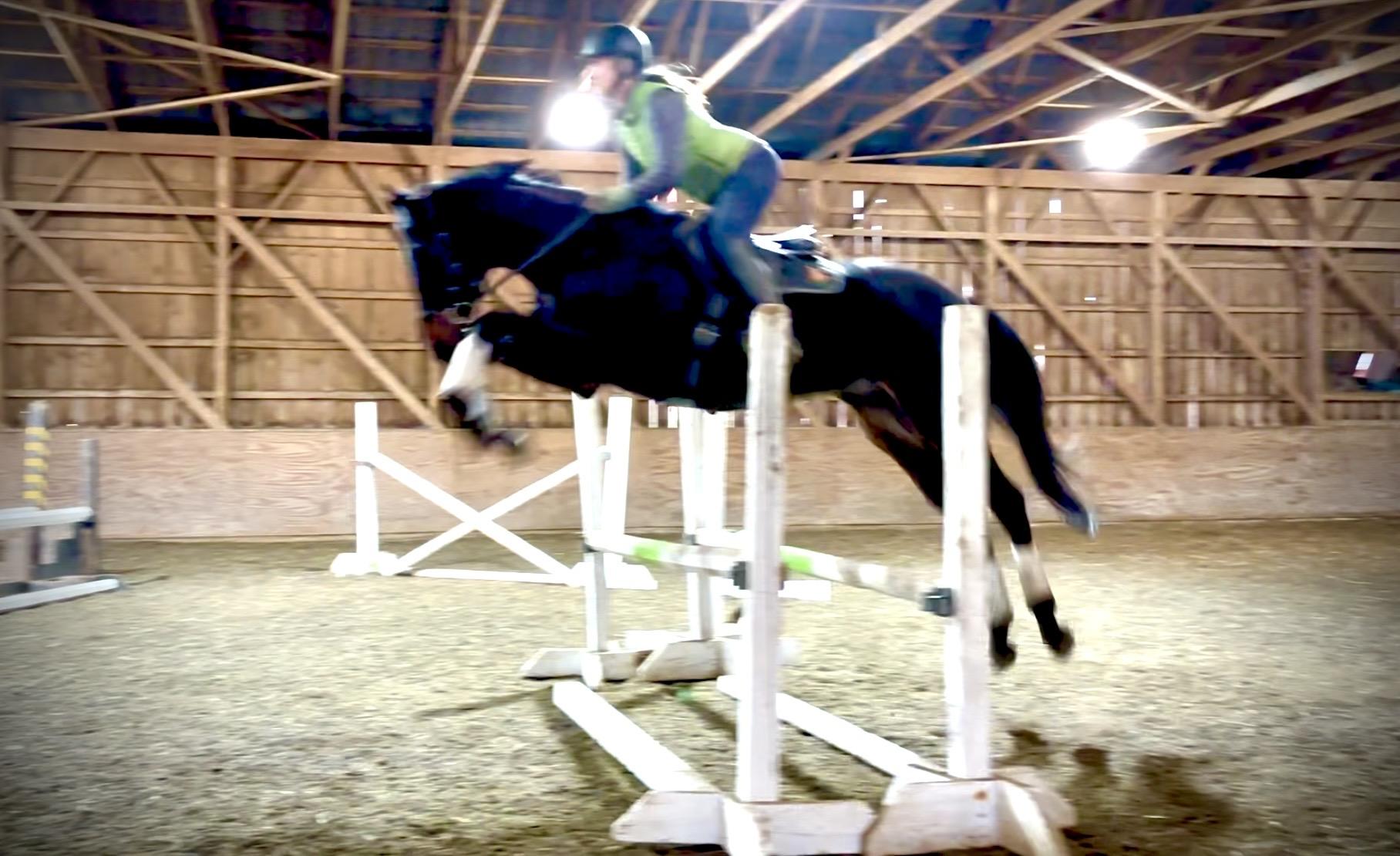
Yes, it’s a blurry screenshot, but Neil’s (Lute’s Angel) knees never disappoint. Screenshot from Lily Drew video.
Neil (Lute’s Angel) has been legging up slowly this winter after a spate of Neil-type injuries (he’s super good at weird small things, like stepping on a nail, or getting a puncture below the knee, and so on). But tell this kid that he gets to jump and he is about as excited as any horse who truly loves their job can be. I adore his enthusiasm and actually enjoy his quirks. He might be far from the easiest ride in the barn, but we get along stupidly well and both look forward to saddle time. That combination probably counts more than most things for keeping him off my sales list.
Quick clip of the end of our jump school yesterday. Yes, we’re both a bit rusty, but he’s figuring out his body well over the fences and remaining (mostly) ridable.
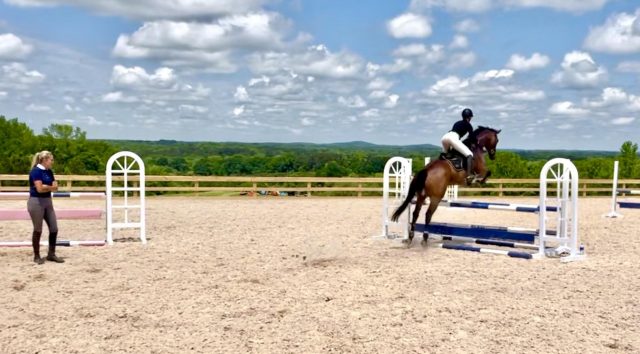
I sent that clip off to Werner Geven, my former coach (only “former” because I now live 1000 miles north of him). He has always liked this horse and been encouraging about keeping him around and taking him up the levels. So while it is not groomed and perfect, it is a good visual of where he’s at.
“Looks good, girl. I like that horse. He’s putting really good effort into the jumps. And the shape looks better. Keep going! Do more grids.” Want to brighten a damn cold, awful should-not-still-be-cold-and-awful day? Have a coach who comments like that on your horse. Inspiration to keep going: found.
Now I’m not saying that coaches should be all sunshine and “you’re great” all the time. Hard work built on constructive criticism is essential. But coaches should like your horse enough to want them to do well. And they should be able to teach to their strengths, not continually bemoan their weaknesses. Most lessons ought to be challenging, but also they should allow a rider to come out the other side inspired to do more, try harder, hone their skills and work and partnership, not throw in the towel.
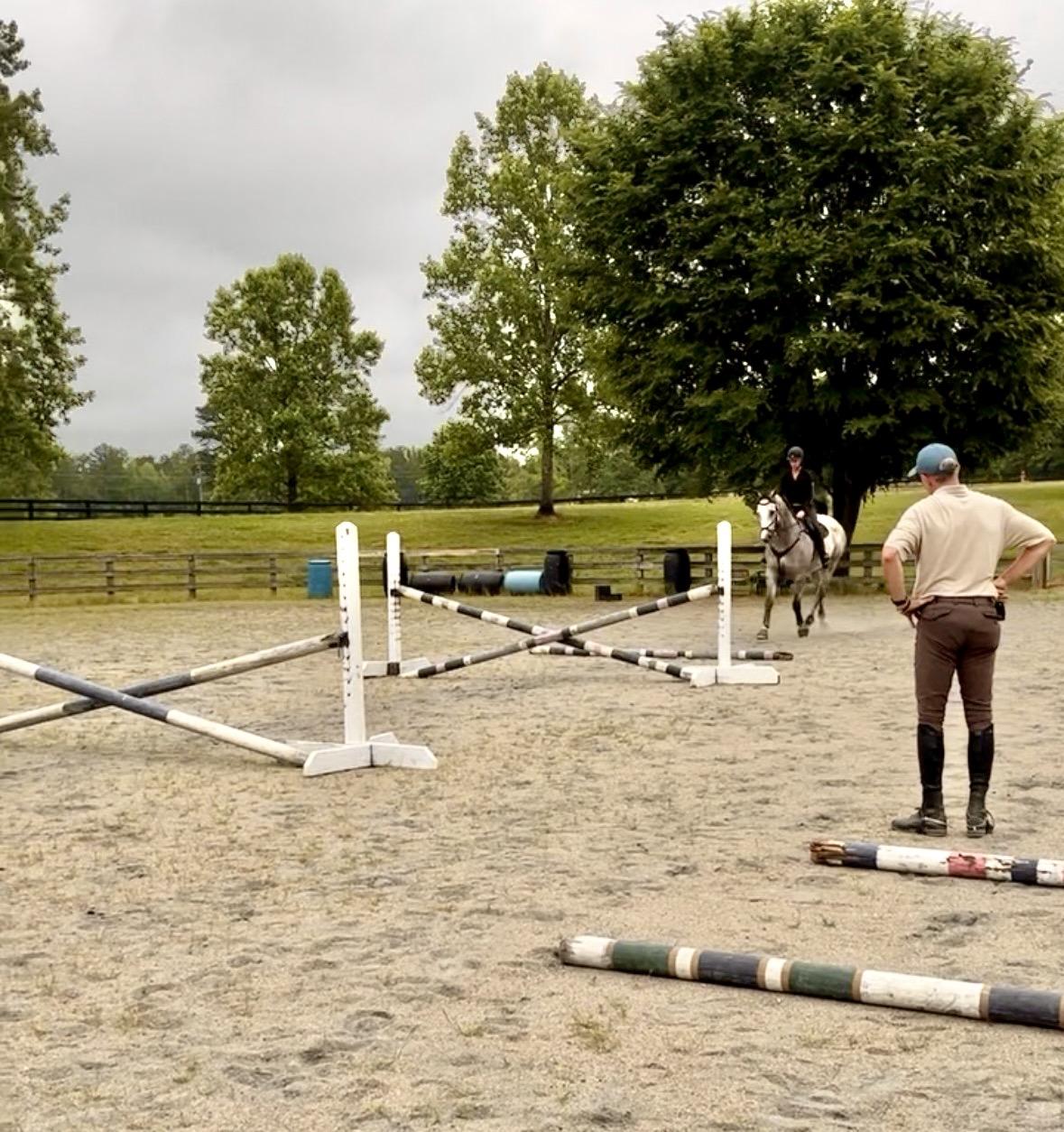
Aboard Uno (Hold Em Paul) in a Werner lesson in 2024. Screenshot from an Ilse Simmons video.
Central New York is tough — hell, a lot of the US is tough. There just isn’t the ease of availability of good coaches that fit what each horse and rider need. But I’m swinging in today to remind folks that finding one — even at the risk of a long drive, virtual lessons, or some other form of communication — is worth the challenge.
Not everyone loves Thoroughbreds. And less love the kind that I do — the slightly hotter, opinionated mare-ish geldings who need to have a near 50-50 say in how things get done. I get that.
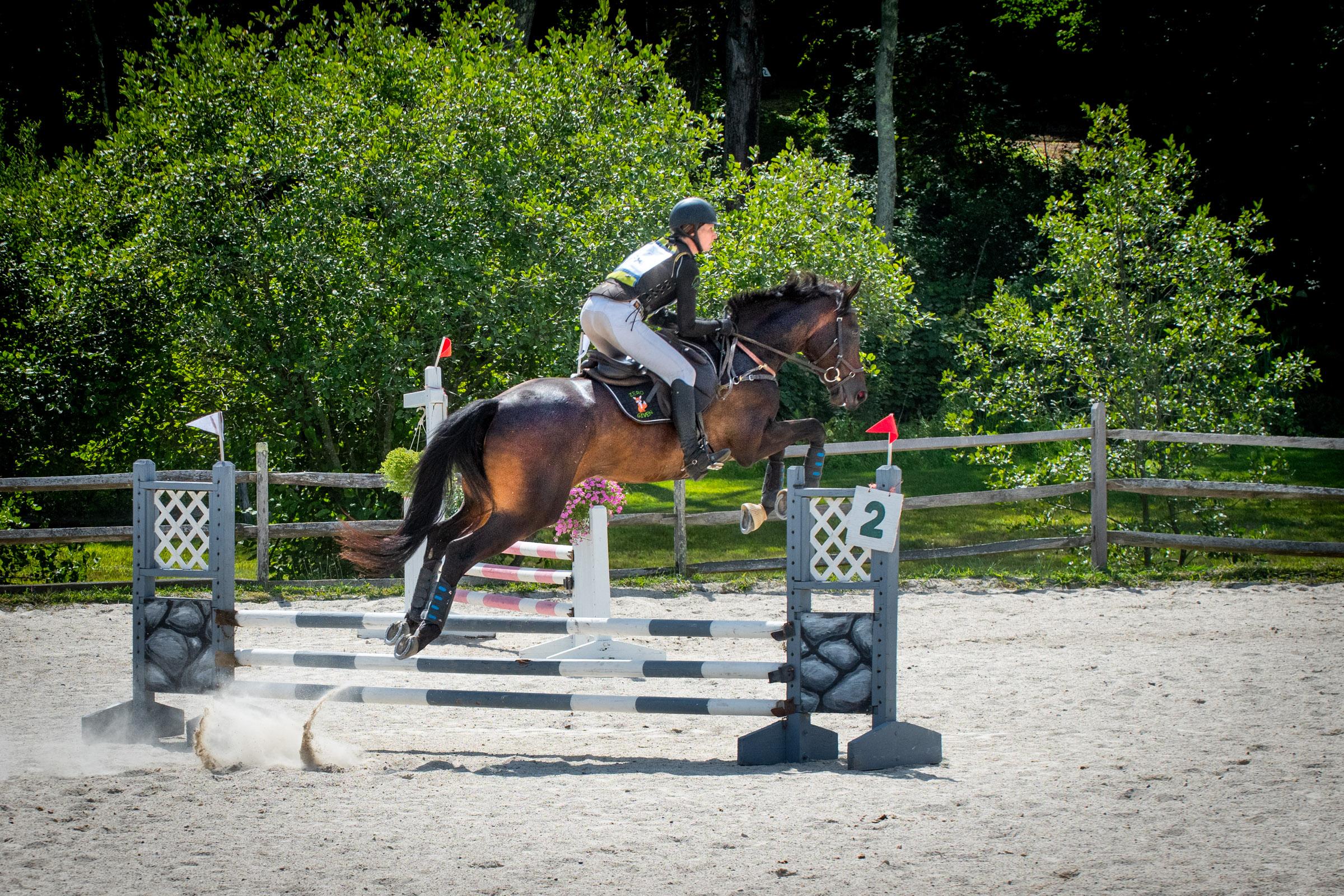
Neil is also pretty convinced that the jumps need to be raised (not quite yet, kid). Photo by Allen Graham.
But riding under the instruction of someone who would rather not deal with that kind of horse or who does not truly understand how they function is an easy way to upend so many things: a rider’s confidence, the horses’ confidence, and from there the spiral accelerates.
I have written elsewhere (forthcoming) that Thoroughbreds struggle when asked to be the odd-shaped peg that needs to fit the square hole. They rarely are good at being shoehorned into a program, stabling arrangement, or rider situation. They generally don’t do well when coached into a rigid mold either. Rather, there has to be a bit of flexibility to meet their needs, strengthen their weaknesses, and celebrate what they do bring to the table.
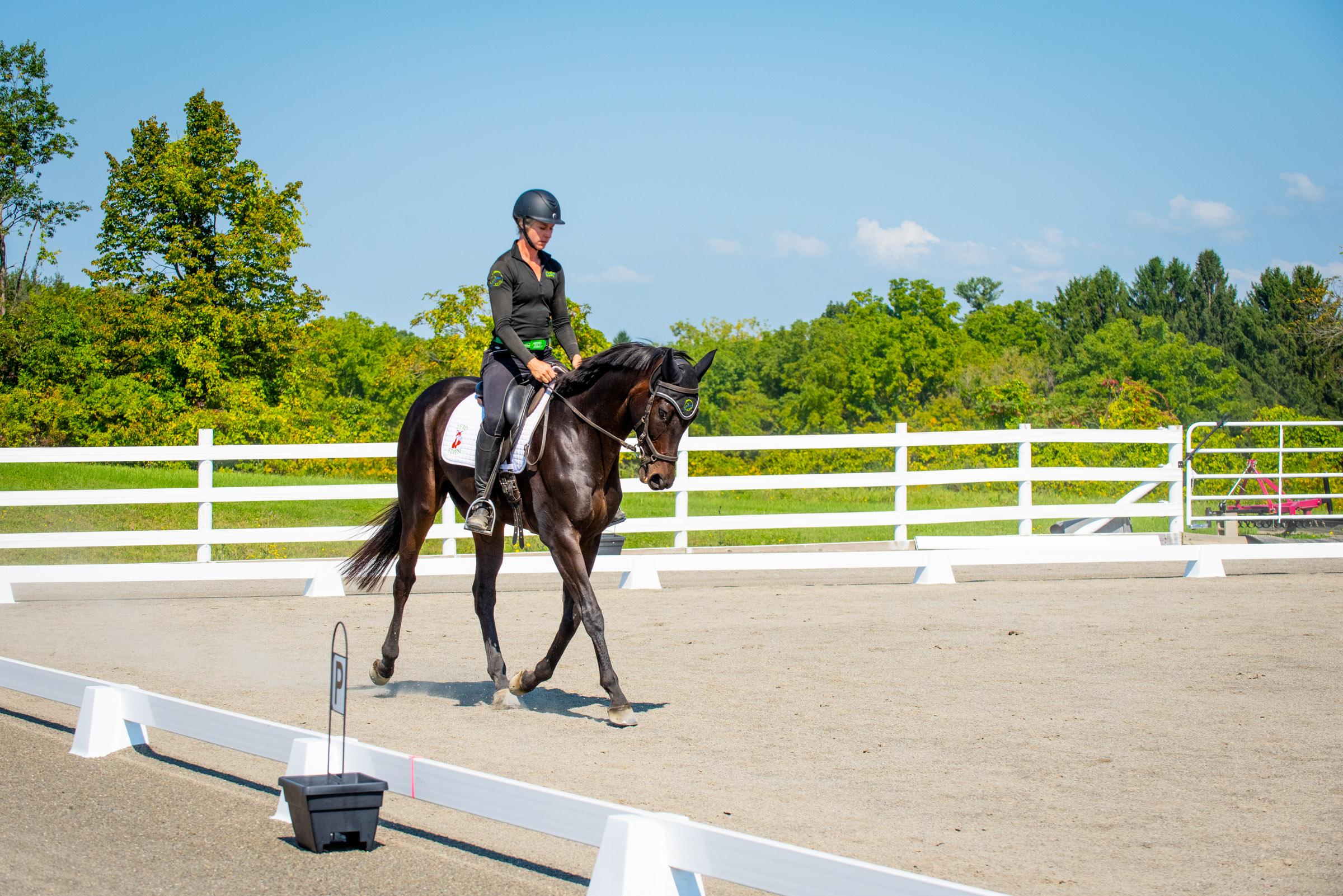
Neil schooling dressage at the Ithaca Equestrian Center last year. Photo by Lily Drew.
I get that Neil isn’t for everyone. But he is the horse I think has the talent to really do big things, and I have chosen to invest in him. So I need a team of folks who are on board.
And sometimes, with Eventing, that is tough. Hot, fussy, young Thoroughbreds often struggle with the dressage. And due to that, their scores at the lower levels — where it is a game often determined by said dressage — may look lackluster. Oh, it absolutely is possible to have a dressage-capable Thoroughbred, of course! But my point is that I’m OK with struggling with the dressage and working to make it better day-by-day. And I’m OK knowing that, in all likelihood, we’ll do better in the rankings both as we shore up the flat foundation and as the jumps get bigger and the xc gets faster. I just need to make sure the coach is cool with that progression too.
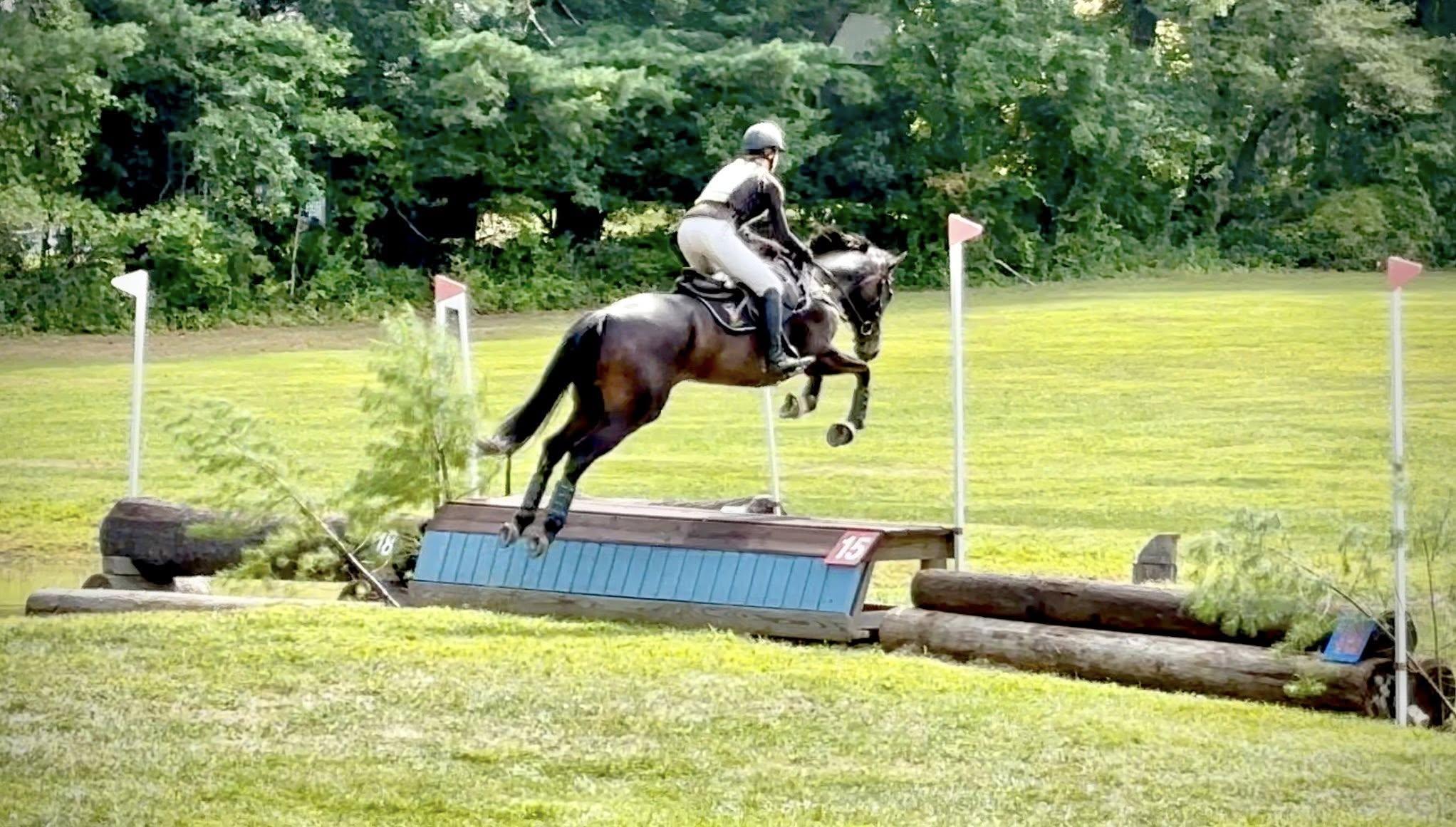
Neil clicking around his first full starter course last year at Course Brook. Screenshot from Pamela Graham video.
It is the same with clinicians. I have ridden with a whole bunch of folks over the years. And the clinics I have gotten the most out of are the ones where the trainers found something to appreciate in my horse. From there they work on honing what is already on the table, not just trying to get through the lesson. Huge shout out to Sara Kozumplik not only for putting on one of the most challenging clinics I have ridden in, but also for being able to see something in a tough horse that inspired more work, not more frustration.
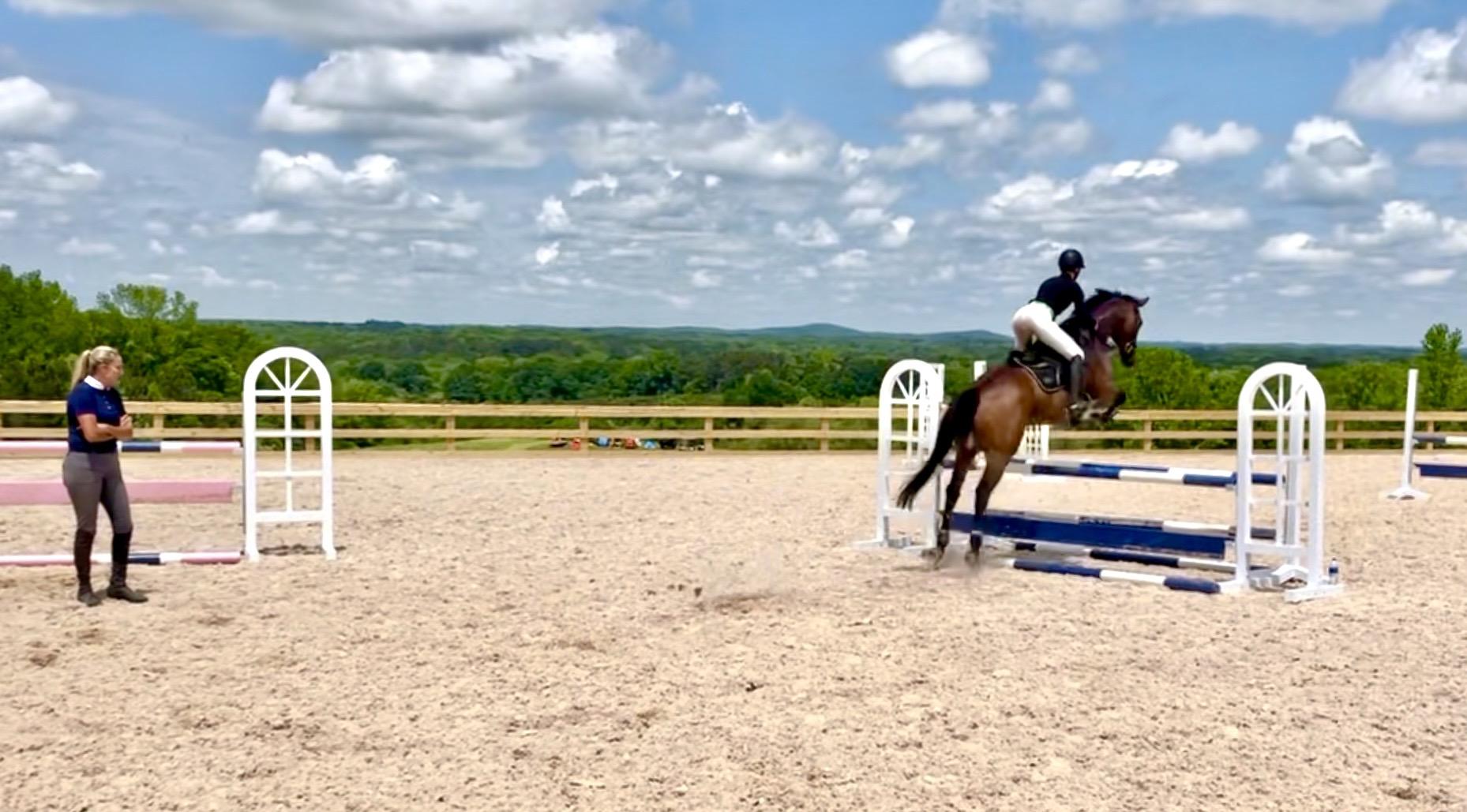
Sara Kozumplik helping Rhodie and I around a course at a GDCTA clinic in 2023. Screen grab from Marjolein Geven.
Rhodie (Western Ridge) was always a good test of someone’s ability to work with a quirky Thoroughbred. Rhodie was sensitive but athletic as all get out. In clinics, he’d rarely be willing to stand still, but would be more than happy to cattily get through any exercise thrown at him. He wasn’t easy to ride or easy to coach. But the coaches that understood Thoroughbreds and had an appreciation for those who didn’t fit the “easy-going” mold, set up lessons where we did more than just “get through” — we learned. (Rhodie is now retired with a chronic suspensory issue and happily hanging out babysitting the young off tracks here). Neil, it seems, is not that different.
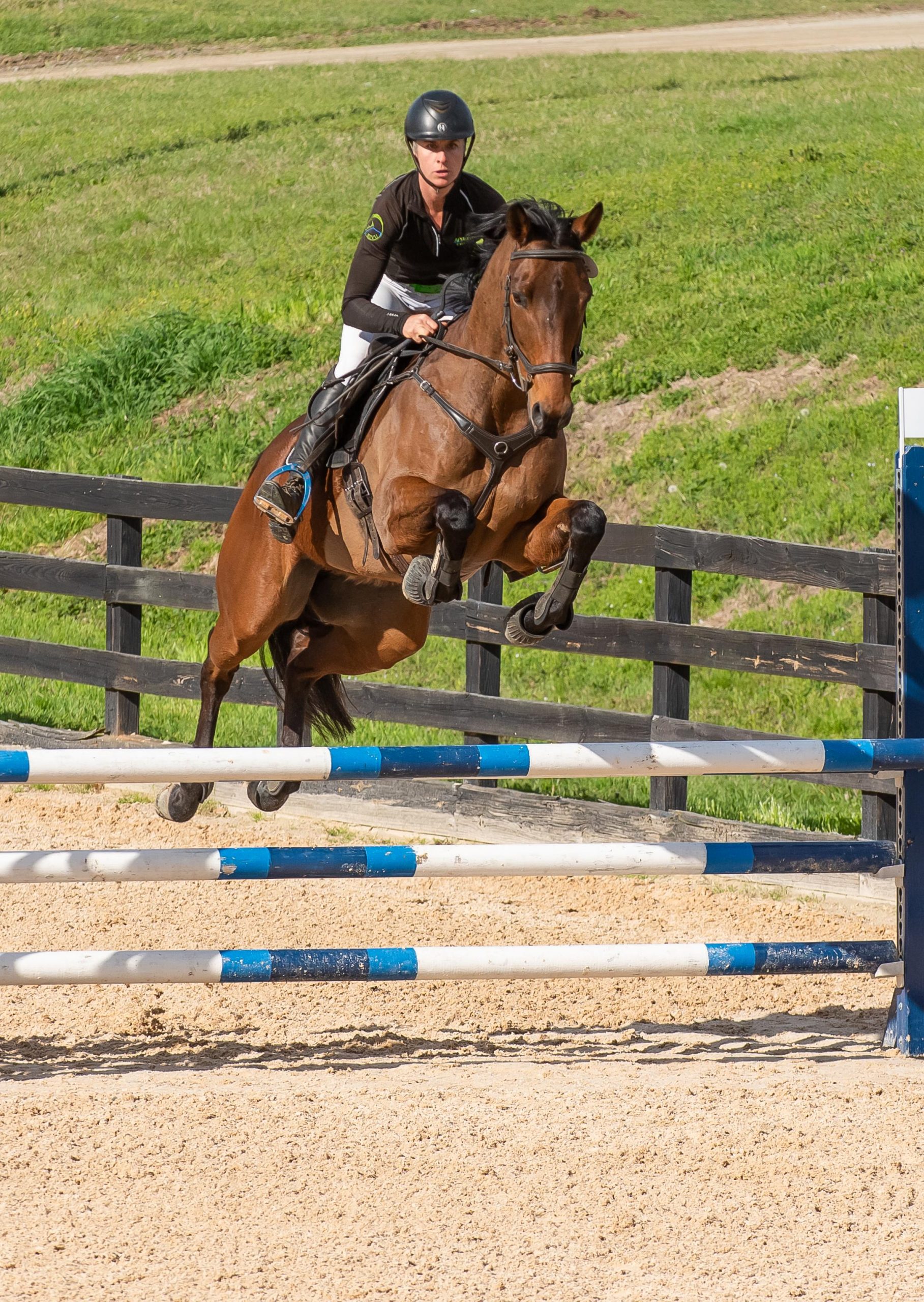
Rhodie flying around Novice at Poplar Place Farm in 2023. Photo by Kimberwick Visuals.
To be clear, I’m not saying that the point of lessons or having a coach is to have someone pat your horse and your ego. Rather, there has to be an understanding of how the horse works, how they think, and how to help them succeed. That comes in opposition to coach-based frustration at their inability to do things the perhaps, more routine, uncomplicated way.
See sometimes, it is that coach who is then able to help you understand when, in fact, that horse might not be the right one for the job. Back when Forrest (Don’t Noc It) was my main ride, Werner helped me work with him, trying to help him along my desired UL path, working both with his clunky body and his brain. A whole bunch of work, effort and good coaching went into that horse.
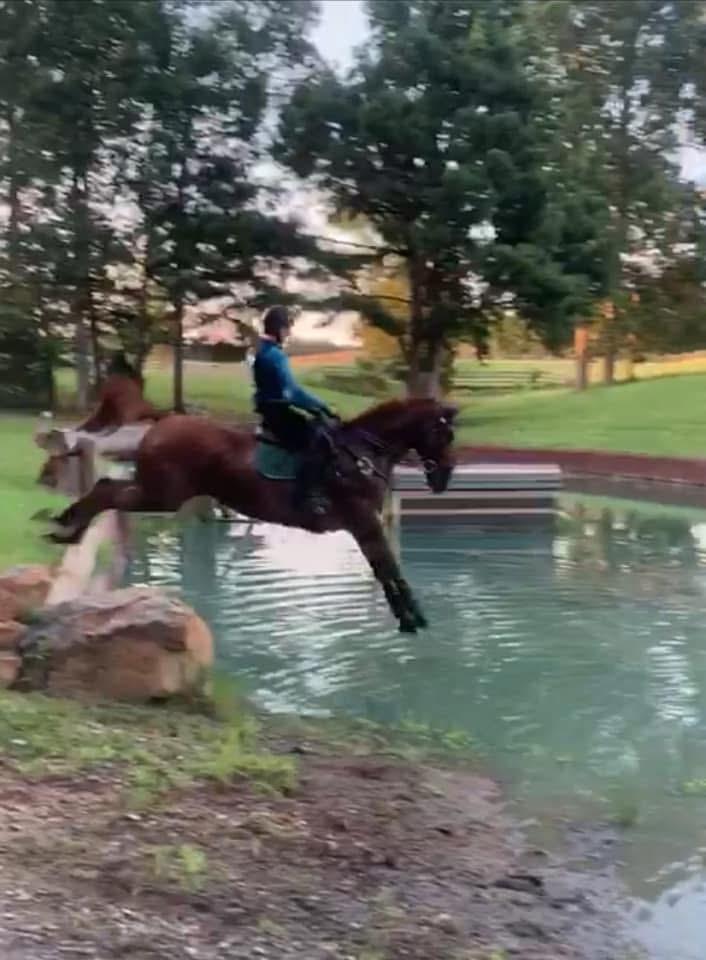
Forrest (Don’t Noc It) in full beast mode schooling at Poplar in 2020. Screen shot by Greg Lyon.
In the end, Forrest improved, I learned a ton, and we clicked around schooling show Training. But it was clear that Forrest had his sights set on the lower levels, while I hoped to get back up to Prelim. When I was ready to hear the conversation, we were able to have the “he’s just not the right horse for the job” chat and find ways forward. That too is the mark of a good coach.
So folks, go ride. And here’s hoping you have a coach who both understands you and your horse. And here’s to me getting past the northern-inspired FOMO and hitting the first baby show of the season this weekend. Be good, Neil.
About Kentucky Performance Products, LLC:
Say goodbye to runny poop and dirty butts. Clean tails brought to you by ProbioticWise®: a three-pronged approach to total digestive tract support. With ProbioticWise, your horse can reap the benefits of a research-proven formula combining the probiotic S. boulardii and fermentation metabolites to promote a healthy stomach and hindgut. Ask your veterinarian if ProbioticWise is right for your horse. Learn more here.
Kentucky Performance Products creates scientifically proven supplements for your horse. Our supplements provide solutions to the everyday challenges facing your horse. The horse that matters to you matters to us®. Learn more about KPP at kppusa.com.

