



Thoroughbred Logic, Presented by Kentucky Performance Products: Musing on Rewards
Are you rewarding your horse’s effort, or just apologizing for your own mistakes? This article breaks down the timing, intention, and impact of praise in the saddle.
Welcome to the next installment of Thoroughbred Logic. In this weekly series, Anthropologist and trainer Aubrey Graham, of Kivu Sport Horses, offers insight and training experience when it comes to working with Thoroughbreds (although much will apply to all breeds). This week ride along as Aubrey shares her logic on rewarding horses for their behaviors.
Back in Georgia a few years ago, I had a funny exchange with my coach, Werner Geven. I was riding Rhodie (Western Ridge) and kept patting him in between fences.
“Stop patting the horse”
I’d just do something else (poorly) and pat him again.
“OK Aubrey, why do you keep patting the horse today?”
“I have to apologize for messing up.”
He laughed and raised his eyebrows.
“OK, good. Ride better. Only pat when you walk.”
It might sound harsh, but he was right. Werner is usually right, as it turns out. Good coaches often are. I wasn’t rewarding my horse for things he did, I was rewarding him for tolerating the dumb sh*t I did. I couldn’t find a distance to save my life, so Rhodie was getting both “I’m sorry!” and “Thanks for not lawn-darting me” points. Those didn’t have to happen after a bad fence, those could happen in a minute once we finished the exercised. I could just tell him he was great in the meantime if it made me feel better. I needed more focus on riding well, less focus on apologizing.
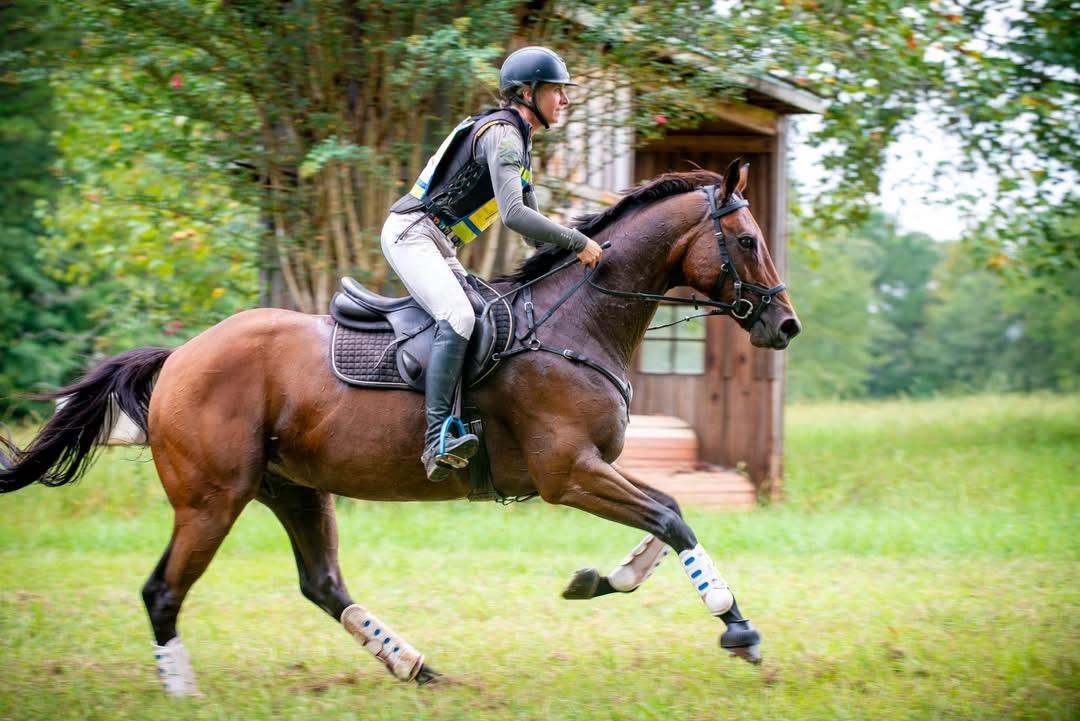
Western Ridge at Poplar back in 2023. Photo by Cora Williamson Photography.
The point stuck. Rewarding when you’re walking and resting (not walking and working) means you can reward as big as needed and it’s OK that the contact gets dropped with one or both reins. Rewarding for doing things well or making even a modicum of effort in right direction is great. ALWAYS REWARD THE TRY. But rewarding them for not doing things they hadn’t even thought of — that is just confusing. They have to be like, “OK, hey weird predator with opposable thumbs, thanks for the random pat/scratch. Cool, I think?”
This doesn’t mean I don’t reward these horses while I’m moving. I still do. A lot. But there’s a catch — I have to be willing to lose the very action I was praising.
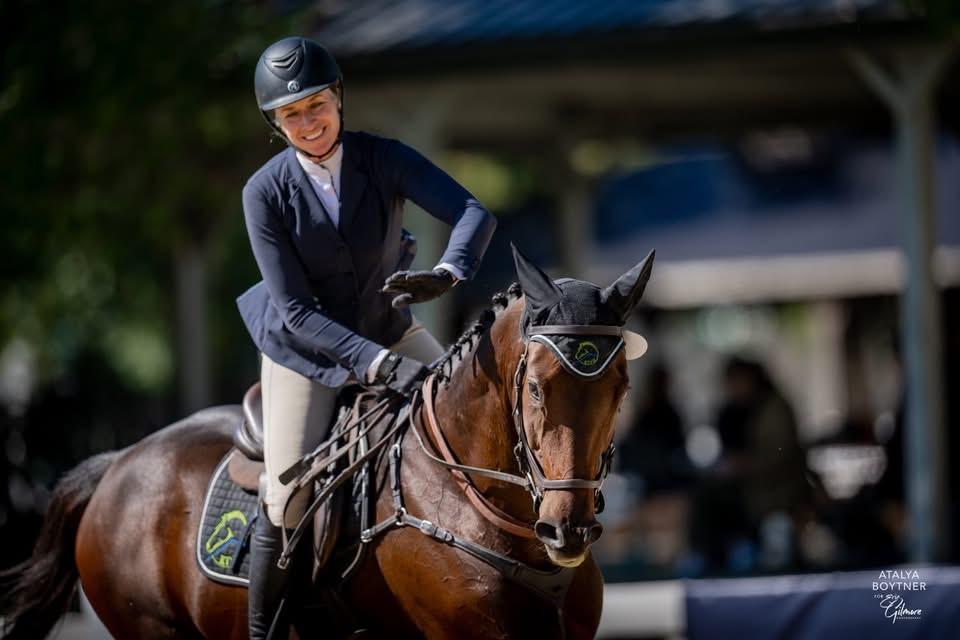
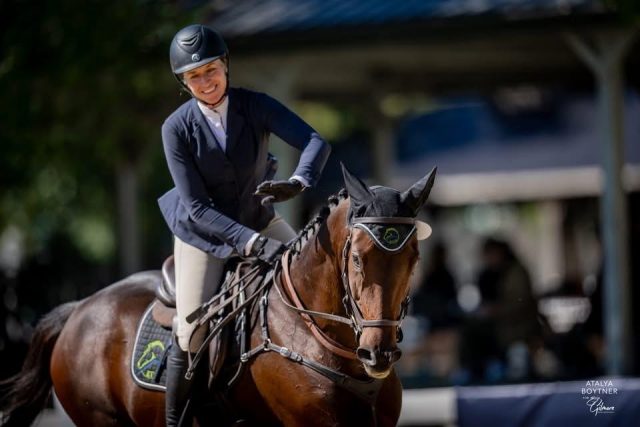
Emmet (Oboy) getting told he was fantastic after his round at the Retired Racehorse Project’s Makeover last year. Rewarding at the end of the round means the movement can fall apart and no one minds. Photo by Erin Gilmore Photography.
When rewarding in movement, I try to use just the inside hand to pat or stroke their neck and tell them they’re good. I aim to never reward in motion with the outside rein as they depend on that rein for stability and balance — rewarding and dropping that rein forward has the potential to significantly alter their balance. Alter their balance, and you alter their gait. Alter balance and gait unintentionally and you can chip away at their trust. So, long story short: hang onto that outside rein.
But, if I pat them while moving, even if it is just an inside rein, I have to accept that I am willing to let go of that movement. Patting breaks up the contact — and even a quick one inside-rein pat to the neck changes your aids. Don’t get me wrong, I still do it. They deserve reward for the work, BUT I expect that when I pat and my body moves, that they will not always maintain the same lovely action for which I was rewarding them. And that’s OK — I’ll just breathe and take a second to put them back together.
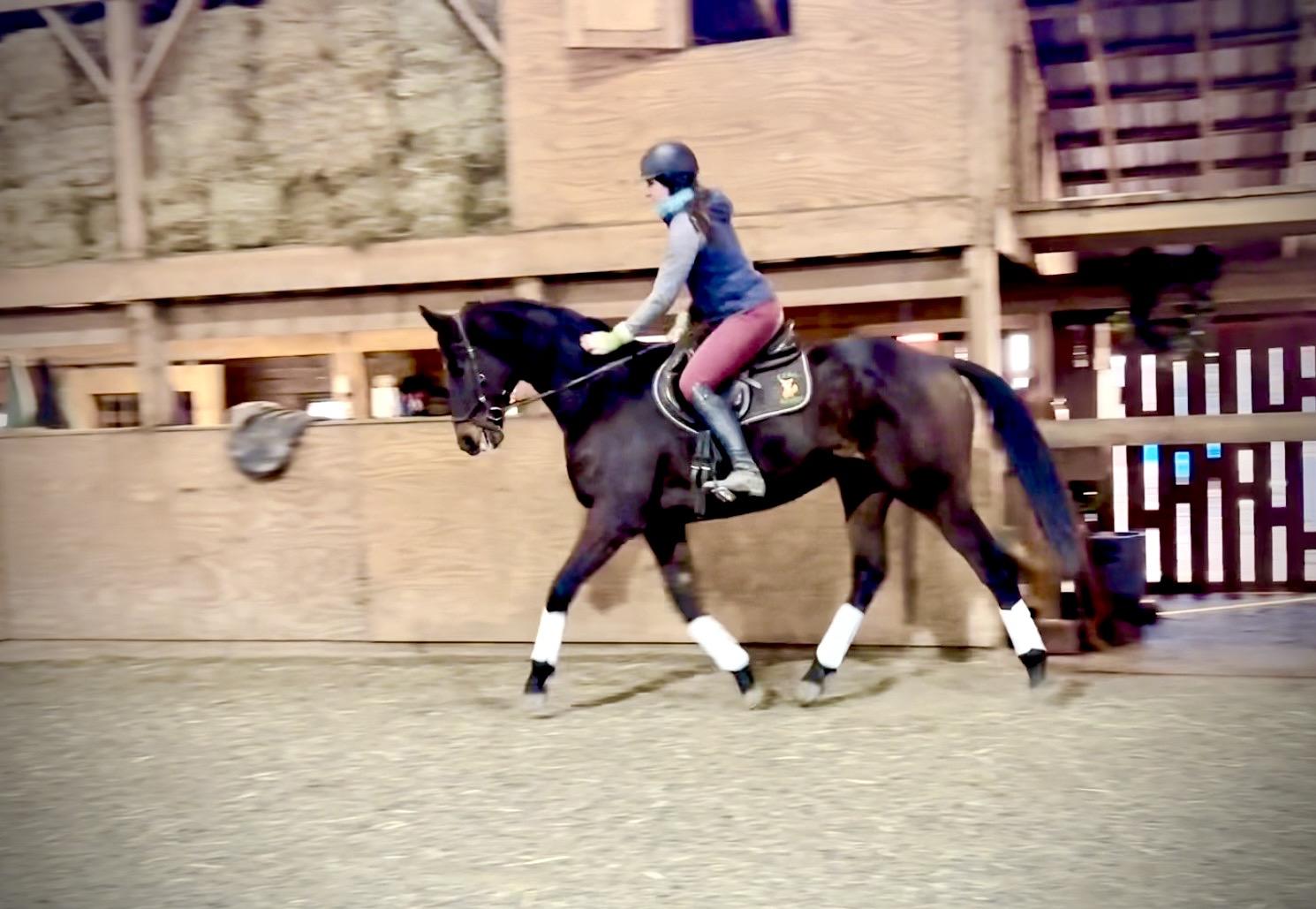
Rewarding Dates (Datesfreedom) for being awesome during his first post track ride, knowing that doing so meant we would likely lose the lovely trot. He was so good that I didn’t care. Screenshot from Lily Drew’s video.
Sometimes, that is absolutely the right answer for a horse — to reward big in action. Often, though, the reward is the down transition coupled with associated scratches once they have slowed.
Frankly, down transitions are great rewards in and of themselves. When a green OTTB comes over their back and puts in a huge effort to do what we’re asking, allowing them a walk break and a reward is like someone coming into your office and letting you know they got champagne and donuts for the office because you did well. Take a break and enjoy the reward. No one is going to make you eat the donut at your desk while typing with the other hand. (If they do, it maybe time to think about working elsewhere.)
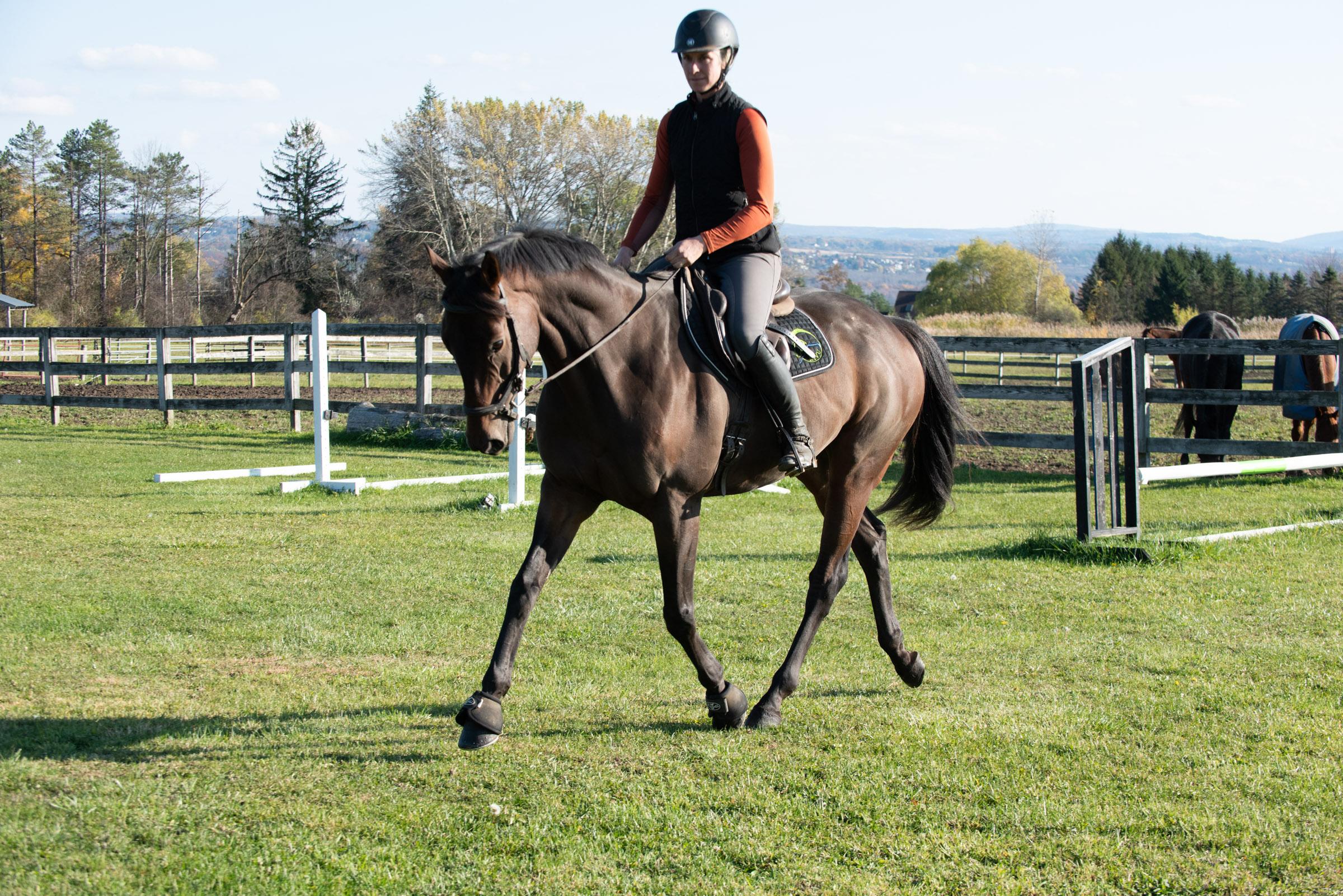
A moment in between rewarding Iago (Camino de Santiago) verbally while working on his trot. Photo by Lily Drew.
It’s tough not to get greedy with these horses when they’re so green and willing. And I try to keep that in mind when starting the young ones — even if they give a good effort, they need breaks. They don’t need an hour long ride or to move on to more advanced work immediately. They need the ask, to answer with a try, and to get a reward. Keep it simple and they’ll keep progressing. And if they’re struggling with understanding an ask, drilling isn’t going to make it better. Sometimes you need to go back to what they know, reward that, reset, and try again a different way or on a different day.
The fun part of this that keeps my brain busy is that each horse needs a little bit of a different type of reward.
For Candour yesterday, with Lily Drew in the irons, his reward was that walk break. He was willing to give her lovely uphill trot work, but the walk break served as much (if not more) of a reward for this cute, out of shape kiddo than the single handed pat while traveling.
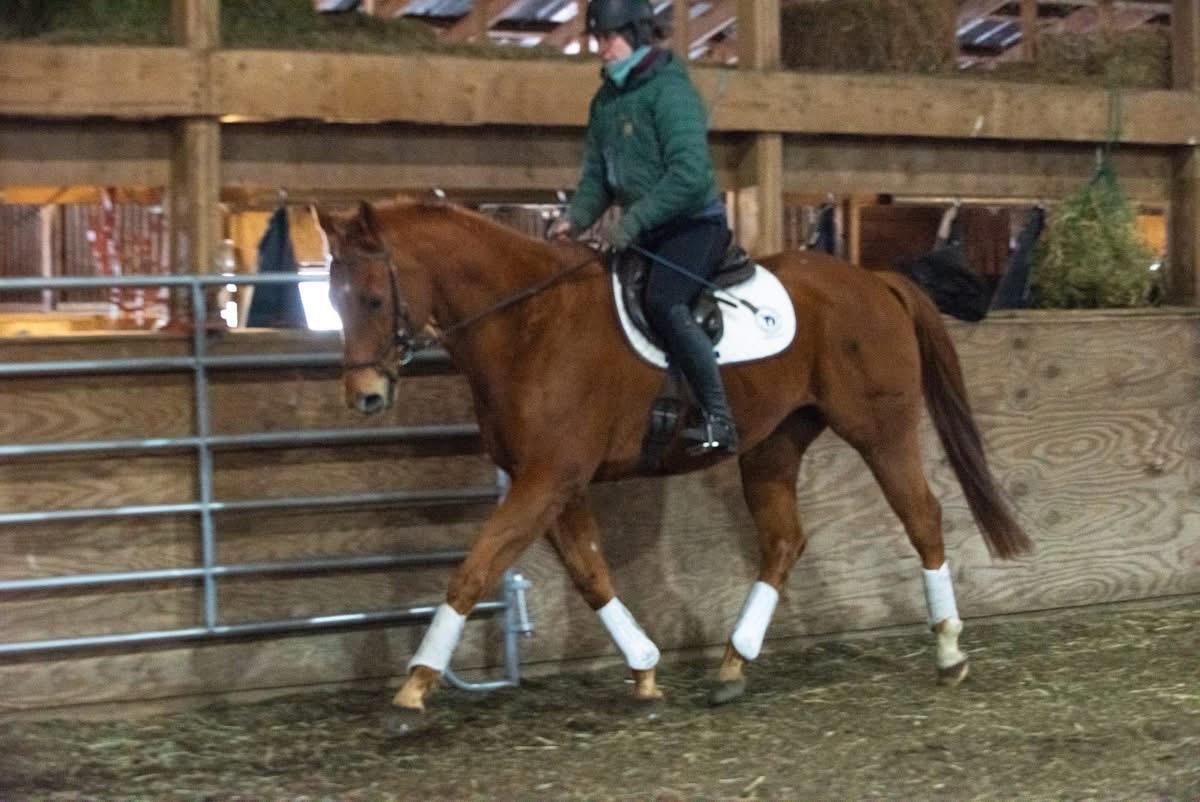
Candour strutting is stuff during his first ride at Kivu. Photo by Lily Drew.
Then you have some, like Artie (Reunion Tour), who are definitely red and definitely identify more as mare than gelding. Touch him while you’re moving and he’ll toss his front legs around and snake his neck. Nope. No thanks, human, stick to riding, no touchey.
In general — and with horses like Artie — I use verbal feedback. If you have ever watched any training videos, there’s a pretty steady (and probably annoying) stream of “Good,” “OK, yep, good,” “Better,” “Good boy” on repeat when they’re trying to figure things out and making strides (literally and figuratively) in the right direction.
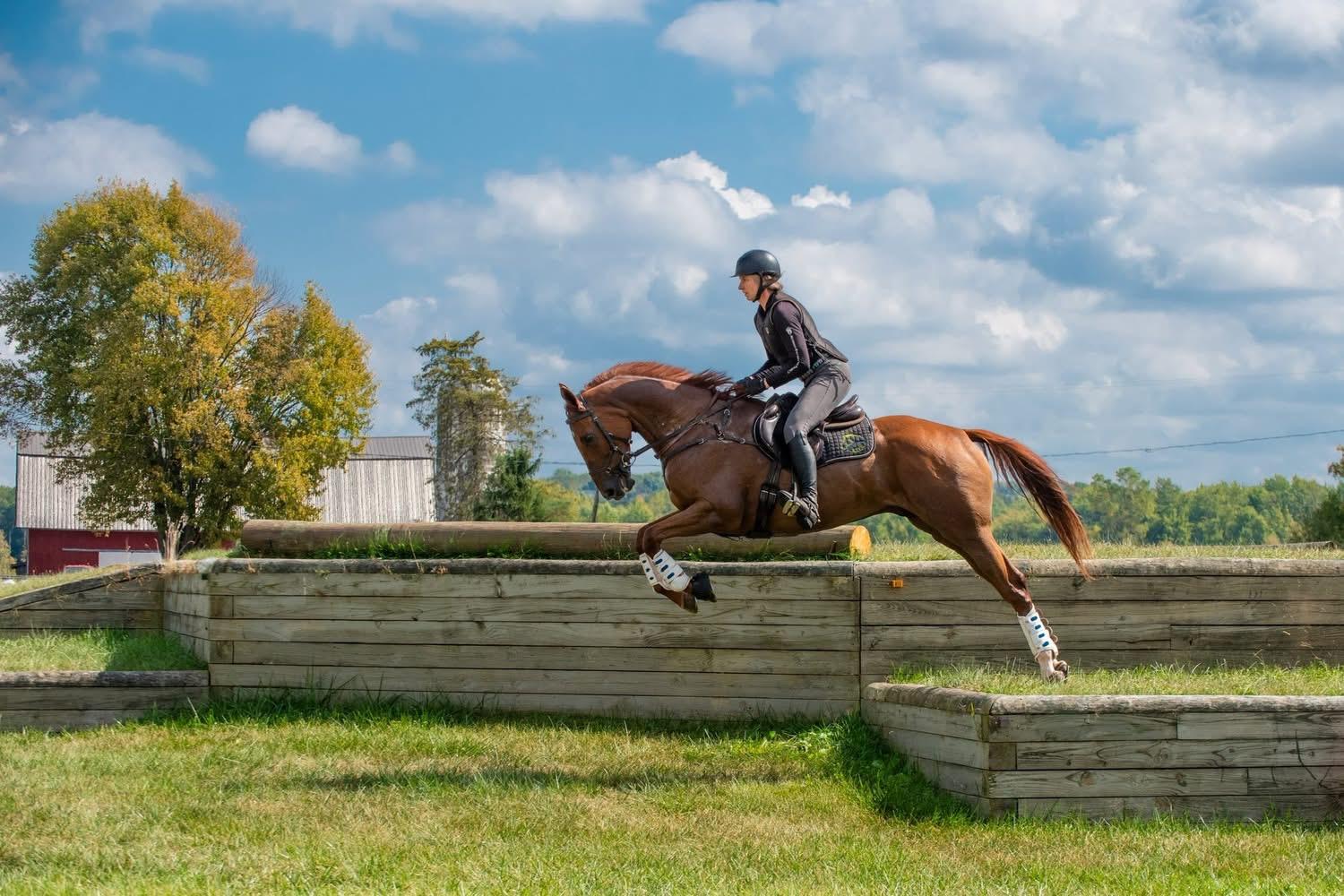
Artie (Reunion Tour) being his usual awesome self. Just don’t touch him. Photo by Lily Drew.
A long time ago, I was lessoning with a jumper trainer in Georgia and I was told to shut up. I probably annoyed her. Totally fair. But either way, her logic didn’t stick. She explained that the horses don’t know what you’re saying — it’s like you’re just singing and the words are just a wash. I was pretty sure they could tell the difference between words that sound like singing and words that sounded like the dialect of a growling demon, so nope, that trainer advice didn’t stick. I still talk to them. And I’m pretty damn certain that they can tell when the words are toned to reward their action vs when they’re tinged to reshape it.
For some, though, words or pats are not enough. For Rook (Breath of Royalty), who came in with a severe lack of confidence and quickly fractious response, I used a halt and treat to reward and to encourage a breath, pause, and a willingness to keep going. I don’t often use treats to train under saddle, but in certain cases, it creates the necessary moment you need to let them settle and then go forward again.
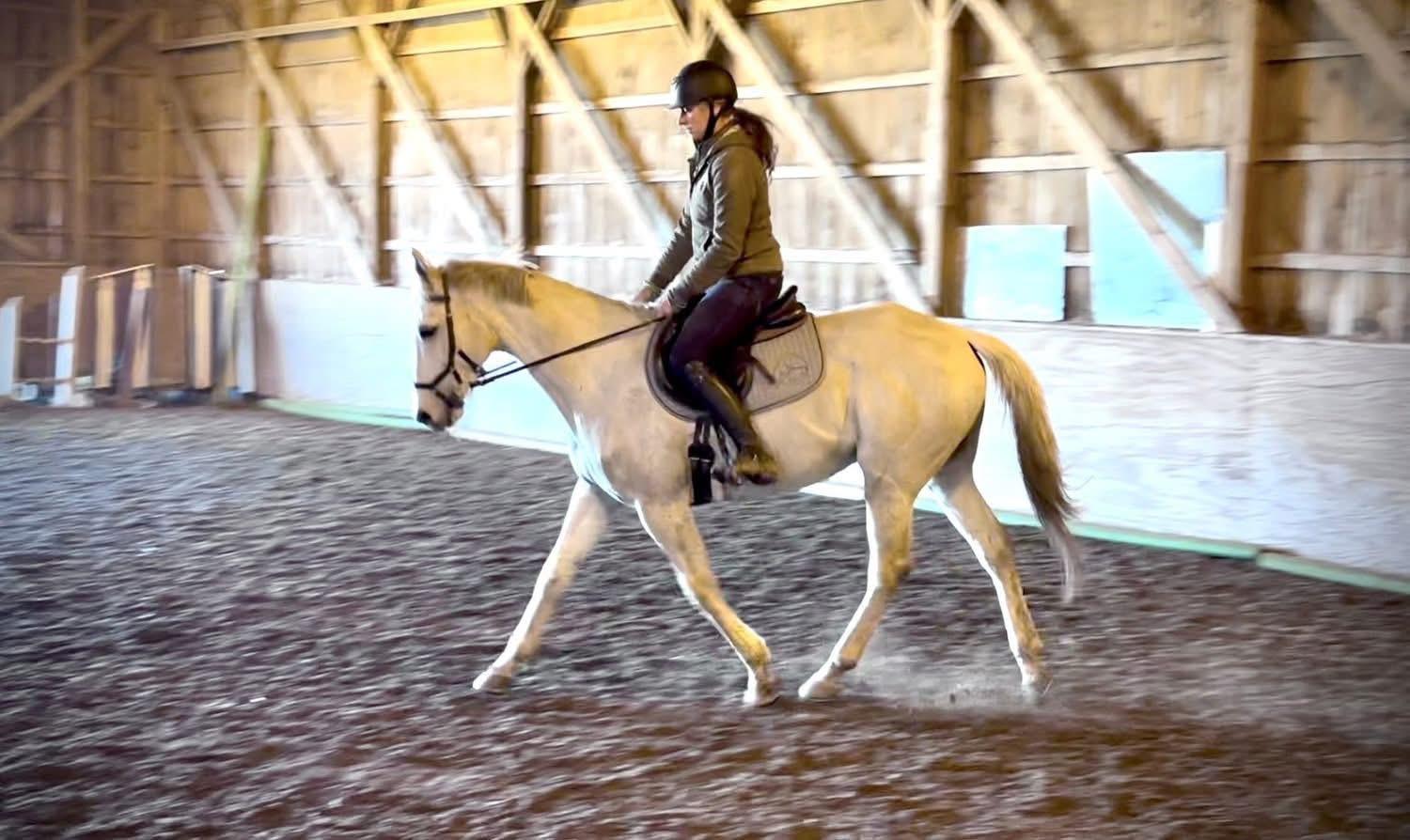
Rook (Breath of Royalty) being a super good kid in-between breaks for cookies. Screenshot by Lily Drew.
The fun part of this is that they are all different. They all need a different form of reward to understand, relax, and to want to give it another good shot. Sometimes, the nerd gets the better of me and reward styles follow bloodlines.
Let’s take Stellar Lute, for instance. Stellar was my first ride back from the weekend’s circle of cold hell. This kid is a nearly 17h goofball by Midnight Lute. Every Midnight Lute I have had the pleasure to deal with has been a little bit on the tricky side. It’s not that they’re bad or particularly naughty, but it seems that bloodline feels things big and has some pretty impressive opinions. Neil (Lute’s Angel) is a great example.
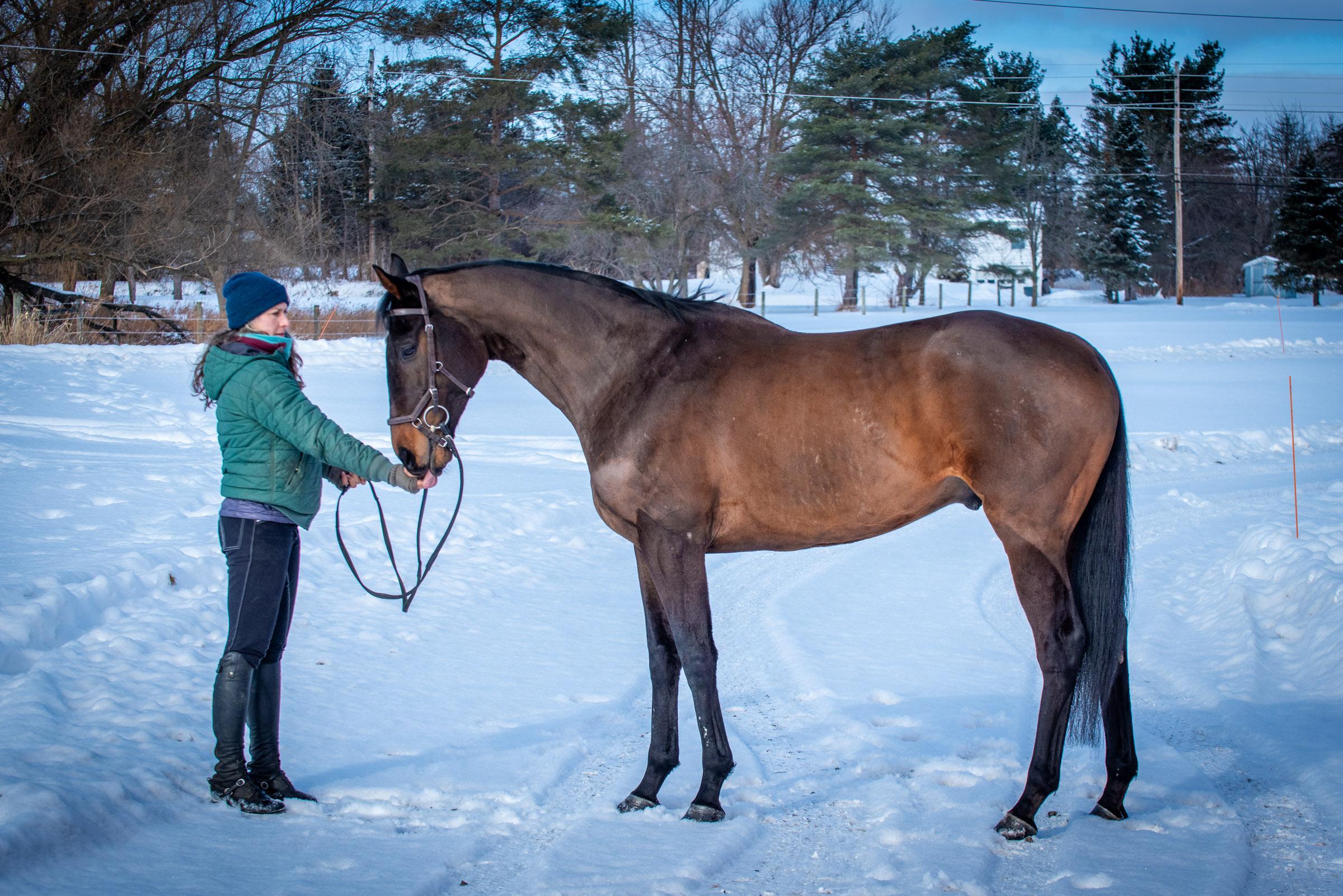
Stellar Lute. Photo by Lily Drew.
Neil ended up in my barn after some impressive bucking and head tossing stunts at the farm before me. He’s now my top UL prospect and I absolutely adore him and his antics. That said, it took him a while to settle in and trust me. Any time you ask Neil to do something difficult, he simply tells you it’s tough. He’ll try — kinda — the first time through. But if you make a big positive deal out of it, out of any of it that is in the even remotely right direction, he’ll pick up on it and try harder the next time. Then his ego kicks in and he gets super excited that he got it right and struts around like he’s the coolest horse in the barn. Yes, Neil. We know. But you have to time the reward right and make it a BIG deal. A little pat gets you very little with this horse.
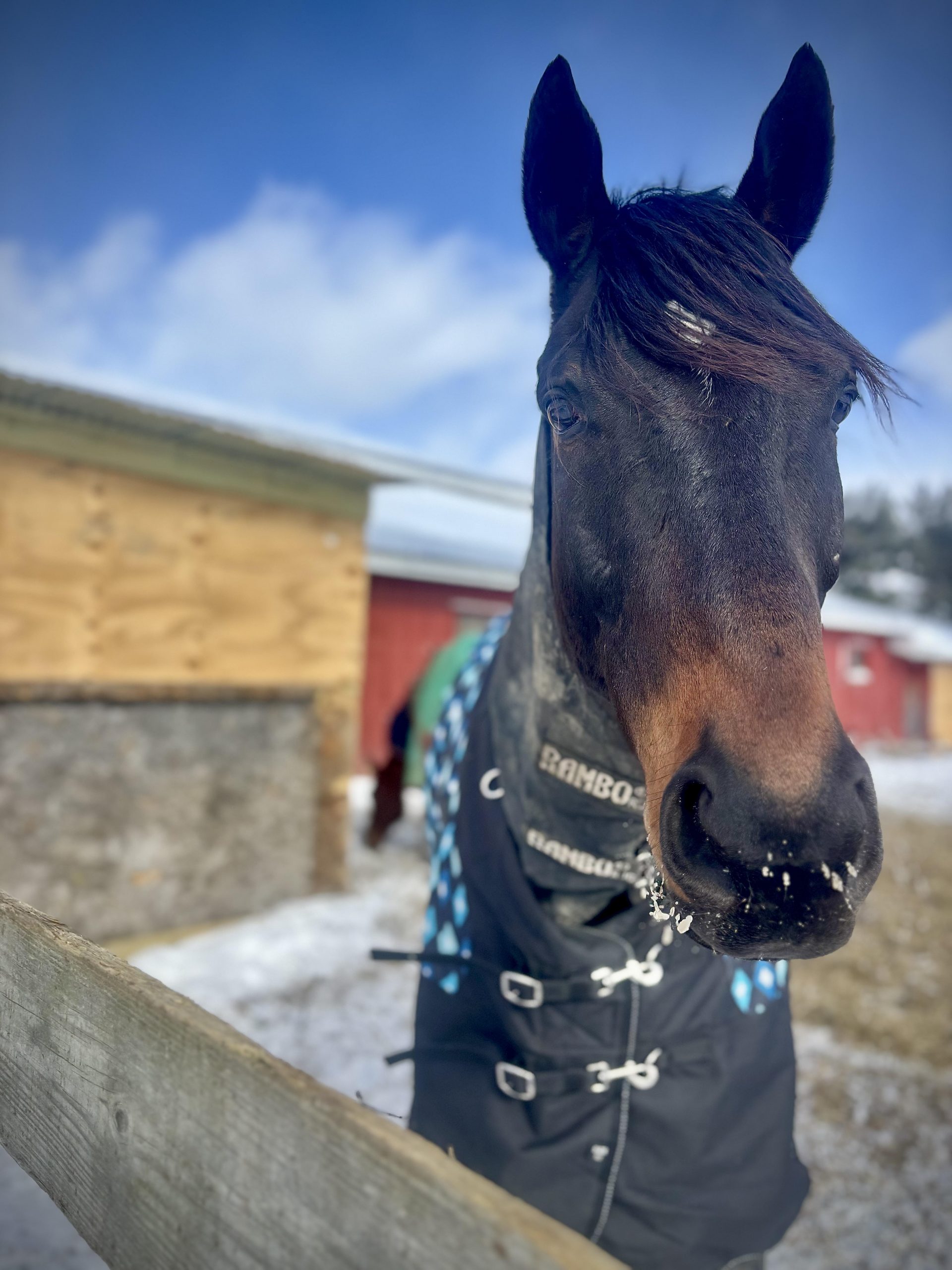
Neil (Lute’s Angel) being annoyed at me that we haven’t been able to work recently in the damn ridiculous cold. Photo by author.
Take the leg yield. Neil has always been a little sticky off of my right leg. Teaching him to leg yield, I walked down the quarter line, set him up and asked him to move over. He locked his jaw, swished his tail and made it clear that he thought my ask was stupid. Ok, Neil. Got it, but you still need to try. But at the end of the line, he crossed over correctly for one step — regardless of the head tossing and all, I dropped the reins and gave him an effusive “good boy” set of scratches and neck rubs. Asked for the side pass again on the next lap and he cocked an ear on me and crossed over. Drop rein, effusive praise. Next lap, touch him with my inside leg, and over he goes — and moves over, staying round and quiet, ears very much up. Yep, Neil, you’re hot sh*t. Good job.
Neil is and has always been a psychology ride — figure out the horse, get the key to unlock the door and go forward. For teaching new skills, it is absolutely the huge praise pause that works.
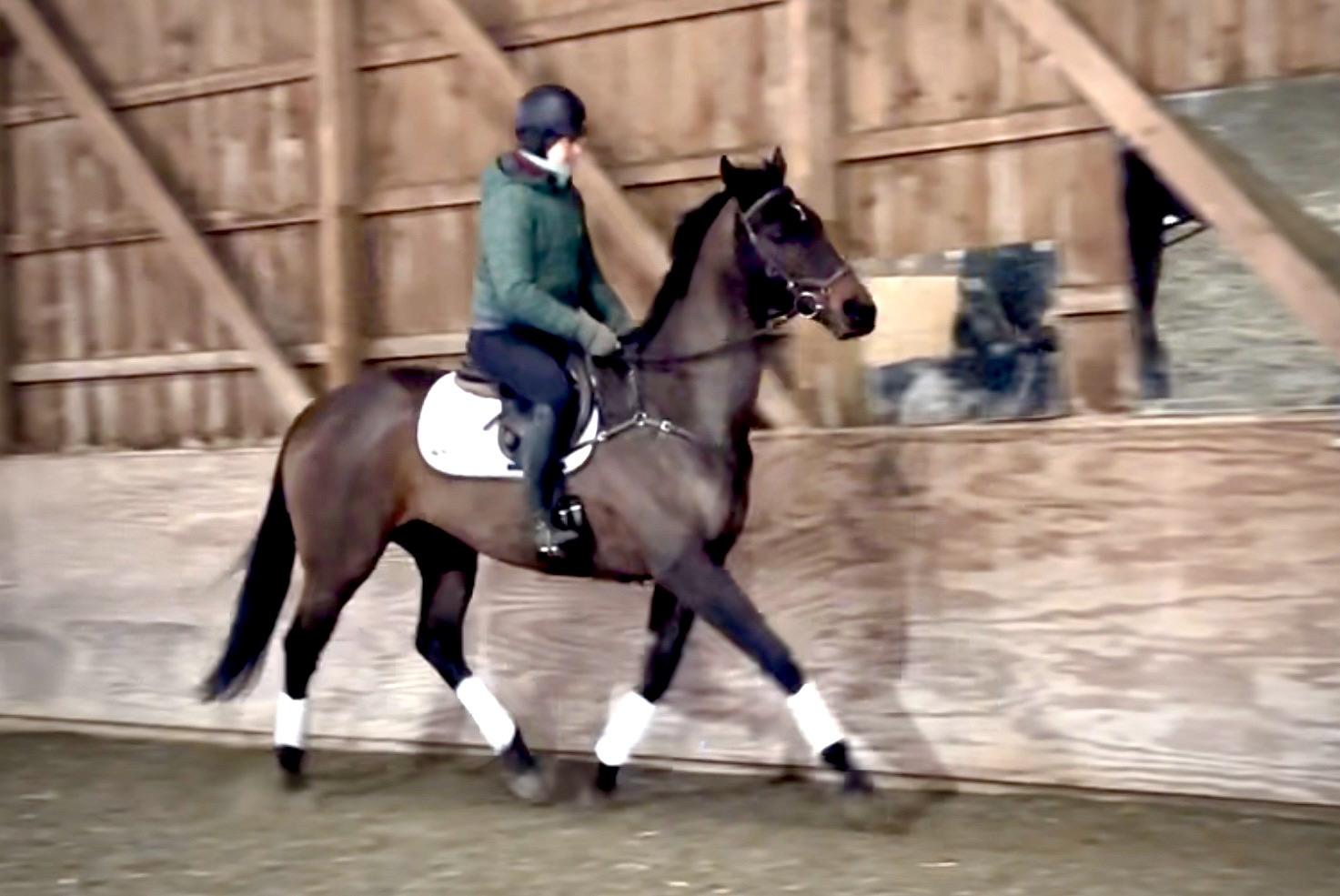
Stellar Lute ride one post track. Screenshot from Lily Drew video.
So riding his slightly bigger and more uphill “brother,” I felt right at home. The first ride on Stellar was fine — he’s elegant and effortless in his gaits, but add any contact and he was both unsure of the ask and just kindly annoyed. He tossed a few “nope” kicks in the mix and generally was willing to work with me — but only kinda. I ended the short ride by trying to break things down into their component parts. Slow. Reward huge when he got it even kinda sorta in the right direction. And guess what, ride two was stunning. His ears stayed up or focused and the kicks disappeared. Good Stellar. Big reward.
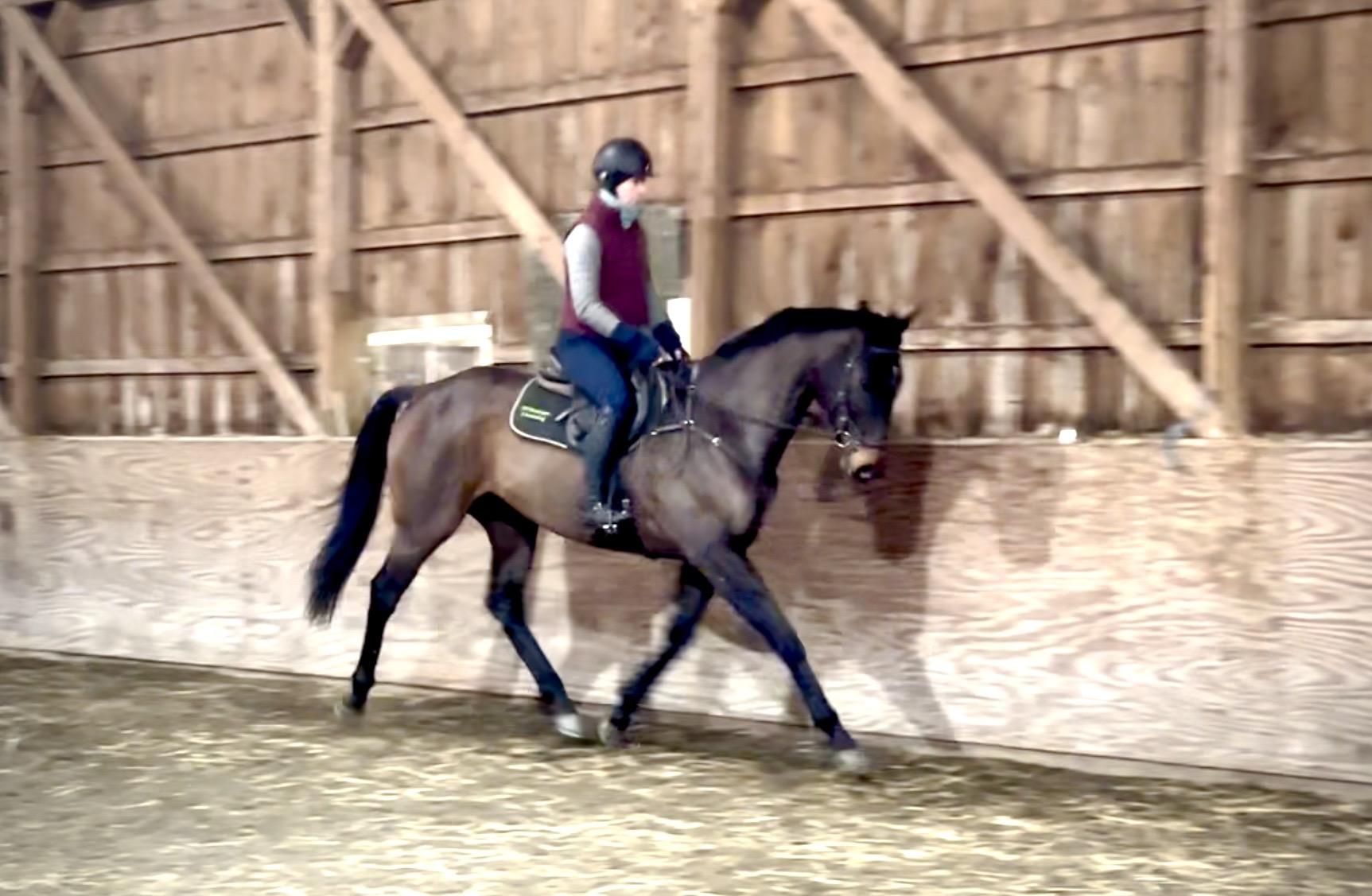
Stellar Lute ride two post track. Good boy! Screenshot from Lily Drew video.
So go ride, folks. And always reward the try.
About Kentucky Performance Products, LLC:
Do you know the signs of seasonal vitamin E deficiency? Researchers have confirmed that horses may need additional vitamin E when not consuming fresh, high-quality pasture grasses, such as over the winter months (Blakley et al., 1994). Vitamin E is crucial to maintain healthy muscle and nerve function, and immune response.
If your horse is stiff during warm-up, sore after work, lacking energy, and/or struggling to develop topline muscling, he could have a vitamin E deficiency. Elevate® is a highly bioavailable source of natural vitamin E that is preferentially absorbed and retained in a horse’s tissues compared to synthetic versions. Ask your veterinarian about supplementing with natural vitamin E.
Kentucky Performance Products creates scientifically proven supplements for your horse. Our supplements provide solutions to the everyday challenges facing your horse. The horse that matters to you matters to us®. Learn more about KPP at kppusa.com.

