



Thoroughbred Logic, Presented by Kentucky Performance Products: Working With, Not Against, Instinct
“Feeling safe makes all the difference in the world … the sense of security in their environment increases trust in their humans.”
Welcome to the next installment of Thoroughbred Logic. In this weekly series, Anthropologist and trainer Aubrey Graham, of Kivu Sport Horses, offers insight and training experience when it comes to working with Thoroughbreds (although much will apply to all breeds). This week ride along as Aubrey shares her logic on how training in accordance with a horse’s instinct is better than trying to work against it.
I often take for granted that my job literally is teaching a 1200-pound prey animal to be willing to be competitively ridden by a bi-pedal predator with opposable thumbs. Add to that that we are give-or-take one tenth their weight and size. The whole thing is pretty wild when looked at from a 30,000 foot view. That said, here we are.
We dress up riding and horse care with pretty saddle pads, clip jobs, and hoof paint. But when you strip it all down, remove all the frills, the expenses, and the personal goals, we’re still just a small apex predator sitting astride an animal who we otherwise could hunt. Domestication helps everyone involved forget this. We don’t think about our position in the food chain when bopping around the barn. And horses find themselves further and further divorced from the herds that roamed the steppes.
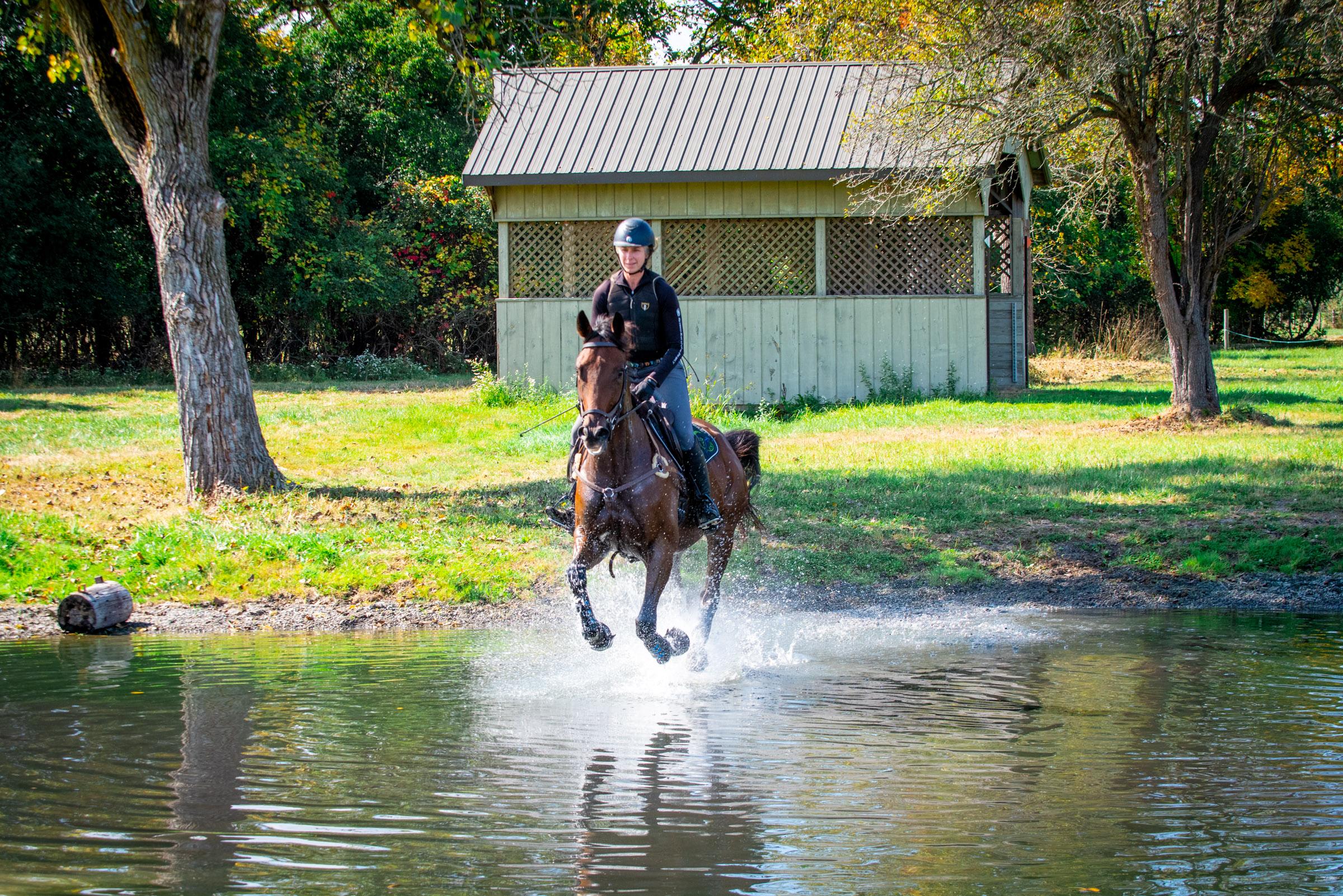
Emmett (Oboy) gamely galloping through the water at Fox Run back in the fall because the predator on his back asked him to. Photo by Lily Drew.
But instinct doesn’t ever completely jump ship.
A long time ago, I dated a guy who was super in so many ways. But I couldn’t fall sleep when he was around. If you know me, you know I knock out and am done for the full night pretty much anywhere. Nope, not when he was there. While I never figured out why and there was literally nothing to warrant my brain’s inability to let down and shut off, I also didn’t stick around long enough to get answers. Sometimes the instinct wins over all the rationalizing.
Returning to horses, though… and Thoroughbreds, especially…
Feeling safe makes all the difference in the world for these kids. I’m not saying they need to be treated with kid gloves. Nope. But the sense of security in their environment increases trust in their humans. And security means catering to their prey-animal instinct and way of engaging the world, not our predator-like way of operating.
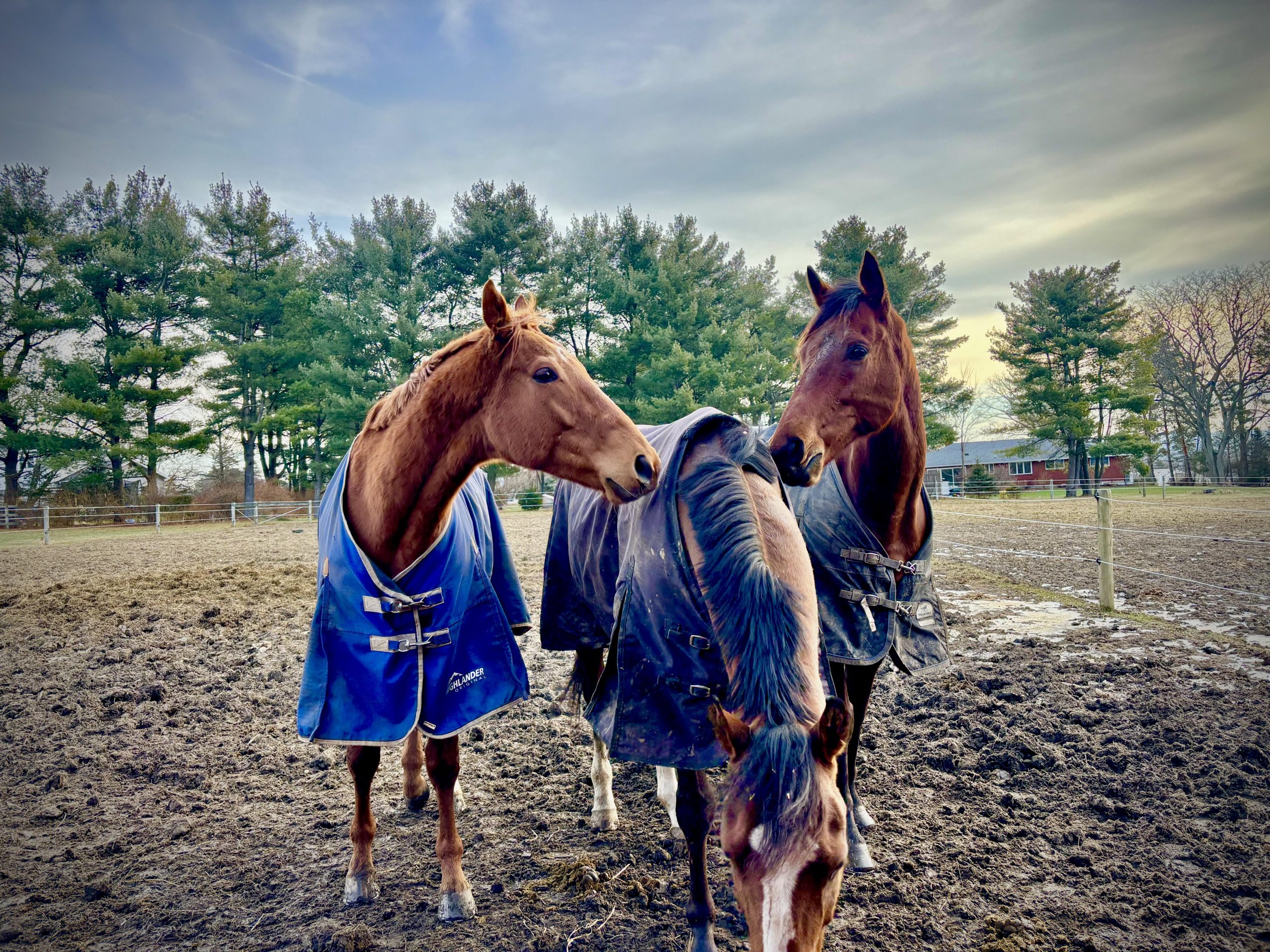
Group turnout increases senses of security. Wine Responsibly, Downtown Man, and Gallant Star all hang out and most certainly do not try to destroy blankets. Nope. Photo by author.
At the track, Thoroughbreds settle in and have a routine. They usually have open stall fronts and the ability to see each other at all times. They are rarely alone on the hot walker or at the training track. They move their feet during mounting and often dismounting. Stillness is not expected except in the starting gate, where they will break out with speed. Instinct is channeled, but also catered to.
So when we bring them from track to second career, their lives experience tectonic-level shifts. Turnout. New stalls. Different schedules. Barns and paddocks commonly designed for tidiness and for the humans who use them, not necessarily for the sanity of the horses. And so on.
Datesfreedom checking out his new digs on his first day inside the regular barn. Photo by author.
Recently I have run into a handful of situations where the horse has been “misbehaving” but I think, mostly they have just been telling their people that they’re not comfortable in a fundamental, instinct-based sense. We’ll start with an easy one that makes a HUGE difference in their overall demeanor: Stalls.
Stalls are, of course, a human construction. Horses are herd animals, and if you watch, when allowed to operate in a herd, they do a few notable things to promote feeling safe: They stay near their buddies and often have a sentry — a horse who will stay awake, head up, scanning for incoming issues while the others sleep or drink. If you watch your fields long enough, you’ll likely see this behavior even in extremely domesticated settings. And you’ll know your horses all feel great about their location when they all lay down and conk out leaving no one on guard.
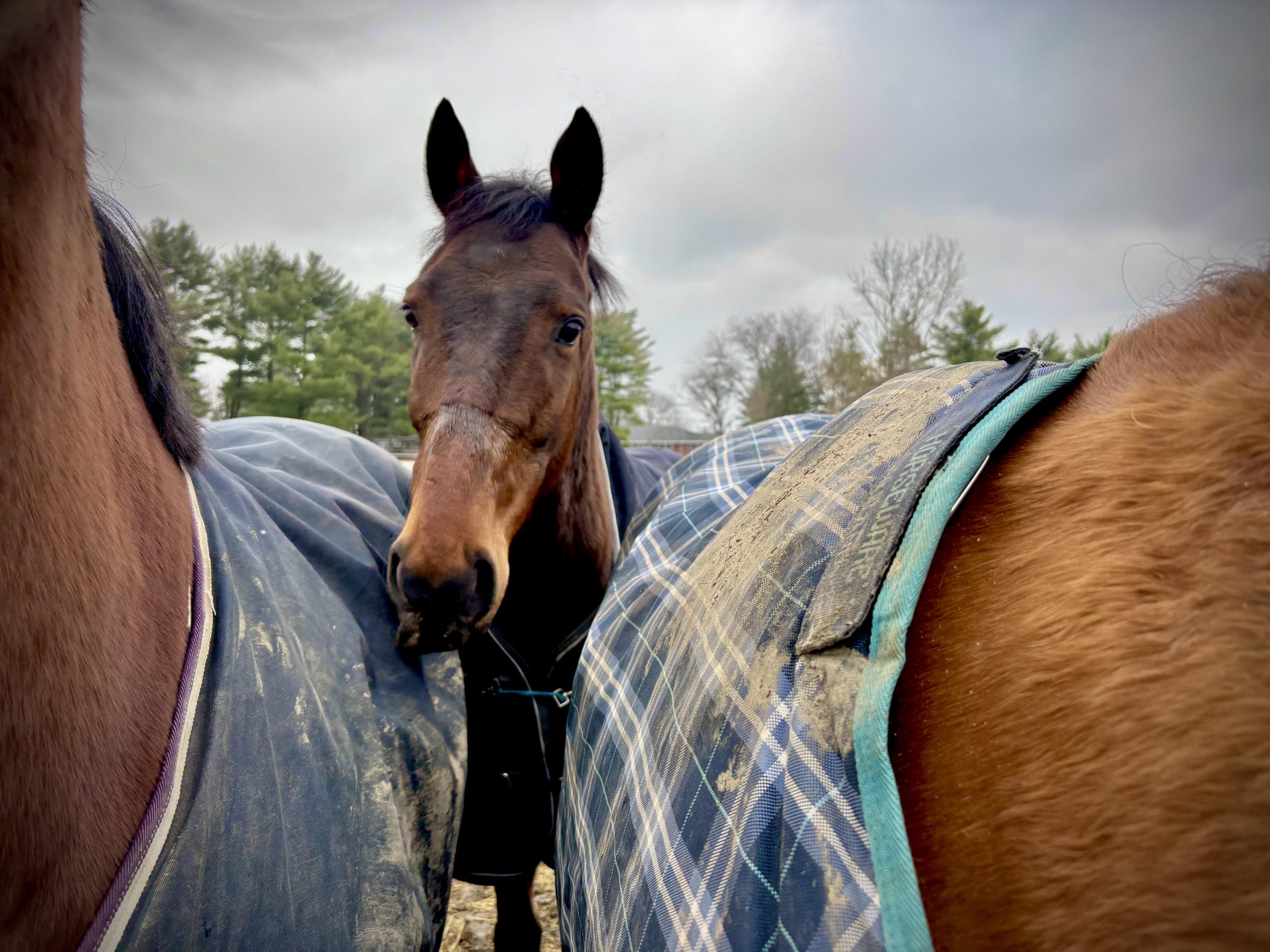
Tuna (I am Fortunata) finding a good secure spot between his two buddies. (Don’t mind the wet halter mark — rain in January is the worst). Photo by author.
So, when I opened the quarantine shed (a run in with all but a door enclosed), I had to ask the horses to fight their instincts. From inside, they cannot always see the other horses. They are alone — a concept that makes a lot of these guys bonkers. When I would first feed them, neither Wine Responsibly nor Datesfreedom wanted to commit to eating fully inside the shed. So, I shifted around the buckets so that they could eat through the doorway until it felt safe (or in good weather fed outside). Until that space felt safe enough, they would grab a mouthful of feed, hustle outside and chew in the open where they could see the others. It was never an ideal situation, but it worked well enough to get them through a month and safely back into the main barn.
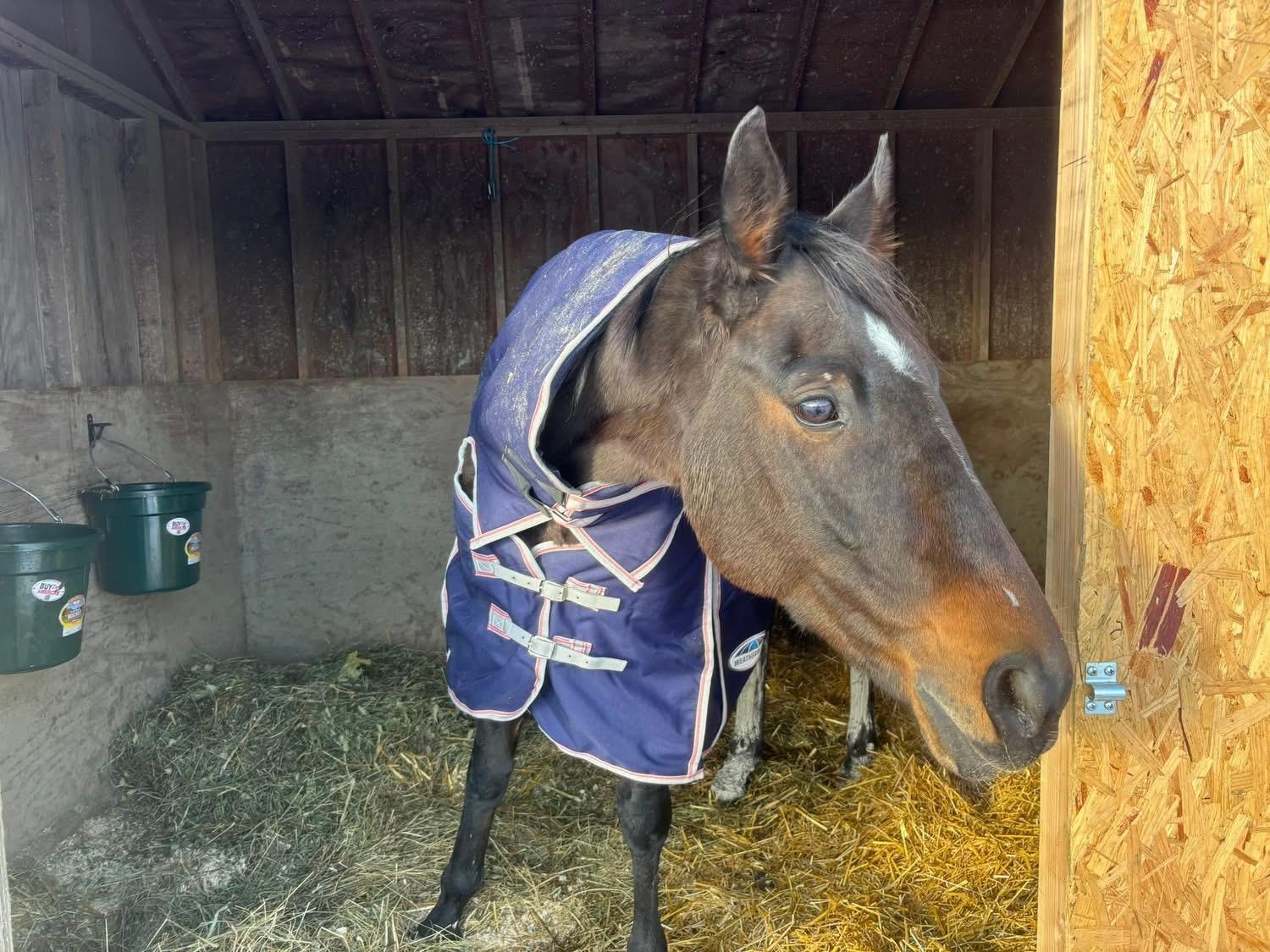
Dates check out what is happening outside his shed at feeding time. Photo by author.
When Wine came back to the main barn, I had to shuffle stalls. The open stall was up in the arena and I had a feeling this might not be the best option. But I tried it anyway. Those stalls are airy — they have a half door up front and the horses can see the buddy next to them through the slats. However, they open face forward to the indoor arena. All that open space and the knowledge that there are more horses that they cannot see down in the main aisle can be a lot for a horse. Wine spun in his stall and half-heartedly tested the half door’s strength. I squinted at him for a minute to see if he would settle, but ultimately moved another horse out of a lower stall and transferred him down into the main aisle.
There, with a smaller, less stressful space to look at, more horses to his left and right, and a single stall guard holding him in, he took a huge breath and settled into his hay (positioned at the front of his stall, so he can eat and see his new buddies on the left and right). Now that Wine understands the barn, the situation, the people, and horses involved, he’s easy to toss into any one of the stalls, including those in the arena (in fact, he slept there last night). But it was a nice reminder that we have to earn our way past instinct sometimes.
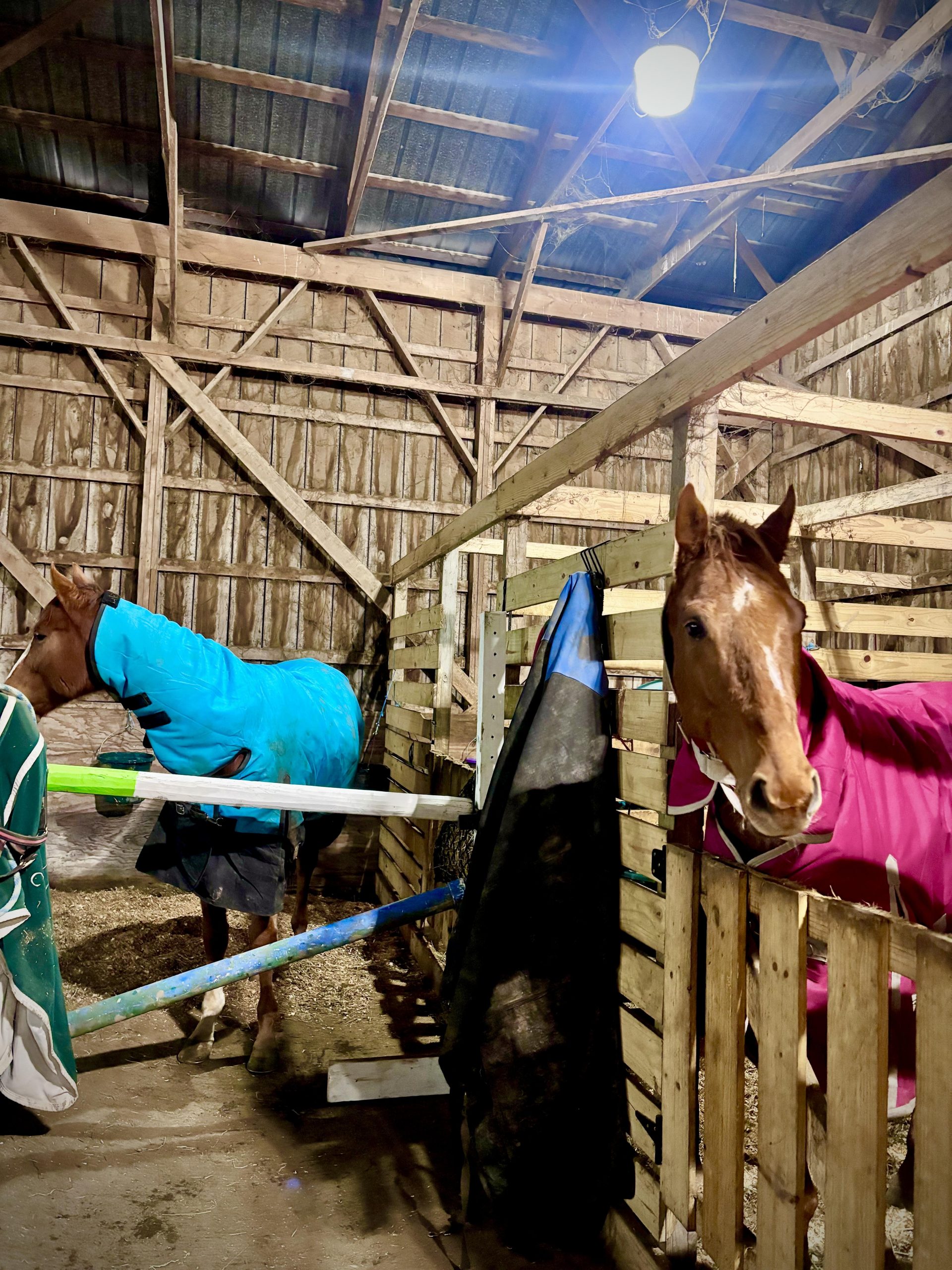
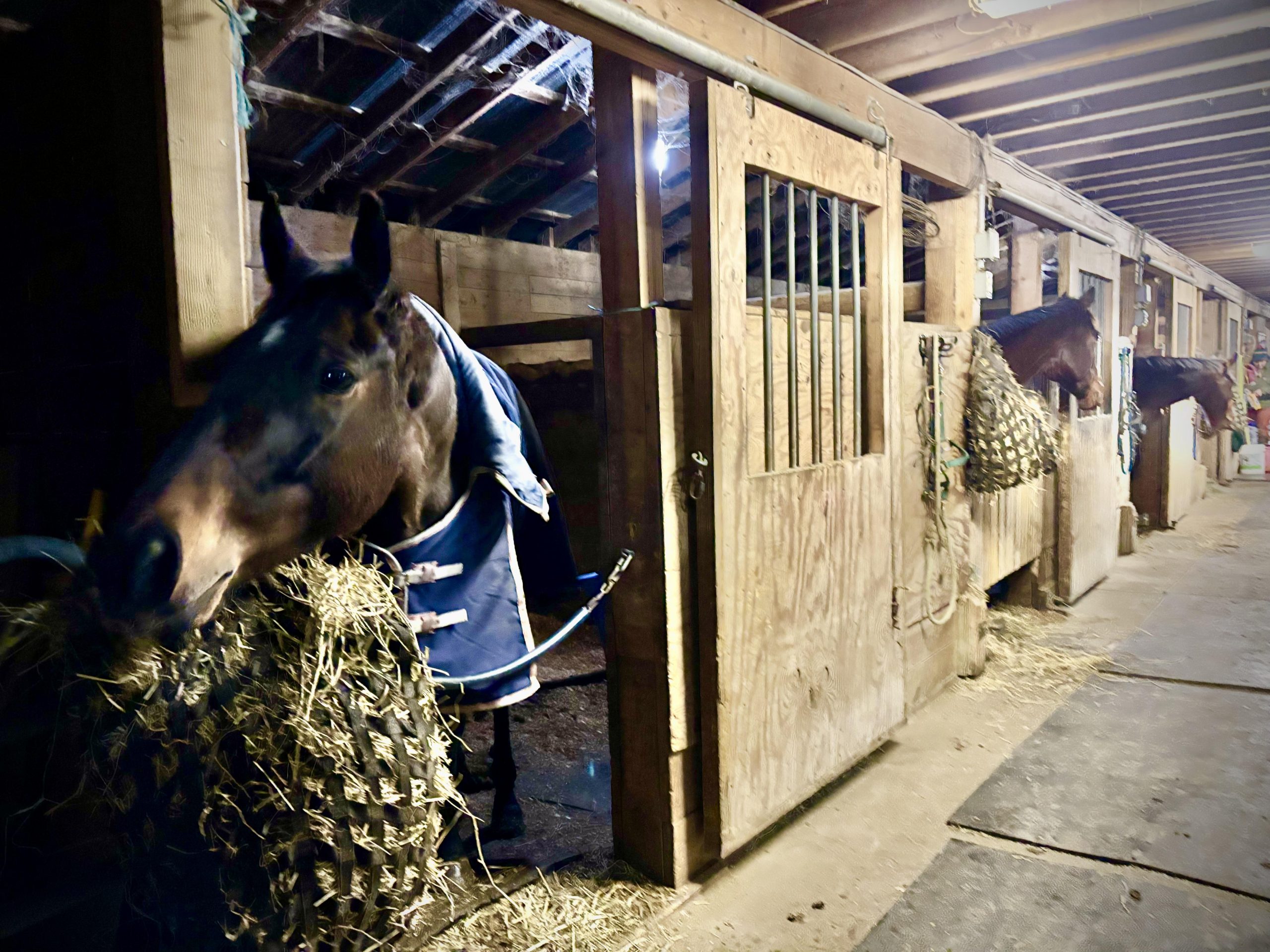
Now a month into time at my barn, Wine is settled and happy in any stall. Here he’s hanging out on a particularly cold, windy night next to my makeshift stall for Oats (Otis On The Cape), created so we could get one more horse out of the cold and inside). Photo by author.
I try to do that here by making sure they can see each other when eating — hay is at the front or outside of the stalls in the aisle. No horse is boxed in. Everyone can get their head out over a stall gate or a stall guard. And surprisingly for some, all but about three horses that I have had in have respected the stall guards despite the fact that they could push through or duck under them at any given point. They don’t need to exit stage left when being where they are feels comfortable.
Similarly, I met a trainer the other day who is doing a fantastic job with her young, opinionated mare. The mare, though, she explained, would only mount from the right. I’m woefully uncoordinated trying to ambidextrously mount or dismount, so was curious why we had a right-handed mare.
Their lovely, heavy four step mounting block was set against the near rail of the indoor. To mount from the left, the horse had to put the whole arena behind her, override instinct, trust her handler and still her feet with her face to the wall. While the other horses there generally had no problem with this, the flighty filly’s nerves would take over and she would not stand. When we moved the block out from the wall and allowed her to face into the big open space and feel safer about standing still because she could now see what had been behind her, the trainer was able to get on from the left and the mounting process went from a 10 difficulty to maybe a three or a four.
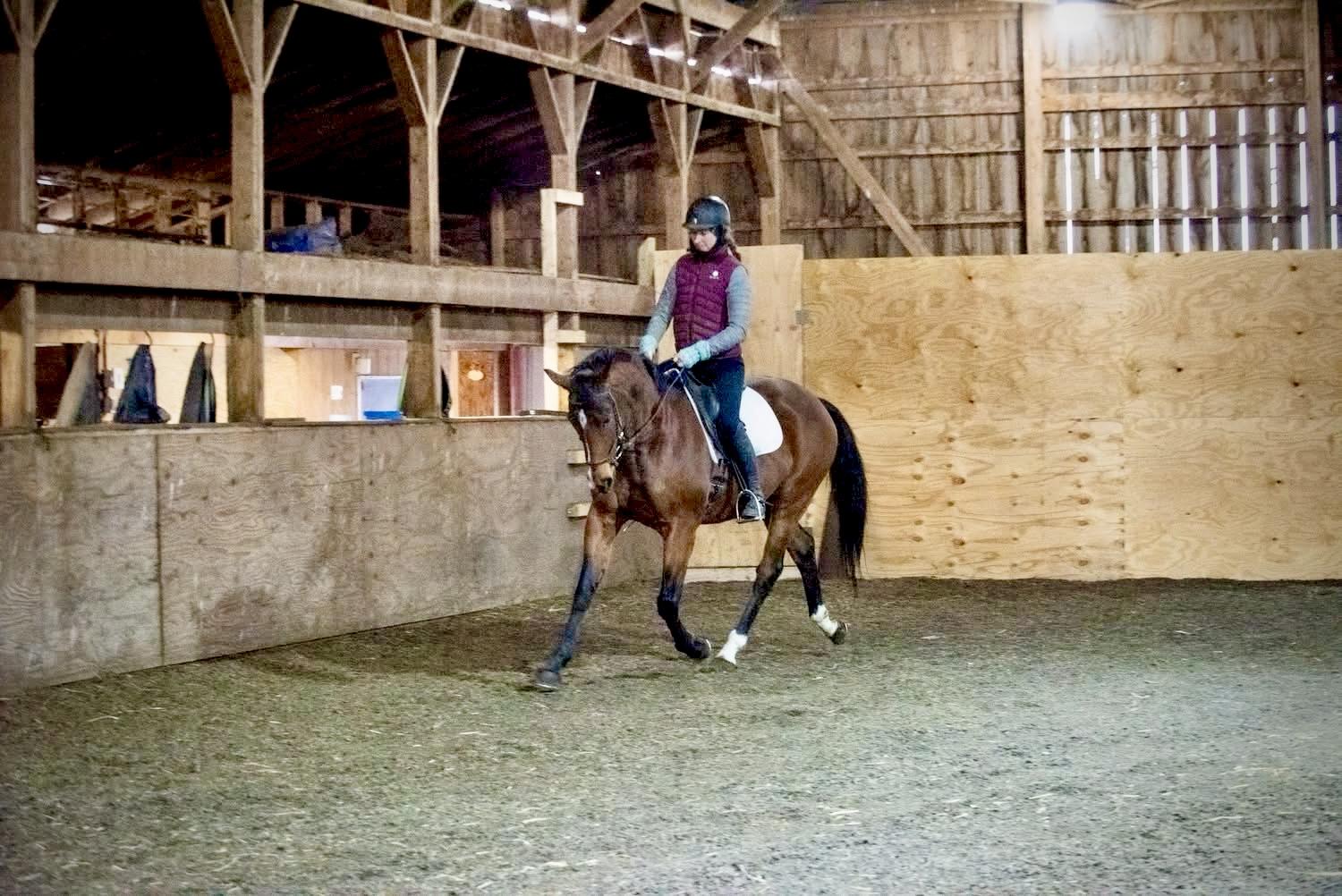
Tobi (Fernando) has never been a fan of our storage room wall. But, keep his feet moving past it and he’s more willing to keep rhythm and stay steady. Force him to stop and look at it and you’re not going to get too far. Photo by Lily Drew.
Again, so much about managing these horses is about making them feel safe from a prey animal point of view. In general (exceptions of course exist):
- Stall rest is not so bad and often does not need drugs if there’s a horse next to them all the time and they can get their head out to see and engage with others.
- Small groups stay quieter in turnout than individuals.
- Horses are more likely to drink when the watering point doesn’t pin them in a blind corner.
- Hay and feed intake improves when eating is able to be a social experience … and so on.
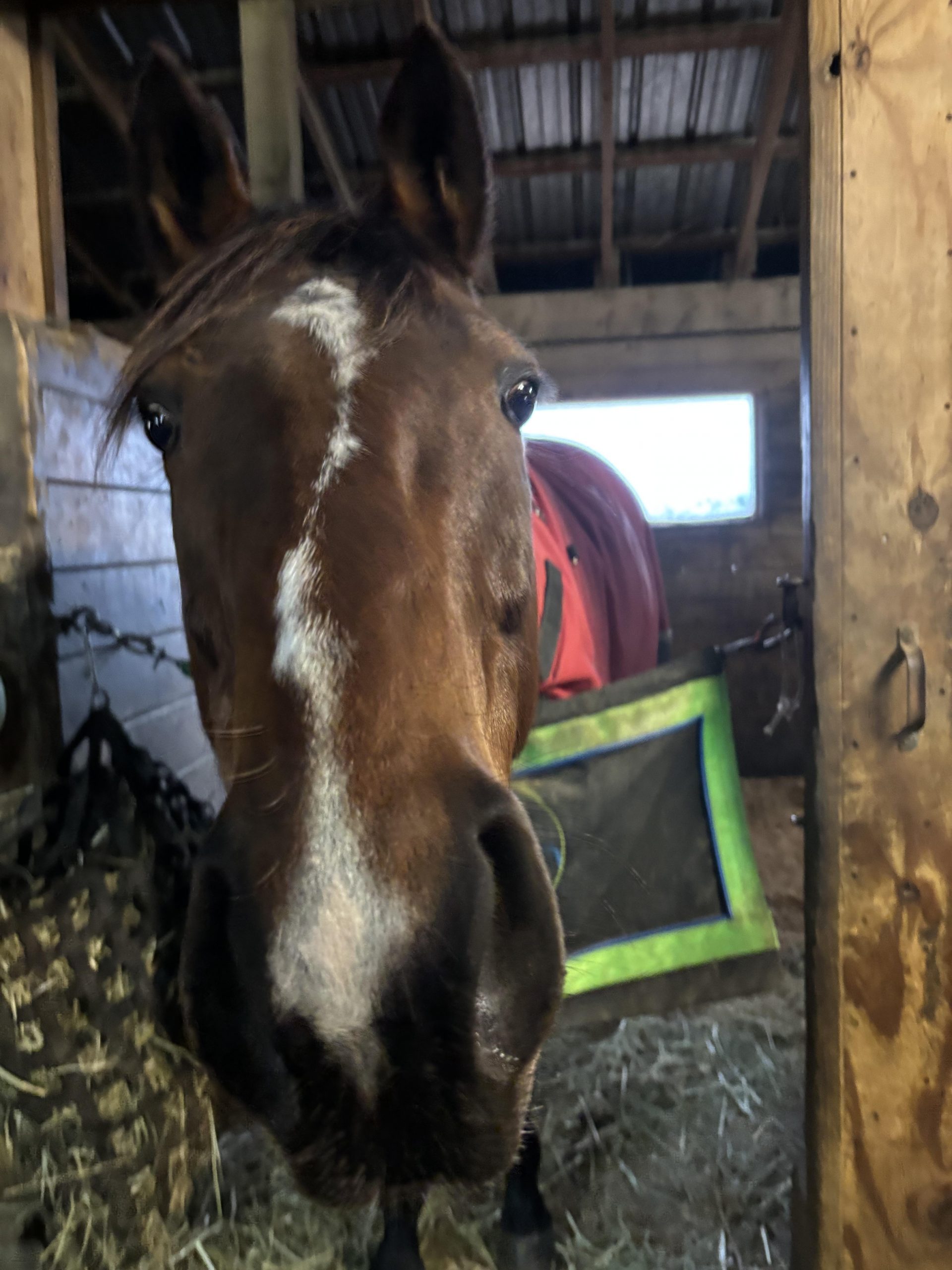
This ding dong (Beachside) has been on stall rest for over a month for a laceration. He’s goofy and eats up the interaction, but he’s stayed quiet and easy to handle with no drugs. Photo by author.
And undersaddle, letting them move their feet past the things that worry them gives them a lot more confidence in you and the situation than trying to hold them still and force them to override instinct. I’m a big fan of making them feel safe enough and trust their rider enough that they become brave and quiet. But the way to build a Thoroughbred who will ride through fire (or water) for you (as opposed to flee the other way) is by working with their ingrained predispositions, not stubbornly training against them.
So go ride, folks. Enjoy whatever break in the cold you can get. I’ll be over here ignoring my instinct that says sitting in front of the fire is far superior to riding many horses in this hellish cold.
About Kentucky Performance Products, LLC:
Is your horse coughing? Does he have nasal discharge? Unfortunately, wintertime environmental factors, such as spending more time in a stall, can aggravate respiratory symptoms this time of year. Research trials conducted at the University of Georgia demonstrate the benefits of AirWise in supporting a return to normal airway function. Formulated using a synergistic blend of high-quality, potent antioxidants and micronutrients, AirWise sustains a healthy inflammatory response in your horse’s airway and supports optimal respiratory and immune function.
Ask your veterinarian about AirWise.
Kentucky Performance Products creates scientifically proven supplements for your horse. Our supplements provide solutions to the everyday challenges facing your horse. The horse that matters to you matters to us®. Learn more about KPP at kppusa.com.

