



Winter Is Vitamin E Season, Presented by Kentucky Performance Products
When fresh grass disappears and hay takes over, winter quietly becomes the season when vitamin E deficiency is most likely to creep in.
Canva/CC
Winter changes a lot of things for horses. Turnout hours might shrink. Blankets come out. Water buckets freeze. And somewhere between the last decent blade of grass and the first frozen bale of hay, vitamin E quietly drops off the radar.
That’s a problem because vitamin E isn’t optional, and horses can’t make it themselves.
Vitamin E Comes From Grass. Winter Takes the Grass.
Vitamin E is an essential nutrient for horses, meaning it must come from the diet. The best — and most natural — source is fresh, green pasture. Not hay. Not pellets. Not “technically forage.”
Fresh grass.
Here’s the catch: vitamin E is fragile. Once forage is harvested and dried, vitamin E levels decline rapidly. By the time winter hay is fed, the vitamin E content is a shadow of what that same plant provided when it was alive and growing.
So when winter hits and pasture either disappears entirely or turns into frozen brown sadness, vitamin E intake drops with it.
Why Winter Is the Perfect Setup for Deficiency
Many horses get the bulk of their vitamin E intake during the grazing season without anyone ever thinking about it. Then winter arrives, pasture access declines or disappears, and diets quietly shift to:
- Stored hay
- Pelleted or processed feeds
- More stall time and less turnout
Research confirms what many horse owners see anecdotally: blood vitamin E levels are highest during peak pasture growth months and lowest when horses rely on harvested feeds. Horses eating fresh pasture can have vitamin E levels more than 60% higher than horses eating dried or pelleted feeds during the same period.
In other words, winter doesn’t just reduce vitamin E — it removes the primary source altogether.

Winter Stress Increases Vitamin E Needs
To make matters worse, winter is not a low-demand season for the horse’s body.
Cold temperatures, heavier coats, reduced movement, changes in routine, and increased stall confinement all contribute to higher oxidative stress. Performance horses may still be training. Seniors may struggle more with circulation and immunity. Young horses are still growing.
Vitamin E helps protect muscles, nerves, and immune function—exactly the systems winter tends to challenge.
Who’s Most at Risk in Winter?
While any horse without access to fresh pasture can become deficient, winter raises the stakes for:
- Horses on full or partial stall rest
- Performance horses in winter training programs
- Senior horses
- Growing horses
- Horses with a history of muscle soreness or neurological concerns
Even horses that “look fine” can have declining vitamin E levels long before obvious symptoms appear.
Canva/CC
Why Hay Isn’t Enough (Even Good Hay)
Good-quality hay is essential—but it does not replace fresh pasture when it comes to vitamin E. No matter how green it looks or how nice it smells, the vitamin E content simply isn’t comparable.
That’s why winter is the season when vitamin E supplementation deserves serious consideration, not as a reaction to a problem, but as prevention.
Supplement Smart, Not Random
If supplementation is needed, the form matters. Natural vitamin E (d-alpha-tocopherol) is absorbed more efficiently than synthetic forms, allowing it to reach target tissues faster. This is especially important during winter, when horses are already operating with reduced dietary vitamin E.
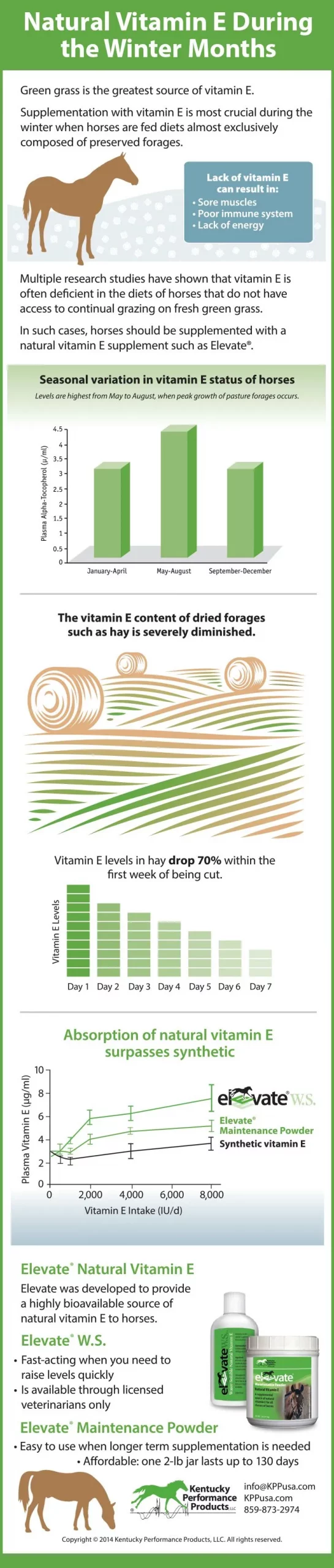
Download a printable version of this infographic here.
The Bottom Line
Winter quietly removes vitamin E from the diet at the same time horses face increased physical and environmental stress. Pasture goes dormant, hay takes over, and vitamin E intake drops—often without any obvious warning signs.
Thinking about vitamin E in winter isn’t overkill. It’s recognizing that modern horse management and seasonal pasture changes don’t always meet a horse’s nutritional needs on their own.
When the grass goes, vitamin E often goes with it — and winter is the time to notice.
This article was developed using educational information gathered from research articles and nutritional resources published by our good friends at Kentucky Performance Products.
About Kentucky Performance Products, LLC:
Is your horse coughing? Does he have nasal discharge? Unfortunately, wintertime environmental factors, such as spending more time in a stall, can aggravate respiratory symptoms this time of year. Research trials conducted at the University of Georgia demonstrate the benefits of AirWise in supporting a return to normal airway function. Formulated using a synergistic blend of high-quality, potent antioxidants and micronutrients, AirWise sustains a healthy inflammatory response in your horse’s airway and supports optimal respiratory and immune function.
Ask your veterinarian about AirWise.
Kentucky Performance Products creates scientifically proven supplements for your horse. Our supplements provide solutions to the everyday challenges facing your horse. The horse that matters to you matters to us®. Learn more about KPP at kppusa.com.

