



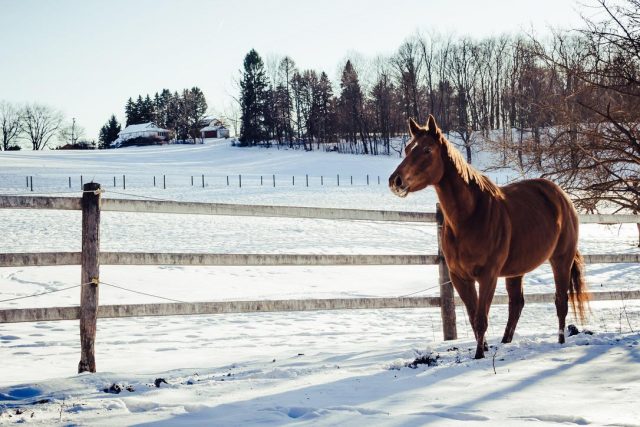
Cold Weather, Sore Feet: Winter Laminitis & What You Can Do About It
Cold weather can quietly compromise hoof circulation in at-risk horses, making winter an unexpected laminitis season.
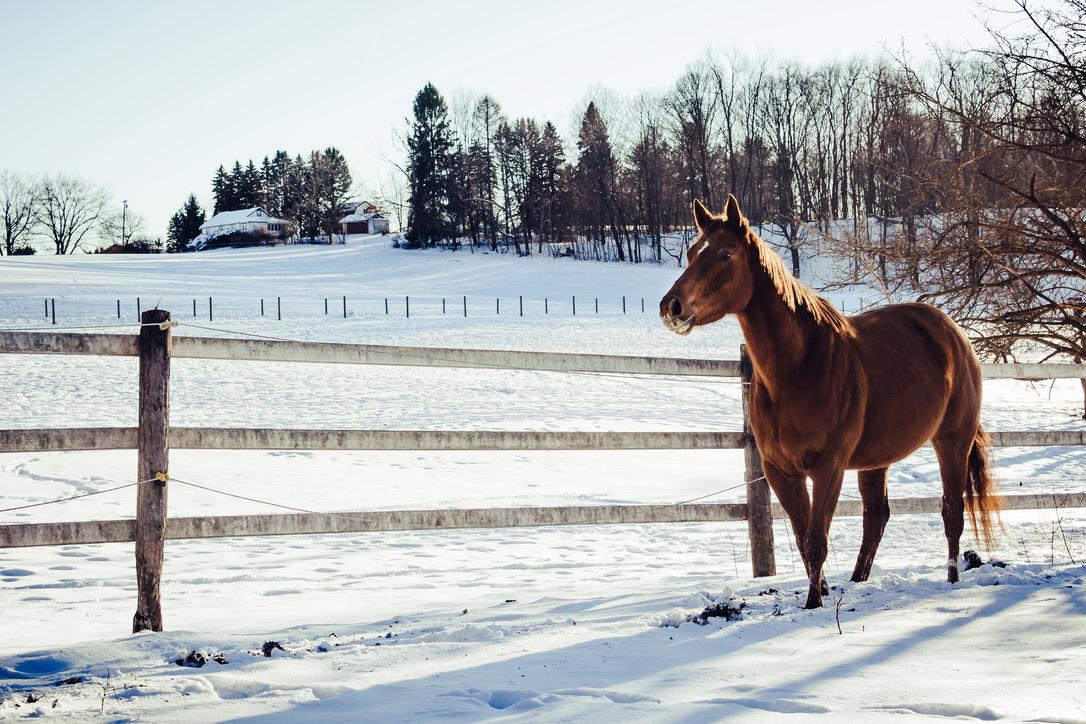
Photo by Rebecca Francis
Here’s the thing about winter: just when you think you’ve dodged the laminitis bullet by getting through fall grass and sugar spikes from temperature fluctuation, cold weather shows up and reminds you it’s not done with you yet.
For horses with a history of laminitis (or underlying metabolic issues) winter can be a surprisingly risky season. Winter laminitis is real, it’s miserable for the horse, and it often sneaks up on owners because nothing else seems to have changed.
Let’s talk about why winter laminitis happens, what it looks like, and what you can do to prevent (and manage) it.
What Is Winter Laminitis?
Winter laminitis is a cold-induced circulatory problem that causes pain and inflammation in the laminae, or the soft tissues that anchor the coffin bone to the hoof wall.
In cold weather, a horse’s body naturally reduces blood flow to the extremities to conserve heat. Blood vessels constrict, and arteriovenous shunts open to redirect blood away from the tiny capillaries that supply the hoof tissues.
In a healthy horse, this system adjusts as needed to prevent damage.
In a horse with metabolic disease, insulin dysregulation, or previous laminitis, that system doesn’t work so well. Blood flow to the hooves can drop too low, oxygen delivery suffers, and pain follows.
Winter laminitis:
- Is usually most obvious in the front feet
- Rarely progresses to full founder with coffin bone rotation
- Can appear suddenly after a temperature drop, even with no diet changes
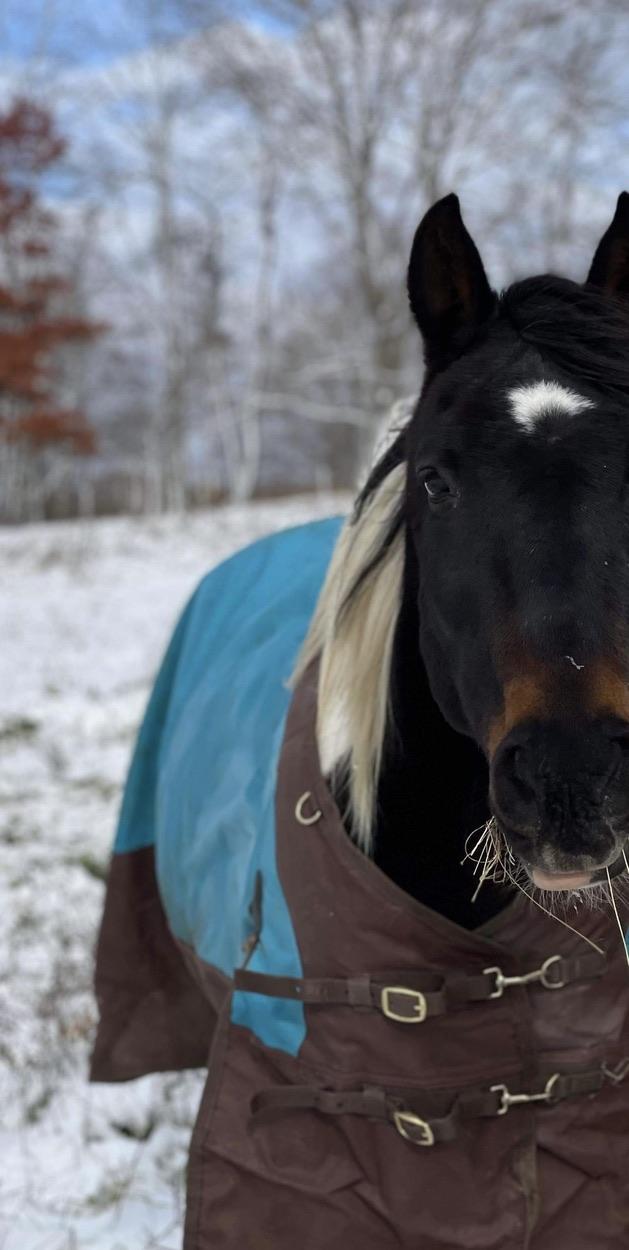
Photo by DeAnn Long Sloan
Why Laminitis Can Flare Up in Winter
Several factors stack the deck against at-risk horses when temperatures fall:
- Cold-Induced Vasoconstriction: Cold causes blood vessels to narrow. In horses with already-compromised hoof circulation, this can reduce blood flow enough to trigger pain.
- Metabolic and Hormonal Factors: Horses with Equine Metabolic Syndrome (EMS) or PPID (Cushing’s) are especially vulnerable.
- High insulin levels increase endothelin-1, a powerful vasoconstrictor
- Chronic insulin dysregulation reduces nitric oxide, which normally helps dilate blood vessels
- In PPID horses, increased cortisol worsens insulin resistance and heightens stress responses
Add cold-weather vasoconstriction to an already narrowed circulatory system, and some horses tip over into laminitis.
- Prior Laminitis Damage: Previous laminitis episodes can permanently damage the hoof’s vascular mechanisms. Those damaged systems may no longer open and close shunts properly, making winter circulation problems worse.
Signs of Winter Laminitis to Watch For
Winter laminitis often comes on fast — and can repeat year after year if unmanaged.
Common signs include:
Physical & Behavioral Clues
- Sawhorse stance, with front legs stretched forward
- Reluctance to move, especially on frozen or uneven ground
- Shortened stride or foot-sore gait
- Frequent foot lifting to shift weight
- Cool or cold feet (not hot, like inflammatory laminitis)
- Occasionally a stronger digital pulse
- Hoof Changes (with ongoing issues)
- Hoof rings
- Flared or distorted hoof walls
- A stretched white line
If your horse suddenly looks sore in cold weather—especially with no diet changes—don’t assume it’s just “frozen ground feet.”
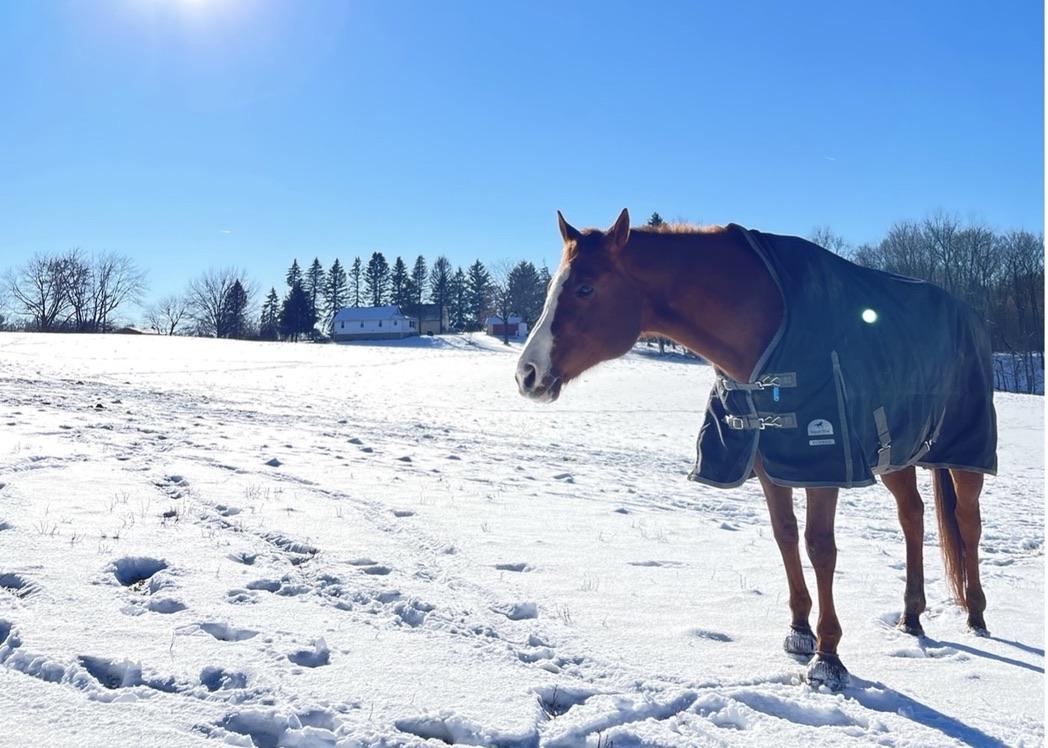
Photo by Hailey Sinon
Diagnosis: Don’t Guess
If you suspect winter laminitis, call your veterinarian.
Your vet will:
- Review your horse’s medical and laminitis history
- Evaluate movement, hoof temperature, and body condition
- Distinguish winter laminitis from bruising or sole soreness
- Take X-rays if needed (especially to rule out rotation)
If you think your horse is foundering, this is not a wait-and-see situation. Call immediately.
Treating Winter Laminitis
Winter laminitis doesn’t behave like inflammatory laminitis, which means the usual go-to tools don’t always work.
NSAIDs Aren’t Always Effective
Phenylbutazone and similar drugs often don’t provide much relief because the pain is circulatory rather than inflammatory.
Management Is the Main Treatment
Keep the horse warm:
- Blanket when temperatures drop below ~45°F (7°C)
- Start earlier if your horse has triggered winter laminitis at higher temps before
- Use lined boots, wraps, or bandages on lower legs
Provide shelter
- Wind- and waterproof, ideally with a southwest-facing opening
- Deep bedding for insulation under the feet
Feed plenty of hay
- Continuous forage helps stabilize insulin and generates body heat
Encourage gentle movement
- Soft surfaces only
- Indoor arenas are ideal to stimulate circulation
Reduce stress
- Stress raises cortisol, which worsens vasoconstriction
- Calm, comfortable horses heal better
About Hoof Cooling
When laminitis is suspected or confirmed, continuous cooling of the hoof wall to 40–50°F for 48–72 hours can help prevent inflammatory damage to the laminae.
Important caveats:
- Wet methods work best (ice and water)
- Cool both the hoof and the limb above it so incoming blood is chilled
- Ice must be replenished about every 2 hours
- Intermittent cooling may be worse than no cooling at all
This is a serious commitment—but it can be protective in the right situations.
Prevention: The Real Win
If your horse has had laminitis before, winter management matters just as much as spring grazing control.
Feed Smart
- Forage-first, low sugar, low starch diet
- Avoid high-NSC feeds
- Keep insulin levels stable
Manage Weight
- Monitor body condition regularly
- Address obesity early (it’s a red flag for metabolic dysfunction)
Prioritize Hoof Care
- Regular trims or shoeing
- Hoof boots if movement is uncomfortable
- Avoid prolonged standing on bare concrete — use mats and deep bedding
Be Proactive About Cold
- Blanket before your horse shivers
- Use deep bedding and insulated standing areas
- If winter laminitis has happened before, blanket at the same temperatures that triggered it previously
Treat Underlying Disease
- EMS and PPID should be actively managed year-round
- Hormonal balance plays a huge role in hoof circulation

Photo by Rebecca Francis
The Takeaway
Winter laminitis isn’t about snow or ice—it’s about circulation, hormones, and history.
If your horse has metabolic issues or past laminitis, cold weather can quietly stack the odds against them. The good news? Thoughtful winter management—warmth, nutrition, movement, and vigilance—goes a long way toward keeping hooves comfortable until spring finally shows up.
And if something feels off? Trust your gut and call your vet. Laminitis is one thing you never want to “wait out.”
