



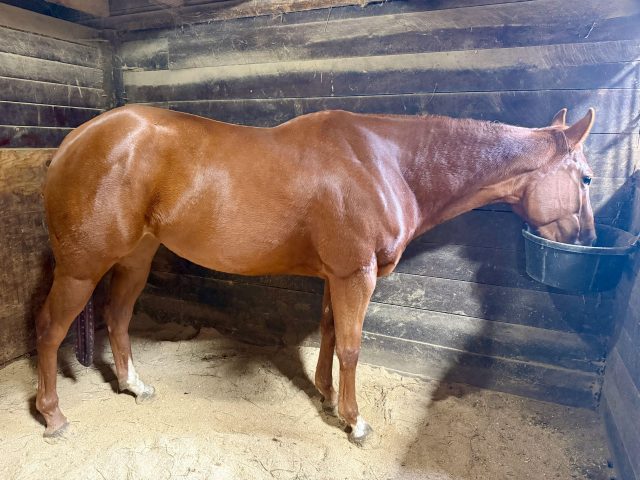
Why I Don’t Feed My Horses on a Schedule (And Why It Works Just Fine)
For my horses, constant access to forage and a low-stress feeding program makes it so the clock matters a whole lot less.
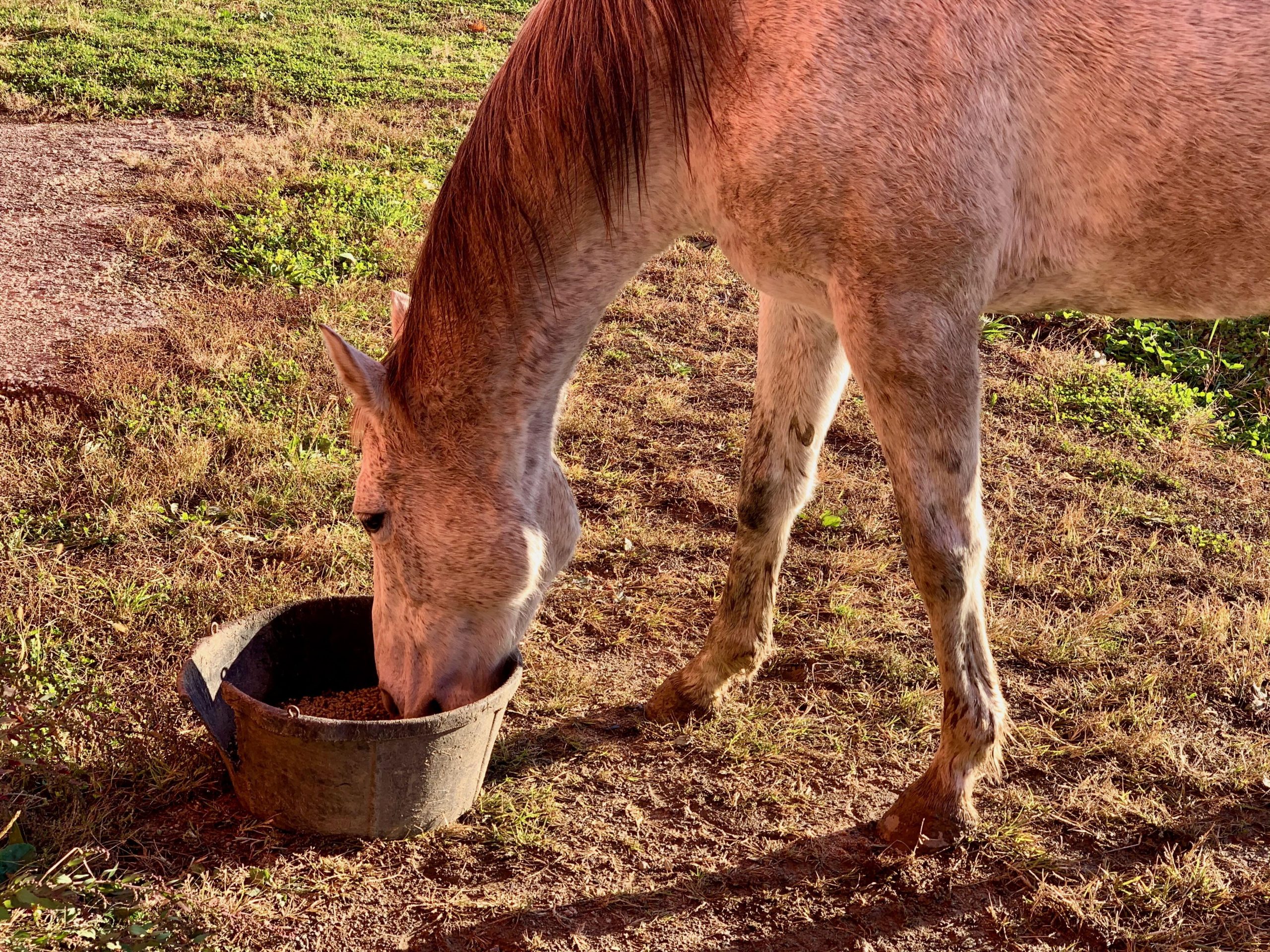
The late, great Tequila, munching on her grain. She preferred to eat outside rather than in a stall. The others ate in their stalls. I adjusted and did what worked best for her. Photo by DeAnn Long Sloan.
Yesterday’s Mythbuster Monday covered why the change in our holiday schedules can adversely affect our horses. And I absolutely am not here to debate that article or claim that it’s wrong. However, there is another aspect to this. For horses who aren’t on a strict schedule, holidays might not be such a stress point. The truth is, I don’t feed my horses on a strict schedule. I never have, and likely never will (with the exception of when we’re at shows, but then that schedule is dictated by when we need to be in the arena, and that’s a whole other thing…). And for my horses, this works just fine.
Let me start by clearing something up right out of the gate, because this is the internet and someone will absolutely panic if I don’t.
My horses are not starving.
They have 24/7 access to hay and/or pasture, depending on the season. Always. No empty stomachs. No waiting by the gate watching the sun rise and set while composing sad poems about missed meals.
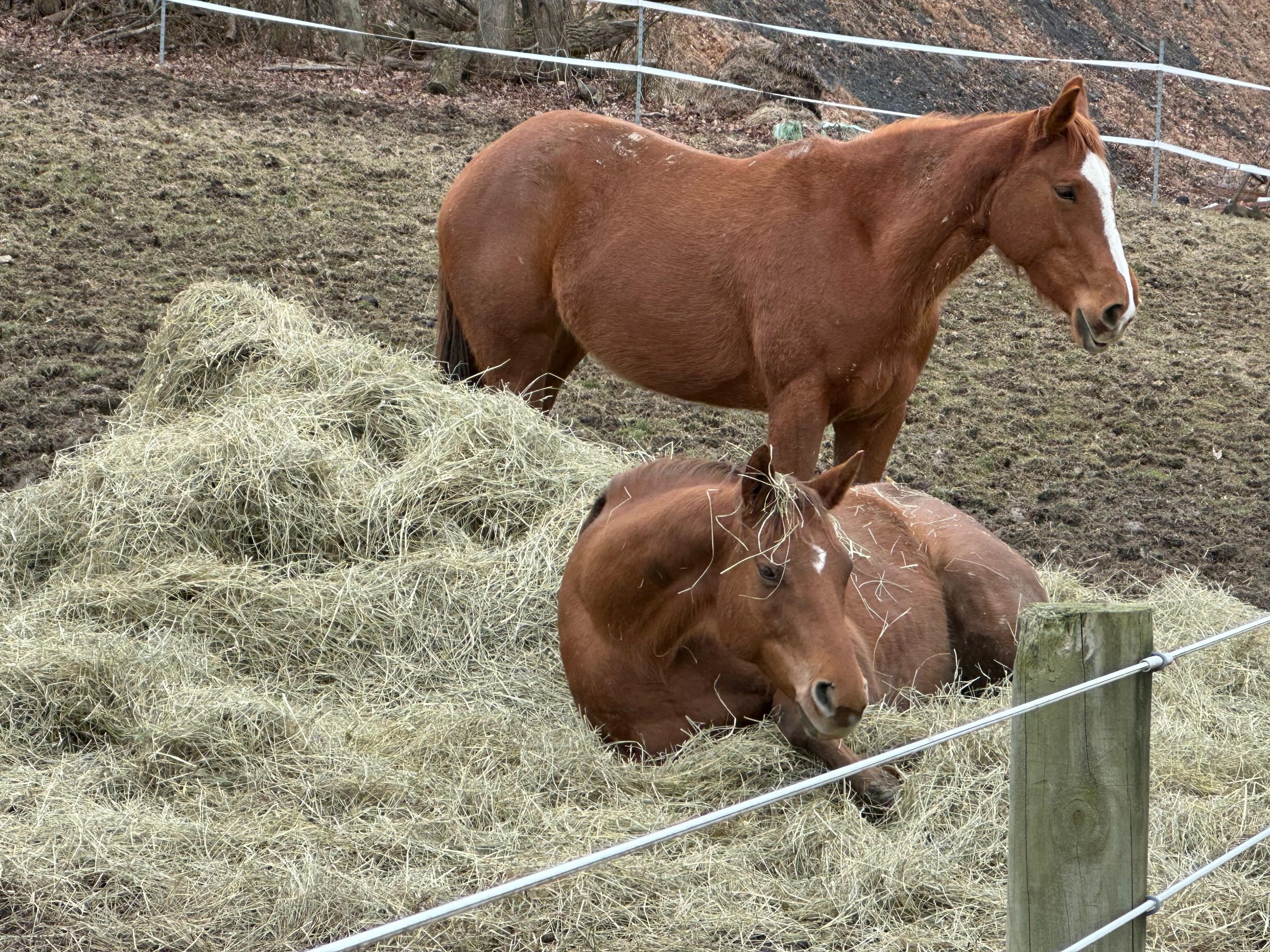
Sometimes we eat our hay, sometimes we use it for a bed. Sometimes we do both at the same time (Jo is especially adept at this). Photo by DeAnn Long Sloan.
Even my horses who end up on stall rest for one reason or another, always have hay. I don’t believe in rationing hay intake — I want them to be able to eat at all times. So the stalled horses have amply filled slow-feed nets.
When I say I don’t feed on a strict schedule, I’m talking about concentrated feed, not forage. That’s a distinction matters more than almost anything else in this conversation.
Horses Are Designed to Eat All Day. Literally.
Horses evolved to be trickle feeders. Their digestive systems are built for near-constant intake of forage, with saliva production, stomach acid buffering, and gut motility all optimized for grazing many hours a day. Research has consistently shown that long gaps without forage can increase gastric acidity and contribute to ulcers, stress behaviors, and digestive upset.
In other words: hay or pasture on demand isn’t a luxury, it’s biologically appropriate.
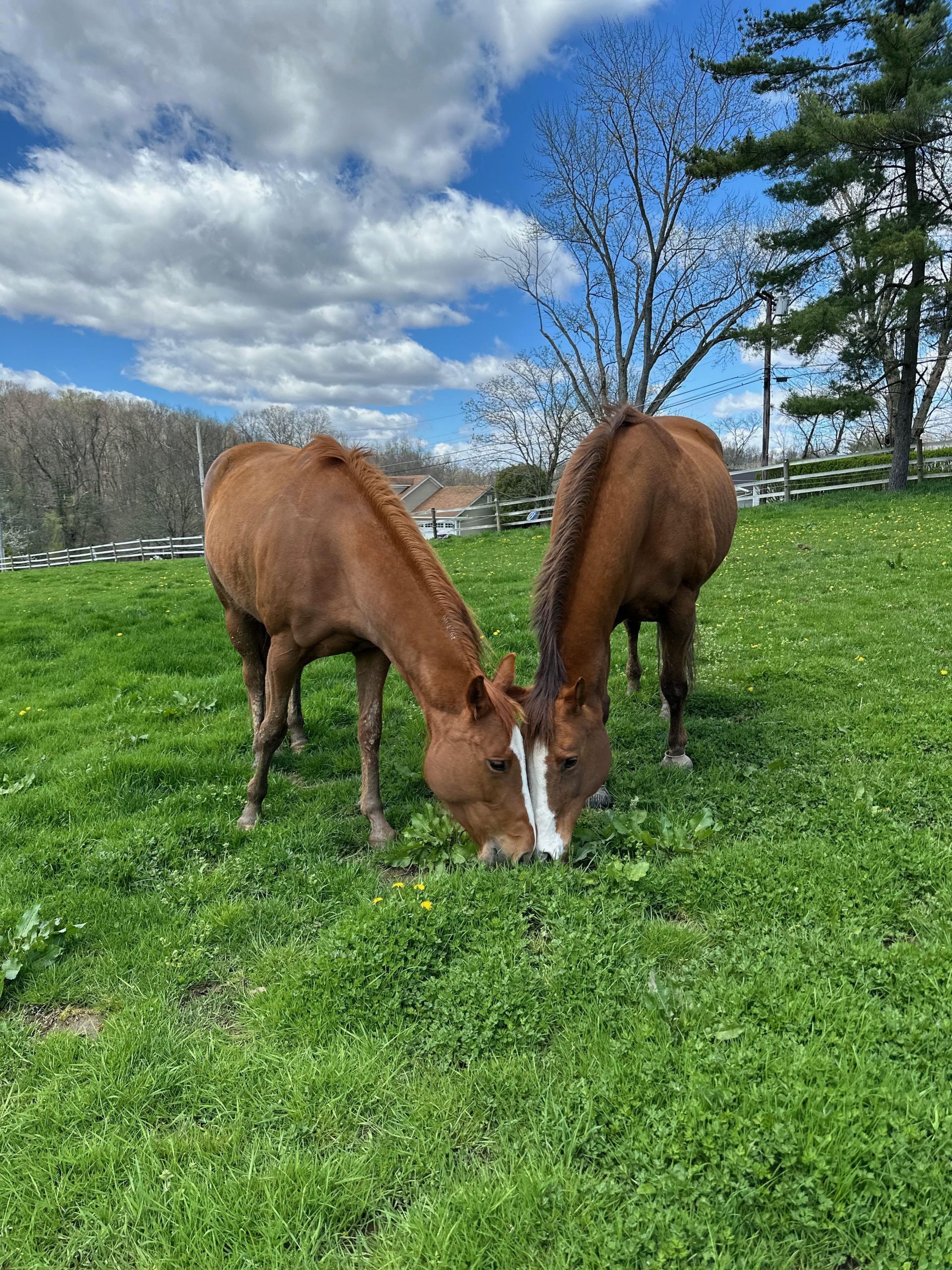
A couple of red-heads, enjoying the same blade of grass. Left: Jo, a running-bred Quarter Horse. Right: Leira, a pleasure-bred Quarter Horse. Photo by DeAnn Long Sloan.
Because my horses can graze or eat hay whenever they want, there’s no pressure riding on a clock. They’re not counting the minutes until grain o’clock. They’re just… being horses.
And honestly? That changes everything.
My Life Is Not a Metronome
I’d love to tell you I run my barn like a Swiss train schedule, but I don’t. And pretending otherwise would just stress everyone out.
I have three kids. Kids who need to get to school, picked up from school, hauled to activities, rescued from school when they’re sick, or retrieved because the wind blew the wrong direction and now today is clearly canceled.
I also work from home. But my barn is not on my property.
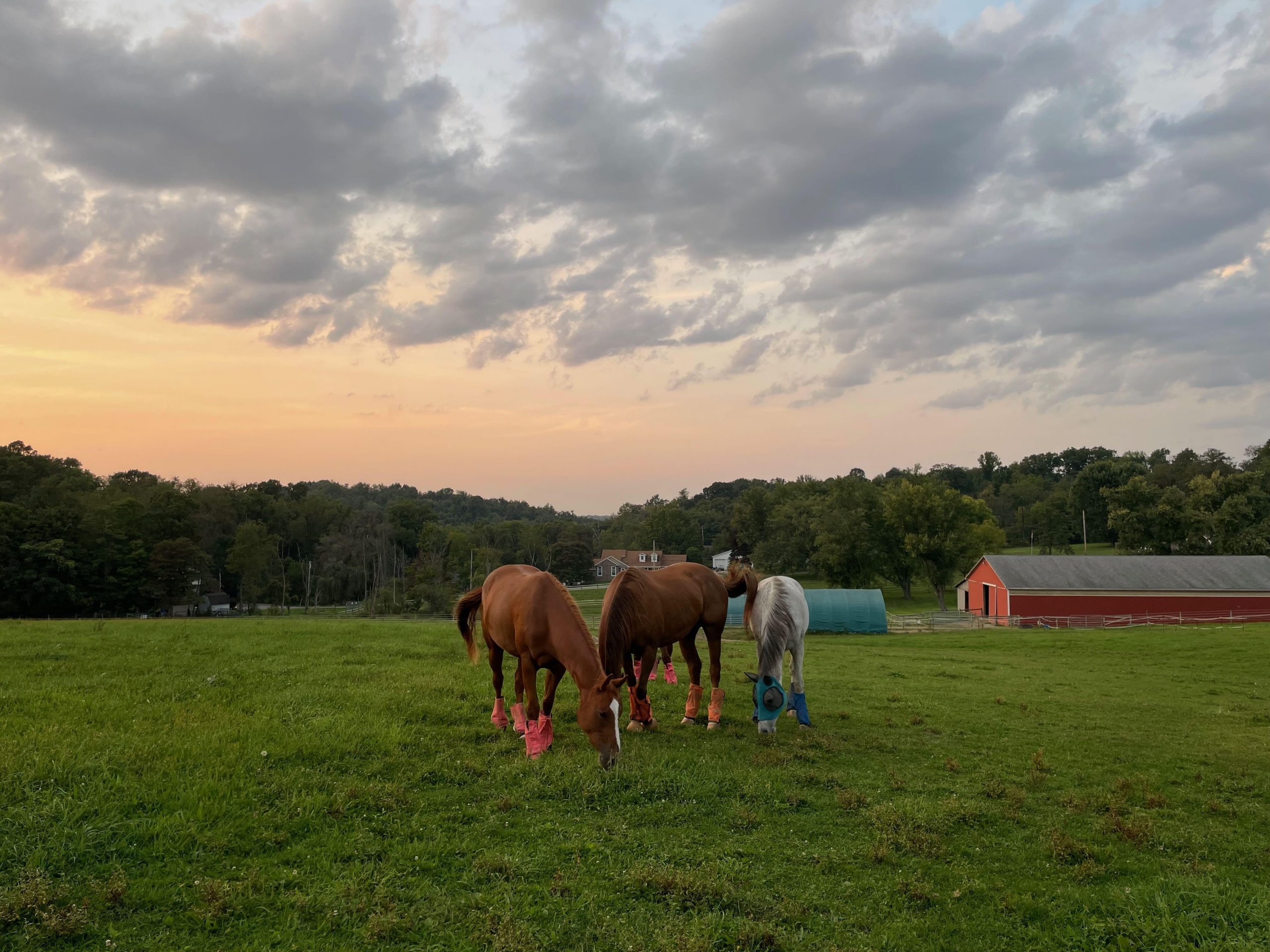
Some of the crew enjoying the pasture a couple of years ago. From left to right: Jo (running-bred AQHA), Mac (OTTB), and Tequila (OTTB). The legs in the back? Likely Leira (pleasure-bred AQHA). Photo by DeAnn Long Sloan.
That means some mornings I can be there early. Some days it’s mid-morning. Some days it’s later than I planned because work blew up or life happened.
Instead of fighting that reality, I built a feeding program that works with it.
Yes, Horses Like Routine, But That Doesn’t Mean a Stopwatch (at least not in my barn)
Horses are creatures of habit, absolutely. But here’s the thing: the habit I want them to learn is that they will be fed, not that it must happen at 8:03 a.m. or the world ends.
At my barn, “routine” means:
- They get fed once a day.
- It might be at 8 a.m.
- It might be at 11 a.m.
- It changes depending on the day.
And the horses are okay with that. Truly.
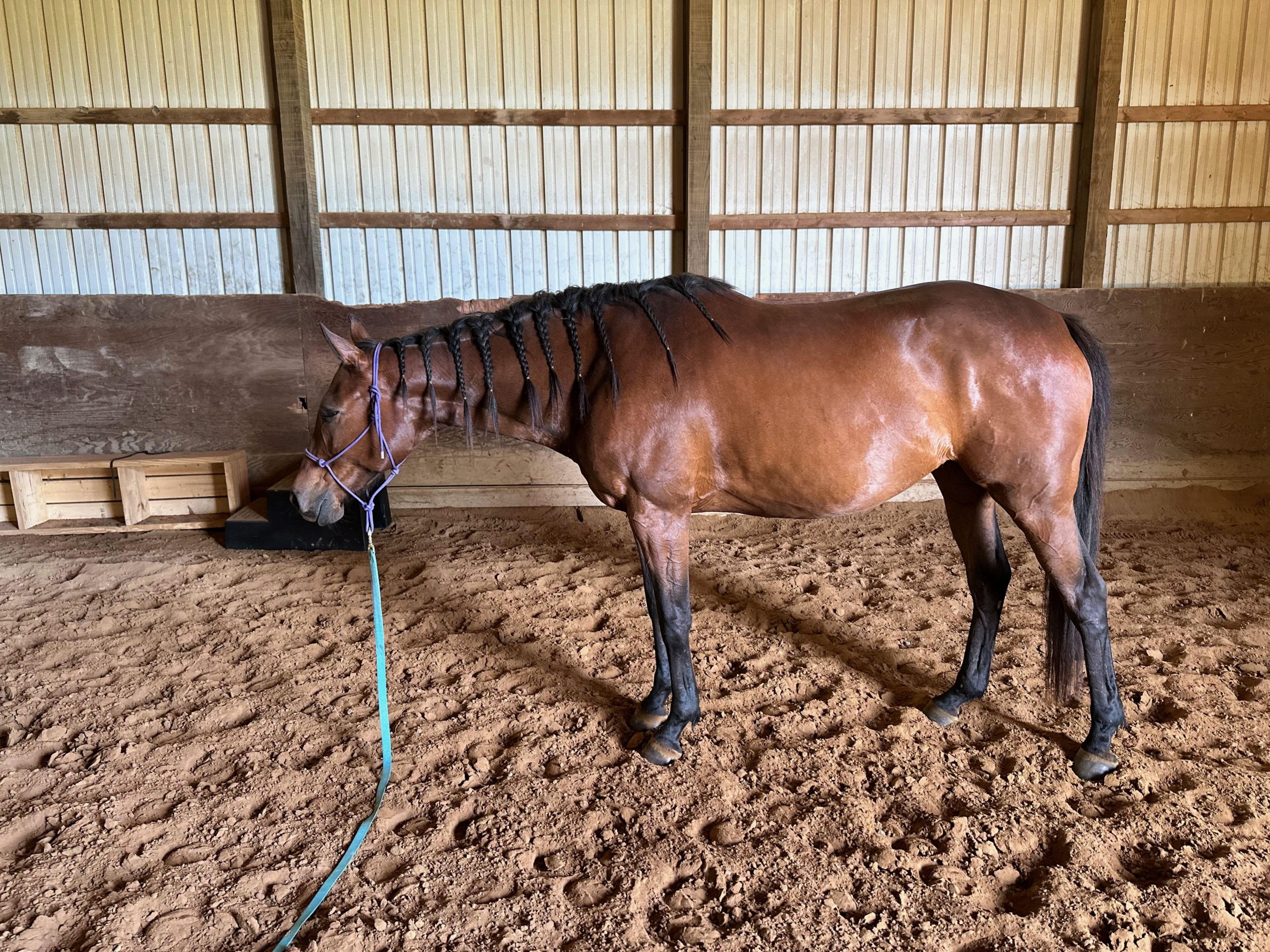
Poppy, one of my OTTBs, showing off her shine. I believe this wasn’t too long after she arrived at my barn, fairly scrawny and under-muscled. Photo by DeAnn Long Sloan.
There’s no screaming at sunrise. No fence pacing. No ulcer-y, frantic behavior tied to feeding times. They’re relaxed because their core need — access to forage — already is met. The grain is just a supplement, not a lifeline.
A Forage-First Diet Changes the Equation
Another reason this works? I don’t feed a lot of concentrated or traditional grain.
My horses are on a forage-based diet, which research supports for digestive health, metabolic stability, and overall well-being. For most of them, that means:
- 1–2 pounds of ration balancer per day (yes, even the Thoroughbreds)
- In winter, soaked alfalfa pellets or cubes for extra calories and warmth
- A few older horses on senior feed, based on age and needs
Even then, no one gets more than three pounds of feed at once, and they only get concentrated feed once a day. There’s no need to carefully space meals because the volume is small and the base of the diet is still forage.
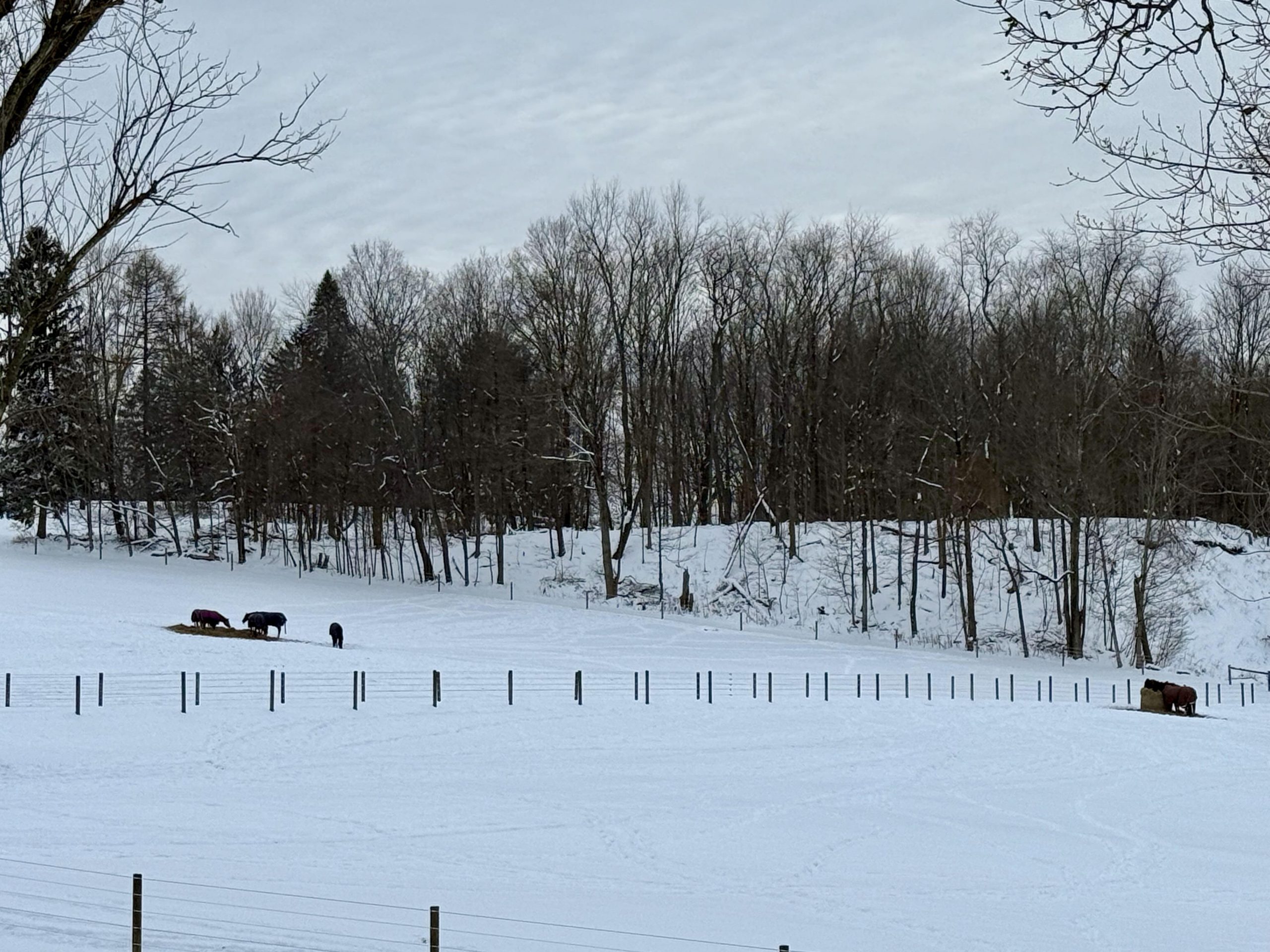
A view of two of the pastures after a snow. One round bale is nearly done (and will be replaced soon), while the other is still full. Either way, the horses always have access to hay or pasture… no matter the season. Photo by DeAnn Long Sloan.
If anything, my bigger challenge is keeping them from getting too round. Most of them would happily audition for the role of “slightly over-conditioned pasture ornament” if I let them. Exercise, not calories, is the limiting factor.
Water, Hay, and No Magic Tricks
They also have constant access to clean, fresh water (heated in winter) because hydration matters just as much as feed intake.
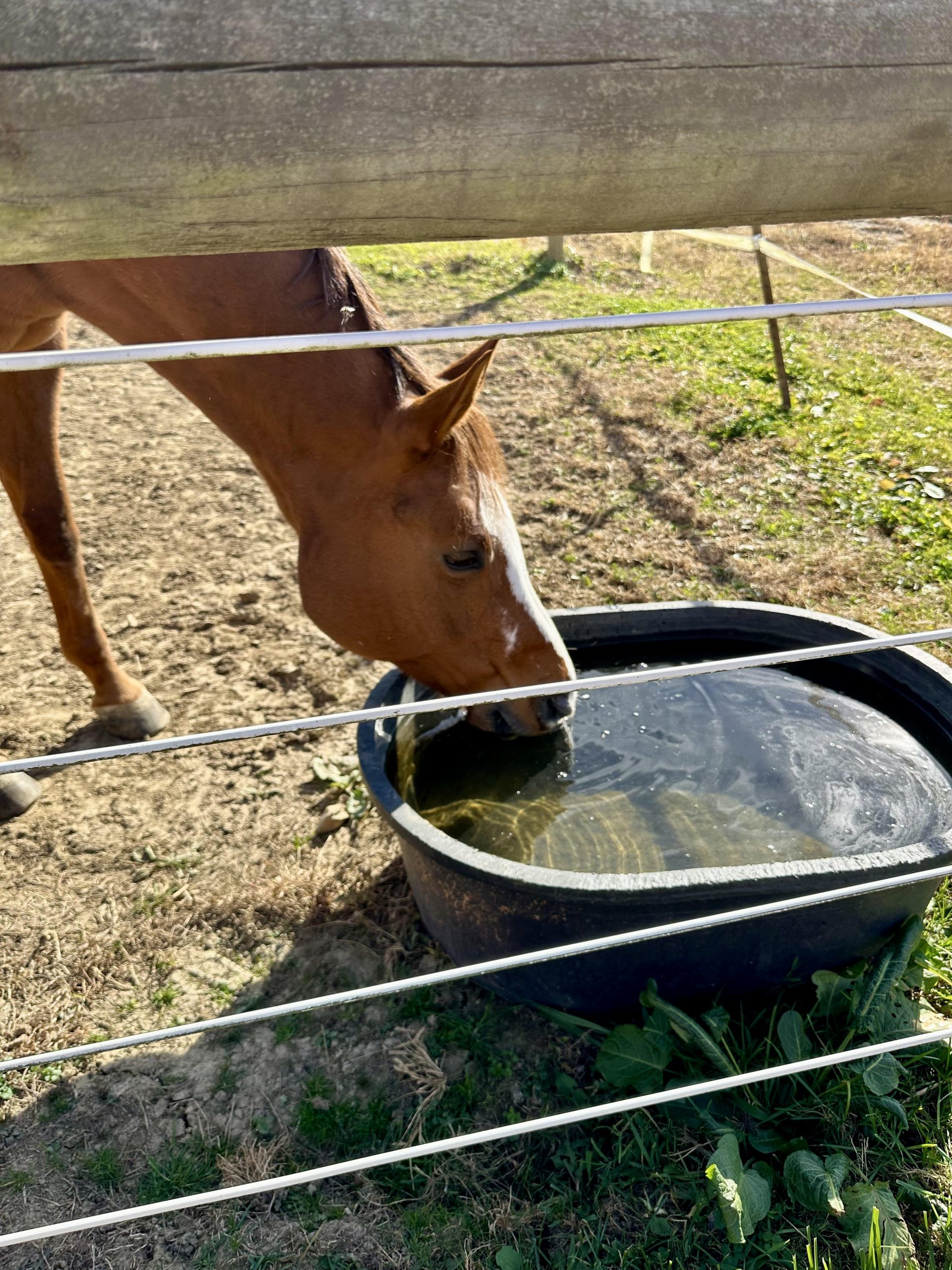
Leira enjoying a drink while on modified turnout. Photo by DeAnn Long Sloan.
My hay isn’t magical. It’s fine. Mostly first cut. Not Instagram-famous. There’s no secret sauce here. The body condition you see is the result of:
- Consistent forage access
- Modest, appropriate supplementation
- Low feeding anxiety
- Horses that aren’t stressed about when their next meal is coming
That’s it.
The Actual Result
- They’re not anxious.
- They’re not ulcer factories.
- They’re not frantic or food-obsessed.
They’re confident. A little sassy. Slightly over-insulated. A herd that knows the basics are covered.
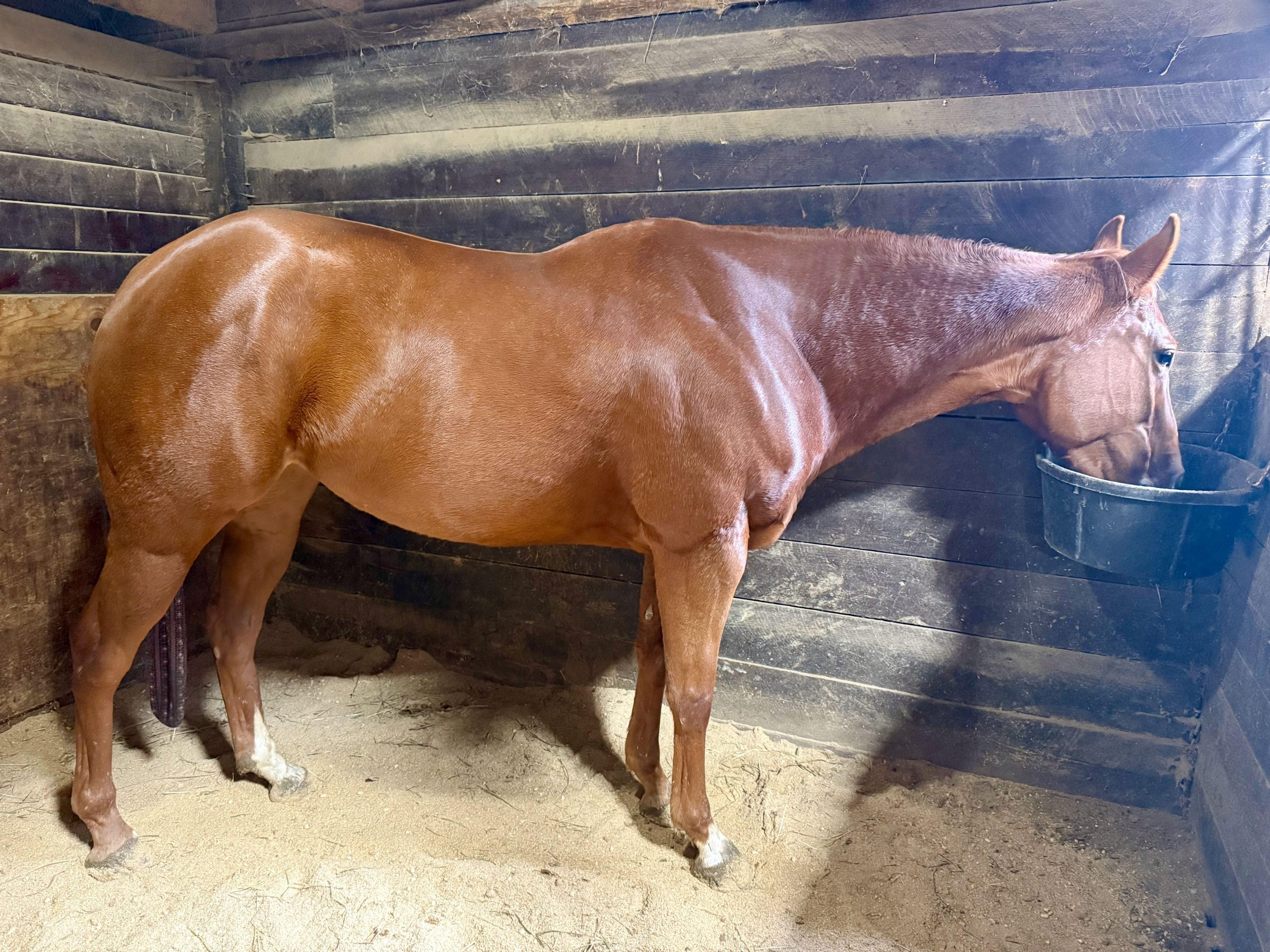
Jo enjoying her meal, looking fat and shiny fresh out of the pasture (to be fair, I probably had just pulled sheets — I don’t groom for them to eat). Photo by DeAnn Long Sloan.
And for me? Not having a rigid feeding schedule means I can breathe. The horses can breathe. The barn runs smoothly without me feeling like I’m failing them every time life gets messy.
Is this the only way to feed horses? Of course not.
But it’s a reminder that good management isn’t about the clock — it’s about meeting the horse’s actual needs. And for my horses, this works.
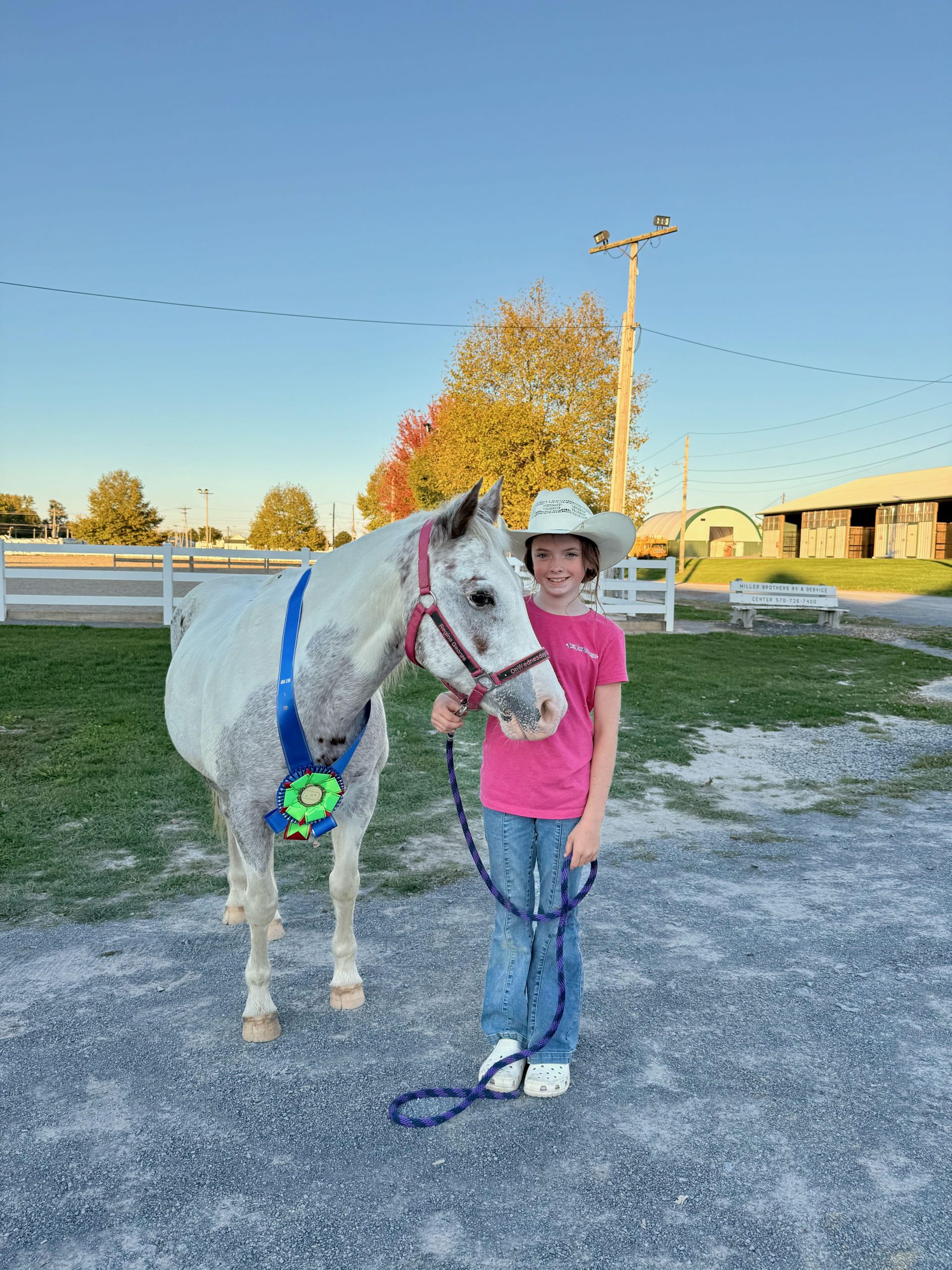
And just because they’re cute — Arden and Pony, showing off one of their ribbons from the show season (and both looking pretty pleased with themselves). Photo by DeAnn Long Sloan.
Side note: This isn’t just a one-off thing that only works for me. Aubrey Graham expressed a similar approach in one of her Thoroughbred Logic articles. We discovered our similar approaches by happenstance. Granted, it’s not something that works for everyone, but it seems to work for our barns — hers is full of young Thoroughbreds and mine is filled with a mix of Thoroughbreds, Quarter Horses, and grade-question mark horses, of varying ages, all of whom hold their weight quite well.
)