



Thoroughbred Logic: Aboard a Dragon? Ride Into the Bend
Presented by Kentucky Performance Products.
Welcome to the next installment of Thoroughbred Logic. In this weekly series, Anthropologist and trainer Aubrey Graham, of Kivu Sport Horses, offers insight and training experience when it comes to working with Thoroughbreds (although much will apply to all breeds). This week ride along as Aubrey shares her logic on setting the usefulness of keeping a fresh OTTB slightly bent.
This weekend, I had the pleasure of escaping the sleet and snow and heading south for a clinic. Can’t beat sunny and 75 and seeing old friends. Beyond the weather and company, clinics provide handy insight and inspiration for these articles. For this clinic, the trends were “Go FORWARD!” (yelled affectionately but loudly) and “ride into the bend.”
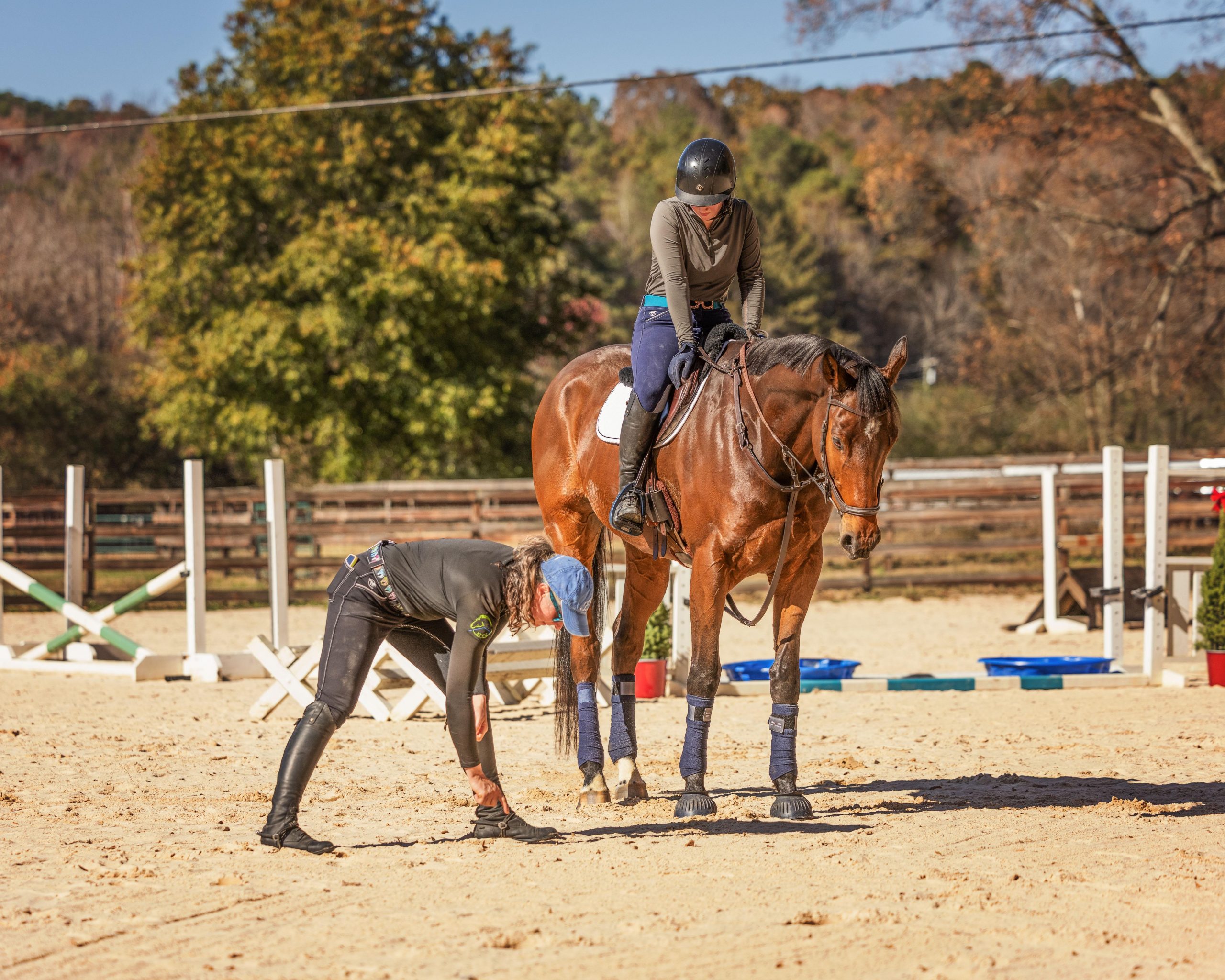
Explaining why forward works with diagrams at the recent Kivu Clinic at Simmons Sporthorses. Photo of Adela Narovich astride Beau (Hyperbolist) by Dawn Light Photography.
The first is no surprise — getting horses out in front of your leg is about the best thing that can happen to them and you, even if you have to really kick on and get going for a minute to be able to do it. OK great, but I have talked about that here.
The second is a critical piece of being able to ride the horse, regardless of their mood, “enthusiasm,” and level of dragon. The idea is that riding straight is not always your friend. When shenanigans abound, one of the key ways that I manage to keep a horse together, work through whatever they’re feeling, and get back to what we were trying to do, is to keep them slightly bent. This works even on the greenest of off-track Thoroughbred to the most seasoned packer.
So…
- It wants to bolt through its chest? Deepen the bend and go forward.
- It wants to stand up and show off its Black Stallion impression. Deepen the bend and go forward.
- It wants to see how successfully you lawn dart over its head in a fun little bucking spree. Deepen the bend and go forward.
- It wants to get super spooky in a corner that it has seen every day for the last year. Deepen the bend and go forward.
- It is not sure which way it is going to unzip and come out of its skin in the warmup. Deepen the bend and go forward.
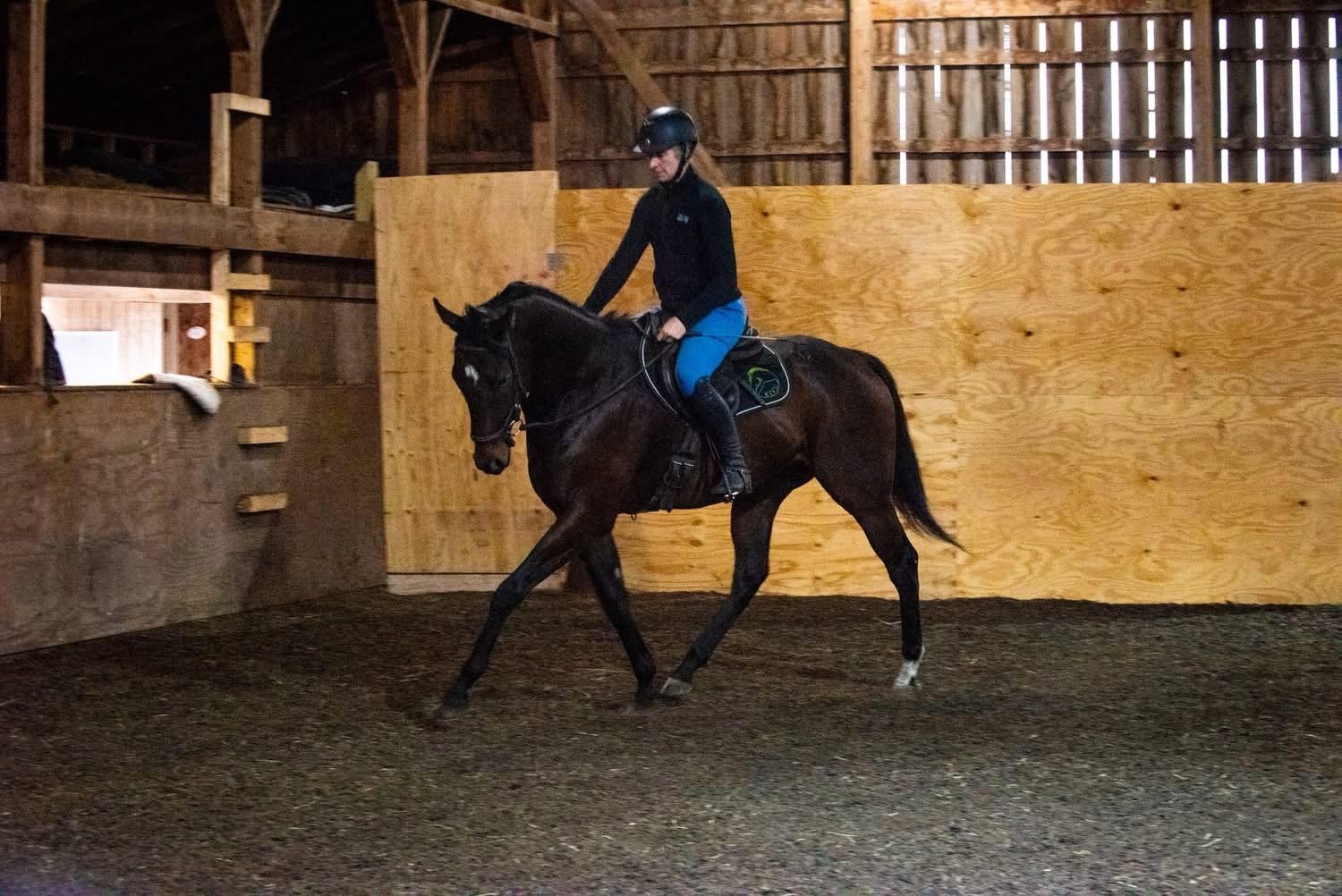
Putting a first ride at home on this talented filly required a bit of bend to get everyone to settle and relax (Photo of Funnystastic by Lily Drew).
Riding in a bend and/or deepening that bend seems to universally increase a rider’s ability to not just manage — but get beyond — the chaos. The concept relies on the notion that when they are gently bent, the horse is far less capable of overriding the rider and the situation. And as such, the rider is able to be more confident and overall softer and less reactive, when they simply set a gentle bend, kick on, and (try to) relax.
To rear, buck, bolt, or spook at their most effective volume, a horse needs to be straight. When straight, they can lock their jaw, lock their neck-to-shoulder, and get above the bit to take off — or pull below it to play bronco. Either way, when straight, all stars and body points align to let them put their whole body to use however they see fit, regardless of the human on their back.
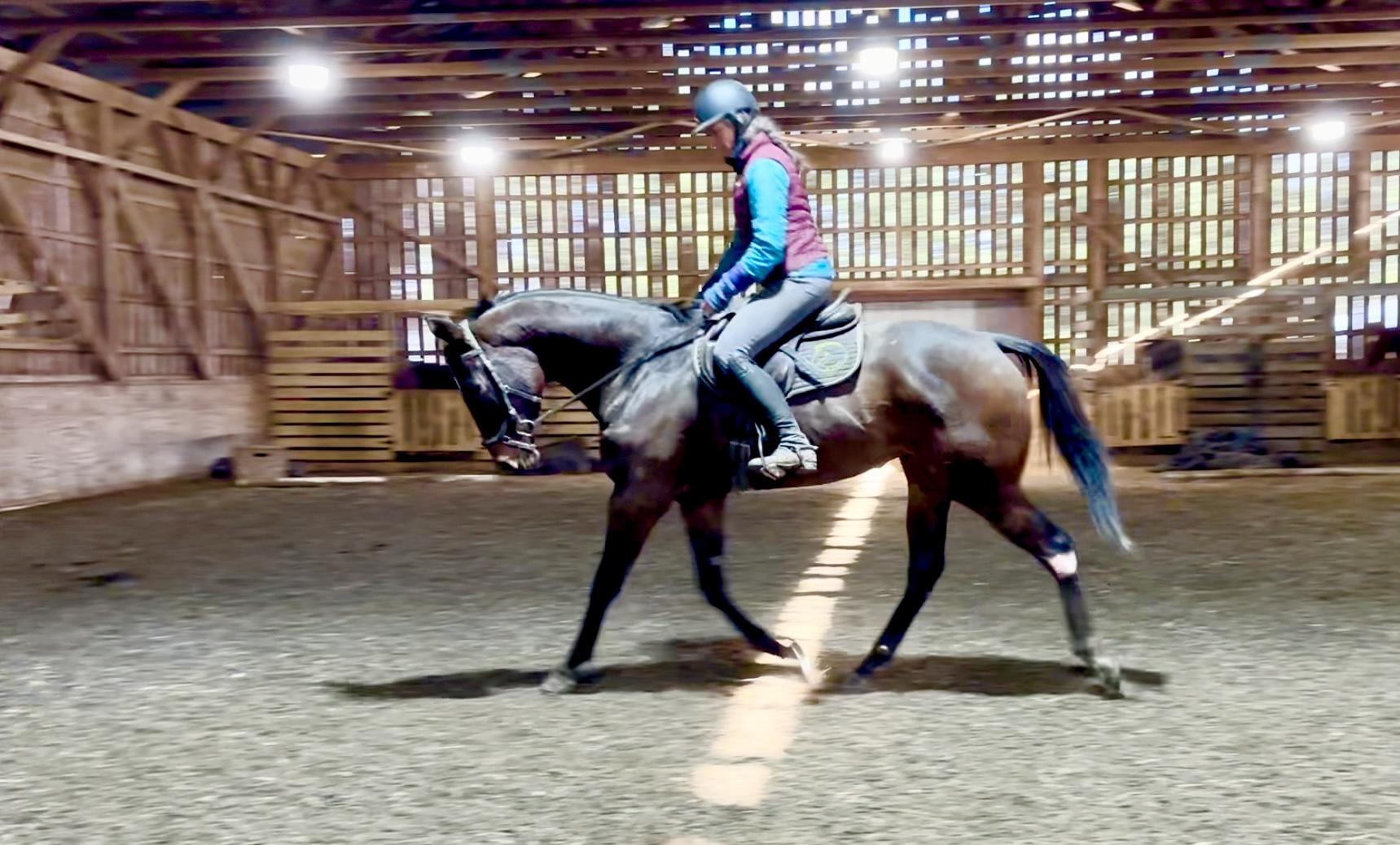
In three rides, this filly has figured it out and is ablate stay round and soft without such a deep bend. Photo by Lily Drew.
The act of setting/deepening the bend to nix those antics is annoyingly simple:
- Keeping a light bend sets you up to ride confidently and have the tools to knock out shenanigans without getting thrown (literally and figuratively) by them.
- Open the outside rein (with contact) to make space for their shoulder to move over.
- Increase inside leg pressure.
- Use the inside rein (heading towards the outside of your inside hip, NOT the wither) to bring the nose and neck in and wrap the horse around your inside leg. Their ribs must move away from your inside leg or it isn’t a bend and this won’t work.
This effectively is a more pronounced version of inside leg to outside rein with a bit of inside rein to help shape and deepen the bend as needed. As you’re doing this, keep kicking on and going forward. The more they stay in front of your leg, the better everything goes. Large circles are the easiest to work with while you get them to steady into the outside rein and everyone gets to take a breath.
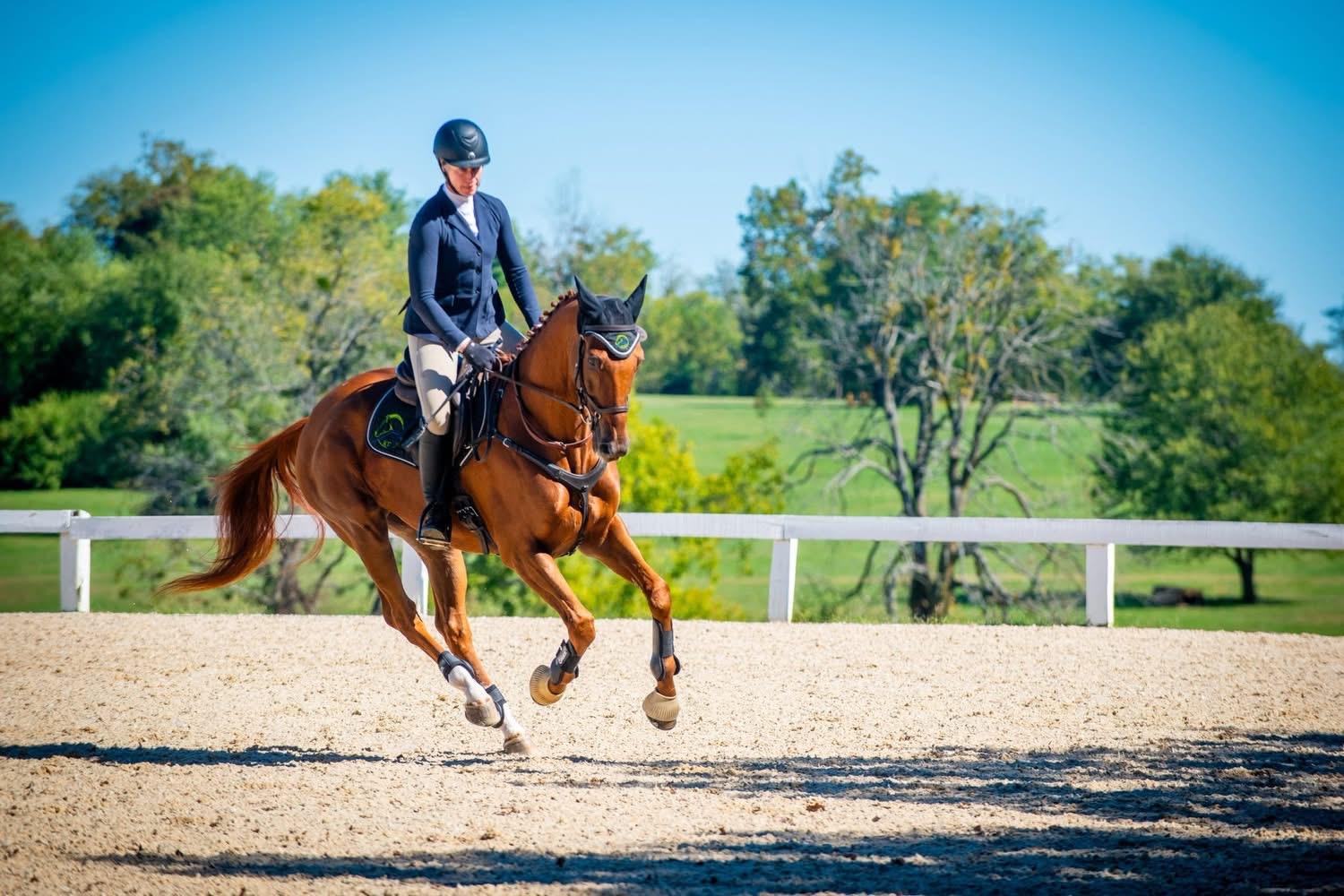
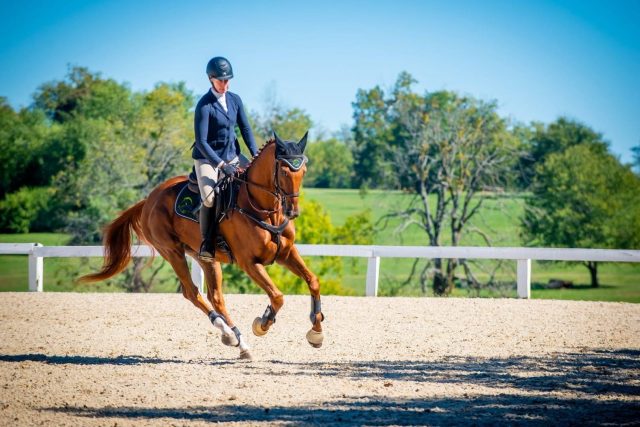
Artie (Reunion Tour) packing in a powerful canter before a jump round at this year’s RRP Makeover. The bend keeps him over that outside hind and enables me to make riding in a busy warmup arena less stressful. Photo by Lauren Kingerly.
Increasing the bend just a bit when the wind starts howling or the snow might just slide off the roof at any moment helps prevent a literal straight-forward disaster. But more than prevention, it asks your horse to keep going, move their feet and put their body in a shape that feels pretty darn OK.
So they move off the inside leg and balance on the outside hind. They stay soft and supple despite a potential pulse-raising environment. And they go forward and keep all four legs respectively near the ground. And when they take that “NOPE” breath and try to blast through you, you simply keep hands low, add a little more of all of the aids already in play to deepen the bend, and then immediately soften and carry on like nothing happened.
When we ride dragons like this, it creates a positive feedback loop. On one hand, it takes only a couple times around before they figure out that they’re not going to rattle the rider so the behavior dims. On the other, with a softer, more confident rider in the irons, they gain the confidence (and no longer feel like they need to send you lawn darting and get the hell out of Dodge). And there is nothing rough or untoward here — just a steady bend that helps them keep moving their feet where you want them and not lifting into airs above ground.
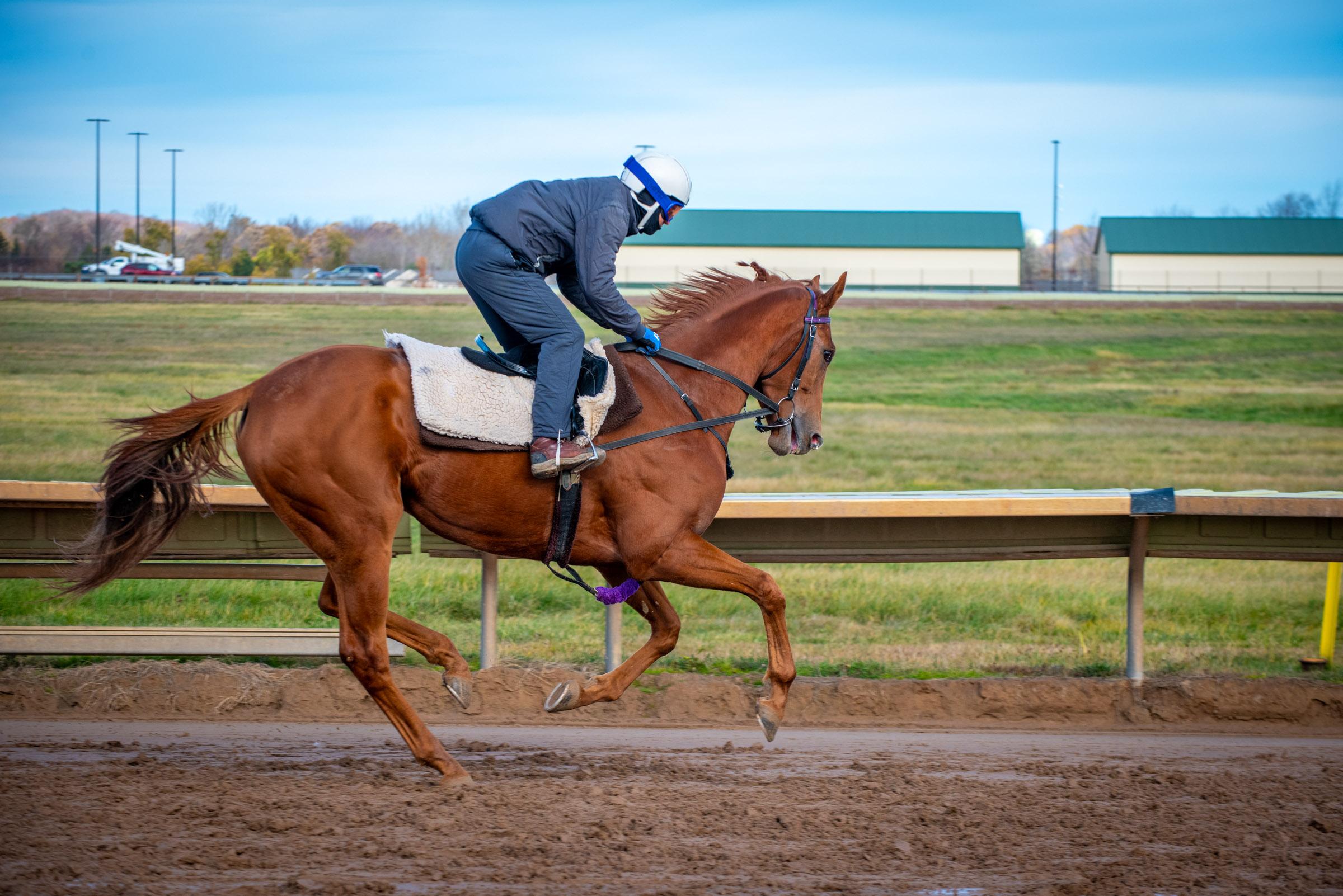
Bend (of sorts) is also used at the track to keep control of the more powerful runners during workouts. JC Good As He Gets is also in draw reins, which for better or worse nonetheless cuts down on the ability to bolt. Photo by author.
A couple of extra hints:
- Having a particularly wild or bouncy ride? Grab a little mane with the outside rein to stabilize it, sit up and kick on. Keeping hands low near the neck helps stabilize the rider and maintain balance when the ride gets jolty.
- The outside rein and inside leg must come first — never grab the inside rein and spin them into a tiny circle at speed. This throws them off balance, undermines their confidence in the rider and can simply be dangerous for horse and human.
- If it doesn’t feel like it’s working, check to make sure the outside rein holds more tension than the inside. Make sure it is steadying back towards your hip, not following forward around the shoulder (I call that “bicycling”). You almost want to feel like you’re setting them up to counter bend from the outside rein, then add inside leg move them over, and then finesse the inside rein to hold and or deepen the bend.
- Make sure the inside rein creates bend, not flexion. Bend involves the whole body which will in this case be the thing that keeps you safe. Flexion involves the tilt of the poll and the TMJ area on a horse — it does not bend their body or move their shoulder or ribs. If your inside hand crosses the neck or pulls to the wither… or if your inside wrist folds over with your knuckles facing their neck, you’re asking for flexion. Because it does not reach through their whole body, getting flexion in the stead of bend means you might not be safe from any of the above antic
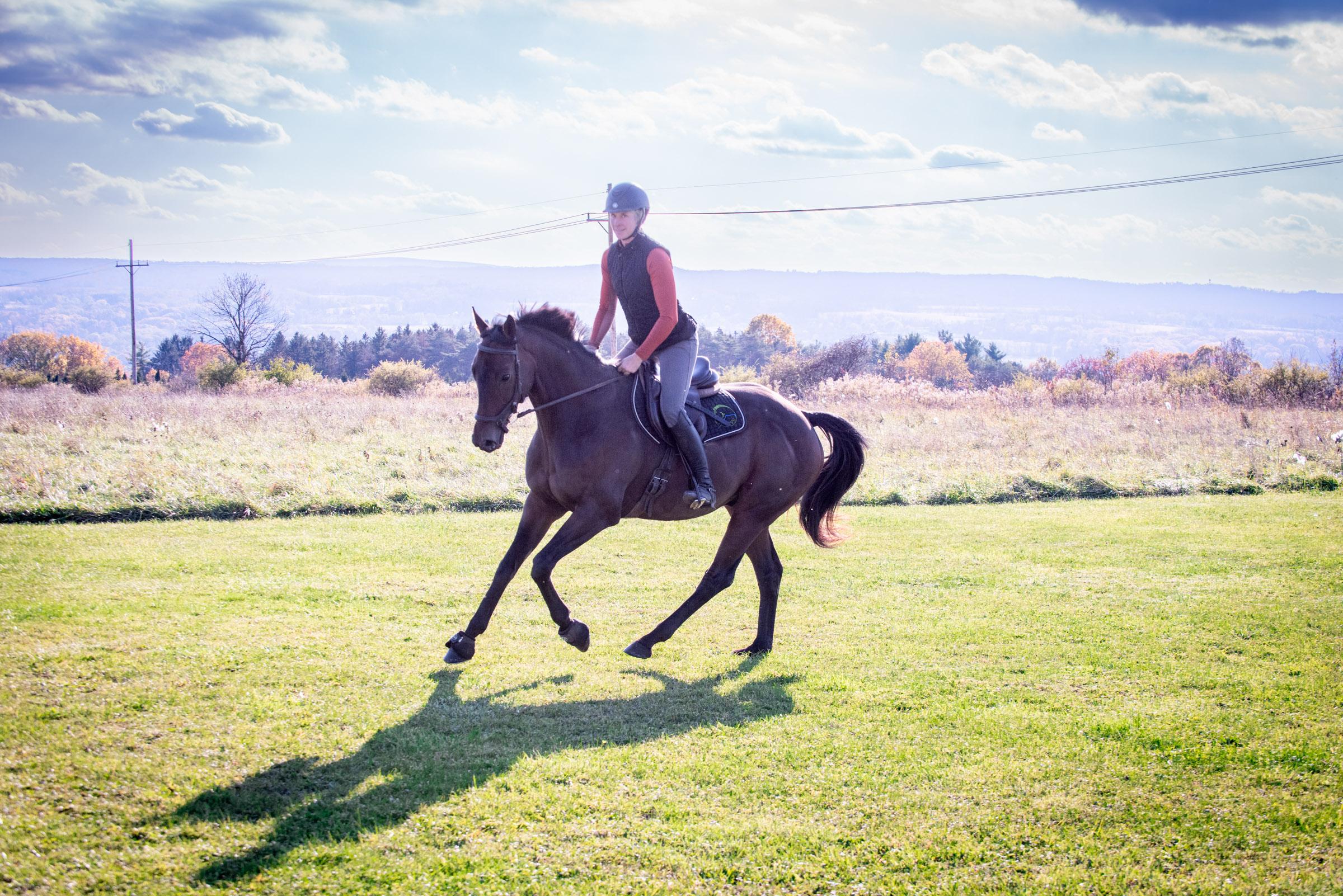
When the bend tactic allows you to create the positive feedback loop, it’s no problem to ride forward and play with power and speed. Iago (Camino De Santiago) my potential 2026 Makeover entry enjoys showing off that freedom outside. Photo by Lily Drew.
So go ride folks. As the air gets crisper and Thoroughbreds of all ages remember their days of breaking out of the start gate, sit up, stay confident and ride the bend as much as you need to to craft a positive cycle of trust and confidence. Get it right and you might actually have fun learning to fly your dragon.
About Kentucky Performance Products, LLC:
Is your horse suffering from digestive tract issues, such as diarrhea, colic or hindgut imbalances? Does he need a high-grain diet? Is he under stress? Neigh-Lox® ADVANCED can help.
Neigh-Lox ADVANCED is a scientifically formulated blend of ingredients that works synergistically to maintain a healthy stomach, small intestine, and hindgut. It contains long-acting gastric buffers and coating agents to maintain a normal stomach pH. It provides an effective probiotic to support complete digestion of starch and sugars in the foregut, helping maintain a healthy hindgut. And it supplies broad-spectrum prebiotics to sustain a healthy balance of beneficial microbes and well-balanced microbiome.
The horse that matters to you matters to us®. KPPusa.com

