



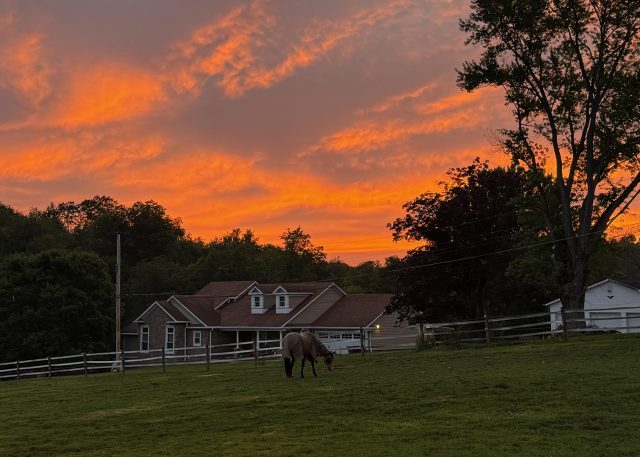
The Day I Realized I Have a Senior Barn
As my barn full of seasoned horses settles into its golden years, I realize the privilege that comes with watching them age and the quiet wisdom that comes with a stable full of old friends.
 Photo by DeAnn Long Sloan
I have a rare opening for a boarder right now.
If you’ve ever managed a boarding barn, you know how unusual that statement can be. Most of the time, stalls fill before they’re even empty. Word travels quickly through horse communities, and vacancies don’t tend to last long.
So lately, I’ve found myself giving tours.
Walking prospective boarders around the property, introducing them to the horses, explaining turnout groups and feeding schedules, I noticed something that caught me off guard.
Somehow, without realizing it, I’ve become the barn with the older horses.
It wasn’t a deliberate decision. I didn’t set out to create a retirement community for equines. Yet as I walked down the aisle and looked into each stall, I started mentally adding up ages.
Twenty-one.
Nineteen.
Twenty-five.
Eighteen.
Twenty.
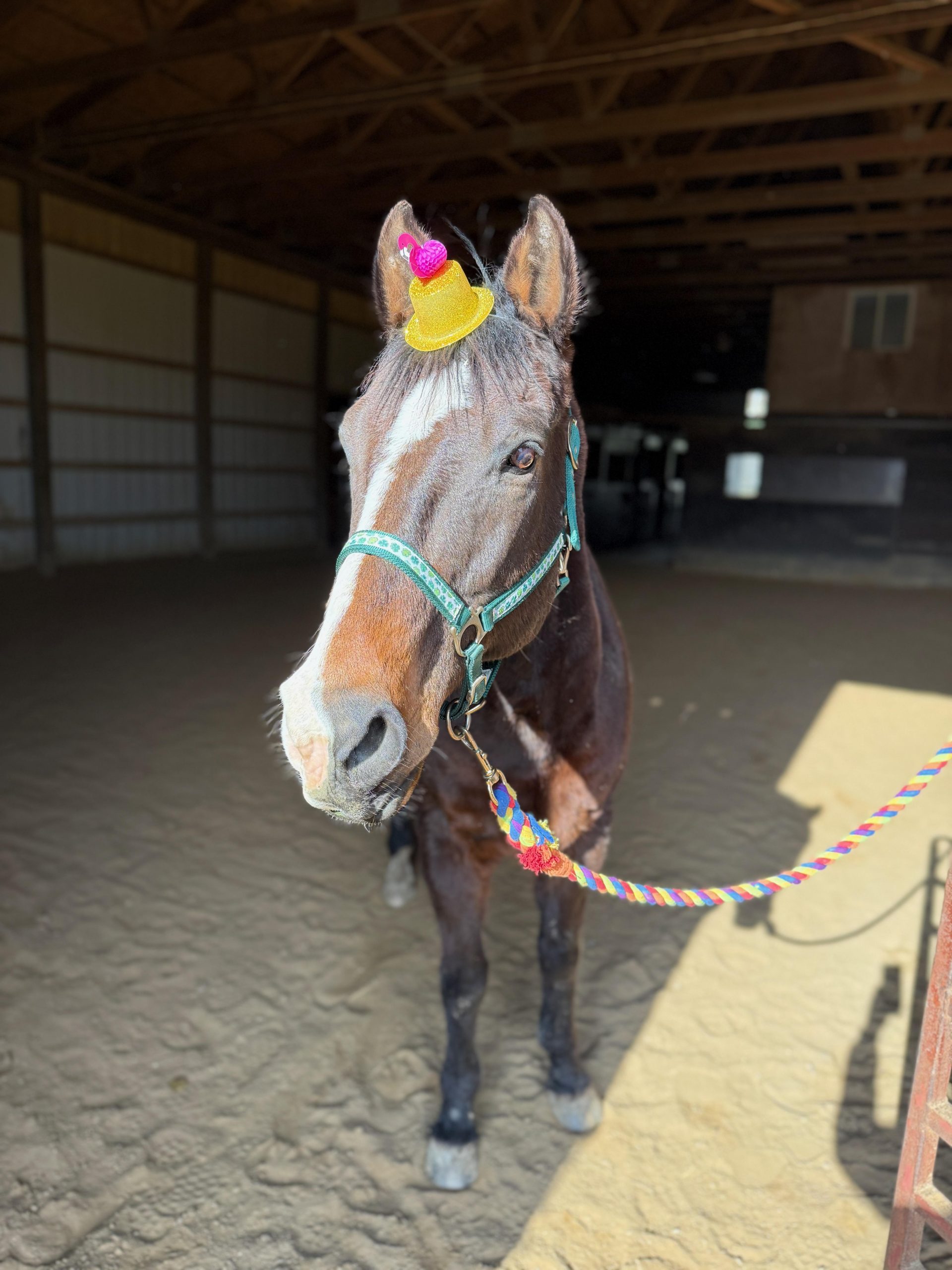
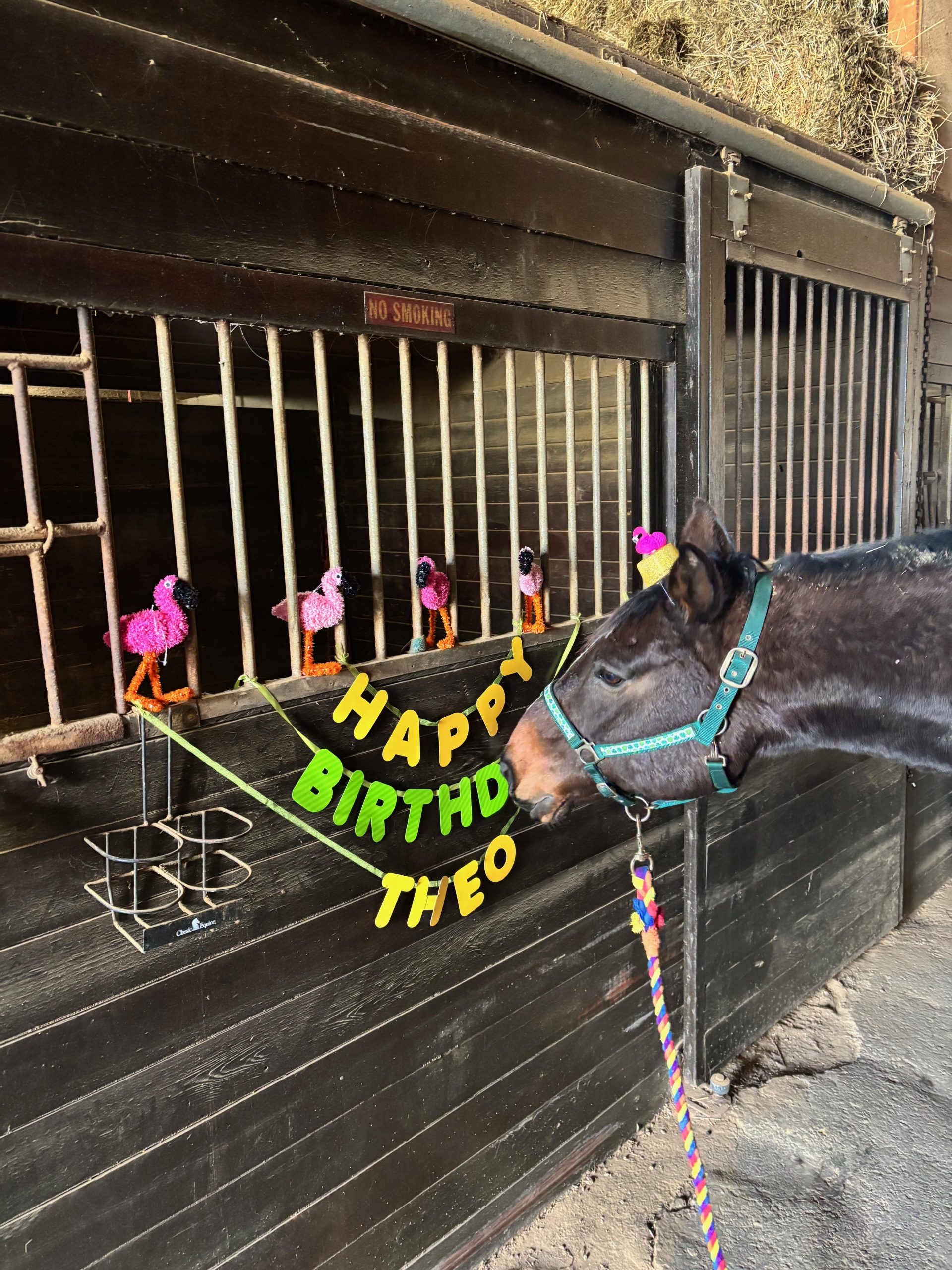
This good boy on his 20th birthday… last year. Photo by DeAnn Long Sloan.
There are a few horses in their mid-teens sprinkled throughout the barn. One youngster keeps everyone honest at six years old. But overwhelmingly, my barn is filled with horses who have lived a lot of life.
And while I hate to break it to everyone, apparently horses age.
I, however, remain exactly the same age I’ve always been. Weird how that happens. (At least that’s the story I’m sticking with.)
The funny thing is that it didn’t happen all at once. No one woke up one morning and announced that all the horses had become seniors. It happened gradually, year by year, the way most aging does.
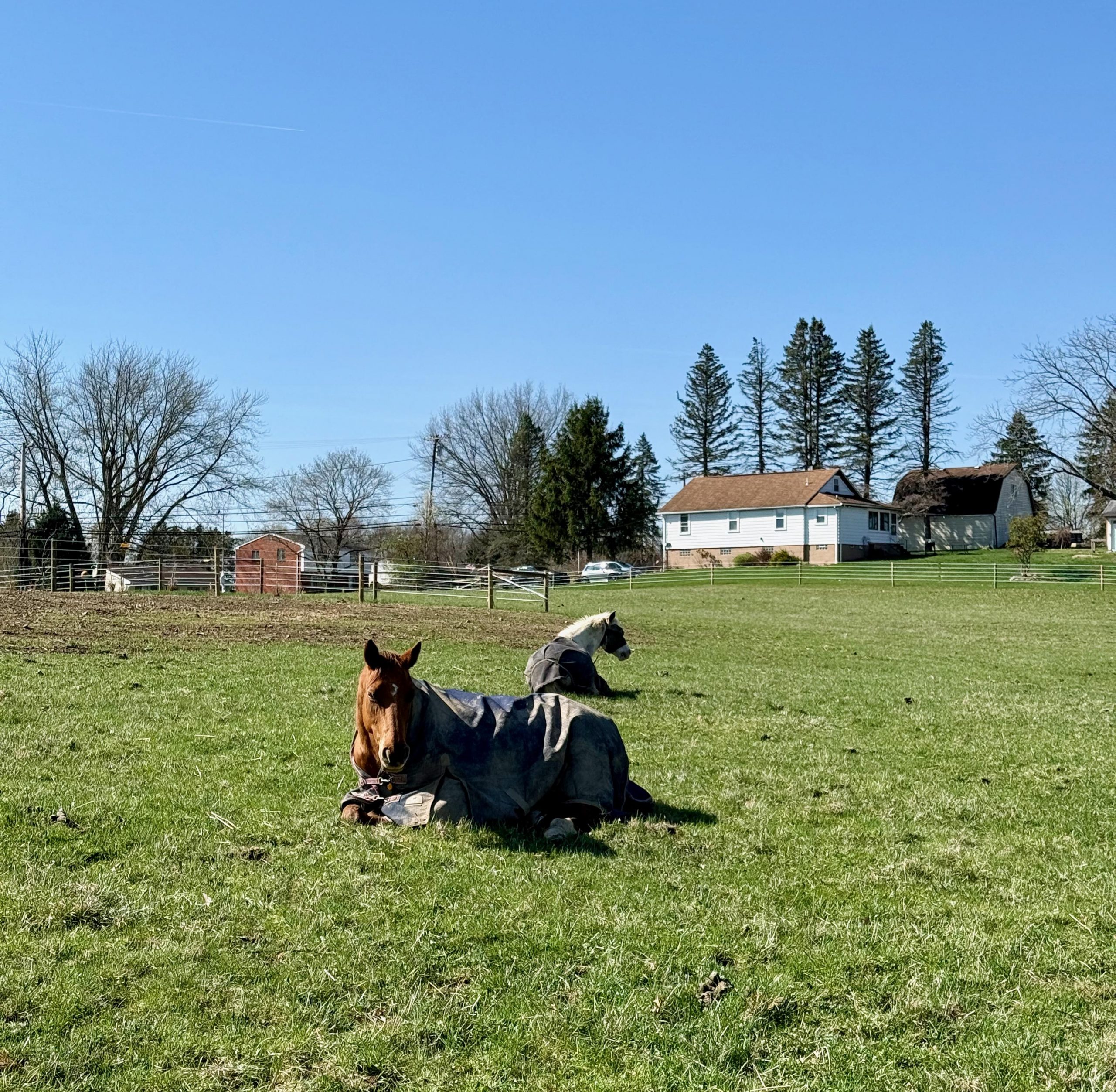
Enjoying a late morning nap. Photo by DeAnn Long Sloan.
The horse that arrived as a spry 10-year-old is now 18. The 12-year-old who used to bounce around the fields is now pushing 20 and we’re managing arthritis and other age-related ailments.
Time passes quietly in a barn. You notice it in the little things first. A joint supplement appears in a feed bucket. Blankets stay on a little longer in the spring. Warm-up rides take more time than they used to. Veterinary conversations become more focused on comfort than performance. The changes are subtle until one day you look around and realize the entire barn has shifted.
What strikes me most is how fortunate I’ve been to watch many of these horses grow older.
In the boarding world, horses come and go. People move. Life changes. Financial situations evolve. Priorities shift. But I’ve had the privilege of being involved in the care of many of these horses for a significant portion of their lives.
I’ve watched them in their prime. I’ve watched them carry riders through shows, trail adventures, and personal milestones. I’ve watched them teach children to ride and then continue teaching those same children as they grow into competent horsepeople in their own right. I’ve seen owners grow alongside them, and build years of memories together.
When you’ve cared for a horse for so much of its life, it stops feeling like someone else’s horse. Not literally, of course. They belong to their owners. But they become part of the daily rhythm of your life.

One benefit of an older horse: seasoned enough to carry me around in only a catch halter when I’m too lazy to make the walk. Photo by DeAnn Long Sloan.
You know who bangs on their stall door when breakfast is late. You know who pretends to be starving despite being visibly overfed. You know whose arthritis acts up before a weather front arrives and who needs extra time before turnout on cold mornings. You know their quirks and routines as well as you know those of some family members.
That’s the blessing, but it’s also the hard part.
Because the longer horses stay, the more deeply woven they become into the fabric of the barn. And eventually, life asks difficult things of us.
Sometimes owners move on to a new chapter. A career opportunity takes them elsewhere. A family grows. Children leave for college. Circumstances change.
Other times, the horses themselves force the conversation. The conversations none of us want to have. The ones that begin with quality of life and comfort and kindness. The ones that require us to love them enough to put their needs ahead of our desire to keep them. Those are never easy decisions. They shouldn’t be. But having a barn full of older horses means understanding that those moments become more common.
It’s one of the quiet realities of caring for horses long-term. If we’re lucky, they get old. And if we’re very lucky, we get to be there with them when they do.
Of course, I know this season won’t last forever. Barns are living things. They change constantly. A few years from now, I may find myself surrounded by youngsters learning the rules of turnout etiquette and testing every fence line on the property.
There likely will be another generation of horses arriving with bright eyes, endless energy, and absolutely no regard for self-preservation. The cycle will continue because that’s how life is.
But right now, this is where we are.
Right now, the barn is quieter. The horses walk instead of charge. Most disagreements are settled with a look rather than an explosion. Turnout groups spend more time grazing than galloping. The soundtrack is less Imagine Dragons and more Otis Redding.
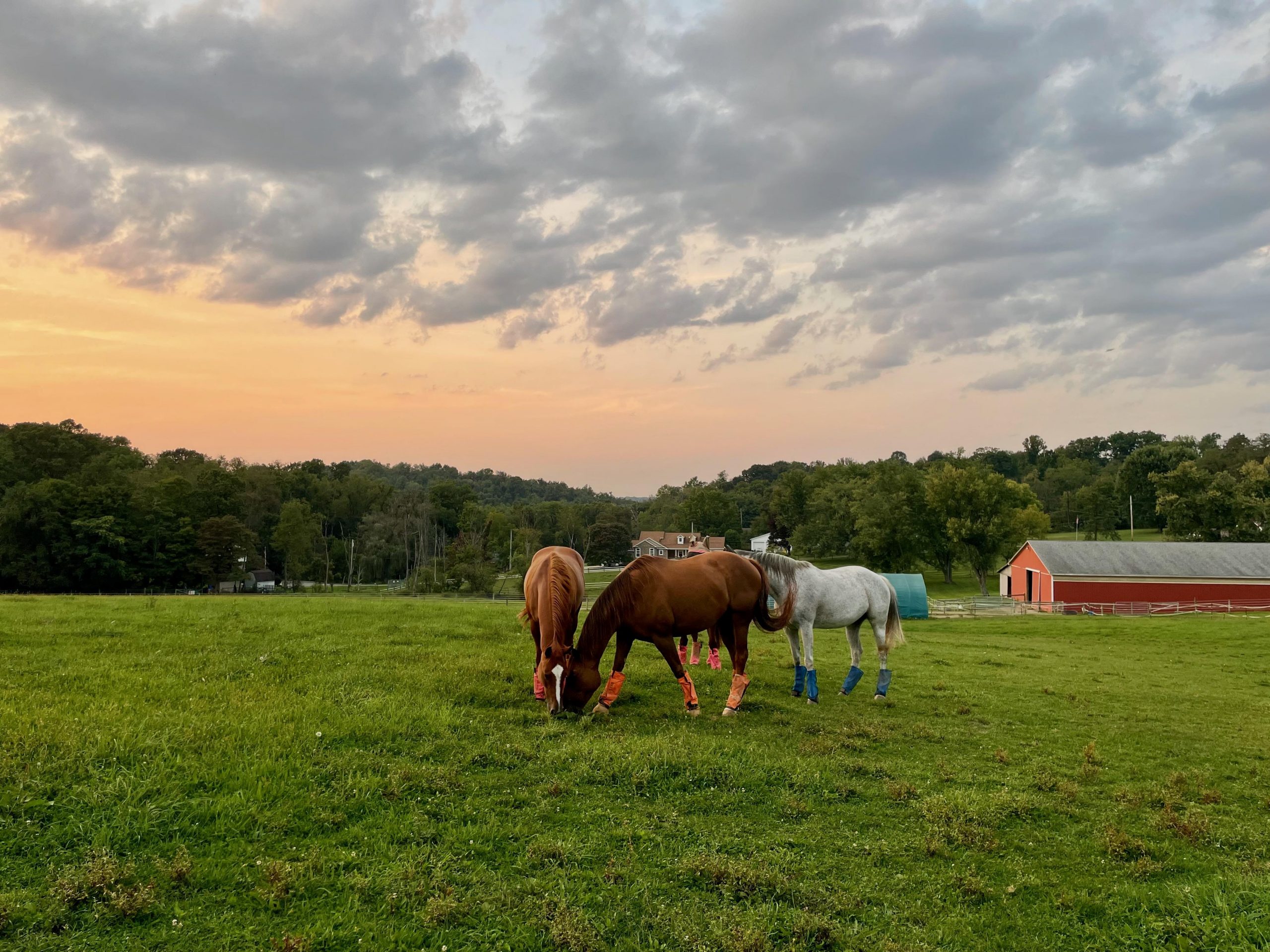
Quiet time grazing. Photo by DeAnn Long Sloan
Sure, there are more maintenance schedules than there used to be. More supplements. More special considerations. More conversations about senior feed and joint injections.
But there is also a calmness that only comes with age.
These horses know who they are. They know their jobs. They know their people.
And in many ways, they’ve earned the right to take life a little slower.
As I finish giving tours and answer questions about the facility, I find myself looking around differently these days. I see the gray hairs around muzzles. The softened toplines. The deliberate way some of them step out of their stalls.
But I also see years of stories. Years of service. Years of carrying people through victories, heartbreaks, lessons, and ordinary Tuesdays.
Maybe that’s what strikes me most when I realized I have a senior barn. Not that the horses are old. But that they’ve stayed. Long enough to age. Long enough to become familiar. Long enough to matter.
And although I know this chapter won’t last forever, I feel lucky to be in it right now.
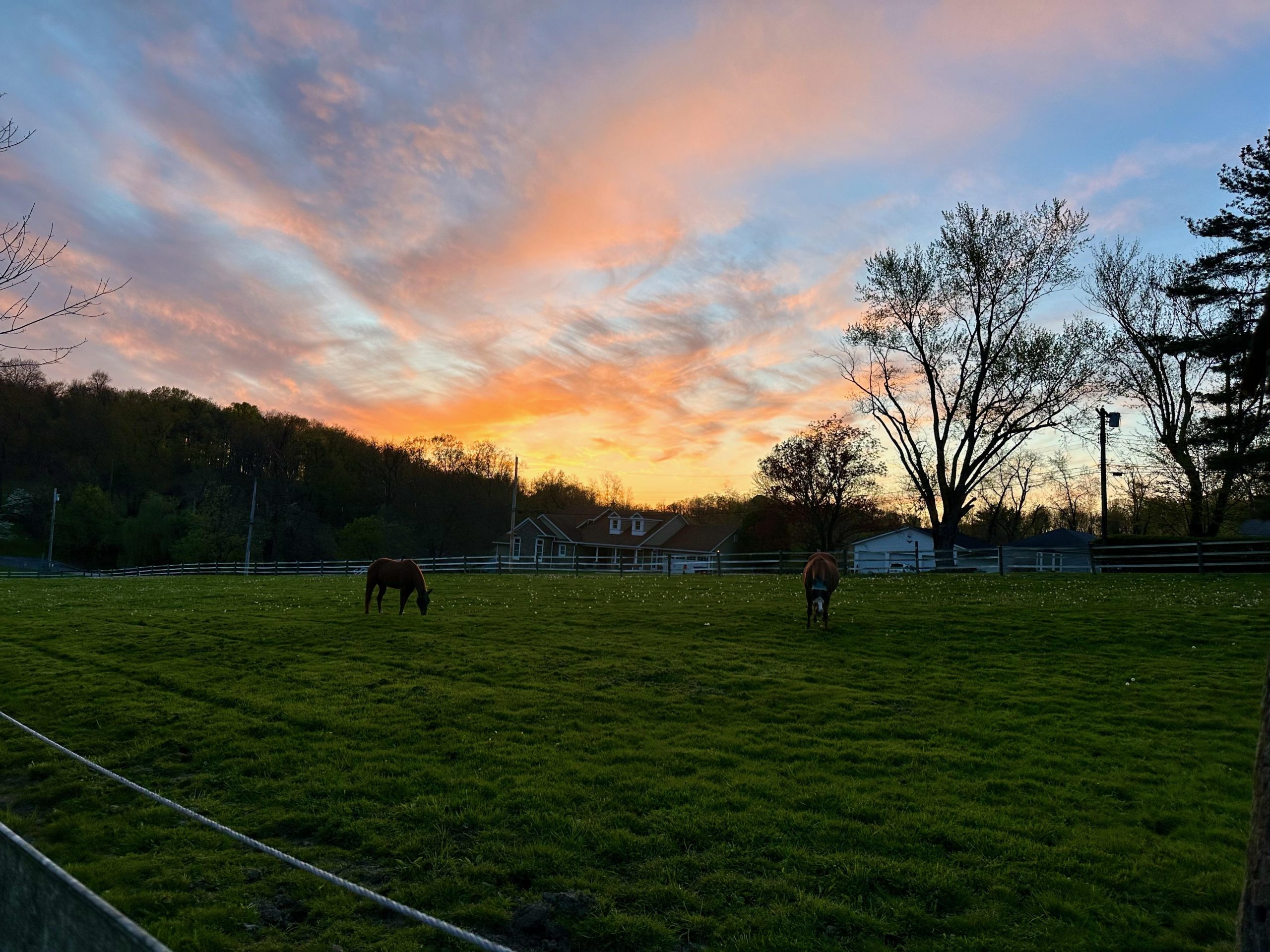
Photo by DeAnn Long Sloan
