



How Horse People Think About Risk (And Why We Keep Doing It Anyway)
Ask any person outside the equestrian circles why they would never get on a horse, and you’ll hear some version of the same answer: too big, too unpredictable, too dangerous.
The question is why millions of people choose to get on anyway, often after being bucked off, fallen on, or dragged through a muddy field. The answer has less to do with recklessness and more with how experienced riders actually process risk — and the psychology behind it is well-documented.
Why Riders Accept What Others Won’t
Equestrian culture has a complicated relationship with risk. It doesn’t ignore danger — it normalizes it.
Risk as a Cultural Baseline
Most riders don’t think of themselves as risk-takers. They think of themselves as people who’ve learned to work with an unpredictable animal.
That framing matters. When risk is baked into the activity from day one, the psychological response shifts from avoidance to management. Riders develop a working sense of what’s acceptable on a given day with a given horse — and that calibration improves with experience.
This pattern of accepting and working within uncertain outcomes isn’t unique to equestrianism. The same pattern shows up anywhere outcomes are uncertain and stakes are personal — and the Clash of Slots website covers one such territory in detail, reviewing casino games and breaking down their mechanics, odds, and win probabilities so players understand what they’re actually working with. Just like with horse riding, the risk doesn’t disappear in any of these contexts. It gets measured differently.
The Two Types of Fear
Sports psychologists working in equestrian contexts draw a clear line between two types of fear. Rational fear responds to a genuine physical threat. Irrational fear responds to a perceived threat to confidence or self-image. Riders who can identify which type they’re experiencing are better equipped to act. Getting back on after a fall means distinguishing between “this horse is genuinely unsafe” and “my confidence took a hit.” That distinction is a learned skill, not an innate personality trait.
How Nervous System Regulation Changes the Equation
Riders operating from a dysregulated state — stuck in fight-or-flight — tend to read situations emotionally rather than logically. A horse that isn’t responding gets labeled as difficult rather than confused. A challenging moment gets coded as danger when it may simply be discomfort. Riders who can self-regulate mid-ride assess risk more accurately, communicate more clearly with their horses, and make better decisions under pressure. Self-regulation here is not a wellness concept. It is a technical skill with direct consequences for safety.
The Cognitive Biases Running in the Background
Even experienced riders make decisions that look, from the outside, like wishful thinking. That is not a character flaw — it is cognitive architecture.
Optimism Bias: Wired to Expect Things to Go Well
Optimism bias is not something researchers have identified specifically in equestrians. It is a well-documented human tendency that happens to play out with particular visibility in horse ownership.
As research published in Current Biology found, people consistently overestimate positive outcomes and underestimate costs, timelines, and the likelihood of things going wrong. Horse owners will recognize this immediately: the youngster who is almost ready for competition, the new horse who was definitely going to be easier than the last one, the vet bill that somehow wasn’t part of the budget.
These are not failures of intelligence. They are predictable outputs of how human decision-making actually works — and they show up with equal reliability in anyone operating in a high-stakes, uncertain-outcome environment.
Loss Aversion: Why Quitting Feels Worse Than Continuing
Optimism bias explains why riders keep starting. Loss aversion helps explain why they keep going.
The Prospect Theory, one of the most replicated findings in behavioral science, established that the psychological pain of a loss is roughly twice as powerful as the pleasure of an equivalent gain. For riders, this plays out in recognizable ways:
- Scratching feels disproportionately bad: Withdrawing from a competition after months of preparation registers as a loss, even when it is the sensible call.
- Bad rounds carry more weight than good ones: A single poor test can feel like it erases weeks of progress.
- Re-entering after disaster feels necessary: The compulsion to try again isn’t irrational — it’s the brain working to recover a perceived loss.
Loss aversion doesn’t make riders reckless. It makes quitting psychologically expensive, which keeps them in the saddle longer than pure logic might suggest.
Where This Shows Up Beyond the Barn
These same cognitive patterns appear anywhere humans engage repeatedly with uncertain outcomes under real stakes — and few environments make that clearer than professional horse racing.
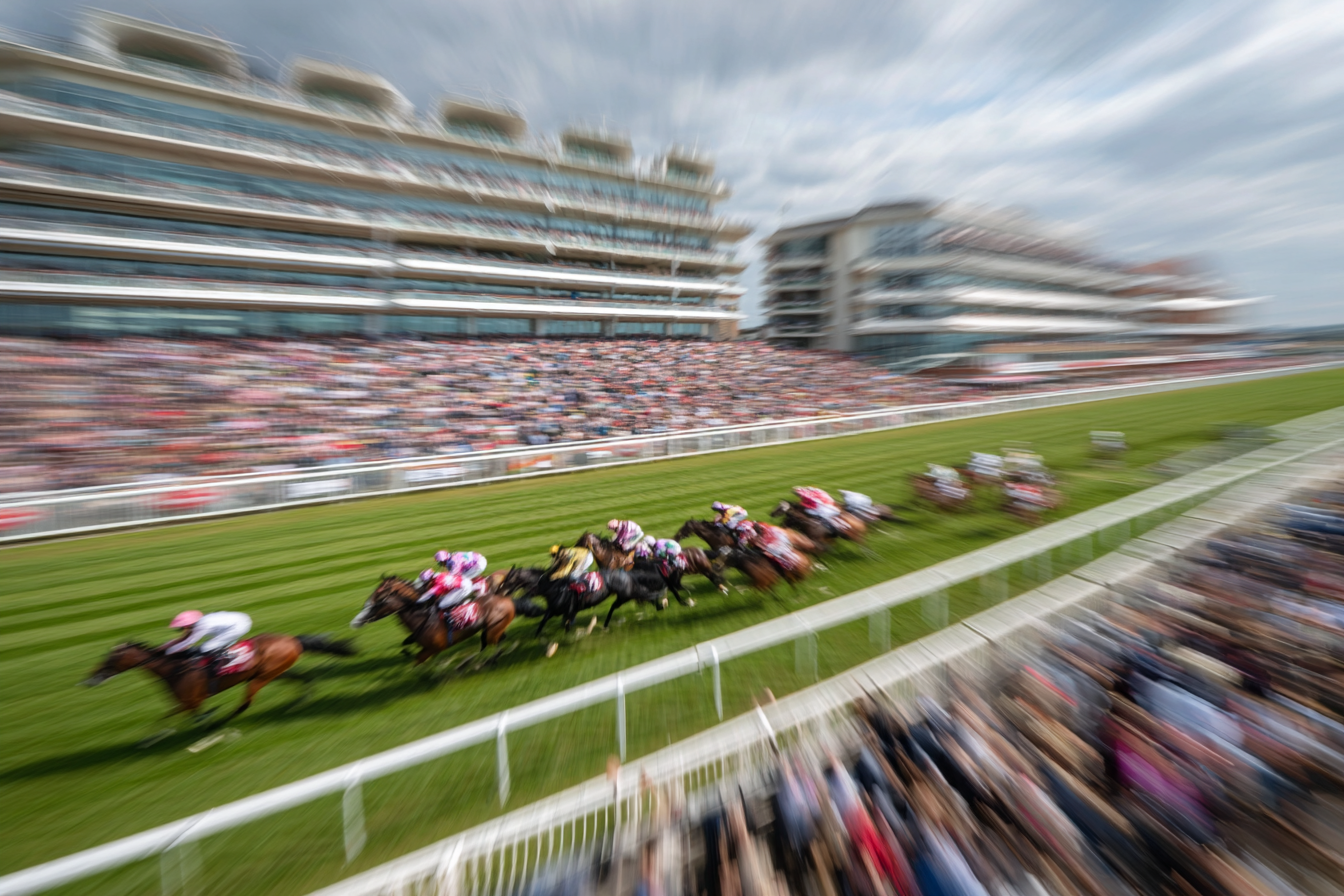
Decisions made around races like the Ascot Gold Cup involve form analysis, variable conditions, and genuine uncertainty spread across weeks of waiting. Yet punters and connections alike commit to positions long before the race runs, knowing the ground could change, a horse could lose form, or a rival could emerge from nowhere. That willingness to act under uncertainty, accept the possibility of being wrong, and stay engaged is the same psychological muscle riders use every time they get on a horse they haven’t fully figured out yet.
The overlap between equestrian risk tolerance and the psychology of competitive betting runs deeper than it might first appear. Both involve calibrated optimism, loss aversion, and repeated engagement with outcomes that cannot be fully controlled. What looks like boldness from the outside is usually just a well-practised relationship with uncertainty — and riders have been building that relationship one ride at a time for as long as people have been getting back on horses after falling off them.
)