



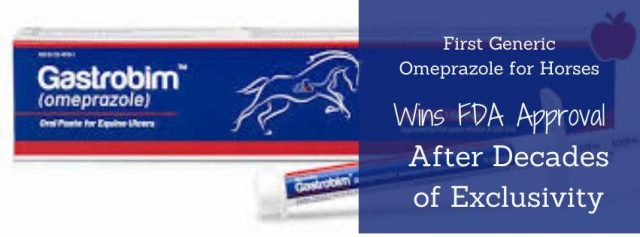
First Generic Omeprazole for Horses Wins FDA Approval After Decades of Exclusivity
Big news for horse owners: more affordable ulcer treatment is on the way.
The U.S. Food and Drug Administration (FDA) recently approved the first generic omeprazole oral paste for horses, marking a significant milestone in equine medicine and pharmaceutical access. Announced in early April 2026, the approval of Gastrobim (omeprazole) introduces a long-awaited alternative to a single long-dominant brand-name therapy for equine gastric ulcers.
Omeprazole is a proton pump inhibitor (PPI), a class of drugs that reduces stomach acid production by blocking acid-secreting pumps in the stomach lining. In horses, it is primarily used to treat and prevent equine gastric ulcer syndrome (EGUS) — a condition that affects a large percentage of performance horses, including racehorses, show horses, and even recreational animals.
Gastric ulcers in horses can cause a wide range of issues, including poor appetite, weight loss, behavioral changes, colic symptoms, and decreased athletic performance. Because horses naturally produce stomach acid continuously, especially when stressed or fed intermittently, they are particularly susceptible to ulcer formation.
Omeprazole paste is administered orally, typically once daily for about four weeks to treat ulcers, followed by a lower maintenance dose to prevent recurrence. The drug has been considered the gold standard for equine ulcer treatment for decades due to its proven effectiveness.
Although omeprazole itself has been widely used in both human and veterinary medicine for years, developing a generic version for horses proved more complex than it might initially seem. The original brand-name equine product, GastroGard, was approved in 1999 and remained the only FDA-approved formulation for over two decades.
One major reason for the delay is the stringent regulatory pathway required for animal drug generics. To gain FDA approval, a generic must demonstrate bioequivalence, meaning it delivers the same amount of active drug into the bloodstream at the same rate as the original product. This requirement is particularly challenging for omeprazole paste because of its formulation.
Omeprazole is sensitive to stomach acid and must be protected through specialized delivery systems to ensure it reaches the site of absorption intact. Achieving consistent absorption in horses, whose digestive systems differ significantly from humans, requires careful formulation and testing. The FDA ultimately approved Gastrobim after studies showed it matched the brand-name drug in pharmacokinetic performance.
Additionally, market dynamics played a role. The equine pharmaceutical market is smaller than the human market, which can reduce financial incentives for generic manufacturers to invest in the lengthy and costly approval process. Until recently, many horse owners relied on compounded or imported alternatives, which are not FDA-approved and can vary in quality and consistency.
The approval of the first generic omeprazole paste has several important implications for horse owners, veterinarians, and the broader equine industry in the United States.
1. Increased access and affordability
Perhaps the most anticipated impact is cost. While official U.S. pricing for the new generic has not yet been widely published, generics typically introduce competition that can drive prices down over time. Given that ulcer treatment often requires multiple weeks of daily dosing, and that some horses need ongoing preventive therapy, cost has long been a barrier to consistent treatment. More affordable options could mean that more horses receive proper diagnosis and treatment, rather than partial or inconsistent care due to expense.
2. FDA-approved alternative to compounded products
Before this approval, many owners turned to compounded omeprazole products or imported formulations. While these options can be less expensive, they are not subject to the same rigorous FDA review for safety, effectiveness, and consistency. The new generic provides a regulated, standardized alternative that veterinarians can prescribe with confidence, potentially improving treatment outcomes and reducing variability.
3. Continued veterinary oversight
Like the brand-name product, the generic omeprazole paste is available only by prescription from a licensed veterinarian. This ensures that treatment is guided by proper diagnosis and dosing, which is important because not all digestive issues in horses are caused by ulcers.
4. Broader industry impact
The approval may also encourage additional competition in the future. As more manufacturers enter the market, prices could decrease further, and innovation in delivery methods or formulations may follow. Moreover, the move reflects a broader trend within the FDA to expand access to generic animal drugs, which can improve animal welfare while supporting veterinarians and owners with more treatment options.
The FDA’s approval of the first generic omeprazole paste for horses represents more than just another drug entering the market, it signals a shift toward greater accessibility and standardization in equine healthcare. By providing a bioequivalent alternative to a long-standing brand-name medication, the agency has opened the door to potentially lower costs, improved treatment compliance, and better overall outcomes for horses suffering from gastric ulcers.
For horse owners in the United States, this development is likely to be welcomed as both a practical and economic advancement, one that could make a common, often costly condition easier to manage in the years ahead.
