



Performance Starts in the Mouth: The Importance of Equine Dental Care
Why routine dental care matters more than many of us think.

Canva/CC
For many horse owners, dental care can fall into the “I’ll get to it” category of horse ownership. It’s not always as visible as a lameness issue, not as urgent as a colic scare, and not nearly as Instagram-worthy as a shiny coat or a clean tail. But the truth is your horse’s mouth can quietly become a problem long before you ever notice anything is wrong.
A recent piece from Texas A&M College of Veterinary Medicine & Biomedical Sciences, featuring insights from Dr. Kyle Johnson, breaks down exactly why dental care isn’t optional.It’s foundational to your horse’s health.
The wear-and-tear problem you can’t see
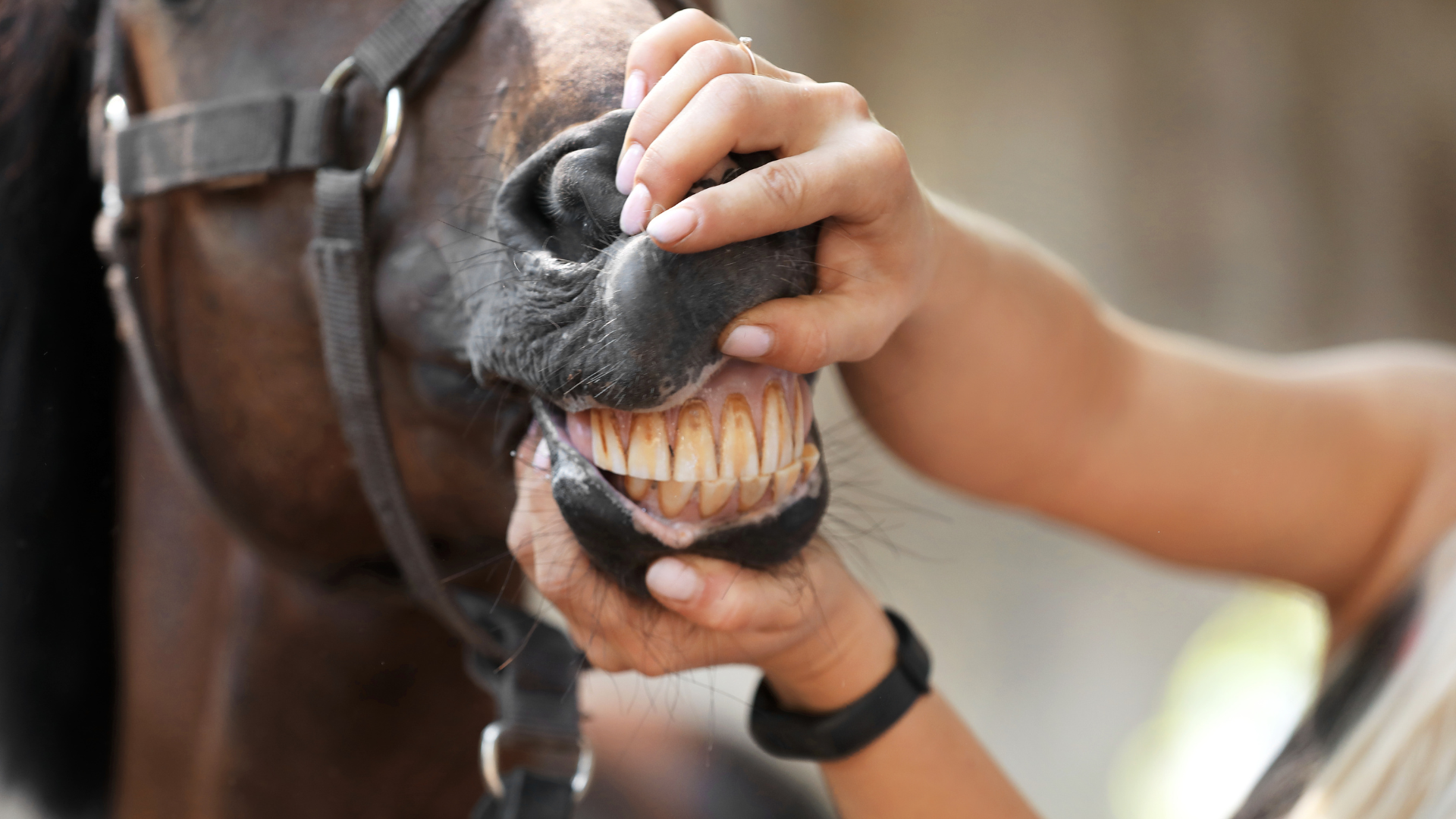
Horses are designed to chew. Constantly. That’s great for forage digestion, but it also means their teeth are under nonstop wear. Over time, that wear doesn’t always happen evenly.
What you get instead is:
- Sharp enamel points
- Uneven surfaces
- Potential fractures or periodontal issues
And because horses are prey animals, they’re masters at hiding discomfort. By the time you do notice something, the issue is often already well underway.
Canva/CC
“But don’t horse teeth just keep growing?”
Not exactly. And this is where a lot of people get it wrong.
Horses don’t have endlessly growing teeth. They have a finite reserve of tooth that slowly erupts over time. Once it’s gone, it’s gone.
That’s why routine dental care matters: it helps preserve that limited tooth structure and prevents uneven wear from accelerating the problem.
Skip maintenance long enough, and you’re not just dealing with discomfort—you’re shortening the functional lifespan of your horse’s teeth.
The subtle (and not-so-subtle) signs you might be missing
Early dental issues don’t always scream for attention. They whisper.
Some of the most common early signs can include:
- Quidding (dropping partially chewed hay—think little “bird nests” on the ground)
- Long, undigested fibers in manure
- Slower eating or messy feed habits
As things progress, you may see:
- Weight loss
- Head tossing or resistance to the bit
- Tilting the head while chewing
- Bad breath
- Nasal discharge or swelling
And here’s the kicker: poor chewing doesn’t just affect nutrition. It can increase the risk of choke and colic.
Floating: not optional maintenance

Canva/CC
One of the most common procedures is floating, where a veterinarian smooths down those sharp points. It’s not cosmetic; it’s pain management and function restoration.
Left unchecked, those points can:
- Cut into cheeks and tongue
- Create chronic discomfort
- Change how your horse eats, moves, and performs
Who should be doing your horse’s teeth?
This matters more than you think. There are people out there offering dental services without being veterinarians. Some don’t use proper sedation. Some don’t have the training to fully evaluate what’s going on.
That’s a problem.
Proper dental exams require:
- Full visualization of the mouth
- Appropriate sedation (for safety and thoroughness)
- The ability to diagnose deeper issues (including sinus involvement)
A licensed veterinarian brings all of that.
How often is “routine,” actually?
- Most horses: once per year
- Senior horses (15+): every 6 months
Older horses are especially prone to dental issues, and by that point, you’re managing wear, not just preventing it.
What it boils down to is that dental care isn’t optional. It’s part of baseline care — right alongside vaccinations, deworming, and farrier care.
Sure, a horse can work through a lot of discomfort. They’ll keep showing up, keep trying, keep doing the job. But that doesn’t mean they should have to. And dental pain is one of the easiest things we can prevent if we stay ahead of it.
Canva/CC
Source: Adapted from reporting by the Texas A&M College of Veterinary Medicine & Biomedical Sciences: “Why Dental Care Matters for Horses.”
