



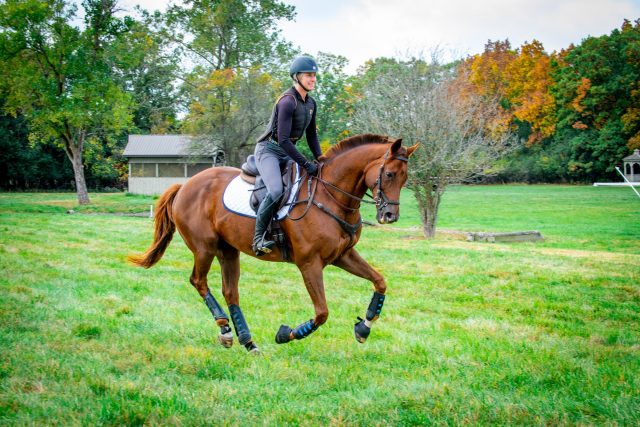
Thoroughbred Logic, Presented by Kentucky Performance Products: Go Wide
Sometimes the kindest contact for a green horse isn’t perfect equitation, but giving them space, options, and room to figure out their own balance.
Welcome to the next installment of Thoroughbred Logic. In this weekly series, Anthropologist and trainer Aubrey Graham, of Kivu Sport Horses, offers insight and training experience when it comes to working with Thoroughbreds (although much will apply to all breeds). This week ride along as Aubrey shares her logic on why wide(r) hands can be kind and helpful for a green horse.
Yes, it is football season. No, this is not what this is about. Though I’m sure if I stretched hard enough into my minimal sports knowledge, I’d be able to tie some metaphor together, but I’ll not torture you with that today…
So here’s the thing. “Correct” equitation teaches riders to hold their hands about four inches apart above the front of the wither, making a straight line from elbow to knuckles to the bit. Super. And that works great… if your elbows can be bungee and if your horse is schooled and in perfect comfort through their limbs.
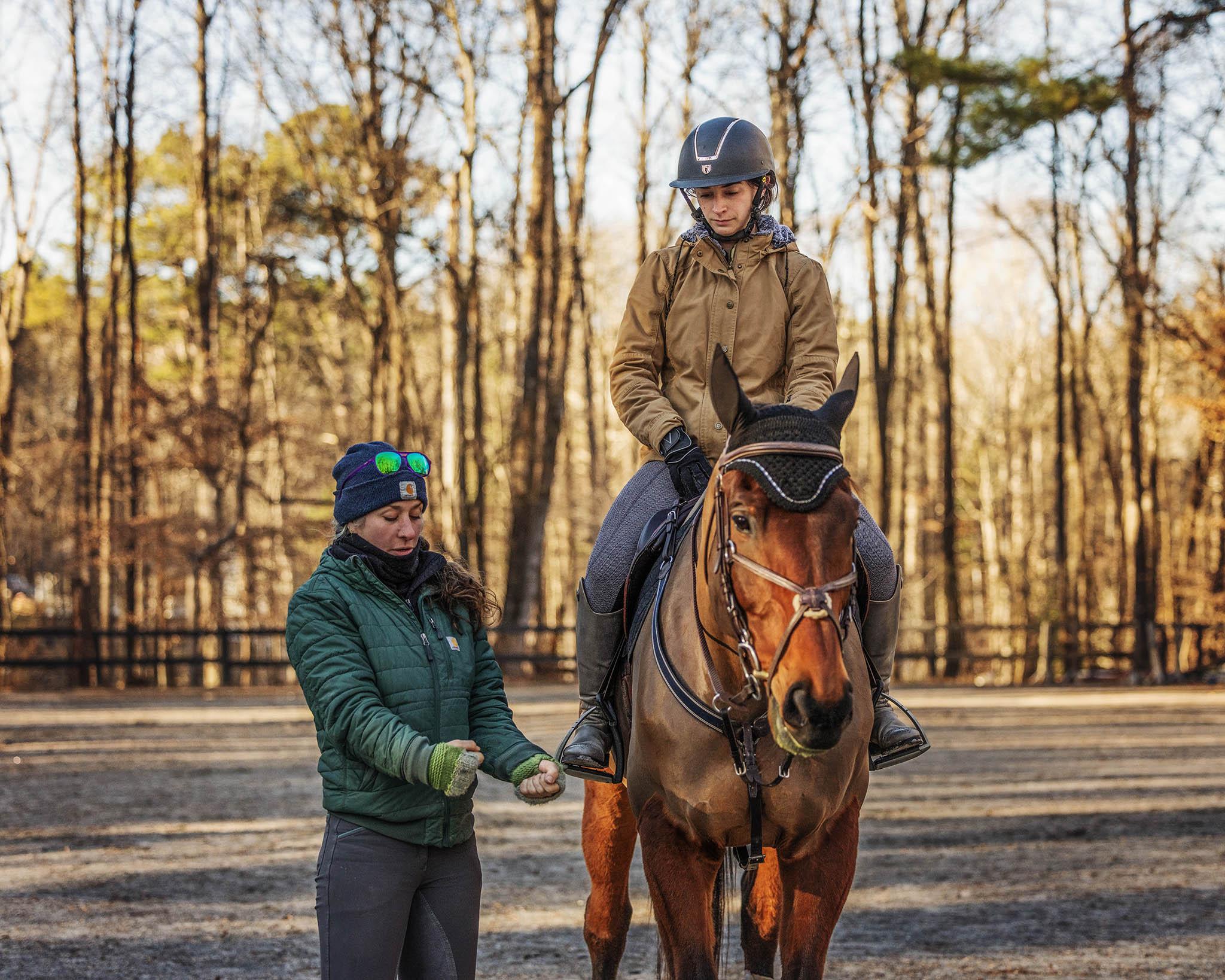
Reviewing the break in the line from bit to knuckle to elbow when the wrist rolls over. Photo by Dawn Light Photography
But when riding green Thoroughbreds (or anything green or any horse with limb issues — hock arthritis, sticky stifles, etc.), I spend most of the ride with wide hands. And when I say wide, I do mean it — like, I try to be able to fit both of their shoulders between my hands. When I’m teaching, another way of putting it is that the rider must be able to fit their own hips between their hands, sometimes twice over.
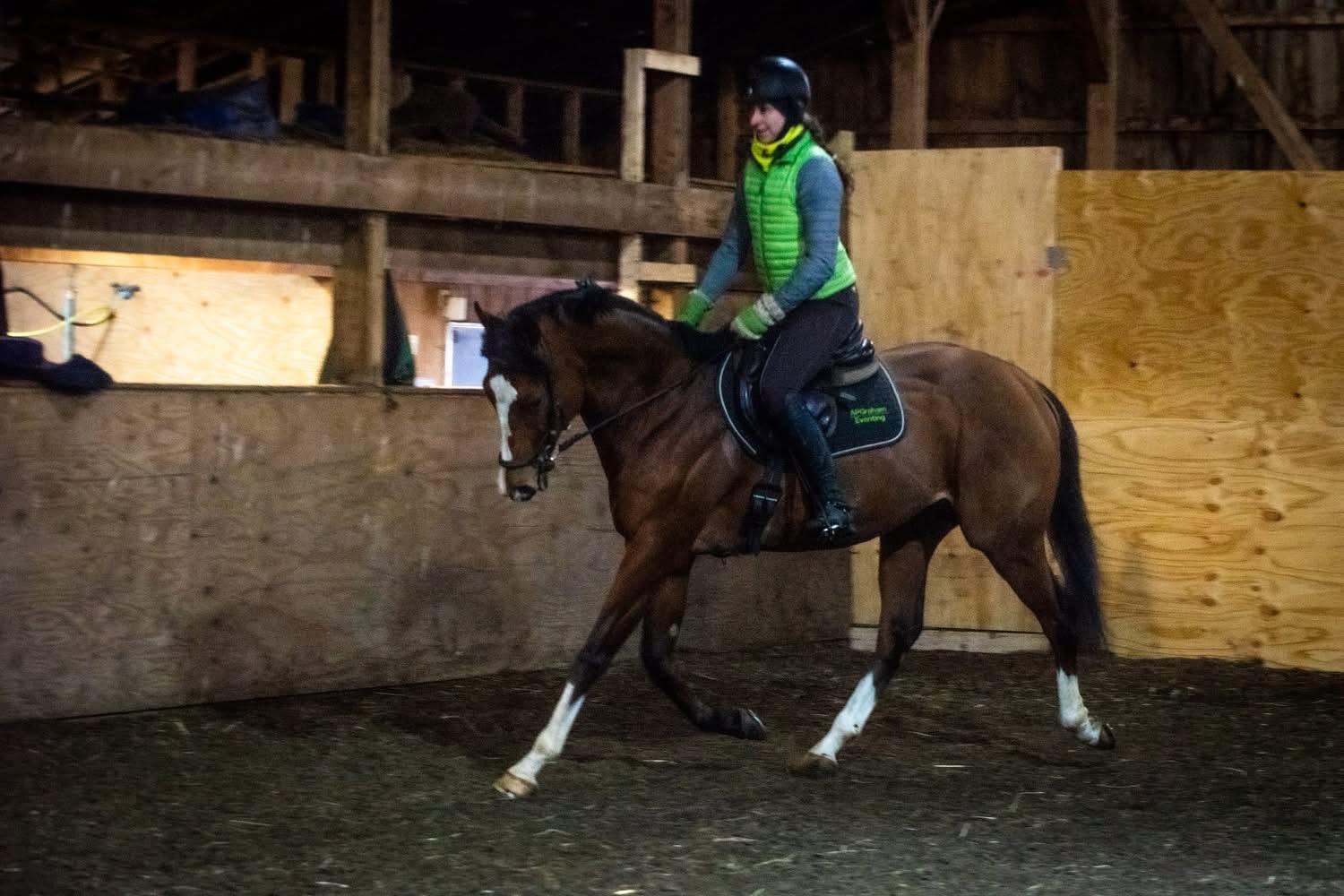
Piloting Joel (Downtown Man) around with wide hands. Photo by Lily Drew.
For folks taught to keep hands tight together, this is going to feel odd. Potentially ridiculously awful.
If a rider is reliant on their hands or has a tendency to lock their elbows, a wide hand might knock them a bit off balance. Often when one goes wide, they may rock back over their pockets, losing the balanced seat and connection. All good there, time to practice staying more in the center, keeping both seat bones and the front of one’s pelvis in the saddle and riding with light hands.
And while going wide might be uncomfortable at first, there are a couple big benefits to that stance:
- Better control of the shoulders and bend
- Improved straightness
- A happier horse through accommodations
- And increased trust
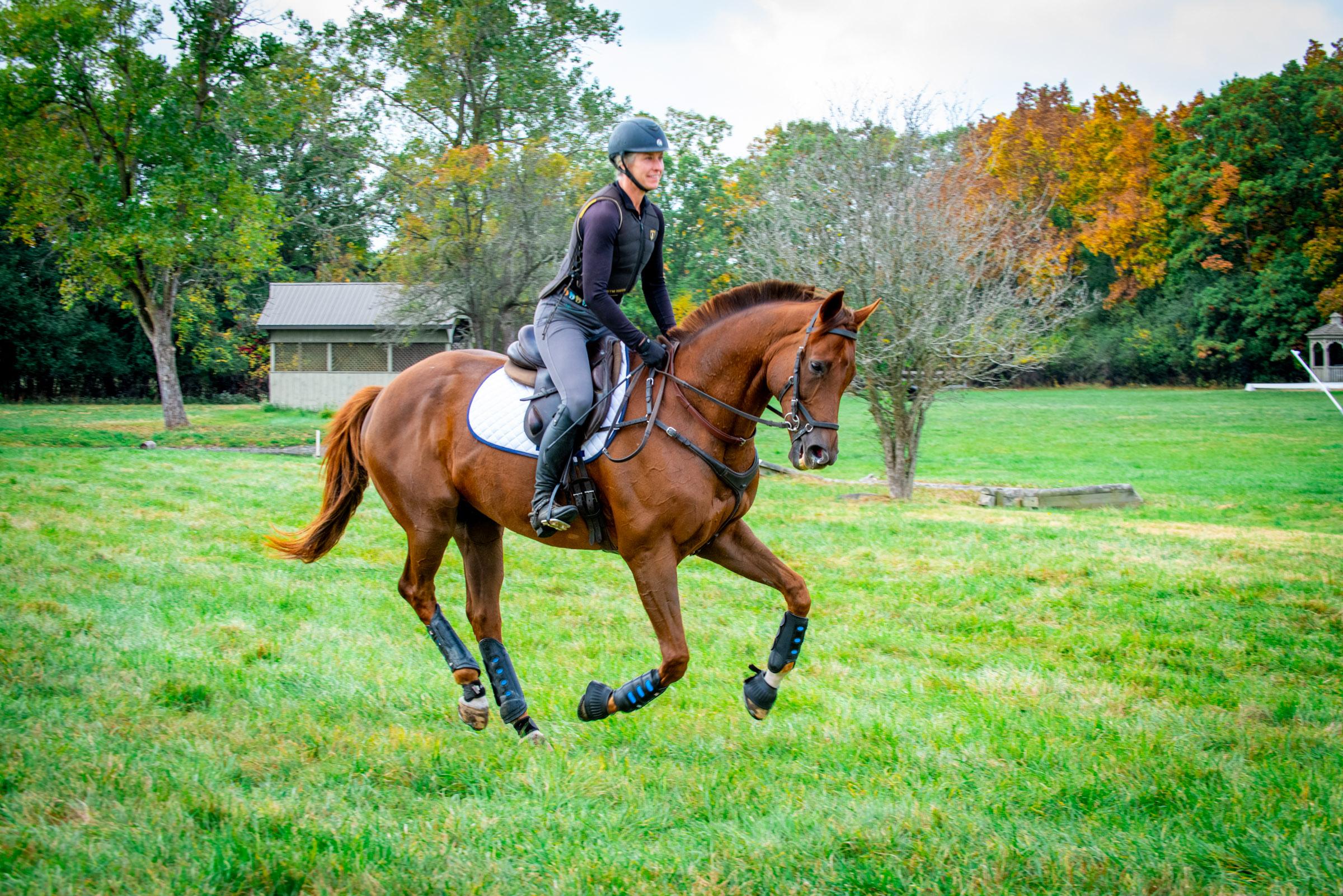
Indy (Star Player) requires a tactful ride that both can go wide to allow for options and to come back up to center for the more advanced work. Photo by Lily Drew.
Staying annoyingly wide with the hands allows a rider to get a figurative grip on a horse’s shoulders. When Thoroughbreds are coming off the track, they usually are better at softening into a bend one way rather than the other (cue croissant article). Thought about another way, they are better at stepping either the right or left hind leg under them to balance and thus, they are better at moving the shoulder one way into a particular bend.
A current horse I’m working with, Bruce (Scotty Silver) is a super quick study. He came in with a preference for his left bend. But so long as I stay wide with my hands and keep the inside leg on and push him over, he’s learning to step under with the left hind and stay round and straight tracking to the right as well. That one is going to be wildly athletic and fancy — going wide is just an early step to help him also work towards those goals.
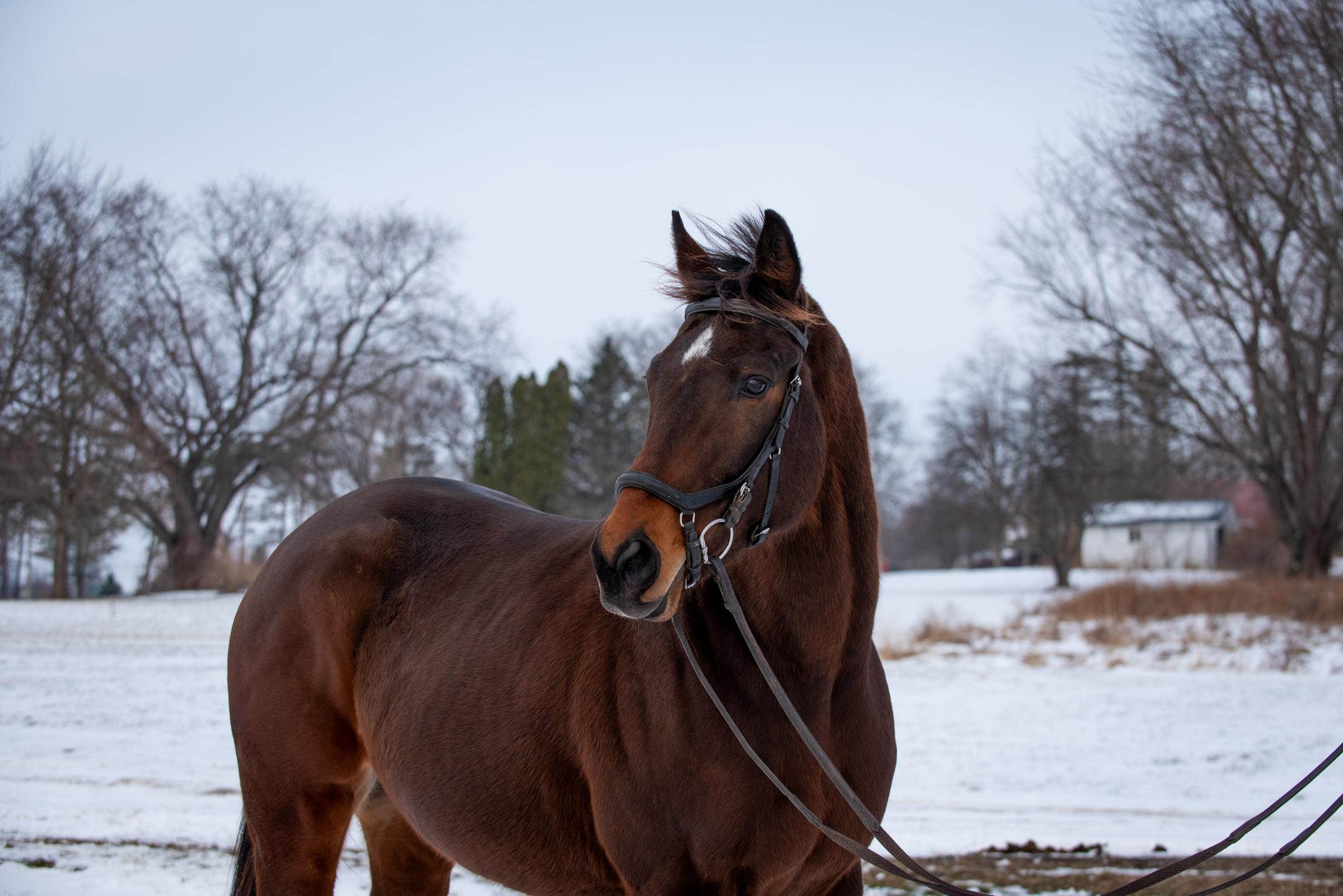
Bruce (Scotty Silver) being as handsome as he is talented. Photo by Lily Drew.
When a horse struggles to get the bend correct, or to understand what the rider is trying to communicate, it is common to see riders take their hand across the neck trying to create flexion in that direction. You know what this looks like — wrist hooked over hand pulling to the other side of the wither, horse nonetheless leaning through the inside shoulder while their nose is tilted in. That tactic probably is instinctual. But despite its logic, it doesn’t tend to work.
Going wide and creating space for the horse to work within opens up more options — especially when it comes to the shoulders. If they’re locked, counterbent, or falling in (all issues that include the shoulder), a wide, steady outside rein gives them support and a clear space to move over into. A guiding wide inside rein keeps a straight line to the bit while allowing a rider to put their leg on solidly and shift their ribs into that steady inside leg to outside rein. Going wide helps to create the balance and associated correct shape from hind outside leg through the limbs, ribs, shoulder and neck until the horse can be soft and correct in the contact.
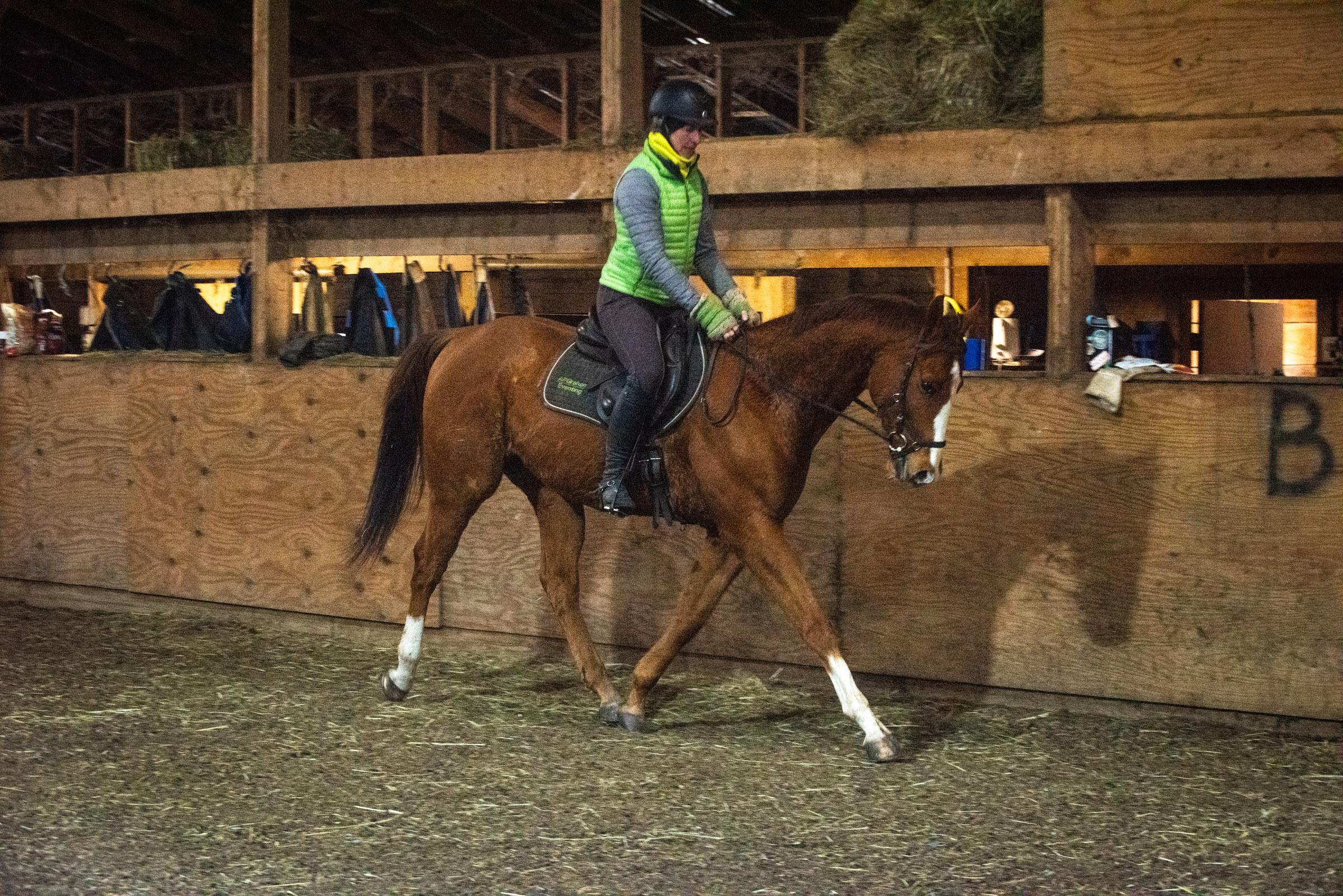
Oats (Otis on the Cape) learning to step through and move into the outside rein. Photo by Lily Drew.
And what comes from this is a straighter horse — one who can bend both directions but also stay on a given line held steady between your legs and hands. It is no surprise that when jumping young horses, riders “go wide,” giving them a clearer channel to flow down to and over the fence.
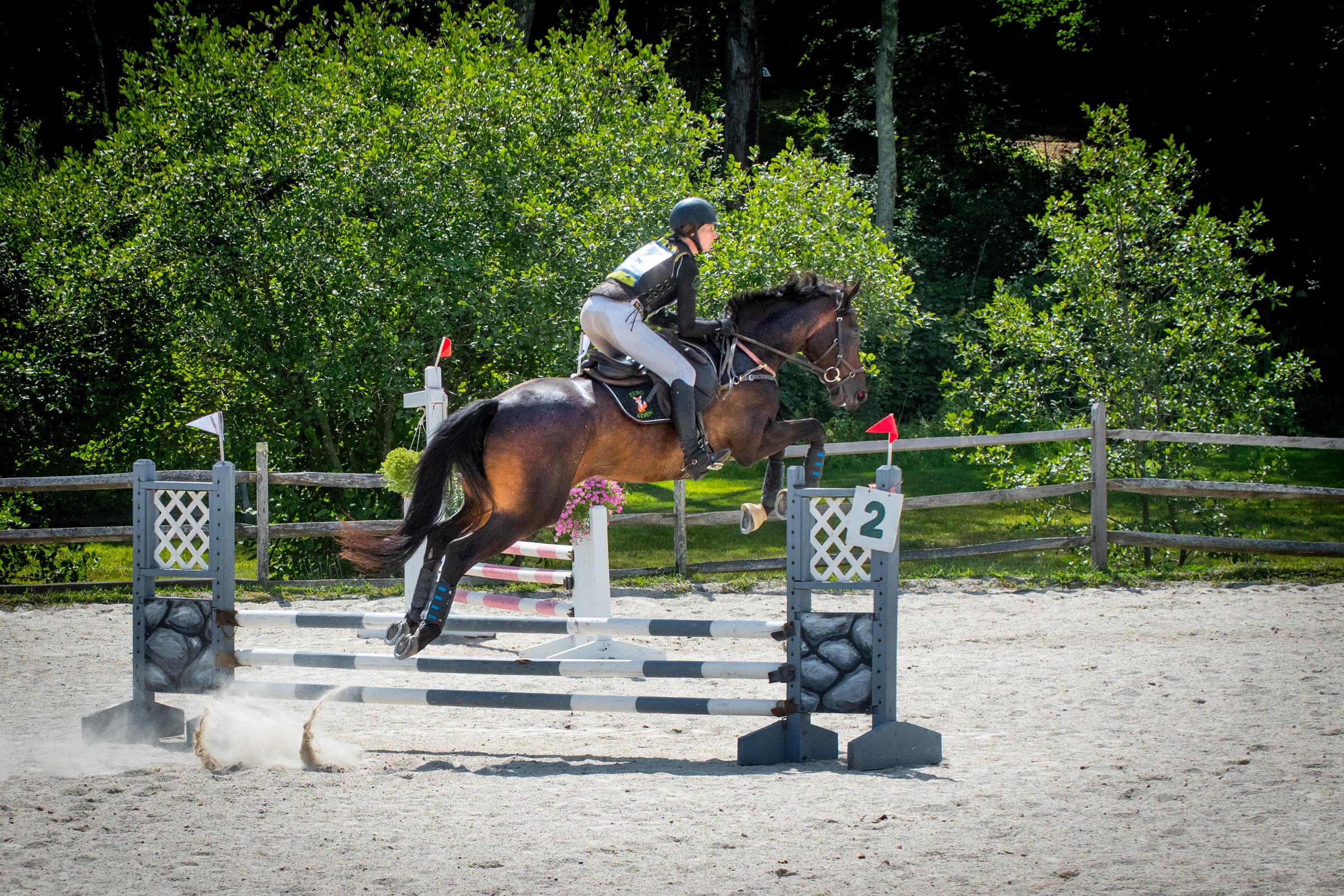
Jumping the electric eel (Neil (Lute’s Angel() always requires a wide hand on approach as he’s still super green. Photo by Allen Graham.
As they start to understand the ask and get stronger over their topline, the hands can start to migrate back towards the center (but this time with more education below them).
Another primary benefit of wide hands is the ability to accommodate the horse. I have written about making accommodations for Thoroughbreds (apparently twice — the 2023 article here and 2025 here), allowing them their imperfections. The goal is always to wrap those needs into the ride as opposed to trying to force them out. Riding wide is another facet of that situation and probably my first go-to solution.
When I watch upper level dressage riders with their hands elegantly elevated above the neck and knuckles basically touching, I can see that they are controlling their horses’ footfalls to within inches. Their equitation inspires — and requests — perfection. It is pretty awe inspiring when it is done well.
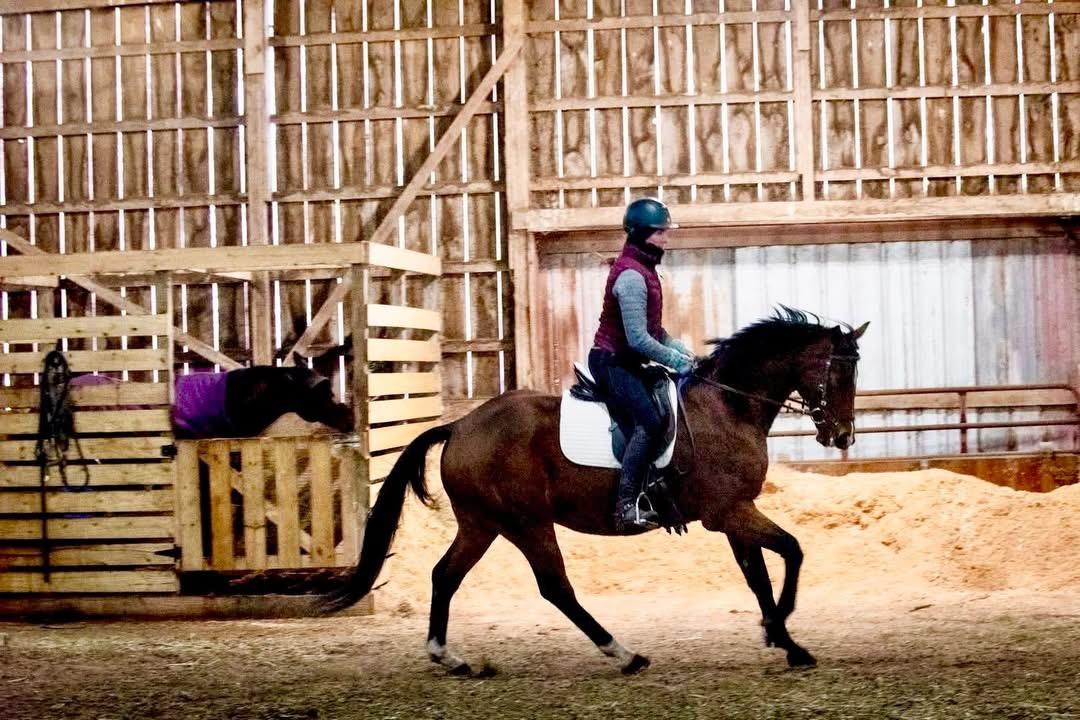
I’m no professional dressage rider, but Tobi (Fernando) has gained control of his shoulders and straightness, so can be ridden with a higher, narrower hand. Photo by Lily Drew.
With recent off-track Thoroughbreds who have not trained for many years to build the hind end and core strength needed for that precision, that hand position becomes damning and often inspires little but irritation on their part.
These horses need options when it comes to their footfalls. They are figuring out their bodies, potentially dealing with arthritis and joint discomfort, or simply trying to build topline, strength and sort out a life post track. And as such, it’s pretty damn tough to place the feet where said high, narrow hand tells them to go. It takes muscle they might not have; it demands the use of the joints in a way that may not be comfortable.
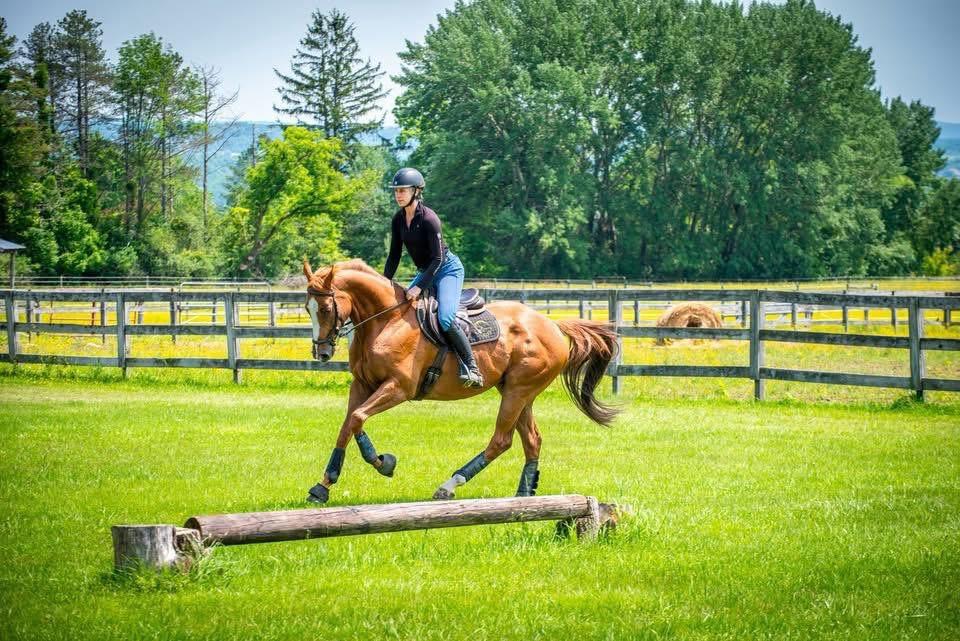
Rhino (Classy Cowboy) came back to me with a history of being fractious. Once he realized he could put his feet where he needed, he settled and got to show off how fancy he had become. Photo by Lily Drew.
But if you give them a wider hand, you are giving them options. They’re able to make an effort at the ask without the penalty of having to get it 100-percent correct to be successful. In other words, the narrower the hand, the more one is requesting perfection.
So, if you have a horse who loses their balance and takes a few off or weird steps on a turn or straight line here or there, accommodate with wider, supportive reins and steady leg and see if they’re able to expand their footfall options towards sound. (Yes, yes, you should also have a vet check up on what’s going on, too). But when riding, the knowledge that ‘wide is kind’ can be quite helpful.
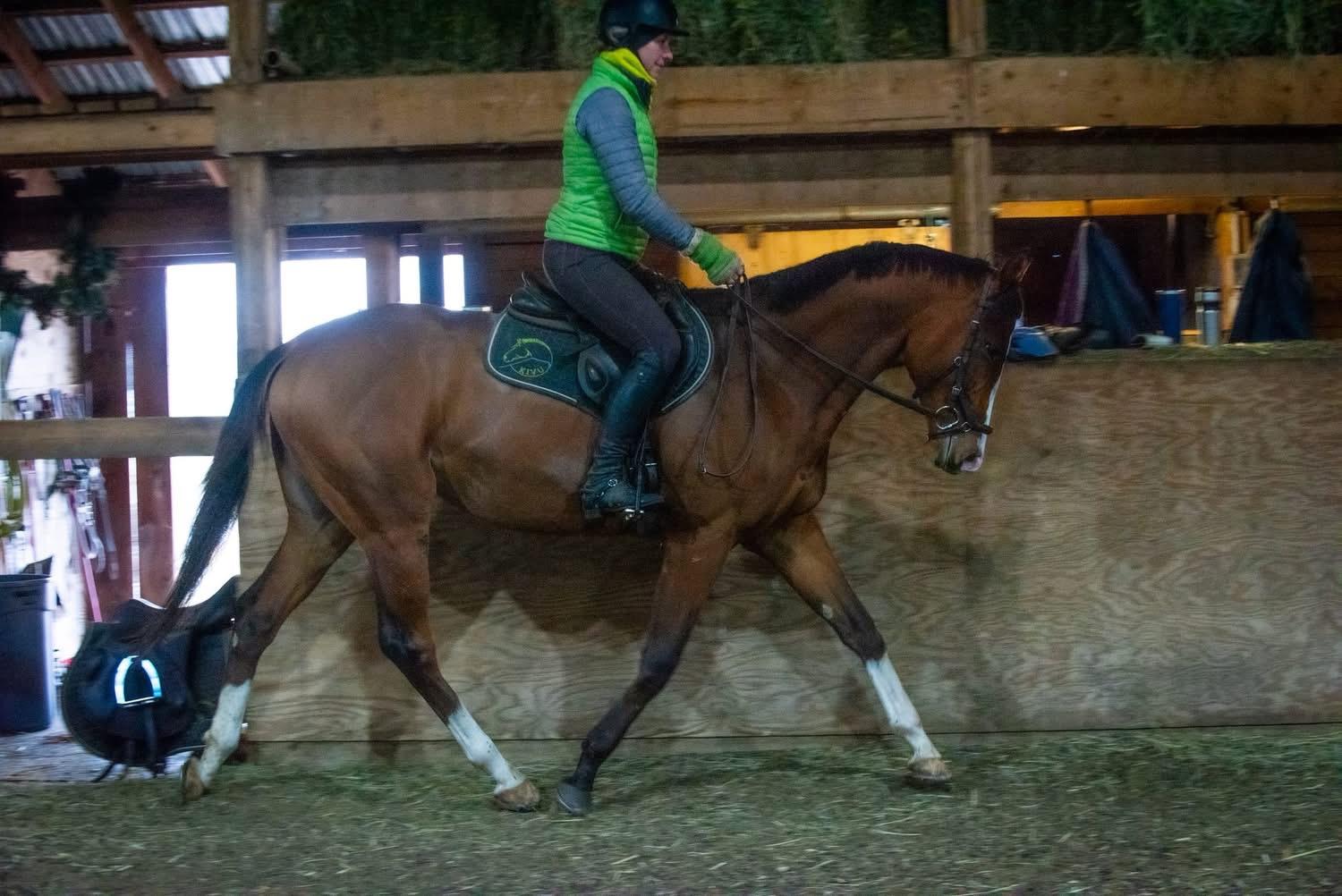
A wide ride got Joel here for his second post track ride. I’ll take it. Photo by Lily Drew.
Many of the fractious horses who arrive here lose their antics when ridden wide. When they realize that they can place their feet in ways that do not increase stress or pain, they settle and are increasingly willing to follow the rider’s lead.
And as such, the wide hand engenders trust and confidence. It offers options to your horse and a range of ways to take a shot at the right answer. And when these smart, smart kids learn that the ride is not one narrowly defined demand after another, things shift. Explosive antics or spooking fade to a head toss or a shifted shoulder and eventually dissipate all together. Balance increases. Speed becomes steady and controllable. And strength is built on the body they have, not the body we assumed they should have.
And as such, the simple act of going wide can grow trust and craft a stronger partnership by providing them options. Wide sets the bar at the level where one can praise not just perfection, but the try. I’ll take it.
So go ride folks. I’m off to layer up as I realize that today is the warmest it will be by close to 30 degrees this week… ooooof. Stay toasty out there!
About Kentucky Performance Products, LLC:
Is your horse coughing? Does he have nasal discharge? Unfortunately, wintertime environmental factors, such as spending more time in a stall, can aggravate respiratory symptoms this time of year. Research trials conducted at the University of Georgia demonstrate the benefits of AirWise in supporting a return to normal airway function. Formulated using a synergistic blend of high-quality, potent antioxidants and micronutrients, AirWise sustains a healthy inflammatory response in your horse’s airway and supports optimal respiratory and immune function.
Ask your veterinarian about AirWise.
Kentucky Performance Products creates scientifically proven supplements for your horse. Our supplements provide solutions to the everyday challenges facing your horse. The horse that matters to you matters to us®. Learn more about KPP at kppusa.com.

