



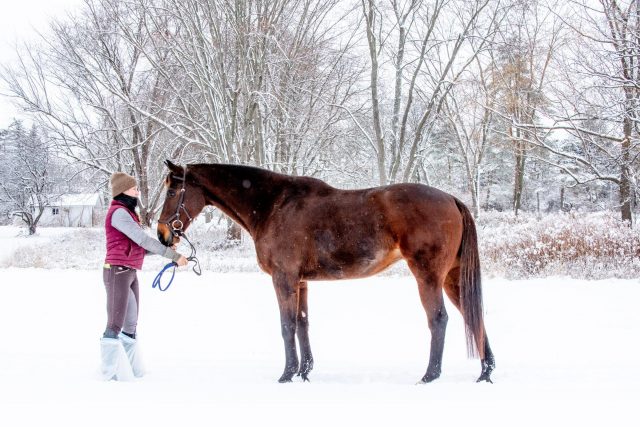
Thoroughbred Logic, Presented by Kentucky Performance Products: Internet Karens and Behind the Vertical
Welcome to the comment section, where everyone’s an expert
Welcome to the next installment of Thoroughbred Logic. In this weekly series, Anthropologist and trainer Aubrey Graham, of Kivu Sport Horses, offers insight and training experience when it comes to working with Thoroughbreds (although much will apply to all breeds). This week ride along as Aubrey shares her logic on internet commentary on horse sales photos.
Putting things out there online comes with a LOT of crap. I’m lucky to have ducked much of it, but do enough sales ads and you know it’s coming. Folks you don’t know will start commenting on your weight, your clothes, the impeccability of your boots (not kidding), and your horsemanship. And they’ll do it all from a still photo. And from miles away, often secure in their lair, tapping righteously away on some tablet.
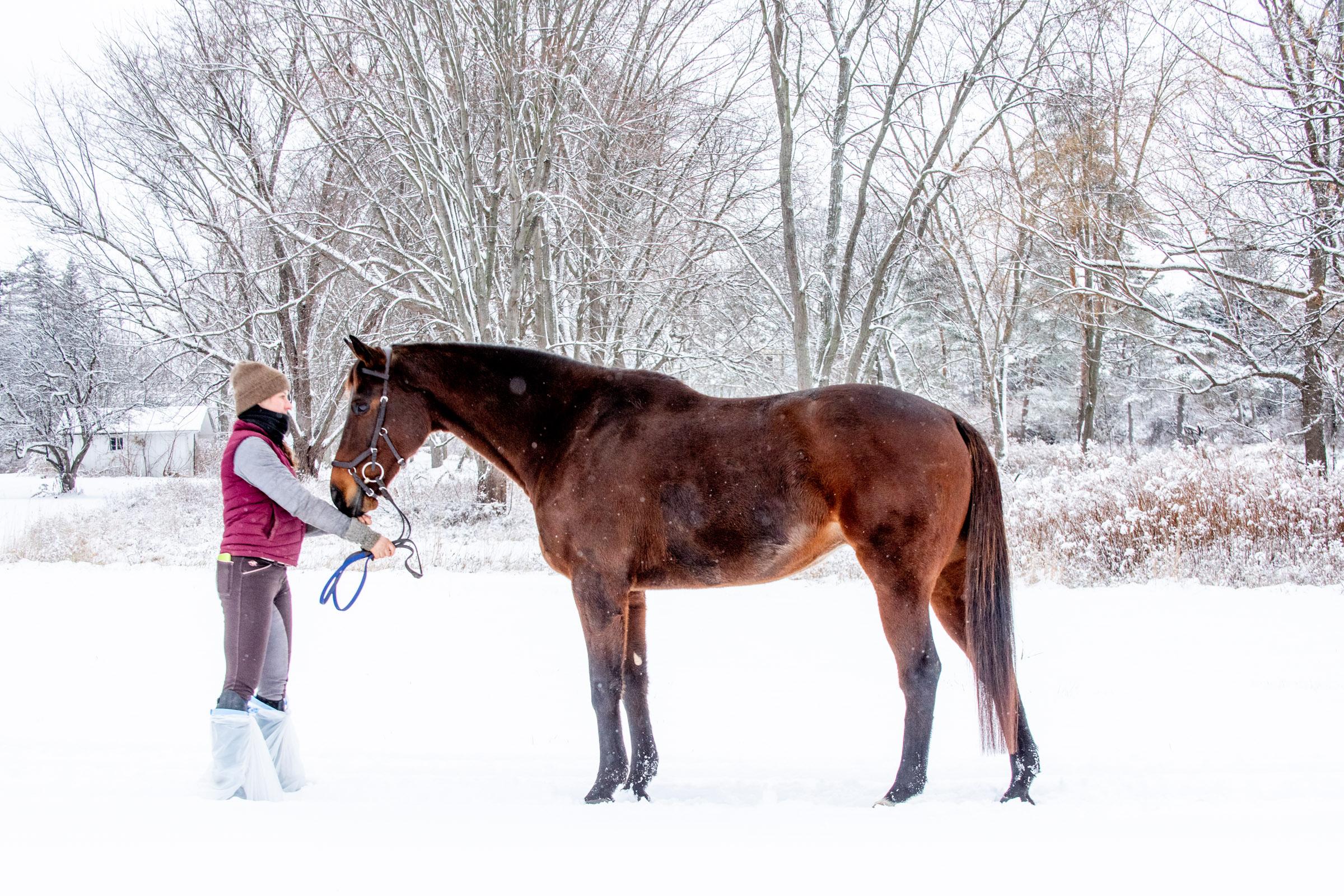
Yep, folks, feel free to critique my “bag lady” look. It was too damn cold and my back was too shot to change boots twice between the house, the barn, the shoot and the ride. Nope. Some days are about efficiency. Now please look at the horse — EJ (Exclusive Justice) is quite handsome. Photo by Lily Drew.
I am a cultural anthropologist, yes, but one of my subfields was Visual Anthropology. These Karen comments speak not only to how we take photographs, but also how we read and respond to them. I have taught university courses on this, published a dissertation looking at the creation, reading, and implications of aid photographs in the eastern Congo. Look Karens, you’re kinda great. This is SO, so interesting (at least to me). I can’t ever really shake my academic past, so when folks get their knickers twisted around a photo, I lean in, try to figure it out, and ask a lot more questions.
Because here’s one reality that I have found as close to true as you get: It is not the other trainers of any reputation doing this. They are not looking at your sales ad and taking away from your horse with comments saying, “That can’t be 16.3. Looks like a pony to me,” with no jest. They’re not the ones decrying slight ribs on a recent off-track someone is listing to help find a long term home, or the person saying to a friend of mine, “Wow, you would do well to present your horses better with clean boots. How distracting.” And everyone looks past the stunning bay to her tall boots — worn, dirt traced, and evidenced of the damn hard day, month, year, that she has worn them to earn the right and ability to competently present said horse for sale.

In 17 layers and a man’s Carhartt, I’m always waiting for the weight comments. (Bet you all looked at my super worn boots too). Photo by Lily Drew.
Don’t get me started on folks commenting on riders being “too heavy.” Just don’t. There’s a certain ring of hell all set and waiting for anyone on the internet who bullies folks about their weight, whether or not they ride. Believe me, every single rehomer thinks about this when they swing a leg over a smaller horse or stands next to their Thoroughbred to help them get the correct shape to best show off their build. We’re in the images too and next to none of us like it.
So who are these Karens? It is hard to say for sure. A quick assessment of their profiles tend to find them to be an older generation. Folks who maybe once rode, once had a professional career, eons ago. Maybe jumped a big stick or two in their twenties (and that was fifty years before). The profiles of many don’t show any evidence of horsemanship or a life sweated and frozen around the rhythms of these animals. The last dude that went after one of my pictures is some man in his seventies posing shirtless and muscled in an arted-up black and white. I mean, well done you — I hope I look that good at that age, but stay clear of my posts, thanks.
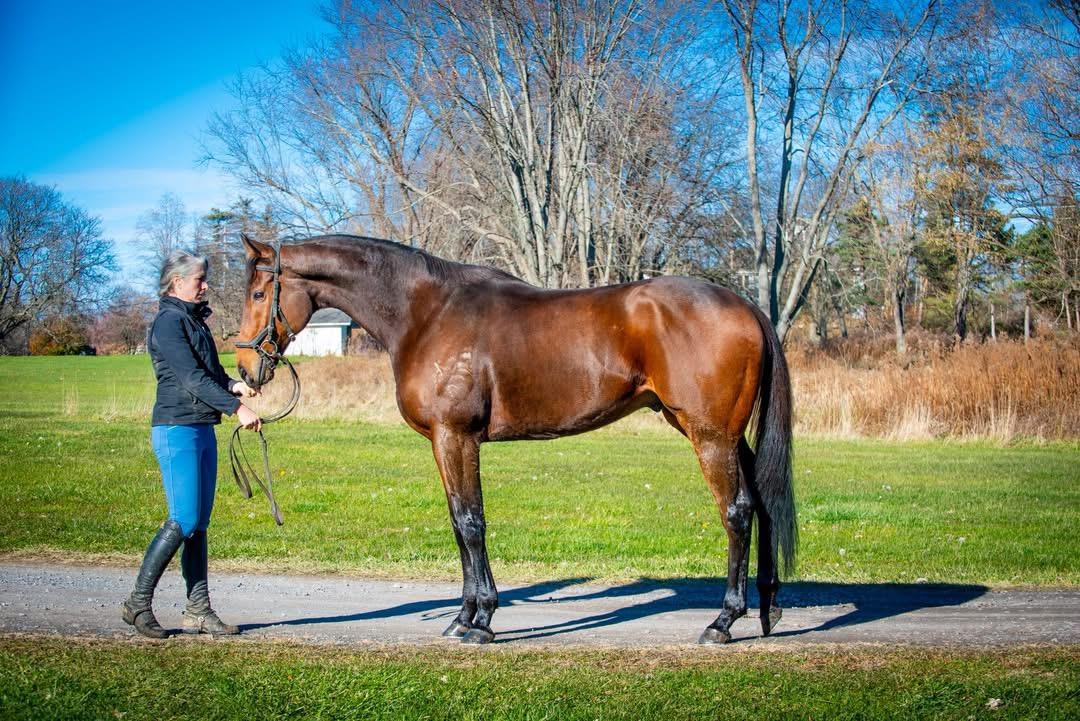
Gandy Dancing, who sticks right at 16.3 got to be the center of an annoying Karen post — “Can’t possibly be 16.3. More like 15.3, right?” I’d rather not have to justify my height, the slope of the driveway or the fact that I do use a proper stick to measure. So somedays, bye Felicia, you’re just blocked. Photo by Lily Drew.
Usually, they’re not shopping. Usually, they’re not riding. Usually they take a look at one image and they suddenly know everything about the world of our riding.
I can say “our” here because the Thoroughbred world is a community. I don’t mean to romanticize that. I’m not trying to say that everyone is peace, love, and Thoroughbreds. Frankly, though, it is a pretty damn supportive group. But anyone in that crowd who has an issue with anyone else there is going to keep that sh*t off the internet or — at very least — off of the specific sales post. Hell, they might even reach out to see if you need help. Basic premise: everyone is trying to make a living and those photographs and posts are the lifeblood to be able to do so.
So let’s get to a favorite Karen pick-apart: the behind the vertical.
Here’s a great example:
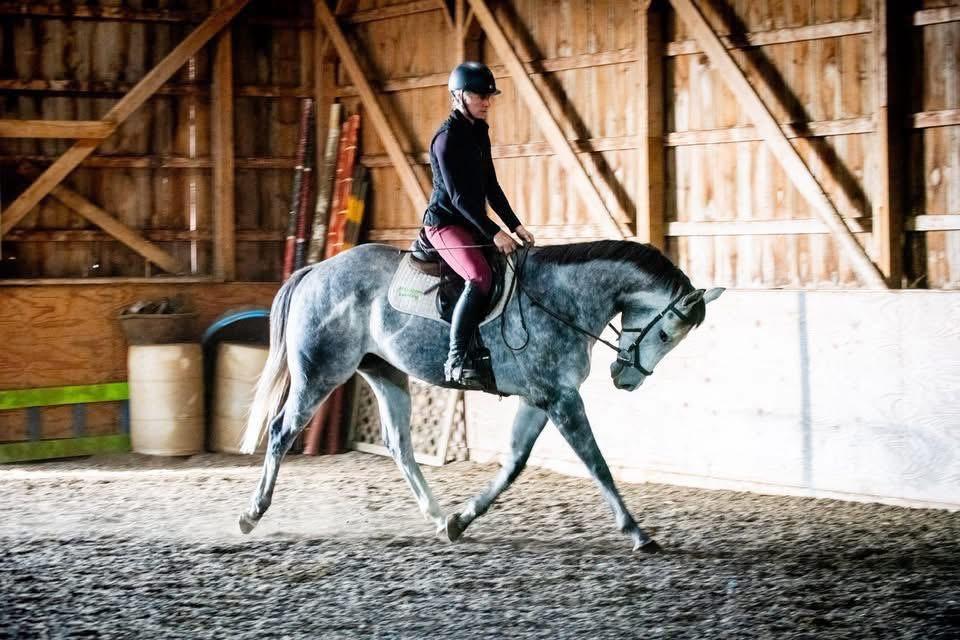
Edward, Exclusive Entry makes a grand gesture showing off his behind the vertical preferences. Keep reading for more info. Photo by Lily Drew.
Yes, there has been much written and rightfully decried about Rolkur in dressage. There is much wrong with forcing or tying a head down. I fully agree here. And I’m the first to go, “Woah woah woah, easy with the hands, ride them from the back to the front” when a lesson student starts the left right pull-down wiggle to bring a horse’s nose down and lower the neck. At that point, I’ll also probably spend the next 15 minutes trying to explain the biomechanics of the horse and how we can “get them over their backs” by riding forward from the leg to said student. OK cool. I’m not perfect, but this is a pet peeve. Fine.
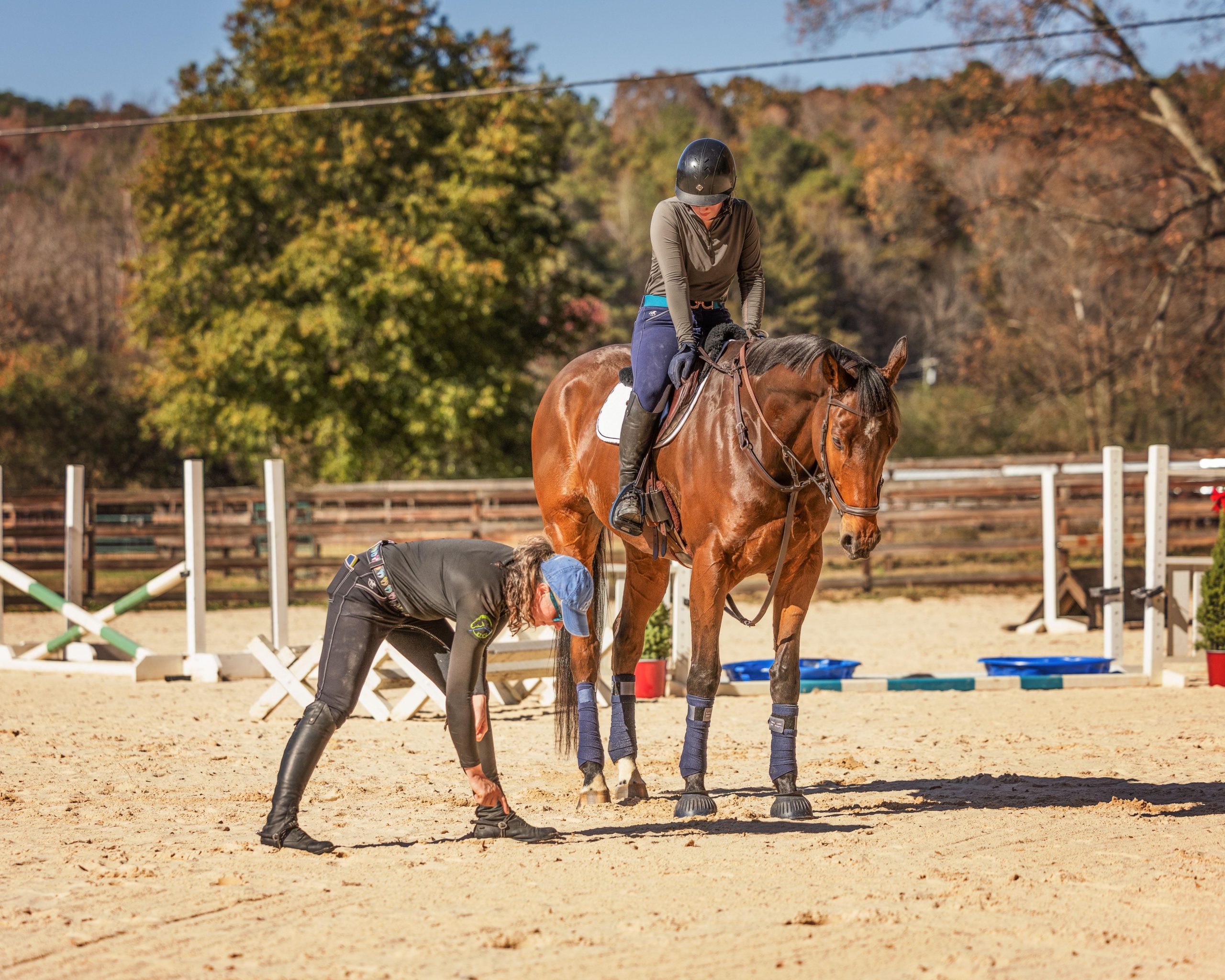
Yep, literally explaining via sand diagrams how getting them forward gets them to engage their core and their back, so no need to wiggle — to be fair here, Adela Narovich was not wiggling her reins to shape up Beau (Hyperbolist) but just needed to kick on more. Photo by Dawn Light Photography
Enter baby Thoroughbreds. Most come off the track in three ways:
- They are hollow llamas with no topline
- They have been correctly trained to use their bodies
- They have been ridden in draw reins and thus learned to sit behind the vertical and curl in
(*Quick caveat, draw reins on the track are used as much to get the horse to use their body as to keep control of them when they otherwise might bolt through their chest.) Right off the track, these horses usually have no idea how to understand, let alone ride confidently, in contact, and going forward in front of the leg often takes most of the first ride if not the first week of rides to spell out.
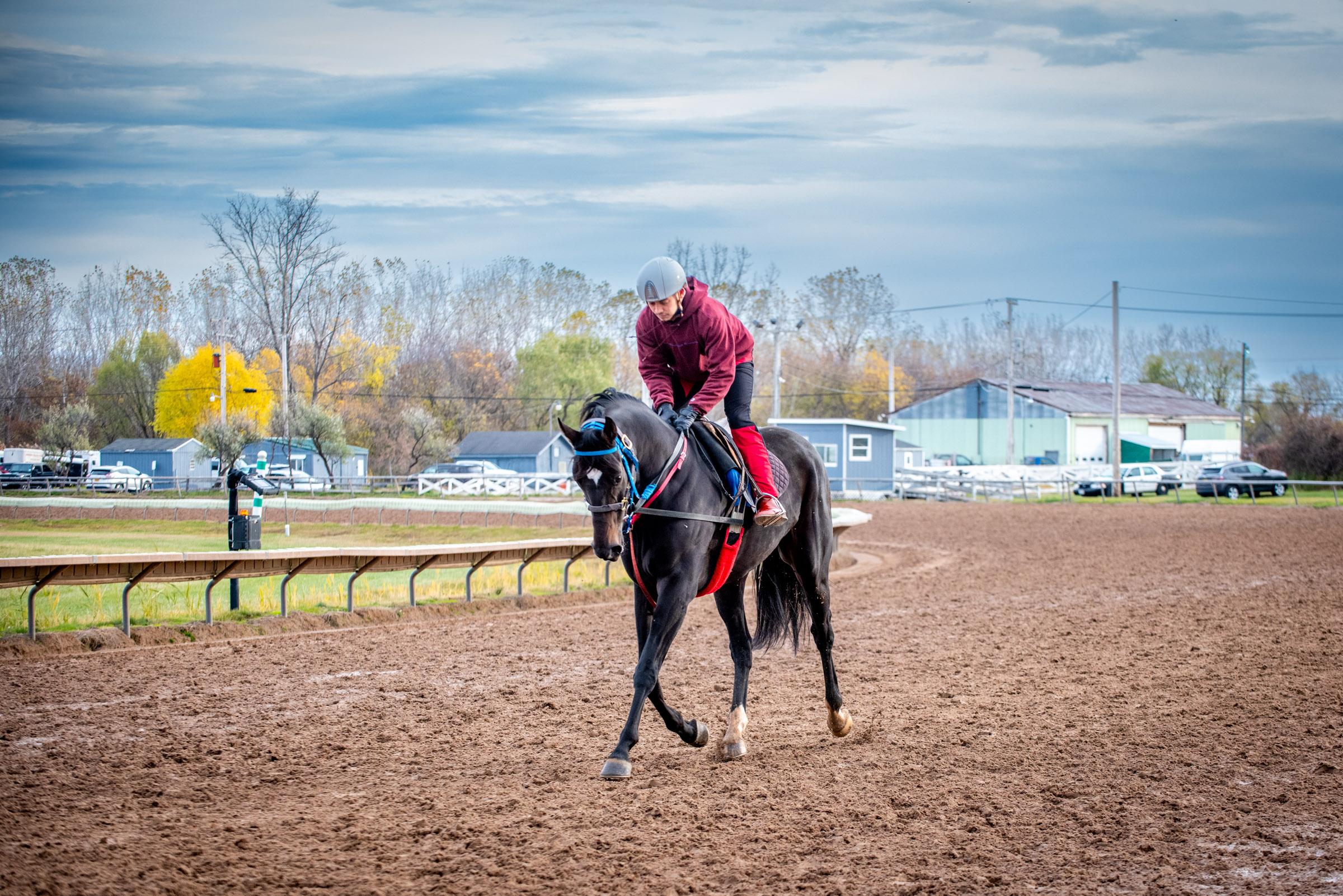
A stunning mare at Finger Lakes Racing getting a workout in draw reins. Photo by author.
Gently take up the reins, add leg, keep a soft seat and install the inside -leg – outside rein equation and ask to go forward in front of the leg. Some will be like, “Oh cool, like this?” but others will do fun things with all parts of their bodies. With their heads and necks they might lock their jaws, some will head tilt, a few might head sling, a portion will bury their nose to their chest and the rest will find new and creative ways to make it all a little more difficult (or toggle rapidly through all the options like an overstimulated border collie). I don’t care whether I’m restarting one for sale or training, for myself or for a client. My number one goal in the first ride is to get them forward and to engage their hind end at least a little. They’re likely not strong enough to stay there for long. But I want them to know that that is the right answer. From there, we have so many options and can build strength to make them possible.
As we tick through the subsequent rides, they learn that the inside leg to outside rein asks them to step up under themselves and use their back. And this is where they sometimes end up behind the vertical for a while. Some simply curl in — as I said and we have to work on lengthening their frame and getting them to reach forward for contact. Edward was one of those — he loved to stick his hind end under him but pin his nose down to his chest on a loose rein. It took a few weeks, but the improvement started showing up as he lengthened his frame and got stronger in the process.
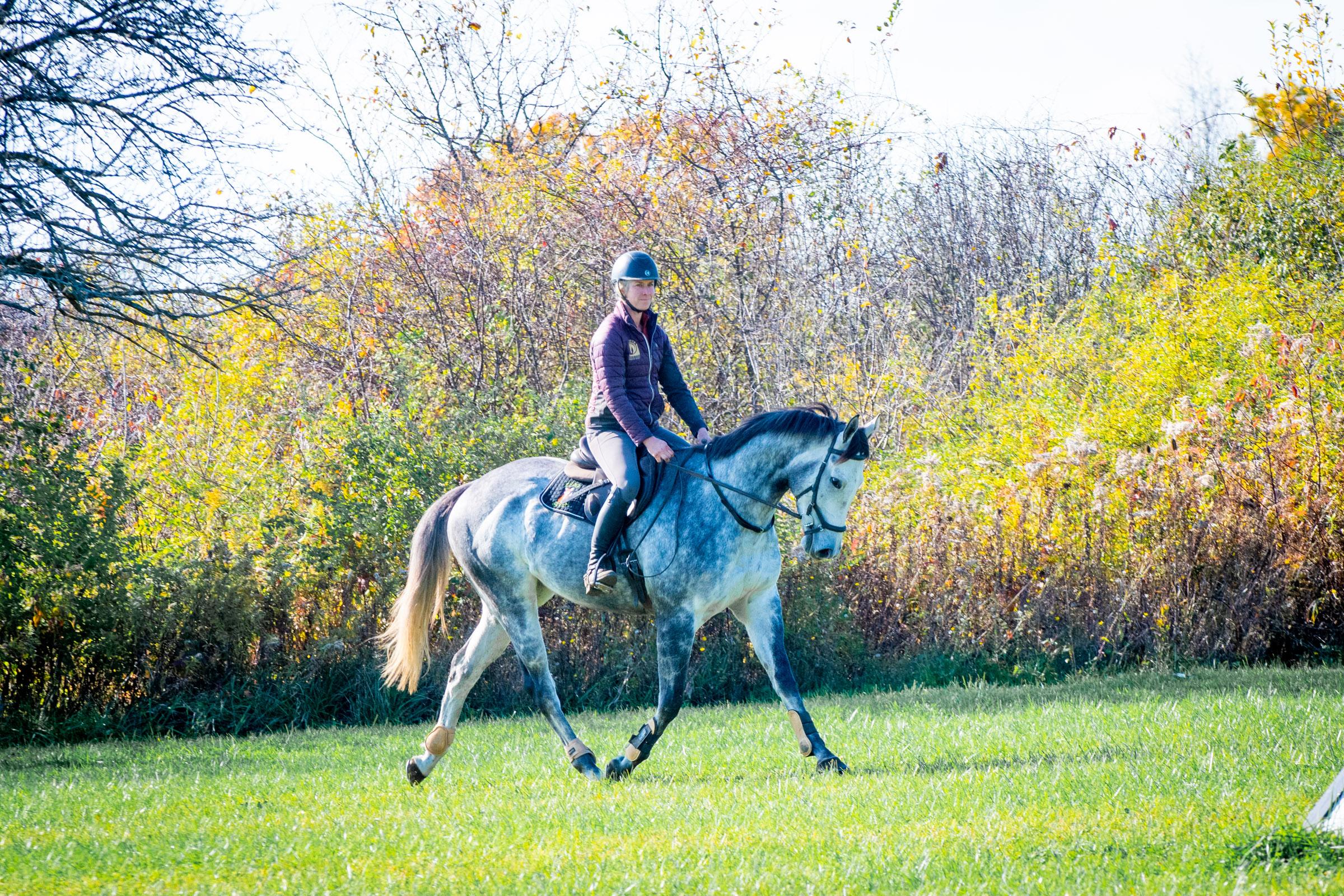
Edward getting stronger and more able to lift his core, keep his hind end under him and stay closer to the vertical. Photo by Lily Drew.
Around this time in their training, many young Thoroughbreds simply figure out how to step through their hind without the strength to really lift their core and wither into the ask. This means that although they are “round,” they are too low. Bring the shoulders up and lower the haunches by a few degrees as they get stronger and that ‘behind the vertical’ becomes ‘at the vertical.’
I learned this when I was struggling with Rhodie (Western Ridge) in dressage. He was “slithery” as one dressage coach put it affectionately. Thank goodness she loves Thoroughbreds. He took tact that I had to learn and quieter hands than I thought I could manage. This kid is and always has been sensitive over sensible. I asked about our below the vertical mark downs and she was like, “look: Your hands are above the neck, he is on contact, but he hasn’t fully engaged his core to lift his shoulder and truly ‘sit’ through his hind end. As he gets stronger, he’ll lower his haunches, elevate his shoulders and that place where his head is and wants to be will be correct.” Over the next year he did more and more as she predicted.
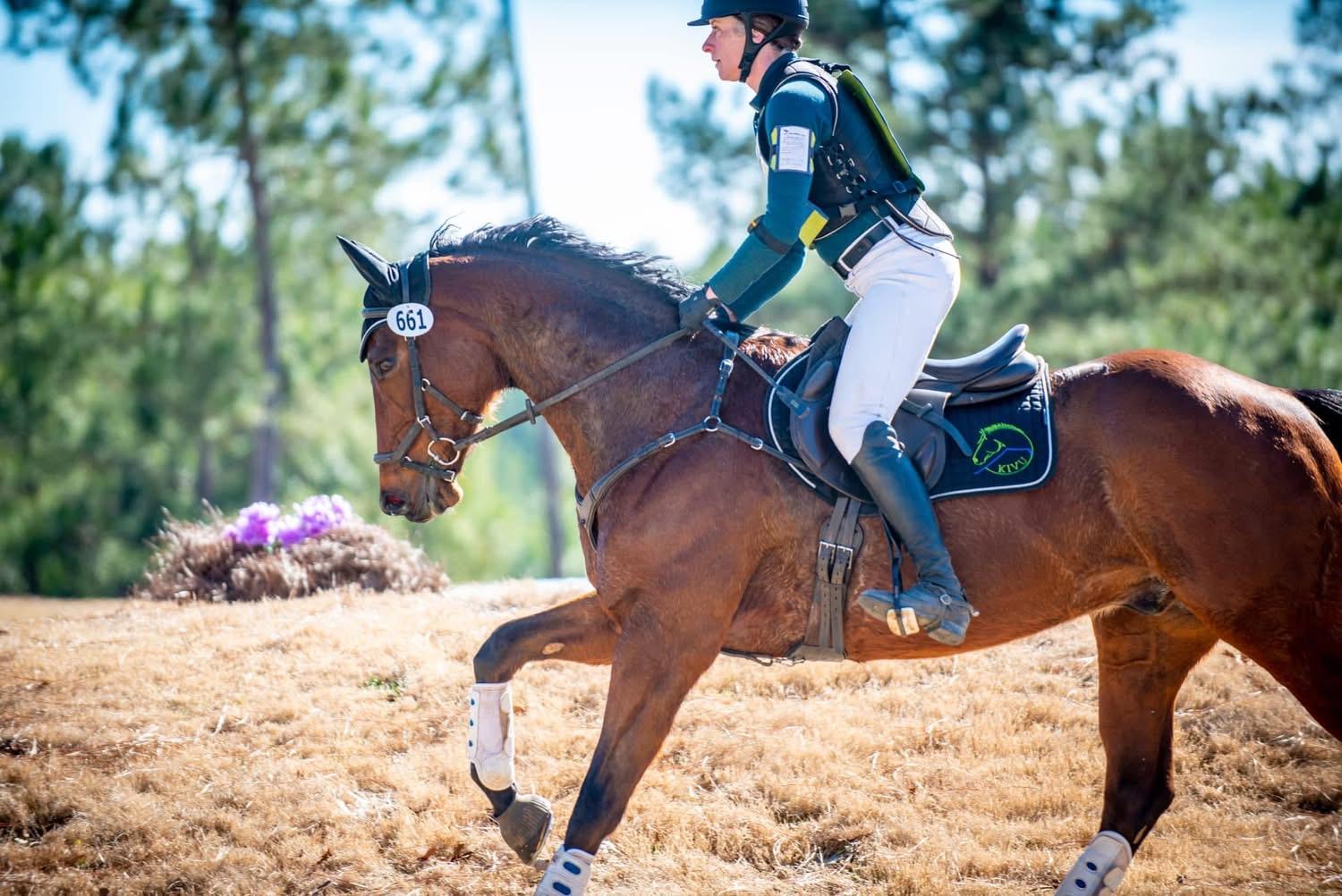
It took a long time to get Rhodie (Western Ridge) strong enough to stay at the vertical for dressage and when out galloping. Photo by Adela Narovich.
Below the vertical can be achieved through unscrupulous riding means, sure — seesawing, gadgets, all sorts of equine hell. But it also is just par for the course sometimes with young Thoroughbreds who have either been ridden a particular way at the track, or have not yet gained enough strength to really sit through their hind end, elevating their posture. And it is quite tough to look at one photograph and know what you’re looking at.
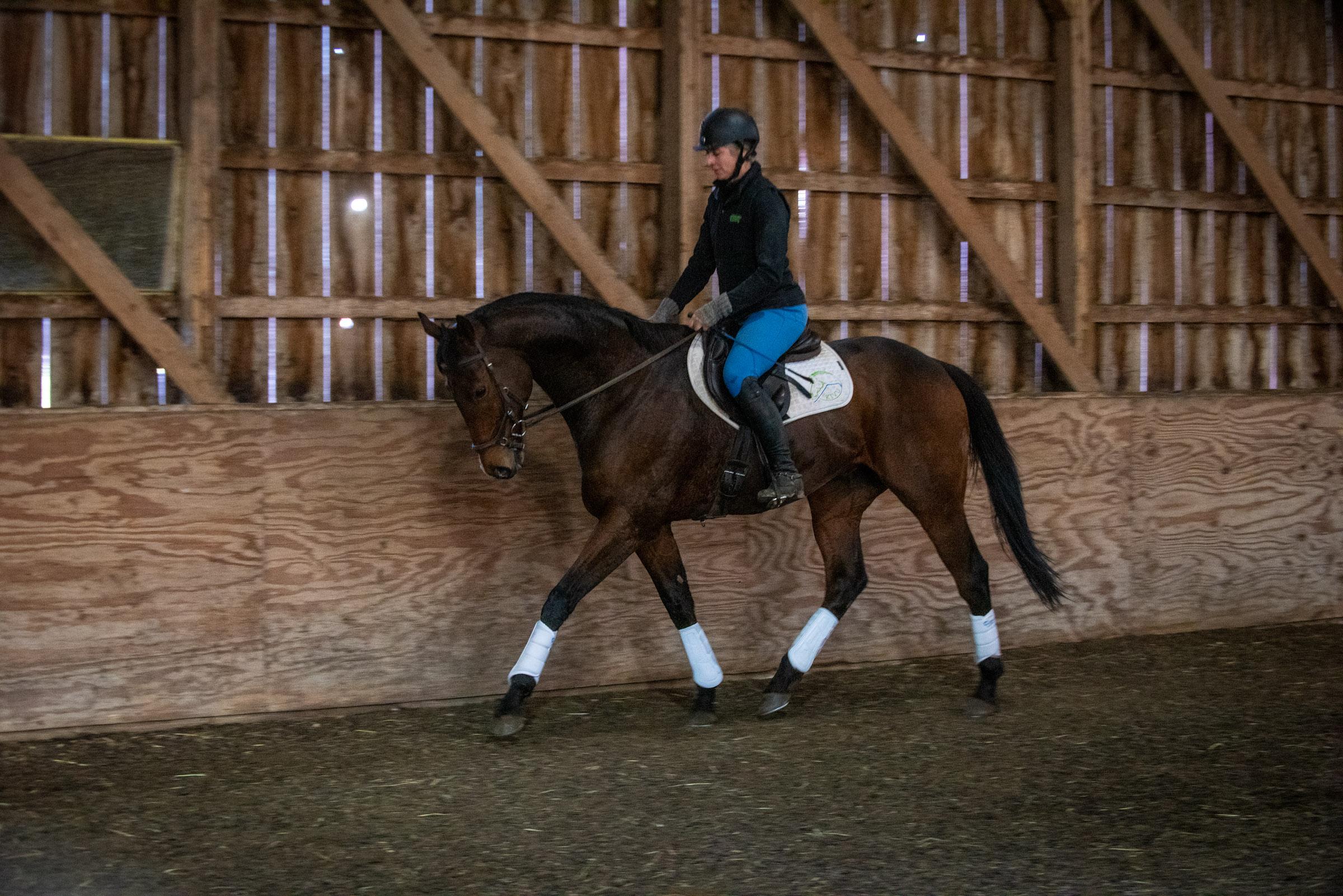
Gandy Dancing made a huge effort at producing a nice shape during his first post-track ride, but he was not strong enough through his core and topline to hold it for long or to truly lift into contact, thus arriving a bit behind the vertical. Photo by Lily Drew.
But here are a few hints for the Karens out there. (Ooh excited hands – I get to break out my Roland Barthes – connotation vs denotation nerdishness.)
In connotation (basically translated as the cultural mode of viewing): they see a horse whose forehead is not 90-degrees to the ground or greater — thus behind the bit or below the vertical and the siren goes off all flashing red lights and womp womp womp womp of “bad riding,” “poor horsemanship” and from the adult female Karens, “how disappointing” (man they really honed that Middle Aged passive aggression. Got that down to a T).
Let’s look at a photo that is not at all perfect, but did kick off a Karen storm:
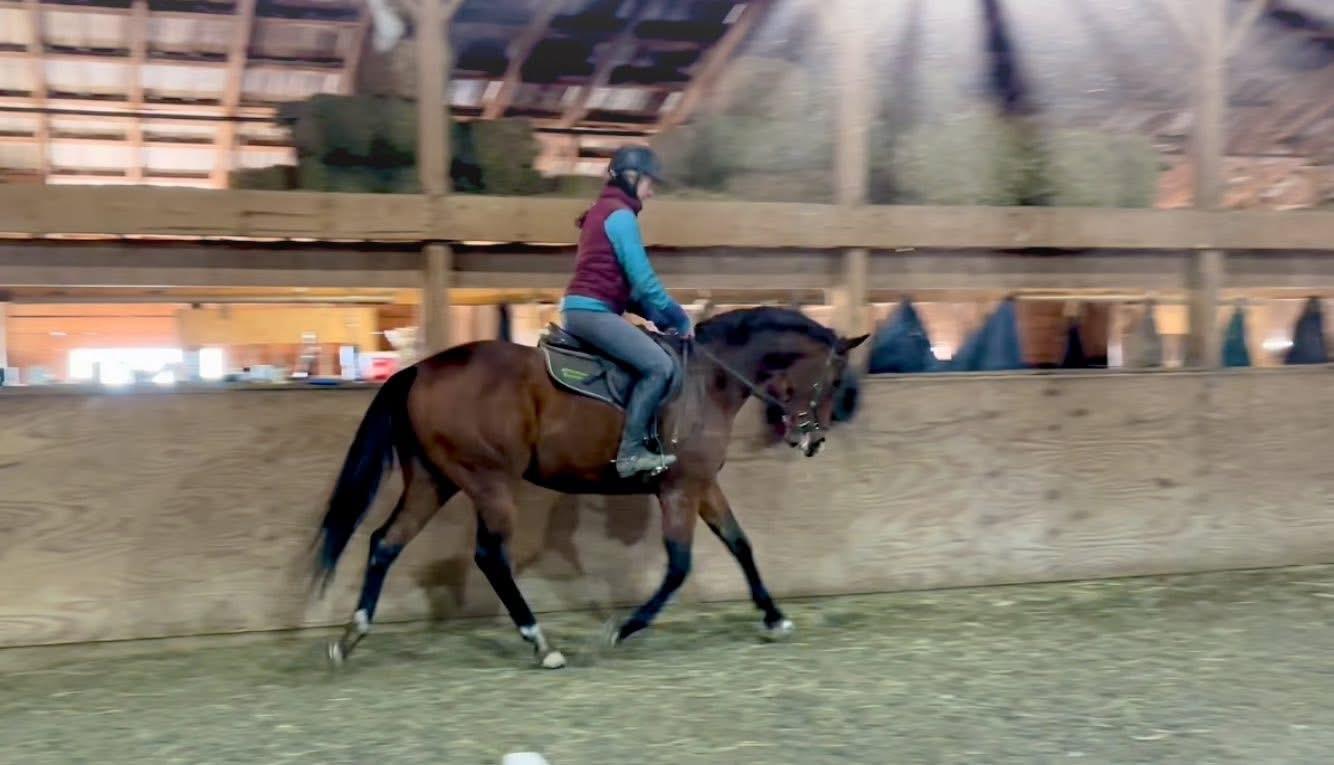
This photo of Tobi (Fernando) is one to recently draw internet attention. I have no idea if they’re upset about a few degrees, or if they are too blind to see that the blanket hung over the rail is not part of his head… Screen grab from Lily Drew’s video.
Denotation (the bare fact of what is presented without attached meaning) might tell another story: Looking closely at all the elements, the image may or may not write the same tale. Look at the wrists and elbows. (No, I don’t love my lack of eq on baby OTTBs where my elbows go out to have wide reins… more to fix…) Anyone forcing or shimmying a horse into a frame from the face first will generally have locked elbows and often wrists that tip the knuckles down towards the floor, putting pressure on the bars of the horse’s mouth. Look at rein length and tension and the number of inches pull on the bit. And then look at the countenance of the horse reading the facial cues carefully: the ears (up, focused/neutral to flicking around) or slicked back and pinned? The eye: open and soft or wide, scared or crunched and indicating stress? The nose and mouth — is it gaping, or is it open in softness, working the bit around, figuring it out in the form of a busy mouthed young horse?
With all the denotative pieces tallied up, these images might raise more questions than it answers. And it may tell a different– or at least a more complex — story. Denotative elements might speak to the greenness of a horse and the newness to the job, to their need for further strength to hold the position. They might also draw out bits where a rider can improve, of course. But they also can combine to connote a horse’s effort and heart at trying to figure out a new job to the best of their ability in their first couple of rides post track.
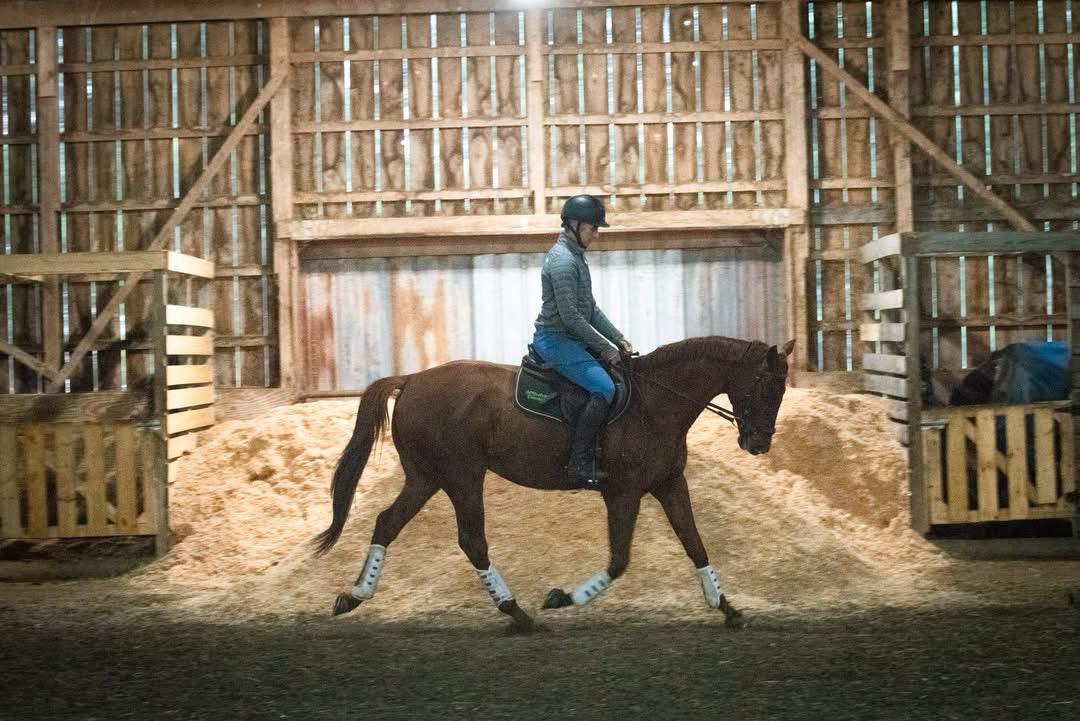
Neon (Liquor Talk) took a minute to let down from the track, but as he got stronger with retraining, he came closer and closer to being at the vertical. Photo by Lily Drew.
And if someone still can’t quite figure it out and wants to yell about irresponsible or disappointing riding, I invite them to come try a baby OTTB for one of their first rides post track and see if they’re able to produce the quiet, perfectly on the bit, pushing from behind and vertical horse in a ride that doesn’t fry their mount’s brain. If they can do that — please, Karen, change careers and train these horses. You’re clearly damn good.
So, folks — go ride and enjoy the process to vertical. But be kind to your fellow horsemen — believe me, none of us are in this business because of the people.
About Kentucky Performance Products, LLC:
Struggling with seasonal vitamin E deficiency? Studies show that vitamin E levels drop when horses don’t have enough access to fresh, green grass. Elevate® natural vitamin E can help. A research-proven, powerful antioxidant, Elevate maintains healthy muscle, nerve, and immune functions by delivering a highly bioavailable source of natural vitamin E that is preferentially absorbed and retained in a horse’s tissues. If your horse is struggling with sore, stiff muscles, neurological disorders, or a poor immune system, ask your veterinarian about supplementing with natural vitamin E.
Kentucky Performance Products creates scientifically proven supplements for your horse. Our supplements provide solutions to the everyday challenges facing your horse. The horse that matters to you matters to us®. Learn more about KPP at KPPusa.com.

