The Good, the Bad, and the Nickel-and-Dime: A Field Guide to Horse Trainers
Here is a not-entirely-comprehensive, loving, and slightly unhinged field guide to the trainers you’ll meet in the horse world.
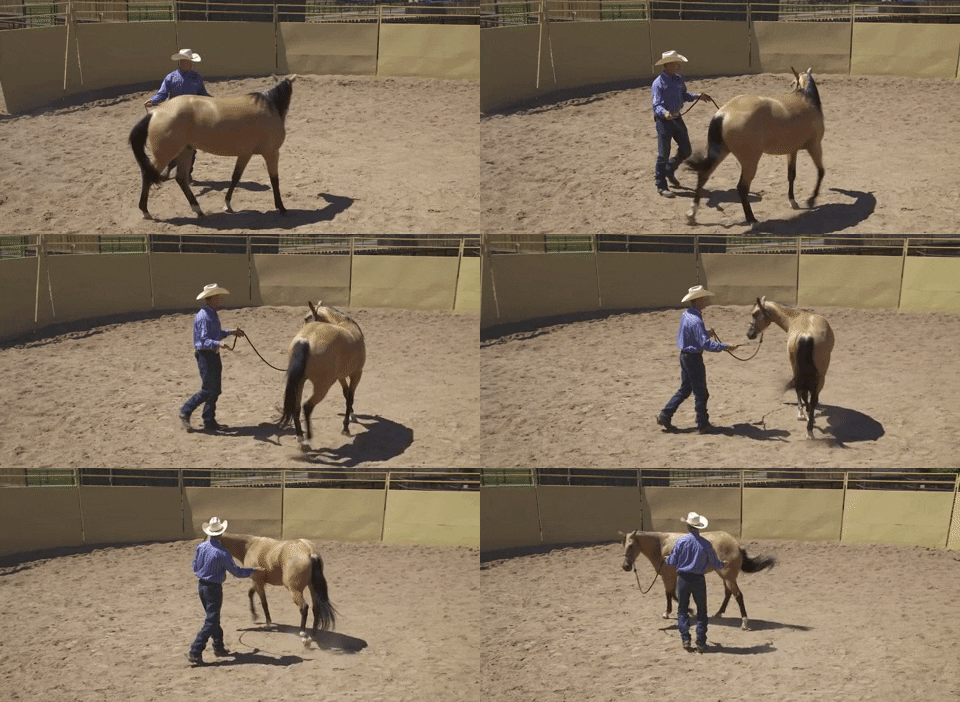
If you stay in horses long enough, you will meet them all.
Not just the horses — the trainers. The ones who shape your riding, your expectations, and, occasionally, your understanding of how invoices work. Some will teach you more than you ever thought possible. Others will teach you how to read contracts with the intensity of a commercial litigator.
This is not about calling out individuals. This is about archetypes. If you’ve boarded, trained, shown, or even just hovered near a barn aisle long enough, you will recognize these characters immediately. Possibly with a twitch.
The Nickel-and-Dimer

This trainer has a contract. A very official contract. It clearly outlines what you’re paying for: training, board, hauling, entry fees, farrier, vet. Great. You sign it. You feel responsible. Adult, even.
Then the invoice arrives.
What is a PITA fee?
Why are you paying for toilet paper?
What is the “miscellaneous barn supplies” line item and why is it $87.43?
Every month brings a thrilling new surprise, like an advent calendar of micro-charges. Cross-ties? That’s extra. Holding your horse for the vet? Extra. Looking in your general direction during a competition? Extra. Being within a five-mile radius of your horse while it exists? Shockingly, also extra.
You don’t mind paying for services rendered. You mind needing an accounting degree to decode the bill.
The Absentee
Your trainer is everywhere — just not where your horse is.
They’re at shows. They’re at horse sales. They’re in another state. Another time zone. Possibly another dimension. You follow them on social media and marvel at the frequent-flyer miles.
Meanwhile, your horse — for whom you are paying what feels like a monthly mortgage — appears to be perpetually “about to get started.” You ask how things are going and receive a vague but optimistic response involving words like soon, next week, or once we’re back from this trip.
You begin to wonder if your horse is being ridden by osmosis.
The Upseller
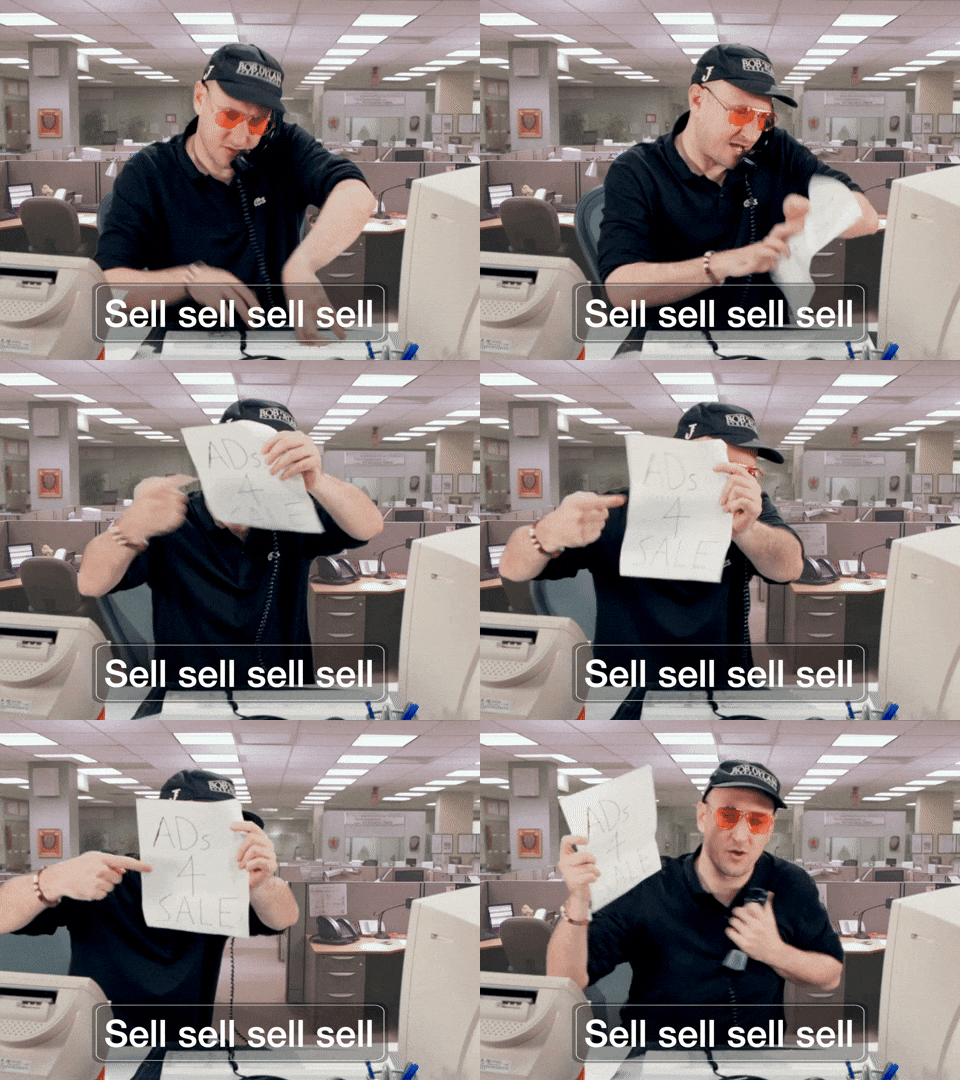
This one starts out promising. Your horse goes into training. You pay the mortgage-level bill. And then, gently — lovingly — you are informed that your horse is… not great.
Not talented. Not suitable. Not going to work out.
But don’t worry.
This trainer just happens to have another horse. In their barn. Right now. Perfect for you. Perfect for your discipline. A once-in-a-lifetime opportunity. It costs roughly the same as an actual house and still needs — say it with me — more training.
This is not the trainer who gives an honest assessment and makes a reasonable recommendation. This is the one for whom this is a business model. Your horse is always the problem. Their horse is always the solution.
The “Trainer”
Quotation marks doing a lot of work here.
This person has ridden some. Maybe taken lessons. Maybe helped exercise a horse or two. Armed with a lunge whip and an almost heroic level of confidence, they announce themselves open for training clients.
They undercut every legitimate professional in the area. The price is tempting. The results are… educational. Horses come back with new habits, creative interpretations of forward motion, and issues that require significantly more time, money, and patience than if they’d gone to a real trainer to begin with.
The most expensive training is often the cheap kind.
The Ghost

You drop your horse off. You drive away. And then — nothing.
No updates. No videos. No texts. No “hey, this is how things are going.” Just the invoice. Like clockwork. Every month. A financial haunting.
You debate reaching out, but don’t want to be that client. You refresh your phone. You scroll social media. You begin to wonder if your horse has been absorbed into the barn infrastructure.
You consider sending a message that just says, “👻?”
The Unicorn

And then… there is this one.
The trainer who communicates. Who sets reasonable expectations. Who tells you how your horse is actually doing — not how you wish it were doing. They feed your horse appropriately. They show up. They put in the work. They are honest about your horse’s potential, whether it’s suited to your discipline, and whether it’s the right match for you.
They deliver consistent results. They don’t sugarcoat. They don’t disappear. They don’t nickel-and-dime you into oblivion.
If you find this trainer, protect them at all costs. Do not let them go. Bring them coffee. Pay your bill promptly. Speak of them in reverent tones. This trainer is a unicorn — and yes, they are worth whatever you are paying.
* * *
The horse world is full of trainers. Some will teach you skills. Some will teach you lessons. Some will teach you to ask very specific follow-up questions before signing anything.
Most of us will meet every type at least once. If you’re lucky, you’ll end up with a unicorn — and a story or two about the rest.
Because if nothing else, the horse world is consistent in one way: it always finds new ways to educate you. Often expensively.