



Rock and Roll: What You Need to Know About Enteroliths
Enteroliths, or “gut stones,” can be a serious issue for horses. They form over time and cause colic. But the good news? They are preventable.
If your horse ever seems colicky for no obvious reason, you might chalk it up to “something they ate.” But what if what’s inside isn’t dinner — it’s a rock? Enteroliths, or intestinal stones, are real, and they can turn an ordinary day at the barn into an emergency call to your vet.
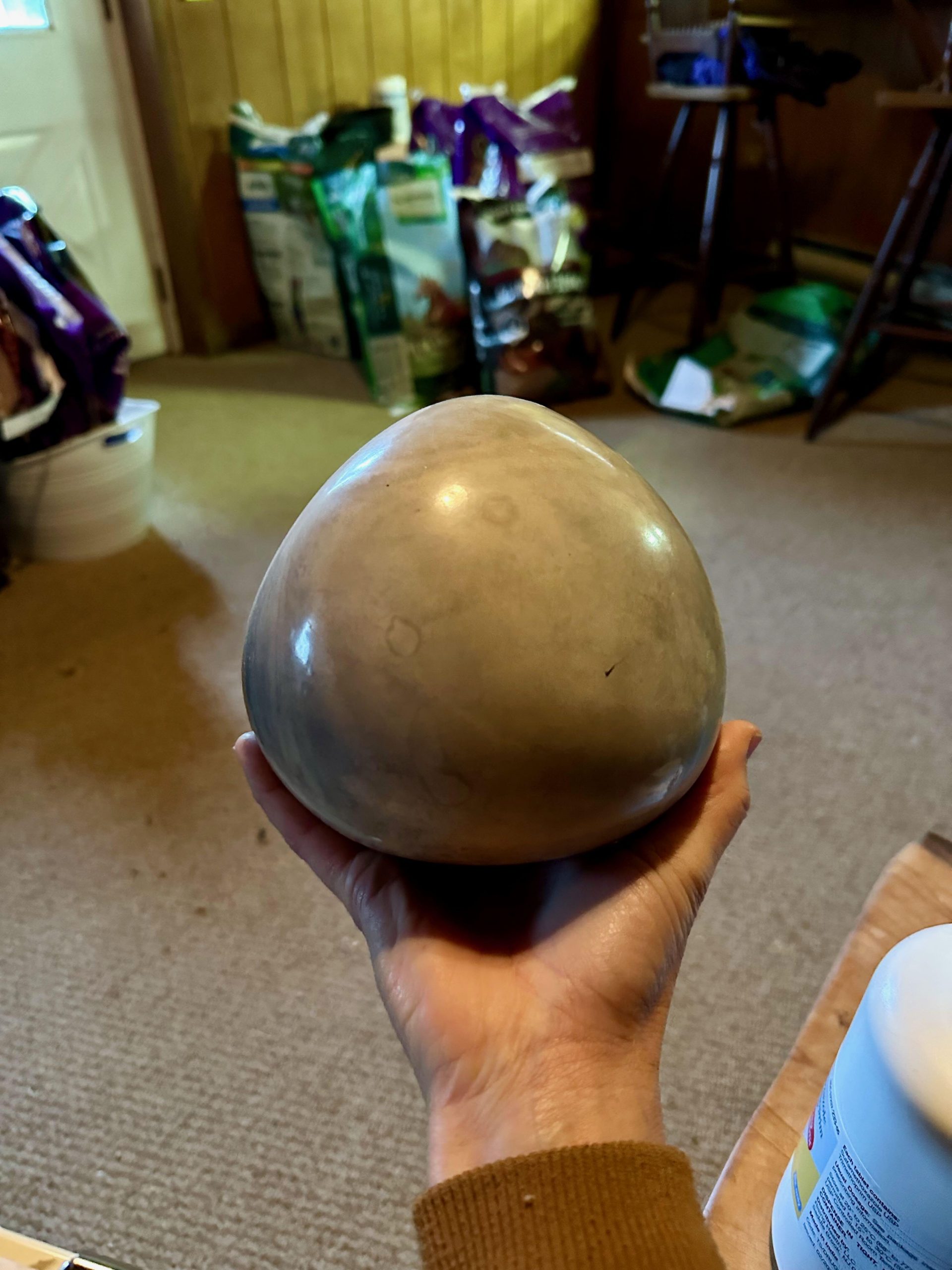
Photo taken of an enterolith that was removed from one of our clients’s horses while I was working with my equine veterinarian. Photo by DeAnn Long Sloan.
What Are Enteroliths?
Enteroliths are mineralized stones that form inside the horse’s intestines, often in the large colon, over the course of years. They start small, building around a swallowed object like a bit of twine, a pebble, or even a strand of hair, and slowly collect layers of magnesium, ammonium, and phosphate (struvite).
They can grow round, triangular, or flat depending on how they bump against each other inside the gut — and sometimes horses carry dozens or even hundreds of small stones. Many horses can go years without symptoms, but when one of these stones shifts and blocks the intestine, it can trigger painful, potentially life-threatening colic.
Why Do They Form?
That’s the million-dollar question — and a question researchers are still unraveling. We know several risk factors play a role:
- Diet: Feeding too much alfalfa (high in protein and magnesium) and too little grass hay increases the risk. Diets high in bran or mineral-rich feeds can also contribute.
- Gut chemistry: The pH and mineral content of a horse’s digestive system can influence how these stones form.
- Management: Horses that spend more time stalled and less time moving or grazing are more likely to develop them.
- Breed predisposition: Arabians, Morgans, and American Saddlebreds are overrepresented in cases.
- Geography: Enteroliths are especially common in California and Florida, where mineral-rich soil and hard water may add to the risk.
Still, there’s plenty of mystery. Not all horses fed alfalfa develop stones, and even horses in the same barn with identical management can have completely different outcomes.
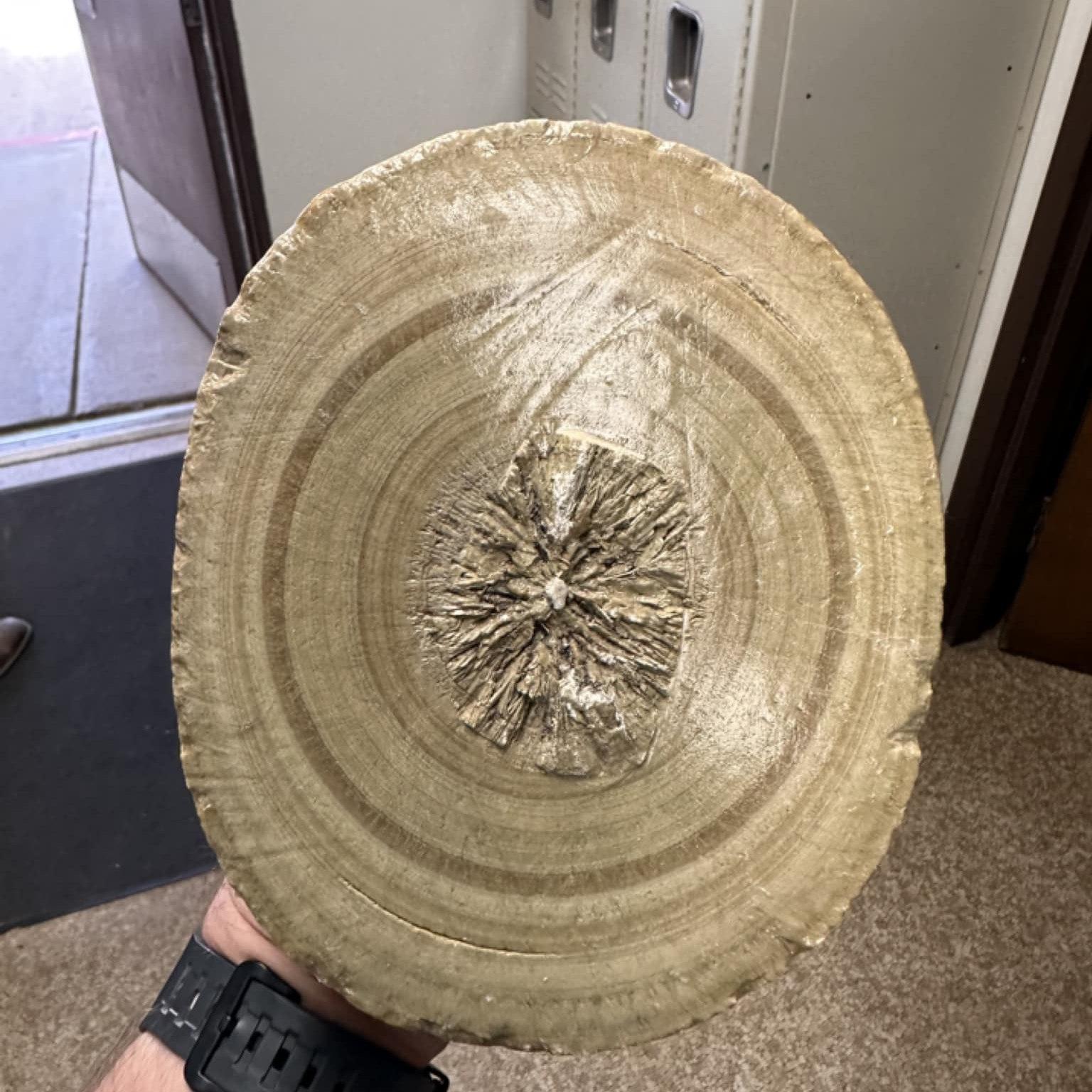
The inside of an enterolith, showing the tiny pebble where it began. Photo from AAEP’s social media.
What Are the Signs?
Symptoms can range from subtle to dramatic, depending on the stone’s size and where it’s stuck. Common signs include:
- Chronic or intermittent colic
- Reduced appetite, weight loss, or lethargy
- Girthiness or reluctance to move
- Pawing, rolling, sweating, or looking at the flank
- Occasionally, small stones passing in manure
A single large stone in the large colon might cause on-and-off discomfort for months, while smaller stones that lodge in the small colon can cause sudden, severe colic.
How Are Enteroliths Diagnosed?
Diagnosing enteroliths can be tricky as outward signs aren’t always clear.
- Radiographs (x-rays) are the best screening tool, though success depends on the horse’s size, bowel contents, and equipment quality.
- Finding stones in the stall or manure pile is a big clue (though not always easy to trace back to one horse).
- In high-risk areas, vets may suspect enteroliths right away in horses with recurring or unexplained colic.
Early detection is crucial. A stone blocking the intestine can cause rupture — and that’s almost always fatal.
How Are They Treated?
There’s only one effective treatment for a horse with colic caused by enteroliths: surgical removal.
Surgery is usually very successful, with more than 90% of horses recovering fully — especially if the blockage is caught before damage occurs. After surgery, horses typically have three months off from work and must switch to a new diet (no alfalfa, ever again) or a change in management.
If the intestine ruptures before surgery, however, the outcome generally is fatal.
What’s the Prognosis?
- Small enteroliths: Often harmless; may pass naturally.
- Larger stones: Recovery is highly likely with prompt surgical removal.
- Rupture or delayed diagnosis: Almost always fatal.
The good news? Most horses that undergo surgery and follow proper dietary management go on to live happy, healthy, rock-free lives.
View this post on Instagram
How to Prevent Enteroliths
So here’s the big part — prevention. And it starts in the feed room.
Dietary management tips:
- Keep alfalfa below 50% of the total hay ration.
- Feed mostly grass or oat hay.
- Eliminate or reduce bran and mineral-rich feeds.
- Add apple cider vinegar to hay or grain daily (to acidify the colon).
- Provide plenty of fresh water and consider softening hard water if possible.
Management tips:
- Turn horses out daily for exercise and grazing.
- Offer frequent, smaller feedings throughout the day.
- Consider psyllium supplementation to help keep the gut clear.
Enteroliths might sound like a problem from a geology class, but for horses, they’re a serious health concern that can be prevented with smart feeding and management. Keep an eye on diet balance, encourage daily movement, and never ignore even mild colic signs. Because while “rock-solid” might be a compliment elsewhere, in your horse’s gut — it’s anything but.
All information has been adapted from articles from the American Association of Equine Practitioners and the UC Davis Center for Equine Health.
