



Thoroughbred Logic, Presented by Kentucky Performance Products: Accommodations
“A softer, more (literally) accommodating ride crafts openings for them to figure out the best placement for their hooves, best way of moving energy over their back. Such a ride channels flexibility to help build the strength and the confidence …”
Welcome to the next installment of Thoroughbred Logic. In this weekly series, Anthropologist and trainer Aubrey Graham, of Kivu Sport Horses, offers insight and training experience when it comes to working with Thoroughbreds (although much will apply to all breeds). This week ride along as Aubrey shares her logic on the benefits of making accommodations based on what each horse needs.
I find it funny how academia never really leaves me alone when I ride. I only realize how present that mostly pleasant ghost is when I try to explain what I am doing, though. Then I’m like… Ohhhhhh, that’s why it works — lightbulb moments that happen when I’m finally able to put a label on what it is I have been doing. And in this case, this one takes me right back to the classroom.
Each year teaching at Emory, I had an increasing amount of ‘accommodation letters’ I had to go through at the start of each class. The paperwork acknowledged the unique ways that each student needed to learn, or the issues that they might face during the span of the class. These didn’t bother me — flexibility has always been part of my syllabus and teaching style.
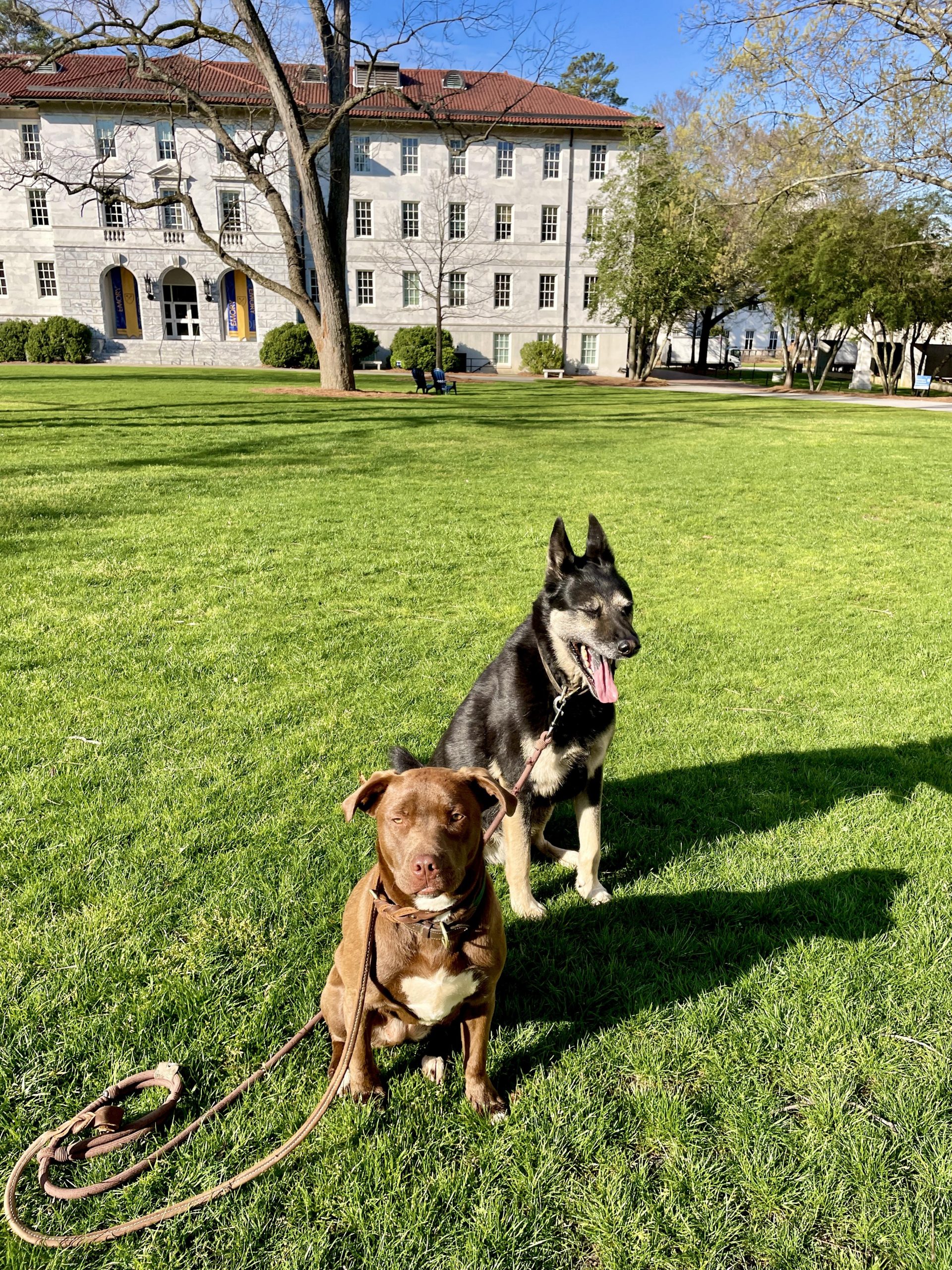
My academic sidekicks. Photo by author.
Need more time to take a test? Great, I don’t give tests. Need to receive written notes of each class? Well, I wing my lectures, so those notes aren’t helpful, but we can assign a friend or neighbor to share. Issues with potential illness or anxiety getting in the way of deadlines? No worries, submit whenever (so long as it’s before grades are due). Stuff like that.
Being rigid in the whole “there is one way to get to where we’re going” has always felt like a dumb hill to die on. Regardless, my students always came in worried that their needs were going to make them less able or likely to get an A. Nope, what would do that would be a plain lack of try. And I rarely encountered students who simply didn’t give a damn.
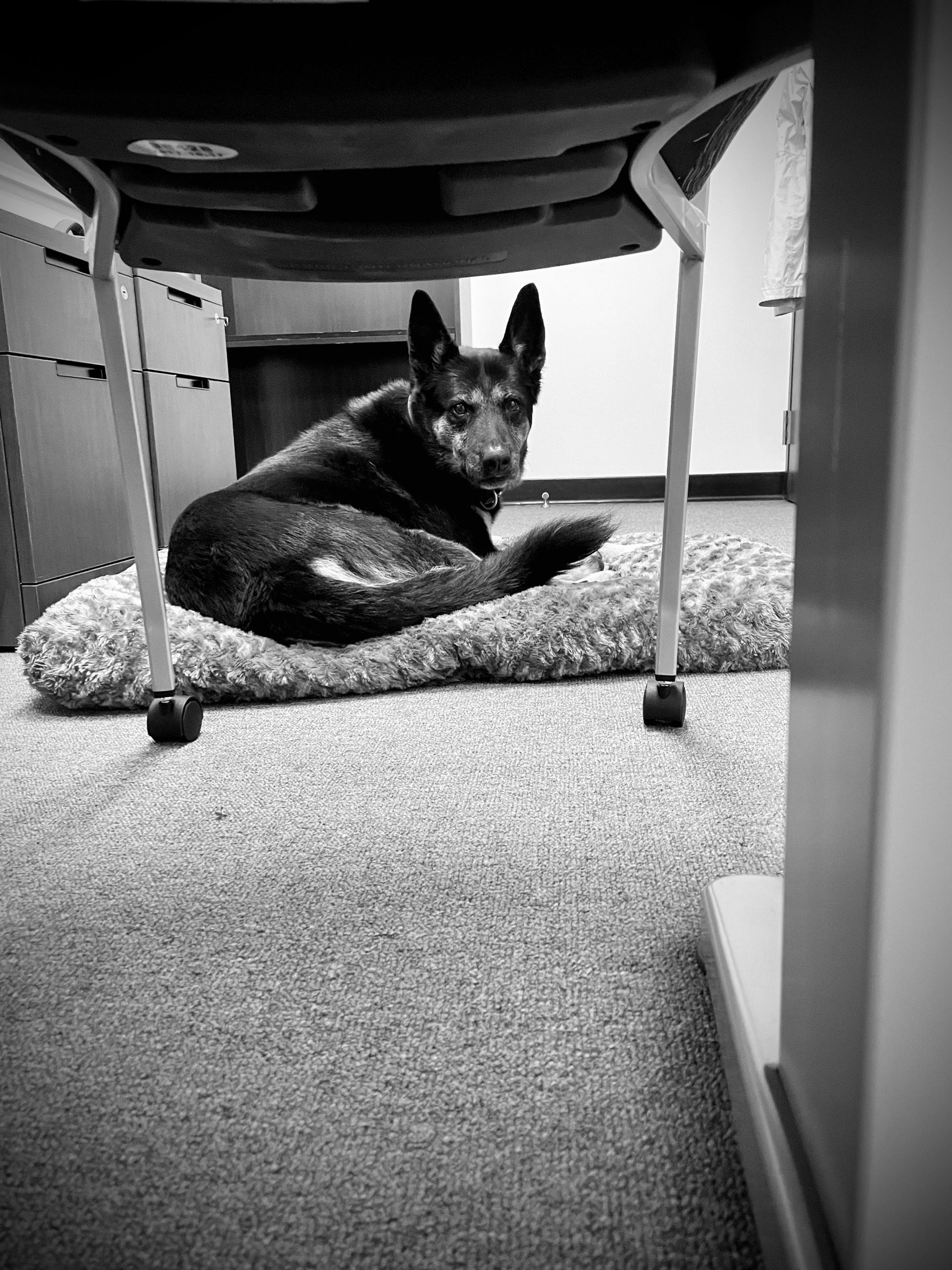
Yep, Walker (and Littles) hung in my office and gave students a dog-break from their daily stress too. Photo by author.
So much of this carries over to horses (and in my case, Thoroughbreds). Many of them who have already begun a second career show up with a bit of anxiety for what the ride is going to be like. I get to know them, swing a leg over, walk off and eventually put leg on and ask them to give work a shot. Some of them don’t blink and are perfect, but for many there are moments where you can feel them start to armor up. They suck back, skitter sideways, or expect that something is going to — for lack of better words — suck.
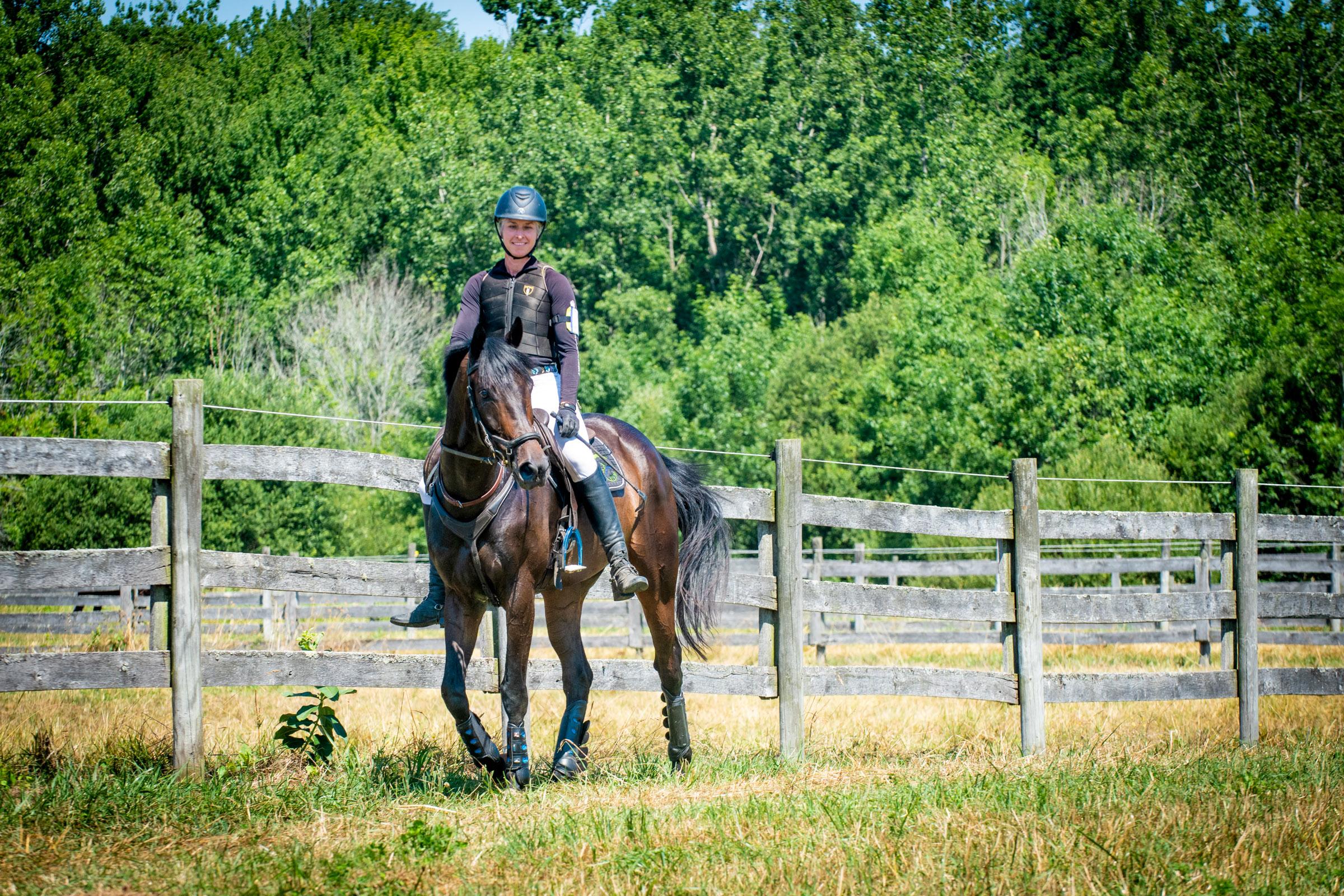
Neil (Lute’s Angel) looking pretty darn proud of himself. Neil requires accommodations about a few things, including the use of my right leg when he gets stressed. If I can compromise there, he’ll give jumping around a more-than-full effort. We’re still working on that in dressage. Photo by Izzy Gritsavage.
Sometimes they’re just testing the waters, but more often than not, there’s something that is sore, something they’re protecting, or something that makes it harder for them to correctly answer the ask. For instance, the hind end: If a horse is sore on a hind limb — be it an old soft tissue injury, a hock, whatever — and I ask them to step under themselves and push from behind, they’re going to tell me that they can’t or they won’t. OK. Totally fair.
Make me stand on my bad knee in the way it doesn’t like to be weight bearing and I’m going to tell you I don’t want to do it that way. Force me to stand only in that position and I’ll probably shove you out of the way so I can get it to a spot that isn’t painful. Tell me that’s the only way to do the exercise and I’m going to tell you that your exercise is stupid and that I won’t do it. You see how this works.
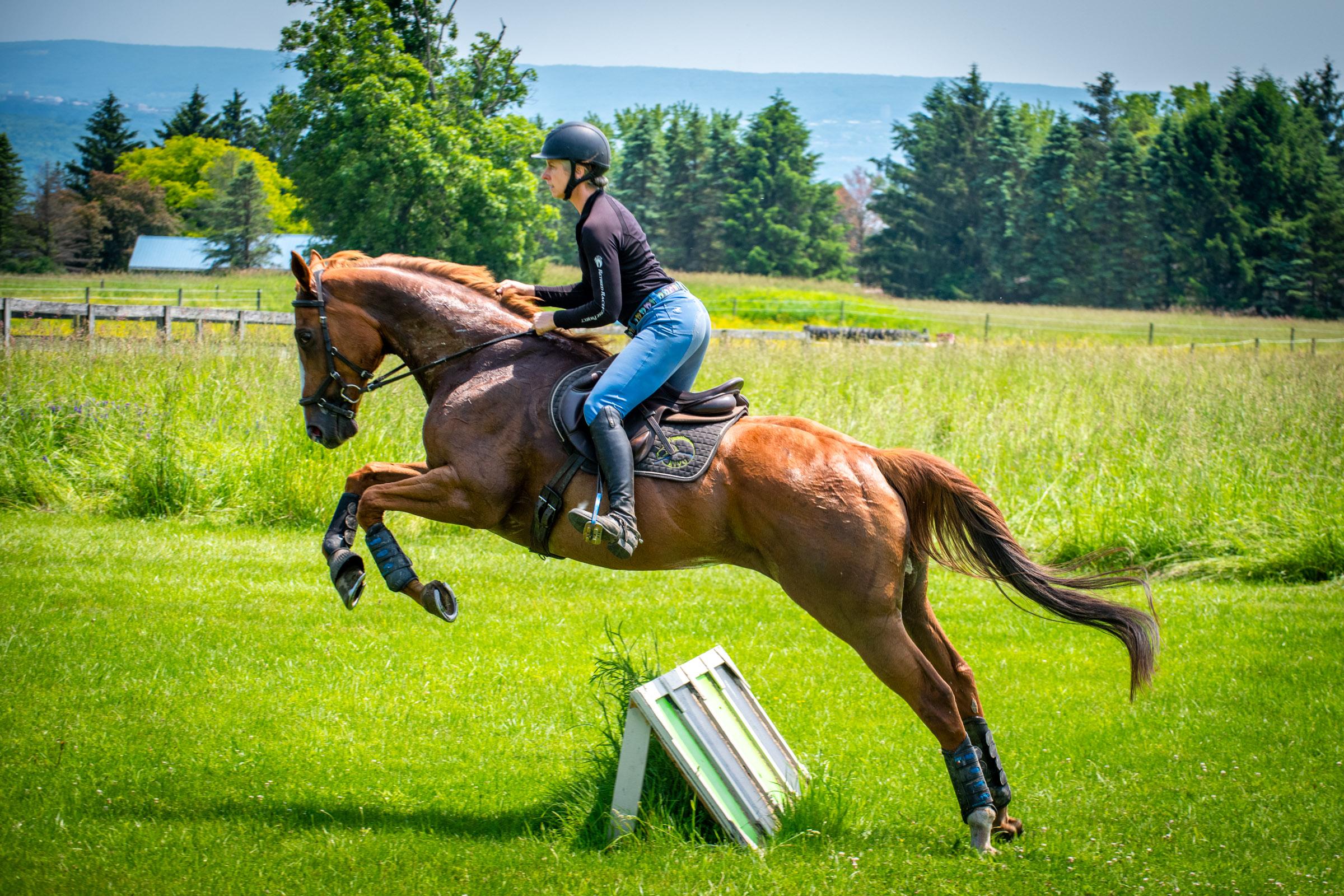
Classy Cowboy is a standard example of a horse who needs a little wiggle room for where to put his hind feet, but give him that and he’ll give you ample try. Photo by Lily Drew.
In a way, many of these horses need accommodations as well. Sure, the usual way to do things might be a simple inside leg into outside rein and then create bend when they push from behind up into even, weighted hands. But some might need a wider, softer rein to come up to so they can find where it feels best to land their hind feet and push. Some might need to travel a touch more on the forehand (at least temporarily) to build up the strength to be able to give going forward a try. Some might need additional learning aids — more voice or more leg for instance and find other things less helpful — like a driving seat or hard hand.
In short, when I get on, one of the things I’m doing is asking the question, “What do you need to be able to learn and do the job?” And when the Thoroughbreds, who really do want to get the answer right, realize that there are multiple (broader) paths to the same pat and same “good boy/girl.” the armor comes down, and the desire to give it a shot skyrockets.
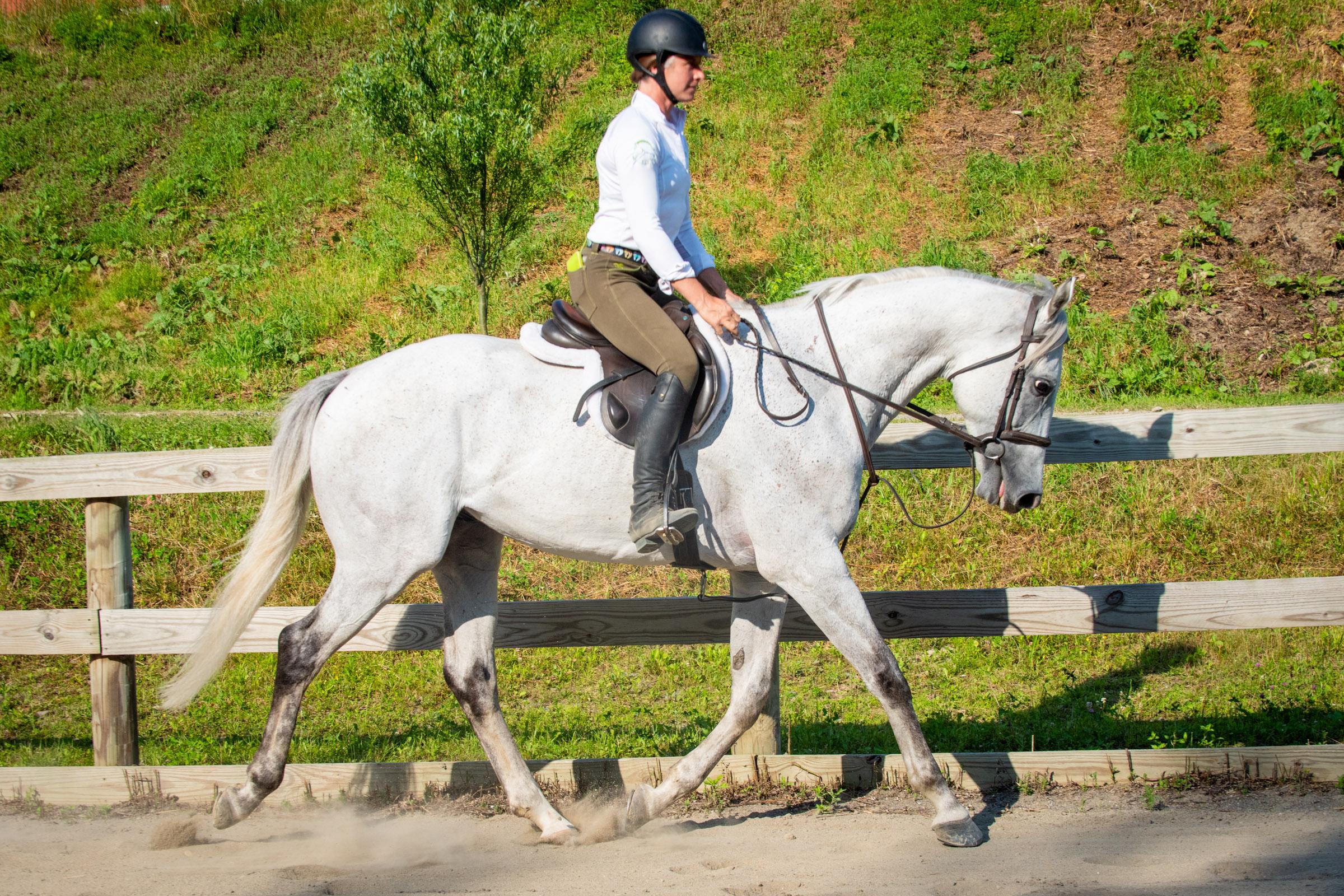
There’s not much accommodation needed with Starship Augusto other than to not lock down on him with your heels and hands. Whether a rider is 12 or 60, he’ll travel like this if given space to move forward. Photo by Lily Drew.
Folks will see the inverse of this if they hop on and immediately seesaw a mouth to bring down a head. Tell them this is how one does things and there is one route to the shape you want and they’ll tell you where to go. And likely they’ll make such a statement expedient. But believe in them, allow a bit more wiggle room and flexibility and the try will compensate for any of the needed accommodations.
The concept is pretty simple, right? But there are a few bits that make it tough in practice. There’s first the understanding of imperfection and not getting freaked out by it. Second, there’s figuring out how to manage it to make it most comfortable both in the saddle and as a longer term situation. Wishing it would not be that way simply doesn’t work. Training like it’s not present equally does not work. Third, there’s shifting your ride to make them more OK without losing the learning objectives/goals entirely. Just because learning is tough, we’re not just going to faff about in the saddle and ask for nothing (that’d be like giving up and just playing movies for a semester instead of teaching).
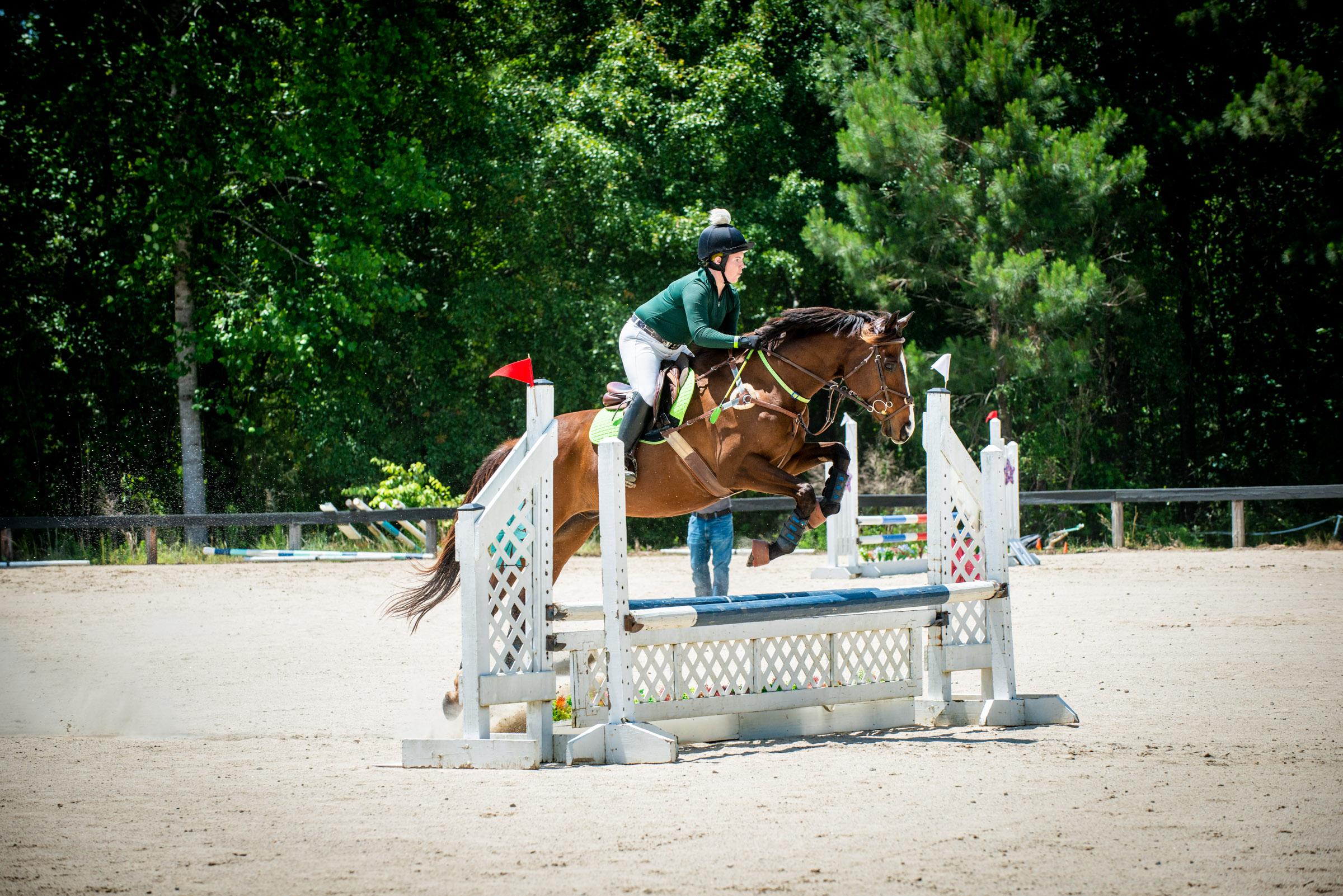
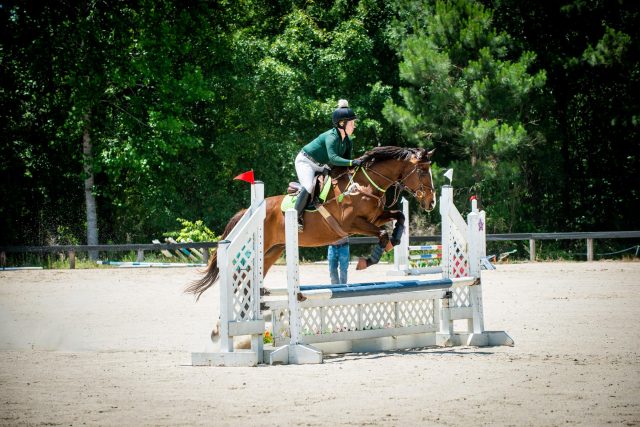
Amanda Tozzi did a stellar job sorting out what Elliot (Surety) needed to be able to jump well. Lock down on him and he’ll rush, but sit up and let him figure out his distance and where his hocks are most comfortable and this kid jumped around great. Photo from a Big Cheese Eventing Horse Trial by the Kivu Team.
Right hind is sore coming off the track? No problem. Let’s put it on the inside when learning something new that requires upright balance. That way one can learn without having to worry about additional potential pain. But also, if it remains sore, perhaps we should do some diagnostics and think about what maintenance might be helpful. In the meantime, whether tracking right or left, a rider doesn’t get to hold them in tight contact and demand equal push and power from both hind legs.
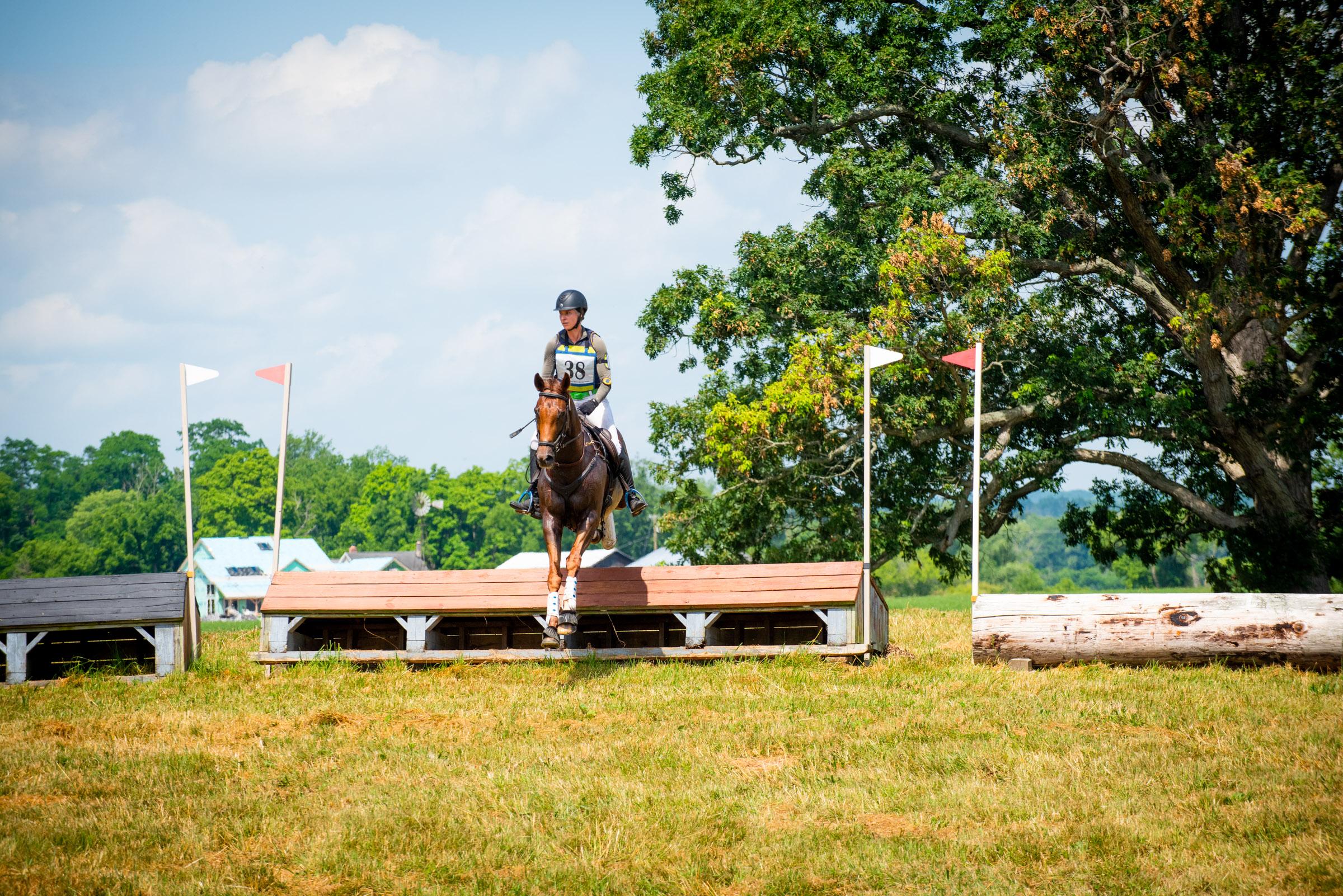
Indy (Star Player) has a few hind end accommodations — requiring a bit of maintenance and understanding of how he has to travel to feel his best. But if I don’t pick, and if I let him travel forward to the jumps, he clears them with brilliance. Photo by Izzy Gritsavage.
A softer, more (literally) accommodating ride crafts openings for them to figure out the best placement for their hooves, best way of moving energy over their back. Such a ride channels flexibility to help build the strength and the confidence to produce the desired effect — a round, even, balanced, far less anxious horse. And thus, a horse who recognizes that the job is fun and wants to try to get the right answer — whatever that may be.
So go ride folks. Allow the accommodations and enjoy the way that flexibility makes it easier to make progress towards your goals.
About Kentucky Performance Products, LLC:
Research has shown that when used in combination, hyaluronic acid, chondroitin sulfate, glucosamine, and manganese sulfate support cartilage structure and optimal joint function. Horses with healthy joints feel better, perform to their potential, and stay sounder longer.
Joint ArmorTM is a research-proven, super affordable formula that provides your horse with the nutrients necessary to support both healthy joint cartilage and synovial fluid.
Joint Armor:
- Maintains fluid motion and flexibility in joints.
- Provides high levels of both glucosamine and chondroitin, plus 100 mg of hyaluronic acid.
- Supports normal cartilage development and reduces joint deterioration.
- Is affordable; one jar lasts up to 75 days.
The horse that matters to you matters to us®. KPPusa.com

