



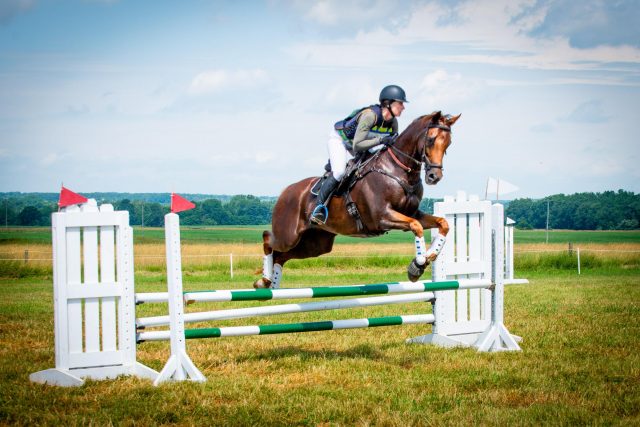
Thoroughbred Logic, Presented by Kentucky Performance Products: PPEs and PTSD
“…while these exams are often described in terms of ‘passing’ or ‘failing,’ there really is no such thing. It is all a subjective view of the particular vet of the particular horse on one particular day in time in relation to the needs and desires of the particular buyer.”
Welcome to the next installment of Thoroughbred Logic. In this weekly series, Anthropologist and trainer Aubrey Graham, of Kivu Sport Horses, offers insight and training experience when it comes to working with Thoroughbreds (although much will apply to all breeds). This week ride along as Aubrey shares her logic on pre-purchase exams (and the PTSD they reveal).
The first pre-purchase exam (PPE) I had done was more telling about me than about the horse. It was 2017… I had a post-doc and a job that, for the first time in my life, paid a somewhat living wage. I was trying to have some form of a normal life (whatever that means) after returning from a different post-doc in South Africa. I was pretty much penniless and with no idea what I was doing next. I somehow waltzed into the most fulfilling and accepting position at my former alma mater and had the opportunity to work with a host of students who were a bit like me — ones whose passions didn’t fit within rigid academic disciplinary divides. Meanwhile, I kept up a second job training a half dozen horses for clients just south of Atlanta.
So go figure that in that situation, I jumped at the opportunity to buy a Thoroughbred. The PPE was scheduled to take place when we — the students and professors — were on a retreat … on a lake… with next to no cell service. Fantastic. I kept having to “sneak” out of these intense group session to run down the road until I had a bar on my phone. “Oh the ankle is flexing a 3 out of 5. Ok, please radiograph it and call the front desk to get me and I’ll run down the road and call you back.” The morning went like that until I slumped back in my chair at noon, resigned. The gray I wagered on was too much of a risk for my highly depressed bank account. The ankle might be sound with injections… or it might not. And I wasn’t in a place to be able to take on a known issue and gamble. That was about me and my lack of money, not the horse. The next horse I pre-purchased had a major heart murmur. The third… well that’s Forrest (Don’t Noc It). And he’s still here. Still annoying (and lovable) as the day is long.
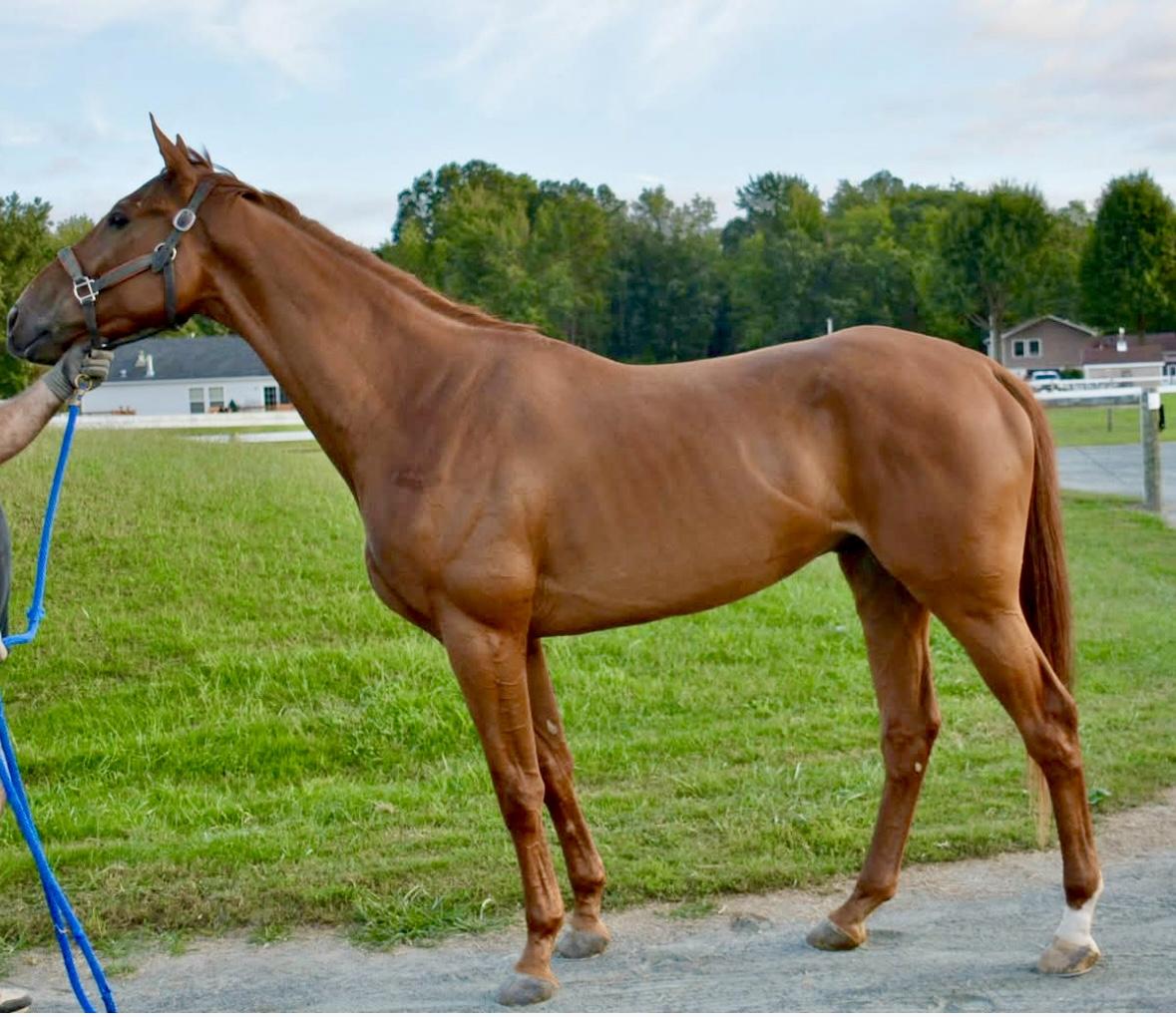
In 2017, I bought Forrest off this photo, a quick PPE and some free movement video in an arena. Photo by Jessica Redman.
Back in the retreat, my colleagues and bosses were annoyed, but somewhat understanding (they did at least appreciate that I could handle blood and manage to effectively field dress a student’s puncture wound with vet wrap later that day though). And it perhaps says something that they were some of the few who weren’t terribly surprised when I left academia in 2019 to commit to training full time.
Now, I don’t have to sneak out of meetings for pre purchases. In fact, I spend far more time holding and jogging horses for the exams than being the one paying for it. And to tell the truth, I don’t PPE my horses any more. I just try to buy through trusted contacts, take a good look at conformation photos and jog videos, and know that if I get it wrong and there are issues, I can still do right by the horse and get them to a seriously good home. Not every critter needs to be a super upper level eventer. Hell, most folks can’t and don’t want to ride that.
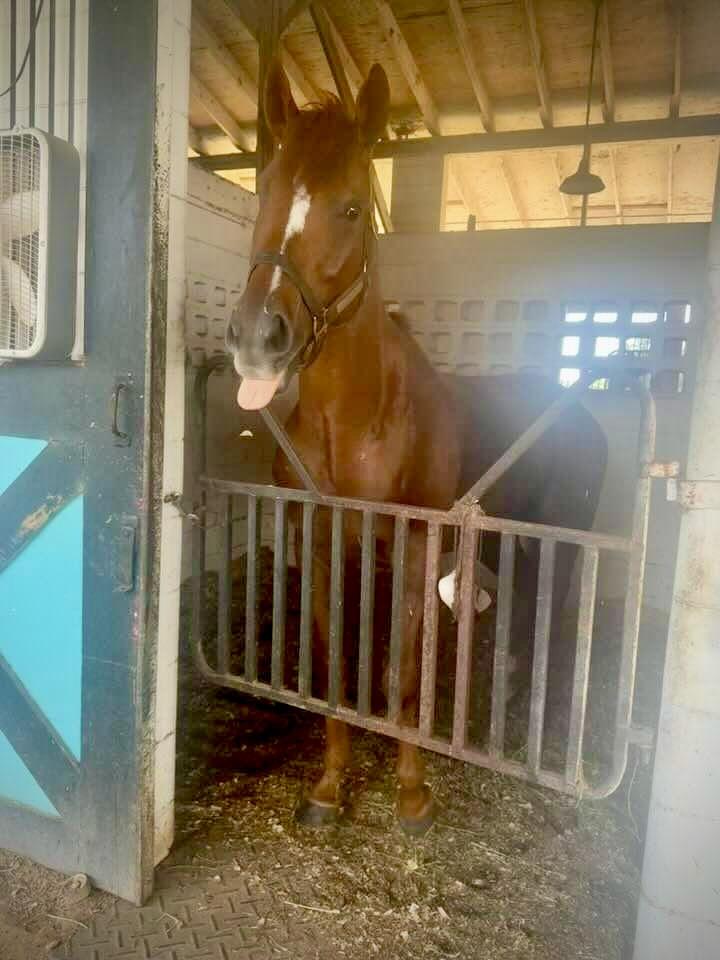
I bought this dude (King Swansboro) off of a five second trot video in a field. I don’t necessarily recommend purchasing horses like this, but by this point, I trust my gut. He’s going to be fun. Photo by Kelly Lupton.
Frankly, of all things in my job, pre-purchase exams stress me out most. I hold my breath on hock and ankle rads and have gotten really pretty good at squinting at the X-ray screen and going, “Please tell that is superimposition and not a chip.” Sometimes it is, sometimes it isn’t. Sometimes the buyers are unpredictable and what I think is a great exam leads to a passed over horse. Sometimes not. Hence the stress.
But let’s back up a step. Pre-purchase exams truly can be an important part of buying a horse. They allow the vet a moment to assess their general health, fitness, and soundness. The exam aims to draw a holistic image of the horse in the present to discuss suitability and maintenance for the future. The exam often includes: a physical exam (temperature, heart rate, eye sight, hearing, breathing normalcy, gut sounds, poking and prodding acupuncture points, feeling joints, palpating tendons and so on), walking and jogging in hand, lunging, possibly riding, flexions (where joints are bent and held for a period of time before the horse is jogged off to determine the soreness of the joint), and any requested radiographs, scoping, or ultrasounds (though those are not usually part of the initial exam).
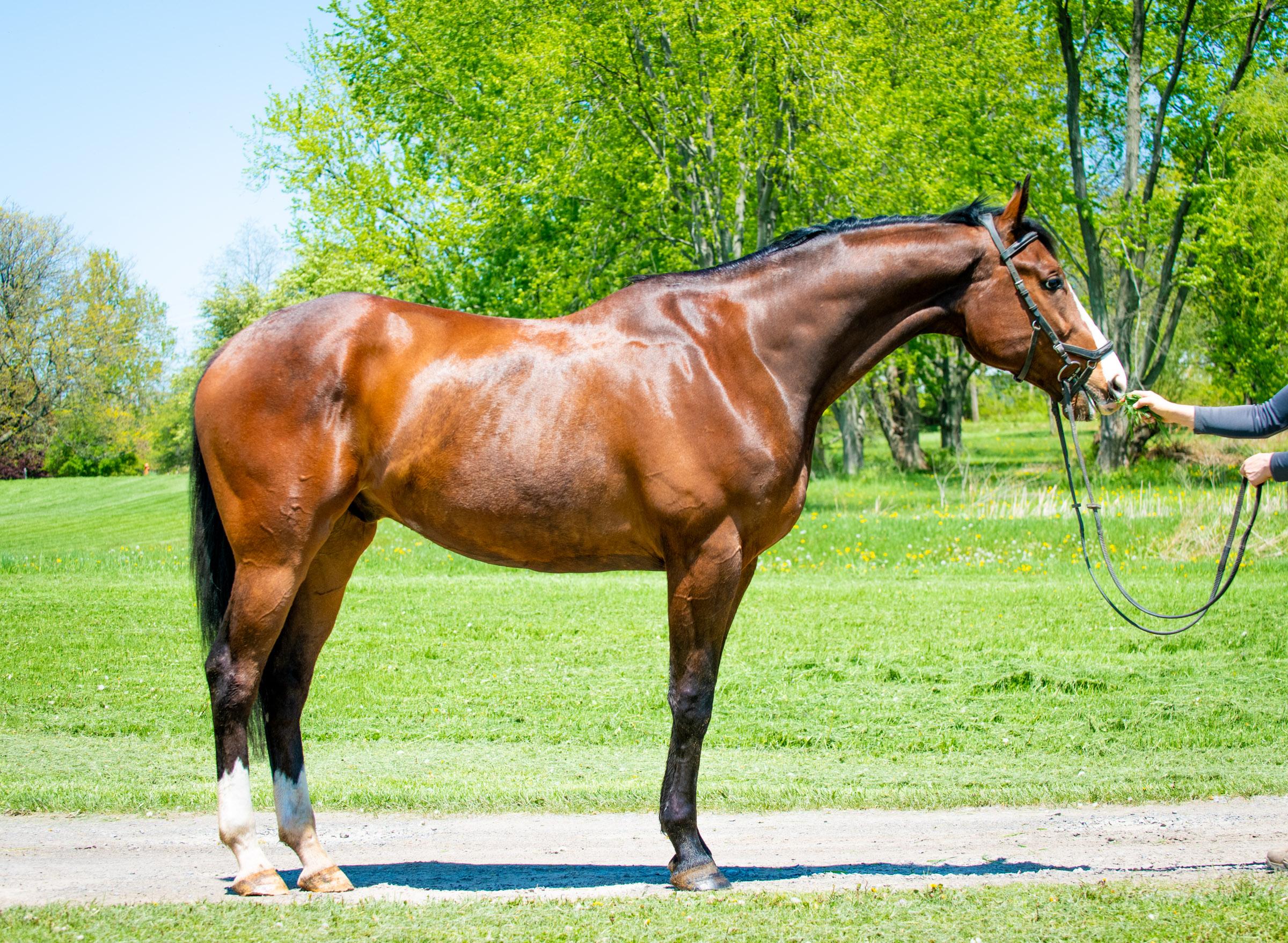
Crash’s (One Big Dude) exam was particularly nerve wracking as he is so big, kind and talented. Thankfully, his PPE didn’t highlight anything outside of the usual range of expectation. Photo by Lily Drew.
And while these exams are often described in terms of “passing” or “failing,” there really is no such thing. It is all a subjective view of the particular vet of the particular horse on one particular day in time in relation to the needs and desires of the particular buyer. A pass for one buyer and vet is a fail for another… so we simply try to avoid that language — though it’s tough to fully irradicate from the discourse of the exam.
For Thoroughbreds, even those who have not run much, there will usually be findings on the exams. This is normal. Let me say this again for the folks in the back. THIS. IS. NORMAL. Some effusion and some arthritis is more or less expected — at least in its mild presentation. If they ran recently, qualified vets will expect that they will be tight through their hind end and will likely “flex” to their upper limb (hocks and stifles), and potentially be sore and palpate to their sacroiliac joint and region of their back. Their front ankles often have some effusion from their track careers and may be sore and worthy of a rad or two.
If one were to radiograph their whole body, one would inevitably find something — often many things. But the findings and whether or not the PPE leads to purchase revolves around the ability to look at the issues in the present through future-tinted lenses: will the horse likely be able to do the job asked? How do we help maintain their body so that they can best do so?
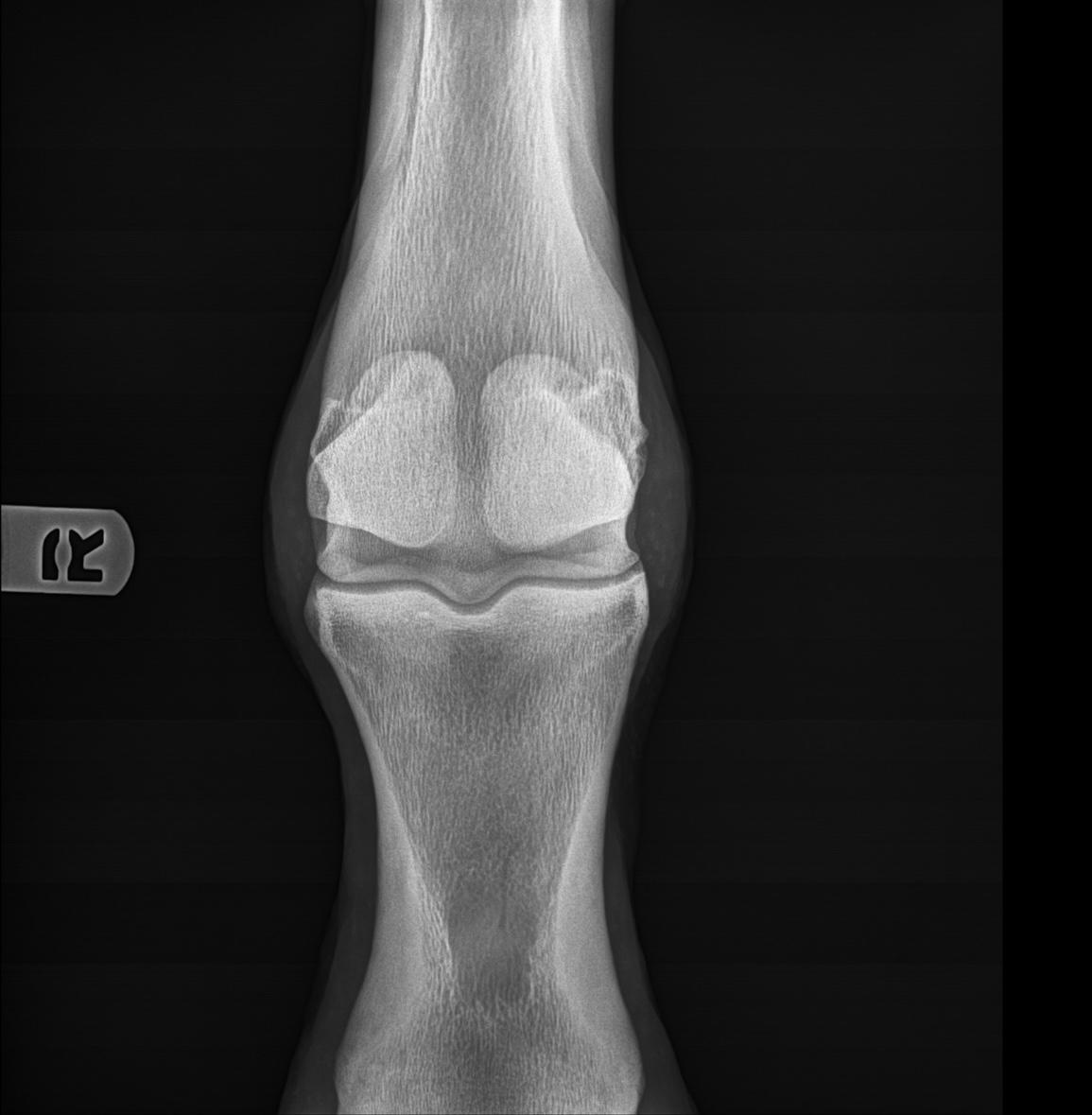
A recent ankle radiograph of one of mine who I think is destined for big things, irksome PPE-findings or not. Radiograph by Early Winter Equine.
So here’s the PSA: Please stop asking your vets to predict the future. The pre-purchase exam is not a crystal ball. If vets could see the future, man, I’m sure all of this would be different (and they had better be making waaaay more money). But the PPE can tell us a degree of what is inside the horse. It can find boney change, chips and old ligament issues, soreness, heart arrhythmia, and breathing issues. What it cannot tell us is how those findings will impact each horse.
A horse with arthritis, or close spinal points in its back, or an old, healed fracture does not necessarily mean it is unsuitable for the job at hand, whatever the job. The PPE tells us about their heart, but it does not tell us about heart — the type that radiates grit, desire, and drive. The exam may find tally-able issues on a horse that ran 62 times, but that horse still ran 62 times and had the gumption to keep going. They likely have a good shot at an athletic next career, even with a probably quite imperfect skeleton.
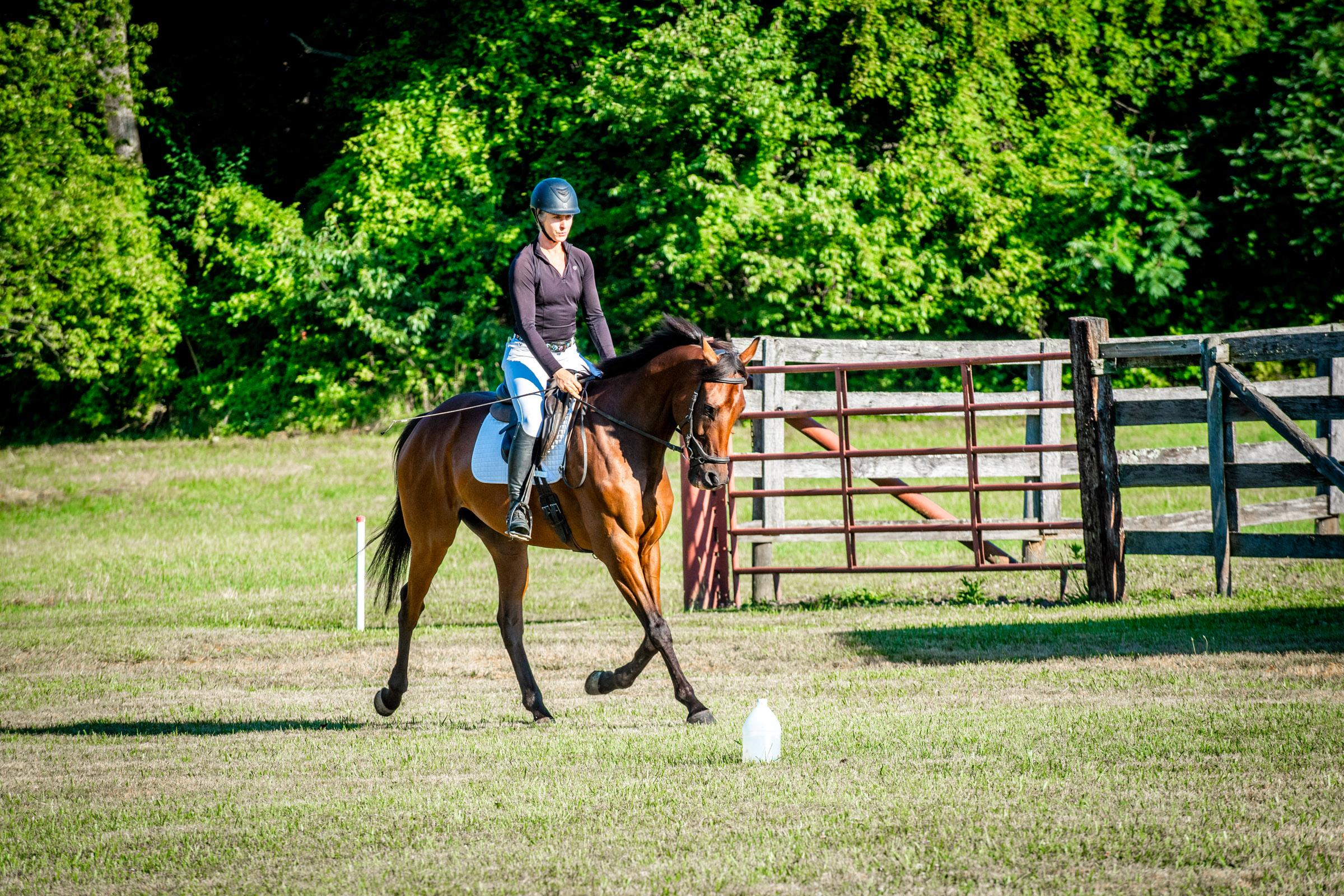
Emmett is going places. I’m going to trust my gut on this one. Photo by Izzy Gritsavage.
The more I assist with PPEs (we often have one or two a week during busy months), the more I realize that they do two things: measure the health of the horse as is AND address the equine PTSD of the potential buyer. Nothing wrong with that, but it is part of the situation. If a buyer retired a horse they loved to stifle issues, one can almost guarantee that the hind limb flexion (that would maybe not bother a different client) will end the exam. If suspensory issues led to breakdown or loss of use of a former equine partner, the mention that they’re slightly sore during the physical exam might be enough to keep a purchaser up at night and have them pass on an otherwise sound, sane horse. Folks will spend hundreds on radiographs of parts of the horse that have shown literally no palpable issue (back, neck, navicular views, etc.) due to their past experiences, or even their friend or trainers’ former trauma.
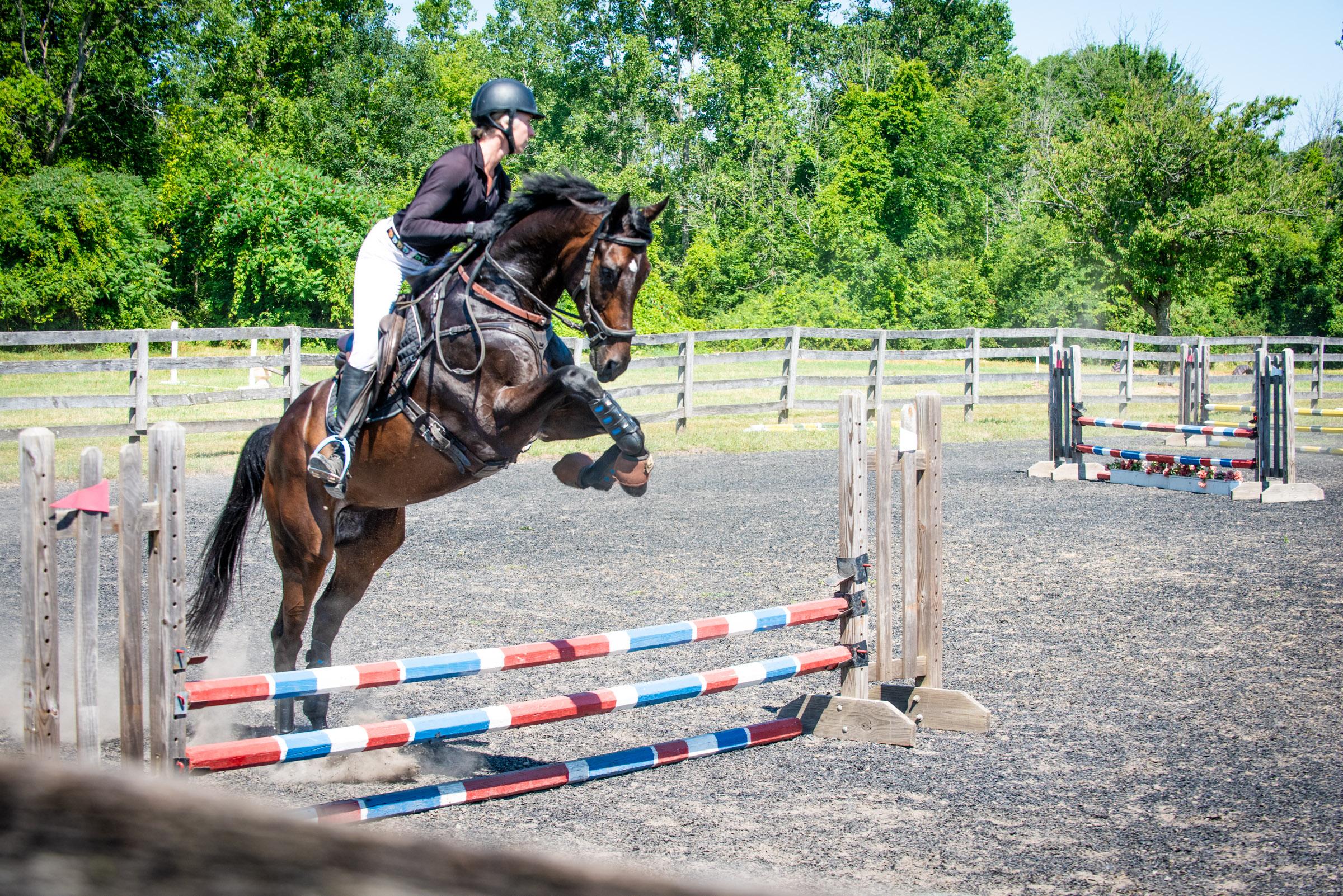
Neil (Lute’s Angel) was passed over for purchase when I was not comfortable letting a “medium” come talk to him about his track days after an inconclusive pre-purchase. I guess I got lucky — his kid is destined for the UL and I’m very excited to get to be in the irons for the ride. Photo by Izzy Gritsavage.
That’s fine and well on one hand. I don’t ever want someone to buy a horse if they’re not comfortable with it. But incidental findings due to a buyer’s former experiences do drive me kinda nuts. So what if there are close points in the back if the horse shows zero discomfort? Or if there’s sidebone in a foot that does not impact their gait? The PPE is part of the whole assessment of the horse, but, man — some days, it feels like the whole whole. With increased mobile viewing technology, we can know so much more about a horse from the inside out. I mean, hell — it is way easier to get a radiograph of an equine ankle than it was for me to get my busted shoulder x-rayed a couple years back. But what horses do with those bones and how they impact them is not always known. Again, that whole vets can’t see the future thing.
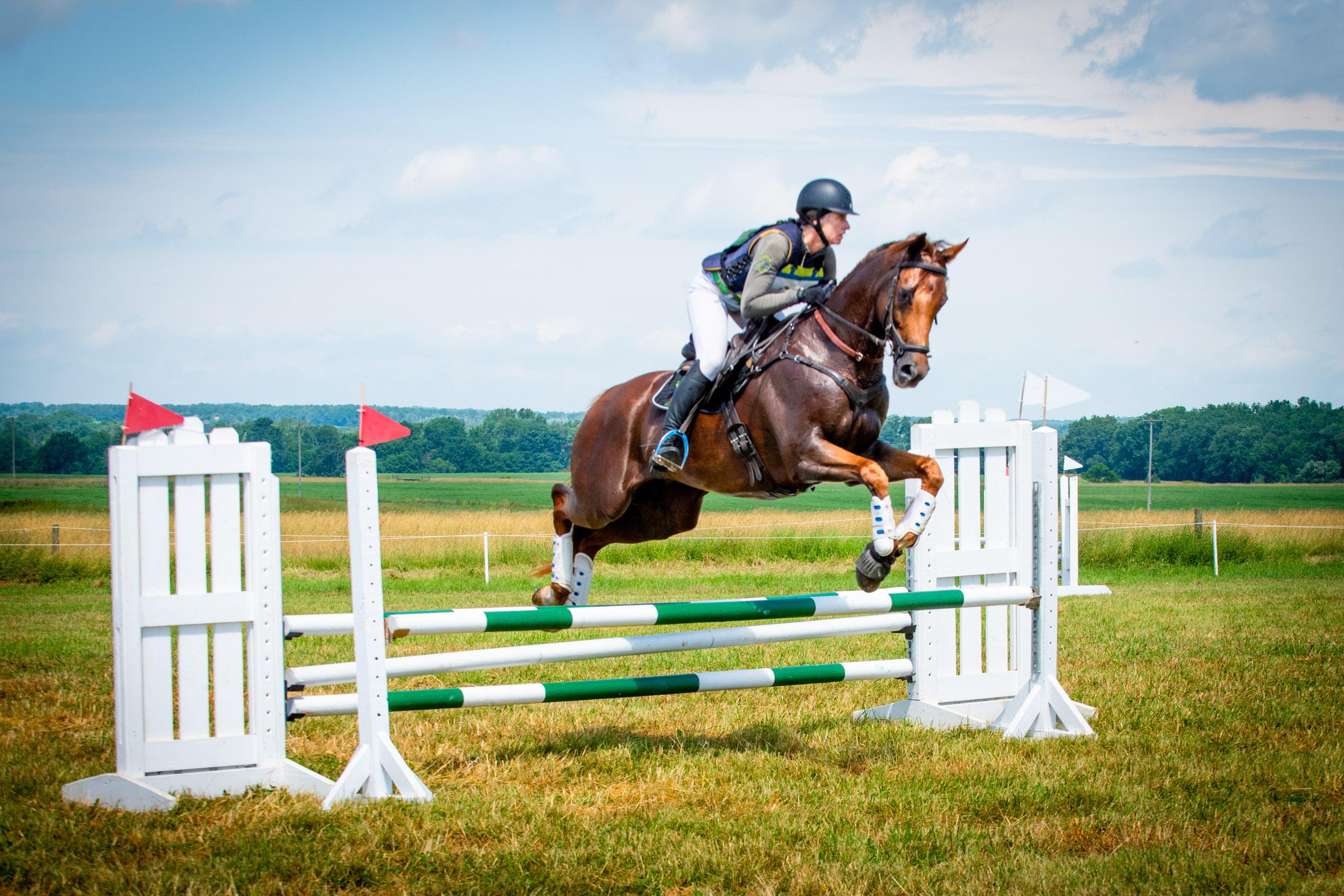
More images of another pretty perfect critter riddled with veterinary imperfections. I don’t care and am just going to enjoy taking Indy (Star Player) up the levels. Photo by Izzy Gritsavage.
So, my recommendation: Yes, pre purchase the horse. But weigh those findings against the rest of the animal. Did you love their personality? Have they been doing the job for years successfully? Will it happily tote the kiddo around? Does a rider truly have upper level ambitions and ability or is it just fun to want a horse that will go beyond the 3’6″? At the end of the day, the question becomes do you think they can do the job with you in the irons? And, perhaps more importantly, is it worth it to try? Because they’re all a gamble — it’s just that sometimes we know the risks up front and sometimes we don’t.
So folks, perfect or imperfect, go ride. I’m off to sneak a few rides in before I have to hold for another pre-purchase (keep your fingers crossed).
About Kentucky Performance Products, LLC:
Omega-3 fatty acids have been proven to reduce skin inflammation and mitigate allergic response. Contribute delivers both plant and marine sources of beneficial omega-3 fatty acids. Feed one to two ounces per day, depending on severity of the allergy.
Need tips on how to manage allergies? Check out this KPP infographic: Got Allergies?
The horse that matters to you matters to us®. KPPusa.com

