



Thoroughbred Logic, Presented by Kentucky Performance Products: Suspended Disbelief
“It might take three steps or three laps around the ring, but there is a feeling that comes with it — a suspension of disbelief. You know they’ll get there (to whatever it is you’re asking), but it will take a moment for them to understand and try in the right direction.”
Welcome to the next installment of Thoroughbred Logic. In this weekly series, Anthropologist and trainer Aubrey Graham, of Kivu Sport Horses, offers insight and training experience when it comes to working with Thoroughbreds (although much will apply to all breeds). This week ride along as Aubrey shares her logic on sitting and waiting for a concept to set in.
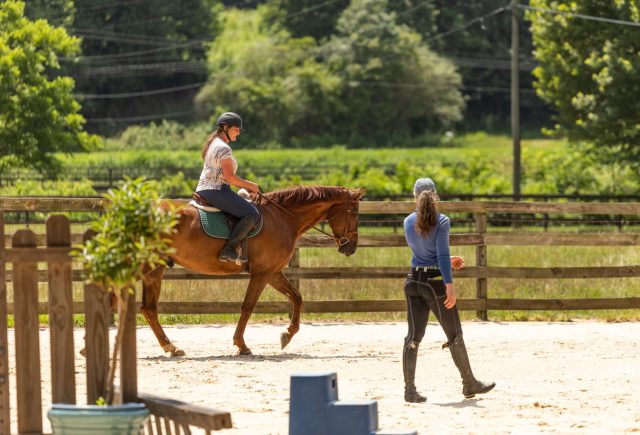
Often when I’m riding green horses there are moments of suspension. These are pauses in the ride that are not truly a break of sorts, but short periods of time where you set something and then wait. Inside leg on, outside rein slightly wider and weighted, outside leg providing stability and encouraging a horse up and forward. Then wait. It might take three steps or three laps around the ring, but there is a feeling that comes with it — a suspension of disbelief. You know they’ll get there (to whatever it is you’re asking), but it will take a moment for them to understand and try in the right direction. These pieces of a ride hang in time; they aren’t full of movement and they’re absent of fight. They become just the gentle application of a set of aids and then the waiting with pressure for something to change — something to give.
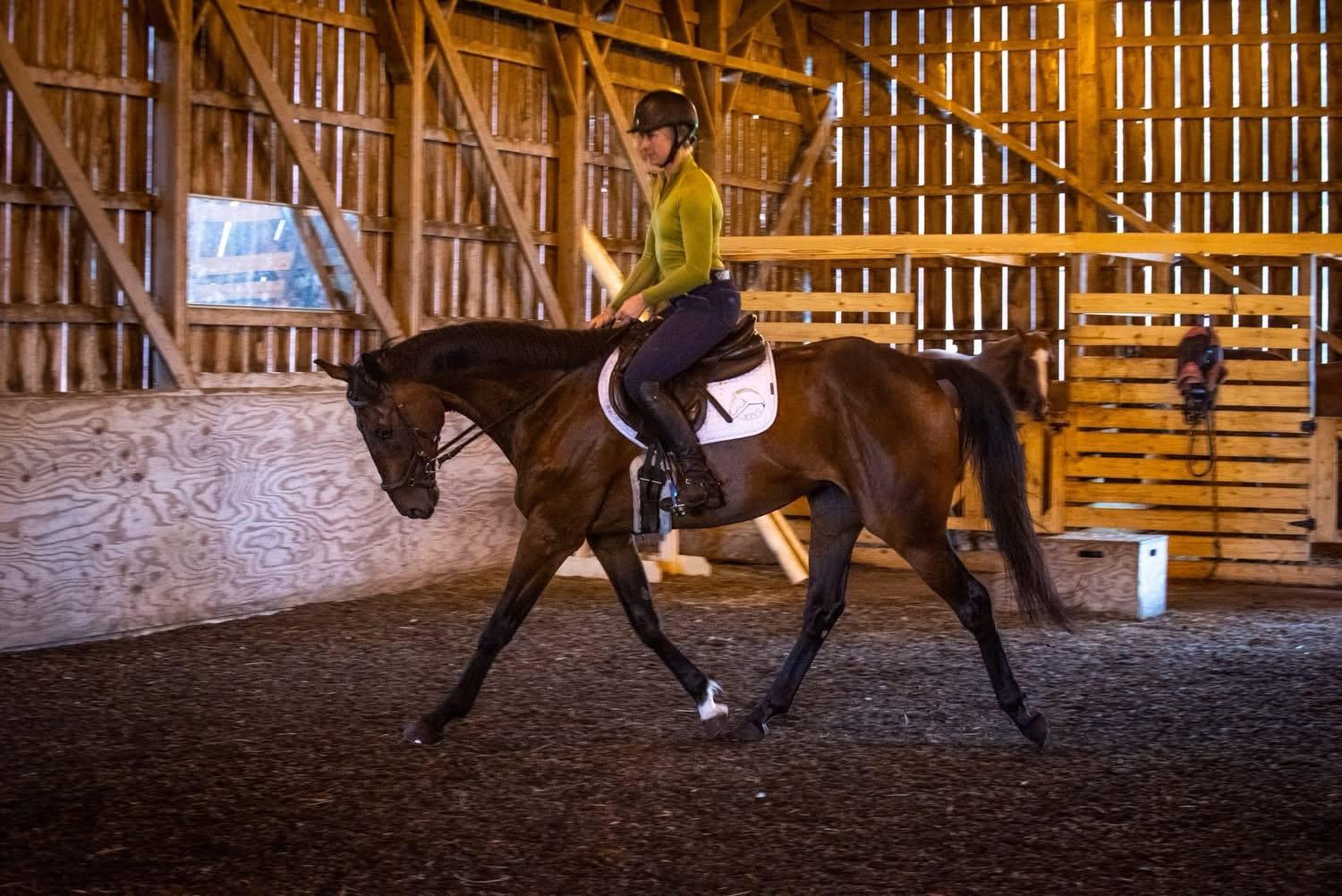
Cove (Always Spring) figuring out how to stretch and trot and turn like a good toddler. Photo by Lily Drew.
It is fun to see it when I teach — the rider applies their inside leg and outside rein, sits up and asks for the horse to step under from behind and into contact. The horse might not immediately respond or change their current course of action. And when the lack of change happens, the rider starts to want to fidget — to shift things, try something else. But if they wait, pressure still applied, work still happening, there’s that somewhat magical moment of watching both horse and rider suspend disbelief. The rider wants to think “this is never going to work” and equally, “just maybe we’re getting somewhere.” And in the constant ask and without all the wiggling and change, the horse starts to listen. The “noise” of the ride dies down and they’re able to focus on moving away from specific pressure and into the shape or pace or movement asked.
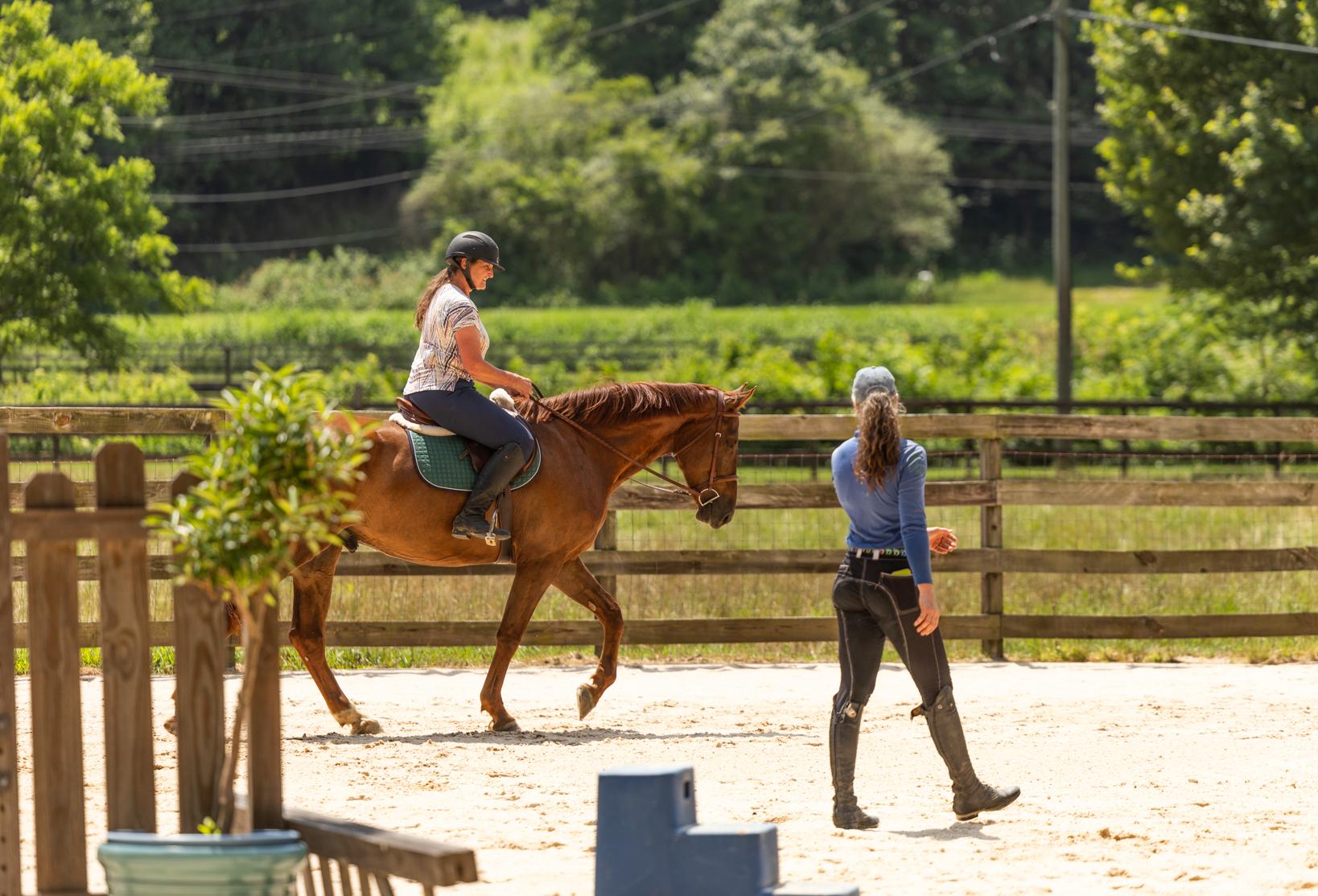
Instructing “just wait for it” at a Kivu clinic at Simmons Sporthorses in Talking Rock, GA. Photo by Dawn Light Photography.
And in those lapses in ride time — those moments of suspended disbelief — it doesn’t look like much, but trust is built… The rider’s waiting and lack of movement gives the horse the time it needs to trust that it can figure it out. Little bits of right answers are rewarded. All forms of try receive positive feedback. And the desire to try and to get it right is compounded upon in a positive feedback loop. The stability and consistency of the ask builds a rapport that can be built on top of — a foundation of sorts. And I suppose a foundation built on the suspension of disbelief — on the “this just might work” — is better than a foundation cobbled together of 47 different materials, gadgets and noisy attempts.
And then out of those points of suspension come change, progress, and the visible outcome of having applied pressure and then waited. As the horse and rider go forward and trust builds, the length of those moments usually shortens. The horse understands that something is being asked, and they start to try to figure it out faster. The rider has to apply their aids and wait in suspension less and less.
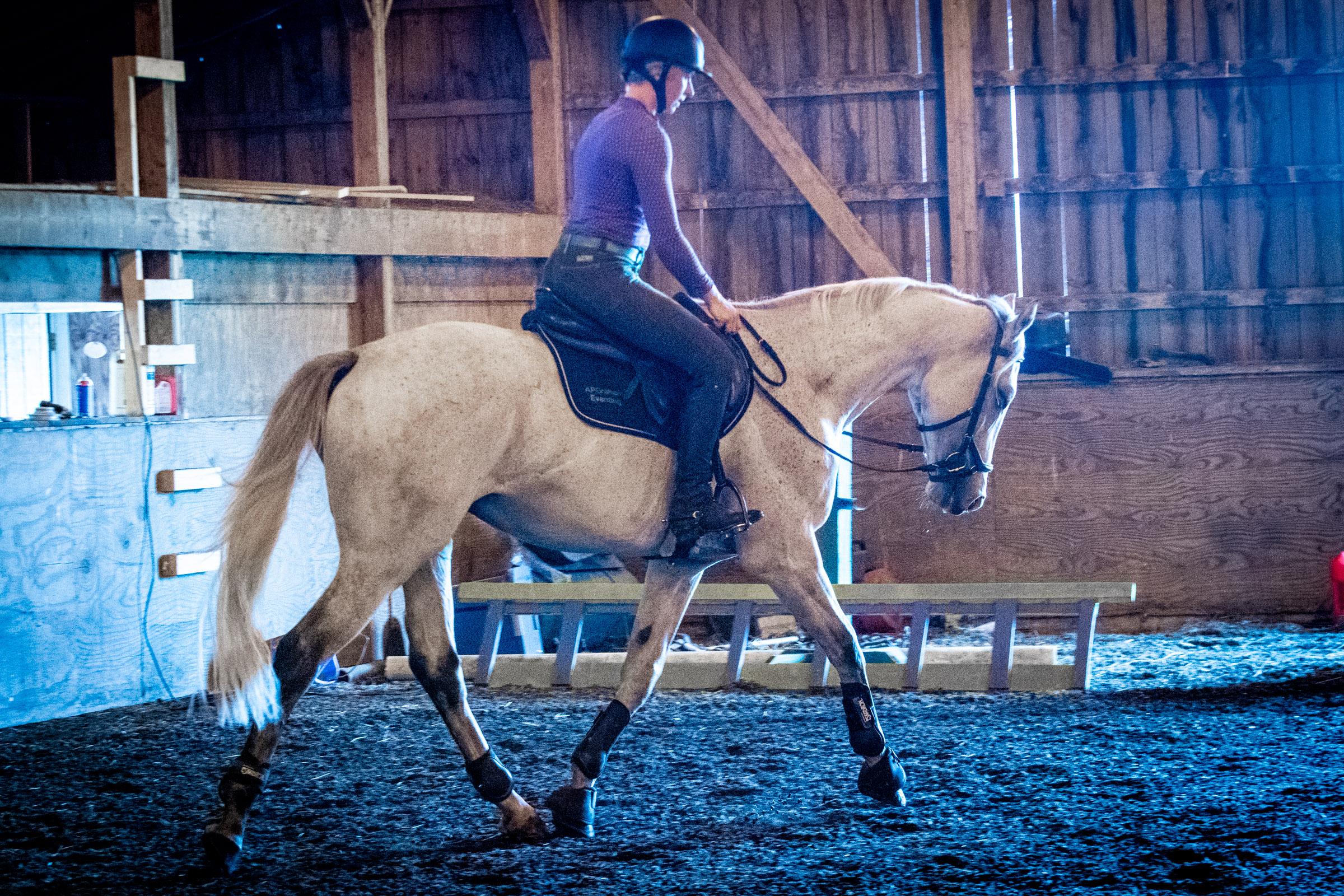
Augusto Starship is learning to travel more like a show hunter and is allowing the moments of suspended disbelief to work their magic. Photo by Lily Drew.
Watching or feeling that happen is just so damn cool.
Here’s a good example: Yesterday I hopped on Spears (JC Upbeat) for his second ride here. Spears’ first ride didn’t really count as he was barefoot and too footsore to actually ask him to do anything. Spears had been restarted off the track a year-and-a-half ago, and then sat in a pasture without much of any job for the past year. He came to us happily field fat, with feet that needed attention and sporting some seriously impressive dreads. So after two weeks of hanging out, getting four shoes and a much-needed haircut, he was ready to go.
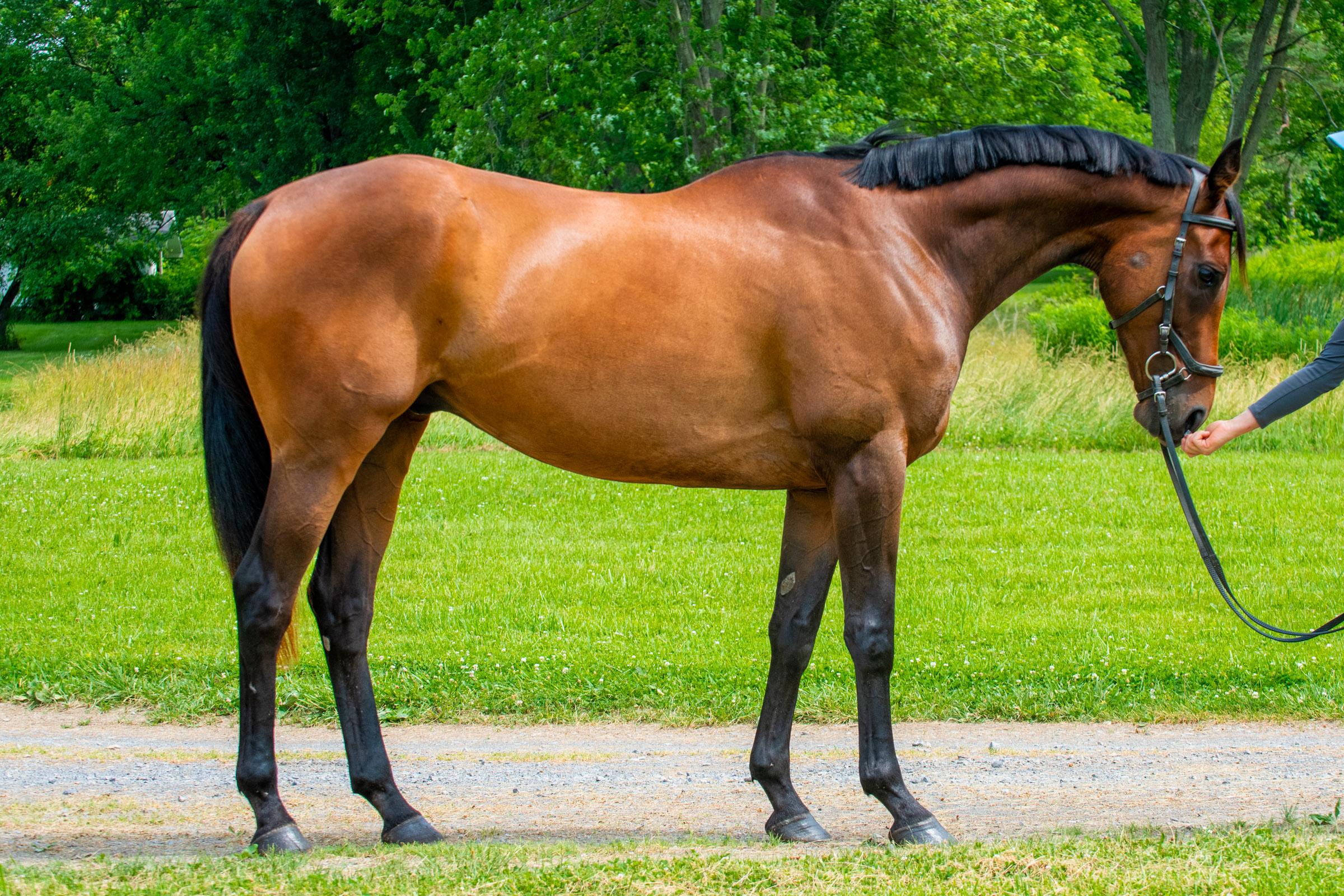
Spears (Upbeat) post bath and trim. Photo by Lily Drew.
Once in the saddle, the ride was pretty text book. The beginning of the ride looked much like this — nose poked out, a bit on the forehand, but seriously well behaved.
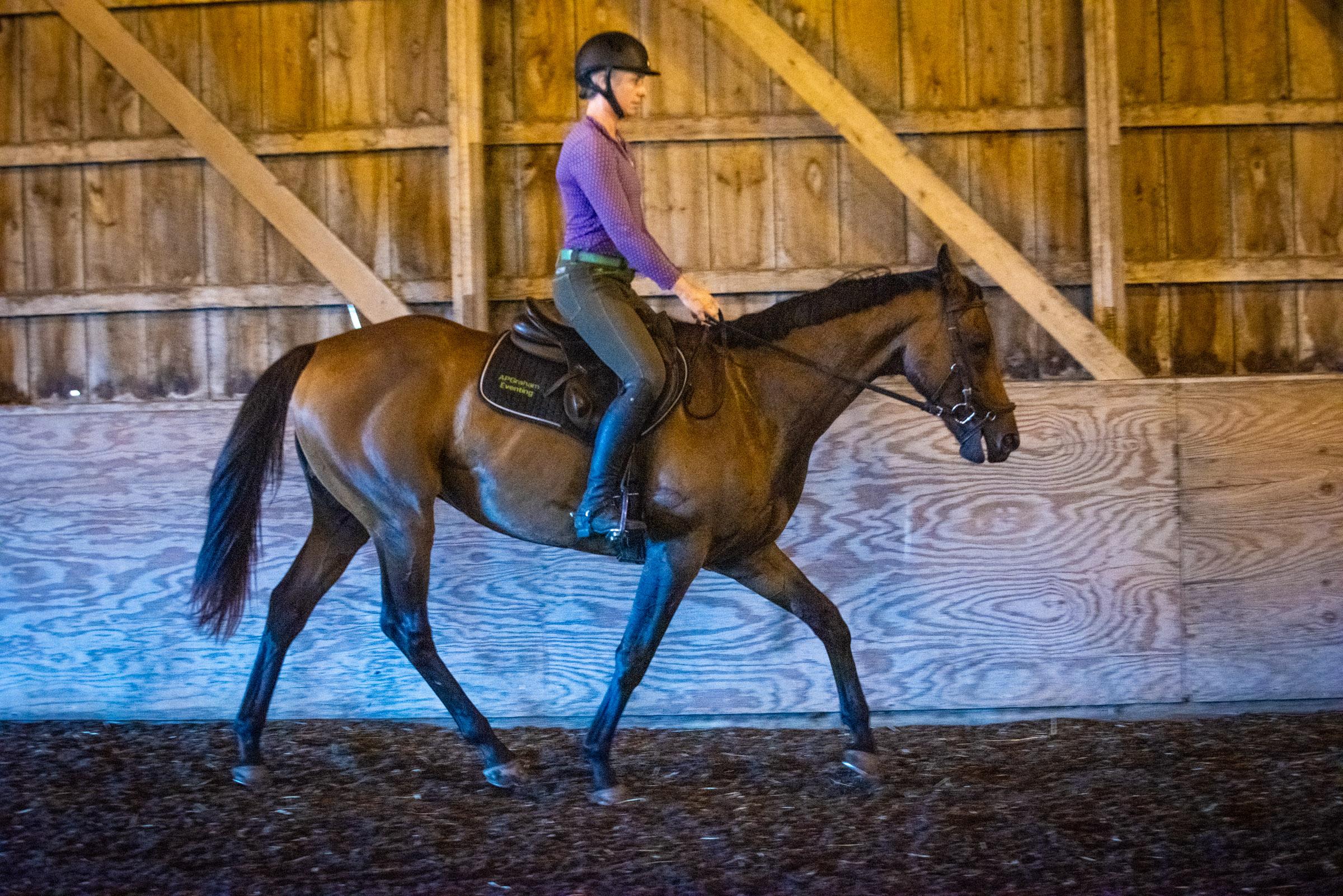
Not the type of photo that will sell a horse, but definitely part of most rides while they try to figure out the ask. Photo by Lily Drew.
From there, I added inside leg, enough pace to get in front of my leg, and outside rein, and then I waited. I remained as bungee as I could and let him take the time to work it out. This kid is super smart, so after a couple of spins around the indoor, he figured out that he needed to reach towards contact. And in a couple more spins with additional lifting leg, he brought his shoulder up and made a heck of an effort at traveling correctly. And from there, I got to ask him to hold his pace and stabilize and to start to build the right type of muscle and topline.
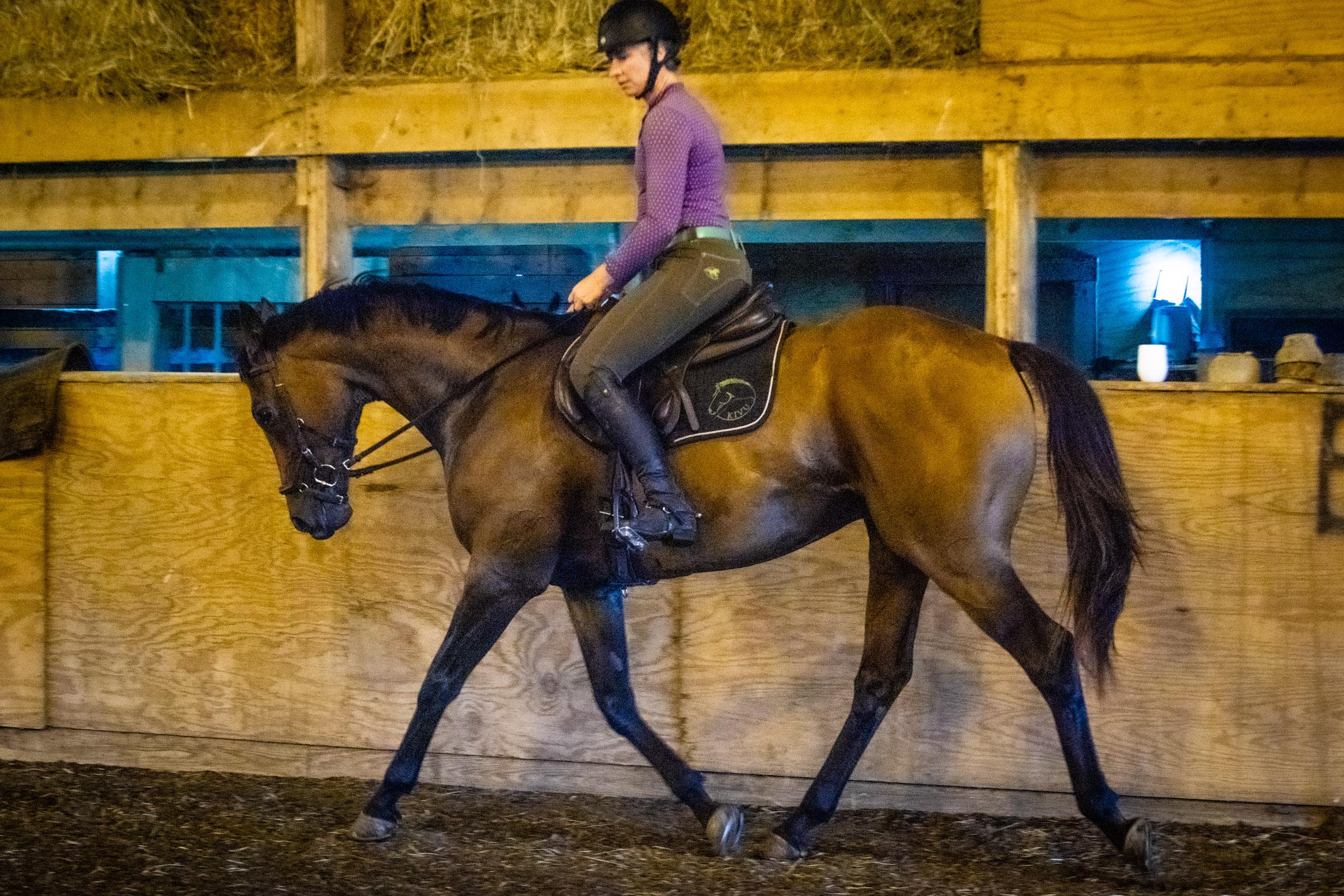
Spears is a smart cookie, so it didn’t take long to progress to this. Photo by Lily Drew.
The ride had an exponential quality to it — as they do when things go well. The beginning was slow, full of hanging moments of suspended disbelief followed by try, a different ask, more try, and more learning. I couldn’t have been happier with how Spears did, and I’m excited to see him progress as his feet continue to improve.
So maybe I should take a page from my horses’ book. When things get tough up here, I often want to flounder around and try the 47 different things to make it work. Perhaps instead, I might need a little more continued pressure and suspended disbelief that things might just start going in the right direction… hopefully soon and with that exponential aspect too.
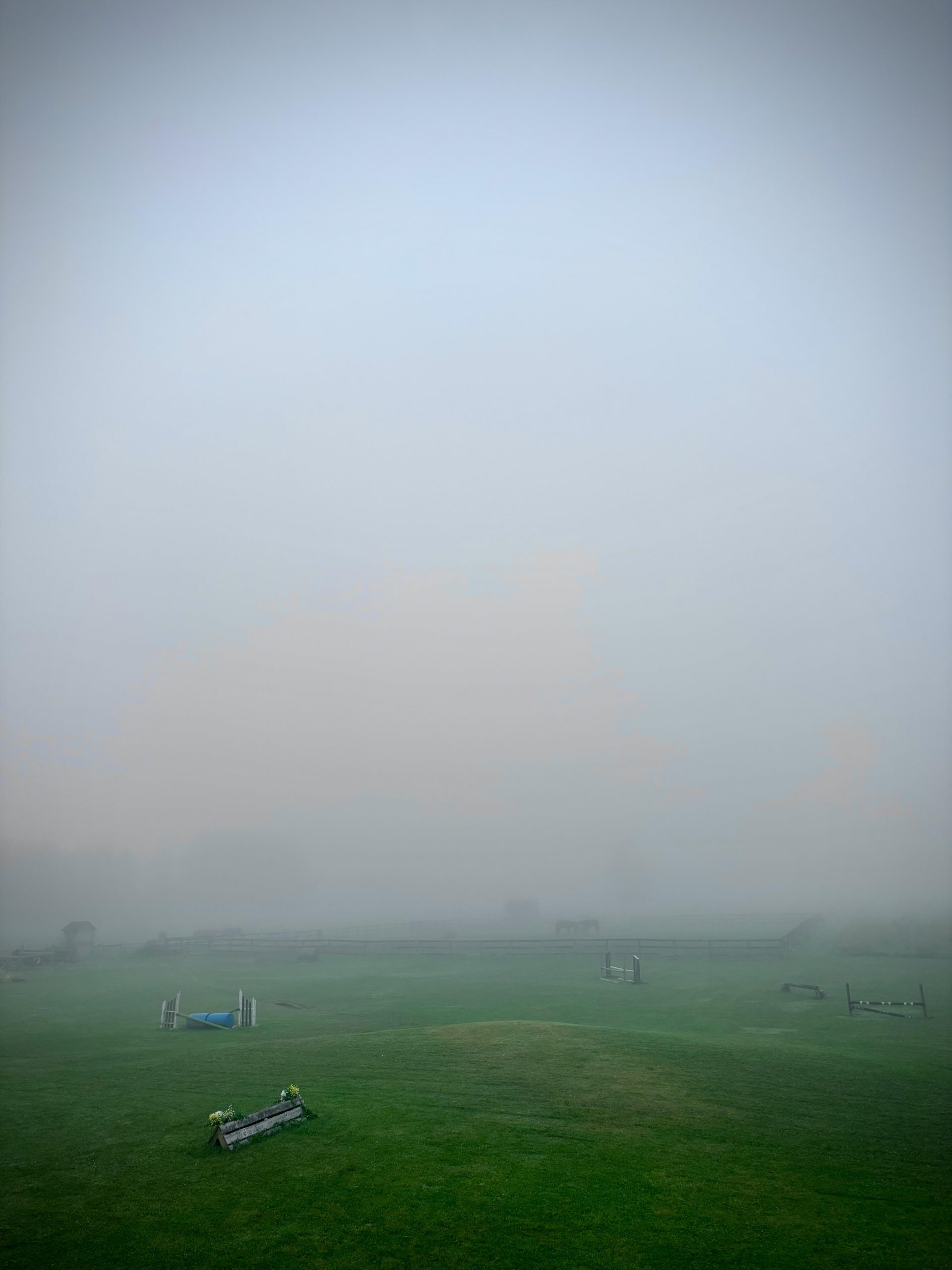
What waiting it out feels like… Photo of the farm by author.
So go ride, folks — enjoy the process of waiting out those moments of learning and progress.
About Kentucky Performance Products, LLC:
Omega-3 fatty acids have been proven to reduce skin inflammation and mitigate allergic response. Contribute delivers both plant and marine sources of beneficial omega-3 fatty acids. Feed one to two ounces per day, depending on severity of the allergy.
Need tips on how to manage allergies? Check out this KPP infographic: Got Allergies?
The horse that matters to you matters to us®. KPPusa.com

