



The Sin of Riding While Amateur
One of our readers offers this thoughtful, first-person reflection on what happens when a capable adult amateur chooses to bring along a green horse — and the judgment, assumptions, and quiet resilience that come with doing it anyway.
Canva/CC
A close friend recently consulted me about buying a green horse. We are both adult amateurs in our mid-thirties with stable jobs and over 50 years of combined riding experience. She has jumped bigger fences, but I’ve been riding longer, managed horses at my own farm, and—most notably—brought young horses up through the ranks. My advice to her became the impetus for this reflection: Be prepared for a lot of cruel, unsolicited advice, because you will be committing a grave sin in the eyes of many professionals: riding while amateur.
I understand why many professionals are wary of amateurs riding “greenies.” It is undoubtedly easier to coach, train, and show a “made” horse, which usually results in more consistent income and safety. Many amateurs are, frankly, unqualified to handle a truly green horse, and doing so can be inappropriate or dangerous. Most, but not all.
Coming off two consecutive state-level championship years, I sold my “big” horse to a junior and somewhat inadvertently acquired a two-year-old. My mother likes to horse shop for me; her finds tend to have the ideal price tag of “free-ninety-nine,” but they are rarely without their quirks. I spent my childhood as the “crash test dummy” kid at her farm, riding horses for a year or two until they were officially childproofed and sold. Sometimes they reared, bucked, spooked, or bolted, but they were never truly malicious. The horse I had just sold had been “rescued” by a professional, given 90 days, and then sold to us for less than the cost of shipping. I put three years into her before reselling her to a lovely junior family. (I actually bought her back when the kid outgrew her, but that’s a story for another time.) My point is: I am one of those “good-riding” amateurs.
Canva/CC
So, I became the owner of a three-year-old mare. A trusted pro backed her and gave her 90 days under saddle before she came to me. At the time, I boarded with a trainer who was understandably apprehensive, but she was game, never trying to dissuade me. The plan had been to buy something “made,” something with a show record that could take me into the bigger rings — but when life gives you a free horse, you make it up.
My trainer and I put together a rigorous plan. The barn wasn’t set up for young horses, so we had to educate other riders about giving us space while we taught her how to canter. For safety, I wasn’t allowed to ride her alone for the first few months. Fortunately, this mare doesn’t have a mean bone in her body. While she is complicated, she has never been unsafe. Once my trainer and I both felt confident, I was allowed to ride unsupervised.
I began bringing her up in the hunter/jumpers. I vividly remember three incidents from those first two years that I recounted to my friend:
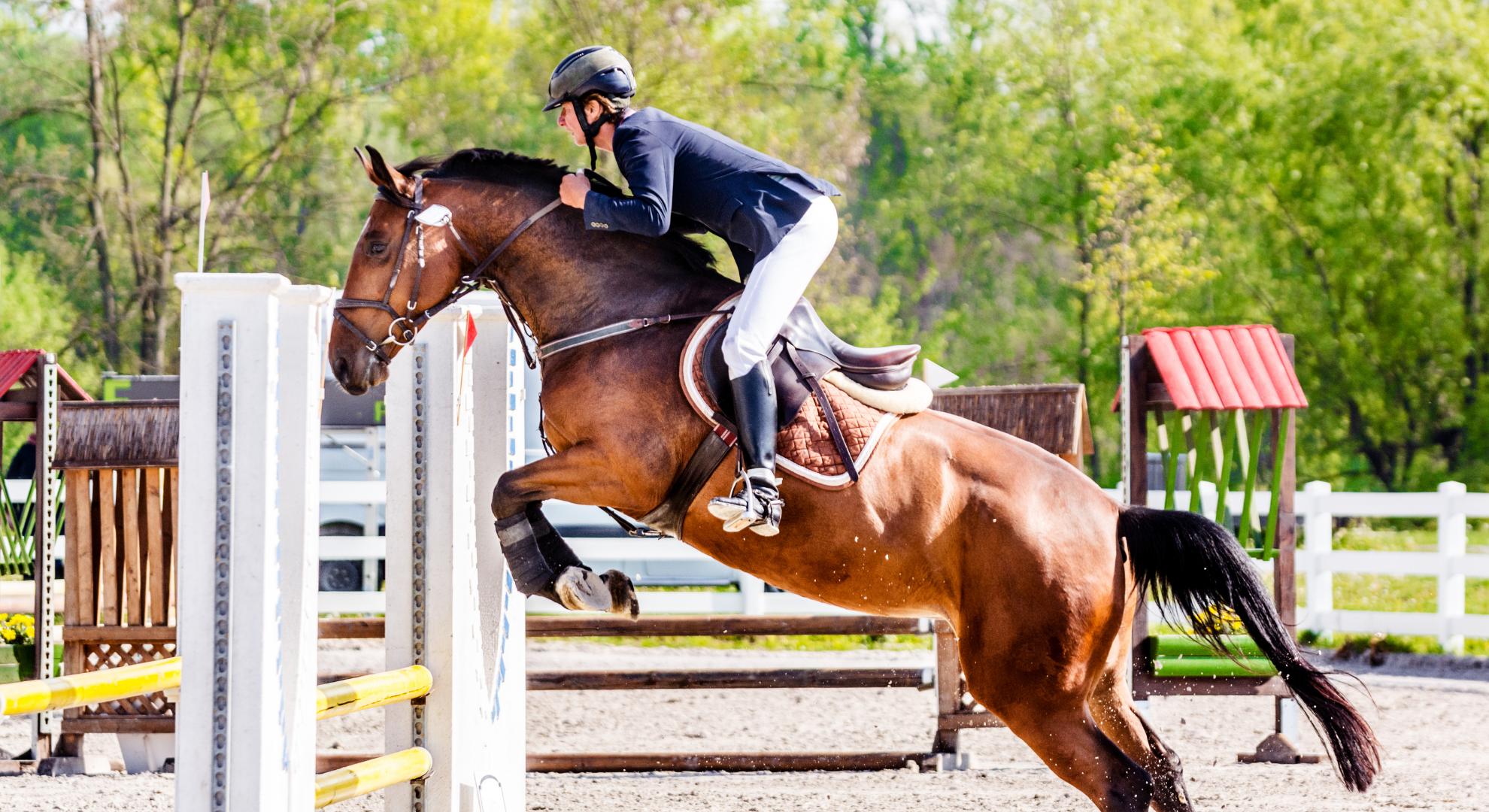
First: The very first time I took her to a showground. We weren’t entered in anything; we just spent hours hand-walking. Eventually, we did some light schooling during a quiet break. She is a brilliant, bold jumper and over-jumped some of the fill. On the second approach, she stopped, clearly having scared herself. A trainer at the rail who knew me said loudly—while making eye contact with my trainer—”And that is why you don’t let amateurs ride babies.” Thanks for the confidence boost, lady. We dropped the rail, re-presented, she jumped, and all was well.
Second: A year later, I took the mare to a three-day clinic with a well-known regional course designer. I ended up being the only person in my height group, resulting in three days of one-on-one coaching. It should have been amazing. Instead, I listened to him tell the audience every time I made a mistake: “This is why amateurs shouldn’t ride young horses.” For three days. Into a microphone. I am not a “snowflake.” I grew up in the 90s hunter rings—the era of George Morris and being told to pick up smoking at 14 to stay skinny. Some folks did not grow up with those trainers and it shows, but I do not have thin skin. By day three, I finally asked him, “What would you like me to do about being an amateur? I am here, seeking professional help to improve.” His response? “Sell your horse to a professional who will take her to her full potential.”
Third: During a lesson at a new barn, the assistant trainer had us in a group session. Everyone else was on, what at least looked like, 17hh imports. She demanded we all perform shoulder-ins, counter-canter, and other more advanced flat work. My horse hadn’t been taught to counter-canter yet. I tried to make it an educational session for the mare, but at the end, I was told yet again: “Maybe you shouldn’t be riding this horse; she’s clearly a professional’s ride.”
These were not isolated incidents; they were just the ones that stuck. Never once was my horse acting unsafe. Never once was I riding dangerously. Sure, we left a stride out occasionally or had an unnecessary stop. And yes, I failed to hold a counter-canter the first time I ever asked for it.
Ironically, my horse was the one you took out first if something was spooky. She didn’t overreact when other horses acted up. She could stand under a flapping tent and dominated grid work. So, what was I doing that was so wrong?
Canva/CC
It took me years to reach two conclusions:
First, there is a perception that because I am an amateur, my horse isn’t living up to her “full potential.” That’s probably right. She isn’t a 1.30m jumper or a Grand Prix dressage horse. She is a solid .90m jumper and a top-100 nationally ranked Second Level dressage horse. She has also lived her entire life as a pampered lady’s horse, draped in every bougie saddle pad, new blanket and supplement known to man. She has never had a day without mints. I feel confident she would choose this cosseted life of lazy turnout, bareback rides, and massages over whatever “full potential” a professional career offered.
Second, and more insidiously, I believe some trainers feel threatened by the idea that a “slightly-above-average” amateur can ride a green horse. If qualified amateurs can develop their own horses, what happens to the traditional business model? We are facing a reality where most top horses in the US are imports because the European development system is superior. The US showing system is not set up for green horses to succeed, and it is certainly not welcoming to amateurs possibly riding them. If we want to develop top horses here, we need to tolerate—and encourage—the amateurs capable of doing the work.
I told my friend to be ready for a long journey. Young horses are a multi-year project. You have to find joy in small victories and develop a thick skin. This mare has made me a substantially better rider; she forced me to research and train harder than any “made” horse ever could. Installing the buttons is much harder than learning how to push them.
Canva/CC
To the trainers who find this notion offensive, I say this with all due respect: be quiet. I promise you that the amateur you see on a green horse is already deeply aware of their inadequacies and we didn’t ask for your feedback. That’s what we pay our trainer for.
A few disclaimers:
- Not all amateurs should ride green horses.
- Those who do should not attempt it without a trusted professional’s support.
- No, I was not jumping a three-year-old. Her workload increased proportionally to her physical and mental development.
- Many professionals were wonderfully supportive, including the main ones I worked with over the years spanning jumpers, equitation, and now dressage.
- Adult amateurs are the backbone of this industry. We provide the capital that keeps the barns open and the shows full. It’s not super cool to alienate us.
To my fellow adult amateurs: I generally recommend against buying a young horse unless you have the patience of a saint, the humor of a comedian, the wallet of a millionaire, and the long range strategy of a chess master. It is hard. But when someone asks where you got your horse or if she’s for sale, getting to say, “I made her myself and no, she is not,” beats out all the noise.
Signed,
A “good-riding” amateur and her spoiled fancy horse
Canva/CC
