



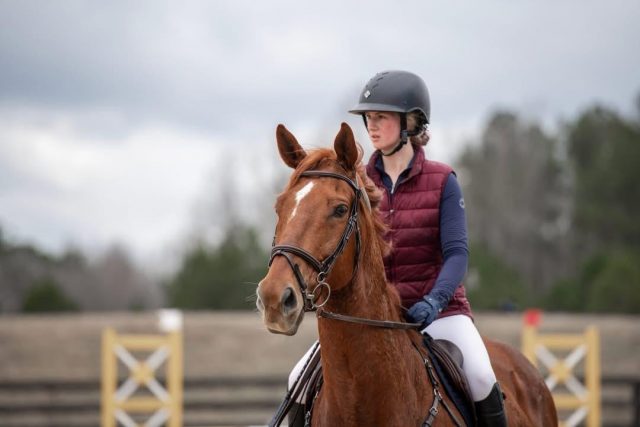
Thoroughbred Logic, Presented by Kentucky Performance Products: When The Goal Is The Problem
Welcome to the next installment of Thoroughbred Logic. In this weekly series, Anthropologist and trainer Aubrey Graham, of Kivu Sport Horses, offers insight and training experience when it comes to working with Thoroughbreds (although much will apply to all breeds). This week ride along as Aubrey shares her logic on setting goals and why, sometimes, that can be problematic.
Goals are great, don’t get me wrong. But if I’m being honest, they worry me.
As your standard type A-ish person who was born in the 80s and grew up in the 90s (yes, I’m old), I had lots of education about how I could be anything, I just needed to have goals. Set. Pursue. Achieve. There was push by teachers to be a lawyer, a doctor — to, you know, “really become something.” I found photography and became interested in Africa writ large, and folks shook their heads. What I learned in turn, shaped how I approach training horses.

I learned a whole lot about flexibility and less about goals while working in these environments. Photo of Goma (North Kivu), Democratic Republic of the Congo. Photo by author.
My goal became to learn, to explore, and not to try to impose my vision on what was happening around me so that I could better understand. That I became a card carrying cultural anthropologists doesn’t seem that strange when I put it that way. Goals got me a couple masters, the PhD, a few post docs, and a teaching position at a great university, but they didn’t get me happiness. Pivoting to horses full time (they had always been a second career) and finding my ways to focus on Thoroughbreds did. My life became a high stakes puzzle of enormous effort, time, labor and passion built around “let’s see what happens.” And while often exhausted and stressed — like 99% of horse trainers — I have been surprisingly pleased with where things have gone.
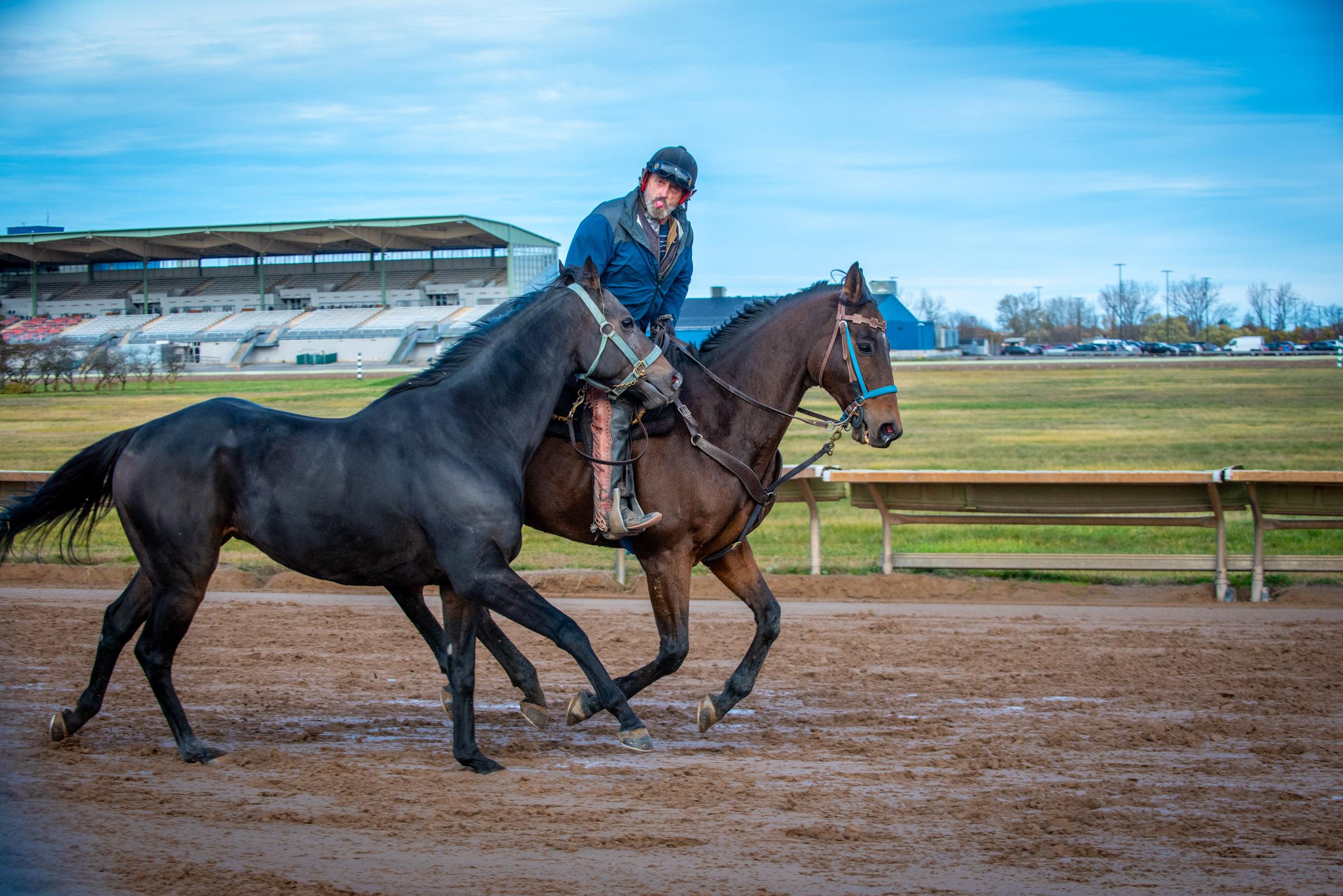
Photo of tackless breezing from Finger Lakes Racing — track trainers have to be flexible in how they train, too. Photo by author.
And here’s the crossover with my horses. Goals still worry me. Flexibility doesn’t.
The internet is full of ISO ads that state rider goals and needs: Must have three-fo0t ability. Must be able to event through Training Level. Must be able to get me my Bronze. Must have scope for the 1.20s. And so on… And when I read these, I get a little iffy.
Now, if you want to get your Bronze, I have a 16-year old Hanoverian in the barn who has taken multiple people up the levels and won them their medals along the way. She’s a sure bet. But my just-off-the-track still growing, still figuring out how to even trot in a circle as a sport horse … Will he get you your bronze? I have no idea. I mean he could, but what if he doesn’t want to? What if he doesn’t like the level of contact demanded to go up the dressage levels. What if his body doesn’t hold up?
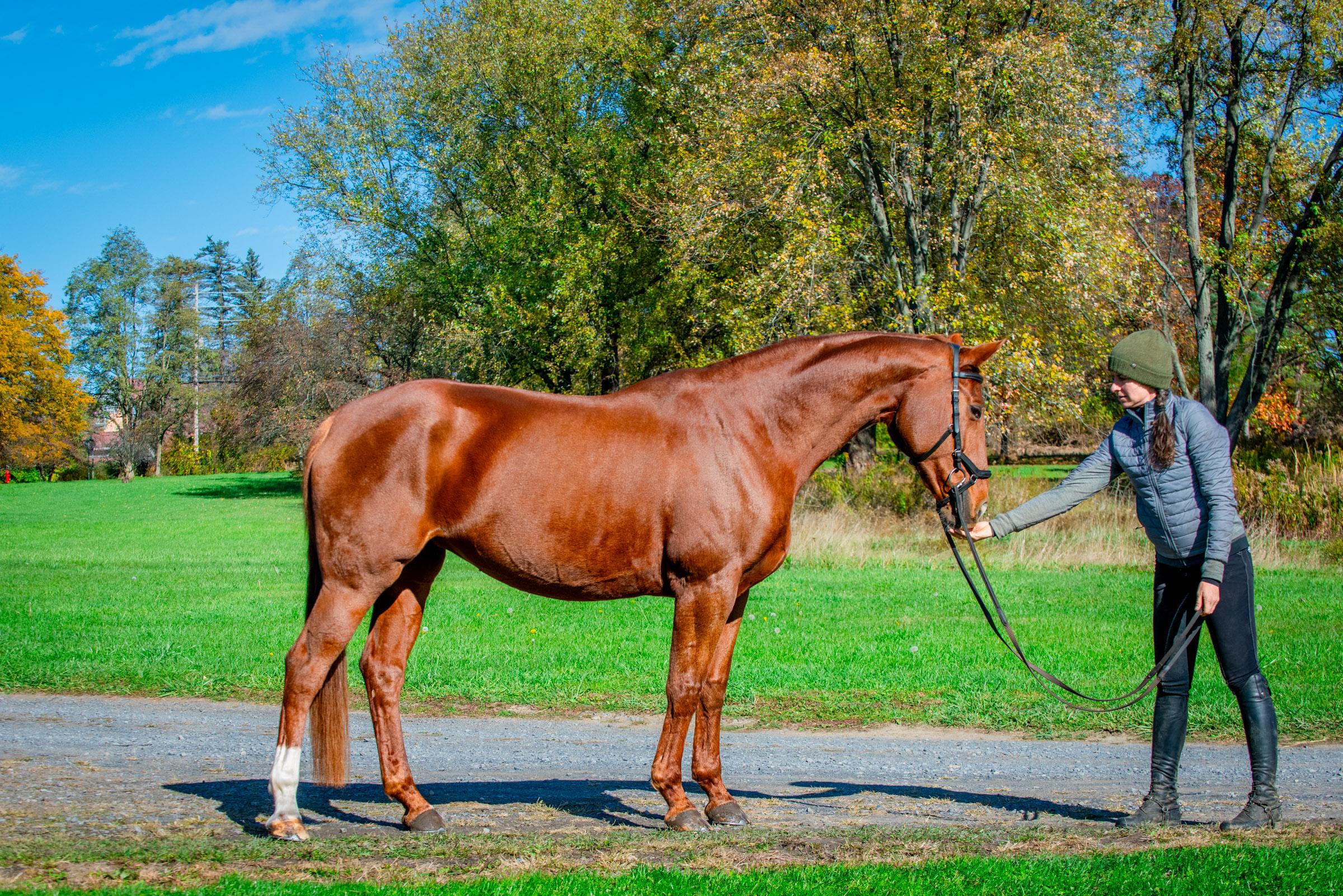
This lady – Doma Fabrizia LR – will get you your bronze, no question. Photo by Lily Drew.
Putting goals on fresh-off-the-track, unproven horses makes me wary. Having a goal means that you can do two things: you can achieve or you can fail. And when we add horses — especially neon green, untested horses — into that mix, happiness (for both rider and horse) gets dicey.
Every off-track Thoroughbred comes out as a somewhat clean slate. They might have bumps and bruises, track jewelry and both positive and negative experiences, but largely they could each go in any number of directions. And it is a gamble if the direction the rider wants to go and the direction the horse wants to go/is able to go, match.
As resellers, we make the gamble more from a somewhat more educated position. We have a chance to sit on the horses, get to know them in the barn, and start to figure out what type of job they will love. And if we do our job well, we get the horses into the right “industry.” August (Starship Augusto) was this great big, handsome gray. Eventers had their eye on him, but every time he hacked out in my cross country field, he became fractious and unhappy. Back in the arena the kid was right as rain. So he went to a show hunter. But if he sold to an eventer who wanted to go Modified/Prelim (or worse, to someone with low level experience and minimal training experience hoping to get through Training Level), he may well have washed out.
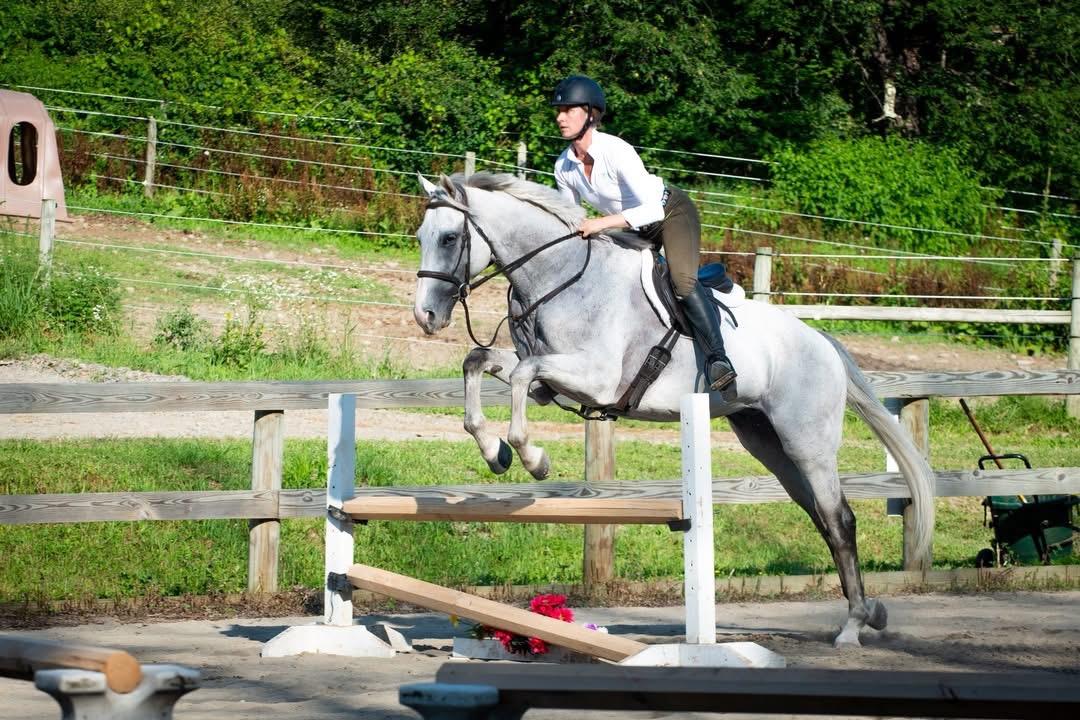
August (Starship Augusto) honing his chosen discipline. Photo by Lily Drew.
Simply put: Our goals might not align with their skills and proclivities.
Forrest (Don’t Noc It) was my first personal OTTB as an adult. And yes, as that A-type kid, I had goals. This was to be my next Upper Level Horse. Time to get back to Prelim and see if maybe we could do more. Forrest didn’t know I had goals. He just thought all the riding and competing was pretty fun. He was a big, hold-my-beer smart idiot; he had a sense of humor and was full of power. I got him through Novice easily, but struggled to make Training happen safely. I took a ton of lessons (and learned to finally sit up), honed our show jumping, worked to keep him ridable between fences on XC, but it wasn’t there. After a horse trial where the jump crew played pick up sticks after our stadium round and I struggled to rate him at all on XC, the depressing reality sunk in. He wasn’t the horse to get me to my goals. Square peg. Round hole.
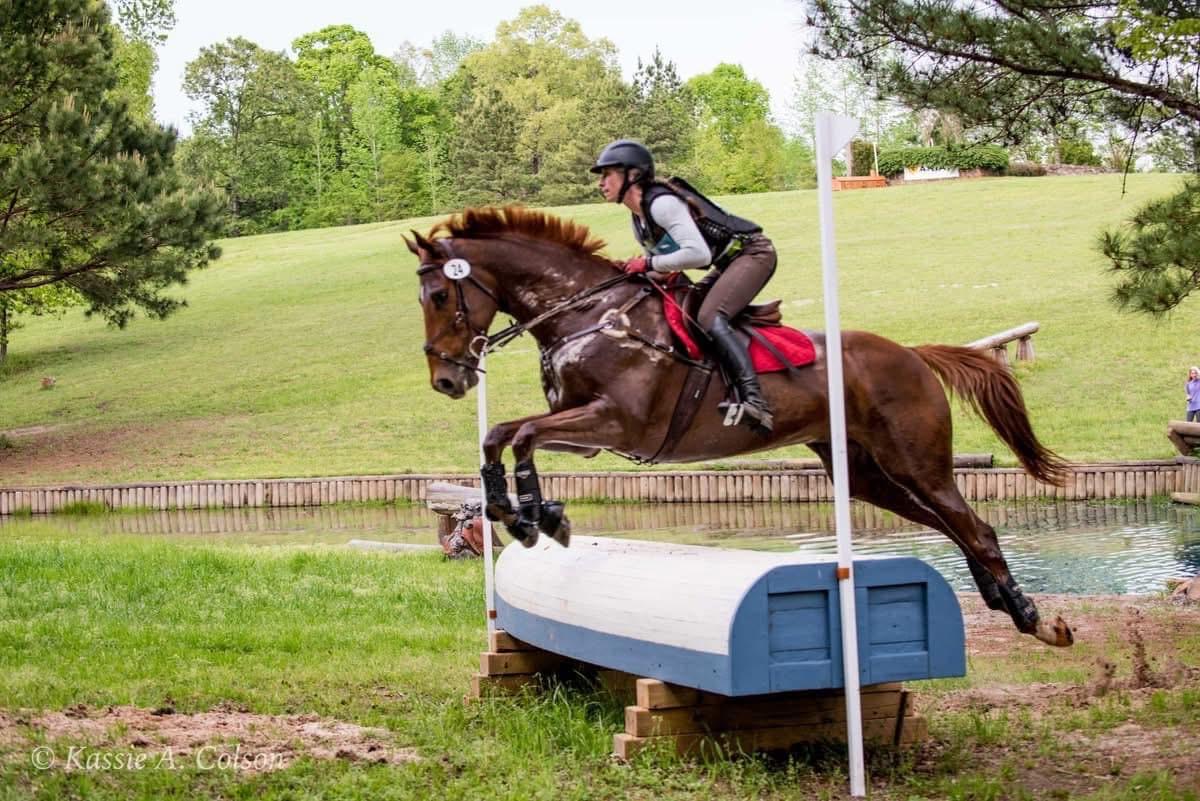
Forrest (Don’t Noc It)’s first time around Novice at Poplar back in the day (before I learned to sit up obviously). He must have been five then. Photo by the Kassie Colson.
So what then? In his case, he sat with me for a while as I processed. He taught some lessons, and then slowly over time, he became a horse I realized could teach riders how to get through Beginner Novice. He gave them confidence that he would jump every time, taught them to ride a big, forward horse who was also an idiot goofball, and helped ready folks for a perhaps more talented but more sensitive Thoroughbred to take them above the lower levels. To say he loves this job is a huge understatement. You can almost literally see that horse grinning.
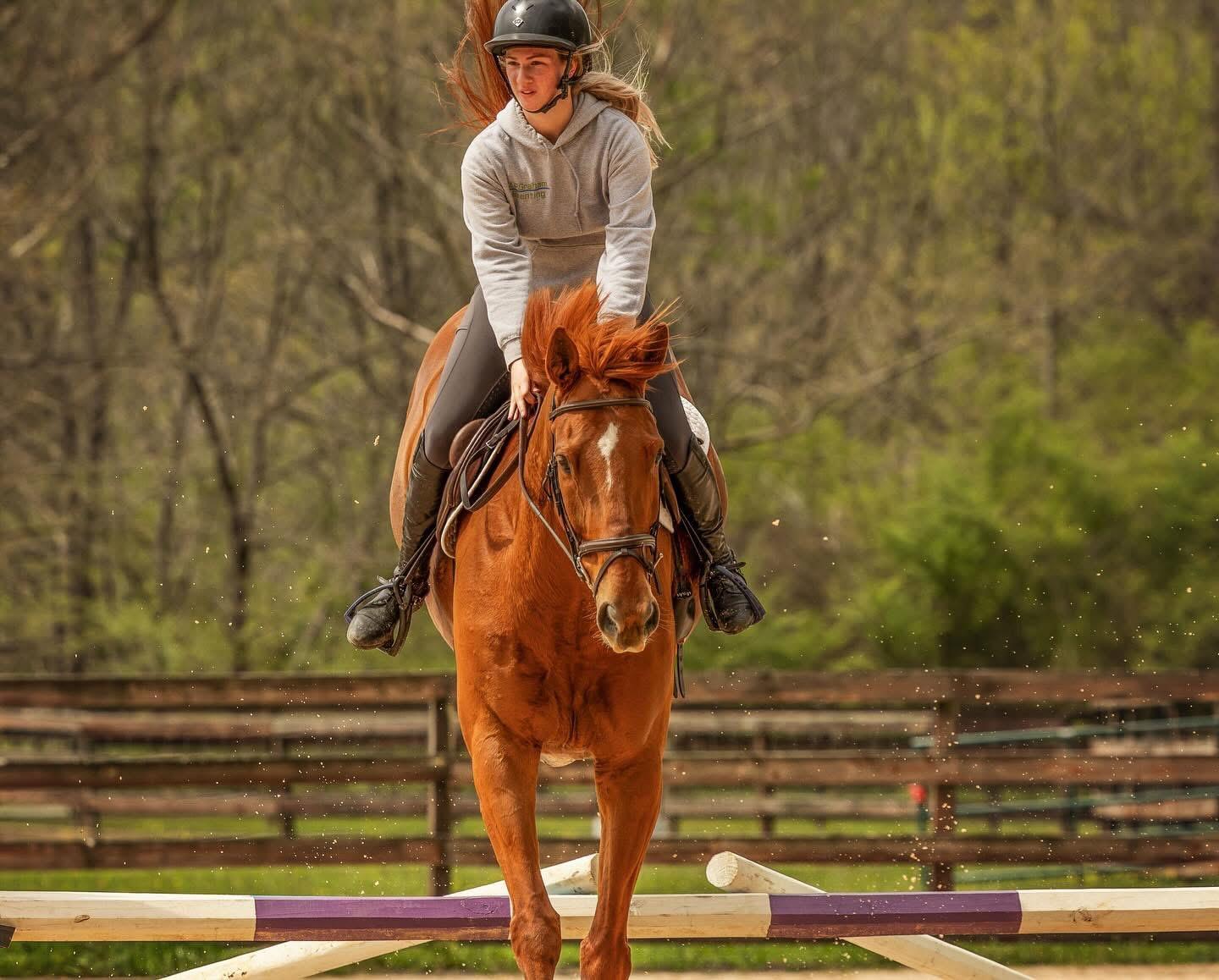
Forrest popping Adela Narovich around a course at his former lease home with Simmons Sporthorses in Talking Rock, GA. Photo by Dawn Light Photography.
Back to my neon green beans — the right off the track horses: When folks come to ride and love them, that’s great. And when they pre-purchase the horse and suddenly then they tell the vet that they have 3’6″ goals and their body must be able to attain that (even if maybe they themselves aren’t currently jumping, or told me they want the horse to tell them what they love to do and will pursue that), my heart sinks. For so many of these horses I want them to have the flexibility to go in a direction and see what they can and want to do. I hope they have a life where their proclivities and limits don’t mean that they fail or wash out, but that they are able to be flexibly accommodated.
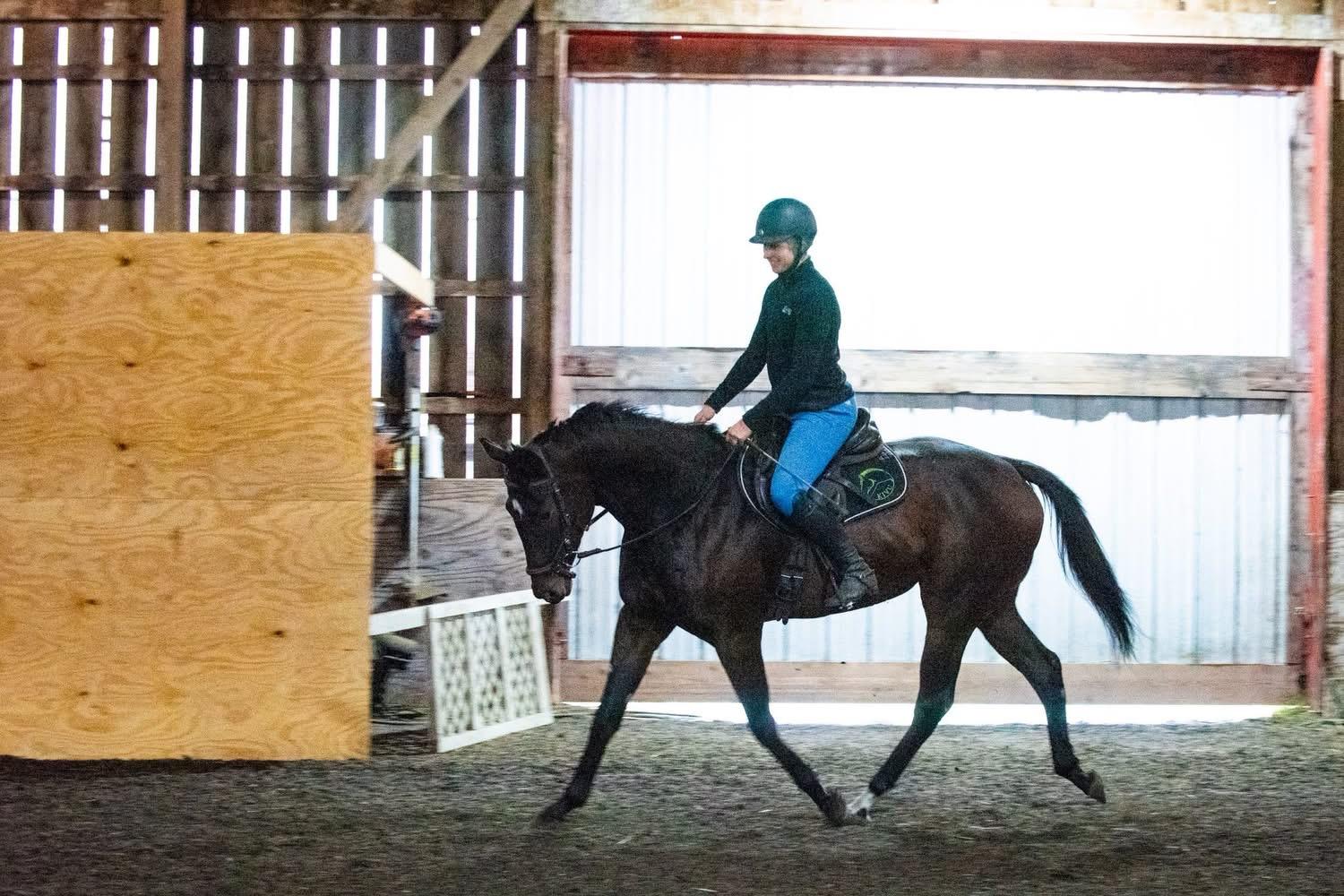
This filly, Funnystastic, is brilliant, but it’s yet to be seen what she wants to do. Photo by Lily Drew.
This same concept applies to every rehab I have ever rehomed. When the question from the person looking to take them on is, “Do you think he’ll be able to jump when he finishes healing up?” I know it is not going to work. For them, that horse is only worth the time, only has value, if he has that one ability once healed. But when the horse is allowed to be who they are — when they are allowed to heal as their body is able — when they are allowed to have their limits and still be loved, then I really feel like we hit the lottery with an owner.
Right now, I have a horse who needs a rider without super fixed goals and it is honestly what has driven this whole article. Edward (Exclusive Entry) is a handsome gray with a bit of track baggage — a fractured wither process or two from a gate accident in the 2023 season, an old cosmetic sequestrum bump… and a small “pop” buck that doesn’t escalate into anything more. A horse like this is at risk if I rehome him wrong. The physical, cosmetic stuff doesn’t bother me. But that buck will likely always be there. It’s not a big deal — I laugh at it. I had a junior ride him around brilliantly yesterday and not get tossed off balance by it. But… it is there. It will likely mark his dressage tests, and certainly will factor into training when working to get him in front of the leg. Could it be tightness? Could he use Chiro? Could we X-ray and treat everything in his body and is he still likely to have it on some days… yep. I don’t want to guarantee that there is a way to get it gone.
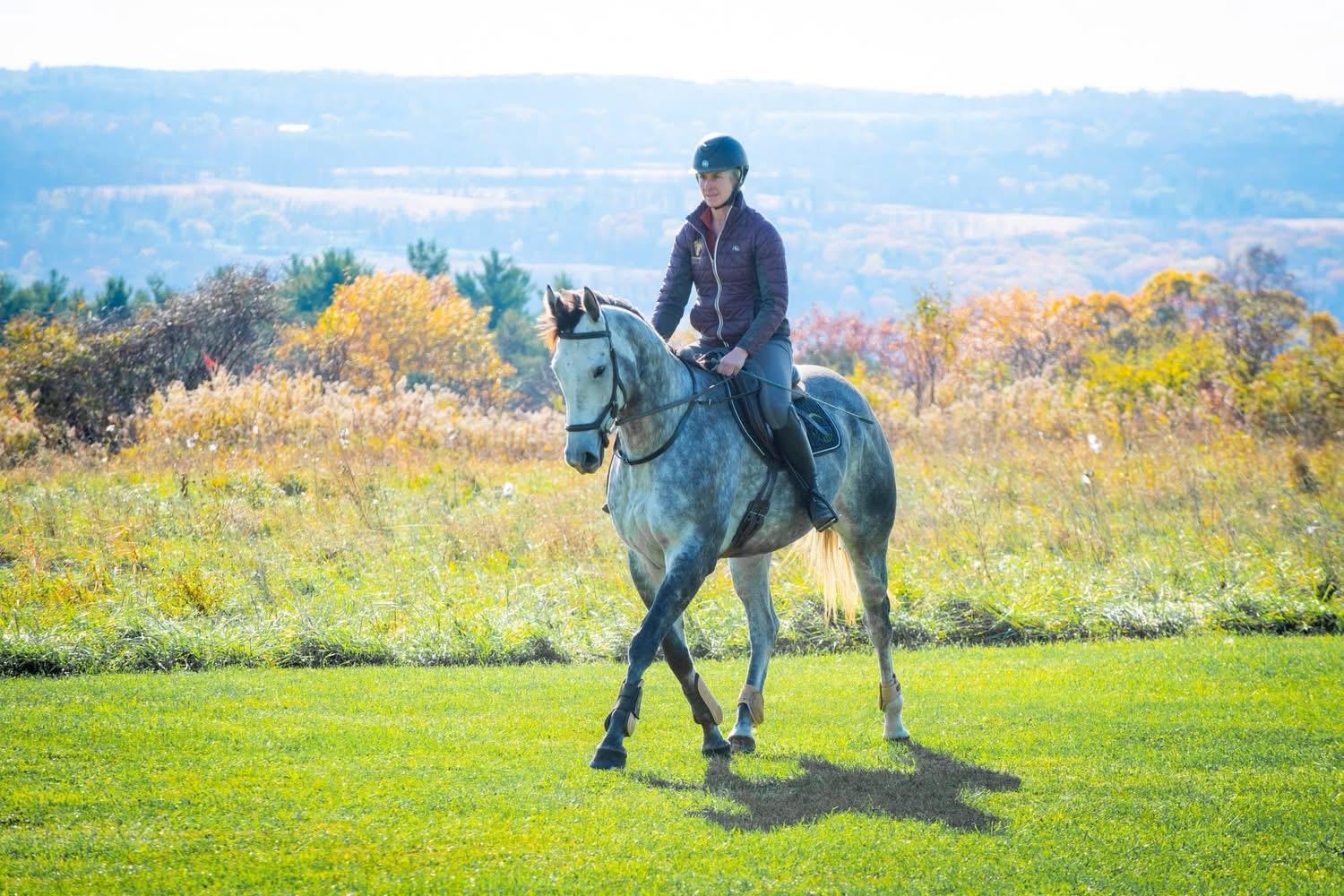
Edward (Exclusive Entry) is a horse needing a horseman not a human with a fixed goal. Photo by Lily Drew.
So for anyone who wants a horse to do X, Edward provides all the promise and potential but carries the risk of disappointment that he might not want to do that show job. And that worries me. He, even more than the others, needs to find his way to a situation built on flexibility — on “what does this horse love?” not “is this horse going to get me to XYZ goal?” He requires horsemanship first and goals second. And that in this day and age seems to be pretty tricky to come by.
So back to the 1990s. Around the same time that I was being told to ACHIEVE, I was taught to hike with my dad and brothers. Yes, we summited mountains. But the hike was a lot more about all of the things between the start and the peaks. The view was nice from the top, but I remember the turns and thickets, hard climbs, drenching rain, my dog’s out and back sprints, and creek-cooled pudding more than the vistas. One of the most memorable hikes was one we aborted early — long story for another day. And so I think about this a bit like horsemanship — it is what happens as you aim for your goals but adjust to the situation. Each horse becomes an opportunity to learn and experience, not solely a success or failure on the road to a particular destination.
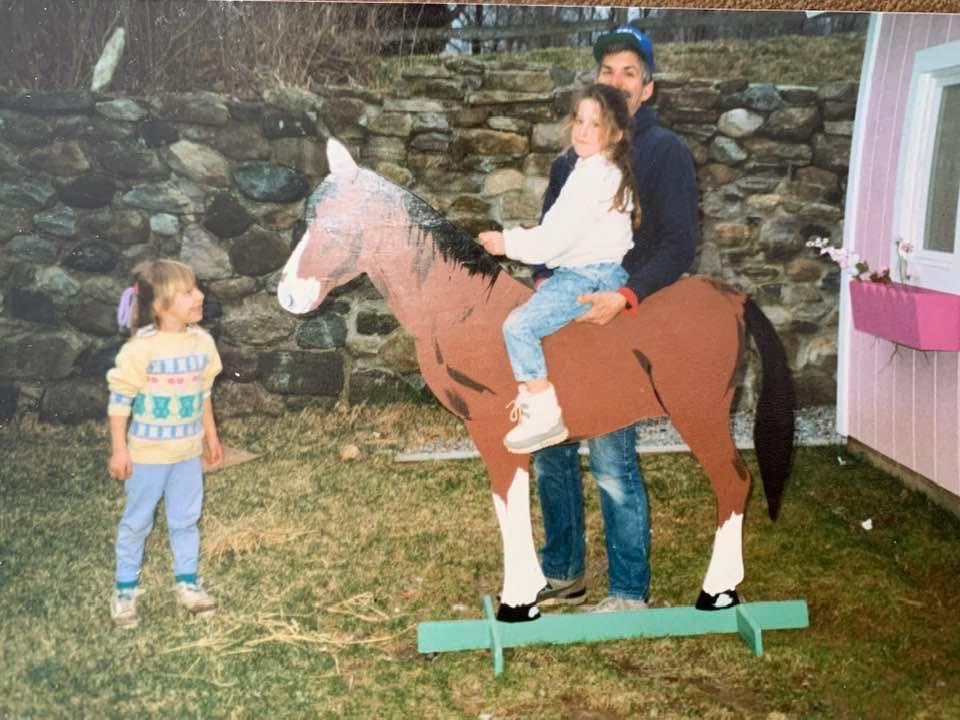
I didn’t manage to find any hiking photos, but before I had my own horse, I had this. Photo featuring my dad (Allen Graham) and some childhood friend who clearly wanted her turn to “ride.” Photo by Pamela Graham.
So go ride folks, and here’s hoping that the winter brings time for both the horsemanship and the goals, however that shakes out.
About Kentucky Performance Products, LLC:
Is your horse suffering from digestive tract issues, such as diarrhea, colic or hindgut imbalances? Does he need a high-grain diet? Is he under stress? Neigh-Lox® ADVANCED can help.
Neigh-Lox ADVANCED is a scientifically formulated blend of ingredients that works synergistically to maintain a healthy stomach, small intestine, and hindgut. It contains long-acting gastric buffers and coating agents to maintain a normal stomach pH. It provides an effective probiotic to support complete digestion of starch and sugars in the foregut, helping maintain a healthy hindgut. And it supplies broad-spectrum prebiotics to sustain a healthy balance of beneficial microbes and well-balanced microbiome.
The horse that matters to you matters to us®. KPPusa.com

