



Vesicular Stomatitis Virus Confirmed in Arizona: What Horse Owners Need to Know
Photo by Barbara Olsen. Pexels/CC
The Arizona Department of Agriculture has confirmed two cases of Vesicular Stomatitis Virus (VSV) in horses in Cochise County, marking the first U.S. cases for 2025. Both horses tested positive for the New Jersey strain (VSNJV) of the virus. Cattle were also present on the affected properties but showed no clinical signs.
Although lesions from VSV usually heal with supportive care in two to three weeks, the disease is highly contagious and can spread quickly through insect bites or direct contact. Here’s what every horse owner should know to protect their animals and keep equestrian activities moving safely.
What Is Vesicular Stomatitis?
Vesicular Stomatitis (VS) is a viral disease that affects horses, cattle, swine, and occasionally other livestock. It causes blisters and sores — typically on the tongue, lips, muzzle, teats, and around the hooves.
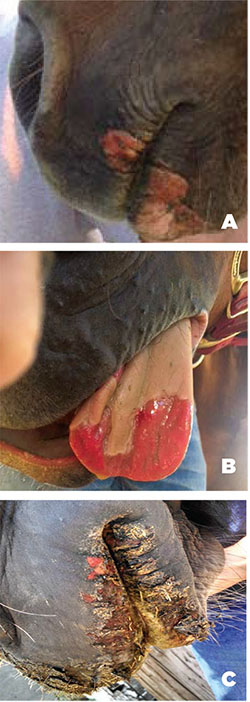
Vesicles and erosions on the mouth, tongue, nose, and lips of horses with VSV. Photos originally from the Colorado Department of Agriculture.
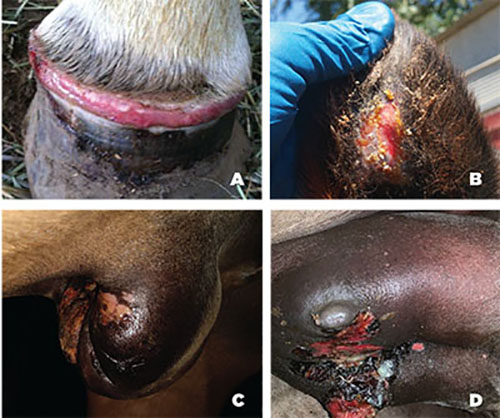
Figures A–D depicting horses with VSV. A. Lesions on the coronary band. B. Lesions on the ears C. Lesions on the sheath. D. Lesions on the teats, Photos originally from the Colorado Department of Agriculture.
While most horses recover without complications, the disease can cause discomfort, drooling, and reluctance to eat or drink. Importantly, humans can also become infected, developing mild flu-like symptoms.
How VSV Spreads
The virus moves in two main ways:
- Through biting insects such as sandflies and midges, especially during warm months.
- Through direct contact — saliva or fluids from blisters can contaminate shared waterers, feed tubs, or equipment.
Because the early signs can mimic other serious diseases — especially foot-and-mouth disease (FMD) — it’s essential to involve your veterinarian as soon as you notice symptoms.
What to Do if You Suspect VSV
- Call your veterinarian immediately. Only laboratory testing can confirm the disease. Early reporting is critical to prevent further spread.
- Isolate the affected horse. Keep it away from healthy animals until cleared.
- Control insects. Use fly sprays, fans, and remove standing water to reduce breeding grounds for midges.
- Disinfect everything. Clean shared buckets, grooming tools, tack, and stalls with an approved disinfectant.
- Limit movement. Don’t haul horses to lessons, shows, or new barns until your vet confirms it’s safe.
VSV is a reportable disease, meaning veterinarians must notify state and federal animal health officials of suspected cases.
Biosecurity Tips for Every Barn
Even if your area isn’t affected yet, a few simple precautions can dramatically reduce the risk:
- Quarantine new arrivals for at least 14 days.
- Avoid nose-to-nose contact between horses from different barns, especially at shows or trailheads.
- Bring your own buckets, halters, and grooming gear when traveling.
- Regularly disinfect trailers, stalls, and wash racks.
- Use insect repellents on horses and around barns.
Transport and Event Considerations
During active outbreaks, some states and events may impose movement restrictions or health certificate requirements for horses coming from affected areas. Before hauling, always:
- Check state veterinary websites for current VSV restrictions.
- Update your Certificate of Veterinary Inspection (CVI) and confirm it meets destination requirements.
- Monitor your horse’s health before and after travel—especially temperature, appetite, and oral comfort.
If lesions or drooling appear, stop transport and contact your vet before unloading at a new facility.
Why It Matters
VSV outbreaks cause more than just inconvenience. Quarantines can halt sales, shows, and breeding plans, and farms under restriction may face significant economic losses. Because VS looks similar to more devastating foreign animal diseases, early detection and reporting help protect not just individual barns but the entire livestock industry.
The bottom line is this: Stay informed, stay vigilant, and keep those fly masks and sprays handy. Good insect control and strict biosecurity remain the best defense against Vesicular Stomatitis.
For updates on the 2025 outbreak, visit the USDA or the Equine Disease Communication Center for verified reports and ongoing case tracking.
