



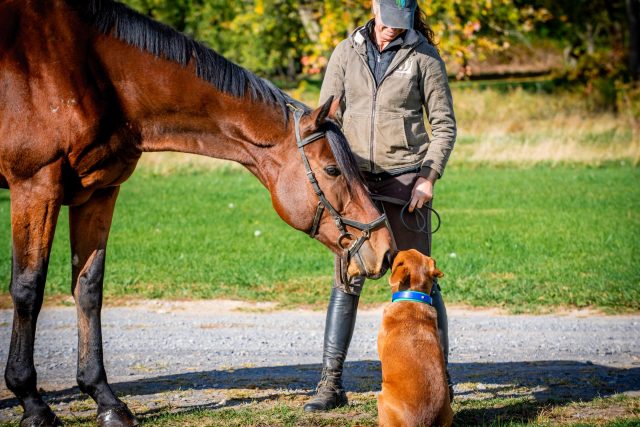
Thoroughbred Logic, Presented by Kentucky Performance Products: An Ode to the Plain Bay
When did we start valuing the color of the horse over its conformation, temperament and talent?
Welcome to the next installment of Thoroughbred Logic. In this weekly series, Anthropologist and trainer Aubrey Graham, of Kivu Sport Horses, offers insight and training experience when it comes to working with Thoroughbreds (although much will apply to all breeds). This week ride along as Aubrey shares her logic on why buyers shouldn’t ignore the plain horses.
Currently in my barn there are nine plain bay Thoroughbreds. There also are three plain chestnuts. Most of the rest have small, non-bombastic face markings. And other than the two grays, no one is technically “chrome-y.” These figures speak as much to my hunt for talent and disregard for color as they do to my wallet. Chrome is often priced out of my budget starting at the track.
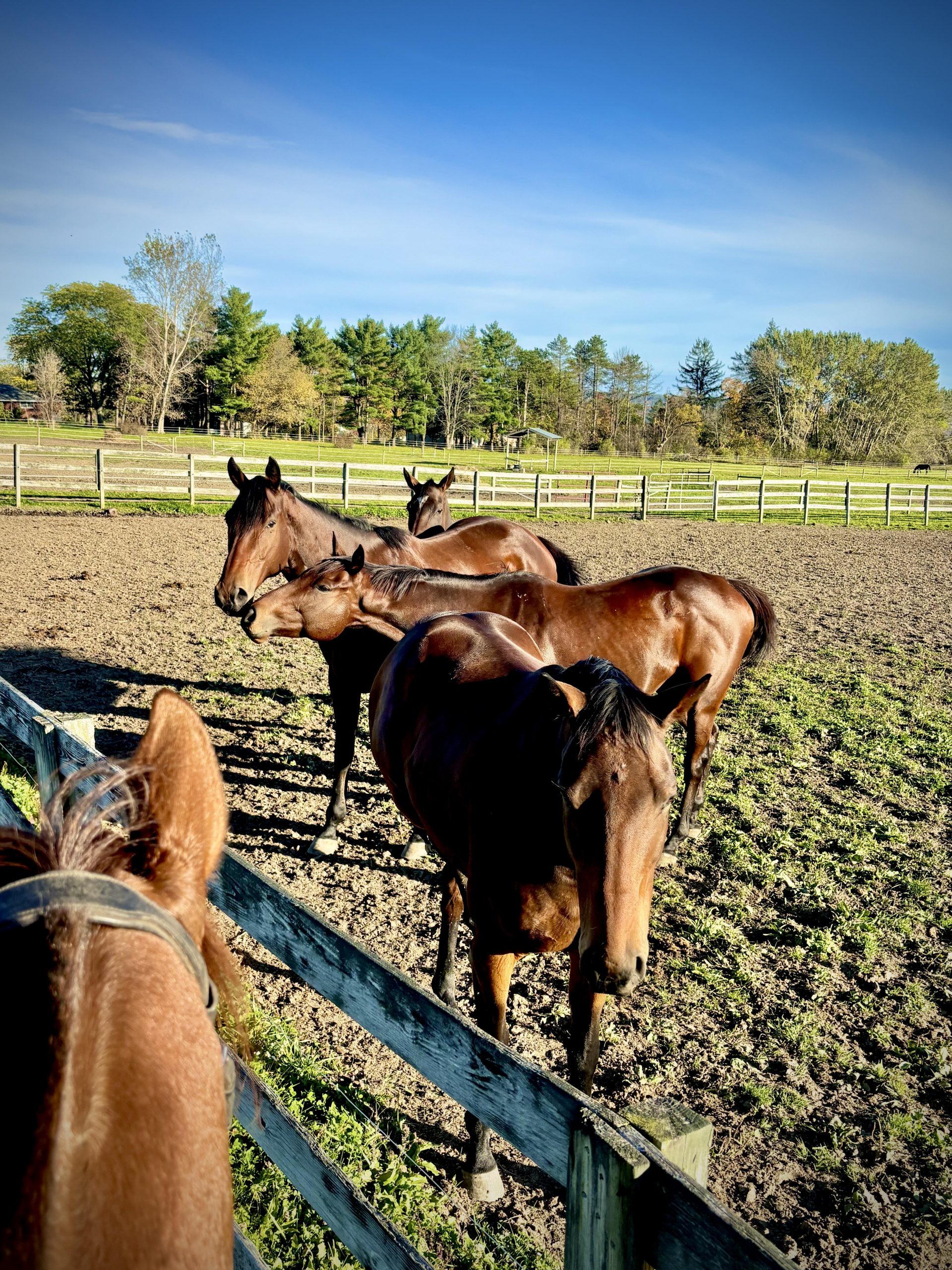
Just a pile of a plain bays shot from astride a plain chestnut. Photo by author.
I guess it makes me wonder when we started valuing the color of the horse over its conformation, temperament and talent.
When I read through In Search Of (ISO) ads online, they commonly describe one of these boys to a T — good mover, easy in the barn, uncomplicated ride, in the right age and height range, but then will add “chrome a bonus” or some such thing. But even with fantastic photos and video, unless one can get someone to the barn to sit on the plain horse and realize the quality of their gaits and the kindness of their demeanor, they’re still tough to sell.
The horses with the fun blazes and knee high socks can have the world against them and they’re commonly uncomplicated to place in a home. While so many are wonderful — even if they are grumpy, hard to load, unsound, or funky under saddle — they will still find their new humans.
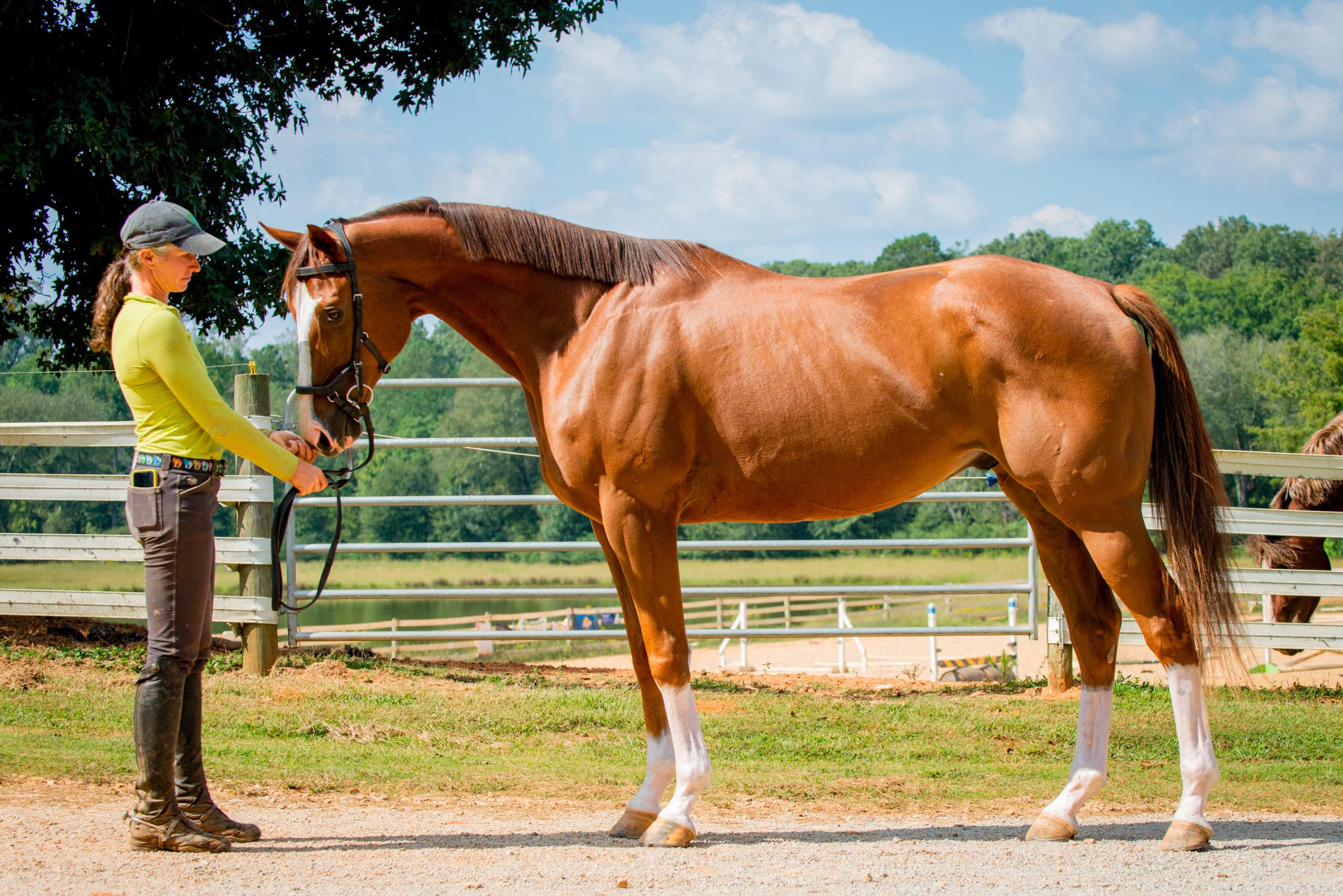
Crypotrithm had a catastrophic knee but still had dozens of people lining up in the hopes of rehabbing him due largely to his build and bling. We got him to the perfect retirement home, but the interest level was wild. Photo by Alanah Giltmier.
The plain kids? They can’t have a dent against them. If you’re going to be plain, you must be perfect in this visually driven market. And even then, you must be doing something exceptional to get you noticed.
And yes, if I sound annoyed, I am. I think this gets down to the purist part of me — the part where a good horse is a good horse, color be damned.
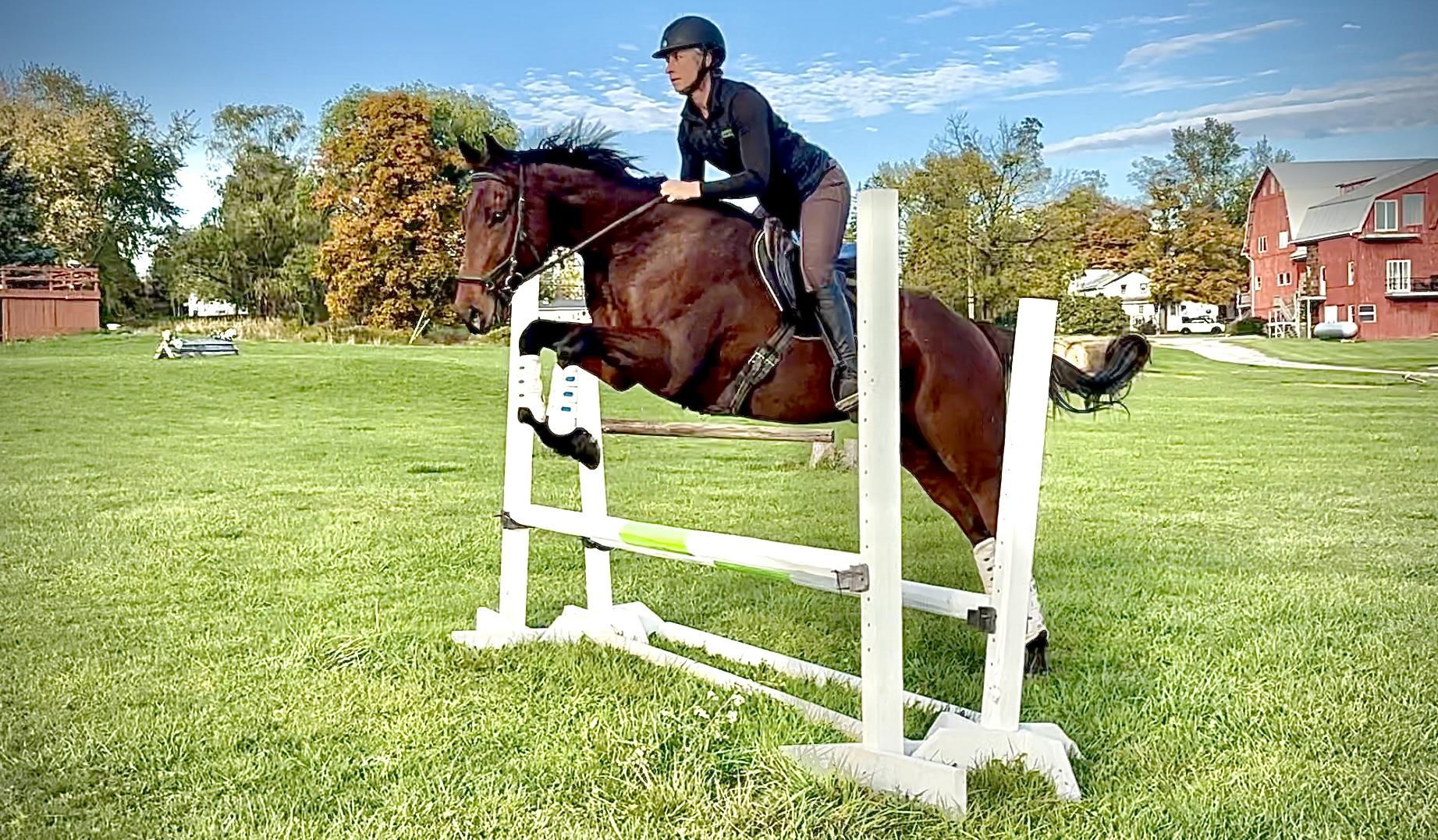
Polo (Overtime Charlie) has two strikes against him. He’s sub 16 hands (by half an inch) and is plain bay. But man can this kid move and jump! Screenshot by Lily Drew.
I skip ISO ads when folks lead with the color they want, or lay out the color they don’t want. Fine. I get it. Some riders want to compete on a huge gray beast and nothing else. Okie dokie — to each their own. But the humans who put color as the top priority are probably not my cup of tea.
The caveat is that if the gray horse or the blingy horse fits the job description, fantastic! But why look at color first? That’s like trying to find a meaningful relationship/someone you want to build a life with starting a search with “ISO big blue eyes and dark lashes only.”
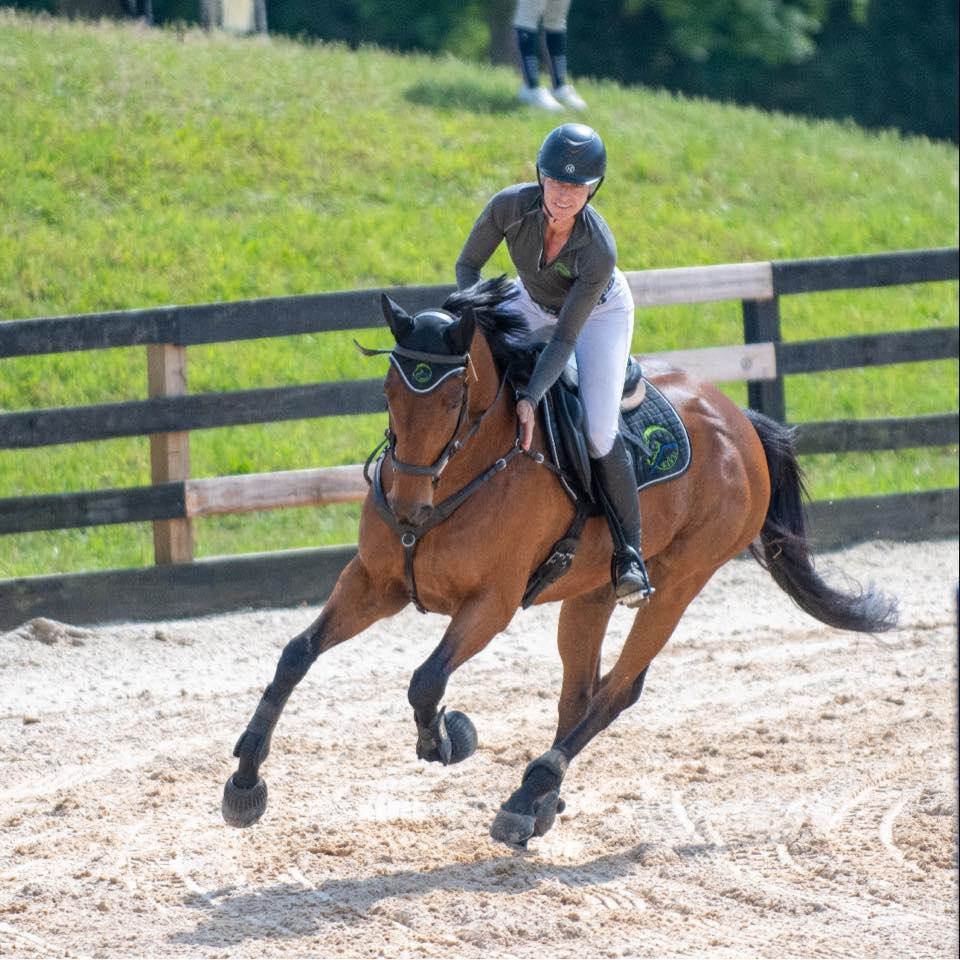
One of my all-time favorites and totally plain bay, Rhodie (Western Ridge) always redeemed his unimpressive dressage with huge jumping efforts and a hell of a lot of heart. Photo by Cora Williamson Photography.
Plain bays run the gamut like everyone else. They can be naughty, goofy, comical, talented, talent-less, sweet or sour. But I’d be willing to guess more times than not that they are likely to be well mannered with humans.
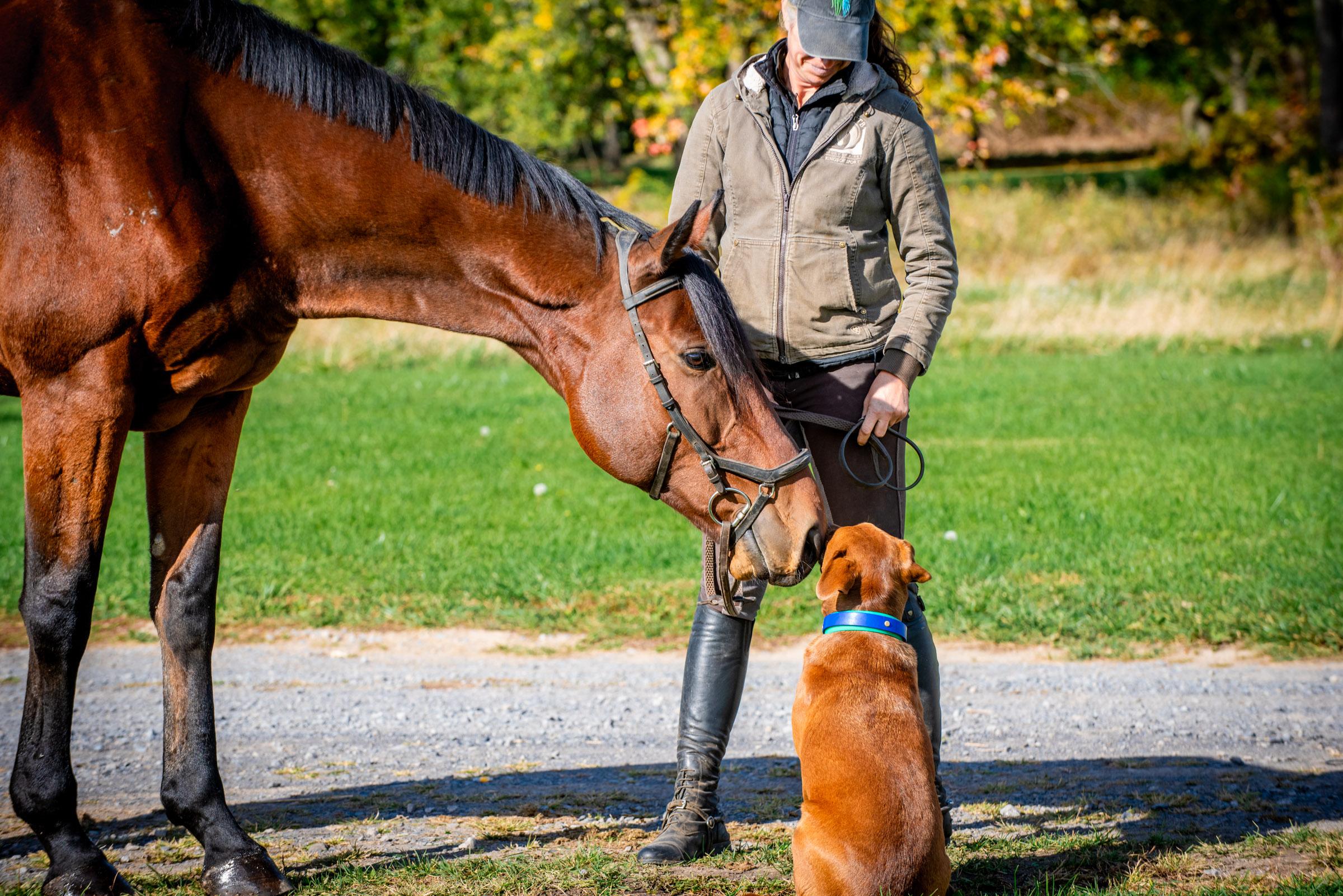
Gentle giant, Generation checking out Littles during his conformation photos. Photo by Lily Drew.
I can’t prove this statistically, but historically the plain ones have been polite. As annoying as it is, like with people, the plain one is often not allowed the level of “getting away with” that the “pretty” ones are (this is of course maddening, but also often a reality). I have long joked that I’ll take an ugly (or plain) colt any day over a pretty filly simply for their level of manners.
For the visually non-bombastic kids, manners matter. Soundness and conformation are also critical because these folks are worth so little if they’re even lightly lame or look like someone used spit and duct tape to attach their various parts together. But then again, when looking at a monochromatic canvas, the angle of the shoulder and hip, the tie in for the neck, and the quality of the legs become so much more important and visible. And often, you get a hell of a horse for a bit less than other colors.
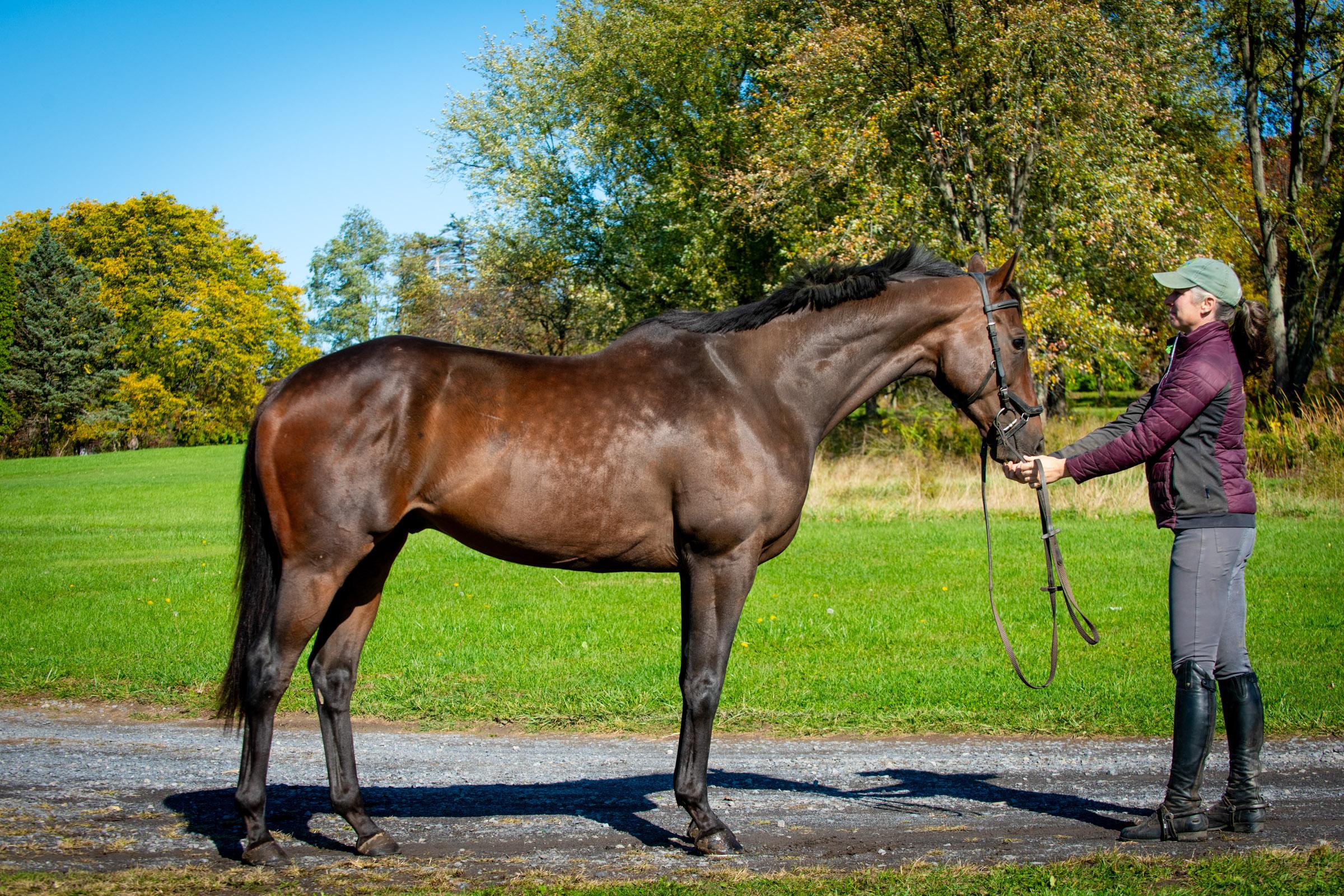
Iago (Camino de Santiago) arrived two days ago and man is he stunning. Photo by Lily Drew.
Plain has plenty of other perks too:
- These guys might get dirty like everyone else, but rub a rag over them with some shine spray on it, and they’re nearly show ready.
- You can wake up at 4:30 for the hunt and toss them on a rig, rather than scrubbing in the cold at 3:30 to get the overnight stains off the gray.
- Think purple shampoo and whitening products are expensive? Great, the plain bays shine even when given an efficient bath in blue Dawn.
- Like to turnout during the day in the summer? Cool, none of these folks will get sunburned.
- There’s less chance of scratches and cannon bone crud on brown or black legs (and not just because you see it less).
- The monochromatic pallet means whatever pad set/color scheme you put on will pop.
- Healthy dapples stand out more when the coat is plain and dark.
- There’s a statistically lower risk of a cancer and skin diseases in dark, minimally white horses than in lighter coated horses
- You often can get an outstanding horse for literally thousands less than you would if they had chrome.
- You can add more plain horses to a field and your significant other will never know you bought more.
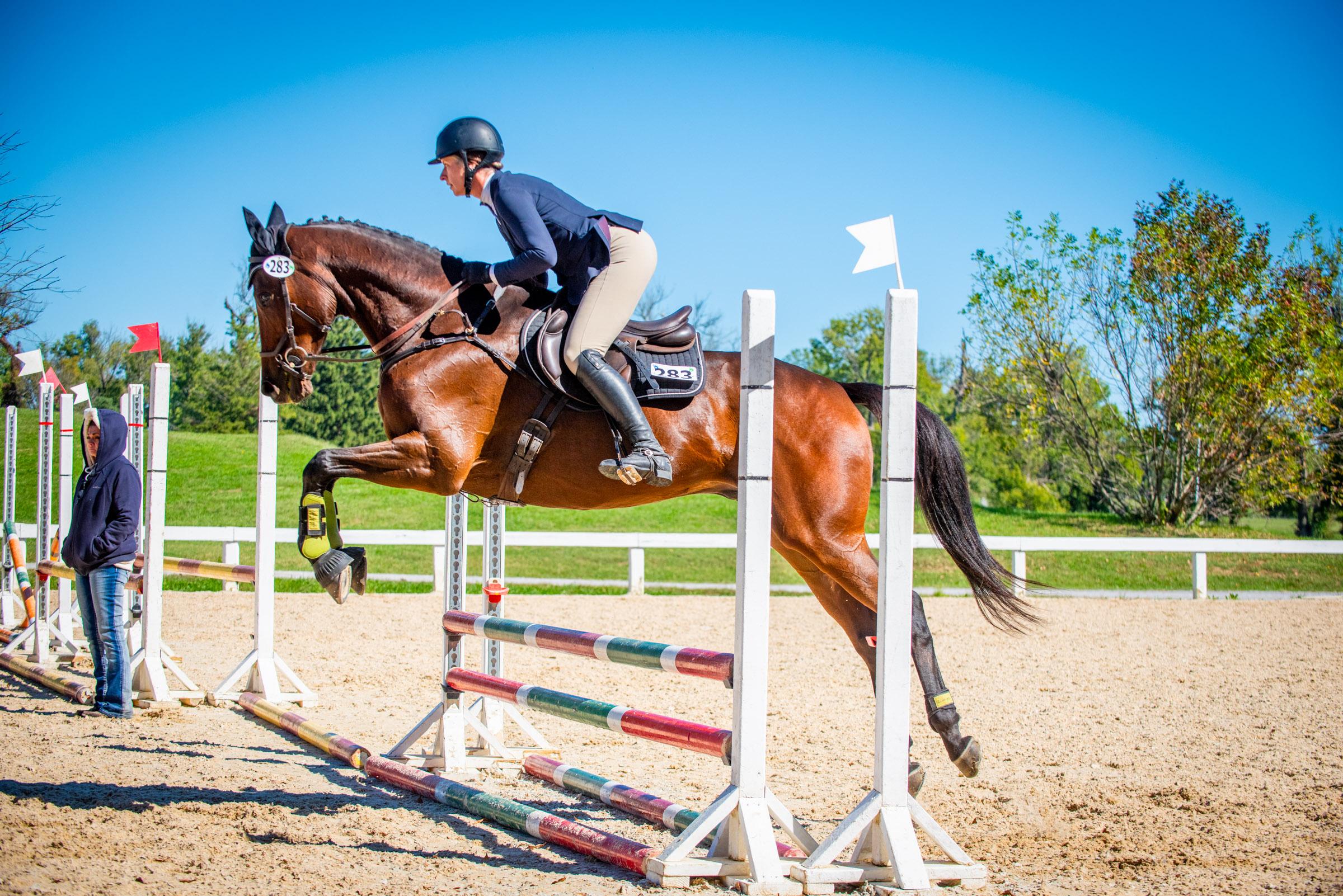
Plain bay Emmett (Oboy) schooling at the Retired Racehorse Project in early October. Photo by Lauren Kingerly.
So to all my plain bays and plain chestnut lovers out there, cheers. And to everyone looking for horses, in a world so dictated by the flash and pop of social media, please remember that a good horse is a good horse. And often, some of the best come dressed in the most unassuming of clothes.
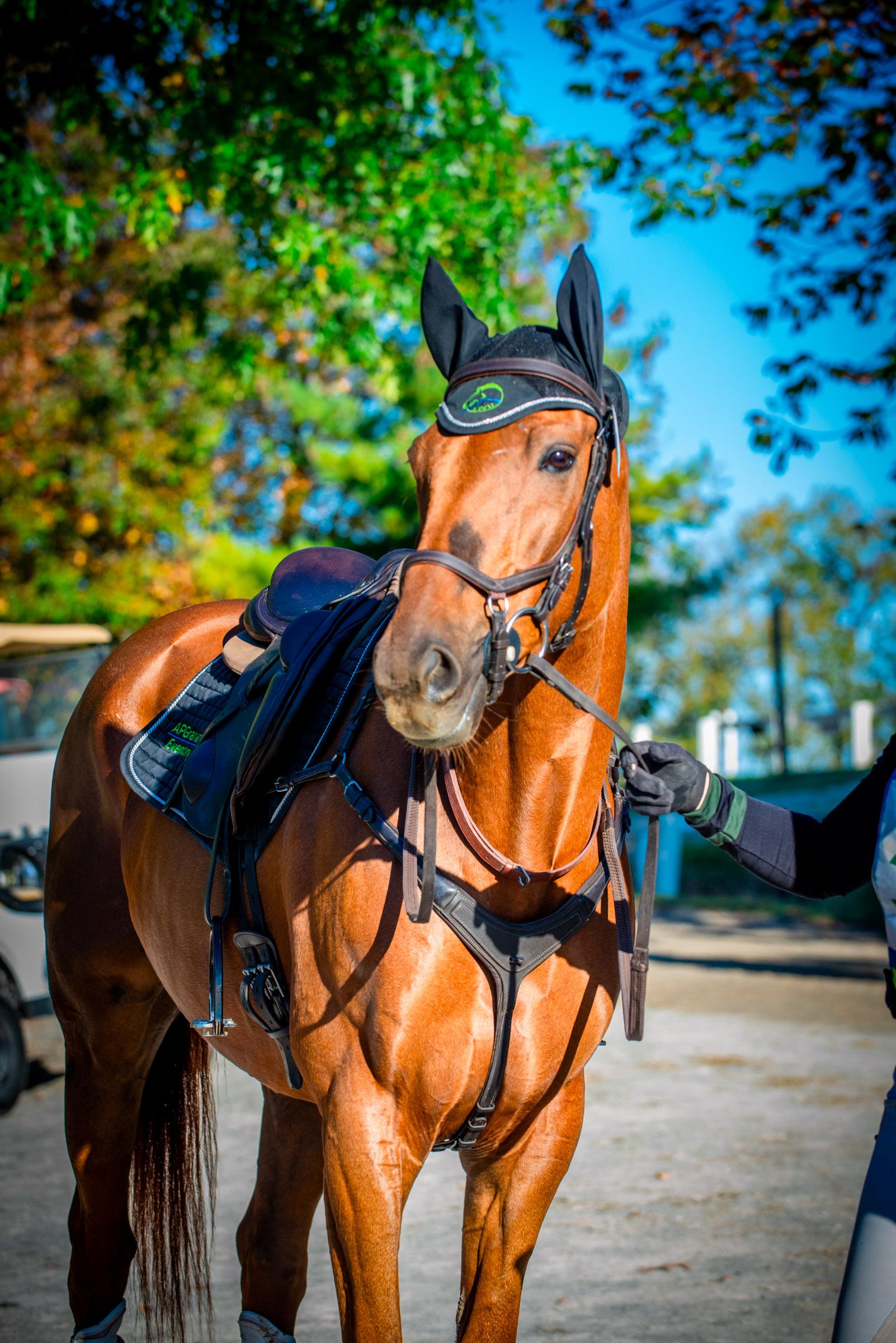
This mostly plain, small chestnut proved his worth finishing second of 59 in the preliminaries of the Eventing division at the RRP. Good boy Artie (Reunion Tour). Photo by Aly Ratazzi Jones.
So go ride folks, enjoy the one you get to swing a leg over and remember to look beyond the bling when hunting for your next one.
About Kentucky Performance Products, LLC:
Support Normal Insulin Regulation
Metabolic dysregulation is characterized by weight gain and unhealthy insulin levels that can lead to
unsoundness. Maintaining normal metabolic function and sustaining healthy weight through dietary
supplementation will support normal insulin levels and healthy laminae structure in the foot.
- Maintains healthy insulin regulation and normal body weight.
- Supports a decreased risk of laminitis.
- Formulated with a research-proven blend of polyphenols and amino acids.*
* Manfredi JM, Stapley ED, Nash D. Effects of a dietary supplement on insulin and adipokine
concentrations in equine metabolic syndrome/insulin dysregulation. In J Equine Vet Sci 2020:88:102930.
The horse that matters to you matters to us®. KPPVet.com
NEW WINTER STICKER AVAILABLE! Visit https://kppusa.com/winter24/ to grab one for your barn.

