



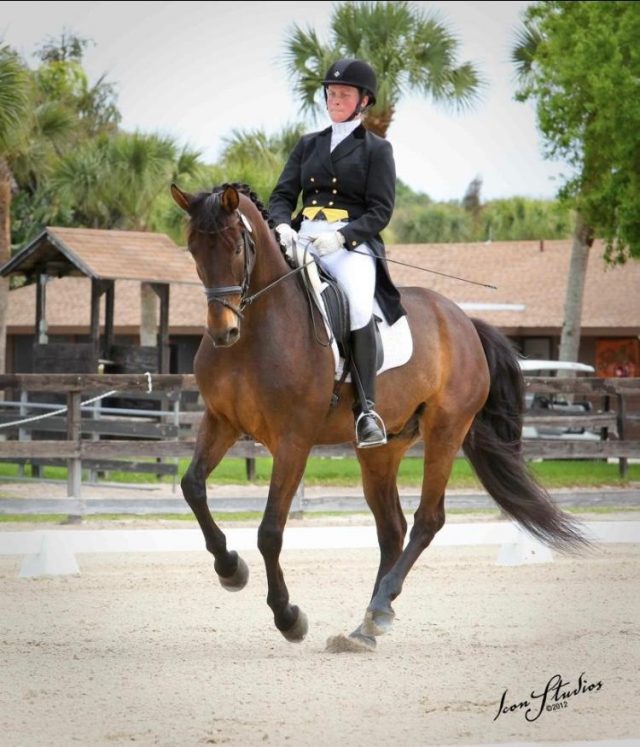
Training in the Right Way: Skill Not Strength
“Excellent riding is based on technique, not wrestling a 1200 lb animal into submission.”
Dressage training is supposed to be the process of training ANY horse to be a better riding horse. The more the horse learns, in theory, the easier it is to communicate with and therefore complete more complex tasks with. Although competition dressage training often is more focused on training for the dressage test, that is not what the original intention (and original judging requirements) were for competitive dressage. Initially, it was designed to give riders and trainers a way to determine how their training measured up to the theoretical ideal of the training process. That said, it is critically important to understand the meanings and reasons for some of the terms we use to describe dressage training and what to look for when observing training and competition (and videos and photos), regardless of whether you intend to compete or just train your horse to be a better whatever you do with him. That, ultimately, is the main purpose of my articles. To provide education and knowledge for riders to understand and improve their eye and understanding of what dressage training is supposed to be. While there will always be some differences in practice and theory, good horse training is always recognizable to the educated eye. That said, it absolutely is necessary that we remember and understand that limited knowledge is limited judgment.
* * *
Do you know why equestrian sports are the only sports where male and female athletes compete against each other at the Olympic level? It is because the horse is the equalizer, and strength is not the necessary skill required to be successful. Excellent riding is based on technique, not wrestling a 1200 lb animal into submission. Whether you are a male or female rider, you need to be fit enough to ride. And an Olympic level athlete is going to need to be fitter than the average Training Level rider simply because riding a horse through a Grand Prix test requires more stamina and precision than a typical Training Level test.
In other sports, male athletes have an advantage due to (as a general rule) having more muscle mass and therefore strength than females. This often allows them to perform with greater strength and speed in running, jumping, and projectile launching activities (to name a few skills). This, however, has no greater value in riding. The horse does not perform better because it has been muscled into submission. And let’s be real, no human can ACTUALLY over power a horse with strength – alone. They can with equipment and chemical restraint, but not just human strength. The art of good riding is the demonstration of not controlling the animal through force, but through technique (communication).
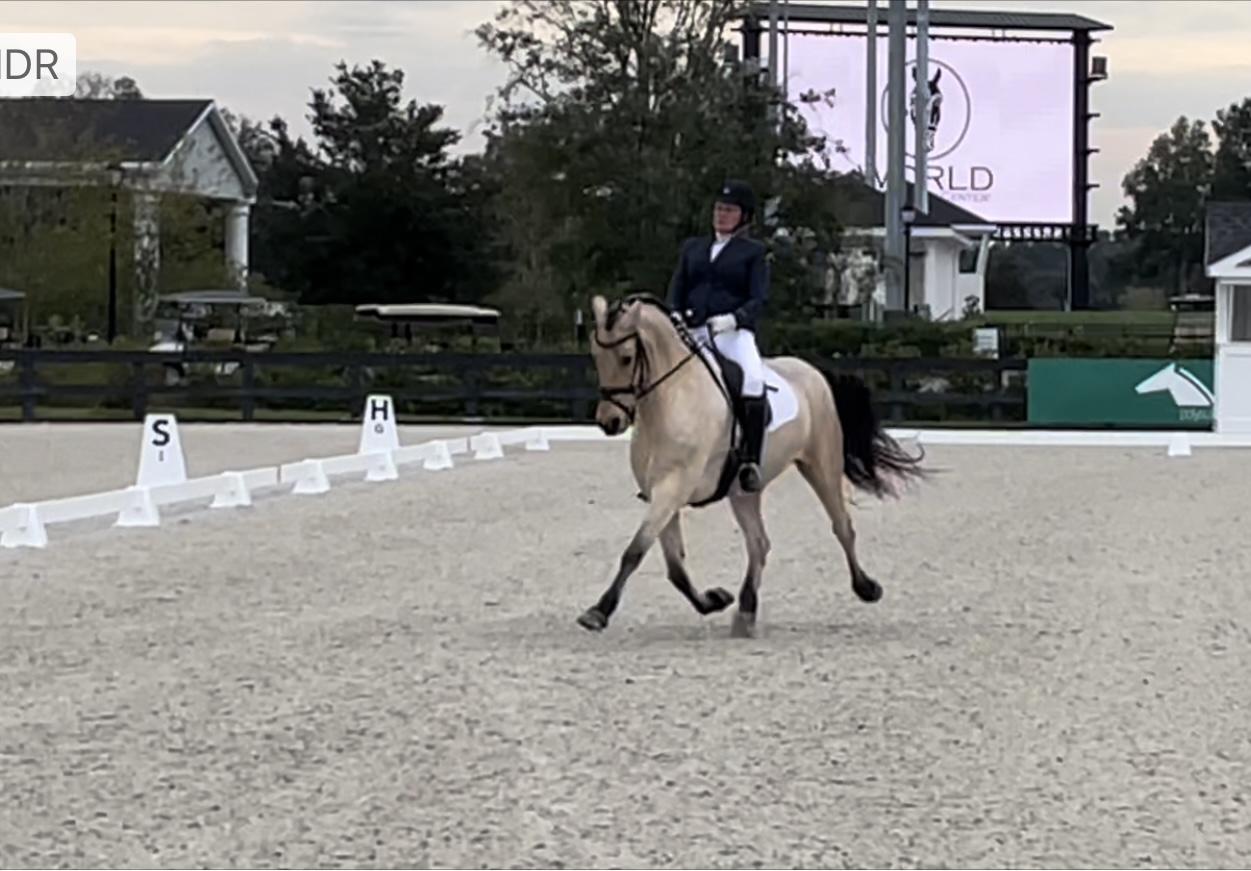
The strength that a rider needs in competition has more to do with stamina and the ability to stabilize their body while the horse is in motion. Photo (c) Gwyneth McPherson
Which brings us to this, the reason we can “control” horses without strength is through TRAINING, which teaches the horse the understanding of what the aids actually mean to do. Training is a systematic process that develops the horse’s understanding and confidence in what his job is. There is an old saying about training that states “strength riding begins where knowledge ends”.
Our equestrian sports (both training and competition) are based on old knowledge and practices developed from times when people relied on horses the way we rely on motorized vehicles. This includes daily activities and specialized (mostly military) situations. If you were a mounted soldier (in any era) and had to use your strength to control your horse, you would have very little chance of survival on the battle field. You needed your horse to be trained to respond to aids, not strength, in order to be able to handle your weapon and keep yourself alive and able to attain your objective. No, these horses were not Grand Prix horses — they were not in any way “competitive” by our standards– but they knew their job and responded to their rider when everyone’s lives counted on it. And, more importantly for the purposes of this discussion, their understanding and training to stay on the aids is absolutely what we should be striving for in the competition ring today.
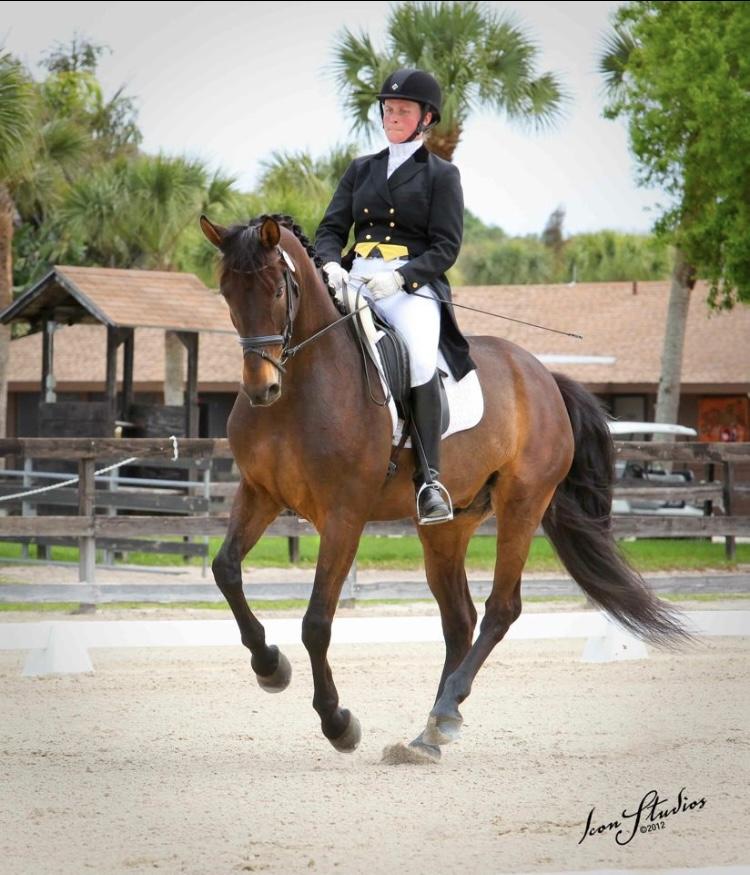
Dressage tests are supposed to test the horse’s training and therefore response to familiar aids, even in unfamiliar situations that might inspire the “fight or flight” response. Photo (c) Icon Studios
Today’s competitive dressage does not look like battlefield dressage, but the system for judging it stems from those old requirements. The dressage test is testing the training of the horse by putting them through a prescribes gourd of exercises an unfamiliar surroundings that may inspire the fight or flight response from the horse. Strength is not the way we train and ride horses, because the horse will always be stronger then us. We train horses to respond to aids which tell the horse what to do and give them confidence in us as riders. These aids are learned through careful repetition of special exercises that create strength, suppleness, balance and understanding. And this is why it is not necessary to have male and female riders compete separately. A well trained horse cannot be ridden better or worse due to inequalities in the rider’s strength.
Remember: limited knowledge is limited judgment.

Gwyneth and Flair in competition at Grand Prix. (c) flatlandsfoto.
Gwyneth McPherson has over 35 years experience competing, training, and teaching dressage. She began her education in in the late 1970s, riding in her backyard on an 11 hh pony. Her first instructor introduced her to Lendon Gray (1980 and 1988 Olympian). who mentored Gwyneth for a decade during which she achieved her first National Championship in 1984, and her Team and Individual Young Rider Gold Medals in1987.
In 1990 Gwyneth began training with Carol Lavell (1992 Olympian) who further developed Gwyneth as an FEI rider and competitor. Gwyneth achieved a Team Bronze in 1991 and a Team Silver in 1992 in the North American Young Riders Championships, and trained her stallion G’Dur to do all the Grand Prix movements while riding with Carol.
In 2008, while Head Trainer at Pineland Farms, Gwyneth began training with Michael Poulin (Olympian 1992). Michael was trained by Franz Rochowansky (Chief Rider for the Spanish Riding School 1937-1955). Michael has shared much of Rochowansky’s knowledge and wisdom with Gwyneth, completing her education as a Grand Prix rider, trainer, and competitor.
Gwyneth’s teaching and training business, Forward Thinking Dressage,is based in Williston, FL. In addition to teaching riders and training, Gwyneth also loves sharing her knowledge of the sport and art of dressage as well as discussing relevant topics pertaining to the training itself and the current competitive landscape.

