



Thoroughbred Logic, Presented by Kentucky Performance Products: The Ability to Lie Down
“This one is so simple… If your horse feels good, they usually can get to the ground. If they’re sore or uncomfortable in their body they will do so less — or, frankly, almost not at all.”
Welcome to the next installment of Thoroughbred Logic. In this weekly series, Anthropologist and trainer Aubrey Graham, of Kivu Sport Horses, offers insight and training experience when it comes to working with Thoroughbreds (although much will apply to all breeds). This week ride along as Aubrey shares her logic on the the importance of a horse being able to lie down.
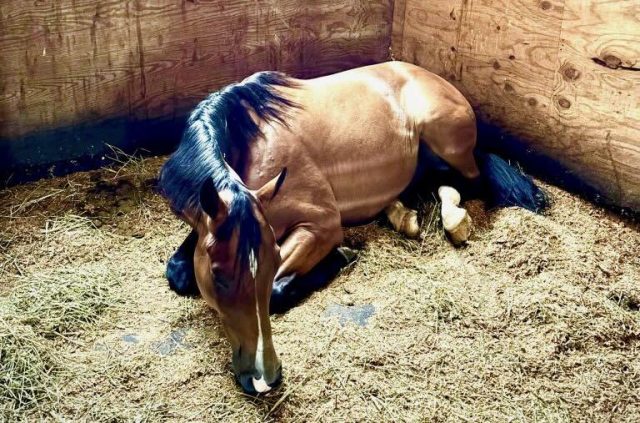
This one is so simple, but I don’t think it gets talked about enough. If your horse feels good, they usually can get to the ground. If they’re sore or uncomfortable in their body they will do so less — or, frankly, almost not at all. This may not be a perfect one-to-one, but hear me out.
With the recent rain and fall mud kicking in up here (finally — we needed the rain), a muddy coat is a shorthand way to check on who is feeling good. Sure, there are variations on this concept. There are horses who perhaps just don’t like to lie down, or the clean freaks like Neil (Lute’s Angel), who will curl up in the hay but will not necessarily come in soaked in wet mud (thanks, buddy). But the concept holds in principle. And with a barn like mine, which is full of young Thoroughbreds transitioning off the track, I get to test the theory that the ability to get to the ground is an indicator of overall body wellness.
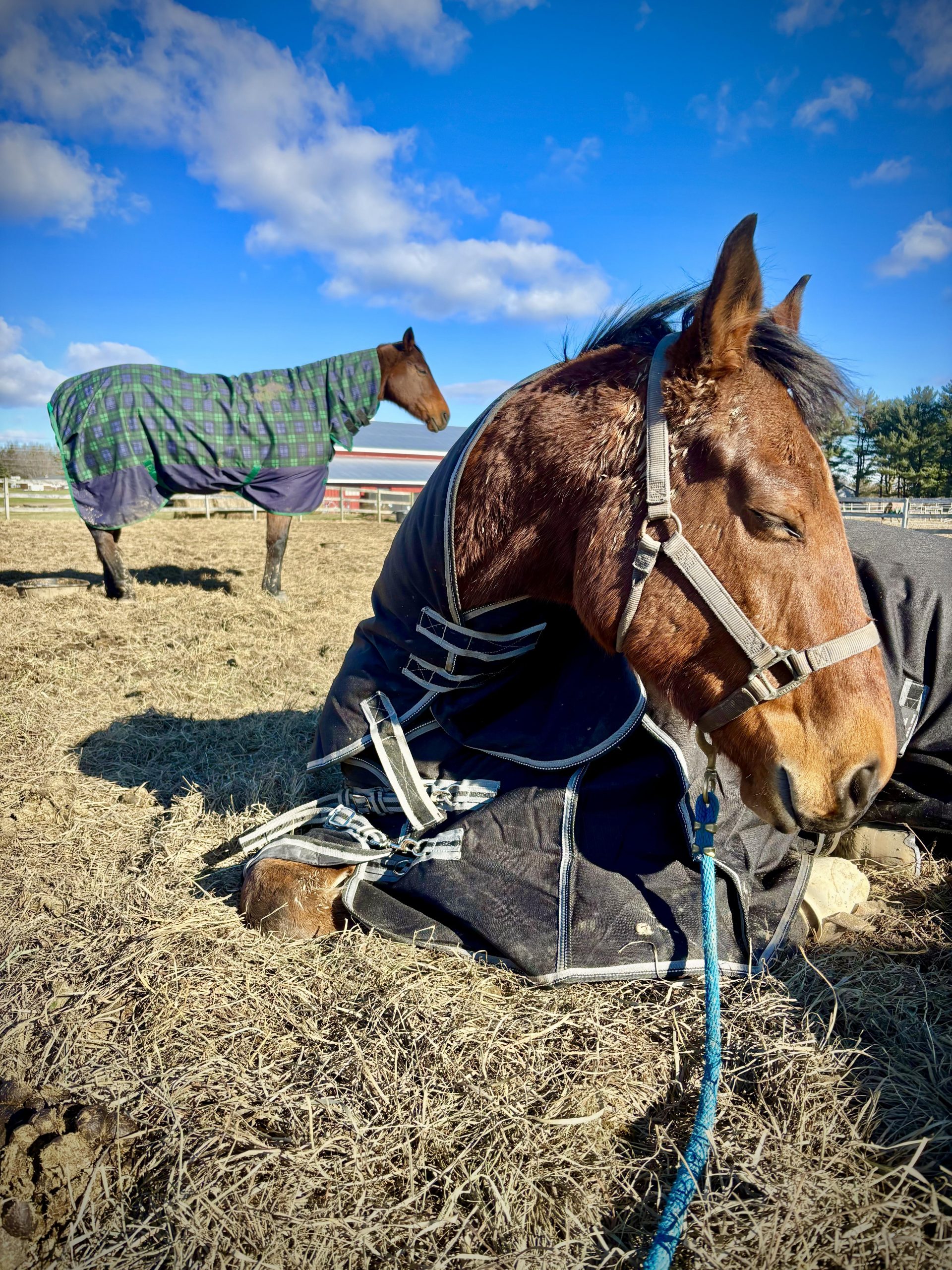
Needles Highway was the master of both indoor and outdoor naps. Photo by author.
August (Starship Augusto) is a great example. This lovely, leggy gray came in on consignment only shortly after retiring and he felt good. His trot floated, the canter needed balance, but all the pieces were there to create a fantastic sport horse. I watched him in the field, rolling and trotting the fence line (he eventually learned to play with friends), and I wrote his first ad about how folks had better invest in whitening shampoo as he was some form of happy swamp monster in pretty gray horse clothing.
Fast forward two months and we all started to squint at his hind end. It wasn’t a big deal, but he definitely needed hock injections. The further out he got from the track, the more he made it clear that he would like the maintenance he likely had before, please and thank you. And in the meantime, what I didn’t notice was just how clean he had gotten. August turned out fine in the paddock, he still tussled with the boys, still moved from field to field with the herd. But the once-mud-monster came in increasingly clean. For a while, I was grateful — “I’m glad you’re not that type of gray horse,” I’d quip, while walking with him past an easy-to-clean row of plain bays and chestnuts.
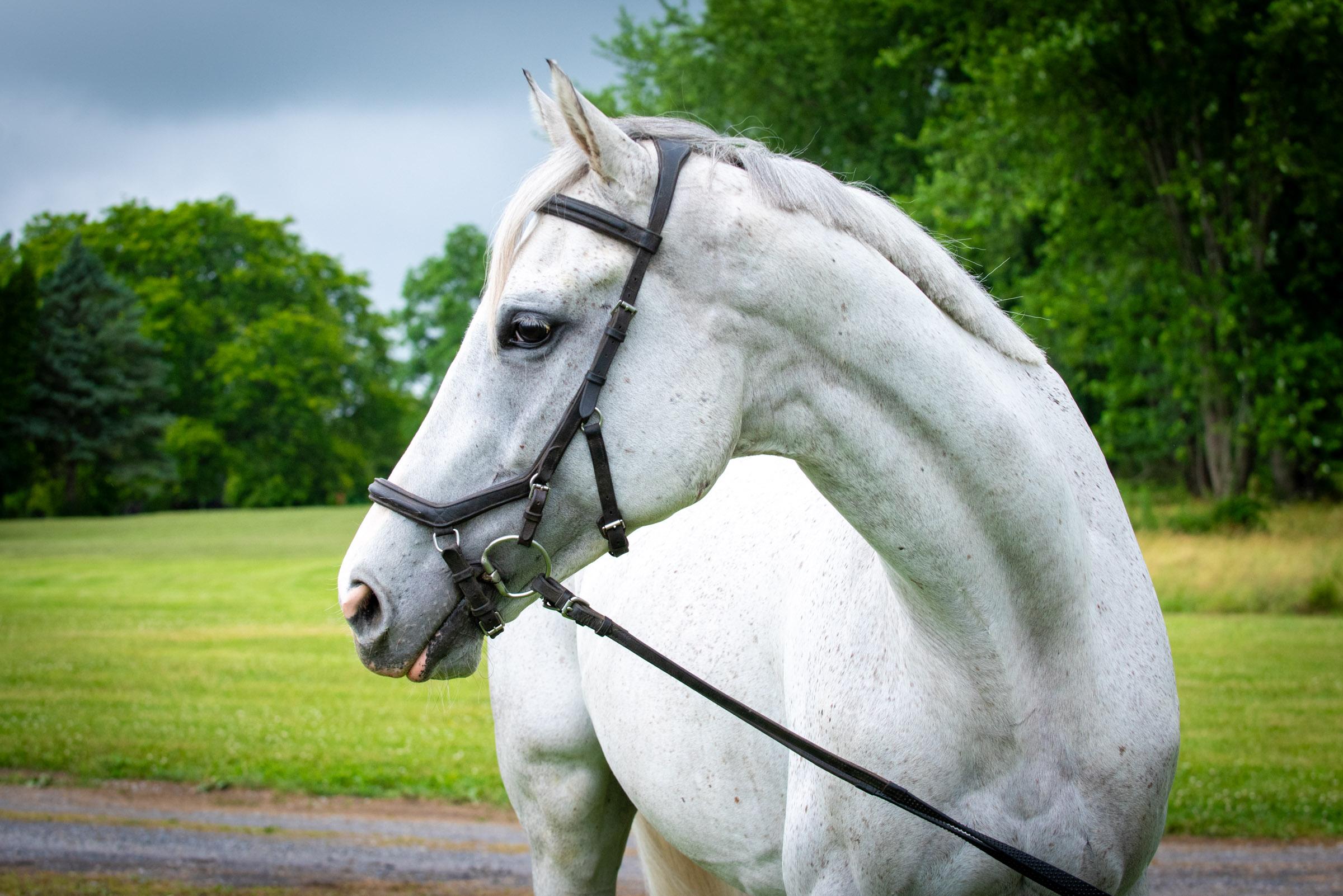
August (Starship Augusto) in his “easy to keep clean” and slightly more uncomfortable era. Photo by Lily Drew.
More fast forwarding, and we injected his hocks. It took less than one week from the time of injections for that pretty clean gray horse to revert to his mud monster self. I was so excited I texted the vet. Of course now that he continues to feel great, and to be able to comfortably flex his joints and lower himself to the ground, I am perpetually annoyed about keeping a gray horse presentable — BUT its clear that he feels better. August also lucked out with his new human. And with a life as a show hunter in his future, there indeed will be lots of whitening shampoo needed.
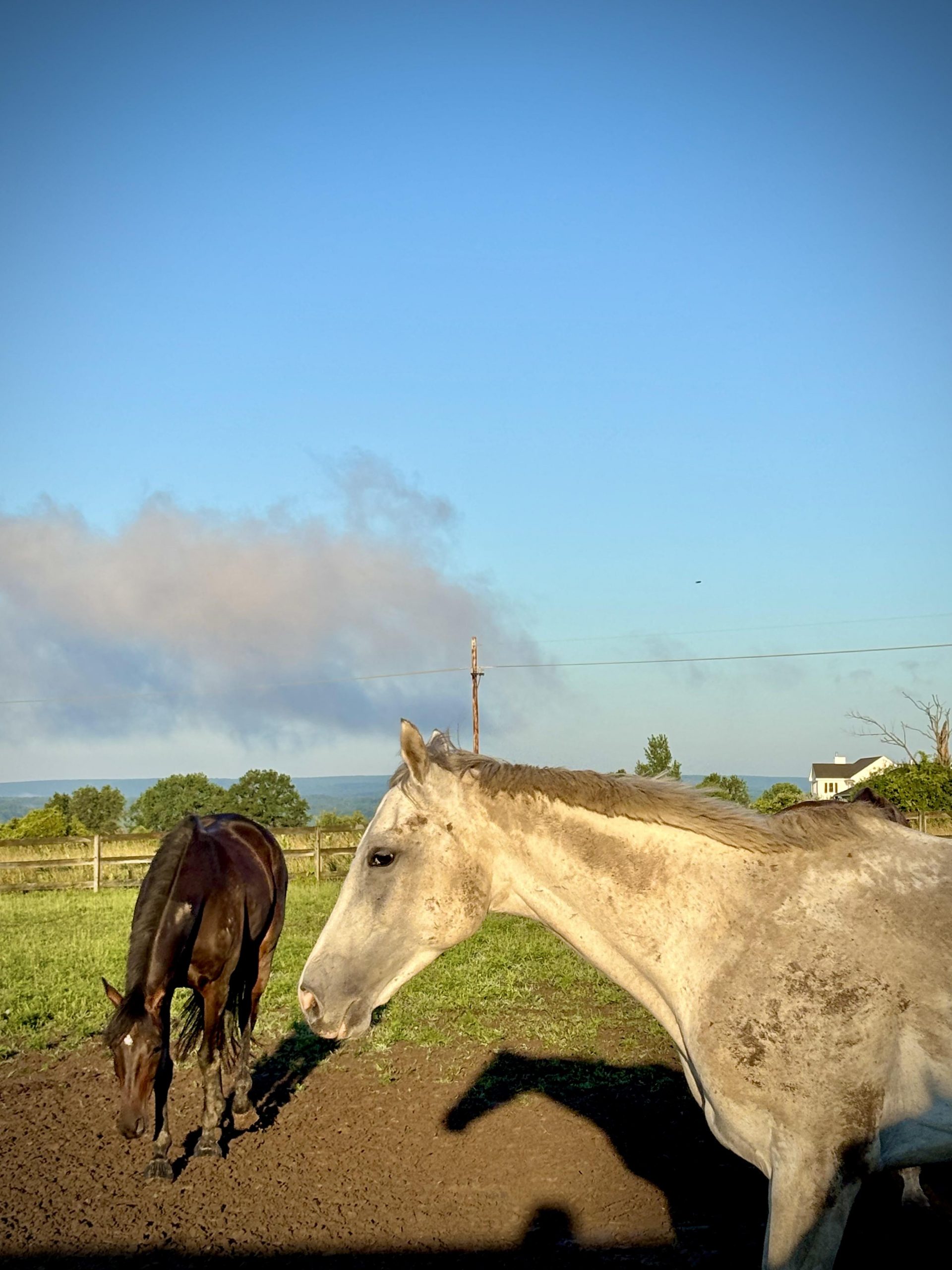
A much happier August, and reasonably clean Neil (Lute’s Angel). Photo by author.
The mud might be a form of equine shorthand for health, but despite all my words, I can’t overstate the importance of their ability to get to the ground and rest. It can be indicative of where they are at and how their body — and especially, their hind end — feels. Additionally, sleep deprivation is a real thing. The lack of zzzz can lead to super strange behavior, mood issues, and just a general wonkiness in their bodies.
Koops is another great example. This handsome kiddo deserves his own book for all he has been through, but in short, here goes:
The small rig carrying Koops from the track to me went off the road and down a hill, tipping it on its side in a culvert on Feb. 2nd, 2024. One of his hind legs went through the separated floor, somehow he held still, and with two jaws of life and a few hours later, they managed to get him out and move him to a nearby clinic. Koops’ wounds and healing were extensive to say the least. There were inches of bone exposed, gaping and necrotizing holes in his legs, and so much more to deal with. But somehow, that sweet, ridiculous fighter held on. And slowly, he healed.
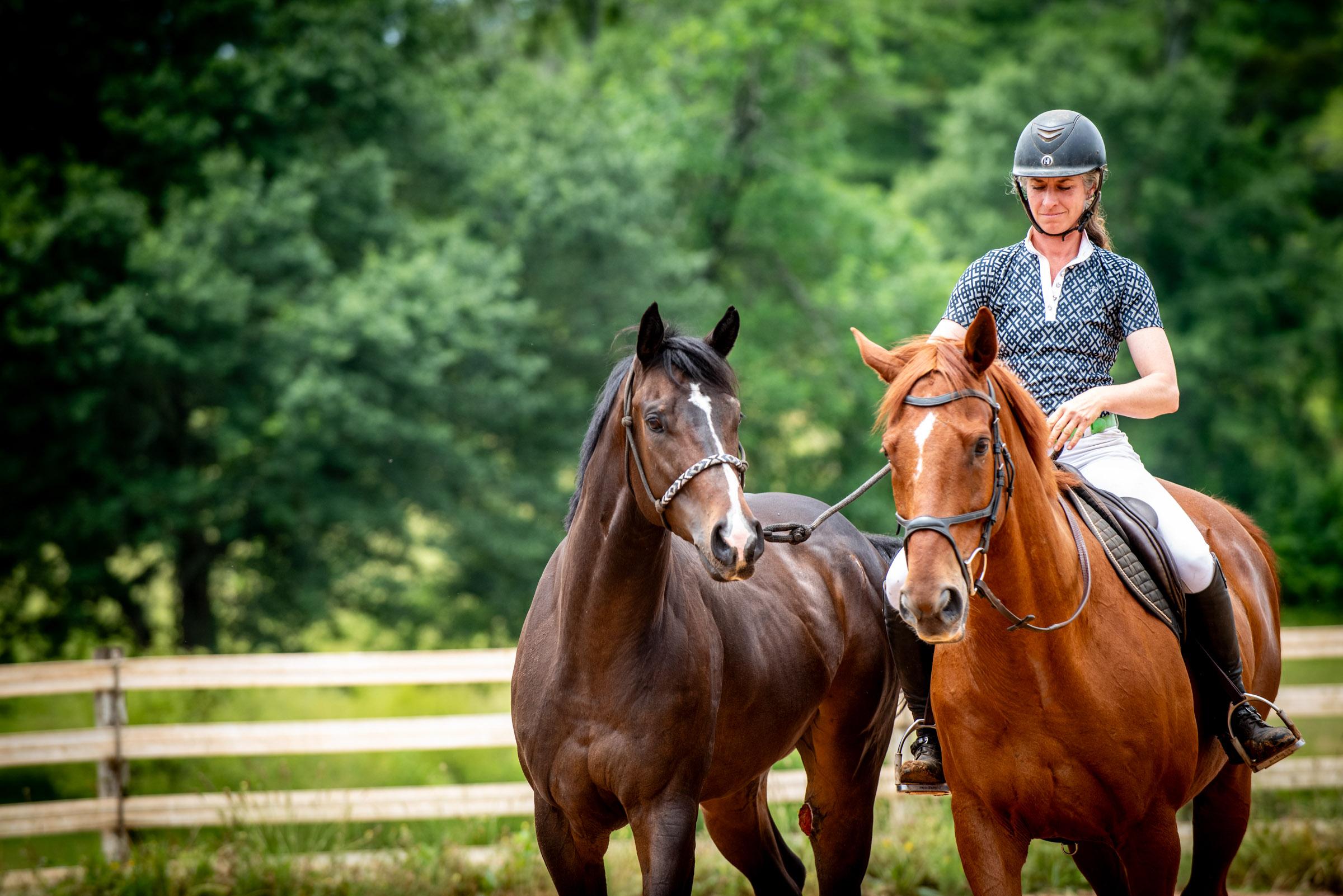
Koops midway through his healing, learning to be ponied (politely) by Forrest (Don’t Noc It). Ignore me, I have no idea what I’m doing with my hands here… Photo by Alanah Giltmier.
When we hit about three months into his recovery, he finally laid down. I walked by his stall and called over Alanah, my working student. I was super excited. He was asleep on his side, occasionally running as he slumbered (so presumably having hit REM stage). Seven hours later though, he was still down. At about 11 at night, I called the vet. He was either THAT tired or he was dying. And that is a pretty ridiculous vet call to make.
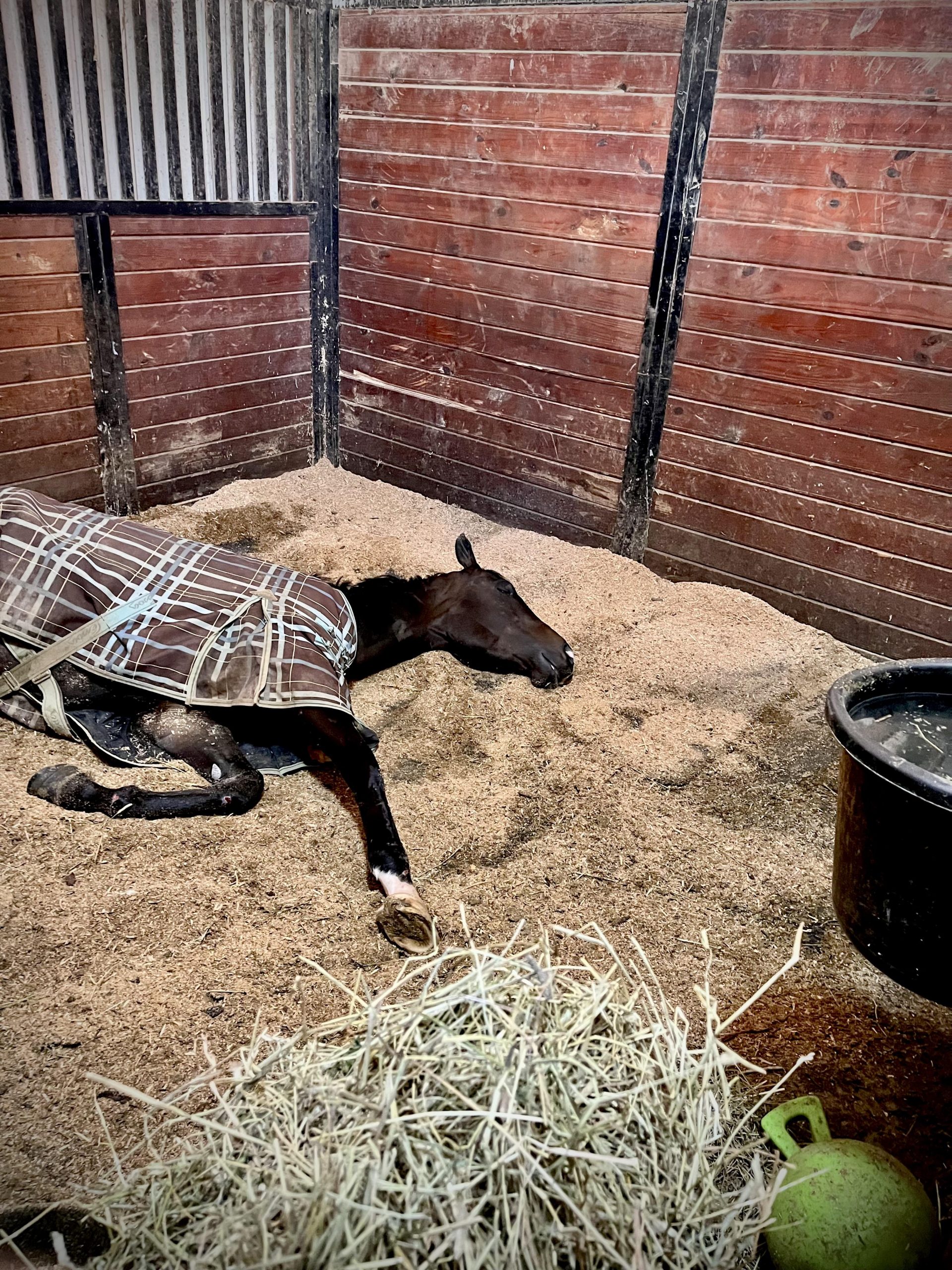
Koops taking his first post crash snooze. Photo by author.
He wouldn’t wake up, though he would blink, rock up on his knees, look glassily at me and flop back to sleep, twitching and flinching all over. I finally cut his blanket off (I couldn’t get under him to the clips) and tossed a bucket of water on him as a last ditch semi-panic move as the vet on the line was on an emergency call, and she was worried and couldn’t tell me if this was an OK thing or not. Cold water did the trick — Koops hopped right on up, peed, then patted me down for cookies. That horse has a list of the number of times he has nearly given me a heart attack. That, though, was one of the most ridiculous.
Once I got over my “are you dying?!” panic, I was thrilled. He finally felt good enough to get to the ground. The healing was working and he needed sleep to heal more. In the coming days, he began to nap more in his stall and then, when he was able to finally turn out, I was always be happy to see that he came in dirty. Sometimes, woefully so…
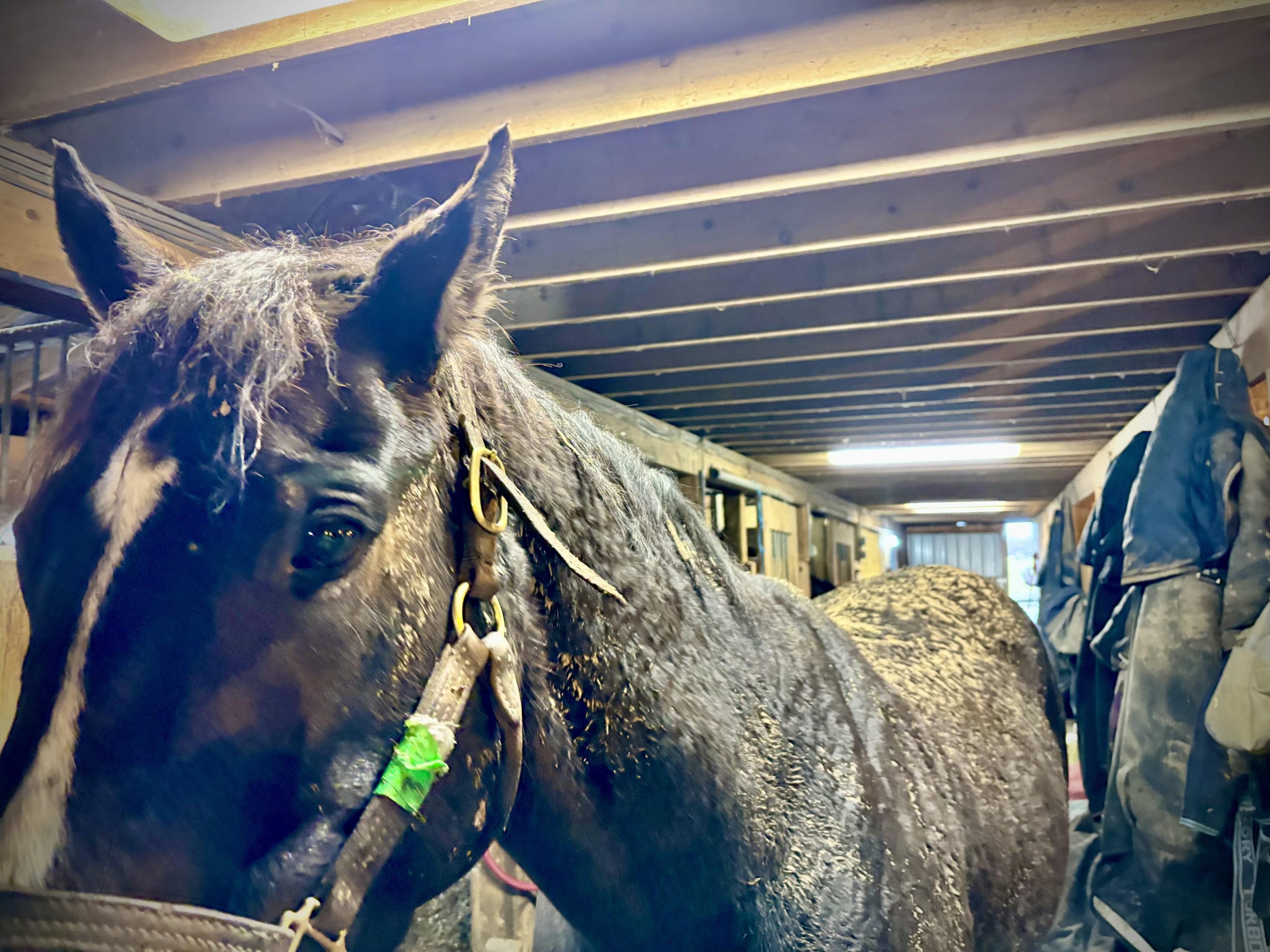
Thankfully, Koops now has no issue getting to the mud or to his nap spot. Photo by author.
I could go down the list of horses who show this positive progression. And I could also tick down the list of those who come in off the track and are eager to channel their inner wallowing hippo at first. Over time, though, as the track maintenance and race muscles respectively wear off and change, these horses become cleaner and less enthusiastic about giving my wash rack and curry combs extensive use. And as their mud wallowing, dust spot rolling, or simple napping decreases, I don’t recommend panic, but definitely do recommend noticing it and keeping an eye on trends over time.
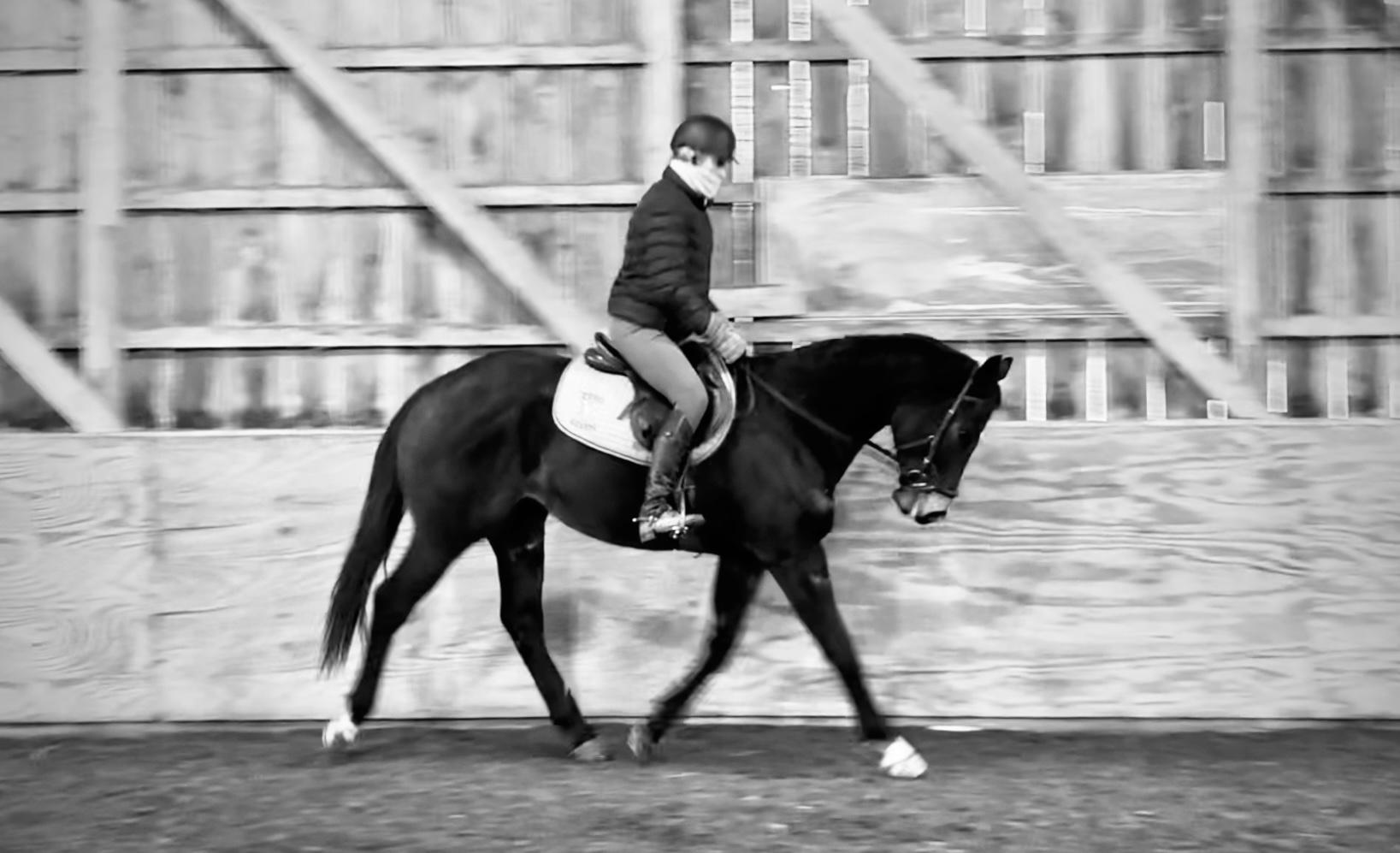
Koops flatting in late winter — a year after his crash. Screenshot from Pivo.
In sum, when I’m watching my OTTBs in the fields and stalls, I mentally run these questions: Do they ever seem to sleep? Do they ever get to the ground and roll? Do they come in dirty or clean? Did they do so before? Do they look sore anywhere? How are they traveling under saddle? And from there, I ponder the potentially related need for things like better hoof angles, joint maintenance, overall arthritis care, potential different training regimens, or simply just an additional soft spot to sleep.
So go ride folks. I’m off to de-mud some geldings and keep an eye out for any who might be problematically clean.
Elevate® Maintenance Powder
Fight back against seasonal vitamin E deficiencies.
Elevate® Maintenance Powder was developed to provide a highly bioavailable source of natural vitamin E to horses. Multiple research studies have shown that vitamin E is often deficient in the diets of horses that do not have access to continual grazing on fresh green grass, or those grazing on dormant winter pastures. Performance horses with demanding workloads, growing horses, and seniors have higher requirements for vitamin E, making deficiencies a more common occurrence. Studies reveal that horses who are deficient in vitamin E are at a higher risk for developing neurological and muscle diseases. Don’t let a lack of natural vitamin E put your horse at risk; supplement with Elevate this winter to ensure your horse gets the vitamin E needed to thrive.
The horse that matters to you matters to us. Not sure which horse supplement best meets your horse’s needs? Kentucky Performance Products, LLC is here to help. Contact us at 859-873-2974 or visit our website at KPPusa.com.

