



Thoroughbred Logic, Presented by Kentucky Performance Products: “No Maintenance”
“Knowing that your Thoroughbred has probably already been maintained in some way shape or form is one important thing. Being willing to meet them where they are and help them get the assistance they need is another critical one.”
Welcome to the next installment of Thoroughbred Logic. In this weekly series, Anthropologist and trainer Aubrey Graham, of Kivu Sport Horses, offers insight and training experience when it comes to working with Thoroughbreds (although much will apply to all breeds). This week ride along as Aubrey shares her logic on maintenance and horse sales.
Most ISOs that go flitting around the Thoroughbred pages carry one line that drives me nuts (OK, there are a lot of things in them that make me batty, but this one in particular).
“No maintenance.”
To start, what even does that mean? For some, it seems it means that the horse can’t need shoes. That’s wild. I’m just going to ignore that absurdity. But for most it means that they are in search of an equine specimen in utterly perfect physical condition that does not ask for any veterinary or specialist assistance throughout the year beyond annual care such as vaccines and dentals — a horse that is to require no joint injections, no arthritis care, no regular ulcer attention, certainly no special farrier work or extra vet visits. Oh, regular chiropractic or PEMF work? That might count too. Nope.
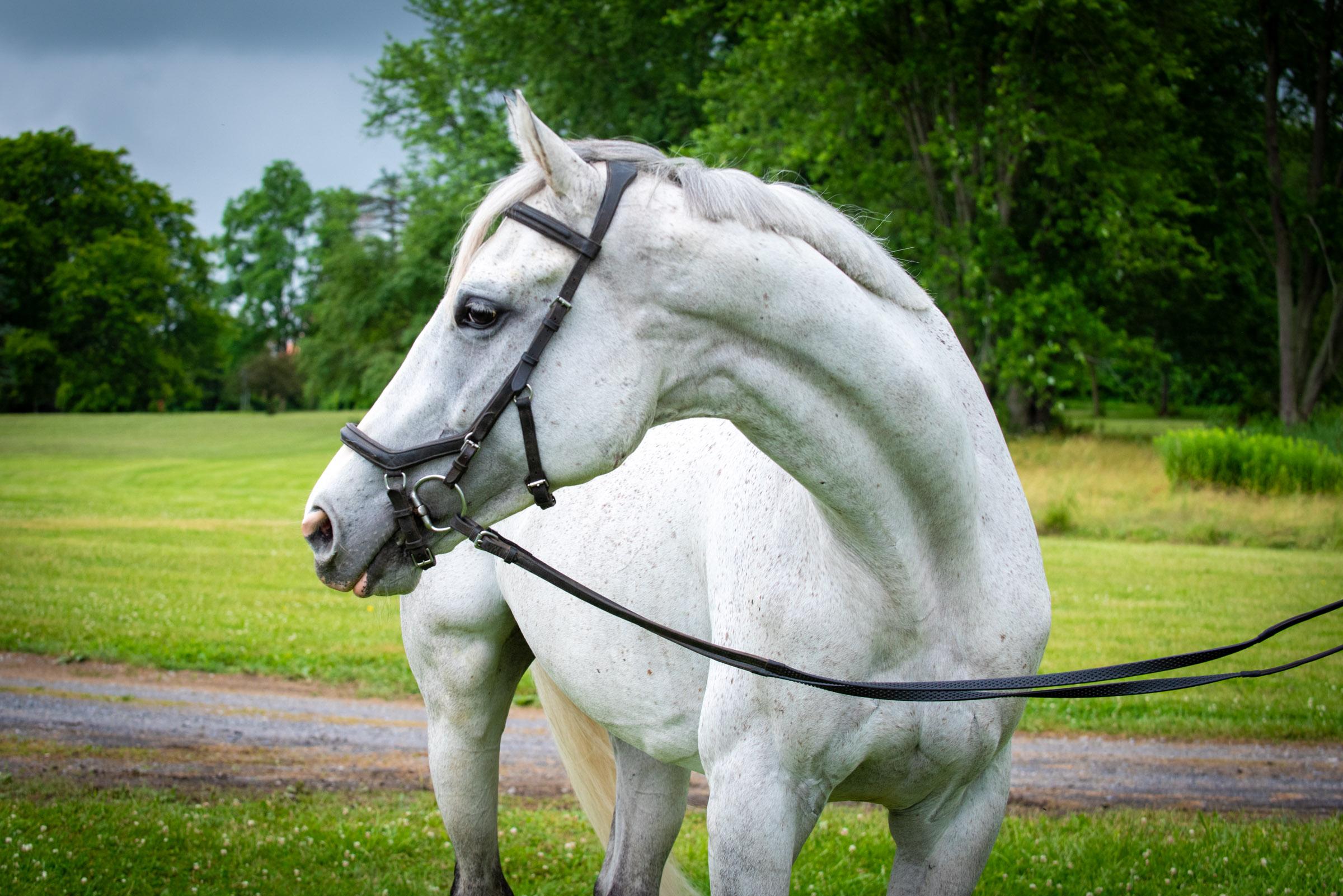
Overlooking good horses due to minor maintenance is a serious pet peeve. Photo of the stunning Starship Augusto by Lily Drew
For many of these folks who fly the “no maintenance” flag, a good brain on a stunning horse who literally checks all the boxes is not enough to overcome the annual need for hock injections. If they need concussion pads up front when jumping to stay happy with little Sally over 2’6″ courses, that’s a big ole “nope.” Worse when there might be two things to keep an eye on — oh the ankles need some TLC and they could use a round of gastroguard? I just shrug. The no maintenance folks, they’re running for the hills.
I have heard folks say, “Oh, I’d be willing to get them injections when they’re getting older. That’s not a big deal,” when looking at a five year old who ran 33 times and just came off the track, who also could use some joint attention. But after a full, high impact career at five, that’s arbitrarily too young to be permitted to need assistance? Makes me nuts.
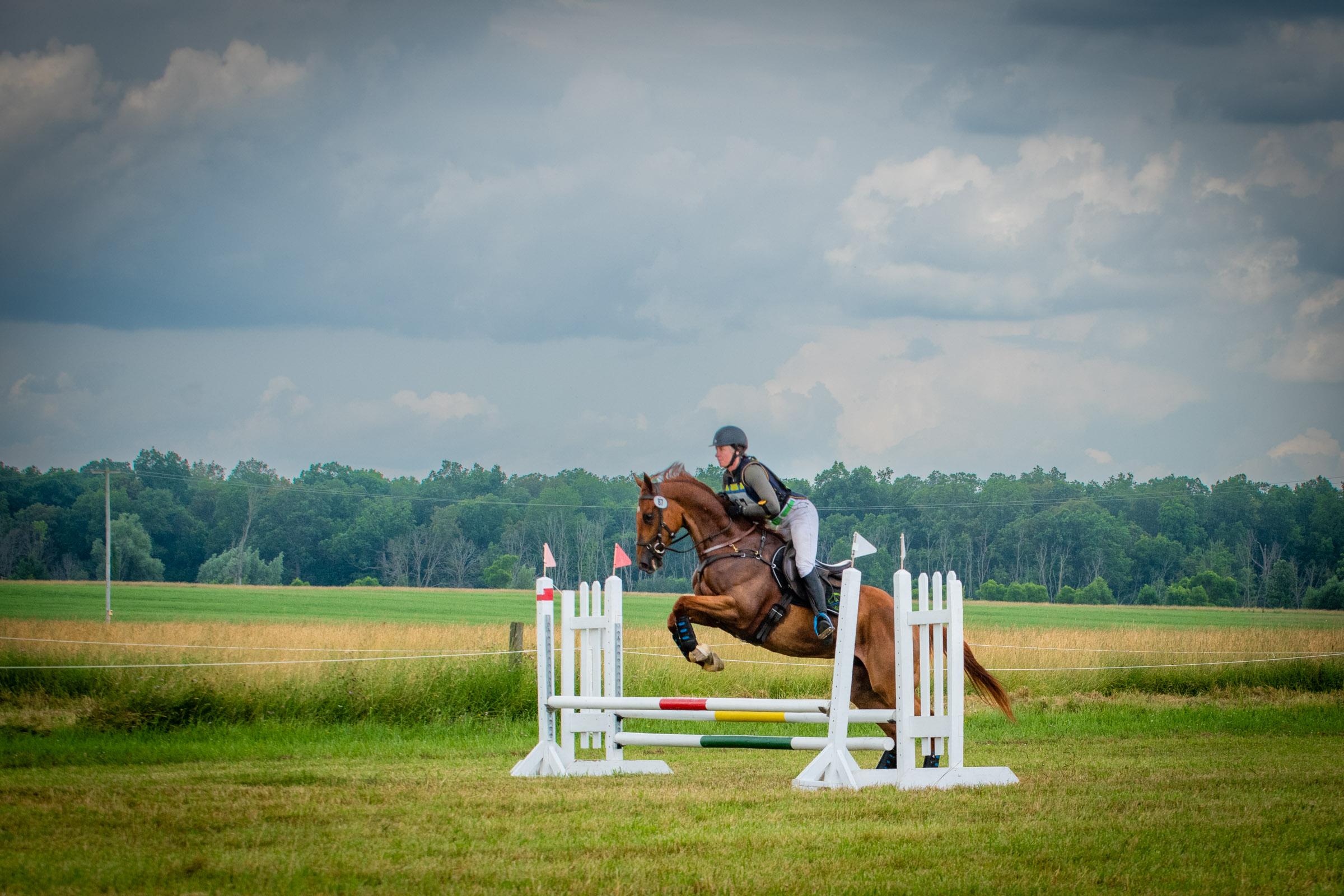
Artie (Reunion Tour) who is one of my #Makeoverhopefuls for this year will require minor maintenance as he goes forward. In my head, “Meh, that’s expected.” Great photo of him (oops with me jumping ahead of the motion) by Izzy Gritsavage.
I think a lot of this comes from the sense that soreness or arthritis are seen as an old critter’s games. By this logic, if a horse is 16, they may have earned those injections, no problem. And for the six year old Warmblood who was broke to ride lightly at four years old and has only trotted around the farm a bit, sure joint maintenance might be a red flag. (I’d consider it up for discussion, but I’m lax on these things). For most breeds that do not have high impact careers, maintenance is assumed to sneak in later in life, or as the owner’s wallet allows. Injections, specialist care, body work all become things that horses gain access to over time as they pay their dues in their sport career — as they slowly get creaky.
But if folks are applying that logic to Thoroughbreds, they’re simply looking through the wrong lens. One needs to keep in mind that these horses have had a full career already when they retire from the track. Even if they only ran one time at age three, they certainly trained plenty, completed their training farm gallops and timed workouts for months in advance of that single start. The pounding that happens in racing is unmatched in any other equestrian sport, including upper level eventing. So yes, their bodies have seen a lot by the time they’re three or four. Keep adding the number of races to that profile and those joints will continue to earn their keep.

Crash (One Big Dude) had a successful career of 18 starts earning $123,480 for his racing connections before retiring and taking on a life as a future show hunter / eq horse. Photo courtesy of Reese Ranch.
Sure, Thoroughbreds develop arthritis as they age, but the breed often deals with juvenile arthritis that arrives before the age of four. But whether due to arthritis or other issues when on the track, there are few ways to manage soreness: rest or maintenance or both. And when horses are midway through the career for which they were purpose-bred to succeed, owners often aim to maintain them. Some live on anti-ulcer meds, others get regular inter-articular joint injections. In other words, before they leave the track, many have already been (hopefully responsibly) maintained.
Under The Horseracing Integrity and Safety Authority (HISA) — a governing body that oversees most of the tracks in America — injections are permitted but regulated. HISA limits the proximity of injections to official work. In general, orthobiologics, corticosteroids, hyaluronic acid (HA) products or antibiotics (among a few more substances) injected into an articular space require a time lag of 14 days before a race or seven days before a timed workout. For anything dealing with the fetlocks, the timeline is a bit longer: 14 days to workout, 30 days to race. Any injectable gels require half a year before racing again.
Emmett (Oboy), who is rocking around the fences in video above, will likely need a bit of maintenance as he clicks along, but this kid earned it with 34 starts on the track. He also has a LOT of life left in those legs and joints, and the heart to head on up the levels in the right hands and program.
Often, right off the track, their joints may still be feeling the benefits of some of those injections, whether we as rehomers or owners know about it or not. So to shop for a former racehorse but demand that they cannot require what they may have already been given is madness. Frankly, it is also worrying.
When I rehome the horses I have restarted, I want to know that they’ll be cared for. A hard line of “no maintenance” concerns me about what happens if, at some point, maintenance is needed. What if at age six, that hock that was mostly fine at four starts to get a little sore. What if the move to a new barn produces a new flare up of ulcers? What if the new type of pounding of a jumping career means unexpectedly that to be sound and happy, the horse needs their coffin joints cared for or pads on up front? Will the “no maintenance” folks assess that these horses have earned the right to care? Or will they toss the proverbial baby out with the bathwater, leaving lovely horses struggling to do their new job because they need a particular physical boost?
Maybe I’m being too hard on folks. I just prefer that buyers (and owners) are realistic and kind. Knowing that your Thoroughbred has probably already been maintained in some way shape or form is one important thing. Being willing to meet them where they are and help them get the assistance they need is another critical one. And look, I’m not asking folks who have an appropriate budget to have to buy horses who have damning lameness or might not be able to do the job asked. It is more about simply understanding how that one phrase (and the hunt in the PPE to make sure that truly no maintenance is needed) shows that the lens is all wrong. And it tells me so much about the industry, the riders, the trainers and where things are going. And frankly, it’s frightening.
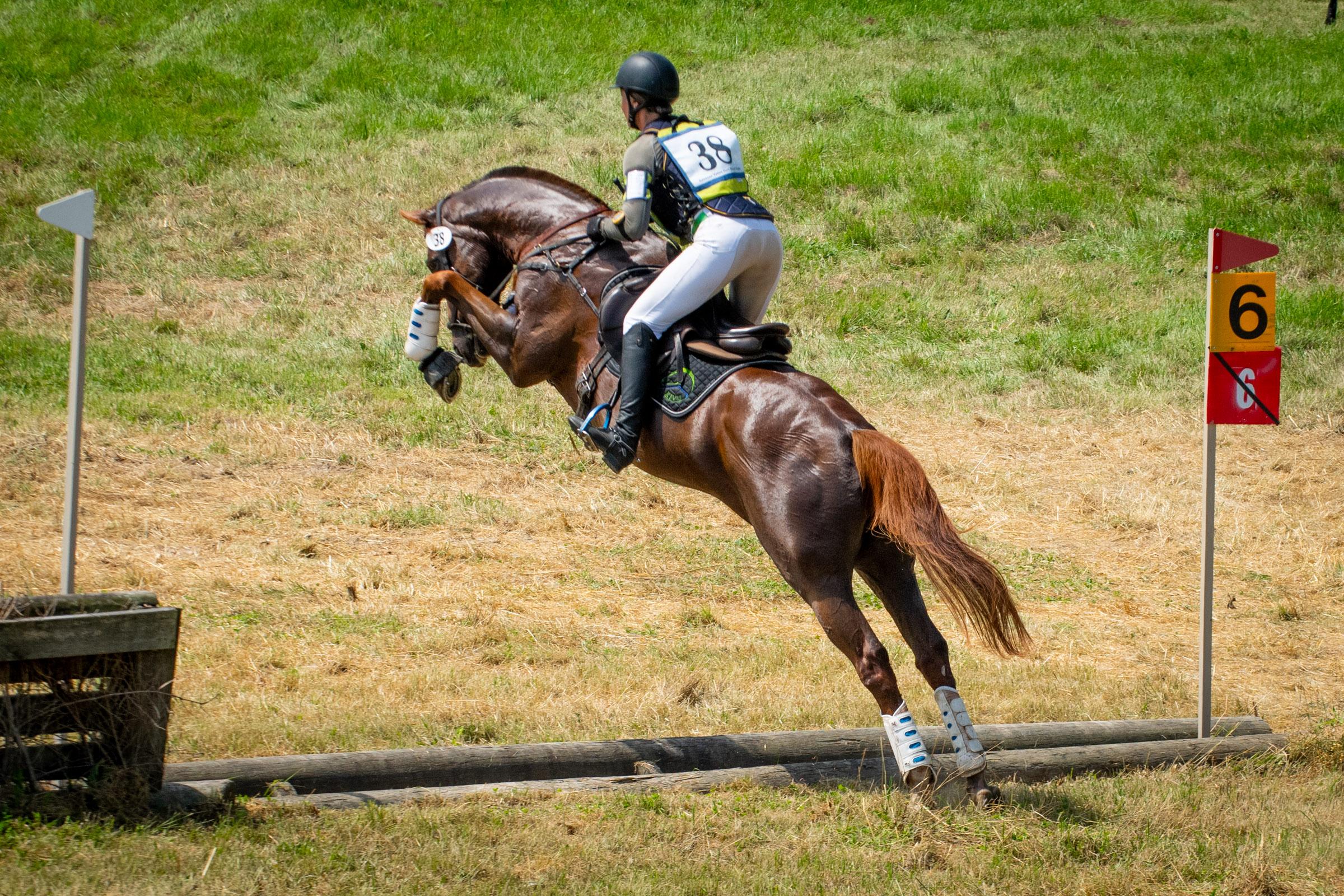
Indy showing off what a little maintenance can allow you to do. Photo from the GVH Horse Trials, image by Izzy Gritsavage.
So I’ll close out this rant by discussing Indy (Star Player). This past weekend, this horse went out and ran his first recognized horse trial hosted by the Gennesee Valley Hunt. He finished his Beginner Novice debut, landing in third. “What a gallop.” “He’s lovely.” “Great jump.” “He looks like so much fun.” It was a long, hot weekend of fun comments and Indy feeling like he was running around on cloud nine. Our dressage left a lot to be desired (I clearly have homework… no biggie), but he tried his heart out in stadium and had an absolute blast flying around cross country.
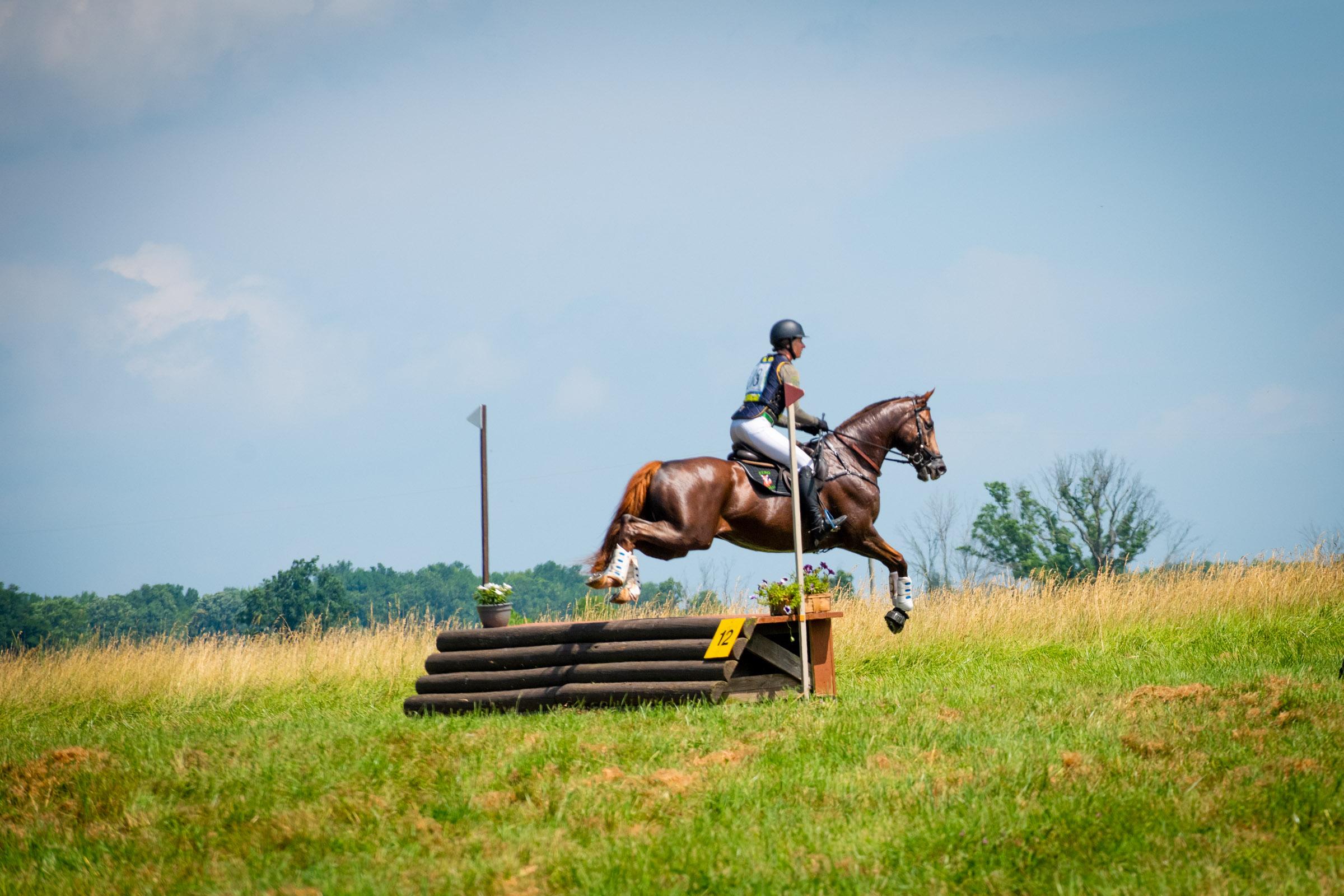
Indy having pretty much the time of his life. Photo by Izzy Gritsavage.
But guess what Indy gets? Maintenance. Hocks, stifles, right front ankle. Concussion pads up front, ulcer meds when we travel. I’m not sure currently how often he will need these injections, but when he needs them again, he’ll get them again. Is he going to go on to be an Advanced Level eventer? His heart says “Hell freakin yeah.” But his body? Probably not (though I’ll let him go up the levels as long as he keeps telling me he’s comfortable, so who knows?). Do I think I can get him up through Novice or Training? Sure, why not? This is one of those horses you love for a lifetime (I have adored him since I team rode him at the 2021 Makeover with his then-owner, Erica Brown). And if I was anti-maintenance, he’d be hanging out in a field retired, not jumping ditches like a totally happy, insanely athletic fool.
Alright alright, I’m stepping off my soapbox now. Go ride, folks — I’m off to put the work in on countless imperfect kiddos and enjoy the hell out of the short Northern competition season.
About Kentucky Performance Products, LLC:
Omega-3 fatty acids have been proven to reduce skin inflammation and mitigate allergic response. Contribute delivers both plant and marine sources of beneficial omega-3 fatty acids. Feed one to two ounces per day, depending on severity of the allergy.
Need tips on how to manage allergies? Check out this KPP infographic: Got Allergies?
The horse that matters to you matters to us®. KPPusa.com

