



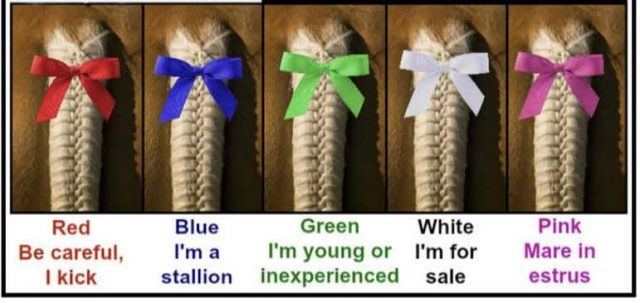
Horse Etiquette 101: Understanding Tail Ribbon Colors
The complete guide to horse tail ribbon colors.
If you’ve ever attended a horse show, trail ride, parade, clinic, or organized equestrian event, you may have noticed horses wearing brightly colored ribbons braided or tied into their tails. Although these colorful accessories may look decorative to the untrained eye, they actually serve a very important purpose: communication and safety.
Horses are powerful animals with individual personalities, quirks, and behaviors. In crowded environments where riders, handlers, horses, and spectators interact closely, misunderstandings can lead to accidents. Colored tail ribbons provide a quick, visual way for horse owners to communicate important information about their horse to others nearby.
The use of tail ribbons has been part of equestrian culture for decades. Although exact color meanings can vary slightly between disciplines, regions, and organizations, several ribbon colors have become widely recognized throughout the horse industry. Understanding what these colors mean can help riders maintain safe distances, avoid unwanted interactions, and create a safer environment for everyone involved.
Red Ribbon
“Use Caution, This Horse Kicks”
The most universally recognized tail ribbon is red. A red ribbon warns others that the horse may kick if approached too closely from behind. Horses kick for many reasons, including fear, anxiety, territorial behavior, discomfort, or simply as a natural reaction when startled.
When riders see a horse with a red ribbon, they should give that horse extra space, particularly when riding in arenas, warm-up areas, trail rides, or crowded show grounds. Handlers should also avoid standing directly behind the horse whenever possible.
Although a red ribbon doesn’t necessarily mean a horse is dangerous, it serves as a reminder that caution is warranted and personal space should be respected.

Canva/CC
Green Ribbon
“Young or Inexperienced Horse”
Green ribbons are commonly used to indicate that a horse is young, inexperienced, or still in training. Much like a student driver displaying a learner’s permit sticker, a green ribbon signals that the horse may still be learning how to behave in busy environments. Young horses can become distracted, nervous, or unpredictable when exposed to unfamiliar sights, sounds, and situations.
A green ribbon encourages other riders to be patient and understanding. Giving these horses additional room can help them gain confidence while reducing stress and minimizing the risk of accidents. Many trainers use green ribbons when introducing horses to their first competitions, clinics, or public outings.
Yellow Ribbon
“Proceed with Caution”
The yellow ribbon is often used as a general caution sign. Unlike the more specific messages conveyed by red or green ribbons, yellow typically indicates that the horse requires extra awareness for various reasons. The horse may be nervous, anxious, recovering from an injury, sensitive to its surroundings, or simply not comfortable in crowded situations.
Some organizations also use yellow ribbons to signify a horse that needs additional space due to medical concerns or behavioral sensitivities. Because the meaning can vary, the safest approach when encountering a horse with a yellow ribbon is to give it additional room and avoid sudden movements or close passes.
In some equestrian organizations and riding communities, a yellow ribbon may also indicate that the rider has a disability or is a para rider. This serves as a courteous reminder for others to provide additional space, avoid sudden movements, and be mindful that the rider may require extra consideration while navigating the arena, trail, or show grounds.
Because the meaning of a yellow ribbon can vary depending on the discipline or event, the safest approach is to assume that the horse and rider need additional room and understanding. Giving them space helps create a safer and more welcoming environment for everyone involved.
Blue Ribbon
“Stallion”
Blue ribbons are frequently used to identify stallions. Stallions can be well-trained, calm, and highly manageable, but they may also become distracted or reactive around mares or other stallions. By identifying a horse as a stallion, the blue ribbon allows other riders and handlers to exercise appropriate caution and maintain adequate spacing.
The ribbon is not intended to imply aggression. Rather, it helps prevent situations that could trigger unwanted behavior, such as allowing mares to approach too closely. At some events, stallions may be required to wear identifying ribbons or other markers according to competition rules.
White Ribbon
Horse for Sale
A white ribbon is often used to indicate that a horse is available for sale. This tradition is most commonly seen at horse shows, breed events, and sales-related competitions where potential buyers may be present. A white ribbon allows interested individuals to quickly identify horses that may be on the market.
Interested buyers should always speak with the owner or trainer before approaching the horse or asking questions about its availability. While not directly related to safety, the white ribbon serves as a practical communication tool within the equestrian community.
Pink Ribbon
Mare is in Season
Pink ribbons are less universally standardized, but they are commonly used to identify mares. In some regions and disciplines, a pink ribbon may indicate that a mare is in season (estrus), which can influence her behavior and interactions with other horses.
Riders should use caution around horses displaying pink ribbons and give them appropriate space.
Purple Ribbon
Horse with Special Considerations
Purple ribbons are used to indicate a horse with special needs or unique circumstances. These may include horses recovering from injuries, horses with vision or hearing impairments, rescue horses undergoing rehabilitation, or animals that require extra space for medical reasons.
Because there is no universal definition, riders encountering a purple ribbon should simply recognize that the horse may need additional consideration and avoid crowding or startling it.
In the equestrian world, safety remains one of the most important priorities. Horse shows, trail rides, clinics, and public events often bring together horses and riders with vastly different experience levels.
A simple colored ribbon can communicate critical information instantly without requiring conversations or announcements. In many situations, ribbons help prevent injuries, reduce stress for horses, and promote courtesy among riders.
Tail ribbons are especially valuable in busy warm-up arenas where riders may be focused on their horses and may not have time to verbally communicate potential concerns.
One important thing to remember is that ribbon meanings are not universally regulated. Different equestrian organizations, countries, and disciplines may use slightly different color systems. Whenever attending a new event, riders should review any posted guidelines regarding tail ribbon colors and their meanings.
At first glance, a colored ribbon braided into a horse’s tail may seem like a decorative touch. In reality, it serves as a simple yet effective communication tool that helps keep horses, riders, handlers, and spectators safe. By learning and respecting the meanings behind tail ribbons, equestrians can contribute to a safer, more considerate horse community.
