



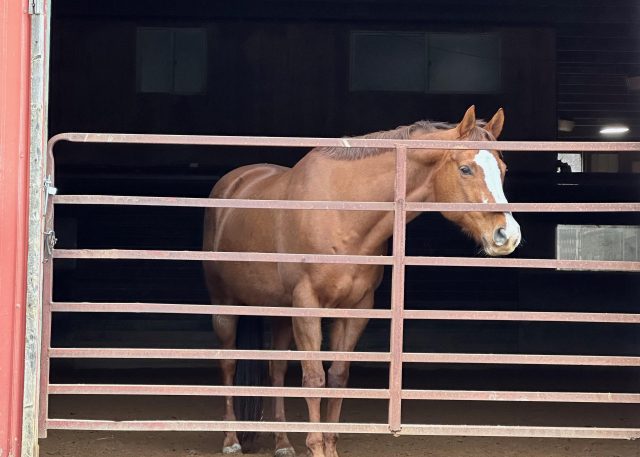
When the Lessons End: What Happens to Retired Lesson Horses?
Retirement isn’t always simple for aging school horses. As their care needs increase and their earning days end, barns face difficult decisions about how to provide the soft landing these equine teachers deserve.

Photo by DeAnn Long Sloan
There’s a horse at almost every boarding barn and lesson program who deserves a bronze statue somewhere.
Usually, they’re older. Usually, they’re fuzzy year-round. They pin their ears at the mounting block but stand perfectly still anyway. They know when a rider is nervous before the rider even realizes it themselves. They tolerate crooked steering, accidental kicks, bouncing hands, forgotten diagonals, and children who accidentally call them by the wrong name for six straight months.
These horses teach generations of riders how to post, steer, trot poles, canter for the first time, and, sometimes, how to get back on after a fall.
And eventually, one day, they can’t do it anymore.
Maybe their hocks finally give out. Maybe they develop Cushings. Maybe they start dropping weight no matter how carefully they’re fed. Maybe arthritis makes beginner lessons unfair to ask of them. Maybe they simply look tired in a way that responsible horse people recognize immediately.
So what happens then?
Where do retired lesson horses go?
And perhaps more importantly: Who takes care of them after they’ve spent years taking care of everyone else?
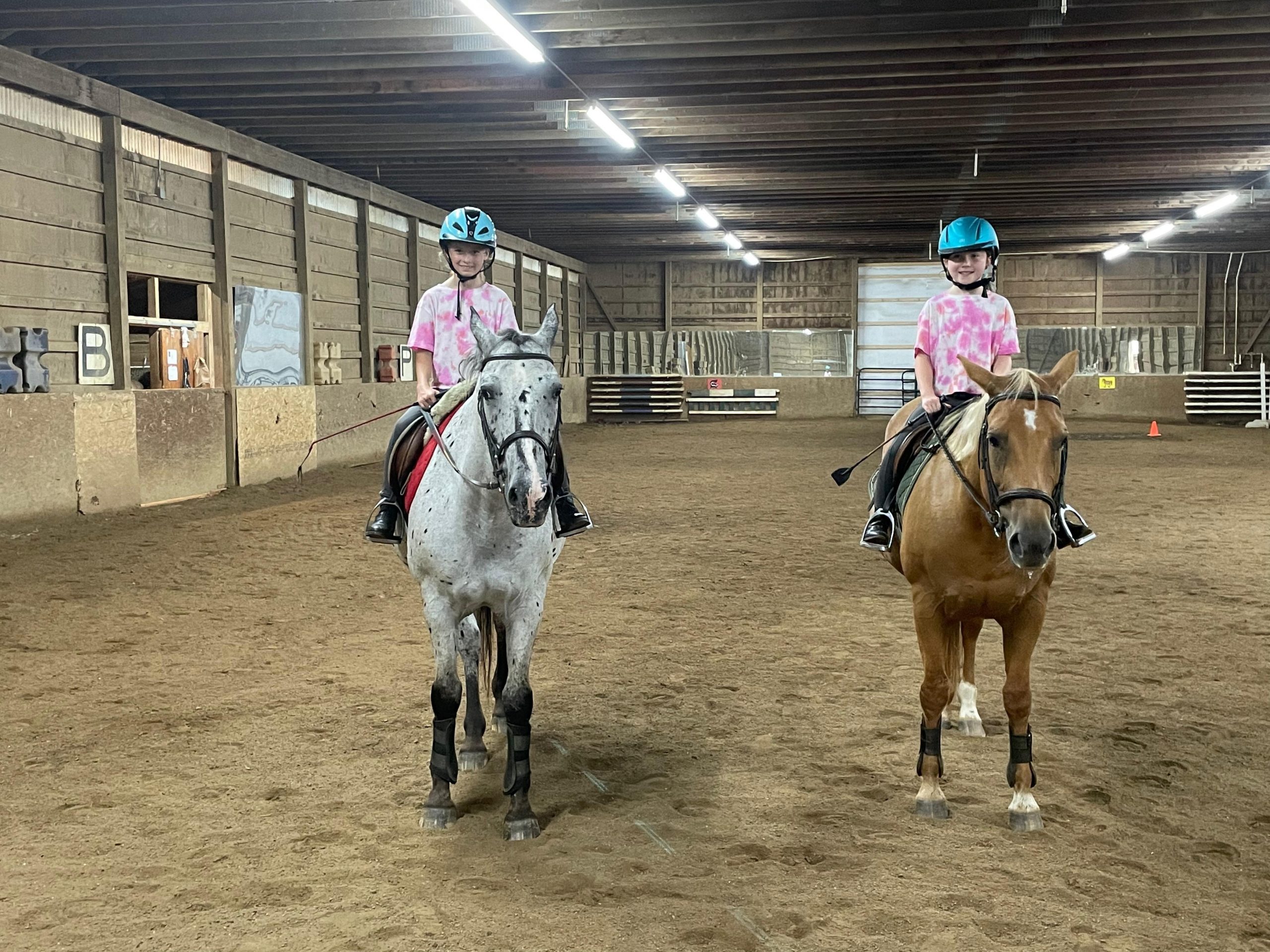
Photo by DeAnn Long Sloan
The Reality of the Situation
Most lesson horses do not retire wealthy.
They don’t have breeding careers waiting for them. They’re often older grade horses with maintenance needs, old injuries, or limitations that make them unsuitable for demanding riding jobs. Many are worth very little financially by the time they retire from lesson work.
But their care becomes more expensive right when they stop generating income.
That’s the uncomfortable math facing riding instructors and barn owners everywhere.
A good lesson horse is worth their weight in gold while they’re teaching. But once they can no longer safely carry beginner riders, the horse still needs hay, grain, dental work, farrier care, vaccinations, deworming, medications, and sometimes expensive veterinary management for chronic conditions.
Meanwhile, the lesson program still has bills to pay.
New school horses need to be purchased. Insurance doesn’t disappear. Feed costs certainly haven’t gotten cheaper. Most riding schools are already operating on razor-thin margins, held together by overworked barn owners and caffeine.
The romantic answer is that every lesson horse peacefully retires into a grassy paradise while children visit them with carrots forever.
Sometimes that happens.
Often, it’s far more complicated.

Photo by DeAnn Long Sloan
The Best-Case Scenario: Staying Home
The most responsible barns do everything they can to allow retired lesson horses to remain where they are familiar and comfortable.
These horses become pasture ornaments, babysitters for young horses, or occasional walk-trot mounts for trusted riders. They spend their days teaching from the sidelines instead of the arena.
It’s the ideal outcome.
But it’s also expensive.
Every retired horse occupying a stall or pasture spot is a horse no longer helping offset the operating costs of the facility. In a small program, carrying even one or two fully retired horses can become financially difficult. Carrying five or six can become unsustainable altogether.
That doesn’t mean barn owners don’t care.
In many cases, they care deeply and sometimes painfully so.
A surprising number of riding instructors quietly support retired horses for years out of pocket because they feel morally obligated to the animals who helped build their programs. They cut corners elsewhere. They skip paying themselves. They absorb the costs because they cannot stomach the alternatives.
But love alone does not magically make horse expenses disappear.
Rehoming: Easier Said Than Done
Some retired lesson horses do find excellent second careers or retirement homes.
A saintly older gelding might become a child’s first horse for light trails and pony rides. A semi-retired mare may become a companion horse for another family’s retired gelding. Some horses transition beautifully into slower-paced lives with experienced owners who understand maintenance and age-related care.
Those are the stories everyone hopes for.
But finding those homes is harder than people realize.
The reality is that many riders adore lesson horses right up until responsibility enters the picture.
People love riding dependable older horses. Fewer people are eager to take on a horse with that needs joint injections, special feed, daily medications, limited riding capability, or the possibility of large veterinary bills in the future.
And emotionally, there’s another challenge: lesson horses often belong to everyone and no one at the same time.
Dozens — sometimes hundreds — of students may love them. But very few are in a position to fully assume ownership and long-term care responsibilities for a senior horse who may require increasing support over time.
That leaves barns trying to place horses carefully while knowing the wrong home can become a disaster.
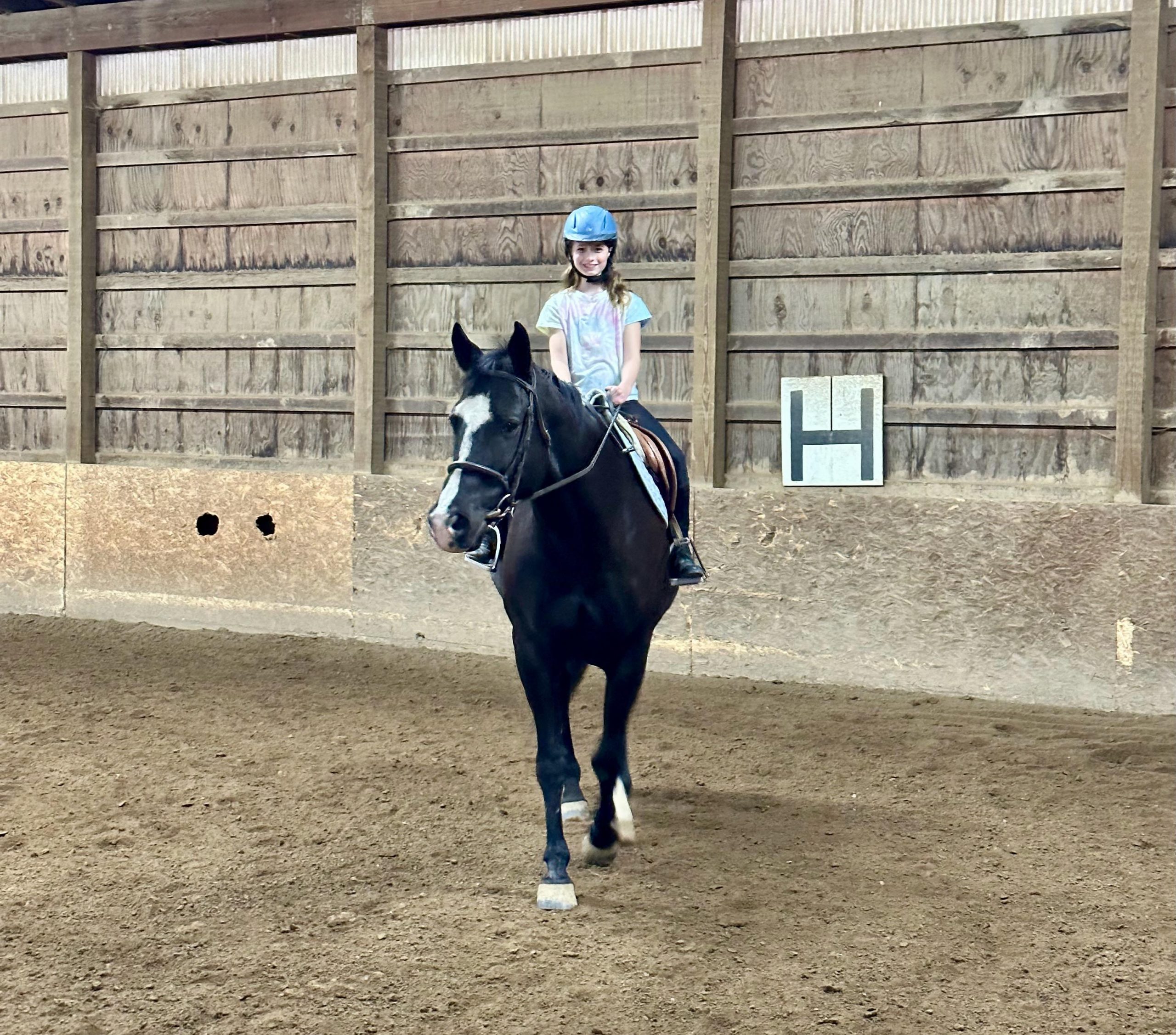
Photo by DeAnn Long Sloan
The Fear Every Barn Owner Carries
Every responsible horse professional knows the horror stories.
The “perfect retirement home” that sells the horse six months later.
The “light riding home” that becomes a hard-riding home.
The senior horse who quietly ends up passed from auction to auction because maintenance costs became too much.
This is why many barns are extraordinarily cautious about rehoming elderly lesson horses. Sometimes they seem overly picky or reluctant to adopt horses out at all.
Usually, it’s because they know exactly what can happen if things go wrong.
For older lesson horses with significant maintenance needs, euthanasia sometimes becomes the kindest option long before the public thinks it should.
That statement makes many horse people uncomfortable.
But responsible euthanasia — before pain, neglect, instability, or suffering escalate — can be a compassionate decision. Especially for horses whose bodies have spent years absorbing the physical wear-and-tear of carrying inexperienced riders. But good horse care is not always emotionally easy.
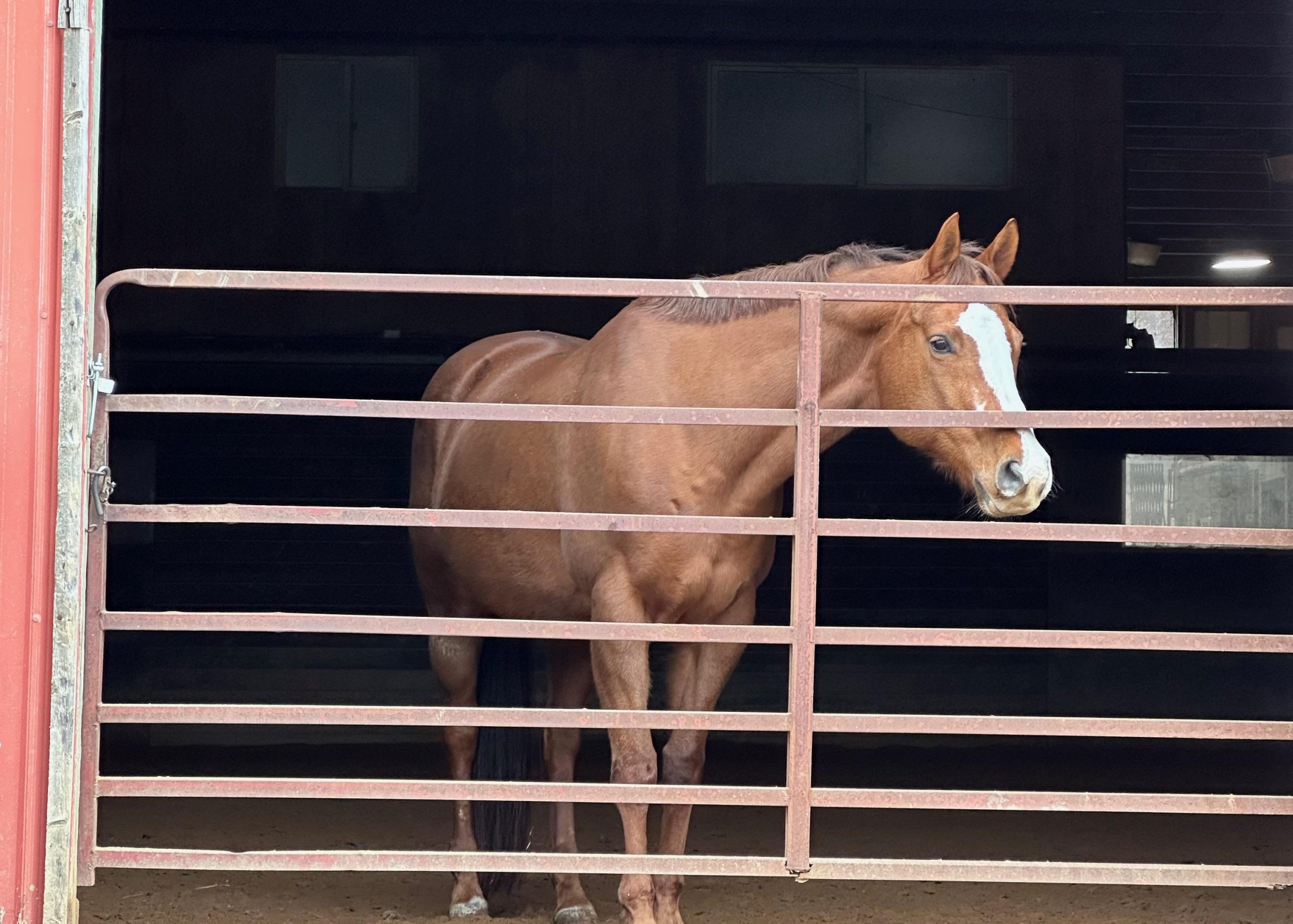
Photo by DeAnn Long Sloan
How Do We Repay Those Horses?
That’s really the question underneath all of this.
How do we repay the horses who taught us? The ones who tolerated our mistakes. The ones who packed terrified beginners around arenas with endless patience. The ones who quietly built entire riding programs and generations of equestrians.
Maybe part of the answer is recognizing their value before they retire.
Supporting ethical lesson programs matters. Understanding why lessons cost what they do matters. Appreciating that good school horses are increasingly difficult to find — and incredibly expensive to maintain — matters.
Maybe part of the answer is planning ahead.
Some barns now build retirement funds into lesson programs. Some create sponsorship opportunities for retired horses. Some encourage long-term students to contribute toward senior horse care. Others carefully reduce workloads gradually so horses transition more comfortably into semi-retirement.
And maybe part of the answer is simply acknowledging the truth: These horses give us far more than we can ever fully repay.
They give confidence to scared children. Safety to nervous adults. Forgiveness to beginners. Stability to entire lesson programs.
They spend years carrying the horse industry on their backs (often literally).
I would like to say that the least we can do is make sure these horses’ final chapters are written with dignity, but my instinct tells me that most people let their demons shout down the better angels in their brains… and these horses likely move along to fates unknown.
