



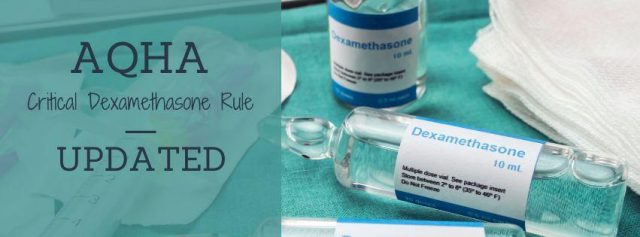
AQHA Announces Critical Dexamethasone Rule Update, Taking Effect July 1, 2026
The dexamethasone limit just got real. Think you’re compliant? You might want to double-check.

Canva/CC
The American Quarter Horse Association (AQHA) is reinforcing its commitment to equine welfare and fair competition with a significant regulatory update that will directly impact exhibitors, trainers, and horse owners across the industry. Beginning July 1, 2026, stricter enforcement of dexamethasone thresholds will take effect, marking a pivotal shift in medication compliance standards for AQHA-sanctioned events.
This update builds upon a rule change originally introduced in 2025, when AQHA reduced the maximum allowable plasma concentration of dexamethasone from 3.0 ng/mL to 0.5 ng/mL. The revision was approved by the AQHA Executive Committee following recommendations from the AQHA Animal Welfare Commission in August 2024, reflecting a data-driven approach to improving horse health, safety, and competitive integrity.
Now, with the July 2026 enforcement phase approaching, AQHA is making it clear: compliance is no longer just encouraged, it will be strictly enforced.
Under the updated rule, any horse testing above the 0.5 ng/mL threshold for dexamethasone will be subject to standard positive drug-testing protocols. This means violations will no longer be treated with flexibility or educational warnings. Instead, they will trigger formal case reviews and potential disciplinary action under AQHA’s established procedures.
This shift elevates the seriousness of medication management and places increased responsibility on trainers, veterinarians, and owners to ensure that horses competing under AQHA guidelines meet all regulatory requirements.
Dexamethasone is one of the most commonly used corticosteroids in equine medicine. Its anti-inflammatory properties make it highly effective in treating a range of conditions, including:
- Allergic reactions such as hives or insect bites
- Respiratory issues like heaves
- Musculoskeletal inflammation
While these therapeutic benefits are well established, dexamethasone also has the potential to mask underlying conditions that could impact a horse’s performance or well-being. By lowering the allowable threshold and tightening enforcement, AQHA aims to strike a balance between legitimate veterinary use and the need for transparency and fairness in competition.
“This is about protecting the horse first and foremost,” the association has emphasized in its communications. “At the same time, it ensures a level playing field where no competitor gains an unintended advantage through medication mismanagement.”

Canva/CC
The 2026 enforcement update signals a broader cultural shift within the equine industry, one that prioritizes proactive compliance over reactive correction. Trainers and exhibitors must now take a more strategic approach to medication administration, paying close attention to dosage, timing, and withdrawal periods.
Veterinary collaboration will be more critical than ever. Accurate record-keeping, clear communication, and adherence to evidence-based withdrawal guidelines are essential steps in preventing unintentional violations.
AQHA is urging all members to familiarize themselves with Rule VIO405.12 in the 2026 Official Handbook, which outlines recommended withdrawal times and best practices for dexamethasone use. Failure to do so could result in serious consequences, including fines, suspensions, or other disciplinary measures.

Canva/CC
With the July 1, 2026 deadline approaching, AQHA encourages stakeholders to begin preparing now. Key recommendations include:
- Reviewing all current medication protocols with a licensed veterinarian
- Adjusting treatment schedules to ensure compliance with the 0.5 ng/mL threshold
- Educating staff and clients on updated rules and enforcement procedures
- Maintaining detailed treatment logs for all competition horses
This proactive approach will not only reduce the risk of violations but also reinforce a culture of responsible horsemanship.

Canva/CC
This rule update is part of AQHA’s ongoing efforts to align with evolving scientific standards and public expectations regarding animal welfare. As scrutiny around equine sports continues to grow, organizations like AQHA are taking decisive steps to demonstrate accountability and leadership.
By implementing stricter medication thresholds and enforcing them consistently, AQHA is sending a clear message: the health and welfare of the horse are non-negotiable.
The July 2026 enforcement date represents more than just a regulatory milestone, it marks a turning point in how the industry approaches medication use and competitive integrity. For those involved in AQHA events, the message is simple: understand the rules, work closely with your veterinarian, and prioritize the well-being of your horse at every step.
As the show season approaches, staying informed and prepared will be the key to success, both in and out of the arena.
For complete details, members are encouraged to consult the 2026 AQHA Official Handbook and stay updated through official AQHA communications.
