



The Horses Who Taught Us: What We Owe Our Lesson Horses
The quiet backbone of riding programs everywhere, lesson horses spend their lives teaching others. The least we can do is make sure their final chapters are written with dignity.
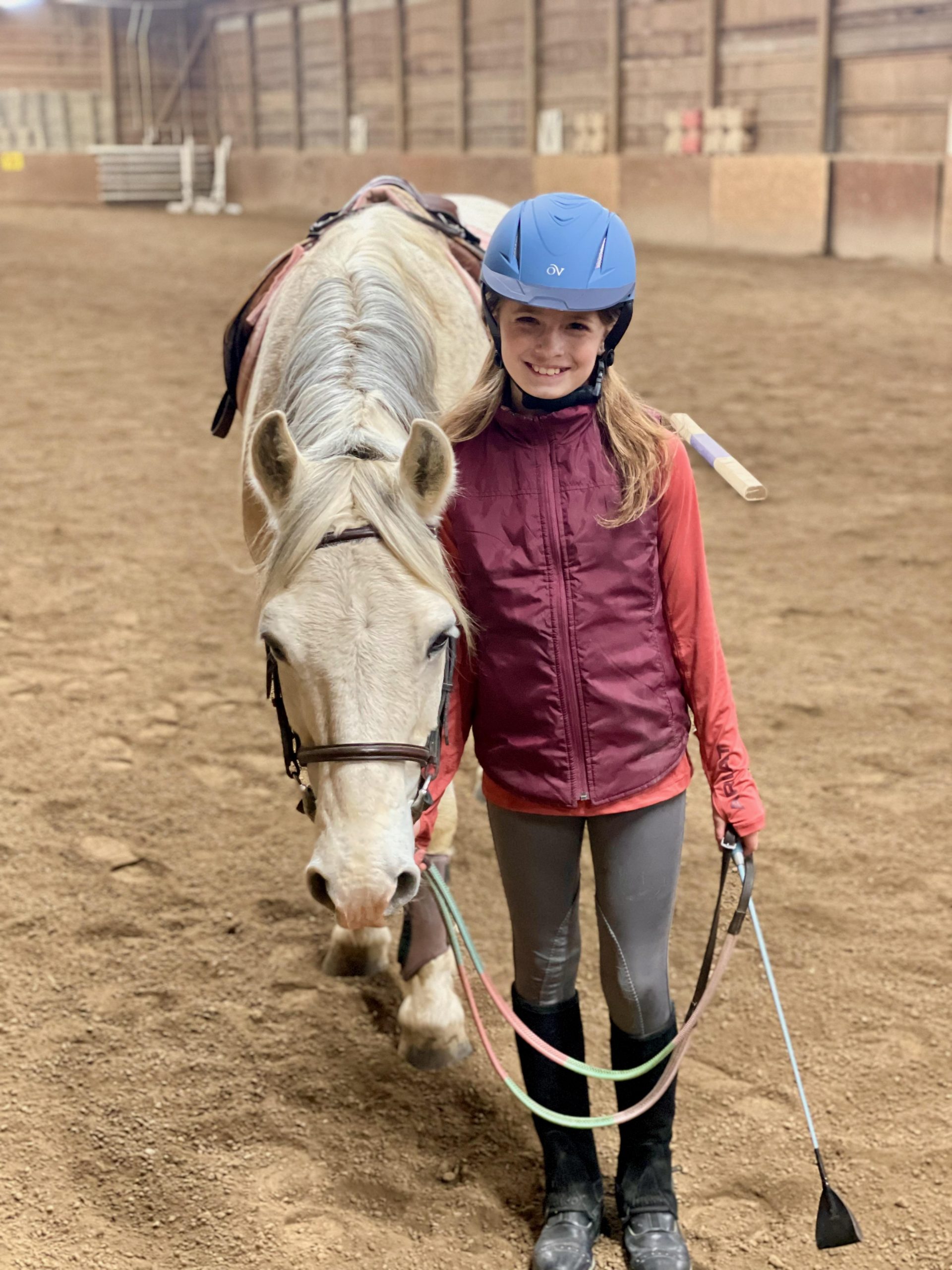
Pepper, a long-time lesson pony at a local schooling barn, and my older daughter. Photo by DeAnn Long Sloan.
Not long ago I heard that a longtime lesson pony at the barn where my daughters first took riding lessons had passed away.
If you’ve spent any amount of time in barns that run schooling programs, you know the type immediately. Every barn has (or had) one. This pony was one of those fixtures of the place: the horse everyone rode at some point, the one who taught riders from their first awkward steering attempts all the way through their first schooling shows.
He was perfectly imperfect.
Sure, he probably took the bit from a kid or two in his day. Maybe he occasionally tested a beginner’s balance with a sudden stop at the gate. But he did his job, and he did it well … for years.
He carried the smallest riders through their first lessons. He trotted endless circles while children learned how to post. He patiently navigated crossrails and grids. He packed nervous beginners around their first show rings, quietly doing his job while riders tried to remember which diagonal they were on.

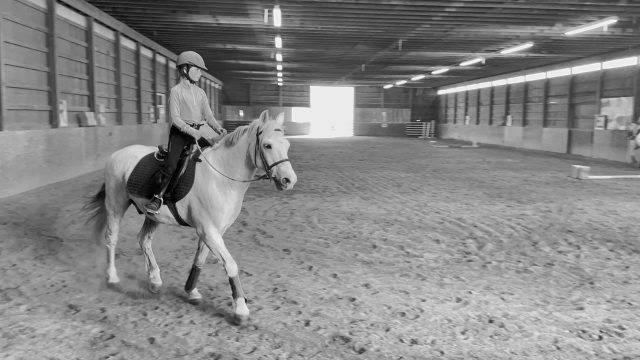
Pepper, doing his job at a schooling show. Photo by DeAnn Long Sloan.
Everyone who went through the program knew him.
He was one of those horses who became part of the barn’s identity. Generations of riders learned on him. He appeared in countless first photos — kids with oversized helmets and crooked smiles, awkwardly holding the reins while their parents snapped pictures.
He wasn’t glamorous.
But he was important.
The last time I saw him, he was well into his mid-20s (at least). He was clearly dealing with PPID. He was thinner than he should have been (though, to be fair, he was fairly old). His feet looked like they overdue for a trim.
I remember standing there watching him and thinking about how much work he had done in his life and how it seemed to be about time for him to hang out in a pasture without kids pulling on his face.
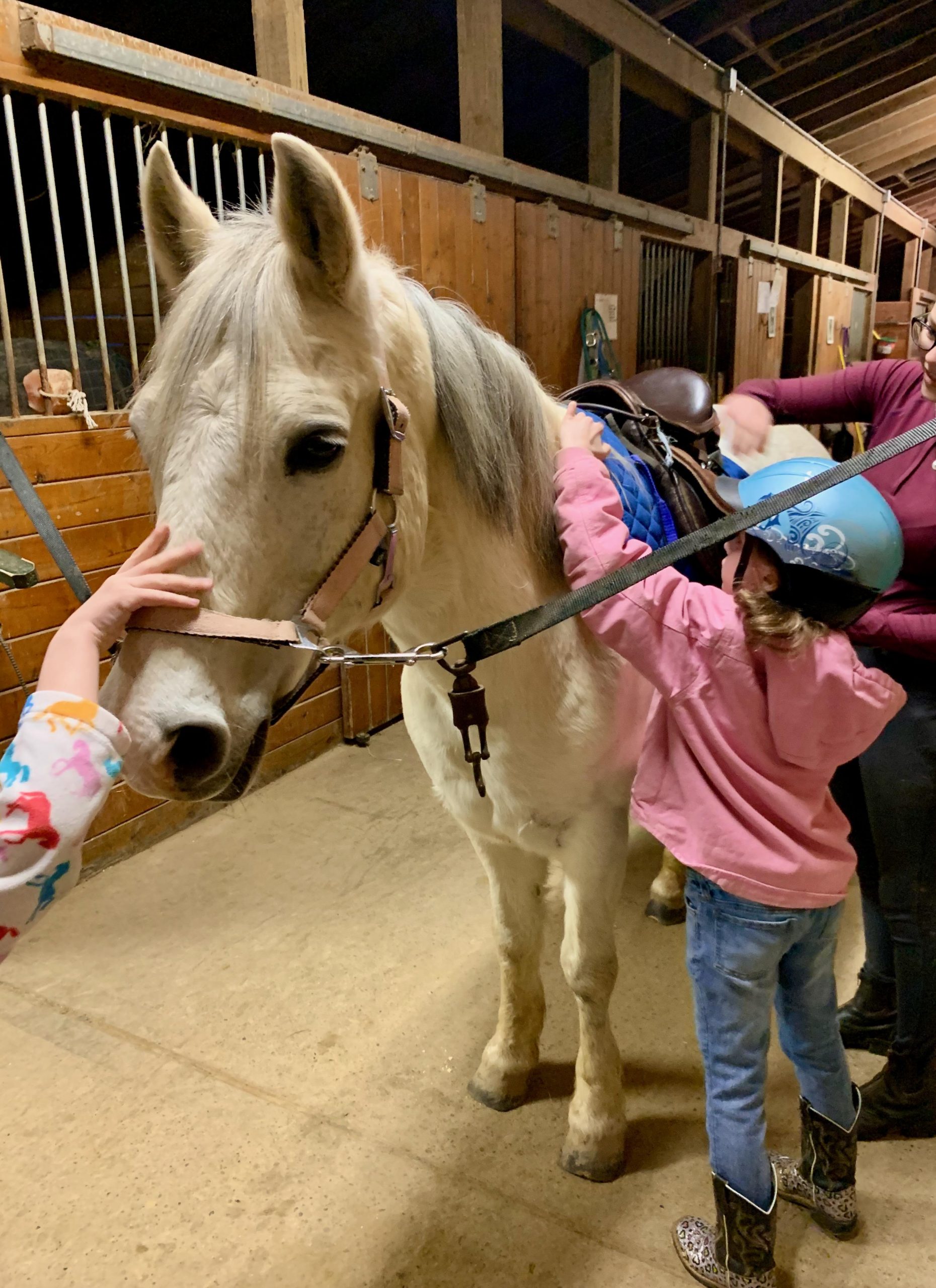
Standing quietly while my daughter learns to tack up. Photo by DeAnn Long Sloan.
I thought about reaching out to the barn owner and offering him a soft landing when it was time for him to retire. A quiet place to live out the rest of his days. No lessons, no expectations — just turnout, hay, and the dignity of being done with his job.
I didn’t do it and I still sort of regret it.
But if I’m being honest, I don’t think they would have taken me up on it anyway. From what I understand, he never really got to retire. He kept giving lessons until a nasty bout of laminitis took him out of work and then he was euthanized a month later.
That realization stuck with me. It made me think about something what we owe our lesson horses.
***
Lesson horses occupy a strange place in the equestrian ecosystem.
They arguably are the most important horses in the sport. They are the ones who create riders. Without them, there are no future competitors, no future trainers, no future horse owners.
They are the teachers.
And yet, unlike many privately owned horses, they don’t technically have a single person whose entire focus is their wellbeing. They belong to the program. They belong to the barn.
They belong to everyone. And sometimes that means they belong to no one in particular.
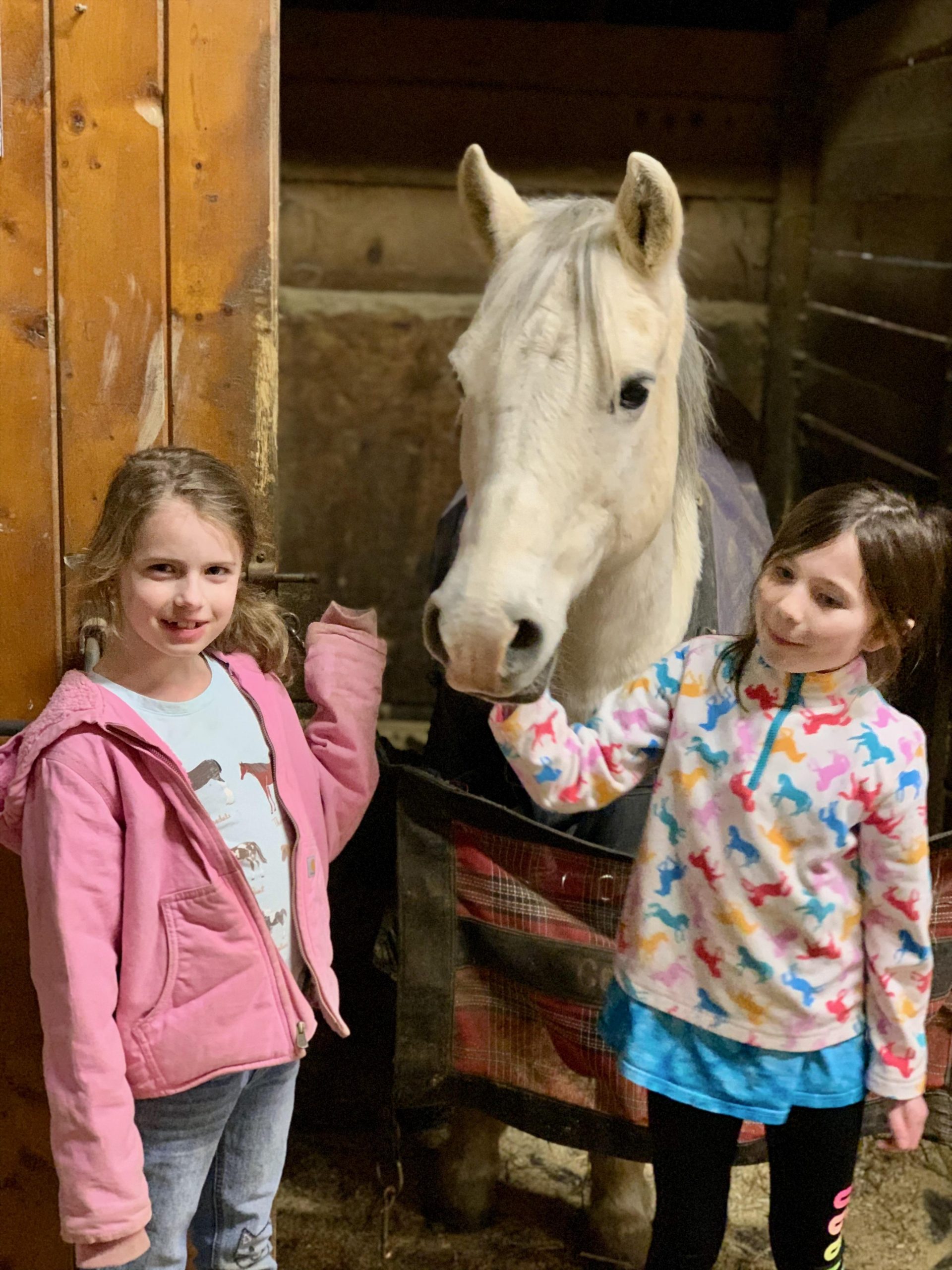
Getting some attention in the stall. Photo by DeAnn Long Sloan.
As someone who runs a boarding barn myself, I understand the economics of it. Truly.
Nobody is getting rich running an equestrian facility (and if you are, PM me immediately — we need to have a conversation). Lesson horses have to earn their keep. Feed bills don’t disappear just because a horse gets older. Farrier costs don’t get cheaper. Veterinary bills certainly don’t.
Programs depend on those horses working.
But there comes a point where a horse has already earned everything we could ever ask of them.
Some of these ponies spend 15 or more years in programs. They teach hundreds of riders. They absorb thousands of beginner mistakes — bad balance, bouncing seats, accidental kicks, unintentional yanks on the reins.
They carry our kids.
They carry our beginners.
They carry our dreams of learning to ride.

The same steadfast pony, carrying my youngest in her first lesson. Photo by DeAnn Long Sloan.
And when they reach the point where the job becomes hard, or uncomfortable, or simply unfair to ask of them anymore, our responsibility has to shift.
At that point, the horse has already paid the bill.
This is where we, as horse people, have to step up.
Retirement isn’t cheap. Turning out a horse to live comfortably while contributing nothing financially to the barn is a real expense. But that expense is part of the cost of running a responsible program.
If a horse has spent a decade or more teaching riders, the program owes that horse something in return.
A soft landing.
Maybe it’s a quiet retirement field. Maybe it’s a lighter job with trusted riders only. Maybe it’s finding that rare unicorn home where someone wants a gentle old schoolmaster to love.
And sometimes, when age and health say it’s time, it’s making the humane decision to let them go peacefully rather than asking them to keep working.
Lesson horses give an extraordinary amount of themselves. They give patience. They give forgiveness. They give stability to riders who are anything but stable. They quietly shape the next generation of horse people, one beginner lesson at a time.
The least we can do is make sure the end of their story is written with dignity.
Because those perfectly imperfect lesson ponies? They’re the reason so many of us fell in love with horses in the first place. And we owe them better than simply working until they can’t anymore.
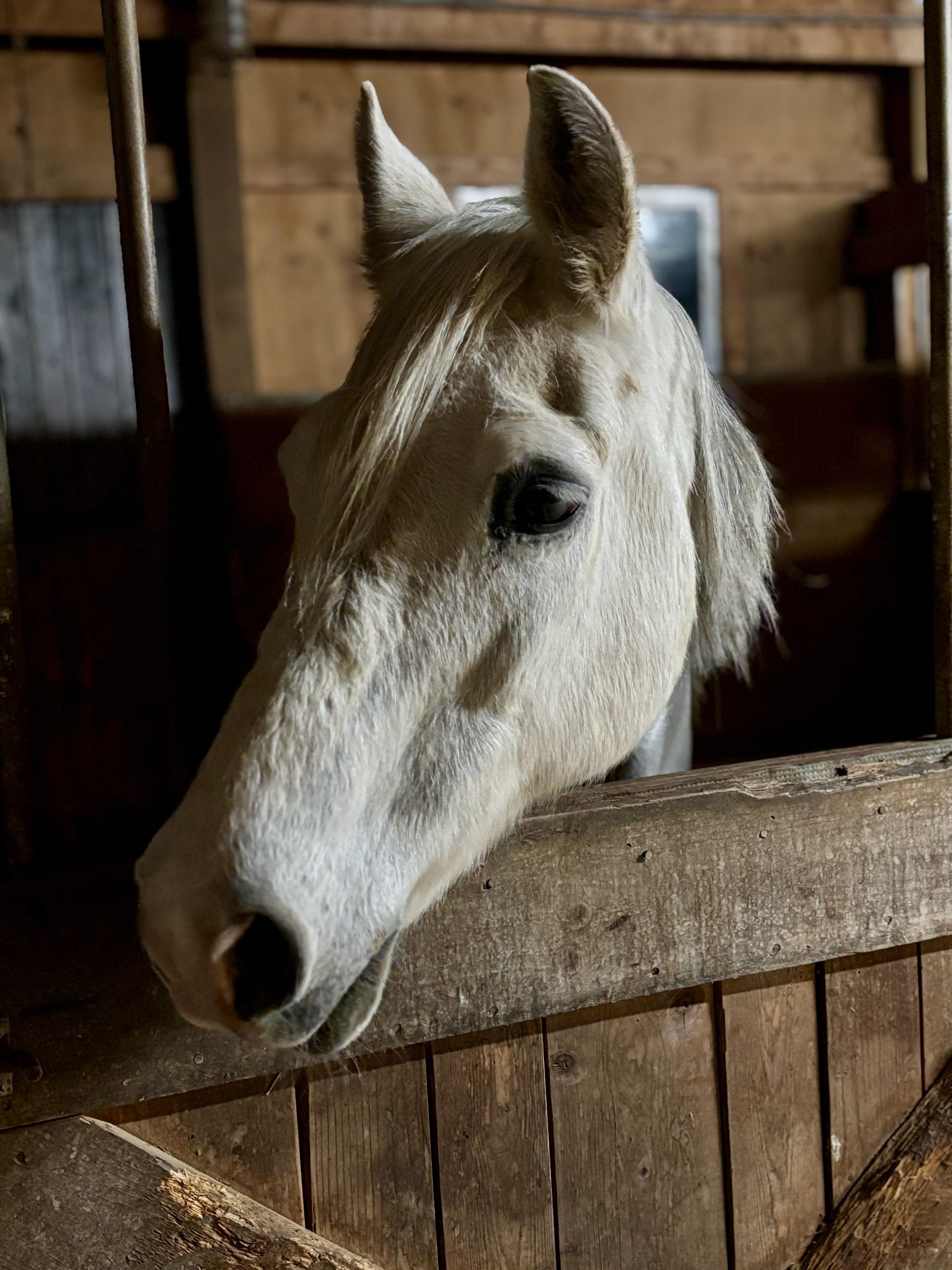
The night before being laid to rest. Photo by Marissa Kozera.
