



Thoroughbred Logic, Presented by Kentucky Performance Products: Quarantine Purgatory
Quarantine may feel like purgatory, but when it comes to protecting horses, herds, and hard-earned sanity, patience and biosecurity are part of the training plan (until it doesn’t have to be).
Welcome to the next installment of Thoroughbred Logic. In this weekly series, Anthropologist and trainer Aubrey Graham, of Kivu Sport Horses, offers insight and training experience when it comes to working with Thoroughbreds (although much will apply to all breeds). This week ride along as Aubrey shares her logic on quarantine.
I thought I was going to write a nice post about revisiting how I do first post-track rides today. But as I sit here at my computer waiting for the sun to come up, my thoughts keep coming back to quarantine and how that timeline impacts the morning. So, with my attention drawn to the still-too-dark-to-see-all-the-way-out-there quarantine shed, might as well dig in here. I’ll kick the first ride article to next week.
As many of you are aware, near the end of November, I made a rash decision that led to needing to quarantine a horse (if you need a recap, read up on Wine Responsibly here). Hell, definitely more than one of my friends texted to ask “what did you do now???” when they saw the posts. In the meantime, I scrambled to make this work and a small but mighty community here stepped up to the plate to help deliver and hastily build the infrastructure to make this happen. This became a wild 24-hour rush of logistics, supplies, constructing, setting, fundraising (for Stall 13, Inc, the non-profit organization that supports the challenging case Thoroughbreds that I run alongside Kivu Sporthorses) and then waiting for Wine Responsibly to arrive from the trader.
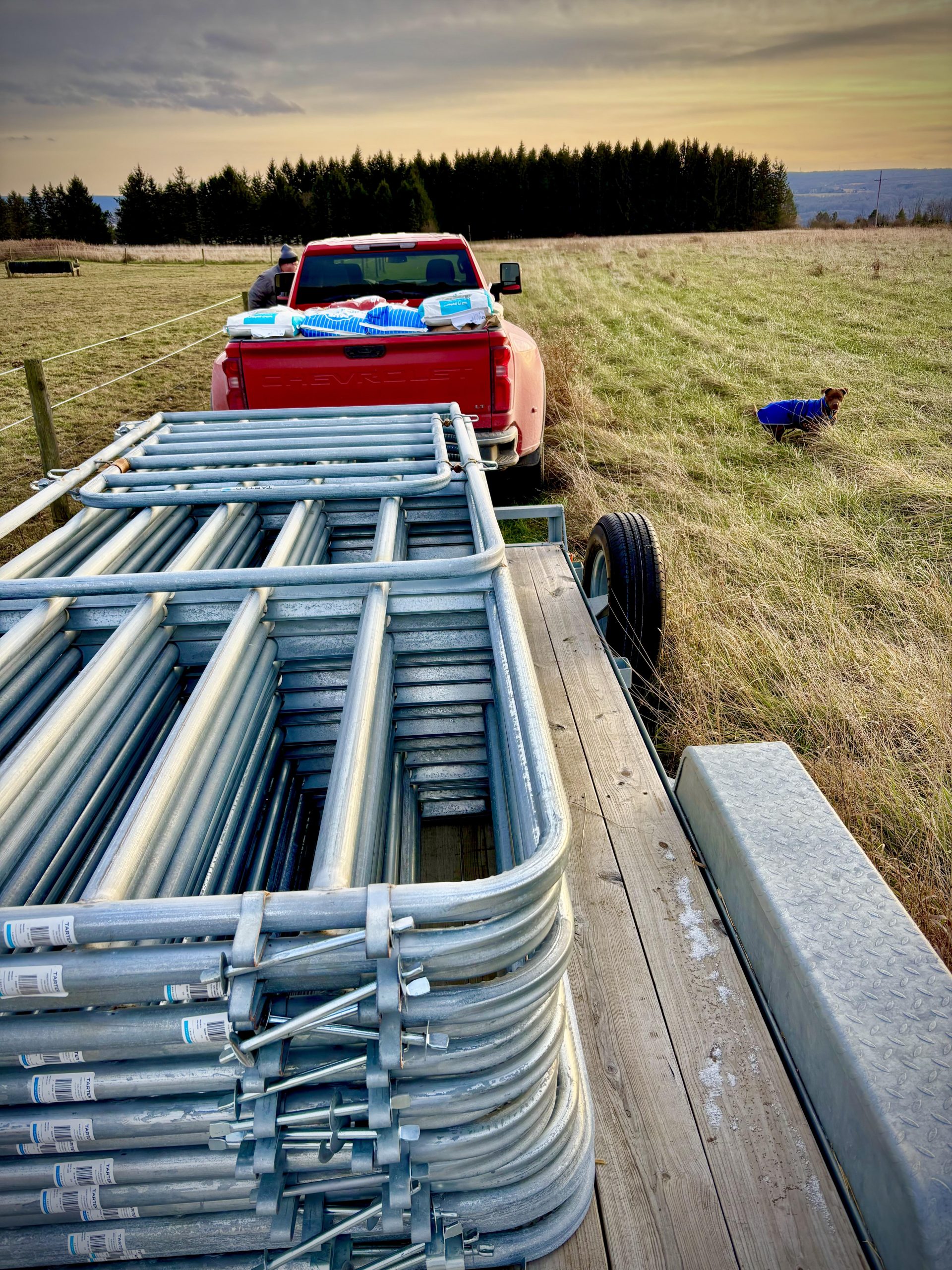
Even the feed store (Lilley’s Tack and Feed) dropped everything to deliver a round pen in the nick of time. Photo by author.
As a retraining facility — both when I was in Georgia and now up here in the bloody cold tundra of New York State — I have only had loose need for quarantine spaces. If a horse is sick, comes in with a bit of funk or otherwise seems like it’s wise to keep them away from the others, they’d get stalled at the end of the barn and kept in the round pen or their own turnout until we cleared the issue. No big deal. But I almost never have had to do this. Pretty much everyone who waltzes into the barn is healthy. I check them out, give them a day to settle, and find them an appropriate herd. All good.
Most of my horses ship in directly from tracks and other boarding barns with reputable care. They had health certs, eyes on them, and regular vaccinations. Of course this is not a total guarantee of health, but it is a pretty good starting point. Tracks are really quite diligent about vaccinations and about making sure that any outbreaks that happen in barns on the backside are contained, and that horses are treated and held for the appropriate amount of time before being able to go back to work or travel. Thus, I have pretty solid trust in horses coming in from race connections and barns that service primarily racehorses — as well as from reputable boarding facilities where you know vaccinations are up to date, and horses are well cared for with knowledgable eyes on them.
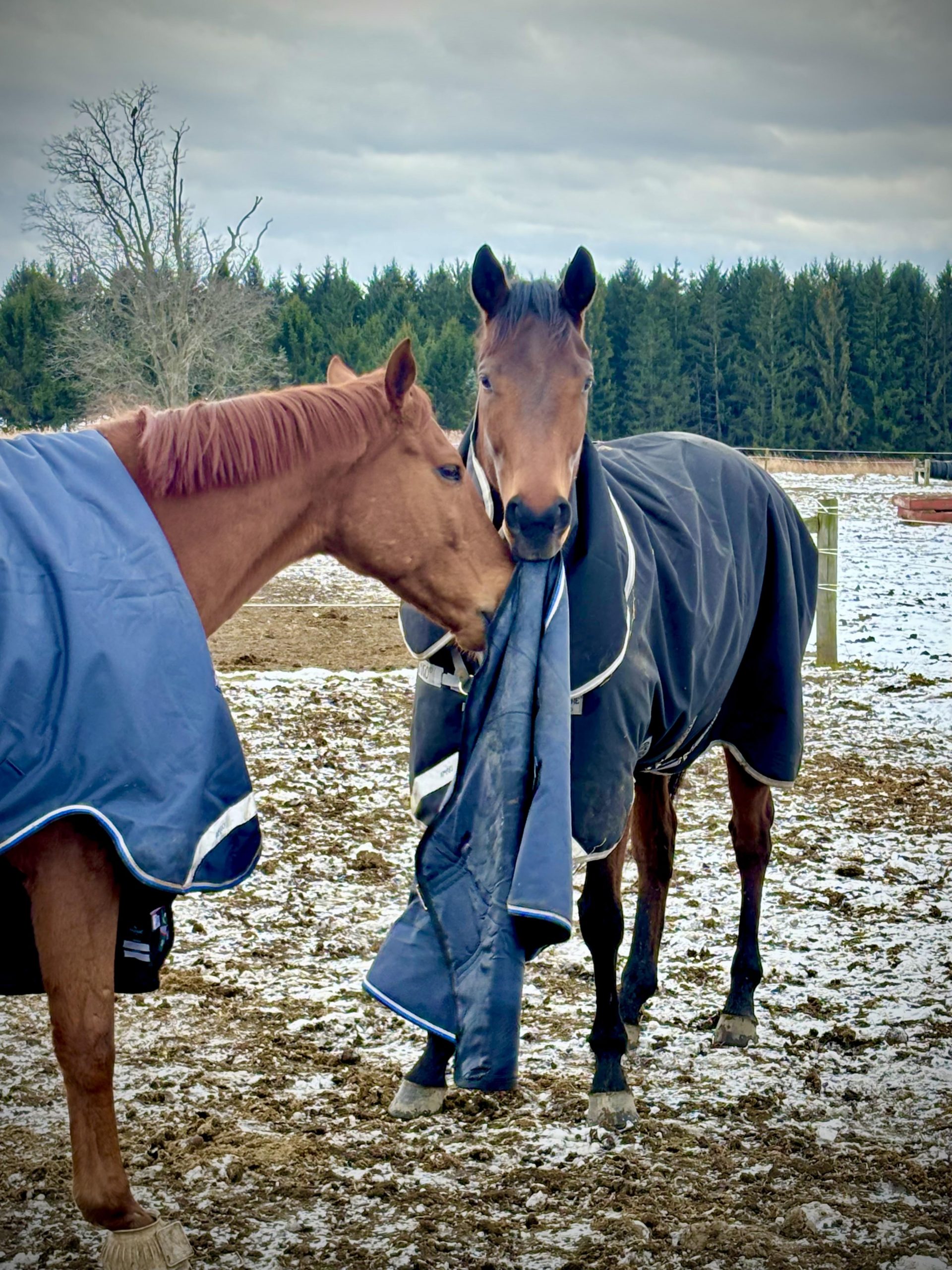
Usually my horses just slot into whichever paddock makes the most sense. Paddock featured here: my show string and utter idiots, Artie (Reunion Tour) sans hood, and Emmett (Oboy) with hood in tow). Photo by author.
The difference with Wine Responsibly and now Datesfreedom — two recent Stall 13 horses — is that their travel histories have not encouraged any form of confidence in their health.
While Wine never left NY State, he bounced from track to owner to a trader who sells directly to auctions and then from there into the auction/slaughter pipeline (no, in NY you cannot legally sell directly to a kill buyer, so selling to the auction house is the loophole). While he was only in the holding area in that NY trader’s barn for a week or so, he was in with all of the other horses who were headed to that same fate. Thus, Wine was not guaranteed to be surrounded by the best-vaccinated, health-certified bunch. Rather, one could expect a bit more of a motley crew composed of everything from fresh-off-the-tracks to the horses people needed out of their back 40 — horses dumped, low figured, and sold to this guy knowing that they’re likely headed to auction… and potentially to be shipped across the border and onto a plate. *For many of these guys, no, slaughter is never really in the cards, but the auction cycle absolutely is.*
So Wine had to quarantine.
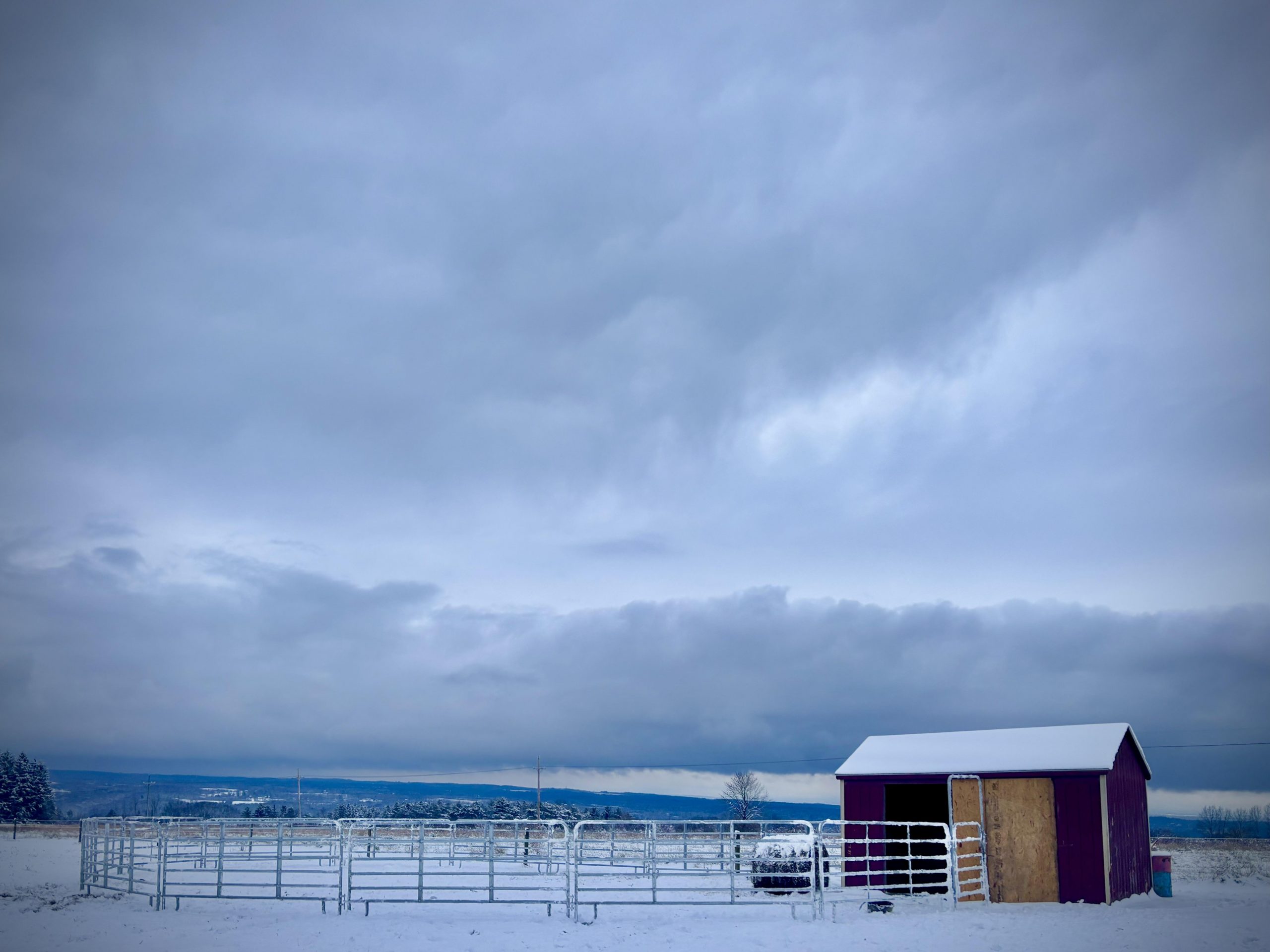
The quarantine set up. It is not necessarily pretty, but it is safe, warm and absolutely gets the job done. Photo by author.
Datesfreedom is the same way. He deserves his own article — that’ll come later. But like Wine, he was sold to a seemingly reputable human off the track, supposedly traveled to a NJ boarding facility, and then was sold to a trader in KY who regularly sells to auctions and kill pens. Two other Thoroughbreds sold with him (Don’t Poke the Cat and Financialstability), were trafficked on to an auction house, and given “ship dates” (meaning supposed timelines for transportation across the border to slaughter). Dates somehow was lost in the mix in KY and took a minute to track down. Stall 13 “bailed” him from that trader and he shipped up to NY in the middle of a blizzard (poor dude). So yes, based on where he had been, he also needed quarantine.
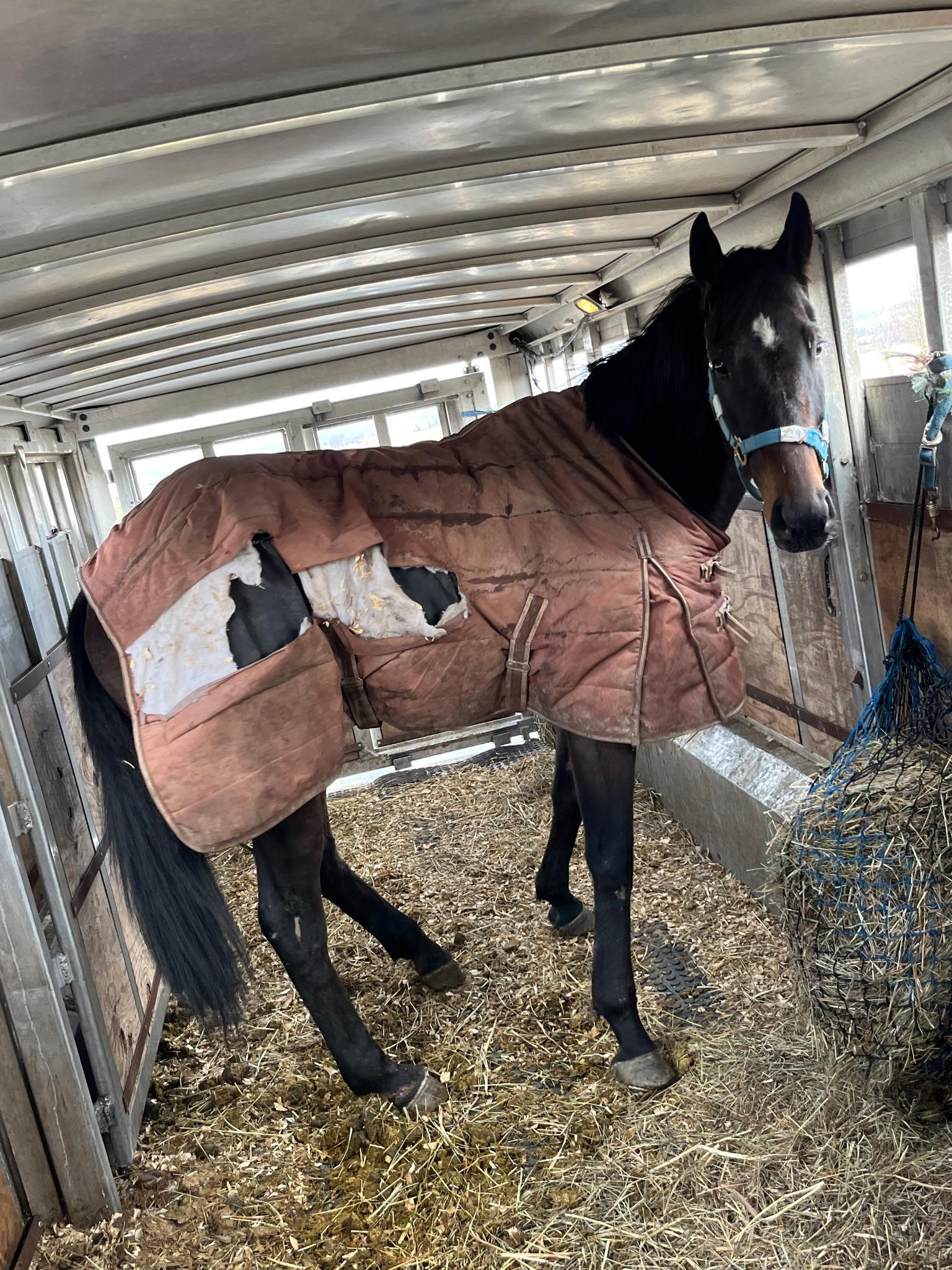
Thank goodness they tossed a blanket on him to haul in a stock trailer in a blizzard. Ooof. Good kid, Dates. Photo courtesy of hauler.
And this is an important point to make: When these horses bounce into sh*tty hands and into the auction pipeline, it is a huge risk to just bail them out, ship them home, and toss them into the middle of an operating barn. One would risk one’s herd, their bank account in vet bills, and in my case, my full-time business if infection were to show up and spread. So while there are thousands of well-meaning folks who would absolutely take in the horse and provide it a good home (especially in high profile cases), these people dwindle drastically in number and enthusiasm when said horse really needs to quarantine — when the horses have bounced to places where contagious illness exposures are increased exponentially (not to mention that we’re in the middle of an EHV outbreak).
Not having a ready-to-go (and affordable) place to quarantine them means the process of bailing these horses and getting them safe slows down, folks decry the situation but can’t really do anything until that logistical piece is in place. When you bail a horse from Bowie Livestock (a renowned auction that ships across the border in Texas), for instance, they have to either leave ASAP on a rig, or go into quarantine at Bowie, which costs $25 a day, plus antibiotics and wormer. That’s actually a pretty fair price. But most places don’t provide their own quarantine options, so it’s up to the buyer to figure out that piece. And one might need to secondarily quarantine once they get out of that time at Bowie or elsewhere… just to be super safe.
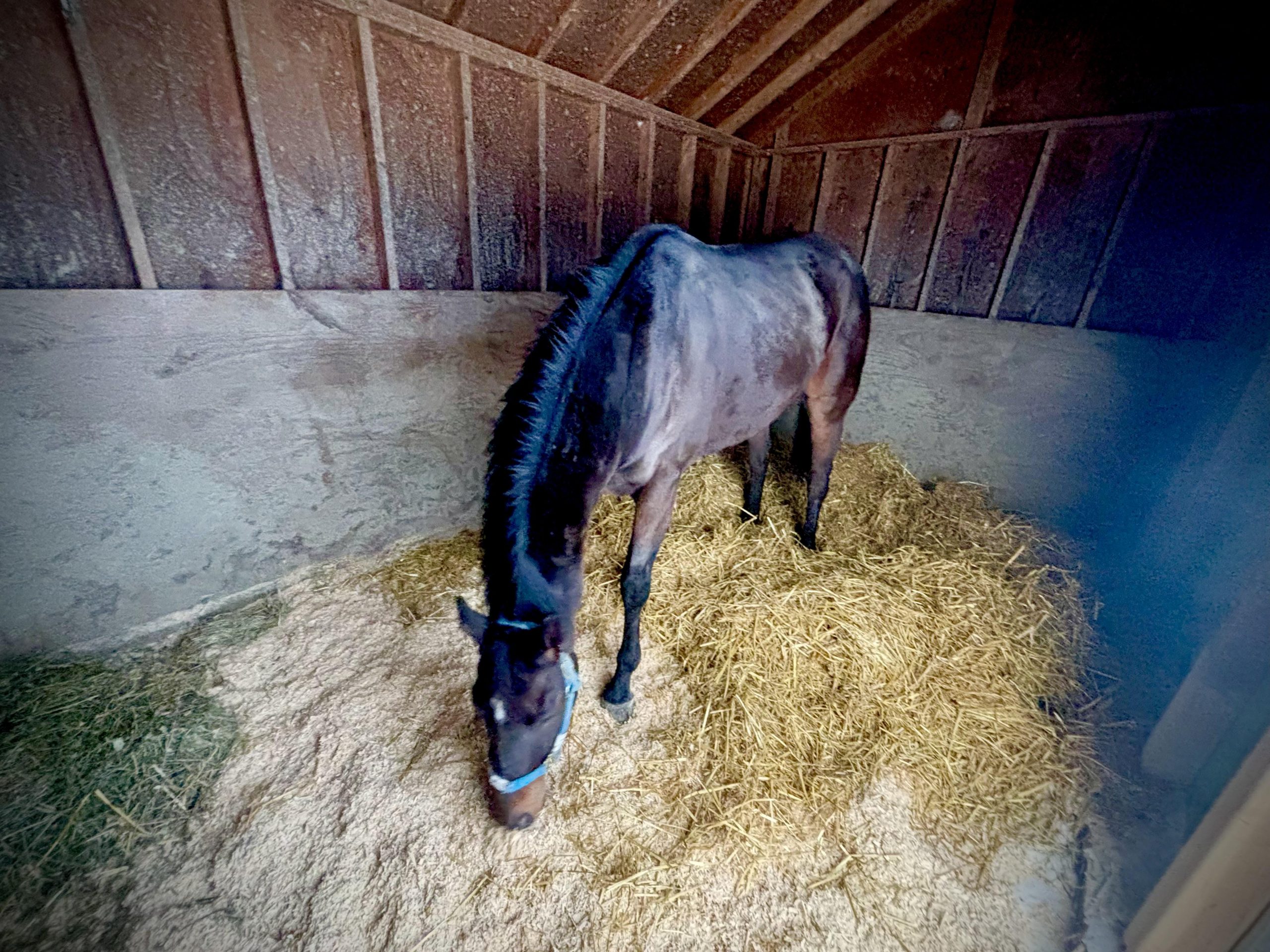
Dates in the quarantine shed on day one. Photo by author (don’t worry he got a blanket about 2 minutes later).
When the hauler dropped off Wine, he said, “Hey, the horses up there looked good. I didn’t see any snotty noses or goopy eyes right now.” Good. But damn if that unsolicited comment didn’t breed further caution.
And look, I’m not exactly a super rule following, safety-measure adhering member of society. I quit a safe job (professor) to train Thoroughbreds full time with no financial safety net. I ride baby OTTBs for a living and prefer to toss them out in a herd and hope they’ll be smart rather than making them insane with solo turnout. Unfortunately, risk is one of my happy places. When I had the option to work anywhere in the world for my research, I chose a conflict/post-conflict zone in the eastern Democratic Republic of the Congo. In other words, rolling the dice and taking a gamble is pretty damn comfortable in my world.
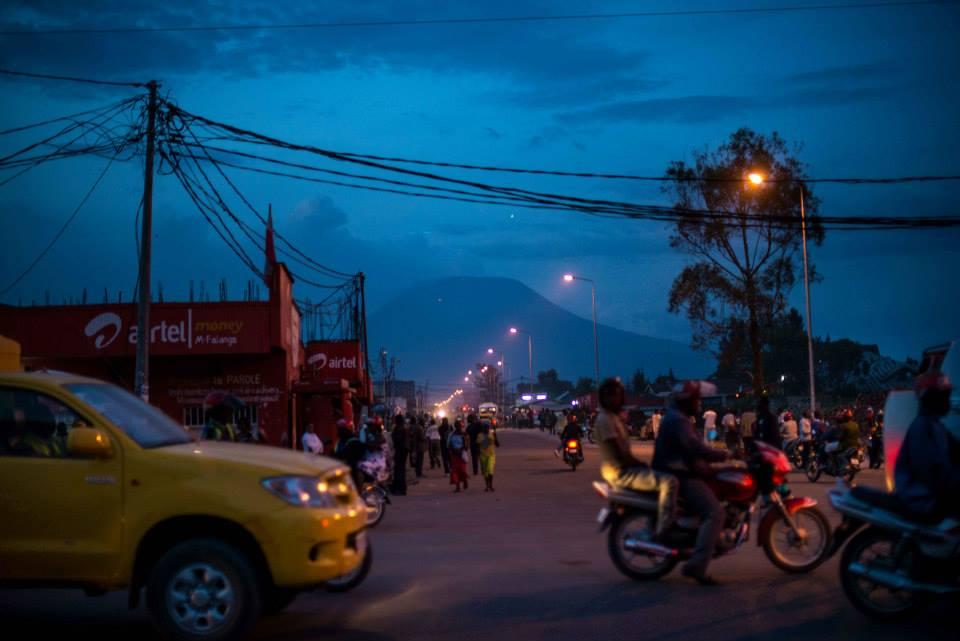
Goma, DRC — my field site for a couple years cumulative between 2009-2014. Photo by author.
But I won’t risk this one. Nopelope. These ponies quarantine for the full three weeks (or if they have infectious health concerns, a full three weeks to a month from the end of their symptoms), and despite the purgatory for all of us, the horses are safer, and I can sleep at night.
Dates is now one week through a (hopefully) only three-week quarantine and already packing on the pounds and coming out of his shell. His ankles, which had the gnarliest set of potential abrasions/laceration turned to scratches that I have seen, have been healing well. And overall, I have high hopes for this kid. Hell, maybe he becomes the Stall 13 Makeover entry for this year. We’ll see.
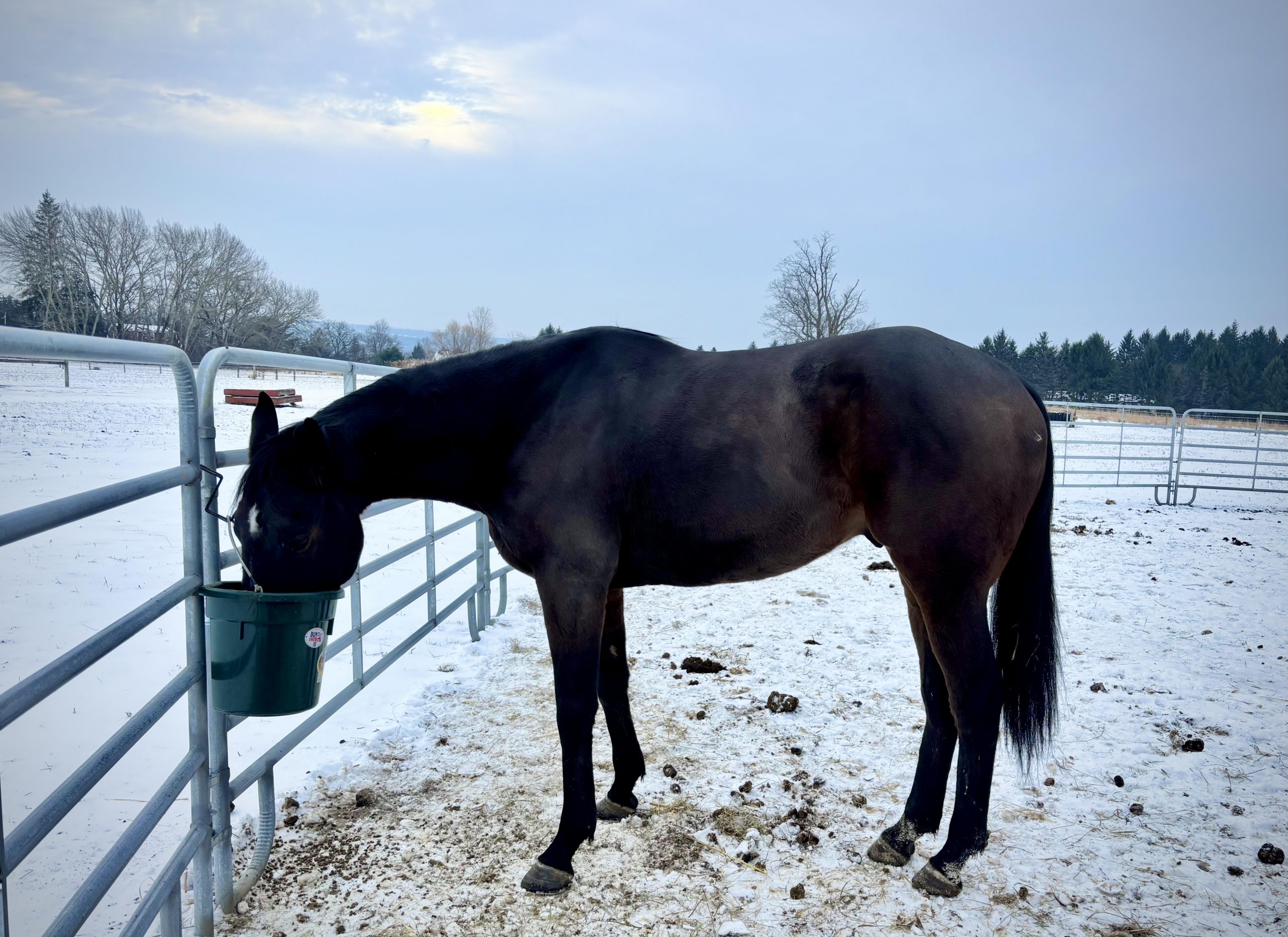
Datesfreedom already packing on the pounds and ticking his way through quarantine. Photo by author.
But for now, he’s still in quarantine. And this means a bunch of logistical and scheduling hurdles.
Here’s how it works:
When I brainstormed how to set up a place for Wine, I thought I might build a stall (or rather, nicely ask Taylor to build a stall in less than 24 hours) at the far side of my arena. The horse could sleep inside at night and be outside during the day. This would be fine if I weren’t worried about what they might carry to the barn. Touching surfaces and walking from stall to stall with the same boots can traffic Equine Corona Virus, EHV and more. Because there was no way not to cross through the high traffic areas, that wasn’t going to work.
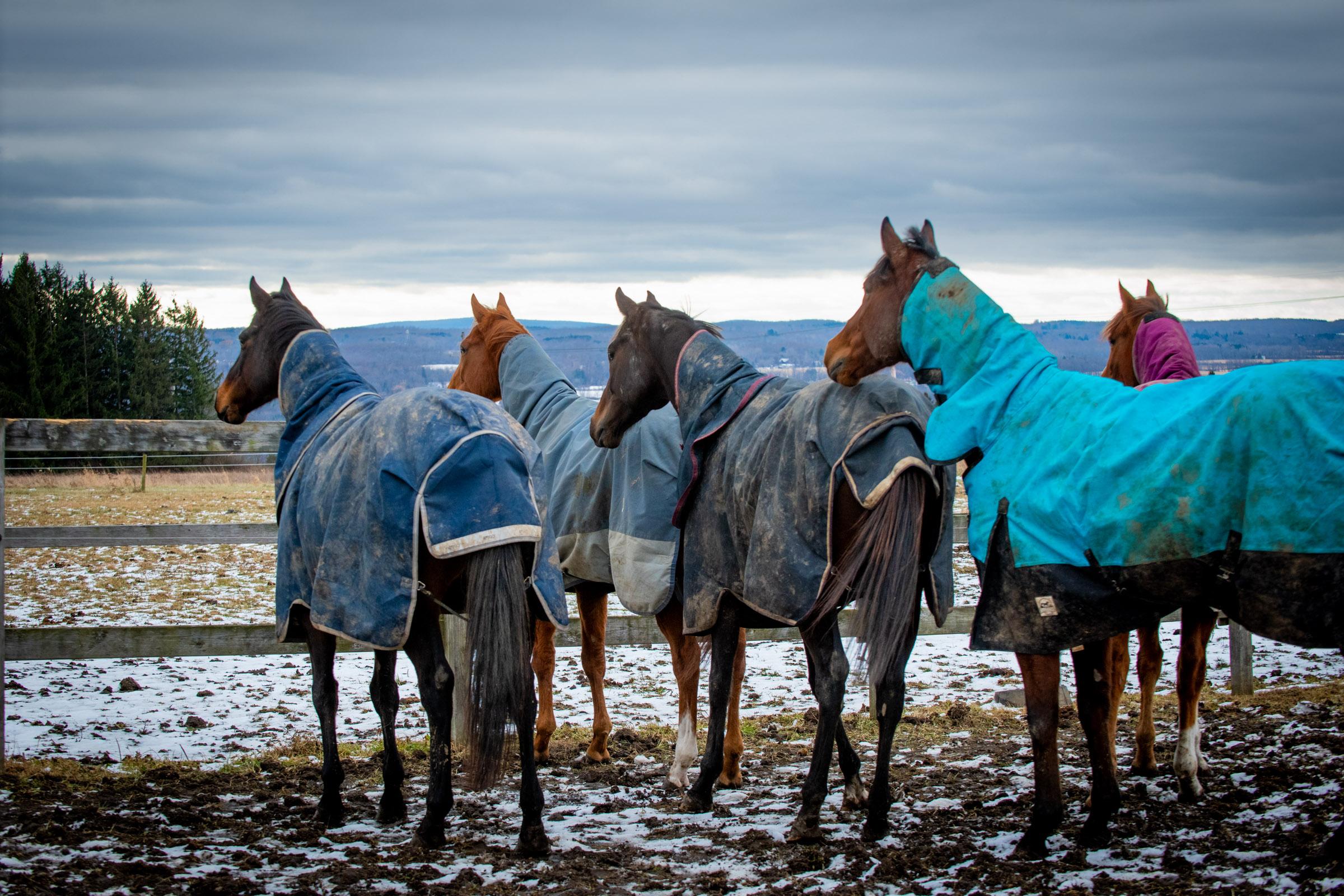
Wine (center red horse) with his new buddies when he graduated quarantine. Photo by Lily Drew.
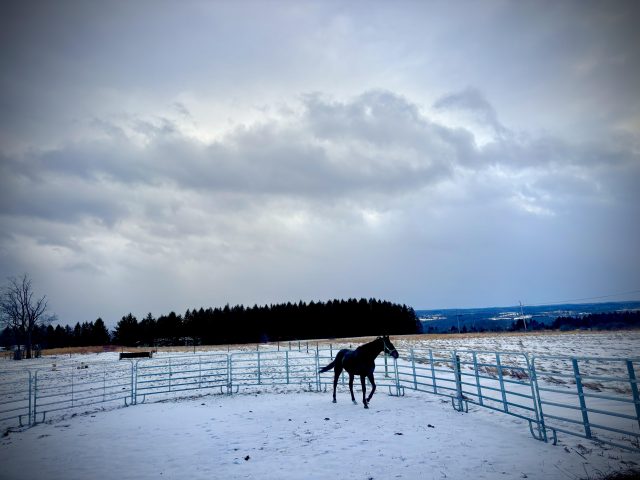
The only other option was the run in shed that was waaaaaaaaaay out in the back field. Walking from the basement to the shed is about 600-feet. We enclosed most of the run in, filled it with straw, shavings, water and hay, and built the round pen off its side so that the nearest fence line with horses was at least 30 feet away. We stuck a round bale in the round pen, alfalfa in the shed, and placed a heavy duty plastic trunk outside its door, full with vet supplies, wraps, treats, a grooming box, and basically all the things I might need, without having to run back into the main barn to get them. We stocked the trunk with the needed blankets and got ready. I pulled a sheet of heavy duty plastic from the basement (I think it was a mattress cover for moving? Meh, don’t need that anytime soon) and we use that to cover the hay and straw that get stored next to the shed.
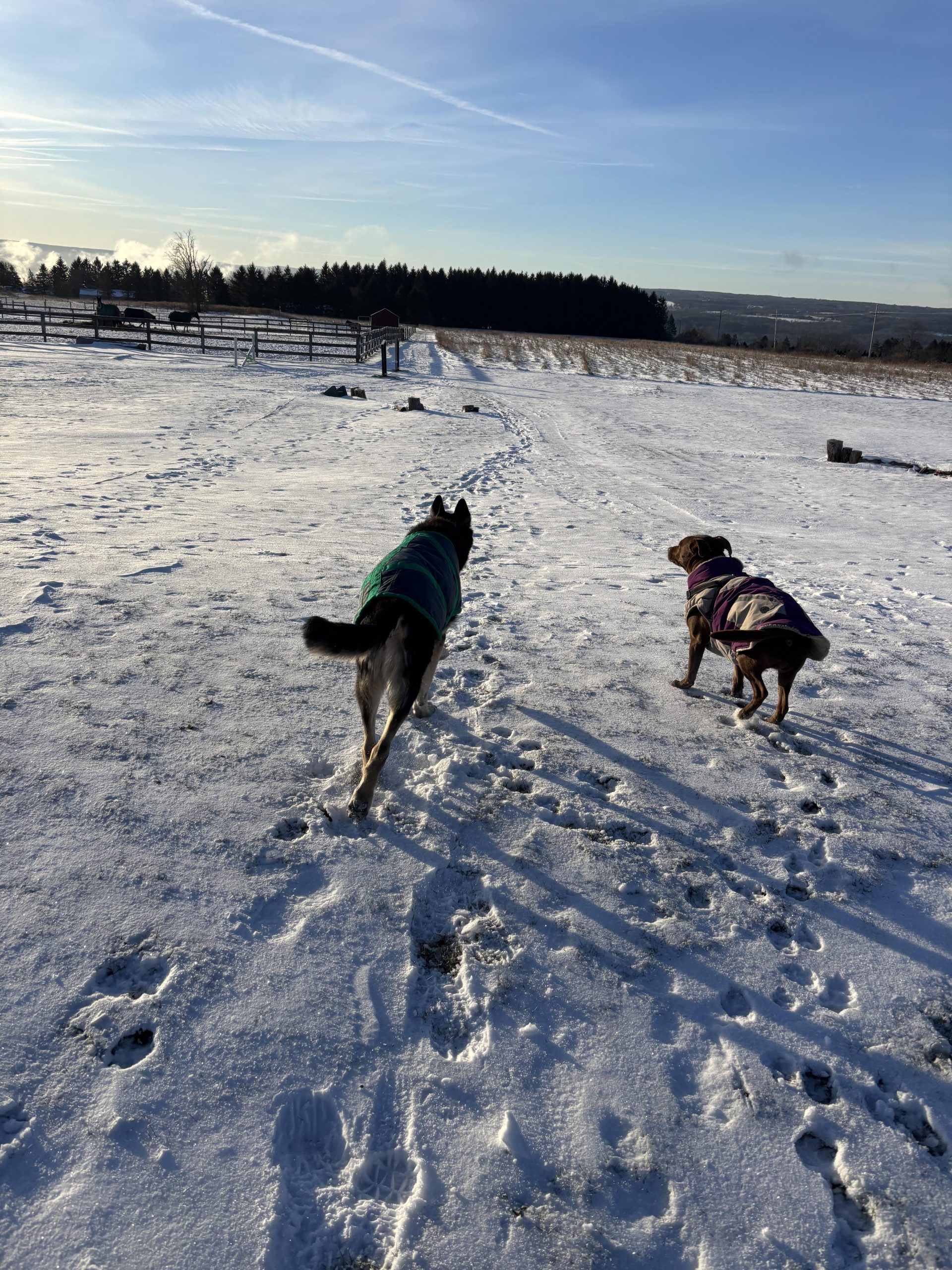
Walker, Littles and me hiking out to feed at the shed. Photo by author.
It would be super ideal if we just had a separate small barn on the property. But without that, we get creative. There’s no water source at the former run-in, so we hook the four-wheeler up, fill buckets (with lids) and drive them out every other day. I live in the NY tundra, so we ran about 600-feet of heavy duty extension cord out to the shed to heat a 16-gallon water tub. The cord ends light up and make a diffuse orange set of lamps to light the path out there and provides the electricity to keep all the water from freezing.
For the humans, the basement is our staging point. Courtney Furst and Blue Seal donated an enormous amount of grain for our quarantine horse(s) (and many thanks to Purina and Meghan Crout, who donated grain for the in-the-training-barn Stall 13 horses too). So we stacked grain in my basement, stashed a spare set of snow boots, snow bibs, jacket, hat, gloves, neck cover and set up a staging space. A huge jug of cholahexadine sits in the basement bathroom.
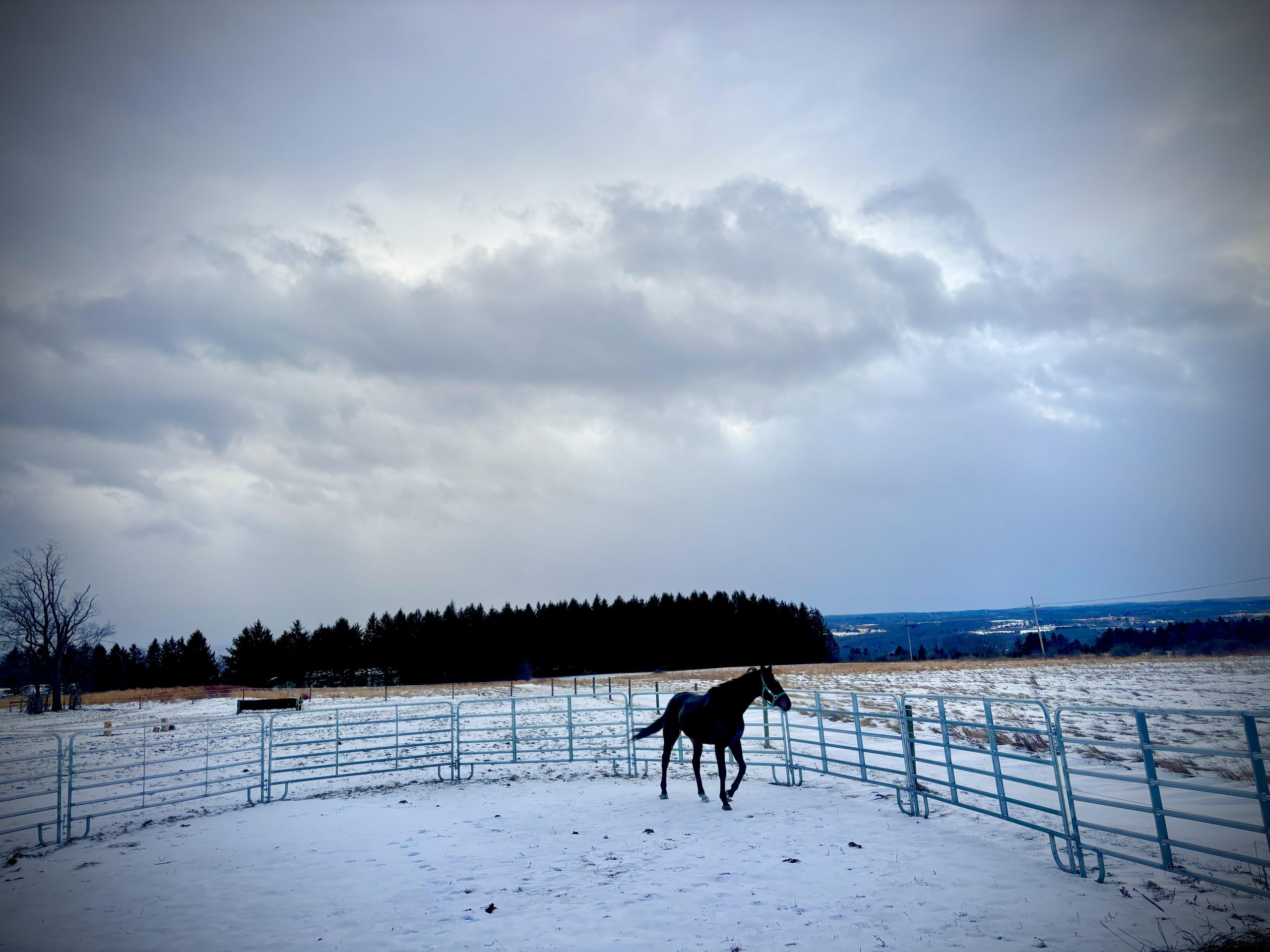
Dates on Day 1, getting to check out his digs for the next three weeks. Photo by author.
Daily work to keep the quarantine horses happy and healthy starts with a full “suiting up” in the quarantine snow gear and boots and hiking the grain and meds out to them. Taylor cut the fence and added a gate so I no longer have to climb through the hotwire (yay!). And currently, Dates get fed breakfast outside his shed so I can clean it out, and in the evening, he eats inside to encourage him to get a break from the damn NY winter weather — which has been super fun thus far this year. No sarcasm there, I swear… oooof.
Because Dates is a good kid, he lets me treat his hind ankles while he eats breakfast and is always happy for a good curry between blanket changes. You have to be confident about the blankets because it’s a hell of a hassle to run back out here mid-day and change something. Toss him some alfalfa, hand off a few carrots, and hike back to the house. There, it’s the drudgery of change out of the clothes, boots, and gear — wander to the downstairs bathroom and scrub exposed surfaces (mostly hands and my phone) with cholrhex, and then head upstairs to suit up in an entirely different set of stuff for the main barn. Rinse and repeat in reverse for the evening.
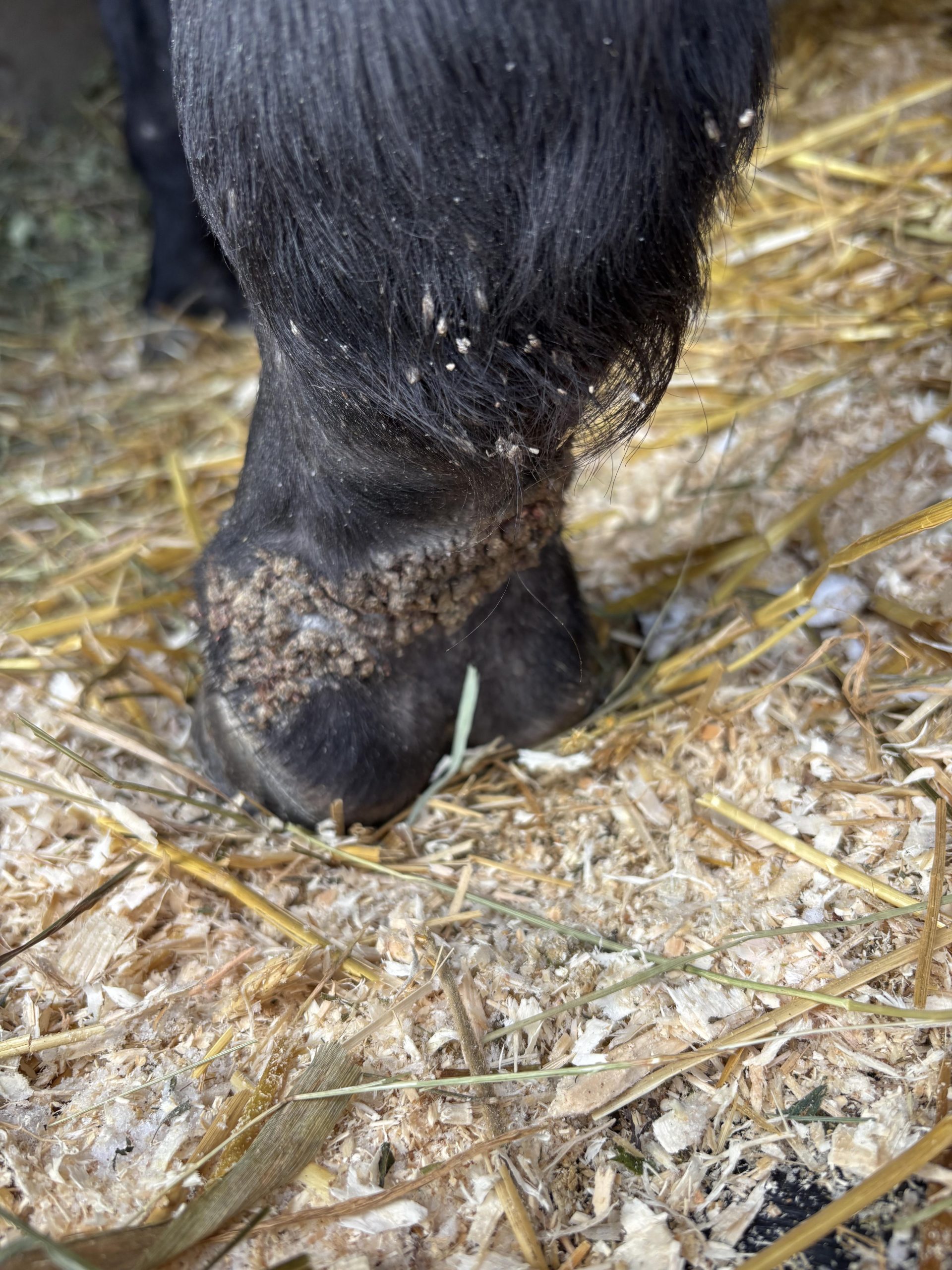
This was a fun finding, but they’re healing well. Photo by author.
For the horses, though, quarantine is a different version of purgatory. If they could count, they’d be right here with me counting down the days til they’re out. They’re not uncomfortable — the shed is super cozy and they have space to move, plenty to eat, and regular care. But they’re — as they are supposed to be in quarantine — alone. They spend the days watching the herds in the just-far-enough away paddocks. And it reminds me daily how much of herd animals these critters are.
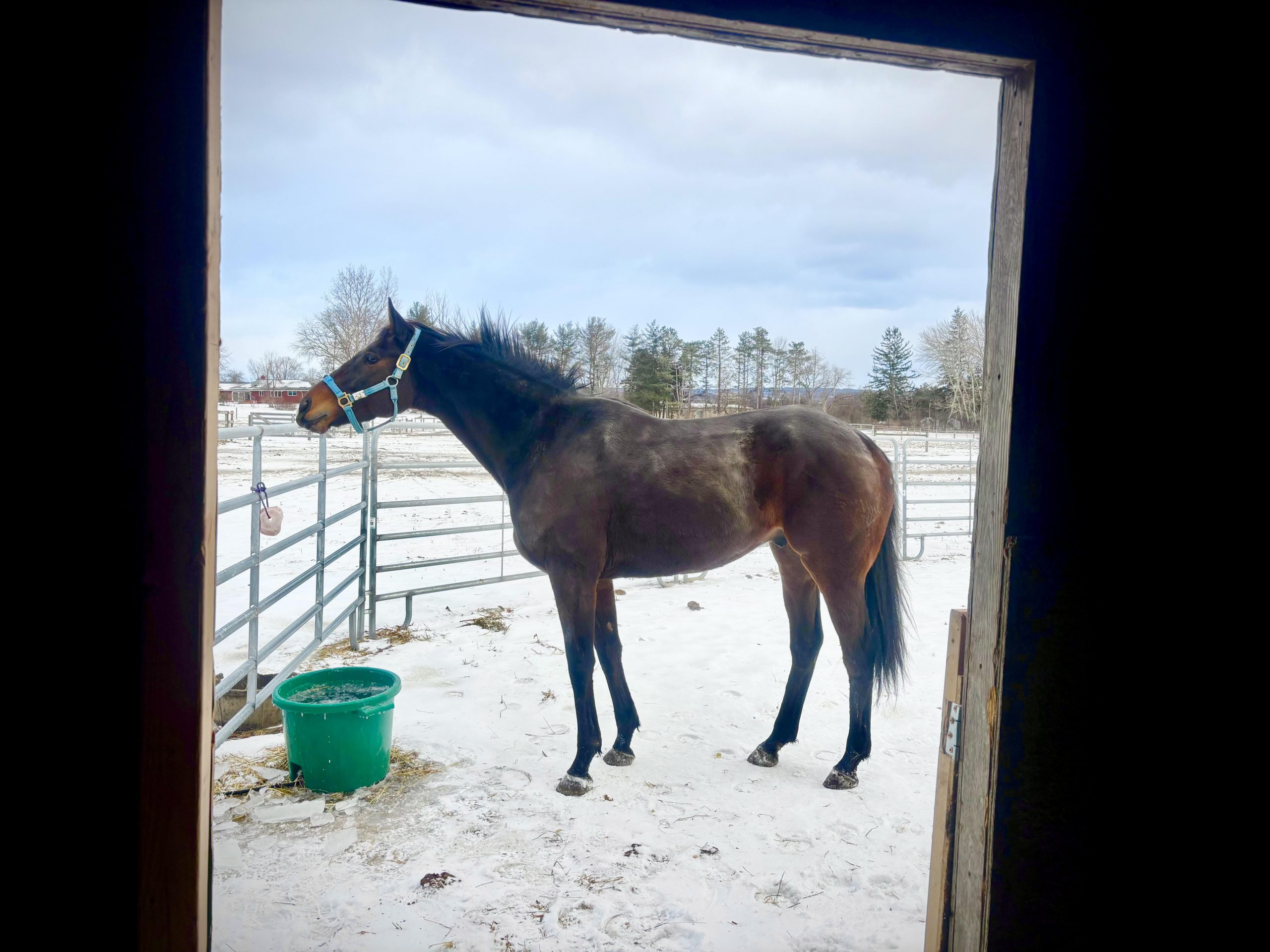
Dates taking a look at everyone else on day 1 here. Photo by author.
When Wine was in quarantine, he was distant. He’d let me scratch his ears when I brought him food, but I’d be damned if he’d let me come and hang out with him, groom him, or change his blanket without making sure he was enclosed in his shed. It didn’t take long til he was part feral and always happy to communicate with his back feet.
When I moved him into the main barn with the 20-plus other Thoroughbreds and a herd to turnout with, his personality 180 was nearly instant. He seeks attention as you walk down the shed row barn, is the first to meet you at the gate, and has transformed from feral to friendly in a blink. While quarantine is necessary for health in these cases, it sure can’t compete with the happiness that comes from a social life with a herd and regular handling.
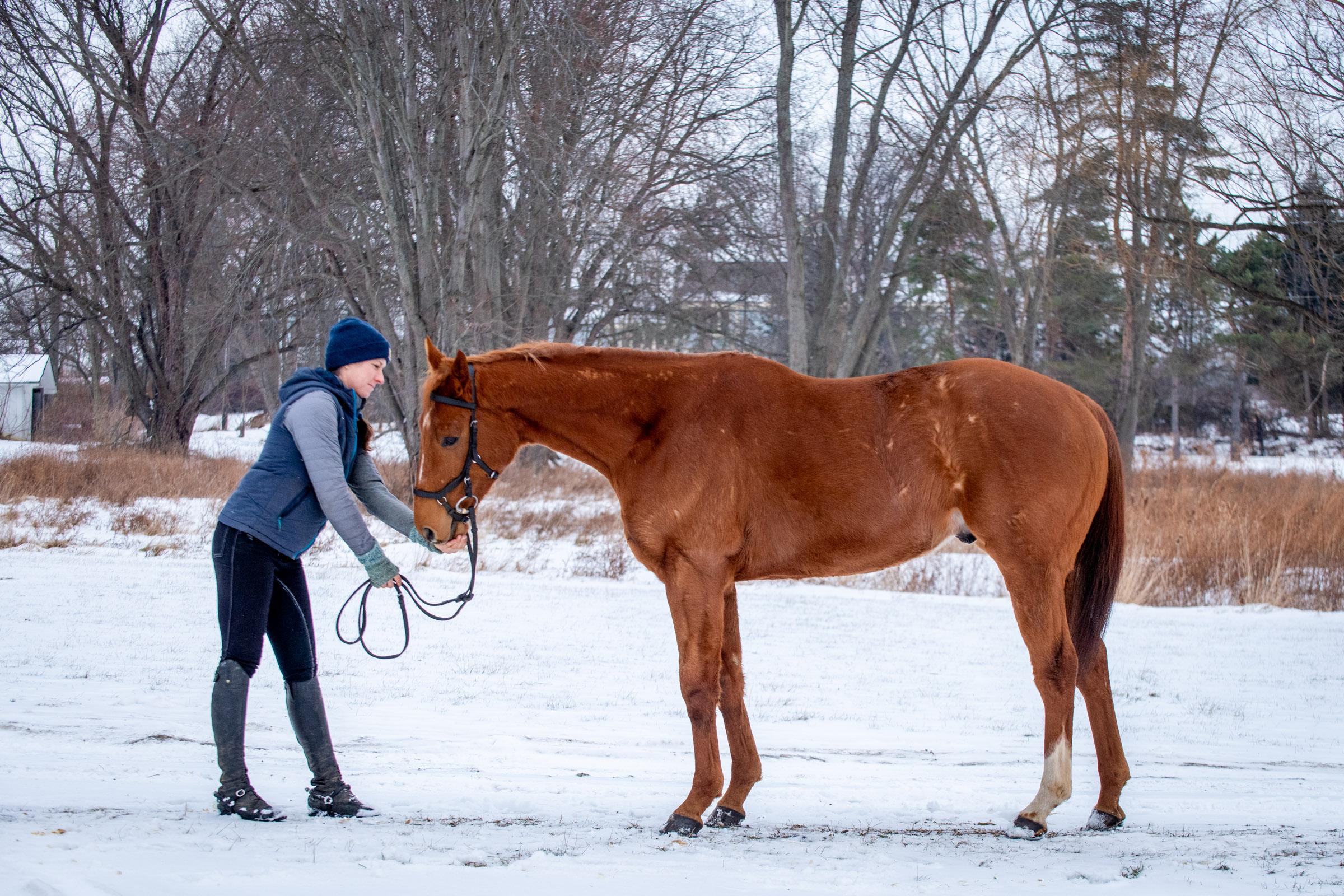
Wine showing off his new let-down bod and kicking off his riding career. Photo by Lily Drew.
Dates currently is in the same boat. With two weeks left in quarantine, he’s always eager for his food, happy to get groomed and attention, but he spends the days watching the fields and herds. My guess is that this resolutely happy, kind kid is going to be thrilled to make the quarter mile walk back into the barn on January 19th. Yep, I’m counting down. Then we both get a more normal life back and can get on with things like seeing what he’s like under saddle.
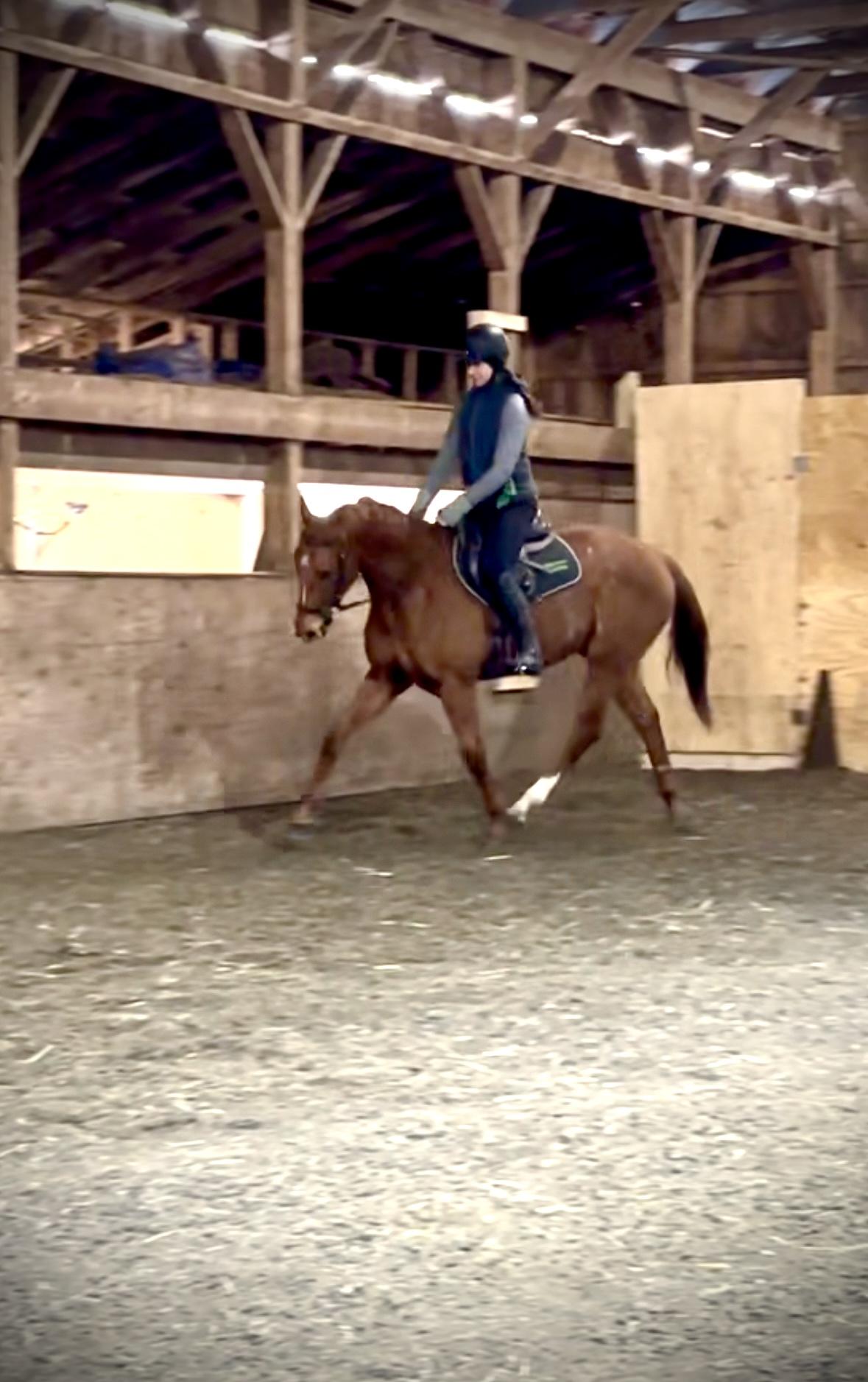
Wine showing off his footwork in his first post track ride, ten days after he graduated quarantine. Screengrab by Lily Drew.
I’m not sure if this would be easier or not in the summer, but I’m also hoping that we don’t have to find out. Once Dates comes into the main barn and gets started under saddle, I’m crossing my fingers that the quarantine shed can transition back into a run-in — until, of course, we need its services again.
So go ride folks! I’m off to suit up and tick off another day of the “T-12 until Dates gets his freedom” calendar.
About Kentucky Performance Products, LLC:
Is your horse coughing? Does he have nasal discharge? Unfortunately, wintertime environmental factors, such as spending more time in a stall, can aggravate respiratory symptoms this time of year. Research trials conducted at the University of Georgia demonstrate the benefits of AirWise in supporting a return to normal airway function. Formulated using a synergistic blend of high-quality, potent antioxidants and micronutrients, AirWise sustains a healthy inflammatory response in your horse’s airway and supports optimal respiratory and immune function.
Ask your veterinarian about AirWise.
Kentucky Performance Products creates scientifically proven supplements for your horse. Our supplements provide solutions to the everyday challenges facing your horse. The horse that matters to you matters to us®. Learn more about KPP at kppusa.com.

