



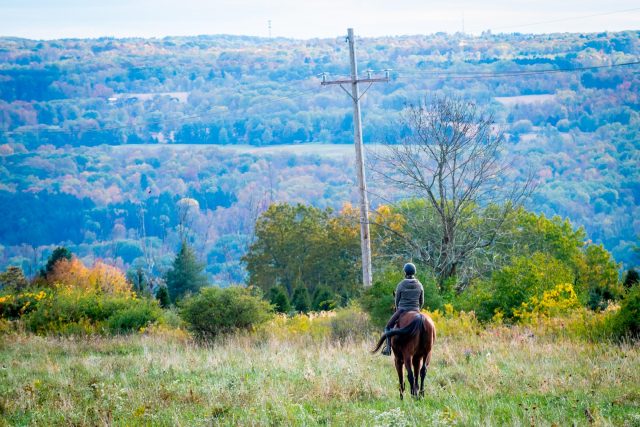
Thoroughbred Logic, Presented by Kentucky Performance Products: Spooky Season Tricks
“I … have a couple of electric goobers who love the excuse of the crisp fall days and the start of the north wind to light up and let out. And as such, here are some basic tips to both manage the spooks and bucks and bolts.”
Welcome to the next installment of Thoroughbred Logic. In this weekly series, Anthropologist and trainer Aubrey Graham, of Kivu Sport Horses, offers insight and training experience when it comes to working with Thoroughbreds (although much will apply to all breeds). This week ride along as Aubrey shares her logic on riding out the spooks when horses decide to be fresh.
When I lived in Georgia, I almost forgot how much I missed the fall. Some years we got a short, warm, pretty fall down south, others would just slip into winter without so much as a pause. The leaves would die and be recycled into the soil, sure, but the air didn’t crack quite the way it does up here. As a kid, I have comically fond memories of the first days of late fall where you’d breath in hard and your nose would hurt. That sensation was always coupled with a slightly out of control gallop on whatever beast I was riding at the time.
With the cold and the wind rattling the dried leaves and grasses came spooks, bucks, and the bolts that I was supposed to discourage. But as a 10-year-old, I would just yell, “incoming!!!!” as we bombed from one side of the arena to the other. Not much has changed — except maybe the control of where and how fast their feet go.
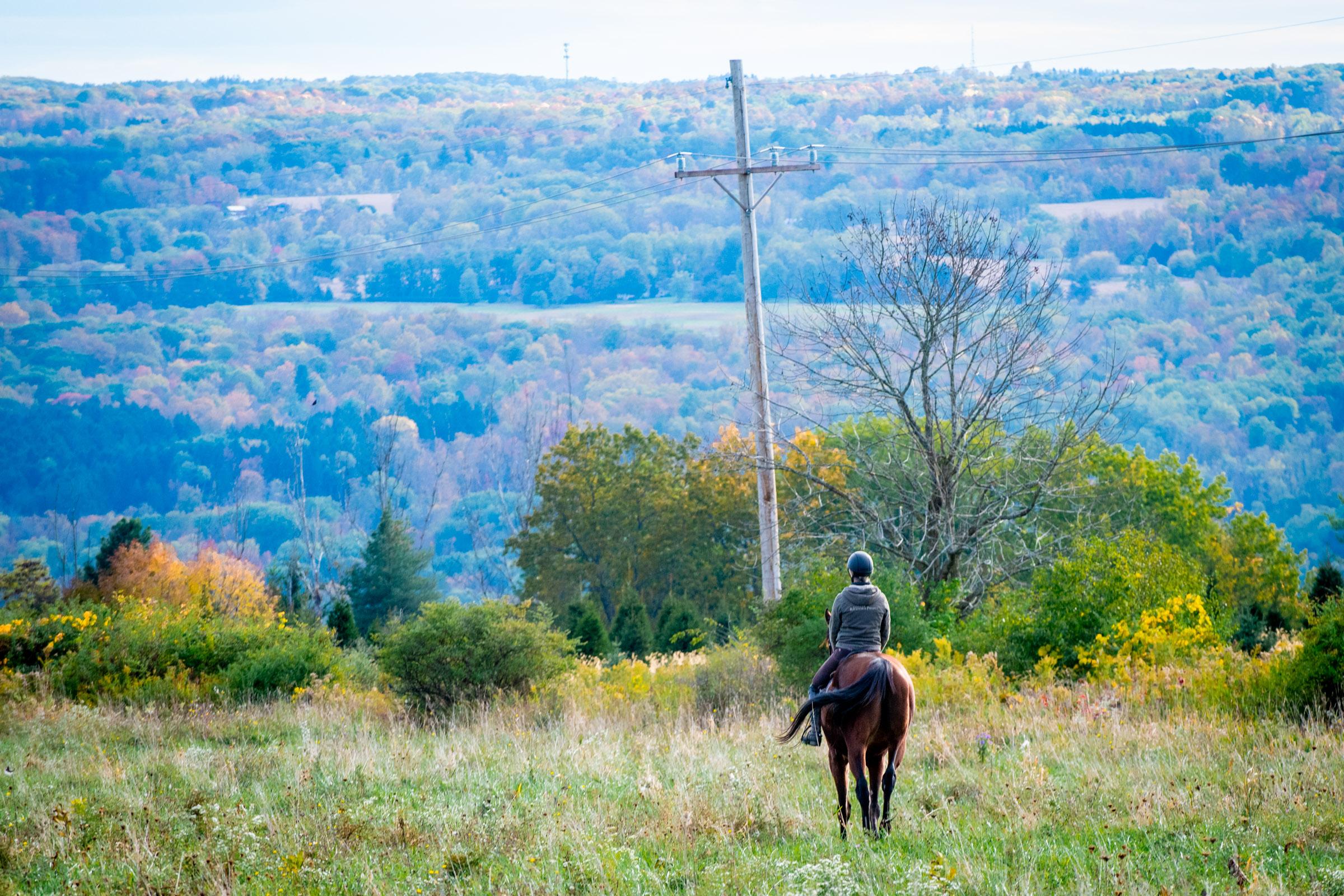
Generation (Stall 13 adoptable horse) hacking out at Kivu in the mid fall. Photo by Lily Drew.
The great thing about Thoroughbreds is that so often their temperament honestly is not impacted that much by weather. I know that a bunch of folks will disagree with me there, but I’m getting close to a statistically relevant figure here. Sure, some get more sluggish in the summer and are brighter when clipped in the winter. But because they are pretty much always switched on, always alert and always wanting to work, I have never found an enormous difference across the seasons. Oddly, the Quarter Horses and ponies I used to ride, and the Draft crosses I have trained, would light up in the wind and chill. That was always a bigger deal because who knew what was coming. And those suckers could buck! But with the Thoroughbreds, sure they’re alert and on, but MOST of them are still a similar type of alert and ‘on’ in the wind and the chill as they are normally — there’s not a ton of difference. Rattling milkweed pods be damned.
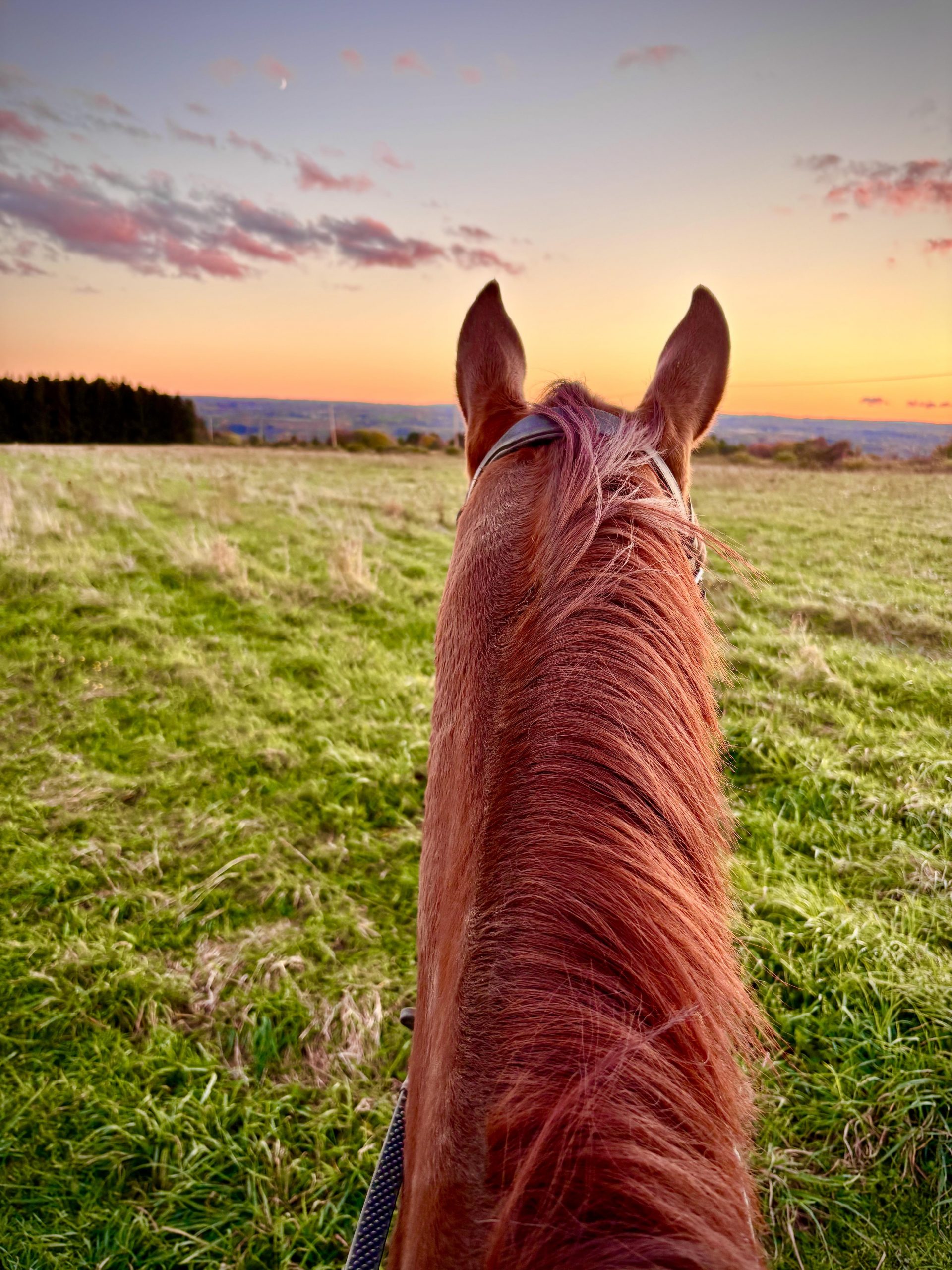
Artie (Reunion Tour) enjoying his end of day hack out. It was supposed to be a walk ride, but yeah… there was next to no walk. Photo by author.
That said, I do have a couple of electric goobers who love the excuse of the crisp fall days and the start of the north wind to light up and let out. And as such, here are some basic tips to both manage the spooks and bucks and bolts:
The biggest thing that keeps me confident when the wind is up and everything seems to be louder — the grasses, the weeds, the trees etc. — is to make sure I can keep their feet moving and keep them in front of the leg. It is understandable for a rider to want to slow, stop, or hold tight on one who is being a bit up or fractious. Said rider might also try to keep them still and force them to “look” head-on at whatever it is that is bugging them. I get it. But I’d recommend more movement, not less.
When the feet stop moving, the direction of travel could be any direction and that always seems to make things more dangerous. From a halt, the potential power is bigger, as there is no existing momentum. Your horse becomes a physics experiment that no one wants to watch blow. Stopping them, or letting them suck behind the leg and slow (especially when their friends are in motion ahead of them) is asking for an even bigger disaster.
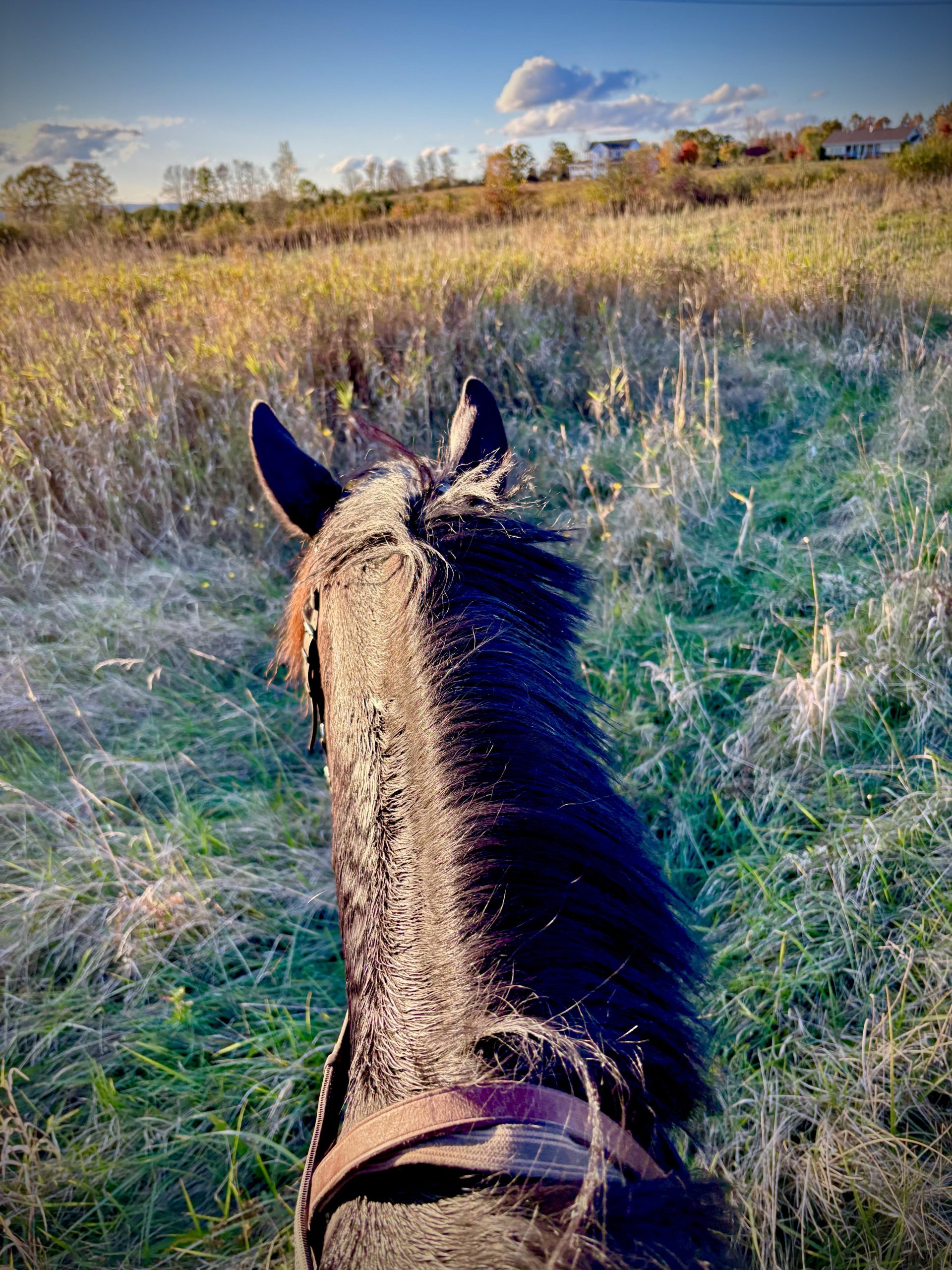
This kiddo earns his neck strap use (not just in the fall). Good boy, Neil (Lute’s Angel). Photo by author.
But, a horse going forward will usually maintain forward motion, even if that movement also goes sideways. All good. Keep your leg on and encourage forward (not fast, just in the rhythm you already have) and get them past the object or area in question, then come back around for another pass… but perhaps a bit slower that time.
When cantering up my gallop lanes, horses often spook at the old barrels left on the property. They’re on the left side in the brush, and come up after a slight turn. Most days the horses don’t care. But get that north wind blowing and make it look like the scene is set for the dead to rise from the graves and walkabout for a while, and you can bet that most horses will jump towards the hayfield when they encounter the barrel stash. That’s fine. Sit up, keep your leg on, grab a little mane or neck strap and stay centered. So long as they keep going forward, the known, upcoming shy-away won’t be that bad. And if you come back slower the next time, they’ll likely barely look at them, as they have already successfully gotten past without being eaten.
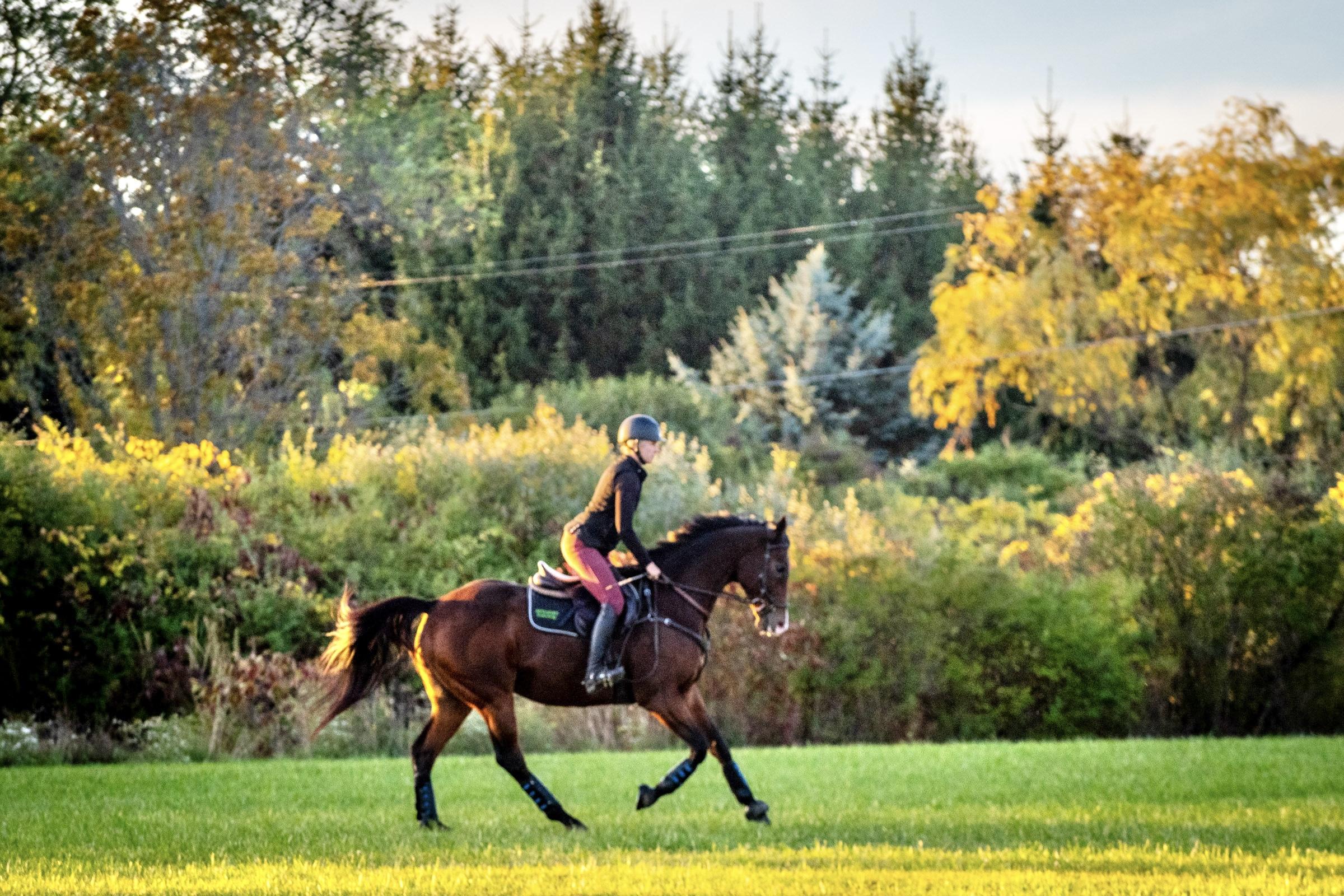
North (Star Redemption) enjoying the weather. Photo by Lily Drew.
The same thing goes for new scary jumps — any time of the year. When they spook at the new bright white jump in the field, I don’t let them stop and sidewind backwards against my leg. Rather, I bend them slightly away from it, remain calm, and walk straight lines laterally past it (so they can see it out of their right or left eye) — while moving. They’ll let out a breath then, and you’ll know the spook is resolved. No more ghosts in that particular obstacle today. At that point, if they want to touch it with their nose, fine, but that’s not the goal from the get-go. The goal simply is to keep the feet moving, think and relax around the new object. But if one lets them stop, snort at it and pedal backwards, that in many ways reinforces their concern with the fence and increases the difficulty of getting them over it.
In short, the safest and most effective way to ride through the spooky season is to simply do exactly that — ride through and past it. Just keep their feet moving.
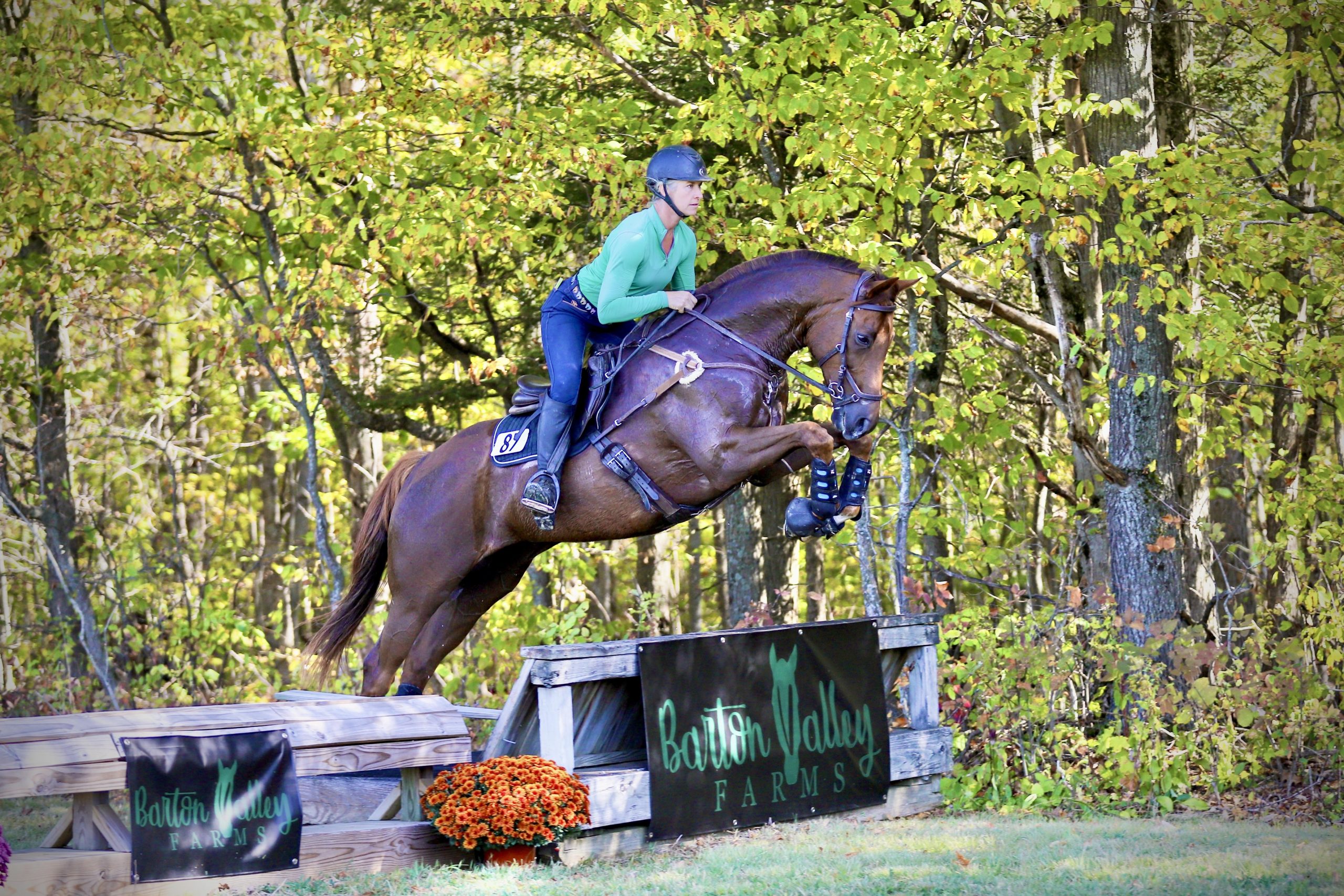
Indy (Star Player) is notoriously spooky around jumps, but keep his feet moving and point him at them, and you’re up and over. Photo by Olivia Arlene Photography.
And as such, the last bit of advice I have for that is to set yourself up for success with proper gear. I find clean tack to be stickier, so if I know I might be in for a wild ride, I’ll wipe down my boots and the saddle ahead of the ride just to add a little extra tackiness to it. I’ll also make sure that I’m in clothes that I can move in. As it gets cold I end up in 147 layers. If I don’t think I can react well in all that bulk, I might have to suffer through being chillier with more mobile layers to make sure my body can respond without restriction.
For the horses, even if it’s just a quick hack, I’ll put a full set of boots on them. Bell boots and then full protection galloping/brushing boots. The point of doing so is simply to reduce the risk of injury when they do decide to throw a fancy lateral move in at the canter, or channel their inner skittering crab. Bell boots, even on those not prone to pull shoes, helps reduce stress when the world rattles and things go, well… sideways.
And then for those who I know might be a bit more reactive (Oh hey, Neil) or have less mane to grab (… ahem Indy), I toss a on a neck strap. I never used to ride with these things — they just were never where I needed them if I grabbed for them. But I have found the Tapestry Equine Products one to work well — there’s an elastic underside you can thread a finger through if you want more give, or the thin leather strap on top. But regardless of what brand you like, when I’m heading out on any who are feeling like being a wild child, I toss that strap on just in case they decide to see a ghost… or 17.
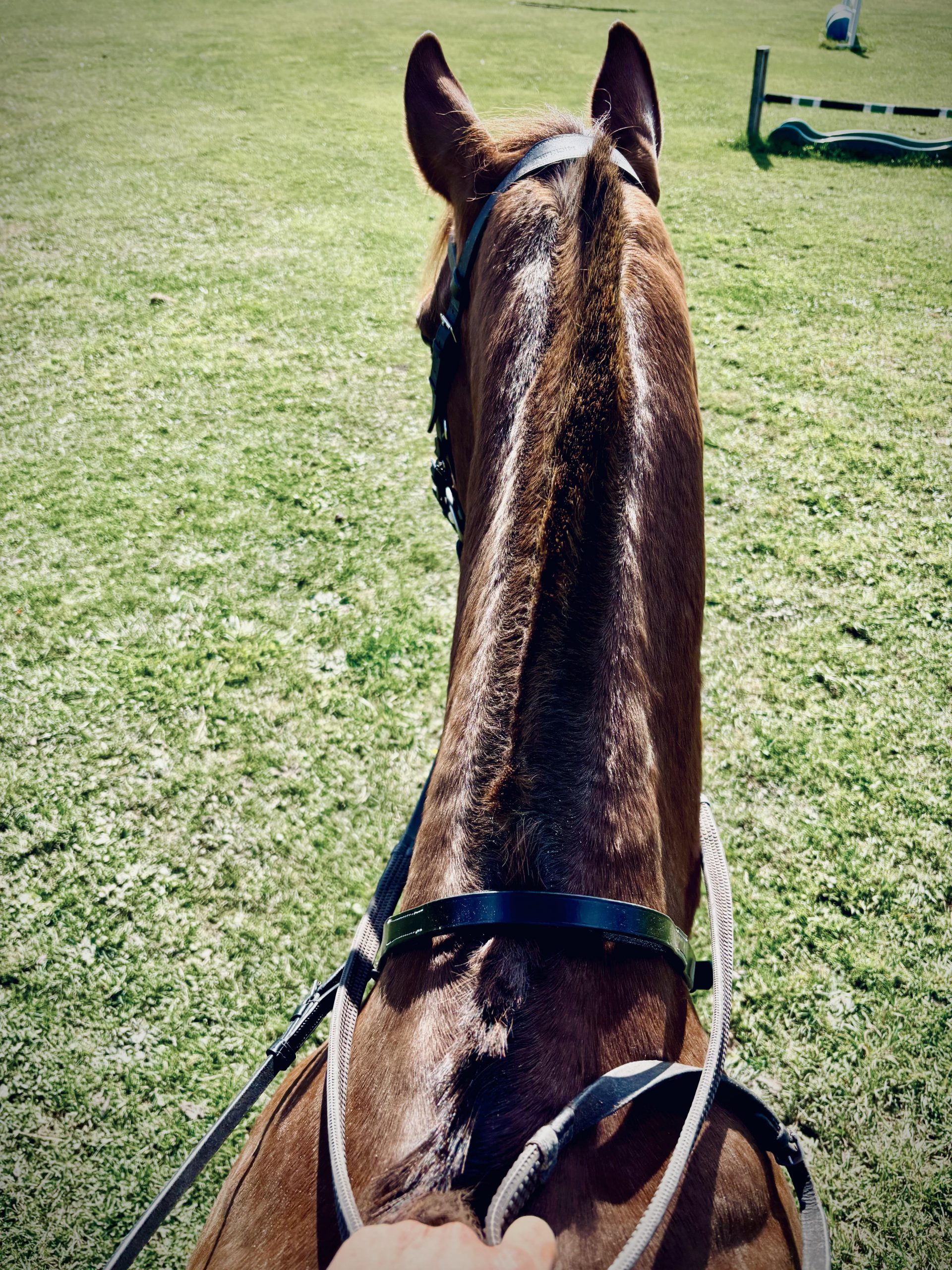
Indy gearing up for a jump school with his roached mane and the Tapestry Equine Products Neck Strap. Photo by author.
A quick caveat: I have mentioned this to folks and they have often said, “Oh, that’s why I wear a breast plate/martingale” indicating the ability to grab something should the world decide to attack. But I’d push back and recommend the neck strap instead. The martingale puts your hand low near the saddle, decreasing the base of support and making a rider tippier. The more forward-set strap allows a wider base of support, and helps a rider stay more stable, especially when one is unsure of what direction all that momentum is going to go.
So boot up and go ride folks, enjoy the season. I’ll be here hoping winter holds off as long as possible.
About Kentucky Performance Products, LLC:
Support Normal Insulin Regulation
Metabolic dysregulation is characterized by weight gain and unhealthy insulin levels that can lead to
unsoundness. Maintaining normal metabolic function and sustaining healthy weight through dietary
supplementation will support normal insulin levels and healthy laminae structure in the foot.
- Maintains healthy insulin regulation and normal body weight.
- Supports a decreased risk of laminitis.
- Formulated with a research-proven blend of polyphenols and amino acids.*
* Manfredi JM, Stapley ED, Nash D. Effects of a dietary supplement on insulin and adipokine
concentrations in equine metabolic syndrome/insulin dysregulation. In J Equine Vet Sci 2020:88:102930.
The horse that matters to you matters to us®. KPPVet.com
NEW WINTER STICKER AVAILABLE! Visit https://kppusa.com/winter24/ to grab one for your barn.

