



When False Legends Go Viral: The Curious Case of Lydia “Red” McGraw

As an editor whose focus is on horsing around the world, I’m always looking for new and interesting stories to share with the Horse Nation audience. So, when I saw a compelling story about a gunslinging woman who escaped human trafficking and saloon life and went on a mission to save others, I thought, “Heck yes! This is one for the site.” I also thought it was incredible that I hadn’t hear about this bada$$ chick before.
I am, of course, talking about the now Facebook-famous Lydia “Red” McGraw.
According to the story making the rounds, she was born in Kansas in 1854, got her nickname from her flaming red hair, and at the age of 15 was chained to a saloon bed in Dodge City — supposedly betrayed, abused, and then on the run as an outlaw across the frontier. The posts are dramatic: saloons, revenge, daring escapes, even ghost stories. For many readers, it feels like a living piece of the Wild West.
Except, here’s the thing… she never existed.
I repeat, she never existed.
The Myth, Retold
The Lydia “Red” McGraw narrative has been repeated hundreds of times in Facebook groups, memes, and shared stories, often with vintage-style photos and emotional storytelling. It’s been shared on Facebook pages with titles such as “History of the world,” “Ancient Epicurus,” and “American Philsophy,” seemingly lending it credibility. But as several fact-checkers and historians have pointed out, there is zero historical evidence that she ever walked any of those streets, wielded a six-shooter, or was chained to a saloon bed. Posts themselves sometimes admit, in a parenthetical aside, that the story is “modern folklore” rather than documented history.
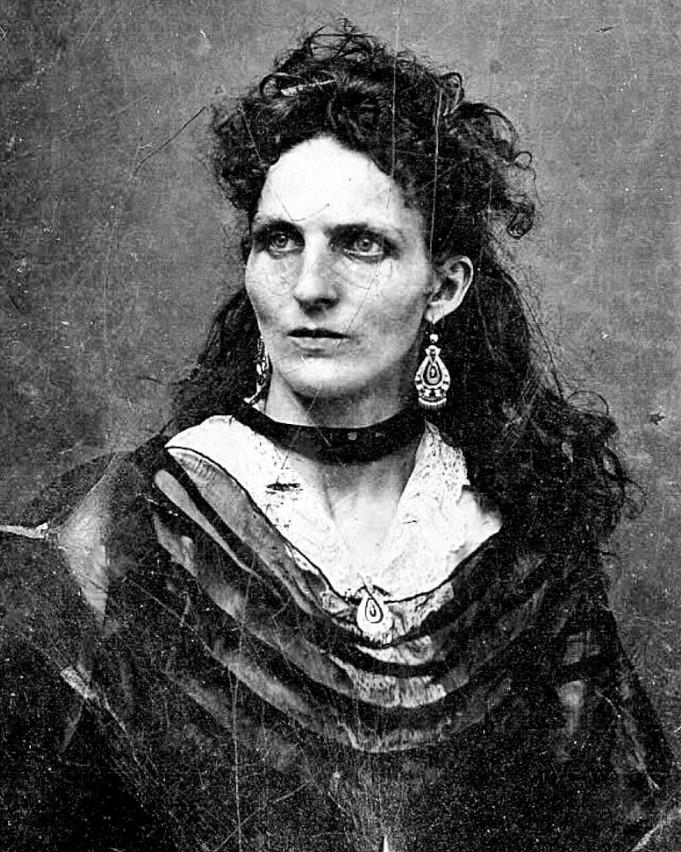
The photo used on Facebook to depict Red McGraw. But if you run a reverse image search on Google, you get a list of questionable historical stories.
The popularity of such narratives comes from their infectious mix: a little bit of “this could be real,” plus enough mystery to make people want to believe. And that is exactly what makes them powerful — and dangerous.
So why do platforms promote these made-up legends?
- Engagement wins clicks. And clicks equal money.
 Stories of wronged women, hidden history, and frontier justice are tailor-made for emotional response. They generate shares, comments, and debate — all of which boost reach in social algorithms. (Honestly, this is why we didn’t link to one of the Facebook posts — we don’t want to promote clicking on the fictitious narrative.)
 - Blurred fact-fiction lines. Many users don’t label these stories clearly as fiction or folklore. They begin with “long ago, in Kansas…” or “some say…” which gives them just enough ambiguity to slide past scrutiny.
- Lack of gatekeeping. Unlike academic journals or history books, social media has no peer review. Anyone can post, repeat, or embellish. The wider the retelling, the more real it feels.
- Nostalgia and identity. We like stories of rebels, strong women, and hidden legacies. Especially in communities that celebrate frontier culture, the myth of Lydia “Red” McGraw feels like an heirloom handed down — even if it’s a fabrication.
How to engage responsibly
- Label clearly. If you republish or quote the McGraw legend or one like it, state up front that it’s folklore, not fact.
- Check sources. Ask for documentation: property records, newspaper mentions, census data. When none exists, treat the story with healthy skepticism.
- Promote real voices. Celebrate actual historical figures — there are plenty of bada$$ folks whose lives are documented — and contrast them with modern myths.
- Encourage curiosity over certainty. A post can say: “I love this story — but here’s what we do know historically, and here’s what remains fiction.”
The Takeaway
We understand the allure of legends. A wild-hearted mare, a daredevil cowboy, a shadowy outlaw — they all captivate imagination in a way that bare facts often don’t. But when legends are passed off as history, we risk erasing real stories and burying truth under fiction.
So next time you see a share titled The Untold Story of Lydia “Red” McGraw: Outlaw Queen, or one like it, pause. Ask: “Who records this? Where’s the evidence?” Heck. Google it. And if there’s no evidence of the person actually existing, feel free to admire the storytelling — but don’t mistake it for history.
If you want some stories about actual bada$$ equestrian women, we’ve got a whole slew of them. Check out the work of Horse Nation staff writer Amanda Uechi Ronan as a start.
