



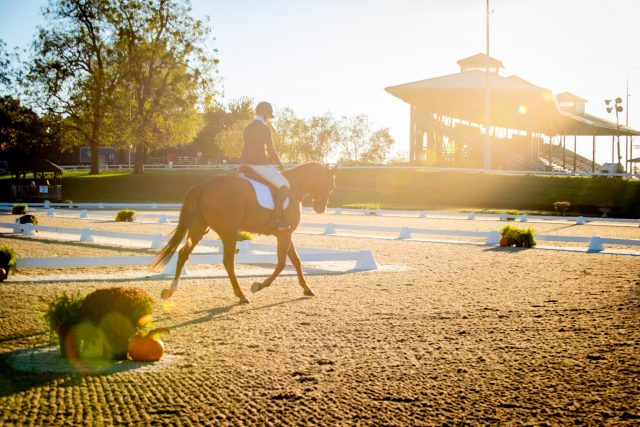
Thoroughbred Logic, Presented by Kentucky Performance Products: Three Types of OTTBs You’ll Find at the Makeover
There are three types of OTTBs you’ll see a the Retired Racehorse Project’s Thoroughbred Makeover, and this year Aubrey brought one of each.
Welcome to the next installment of Thoroughbred Logic. In this weekly series, Anthropologist and trainer Aubrey Graham, of Kivu Sport Horses, offers insight and training experience when it comes to working with Thoroughbreds (although much will apply to all breeds). This week ride along as Aubrey shares her logic on the three horses you’ll meet at the Thoroughbred Makeover.
The 2025 Retired Racehorse Project Thoroughbred Makeover and National Symposium is now officially in the books. It was a wild ride (for some, wilder than others), and as always the happiest horse show of the year. This go round, I had the privilege of taking Artie (Reunion Tour), Emmett (Oboy), and Spin (Major Spin). It was an exciting Makeover this year — nearly five inches of rain during Tuesday schooling, a broken stirrup leather (I’m sure related to that soaking) to start Wednesday competition, a chance meeting of the fox hunt during Spin’s dressage free walk, the realization that Emmett is less patient than I (and that’s saying something), and a heck of a good stab at the Eventing championship.
But it also was one filled with so much laughter, triumph, learning, and pride — because I honestly don’t know who hauls home from that show not proud of their horse. Just look on social media — exhausted trainers from all over the country will be riding out their Makeover hangovers and posting sappy tributes to their horses, the show, the organizers (THANK YOU!), and the experience. And that’s as it should be — because why do we show our horses if not to point them at a challenge and be proud of how they tried to complete it, regardless of their placings?
And around this time each year as the Makeover closes up, folks start to comment that “they could never do that” or “they had a great horse who was eligible but s/he wasn’t far enough along” or had some form of set back that kept them from entering. And each year I try to tell folks that you don’t have to be perfect to go. You have to be proficient, sure. And your horse has to be trained enough to be quiet enough to manage on the ground and in the saddle. But what you see online is the highlight reel. The show goes beyond that — so much of the “realness” of this show is both the unfettered pride in the horses and the sportsmanship of how folks handle it when a horse struggles or simply shows off just how green they still are.
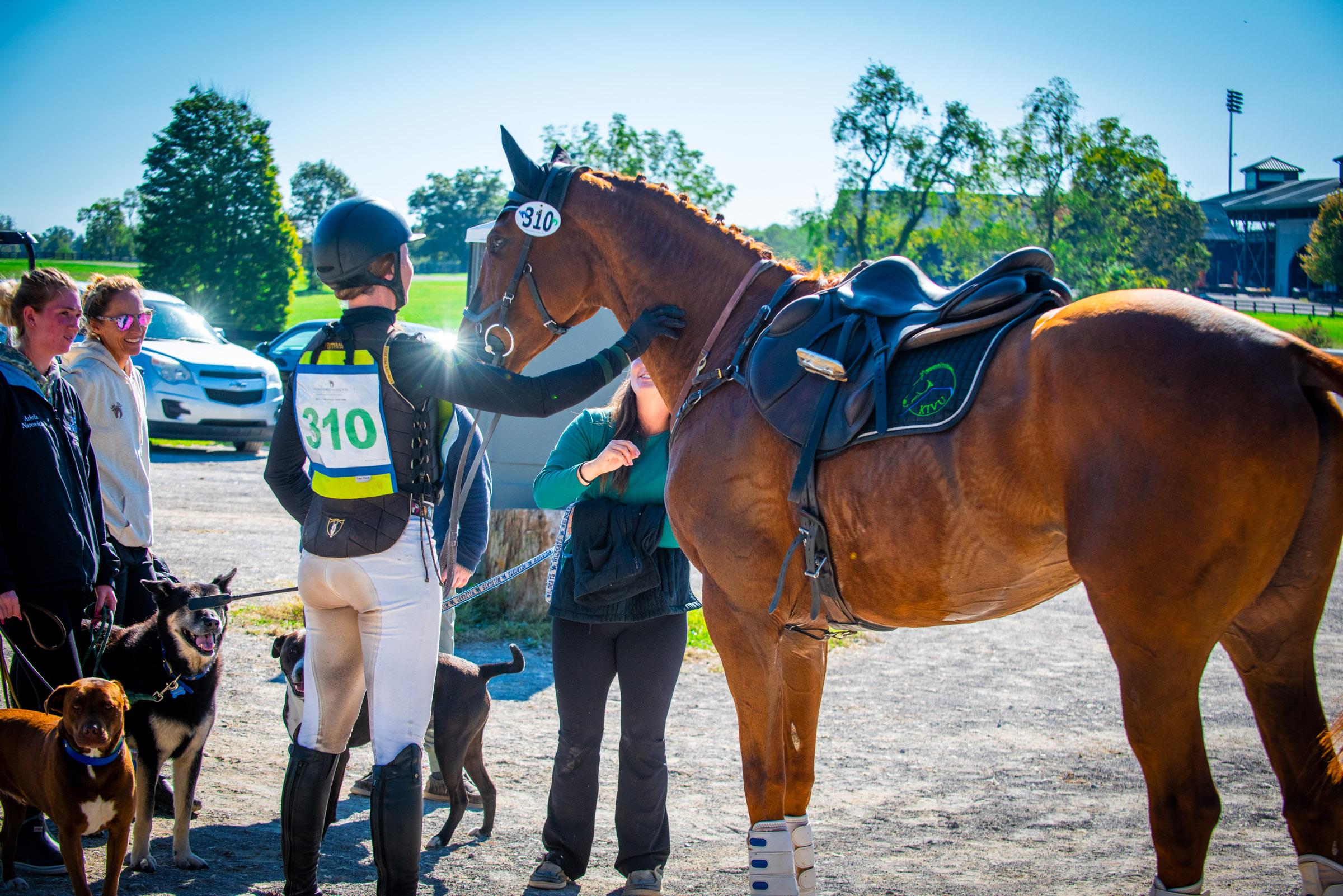
Portions of the extended Kivu family hanging out with Artie (Reunion Tour) after his Championship round at the RRP Makeover. Photo by Aly Ratazzi Jones.
And it is that community and that radiating pride in these former racehorses with only up to 10 months of retraining that keeps me coming back.
So as both a recap from the week and a message to folks who aren’t sure if their horse is the “type of horse to take to the Makeover,” let’s run down this year’s entries.
The three horses I loaded on my trailer at 4:45 in the morning and drove the 11 hours to Kentucky (New York is indeed a bit further away than Georgia) somehow represent a set of common categories of horses you would see competing. There’s Artie — the mostly prepared, amply competed, ready to show off and move up type; there’s Emmett, the still quite green, but game type; and there’s Spin, the rehab who is there to show folks not just what these horses can do, but what they can overcome. In years past, I have taken smatterings of all three of these categories — this year, I just happened to have one of each.
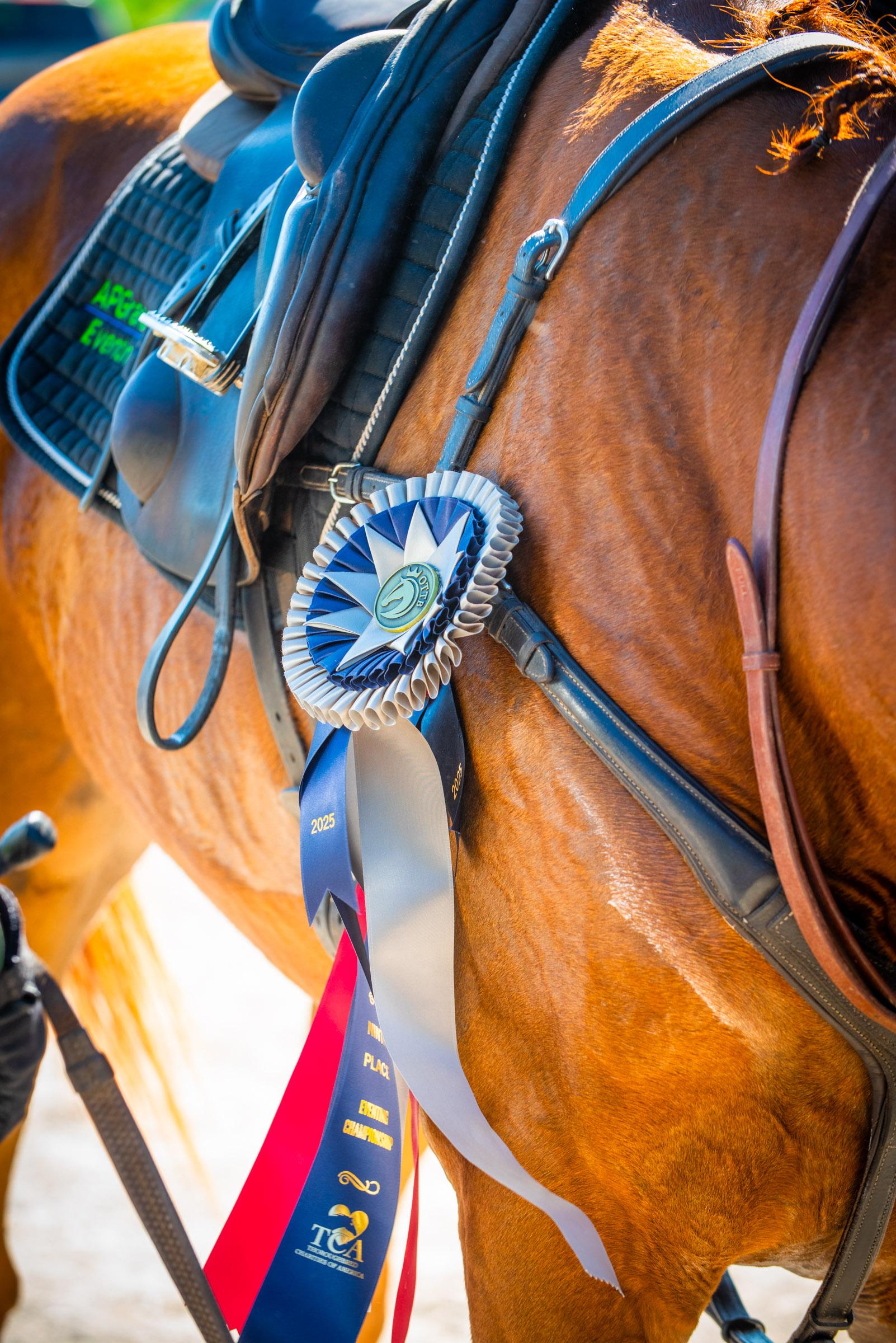
I have never been in it for the ribbons, but a second place in the eventing prelims and a ninth in the championship isn’t too shabby. Good job, Artie. Photo by Aly Ratazzi Jones.
1. The “Ready” Horse: Artie (Reunion Tour)
Artie came off the track last fall and was lucky enough to land himself with Sarah Hepler, a Thoroughbred enthusiast and dressage rider. I helped get him restarted, and when Artie made it clear that he’d rather jump than pursue straight dressage, Sarah brought him to me to consign. Fast forward a few months and it didn’t take much to have him clicking like a metronome around small courses inside and small xc courses in the jump field. The feel was so good and the market so plain stupid (no one wanted a “little” –16hh — red seven year old) that I ended up picking him up for my string and bringing him along.
Up north, the show season and firefly season share commonalities. They start late, do not last long, and become a proverbial frenzy (of packed weekends and the feeling that if you miss one you’re missing so much). Artie popped around a couple jumper and dressage shows in the early season, then since we don’t really have much by way of schooling shows up here, he hit the recognized in the area — Genesee Valley Hunt and Larkin Hill gave him great experience. Due to the hard ground and the inability to school the elements the day before, I kept him low — building up his confidence at Starter but schooling bigger at home.
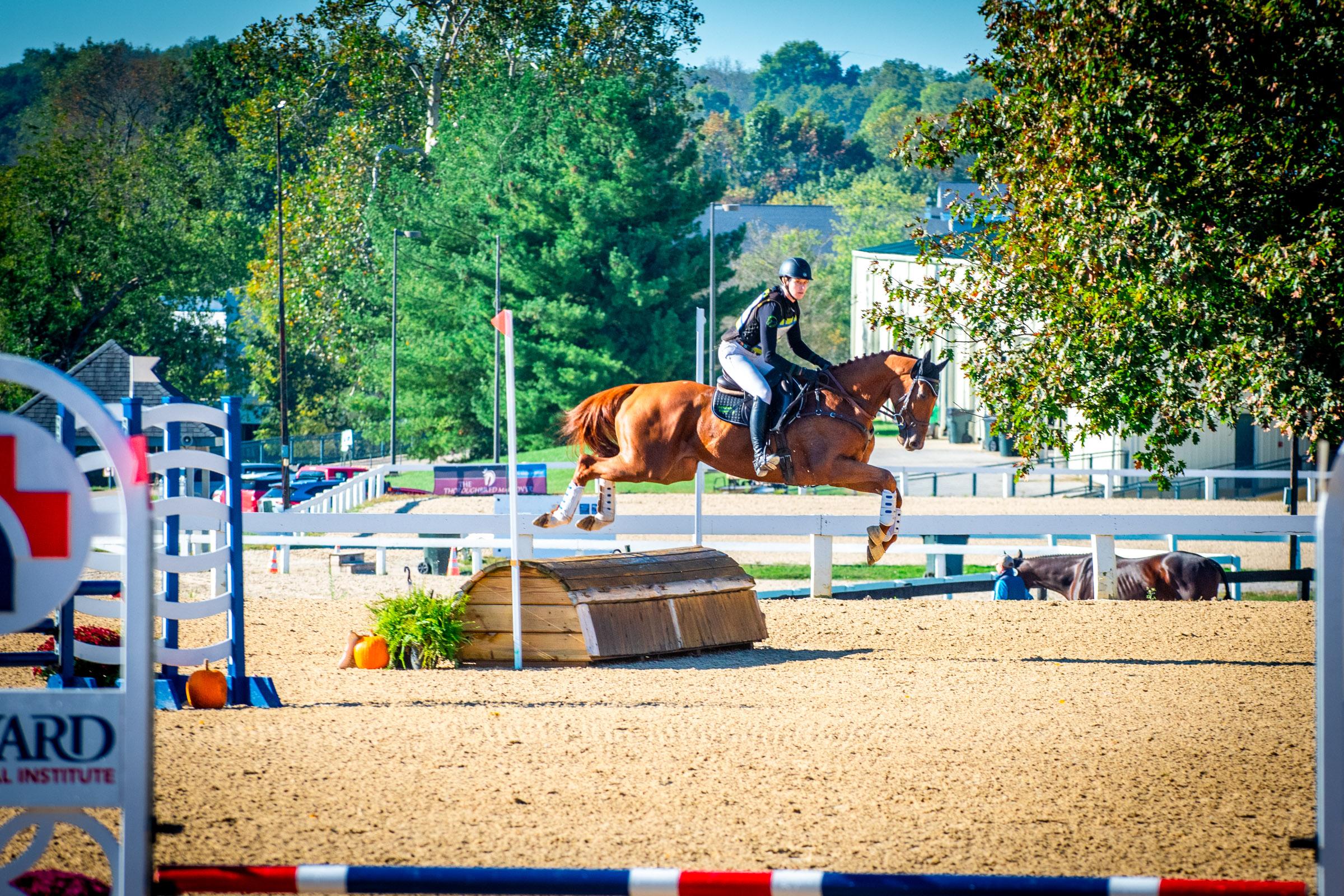
Artie jumping an xc element in the eventing championship at the Makeover. Photo by Aly Ratazzi Jones.
By the time we got to the Makeover, he was more or less ready to tackle what was put in front of him. The dressage was reasonably well-schooled, and the fences portions looked a lot like what we had jumped in Area 1. When he got out on SJ-XC for the prelims, this little horse shined. Sure, he had a rail in the stadium portion, but he was adjustable, confident, brave, and quiet. I decided ‘why not’ and went for the down bank option, galloping from there to a sizable ditch and around to a few coops and the water. His “show gallop” was outstanding. He landed off the last fence and, when asked, dug in and laid down speed (still ridable and attentive), the likes of which I haven’t sat on since racing horses on back dirt roads in my teens. Artie probably would have smoked those 1990s horses in third gear, but the feel and the fun were the same.
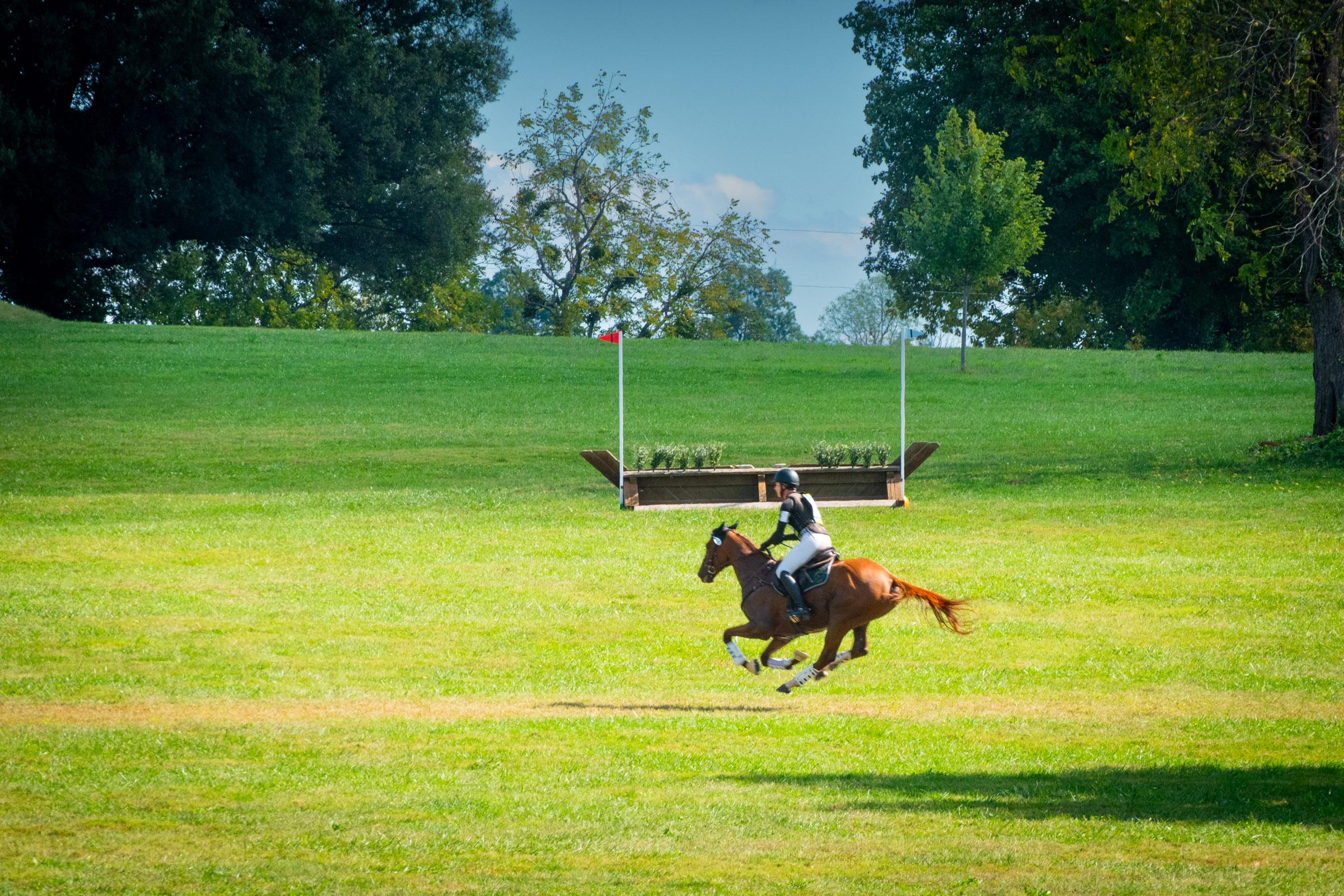
Yeah, this kid can move. Photo by Lauren Kingerly
I was proud of him for his bravery and ridability and the way he stepped up to the challenges and met them with a clear head and ample smarts. It didn’t hurt that the combined score landed him second of 59 heading into the finals and topping out with the best jumping score by five points. Well damn done, kiddo. He gets all the cookies and a whole lot of time to rest up now that he’s home.
2. The (Slightly More Neon) Green Horse: Emmett (Oboy)
Emmett is the type of horse I usually have at the Makeover. He’s a late-game entry, one who is not quite prepared, but hey! It’ll be fun, so why not? This is the type of horse that you take if you can handle their shenanigans — they’re simply too green to be expected to behave the whole time. When I brought Wolf (Louisiana Moon) in 2023, one of the organizers looked at me and was like, “I’m glad this is you — good God, Aubrey, don’t encourage people to bring horses this green.” It wasn’t unmerited. I mounted from the ground and as I was about to have my right foot in the stirrup, he took off bucking. I looked like a crazy person laughing as he porpoised along. Fair enough.
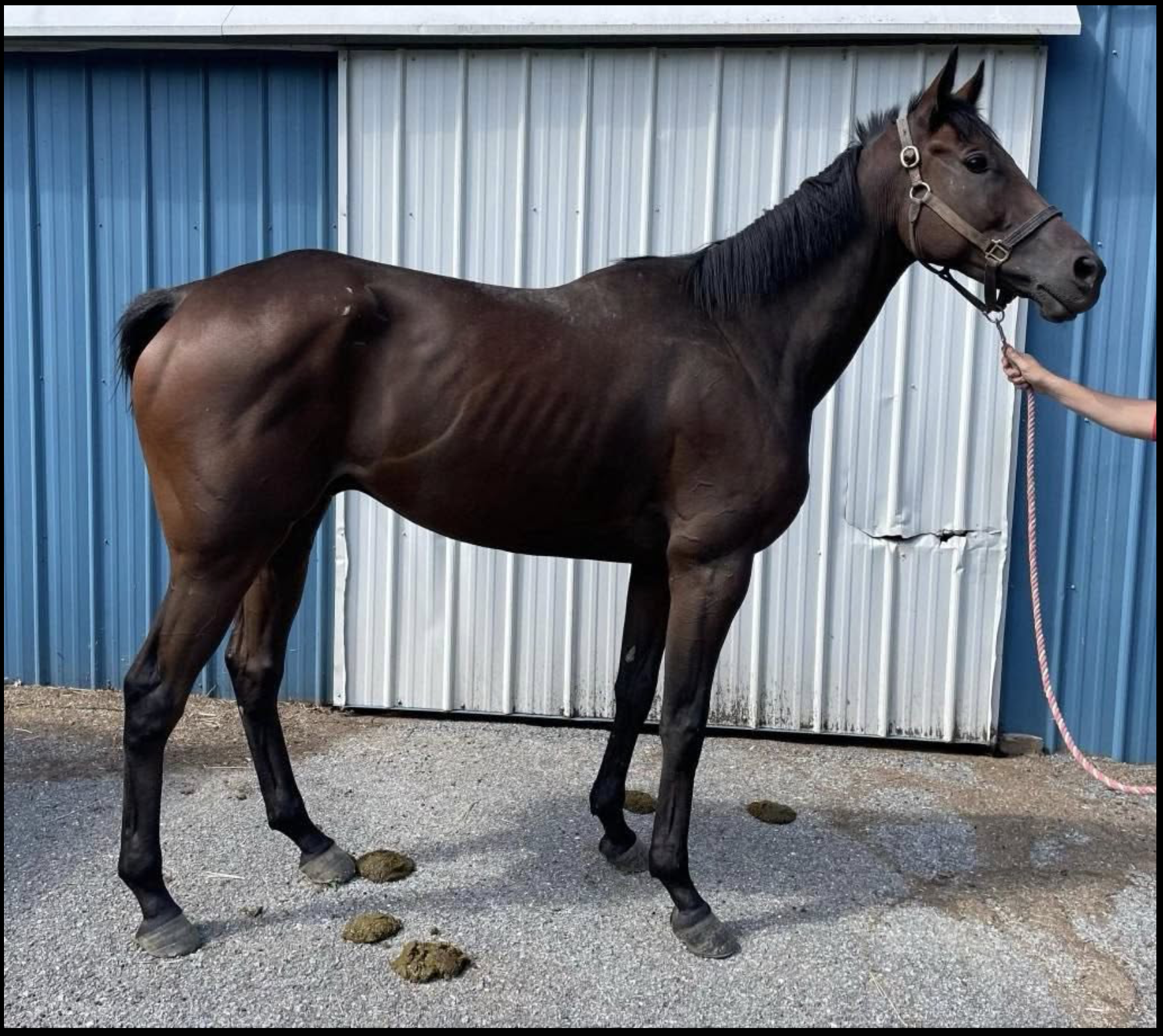
Emmett’s (Oboy) photo from the track about the time when Larissa Lafebure rehomed him and gave him a shot at a different life. Photo courtesy of Larissa Lafebure.
So Emmett was pretty in line with that “maybe too green” description. He arrived at my barn to be restarted in mid-April. By June, he was jumping well but was harder to rehome due to findings from a pre-purchase exam (pedal osteitis, an old wing fracture, ankle and hock arthritis and a straight sesmoidian ligament that looks like moths got locked in with it for a winter). To keep him safe and land him in a good home, he needed experience to prove that he wasn’t as limited as that list made him seem.
I believe in that horse. And I trust my gut. So I brought him into my string, got him a few rounds of injections, and out to a handful of small shows.
And he was good — that horse is all grit and heart and try, even when it is hard. He might gnash his teeth around the bit, but he’s brave and willing to give whatever you ask a damn good shot. And to boot, he’s developed into the weirdest horse in the barn — seems he has figured out how to weedle his way into my heart. Damn horses.
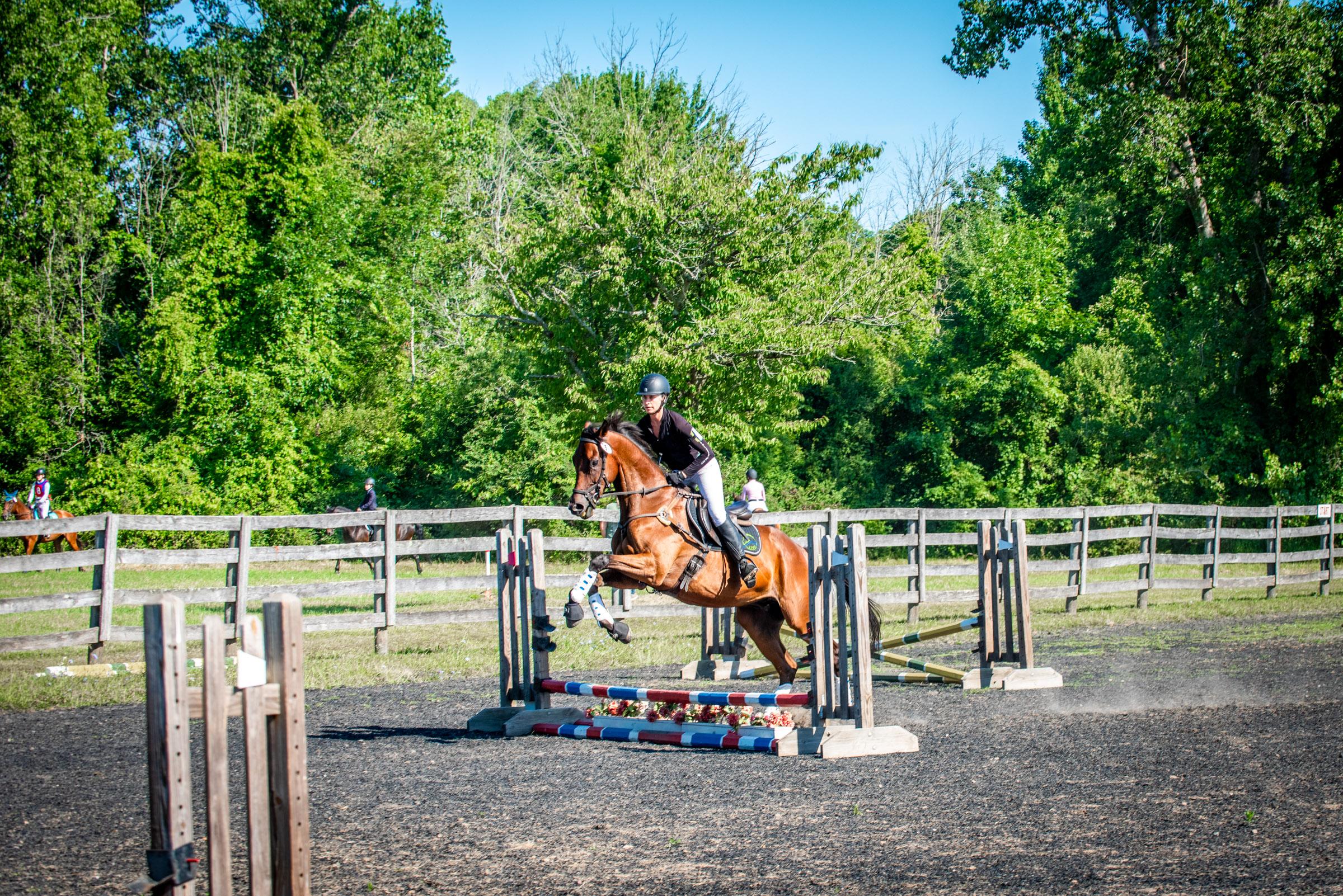
Emmett (Oboy) learning about being a show horse at Chestnut Ridge in July. Photo by Izzy Gritsavage.
Was he ready for the Makeover? Meh…
Realistically, yes, he was ready as far as the courses and jumps were concerned. No, though, he was not ready in terms of the atmosphere and the professionalism needed. But it’s all good, and I learned a few more things about him this week. The most important is perhaps that I now know that when he’s stressed, DO NOT MAKE EMMETT WAIT.
Emmett was held for 20 or more minutes at the eventing SJ-XC start and lost his mind. The brain he had held onto that week fell out his ear and sweet, pleasant Emmett transformed into Angry Emmett. Thankfully, there’s a seriously kind horse in there, and he was able to refocus after he blasted me through — not over — the first fence on course. It improved from there, but certainly earned the comments about lacking some ridability between the fences.
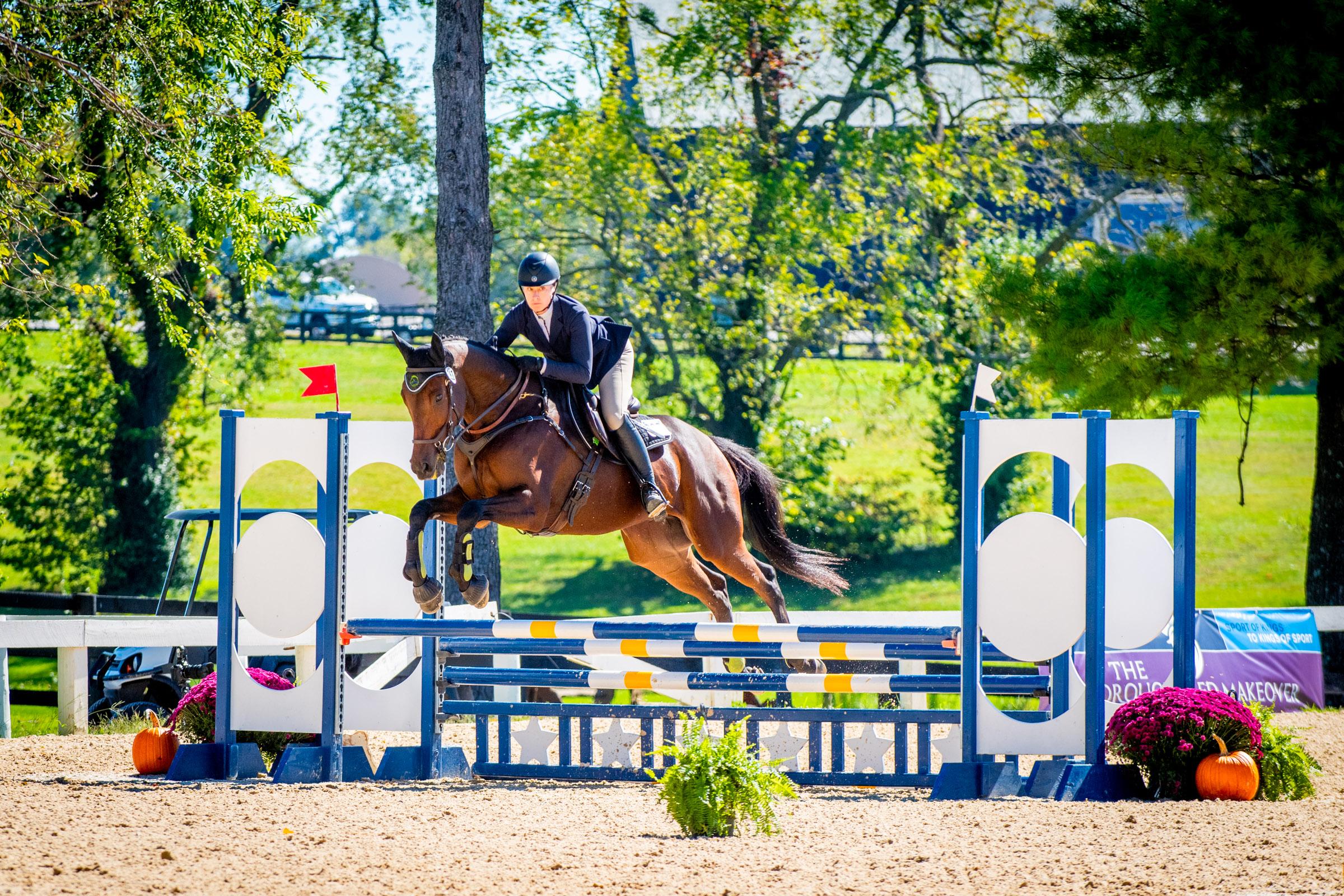
Emmett only a few months later clicking around the .80s at the Makeover. Photo by Lauren Kingerly.
But we learned and it improved. So for his show jumping the following day, when asked to wait I hopped off and returned him to his stall. He jumped great (for where he is) with a quick two-jump warmup and into the arena. Overall, I could not be more proud of this horse and how he both held it together (sometimes by very fraying threads), and equally gave me his all simply because I asked.
These types of horses might be my favorite to bring to the Makeover (even if it is less encouraged than the more polished, ready horses) simply because I am proud of them no matter what — proud of them for holding it together, overcoming the stress, and trying. I don’t care how they finish up (though I’m pleased that Emmett found himself in the top half of both disciplines). Rather, I care that they gained the experience and learned along the way. Good kid.
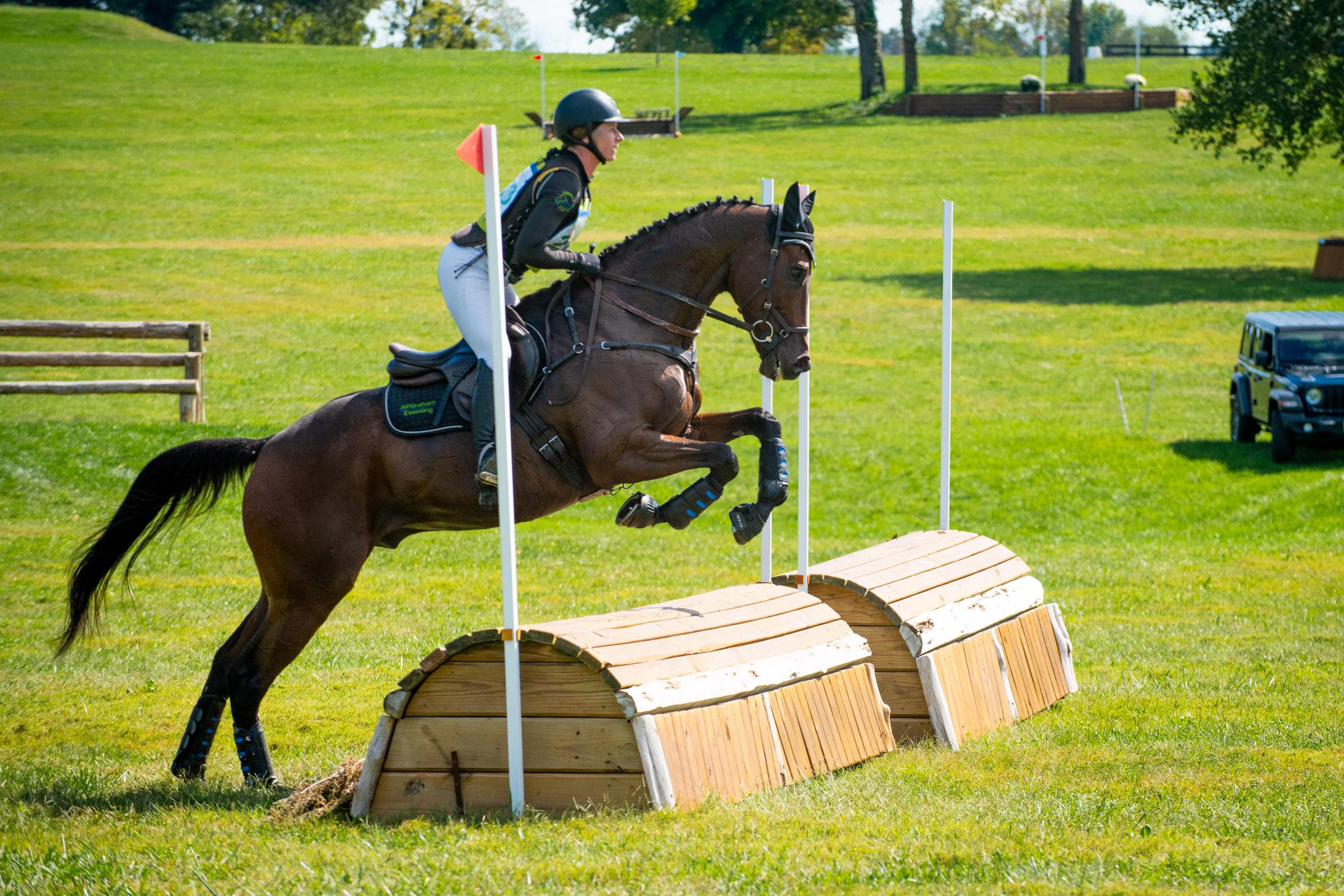
Emmett making easy work of the cross country elements. Photo by Lauren Kingerly.
3. The Against-The-Odds Horse: Major Spin
Each year, the RRP Makeover becomes a bright spot for a horse that no one expected would make it there. There are horses who had catastrophic injuries on the track, those who fought neglect, those with seemingly insurmountable behavioral issues. Each year there are horses who were never expected to survive, let alone be ridable and sound enough to compete at a national showcase.
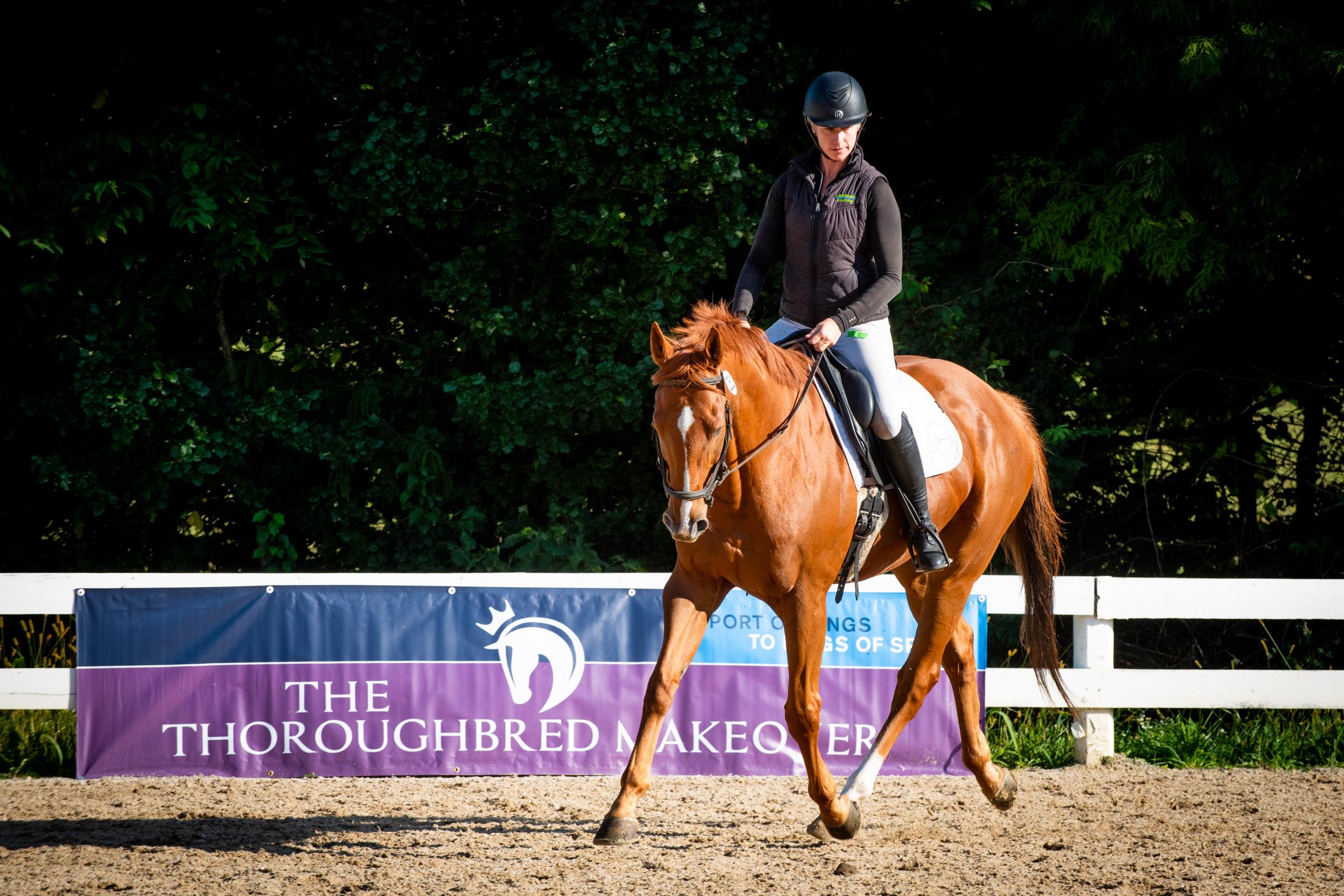
Major Spin schooling at this year’s Makeover. Photo by Lauren Kingerly.
This year, I should have had two of those horses going — Major Spin and his disastrous knee, and Koops who survived a trailer wreck when the shipper drove off the road in the nether region along of the Mississippi-Alabama border. Koops rehabbed for nearly a year from his trailer crash injuries, was sound and jumping, only to sustain a kick in the pasture that left his right knee in need of ample rehab time and turnout. Dammit. I pulled him from the card and added Emmett. (Koops currently is doing great — he’s fat as a tick and seems quite sound. It’s about time to get him back to work and see exactly how good that knee is).
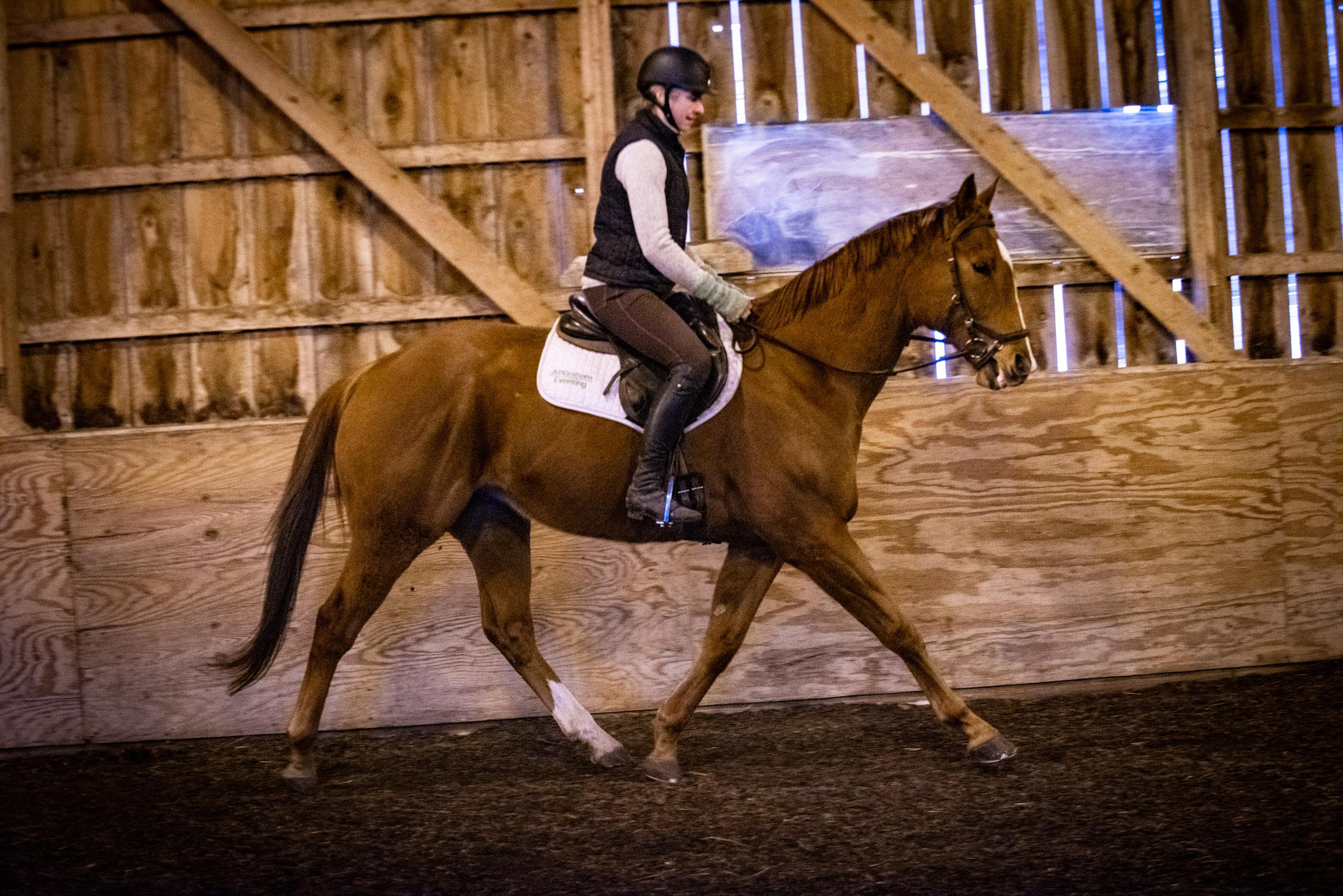
An early ride in Major Spin’s post track career this past winter. Photo by Lily Drew.
But Major Spin made it. When I first met him, he was still in the running line up at Finger Lakes Racing, despite being dead, dead lame on his left knee. It was so egregious that when the race trainer would not X-ray, the track vet donated their time and the films to us to help get him out of that situation. And so, because I’m a sucker, I did. I bought Spin (yep, you heard that right — that trainer wouldn’t let him go for free, lame as hell to a good home… what a great guy…) and decided that we could make a decision about his future after a few months of turnout. And with time and rest, he kept getting better. And then he simply was sound.
With the help of the Stall Thirteen non-profit Spin got a chance to rest his knee for six months, then get restarted for a second career. We pointed him at dressage (since I don’t want to risk the knee in a jumping discipline) and the big horse took to it like a fish to water. In the lead up to the Makeover, I managed to get Spin to a couple dressage shows in the region. These let him see an arena, run the tests, and try his hand at surviving chaotic warmup arenas before he got to Kentucky. Good kid.
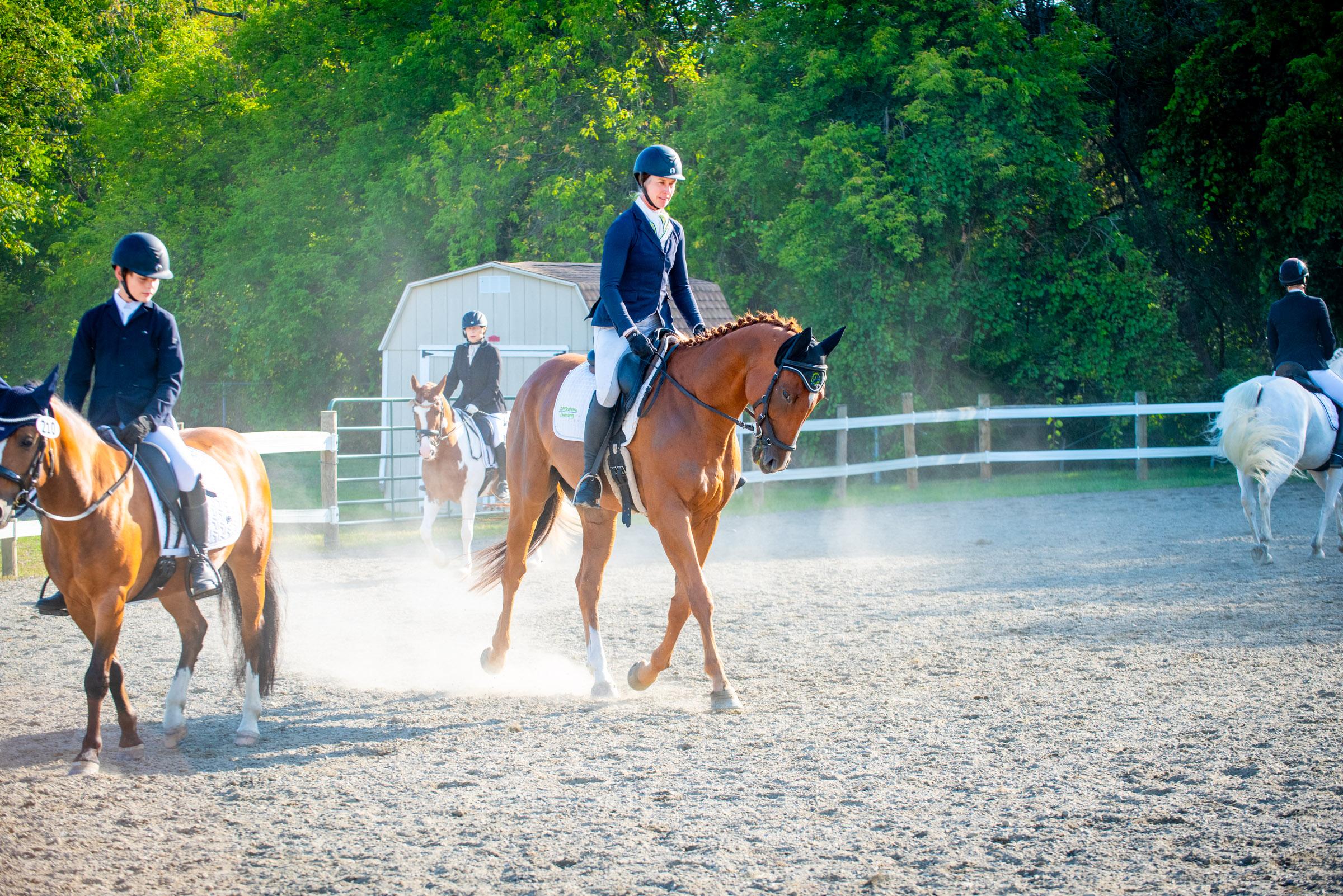
Spin managing the warmup at Dressage in Wine Country like a pro. Photo by Lily Drew.
At the Makeover, he sand danced his way into the top third in dressage, despite a knee that looks like it should never in a million years be sound. But perhaps most importantly, on day one in Kentucky, he passed his soundness exam — slab fracture, huge chip, arthritis and all. He actually is sound. It is wild, unlikely, and frankly damn wonderful.
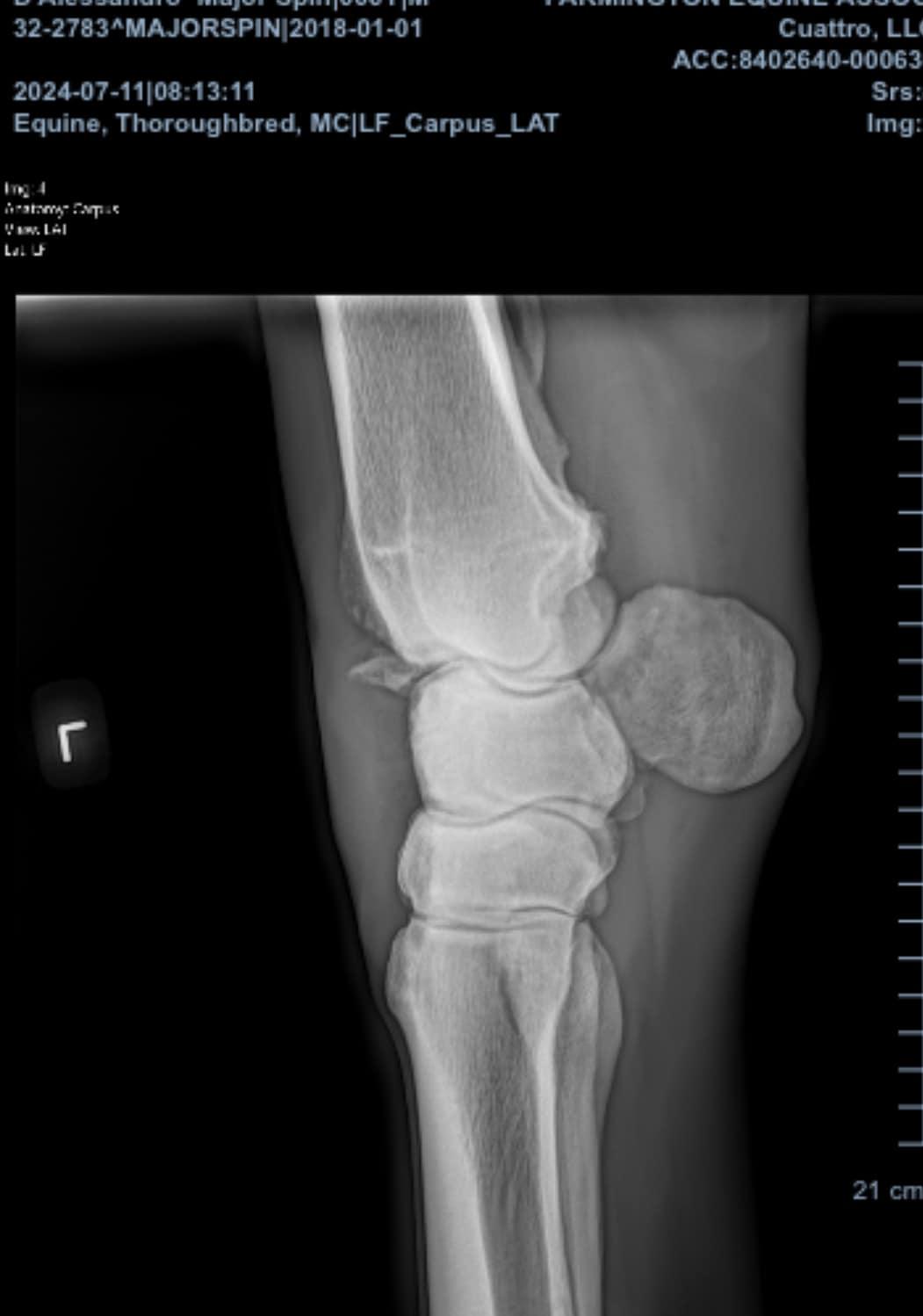
A little reminder of what Spin’s knee looks like. Radiograph by Farmington Equine.
Throughout the week at the Makeover, Spin was a giant gentleman. He schooled well daily with only one hitch: the barrel racers. Apparently Spin thinks neon fringe is worthy of terror. But with them out of sight, he laid down a quality Training Level 2 test and freestyle (which was mostly Training Level Test 3). The only hitch there came as I heard the bugle… then came the galloping herd of fox hunters and hounds racing across his line of sight during his attempted free walk in the T2 test. Too bad on timing, but what a good kid. He still pulled 8s on his trot work and went home with lovely comments and a ton more experience under his proverbial belt.
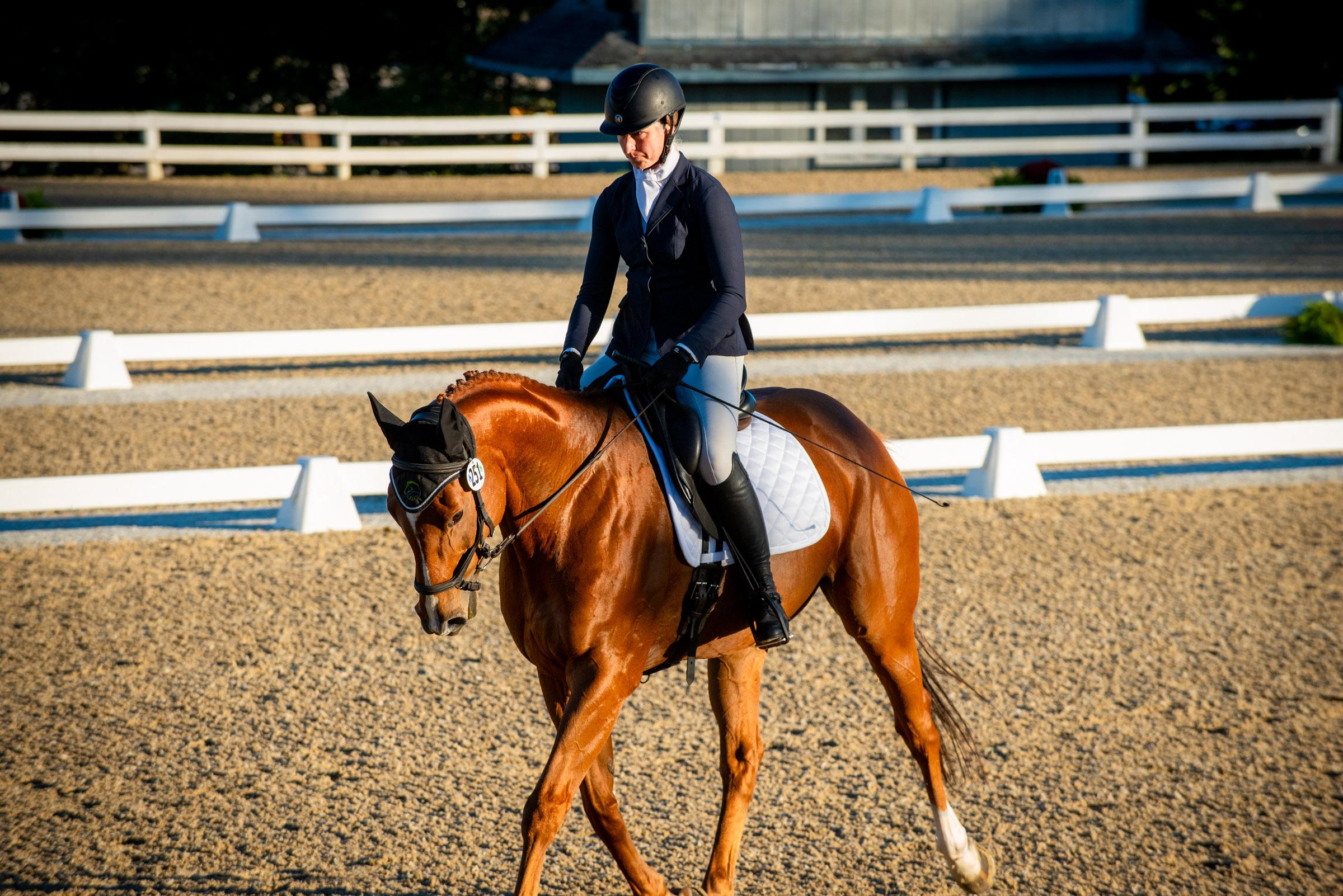
Spin during his freestyle at the Makeover. Photo by Lauren Kingerly.
But with Spin — as with these horses who are there showing off not just what they have become post track, but what they have overcome from the track — the best part was that he arrived sound, he competed sound, and he shipped home sound. I’m thrilled with his brain and the quality of work he put forth, but I’m even prouder of the sheer fact that he was able to do any of it in the first place. Ride the horse, folks, not the X-ray.
So I’ll close up there — this is way too long… but hey, like everyone else, apparently I’m sappy and proud of my horses. Artie, Emmett and Spin, thank you for all the the try. RRP Organizers, and my at-home and on-the-ground team, THANK YOU for literally everything. Now to find a horse for next year.
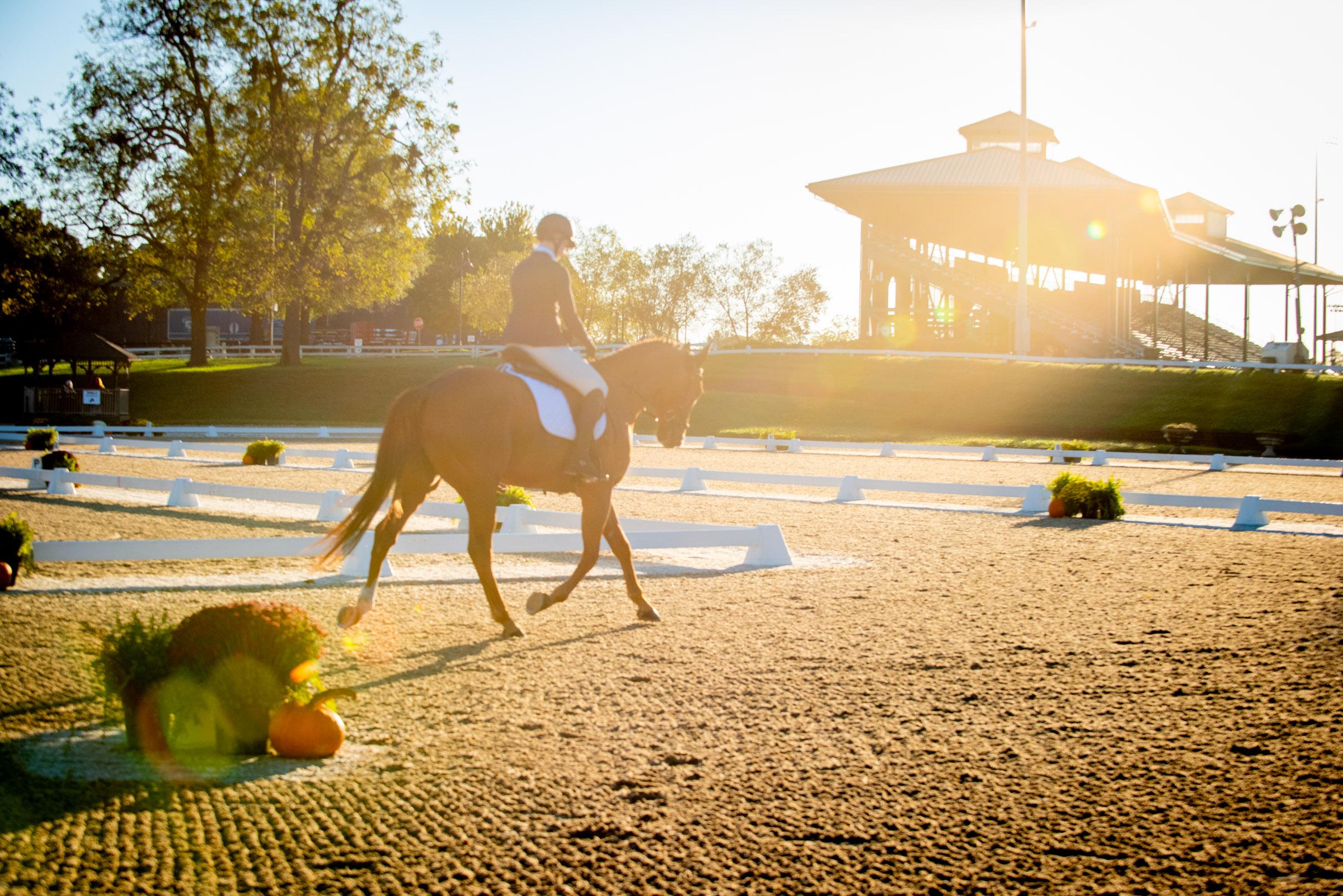
Not much beats the Kentucky Horse Park at sunrise. Good Spin. Photo by Lauren Kingerly.
So go ride folks, enjoy the training and the wind down into winter. I’ll be over here pretending that it is not getting colder and that winter is not in fact coming.
About Kentucky Performance Products, LLC:
Support Normal Insulin Regulation
Metabolic dysregulation is characterized by weight gain and unhealthy insulin levels that can lead to
unsoundness. Maintaining normal metabolic function and sustaining healthy weight through dietary
supplementation will support normal insulin levels and healthy laminae structure in the foot.
- Maintains healthy insulin regulation and normal body weight.
- Supports a decreased risk of laminitis.
- Formulated with a research-proven blend of polyphenols and amino acids.*
* Manfredi JM, Stapley ED, Nash D. Effects of a dietary supplement on insulin and adipokine
concentrations in equine metabolic syndrome/insulin dysregulation. In J Equine Vet Sci 2020:88:102930.
The horse that matters to you matters to us®. KPPVet.com
NEW WINTER STICKER AVAILABLE! Visit https://kppusa.com/winter24/ to grab one for your barn.

