



Turn Out Can Be Critical to Healing
Canva/CC
A recent article published by the Paulick Report focused on the findings of equine surgeon Dr. Larry Bramlage who argues that carefully managed turnout can be critical to the healing of equine skeletal injuries — often so than extended stall rest. Allowing movement encourages bone remodeling, preserves joint integrity, and supports overall mental well-being during recovery
According to Dr. Bramlage, bones respond to mechanical loading: when a horse moves — even at a walk or light trot — strained bone tissue encourages new bone formation. This mechanical stimulus boosts bone density and accelerates healing. In contrast, stall confinement reduces load-bearing activity and slows the recovery process. Controlled turnout provides the precise stimulus needed to kickstart skeletal repair without overloading the injury.
Further, movement supports cartilage maintenance and joint lubrication. Horses kept in stalls often suffer from stiffer joints and poorer resilience, while those turned out regularly maintain better joint flexibility and health. In essence, motion preserves joint integrity and may reduce the development of arthritic changes during recovery.
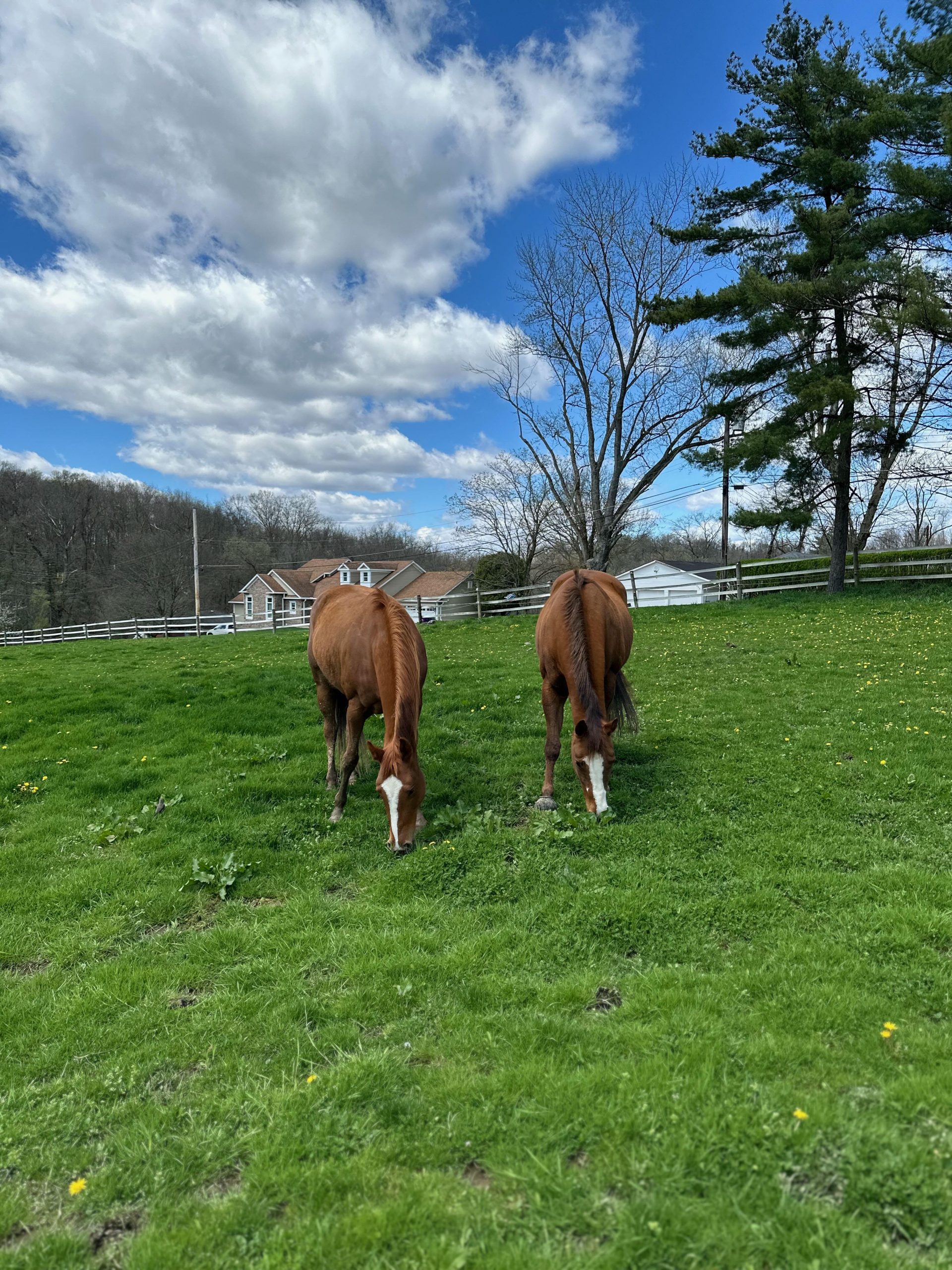
Two of the many chestnut mares at my barn enjoying some turnout. Photo by DeAnn Long Sloan.
Beyond bones and joints, turnout supports mental health. Horses confined for long periods frequently develop stress-related behaviors. Access to natural surroundings, fresh air, and freedom to move helps reduce stress — and lower stress levels translate into more efficient healing and less risk of re-injury once rehabilitation begins.
However, they type of turnout is critical. Dr. Bramlage is not advocating for unfettered turnout for an injured horse, and emphasizes the importance of customizing turnout based on the specific injury and recovery stage. For example, limited turnout on safe footing may be ideal early in healing, while gradually increasing allotted time helps advance bone and tissue adaptation. Blindly allowing full pasture access too soon or keeping a horse confined too long can both hinder recovery.
Other studies reinforce Bramlage’s position. Mississippi State University and Kentucky Performance Products both point out that horses turned out regularly develop stronger bones, ligaments, and tendons, especially when started during growth phases. Conversely, prolonged stall rest has consistently been linked to reduced bone density, cartilage degeneration, and increased tendon injury risk. According to an article published in the Equine Veterinary Journal, paddock turnout early in life can reduce the likelihood of future orthopedic disease.
Canva/CC
Here are the practical take‑aways for horse owners:
- Work closely with your veterinarian to create a tailored rehab and turnout plan.
- Avoid both extremes: stunted recovery from over‑restriction or re‑injury from early over‑load.
- Don’t default to stall rest unless absolutely necessary — controlled turnout can be better.
- Monitor behavior and movement — ensure turnout areas are safe and footing is appropriate.
- Re-evaluate regularly: as healing progresses, gradually increase turnout time or space.
When used strategically, turnout becomes a powerful part of equine rehabilitation—helping horses recover stronger, healthier, and more balanced than before.
Canva/CC
