



‘Find Out Who You Are and Do It On Purpose’: Remembering Dolly Parton
The rhinestones were dazzling, but Dolly Parton’s truest legacy was found in her songs, her generosity, her fierce self-knowledge, and the millions of lives she made brighter.
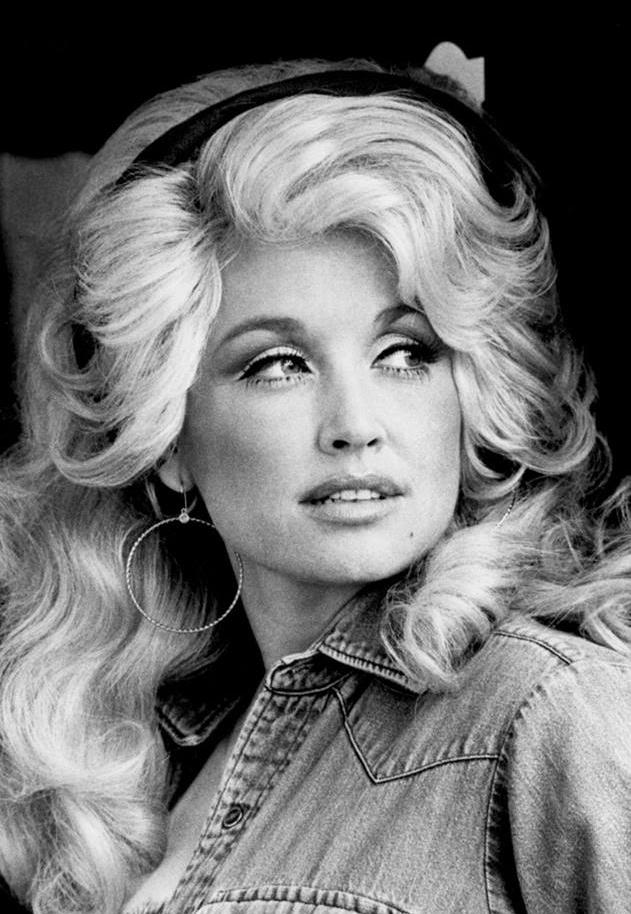
Young Dolly Parton. RCA Records, Public domain, via Wikimedia Commons.
Some artists are famous. Some are respected. Some are beloved.
Dolly Parton was all three, and somehow, she became something even rarer: one of the few public figures who seemed to be almost universally adored. The posts that have flooded social media over the last 18 hours have been nothing but outpourings of love and adoration. As it should be.
When news came that Parton had died Aug. 25, 2026 at the age of 80, the grief stretched far beyond country music. We lost a singer, songwriter, actress, author, businesswoman and philanthropist. But we also lost someone who made kindness look clever, generosity look joyful, and self-assurance look like an art form. For seven decades, she reminded us that a person could be ambitious without being hard, glamorous without being shallow, devout without being exclusionary, and funny without making anyone else the punchline.
There was no one else quite like Dolly, and that was always the point: “Find out who you are and do it on purpose.”
She Knew Exactly What She Was Doing
One of the clearest glimpses of Dolly Parton came during her now-famous 1977 interview with Barbara Walters. Walters questioned her appearance, her accent and whether people considered her a joke. Parton did not bristle. She did not shrink. And she did not surrender an inch of herself.
“I would never stoop so low as to be fashionable,” she replied. “That’s the easiest thing in the world to do.”
It was classic Dolly: a laugh line with a steel spine. A true steel magnolia, if you will.
View this post on Instagram
She went on to explain that she was “very real where it counts,” meaning inside — in her outlook on life, in the way she cared about people, and in the things that mattered to her. Show business, she said, was a money-making joke, and she liked telling jokes. The public may have thought the joke was on her, but Dolly knew otherwise: “I know exactly what I’m doin’.”
She was equally certain of her identity and her talent. That security, she explained, gave her room to “piddle around” with the makeup, wigs and clothes.
That interview endures because it revealed the intelligence beneath the rhinestones. Her image was not evidence that she did not understand how the world saw her. It was evidence that she understood perfectly, and chose herself and her approach anyway. The wigs, long nails, high heels, and glitter were not a disguise for insecurity. They were the joyful creation of a woman so grounded in who she was that she could play with who she appeared to be.
There are two things about this interview that have always stood out to me. First, the contrast between Barbara Walters and Dolly is astounding, underscored by Dolly’s wig and lipstick and Walters’s simple bob and modest makeup. Second, the moment when you see Barbara Walters get it. Right after Dolly says she knows exactly what she’s doing and she can change at any time, the look in Walters’ eyes changes. It’s at about minute 2:41 below, but you can see that patronizing look disappear and respect take over.
The world was never laughing at Dolly Parton. We were laughing with her, even when it took us a while to catch up.
A Songwriter Before Everything Else
The spectacle sometimes made it easy to underestimate her. That was our mistake, never hers.
Dolly Parton was, first and always, an extraordinary songwriter. She could turn poverty into dignity in “Coat of Many Colors,” longing into an immortal plea in “Jolene,” and the frustrations of working women into the joyful rebellion of “9 to 5.” She found stories where other people found ordinary life, then wrote them with enough specificity to feel personal and enough humanity to belong to everyone.
Even the opening rhythm of “9 to 5” carried her unmistakable inventiveness. While working on the film, Parton clicked her acrylic fingernails together to imitate the clatter of a typewriter, using the sound to find the song’s beat. Those nails were eventually credited on the recording. Only Dolly could turn a manicure into percussion, and then turn that percussion into an anthem.
And then there was “I Will Always Love You.” Parton wrote the song as a farewell to Porter Wagoner when she left their professional partnership. Her original recording reached No. 1 on the country chart, as did a later rerecording. Nearly two decades later, Whitney Houston’s towering version for The Bodyguard spent a staggering 14 weeks atop the Billboard Hot 100 and carried Dolly’s words to still another generation.
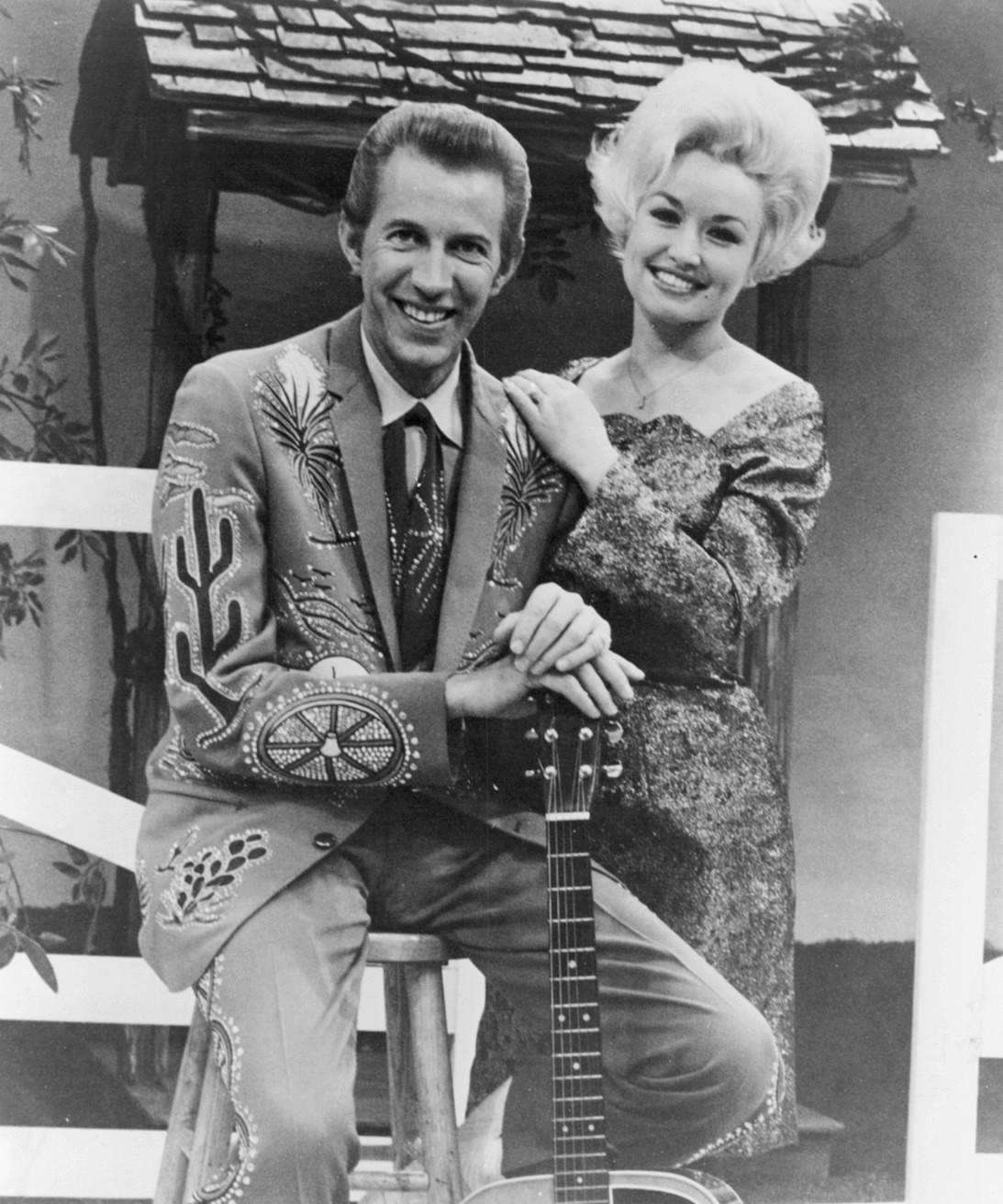
Porter Wagoner and Dolly Parton, 1969. Photo by Moeller Talent, Inc. Nashville, Public domain, via Wikimedia Commons.
Houston’s voice made the song soar. But the emotional architecture — the gratitude, ache, tenderness, and strength required to leave someone with love rather than bitterness — was all Dolly. That a quiet country farewell could become one of the most recognizable ballads in the world says everything about the reach of her writing.
Dolly pointed out that emotion is what drives good songwriting (at least for her):
The Book Lady
For all the awards, records and sold-out performances, one of Dolly’s proudest legacies began not on a stage, but with her father.
Robert Lee Parton was intelligent and hardworking, but he could not read or write. His experience inspired Dolly to launch the Imagination Library in 1995 for preschool children in Sevier County, Tennessee. The idea was beautifully straightforward: Mail every enrolled child a free, carefully selected book each month from birth until age 5, regardless of family income.
What began in her home county expanded across the United States and then around the world. Today, the program operates in the United States, Canada, the United Kingdom, Australia and the Republic of Ireland. More than 3 million children are registered, and more than 332 million books have been gifted.
Dolly understood that a book is never merely paper and ink. In the hands of a child, it can be possibility.
“When I was growing up in the hills of East Tennessee, I knew my dreams would come true. I know there are children in your community with their own dreams. They dream of becoming a doctor or an inventor or a minister. Who knows, maybe there is a little girl whose dream is to be a writer and singer.
The seeds of these dreams are often found in books and the seeds you help plant in your community can grow across the world.”
The Imagination Library did exactly that. It took a seed planted in East Tennessee and carried it into millions of homes, placing stories directly into small hands and giving children the chance to imagine lives beyond what they could already see.
Her father reportedly called the program the most important thing she had ever done. In a life overflowing with accomplishments, it is difficult to argue with him.
Love Without Conditions
Part of Dolly’s nearly universal appeal came from the fact that people believed her kindness. It was not abstract, and it was not offered only to people who looked, lived, loved, or believed exactly as she did.
Parton was a longtime supporter of the LGBTQ+ community, even when country music was not always a welcoming place for LGBTQ+ artists or fans.
“I hope that everybody gets a chance to be who and what they are.”
That belief appeared in her work as well as her words. Her 1991 song “Family” included gay relatives within its expansive, imperfect, and loving vision of belonging. She wrote “Travelin’ Thru” for the 2005 film Transamerica, using the journey of a transgender woman to explore identity, uncertainty, and the courage to keep moving toward oneself.
She also embraced drag culture with characteristic delight. Drag performers had celebrated and impersonated Dolly for decades, and she returned that affection rather than distancing herself from it. She famously recalled entering a Dolly Parton look-alike contest judged by drag queens — and losing.
Of course she loved the story. Dolly understood transformation, performance, and the freedom of creating yourself for the world to see. More importantly, she understood that dignity should not depend on approval. She did not require people to pass a test before they were worthy of kindness. She simply made room for them.
And, Yes, There Were Horses
Because this is Horse Nation, we would be remiss if we did not point out that Dolly’s entertainment world made plenty of room for horses, too.
Dolly Parton’s Stampede, with locations in Pigeon Forge, Tennessee, and Branson, Missouri, is an equestrian-themed dinner attraction built around 32 horses, skilled riders, trick riding, musical productions, special effects and friendly audience competition.
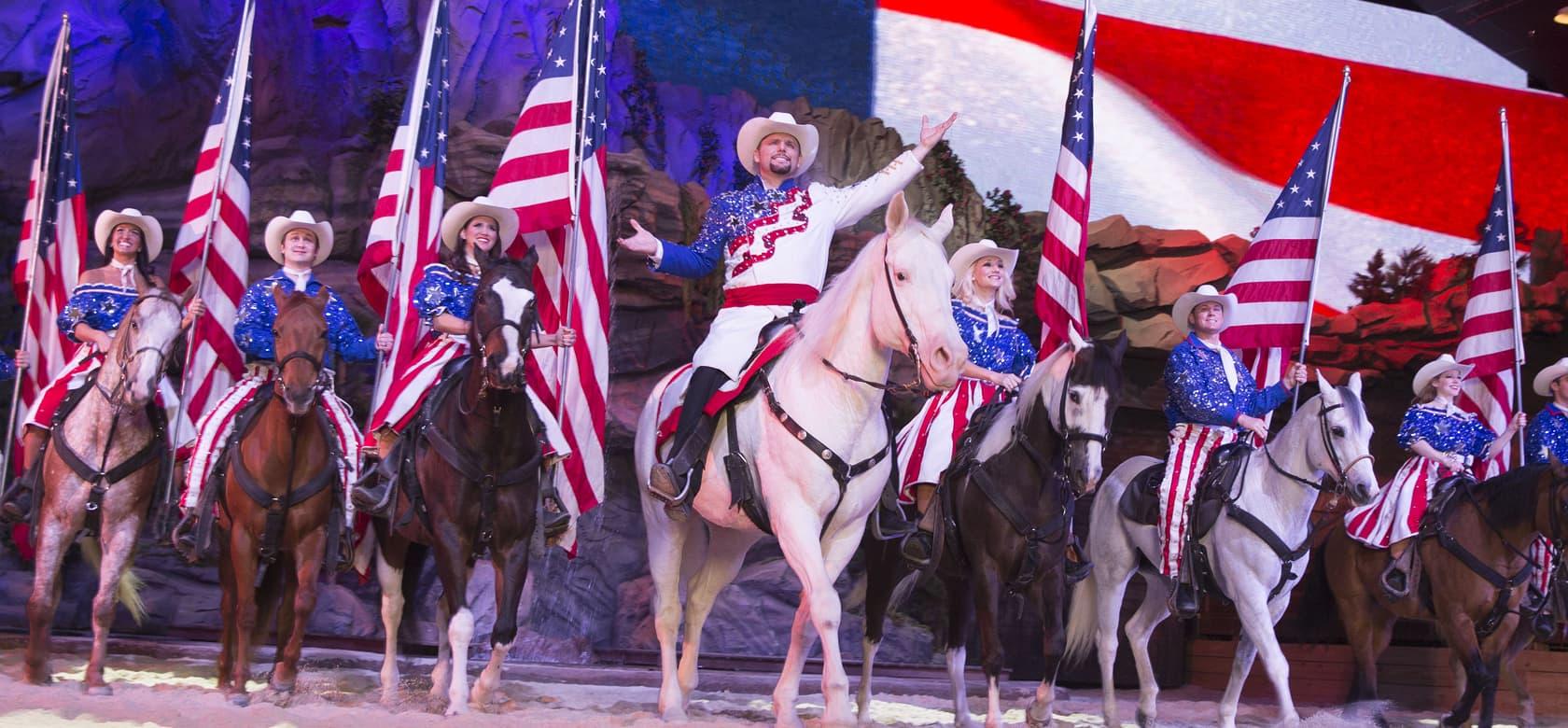
Photo from Dolly Parton’s Stampede website.
Guests can arrive early to walk past the stalls and meet the equine stars, enjoy live country and bluegrass music, and then settle in for a four-course Southern feast while the horses and riders take center stage. During the Christmas season, the production transforms with holiday music, lights, a live nativity and Santa Claus.
It is big, theatrical, unabashedly over the top and designed to make people happy.
In other words, it is wonderfully Dolly.
She Made the World Brighter
Dolly Parton leaves behind songs we will sing for generations, films we will keep quoting, stages that will always seem slightly dimmer without her, and hundreds of millions of books carrying her belief in children into homes around the world.
But perhaps her greatest gift was the example she set.
She showed us that softness and strength are not opposites. That you can take your work seriously without taking yourself too seriously. That faith can lead with love. That success means more when you bring something home to your community. That there is power in knowing who you are — and enormous freedom in letting other people be who they are, too.
She was rhinestones and roots, laughter and discipline, towering ambition and down-home humility. She built an unmistakable public image, then spent a lifetime proving that the heart inside it was even larger.
At the close of one of her greatest songs, Dolly Parton offered a wish for joy, happiness and love. Now the world returns that sentiment to her.
We will always love you, Dolly.
