



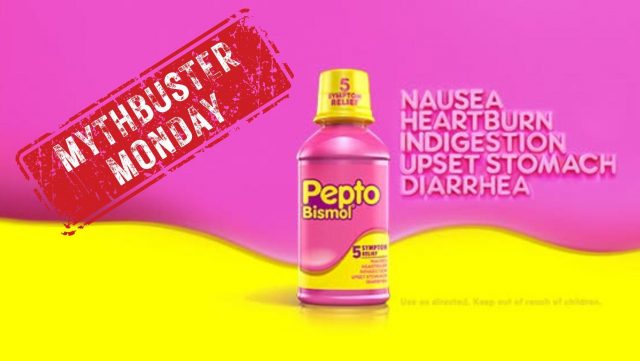
Mythbuster Monday: Peto-Bismol and Ulcers
On Mythbuster Monday, we tackle a variety of equestrian myths to either bust or confirm. Today’s discussion: Can you treat ulcers with Pepto-Bismol?
It’s Mythbuster Monday, where Horse Nation dives into different equestrian myths and provides research-based evidence to either bust or confirm those myths.
Today’s Mythbuster Monday was inspired by a debate that popped up on a horse social media page stating that ulcers could be treated with over-the-counter (OTC) Pepto-Bismol. It sparked enough debate that we got curious and decided to dig deeper, look at the science and physiology behind it, and separate myth from fact. So, here it is — can you treat horse ulcers with Pepto-Bismol? Is OTC human medication strong enough for horse dosing? Is this an effective treatment? Read on to find out!
Myth: You can treat horse ulcers with Pepto-Bismol
Myth or Fact: Myth
Horse gastric ulcers are one of the most common digestive issues seen in horses, affecting equines of all ages, breeds, and disciplines. An ulcer is a sore or erosion in the lining of the stomach caused by exposure to stomach acid. Horses naturally produce stomach acid around the clock, whether they are eating or not. In the wild, horses graze almost continuously, which helps buffer and protect the stomach. Modern management practices such as meal feeding, intensive training, transportation, competition schedules, stress, and periods without forage can increase the risk of ulcer development. Horses with ulcers may show signs ranging from poor performance and behavioral changes to weight loss, a dull coat, decreased appetite, or recurring mild colic.
Pepto-Bismol is an over-the-counter medication commonly used in people to help relieve digestive discomfort. Its active ingredient, bismuth subsalicylate, works by coating irritated tissues within the digestive tract while also providing mild anti-inflammatory and antimicrobial effects. In humans, it is often used to help manage symptoms such as upset stomach, nausea, indigestion, diarrhea, and heartburn. The medication’s protective coating action help soothe irritated tissues and reduce discomfort while the digestive tract recovers from irritation or inflammation.
But is Pepto-Bismol an effective treatment for horse ulcers?
An article titled Equine Gastric Ulcer Syndrome in Adult Horses states that the primary goal of treating equine gastric ulcers is to reduce stomach acid and allow damaged tissues to heal. The review identifies omeprazole as the cornerstone of ulcer treatment due to its ability to significantly suppress acid production within the stomach. The authors also discuss the use of additional medications such as sucralfate, which helps protect ulcerated tissue, and misoprostol, which may be beneficial for certain glandular ulcers. The article emphasizes that treatment success is often improved when medication is combined with management changes, including increased forage availability, reduced stress, and adjustments to feeding and exercise routines.
The findings of this review directly challenge the common myth that Pepto-Bismol is an effective treatment for horse ulcers. While bismuth subsalicylate, the active ingredient in Pepto-Bismol, may temporarily coat irritated tissues and provide short-term digestive comfort, the review does not list it as a recognized or evidence-based treatment for equine gastric ulcer syndrome. Unlike omeprazole and other proven therapies that address the underlying cause of ulcer formation by reducing acid exposure or protecting damaged tissue, Pepto-Bismol has not been shown in scientific research to heal gastric ulcers in horses. As a result, current veterinary evidence supports acid-suppressing medications and proper management practices rather than relying on Pepto-Bismol as an ulcer treatment.
Another article titled Treatment and Prevention of Equine Gastric Ulcer Syndrome discusses proven treatment options such as proton pump inhibitors, particularly omeprazole, which decrease acid production and have been shown to effectively heal gastric ulcers in horses. The article also highlights the importance of management practices, including proper feeding schedules, increased forage intake, and reducing stressors that contribute to ulcer formation and recurrence.
The information presented in this review further challenges the popular myth that Pepto-Bismol is an effective treatment for equine ulcers. While Pepto-Bismol may temporarily soothe an irritated digestive tract, the article again does not include bismuth subsalicylate among the recommended or evidence-based therapies for ulcer treatment or prevention. Instead, the research supports treatments that directly address the underlying cause of ulcers, excessive acid exposure, rather than products that simply coat or soothe the stomach. This distinction is important because a horse may appear more comfortable after receiving Pepto-Bismol, but there is no scientific evidence showing that it heals ulcers the way proven treatments such as omeprazole can.
According to the article, How Long Does It Take for Pepto-Bismol to Work?, One reason the myth that Pepto-Bismol can treat horse ulcers persists is that its active ingredient, bismuth subsalicylate, does have legitimate medical uses…for humans. Bismuth compounds coat irritated tissues and possess mild antimicrobial and anti-inflammatory properties. In human medicine, bismuth is sometimes included in treatment protocols for stomach ulcers associated with Helicobacter pylori (H. pylori), a bacterium known to cause many human gastric ulcers. Because of these benefits in people, some horse owners have assumed that Pepto-Bismol may offer similar ulcer-healing effects in horses.
However, equine gastric ulcers develop for very different reasons. Unlike many human ulcers, horse ulcers are not typically caused by bacterial infections such as H. pylori. Instead, they are most commonly linked to continuous stomach acid production, periods without forage, stress, intensive exercise, and other management factors that damage the stomach’s protective lining. Because the underlying cause is acid-related rather than bacterial, current veterinary research focuses on treatments that reduce stomach acid production and strengthen the stomach’s defenses. While Pepto-Bismol may temporarily soothe irritation, there is no scientific evidence showing that it effectively treats or heals equine gastric ulcers, making its reputation as an ulcer remedy more myth than proven medicine.
These sources collectively debunk the myth that Pepto-Bismol is an effective treatment for equine gastric ulcers. Across veterinary reviews, clinical research, and current treatment recommendations, a consistent theme emerges: successful ulcer therapy in horses is centered on reducing stomach acid production and creating conditions that allow damaged stomach tissue to heal. The literature makes clear that equine ulcers are primarily caused by factors such as continuous acid exposure, stress, feeding practices, exercise, and compromised protective mechanisms within the stomach, rather than the bacterial infections that often contribute to ulcers in humans. While bismuth subsalicylate, the active ingredient in Pepto-Bismol, may provide temporary soothing effects by coating irritated tissues, there is little to no scientific evidence demonstrating that it heals gastric ulcers in horses.
Rather than relying on anecdotal remedies, the research consistently supports evidence-based treatments such as omeprazole, along with management changes that reduce ulcer risk and promote healing. The fact that Pepto-Bismol can temporarily ease digestive discomfort may contribute to the perception that it is treating the ulcer itself, when in reality it does not address the underlying acid-related causes of ulcer formation. Far from being a proven ulcer treatment, Pepto-Bismol remains unsupported by current equine ulcer research, while therapies that directly reduce stomach acid and protect the stomach lining continue to be recognized as the most effective and scientifically validated approaches to treatment and prevention.
Do you have an equine myth you’d like us to tackle? If so, send it our way! Email your suggestions to [email protected]. Put Mythbuster Monday in your subject line.
