



Thoroughbred Logic, Presented by Kentucky Performance Products: Adaptability
For readers who love OTTBs, horse management, and thoughtful horsemanship discussions, this one should spark some great conversation.
Welcome to the next installment of Thoroughbred Logic. In this weekly series, Anthropologist and trainer Aubrey Graham, of Kivu Sport Horses, offers insight and training experience when it comes to working with Thoroughbreds (although much will apply to all breeds). This week ride along as Aubrey shares her logic on trust when it comes to the need for adaptability.
One of the things I love most about Thoroughbreds is not just their versatility, but their adaptability. The difference here is subtle. They, as a breed, are versatile. That goes without saying. They gallop across the polo field, flick their toes through the show hunter hack, drop into water on cross country, and give the purpose-bred quarter horses a run for their money in barrels and mounted shooting. And they do all of this after already tying up a career running their hearts out on the track. Yep, super versatile as a breed.
As individuals, Thoroughbreds also are adaptable. It’s not just that one Thoroughbred can run barrels, but that the TB barrel horse also can learn to canter correctly down a six-stride line. It is the filly I retrained from the track who was eventing with her owner in Georgia, now working cattle out west. And it is the reality that every one of these horses who has come off the track has individually adapted (admittedly some better than others) to a completely different world of care, exercise, lifestyle and purpose as sport horses.

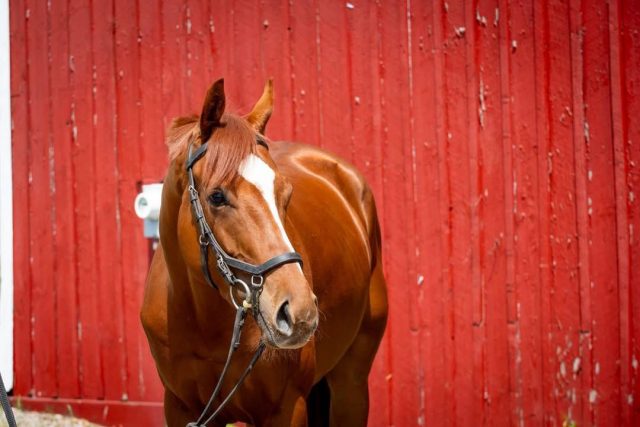
Now (In A Minute) came home from the track last week and is having to learn all the things about how to (sport) horse – turnout, riding, crossties… all the things. Photo by Lily Drew.
To understand how adaptable they are, my brain goes looking for an inverse and I land on the fighting fish (Bettas). Those stunningly beautiful critters seem to be some of the least adaptive out there. They can only live in solitary homes of glass and water lest they murder their company. There is one captivity equation that keeps them “happy” … or perhaps … simply alive: glass, water, and utter solitude.

This is how I end up thinking of their set ups, I’m certain folks do more than just a round glass tank… Photo from https://theplecofeeder.com/
The Thoroughbred, of course, is not like that. They are too smart, too social, too willing to try to simply have a single answer that works for them.
And that’s the fun part when people visit here to try horses. They walk into a barn full of Thoroughbreds and find them all quietly munching their hay or hanging out easily in paddocks. They stand on the cross ties, travel past each other with feet and teeth usually in check, and basically are uncomplicated good kids. And sometimes, those folks seem to think that the way things are done here are the only ways these kids will be happy. And then they worry because their barn/set up/feed schedule, etc. is different.

Ducky (Return the Ring) was in barrel horse training before returning to Kivu to begin his career as an Eventer. Good adaptable pony. Photo by Lily Drew.
While I absolutely take a ton of pride in getting things right here for my horses, how I do things is only one of any myriad ways that a Thoroughbred can be content and successful. This circus is not the betta fish glass container + water. It’s not the only option.
I ran into this with some super kind folks who were out trying horses this week. They would ask how many times a week I rode such and such a horse? How long were his rides? What did he eat? How was he with other horses in the fields? What did he do previously and how was he there? These are all good questions.

Neph (Sisterson) has settled right into our way of life here, but that doesn’t mean he can’t settle into someone else’s just as easily. Photo by Lily Drew.
When I mentioned that he was quiet and good with three rides a week at around 20-30 minutes, you could see them hold those numbers in comparison with their goals — longer rides many more days a week. When the numbers were not an exact match, the concern creeping in was visible. I tried to hit pause for them — he can adapt. What he does here is based on my schedule and what he needs to do the current job. That job is called being for sale. It is not what he will do with a proper career — that’s more rides, more hours, more work. Good.
In general, these horses love to work. No, none need a seven-day-a-week job — they didn’t even work that hard on the track. But they can do as much or as little as one needs them to so long as the humans adjust their expectations.

Artie (Reunion Tour) shown here taking on Novice at the GVRDC horse trial this weekend. The more he’s asked to do, the happier he is. But equally, the more maintenance he requires. All good – just needs accommodation. Photo by Lily Drew.
If you work them long hours many days a week, they had better be getting the nutrition and maintenance they need, excellent shoeing, and have tack that helps and does not hurt along the way. But keep them happy and healthy and they’ll step up to the plate with their human every time. Want to only work them a few days here or there, or leave long spells between swinging a leg over? Frankly, they’re usually just fine. I just wouldn’t expect that there won’t be some potential moments of a horse being fresh and enjoying the opportunity to use their body when you do tack up.

Thanks to properly flocked County Saddles (thanks, Lily), Prolite pads, and Tapestry Equine girths, my kids stay comfortable even with a heavier work load. Photo by Lily Drew.
This goes beyond riding. It is part and parcel of their management. For instance, I feed a super specific mix of things here. I have that nutrition pretty dialed based on years of trial and error and various consultations with nutritionists and feed reps. That said, what I feed is not the only thing these horses can eat and still succeed. They can adapt.
I turn out in 12-hour sessions with herds organized by personality and gender. You want to turn out 24-7 in a big field with shelters, bring in to feed individually, and kick them back out? Cool. They probably can adapt.

Horses here get to enjoy quite a bit of turnout in herds, but they also get to come in to eat. Photo by author.
I could go on and on about the ways they are adaptable. But the point is that there is flexibility in the various ways that we can manage these horses to keep them happy. Those ways are myriad, but importantly, the expectations of adaptation also needs to have its limits.
Sure, these horses should be able to figure out how to stall well at other facilities — hell, they all stall well here. But when one is struggling, it takes people (owner/barn manager/whomever is in charge) to figure it out and make productive changes. Sure, they should be able to handle 24-7 turnout, but when one’s skin is not handling the elements, or the feed set up means they’re not getting the full amount, it is up to the human to adapt their practices to accommodate the horse. When that horse goes into six-day-a-week work, we as their caretakers need to adapt the care they receive. More calories, good farrier work (that should be a given anyway), and regular maintenance as needed.

We’re very lucky to have Grace Putnum on our team as farrier. (Disregard the mane, that was only a half-done hack job at that point!) Photo by author.
And it is in those subtle shifts to the asked adaption where the horsemanship comes in. That’s the point where one makes adjustments to accommodate the animal instead of continuing to assume that they’ll figure it out. There’s absolutely a fine line there: enough time to try to adapt vs change the environment or situation to suit the individual equine’s needs.
And of course, each horse is different.

Hennessy (Johnny Bootleggs) is a horse that asks a rider to walk the line between adaptation and accommodation. I’m excited for him to have an easy-going but fun career in the future. Photo by Lily Drew.
Easy example: we feed wet. Grain is doused in water (there’s a whole article on this here), and in the evening they get soaked beet pulp, soaked alfalfa cubes, and their grain and supplements — so again, wet. Most of them figure it out over time and we have a process of training them onto it. Some, however, take longer than others, and some simply refuse to comply with our feed plan.
Shorty (Corrected Pedigree) has been here for at least four months now and he still eats his morning grain dry. Leaving the water out (and also any supplements as he’s a picky one) is a concession as I ask him to adapt. I need him to have the calories more than I need him to have the extra water. Fine. So we make it work his way so that I can have it my way (a horse who doesn’t look like we need to hide him behind the barn).

Good thing he’s cute. Photo of Shorty (Corrected Pedigree) by Lily Drew.
I could go on and on here. But the take away is that adaptation is linked to accommodation through horsemanship. Each horse asks us to walk that line differently, and frankly for me there’s a ton of fun in the trying to figure out what the puzzle pieces are that make them happiest within the existing set up and rider goals.
So go ride folks, enjoy the ridiculously nice weather for once. I don’t know what season this is, but it is welcome to stay here as long as it can.
About Kentucky Performance Products, LLC:
Not all electrolytes are created equal. When choosing an electrolyte, look for one that is science-backed and low in sugar, such as Summer Games®. This research-proven electrolyte formulation was originally developed for the horses competing in the 1996 Olympics.
Created from the results of extensive studies investigating the composition of sweat, Summer Games contains both key electrolytes and trace minerals in the actual amounts lost through sweating. While it’s an electrolyte worthy of Olympic athletes, Summer Games can be given in adjusted serving sizes to meet any horse’s needs, from hard-working lesson ponies to fiery eventers. Shop for this summer staple here.
Kentucky Performance Products creates scientifically proven supplements for your horse. Our supplements provide solutions to the everyday challenges facing your horse. The horse that matters to you matters to us®. Learn more about KPP at kppusa.com.

