



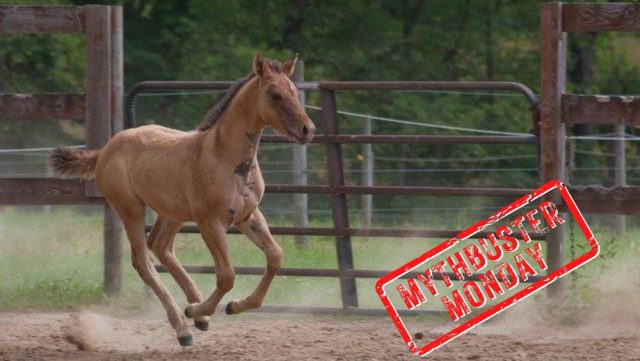
Mythbuster Monday: Breeding A Mare After Her First Heat Cycle Is Unsafe
On Mythbuster Monday, we tackle a variety of equestrian myths to either bust or confirm. Today’s discussion: Is it safe to breed a mare as soon as she starts going into heat?
It’s Mythbuster Monday, where Horse Nation dives into different equestrian myths and provides research-based evidence to either bust or confirm those myths.
Today’s Mythbuster Monday was inspired by a debate amongst competitors at a horse event. It sparked enough debate that we decided to dig deeper, look at the science and physiology behind it, and separate myth from fact. So, here it is — is it safe to breed a mare after her first heat cycle? Do heat cycles signify the horse is mature enough to carry a fetus to term? Are their growth and development concerns? Read on to find out!
Myth: Breeding a mare after her first heat cycle is unsafe
Myth or Fact: Fact

Photo by Bethany Kaiser Art
Mares are seasonally polyestrous animals, meaning they experience multiple estrous cycles during the breeding season, which typically occurs in the spring and summer months. The estrous cycle in mares averages 21 to 23 days, with each cycle consisting of estrus (the period of sexual receptivity) and diestrus (the period of reproductive inactivity). Estrus, often referred to as “heat,” usually lasts between four and seven days and is characterized by behavioral signs such as frequent urination, raising of the tail, and receptivity to a stallion. These behavioral and physiological changes are driven by hormonal fluctuations, primarily the rise and fall of estrogen and progesterone, which prepare the mare’s reproductive tract for potential ovulation and conception.
Mares typically experience their first estrous cycle, or puberty, between 12 and 24 months of age, though the exact timing can vary depending on breed, environmental factors, and individual development. The onset of the first heat cycle signifies that the mare’s reproductive system has matured sufficiently to produce viable eggs and respond to hormonal cues. While the initial estrus indicates physiological readiness, it is primarily a sign that the mare’s endocrine system is functioning, and her reproductive organs are capable of cyclical activity. Observing the first heat also provides insight into the mare’s overall reproductive health and sets the stage for monitoring subsequent cycles.
But, does it mean it is safe for a mare to be bred after that first heat cycle?
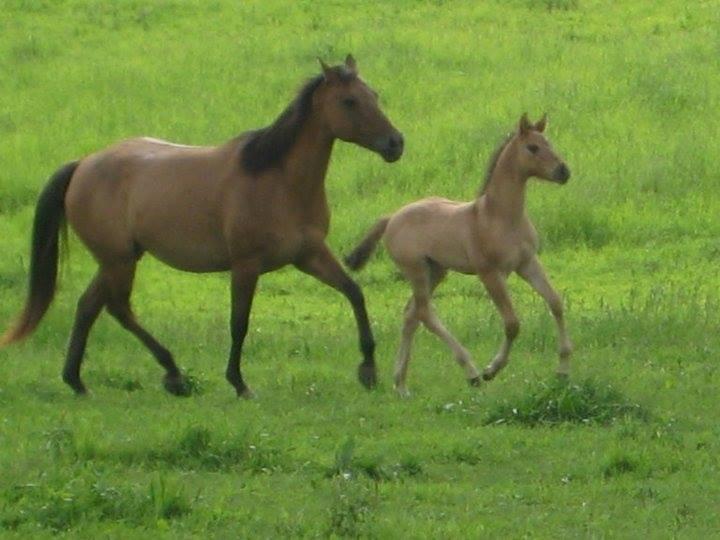
Photo by Marcella Gruchalak
According to a research article by Macpherson, breeding mares too early — such as immediately following their first estrous cycle — can lead to lower conception rates and reduced reproductive performance. While mares may display behavioral signs of heat at puberty, their reproductive system, including the uterus and hormonal cycles, may not yet be fully mature to support a successful pregnancy. At this stage, the mare is still undergoing significant skeletal and muscular development, and energy is prioritized toward her own growth. Introducing pregnancy too early can divert critical nutrients and energy away from the mare’s development, potentially compromising both her long-term health and the growth of the developing foal. The study emphasizes that physiological readiness does not always align with the appearance of estrus, highlighting the importance of allowing mares to reach full maturity before breeding to optimize fertility, reproductive outcomes, and overall well-being.
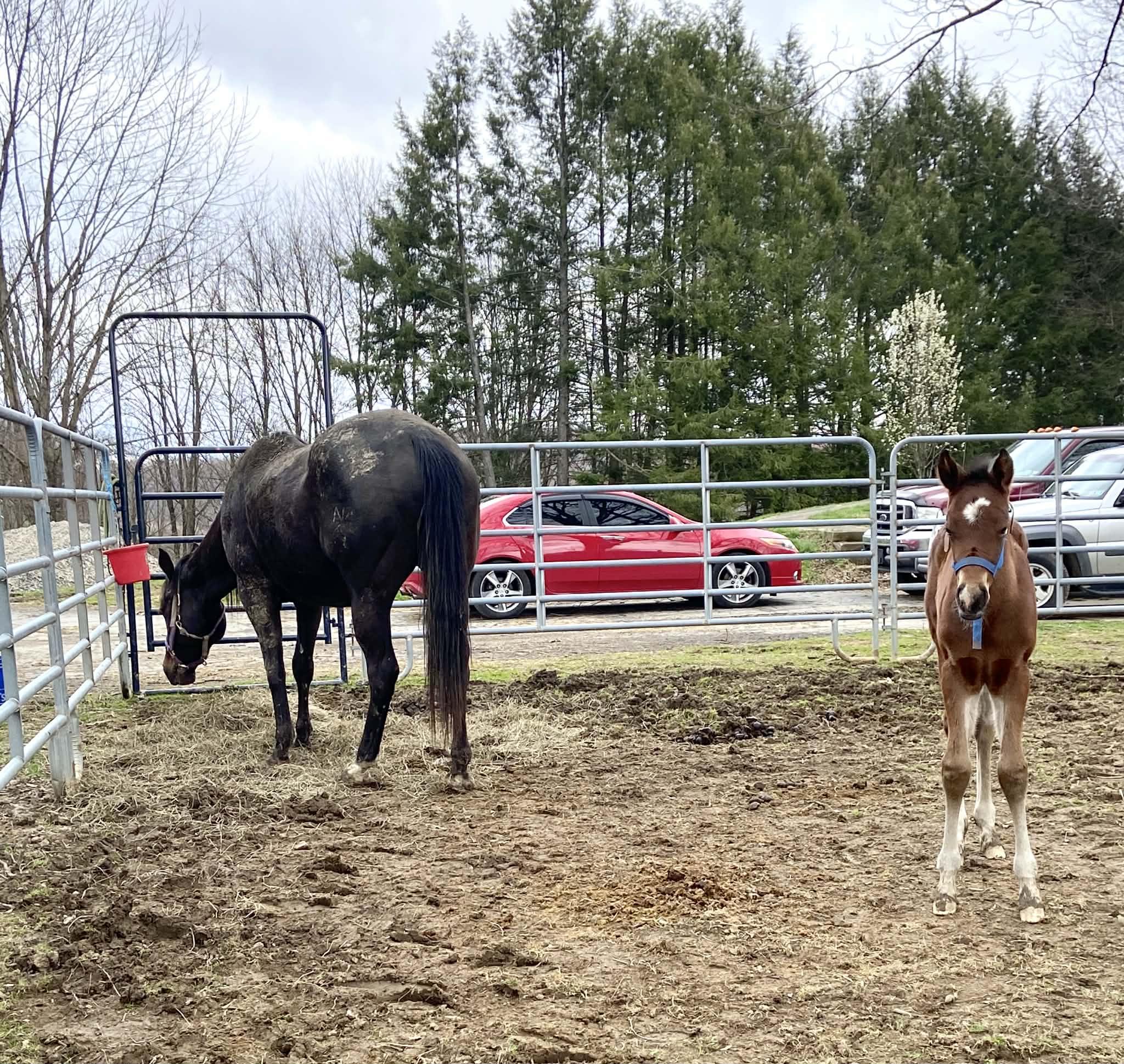
Photo by Marcella Gruchalak
Another article, Cardona‑García and colleagues examines follicular dynamics and pregnancy rates during foal‑heat in mares. The study found that although mares commonly display behavioral signs of heat, actual ovulation and follicular development can vary widely between individuals. Some mares do not ovulate during their first observed estrus, indicating that the presence of heat behavior alone is not a reliable indicator of reproductive readiness. This research highlights the complexity of equine reproductive physiology and underscores that early signs of estrus — such as those seen at puberty — do not necessarily correspond with the mare’s ability to conceive successfully. Consequently, careful monitoring of ovulation and follicular maturation is essential before attempting breeding to optimize fertility outcomes.
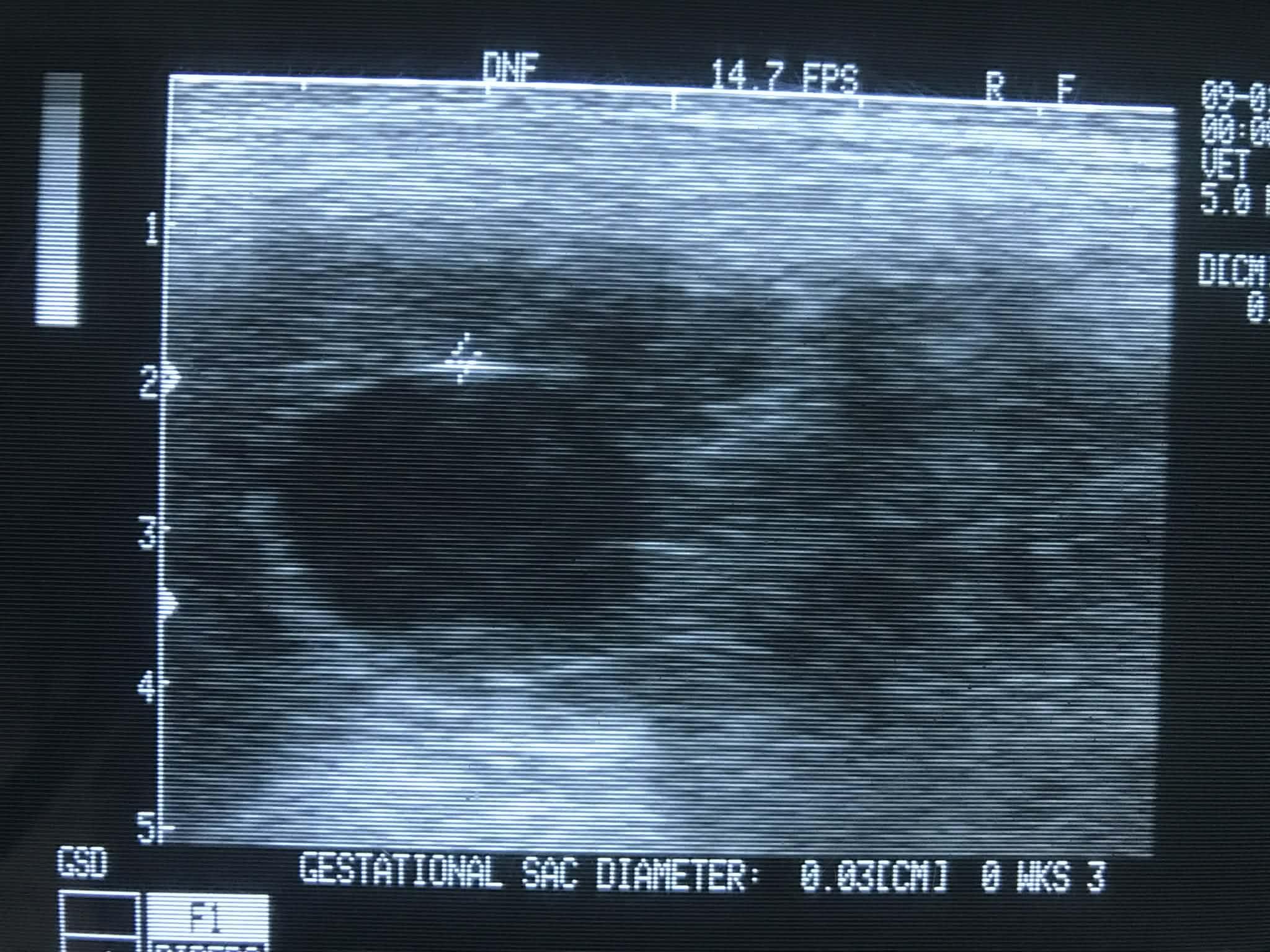
Photo by Marcella Gruchalak of Gestational Ultrasound by Misty Hollow Equine Practice
Fawcett’s research shows that the age at which a mare is first bred has significant implications for her lifetime reproductive success. Large retrospective studies indicate that mares bred too early, before reaching full physical and reproductive maturity, tend to experience lower conception rates, increased pregnancy loss, and reduced overall fertility throughout their lives. This evidence highlights that even if a mare displays signs of heat during her first estrous cycle at puberty, early breeding can compromise both her reproductive performance and long-term reproductive health. Waiting until the mare is fully mature helps optimize fertility outcomes and supports healthier pregnancies over the course of her breeding career.
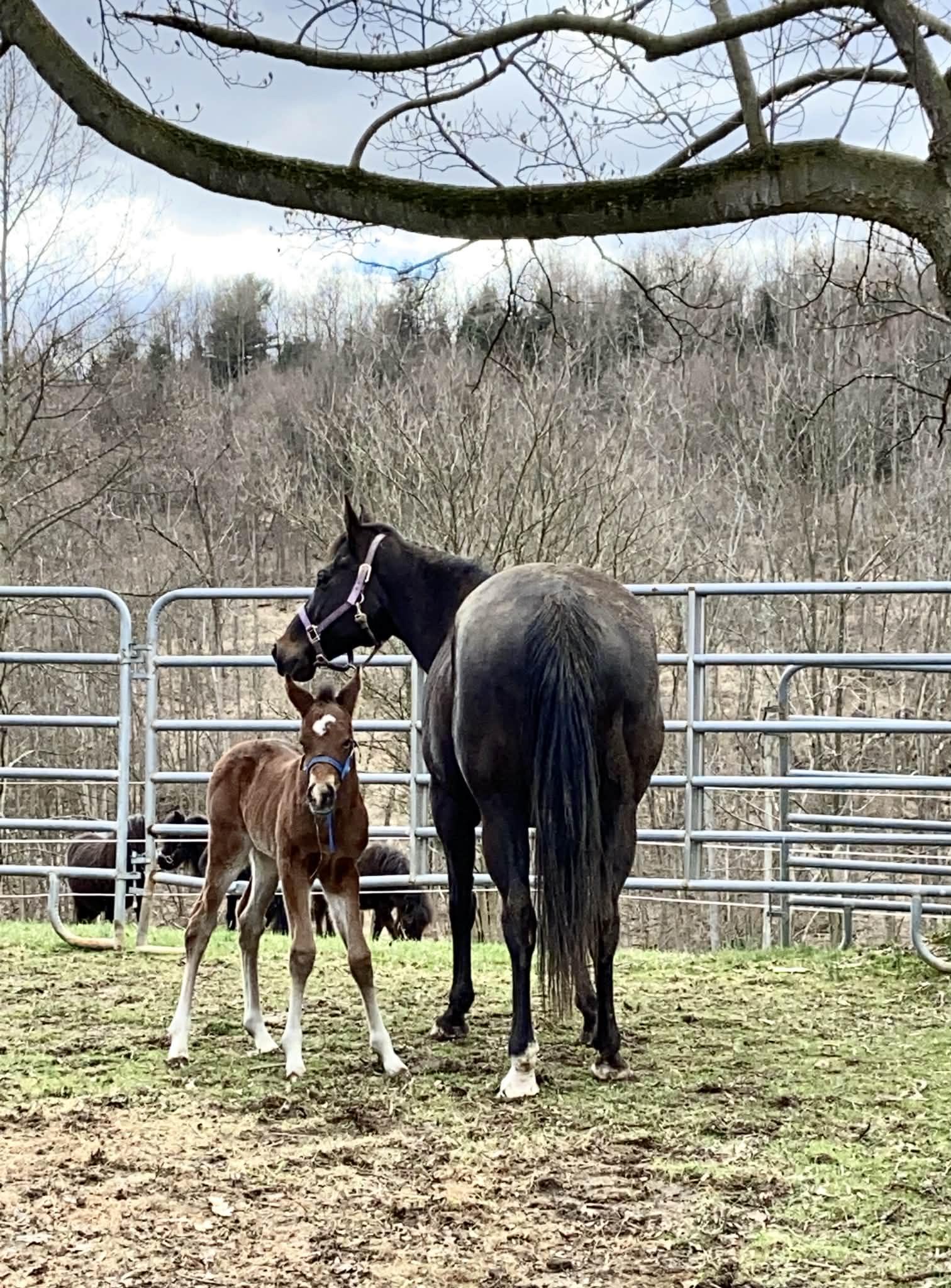
Photo by Marcella Gruchalak
These sources collectively confirm that it is unsafe for a mare to be bred as soon as she experiences her first heat cycle. Across equine reproductive physiology, veterinary research, and long-term population studies, a consistent theme emerges: the onset of estrus reflects hormonal activity, not full reproductive or physical maturity. The literature clearly demonstrates that early heat cycles, particularly those occurring at puberty, do not reliably indicate uterine readiness, consistent ovulation, or the mare’s ability to support a healthy pregnancy. Breeding at this stage can divert critical energy away from continued skeletal and muscular development, compromise fertility, and negatively affect both immediate and lifetime reproductive outcomes. Far from being an optimal or evidence-based practice, breeding at first heat is repeatedly shown to increase reproductive risk, while strategies that prioritize developmental maturity, uterine health, and overall physiological readiness result in healthier mares, improved conception rates, and greater long-term reproductive success.
Do you have an equine myth you’d like us to tackle? If so, send it our way! Email your suggestions to [email protected]. Put Mythbuster Monday in your subject line.
