



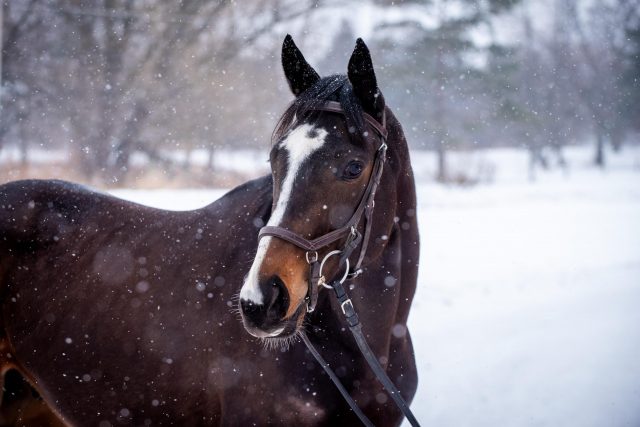
Thoroughbred Logic, Presented by Kentucky Performance Products: Speed, Instinct, and Buying the OTTB
“I have learned a ton about buying and selling (and definitely had some blunders) … Thankfully, these days, I have a good bit more knowledge, a few more tools, and have also gotten really comfortable trusting my gut.”
Welcome to the next installment of Thoroughbred Logic. In this weekly series, Anthropologist and trainer Aubrey Graham, of Kivu Sport Horses, offers insight and training experience when it comes to working with Thoroughbreds (although much will apply to all breeds). This week ride along as Aubrey shares her logic on buying horses off the track.
I have been asked a few times recently how I pick my horses. I appreciate the compliment in the form of a question. Often my answer is pretty uninteresting: glibly, I end up saying, “often they end up picking us,” or some such thing that really doesn’t amount to an answer.
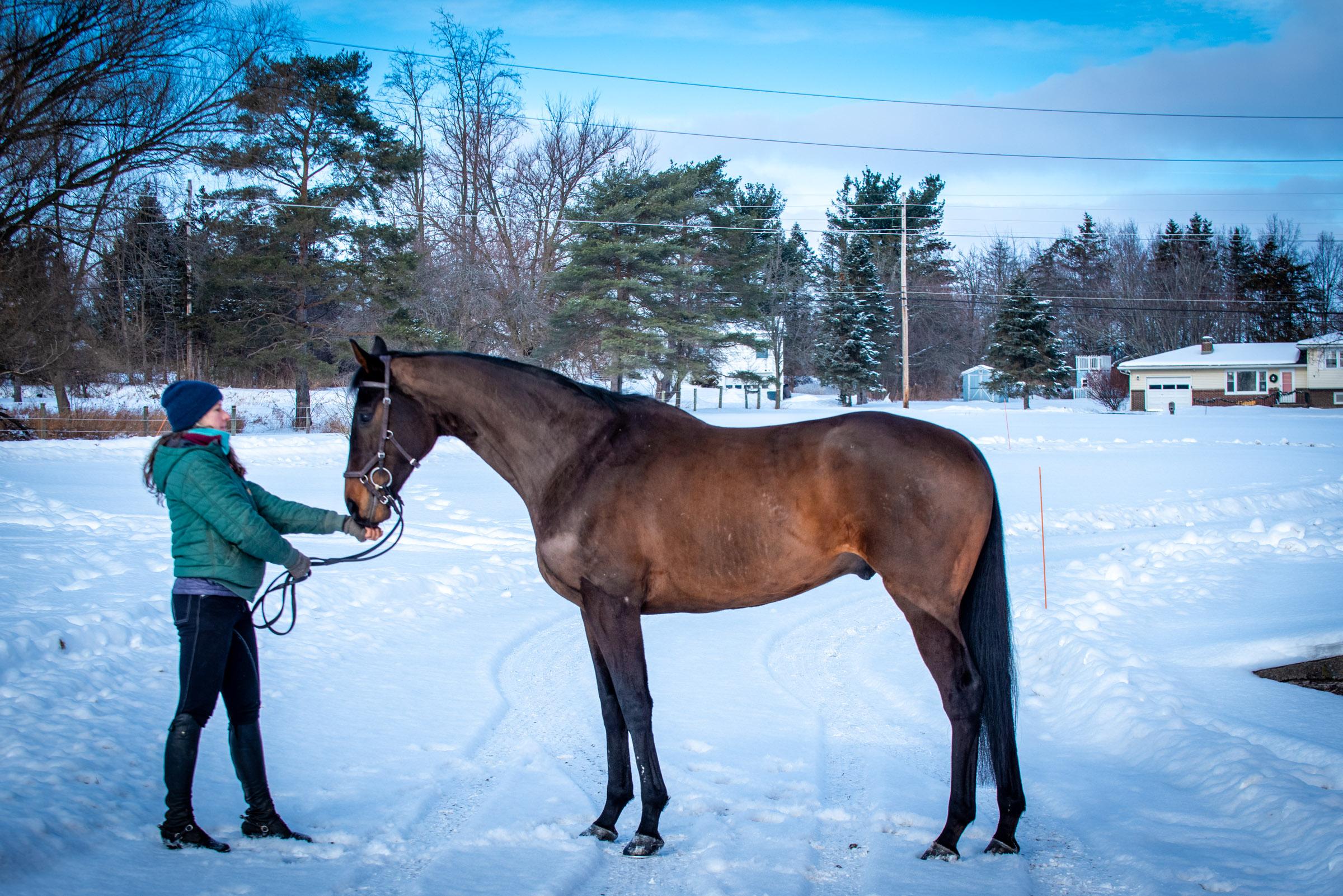
This one was picked for us. I certainly don’t mind. Photo of Stellar Lute by Lily Drew.
I suppose this is the more fleshed out response.
I can only imagine how stressful it is to shop for a horse right now. There are simply so. many. options. And if you go ahead and put an ISO out there, you’re going to get a few appropriate horses and an inordinate number of inappropriate animals filtering their way into the comments and your personal messages. Best of luck with the sorting.
When I bought Forrest, my first personal Thoroughbred as an “adult,” I was 100% winging it. I knew I wanted tall (though I was still too naive to know that a long legged rider does not need a 17h horse), sound, and young-ish and hopefully capable of jumping and enjoying a job in eventing. That was about it.
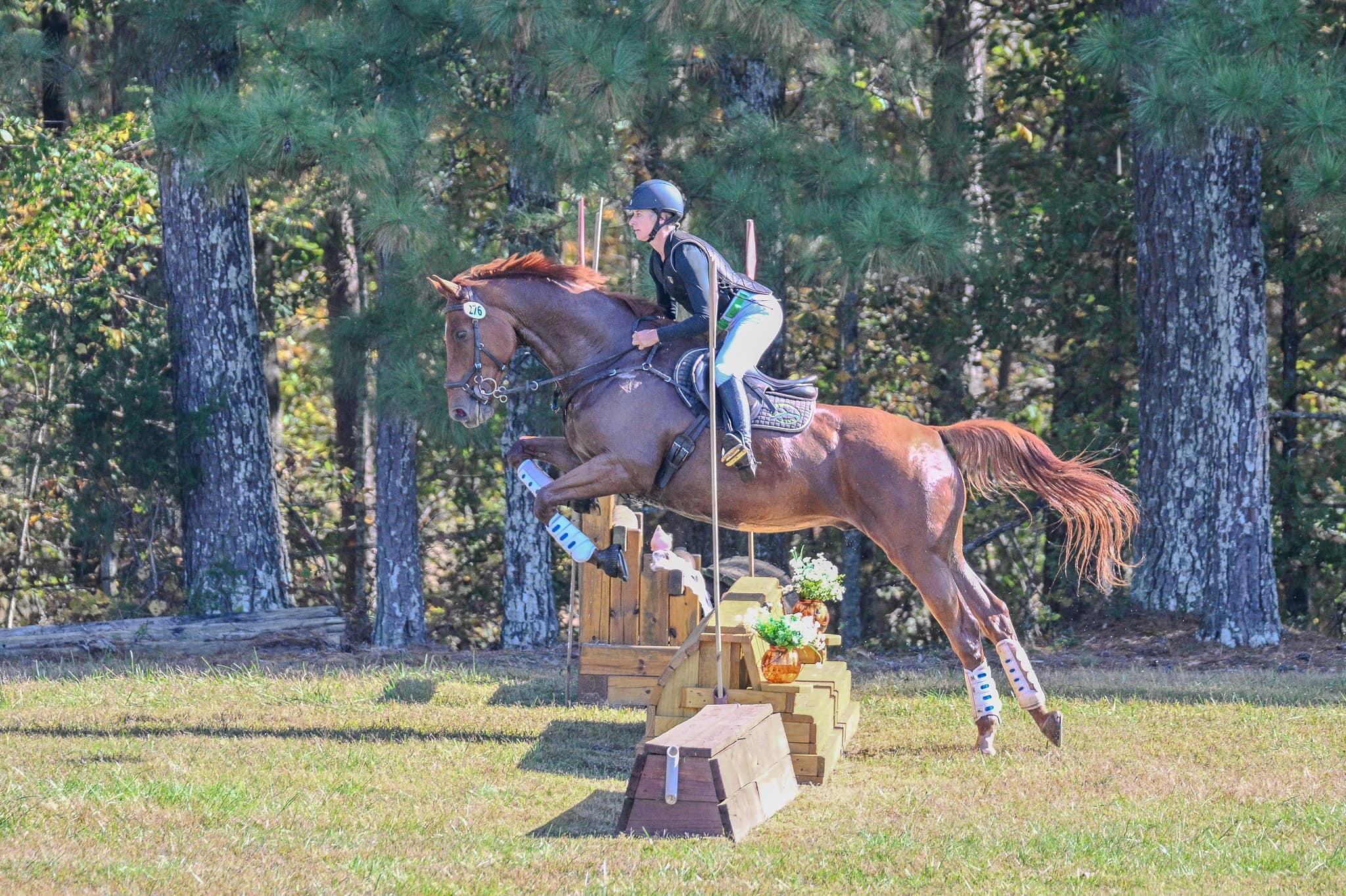
Forrest might not have made it to the upper levels, but he sure loves taking folks around the lower ones. Photo by Cora Williamson Photography.
I spent months scrolling Facebook and all of the rehoming sites. Hell, I remember being out to dinner with my then-boyfriend at a nice restaurant. He got up to head to the restroom, and I grabbed my phone. I saw that there was a lovely, big bay with excellent conformation that had just posted on a page I was diligently monitoring. I reached out, continued to carry on distracted conversation through the main course, only to find out over dessert that the gelding had already been snapped up before I inquired. Dammit. I should apparently have been watching my phone, not eating those appetizers.
I realized that if I wasn’t quick, the horses that caught my eye disappeared. Quick didn’t just mean on top of the ads, or checking in to see what the reputable rehomers had coming in. It also meant the ability to make an efficient decision. I realized that asking a million questions, requesting the creation of more videos, the taking of more images often meant that someone who asked less got the horse. At first, I thought this was wild. I was basically being asked to buy on instinct, race record, and only a smidgen of information, video, and a photo or two.
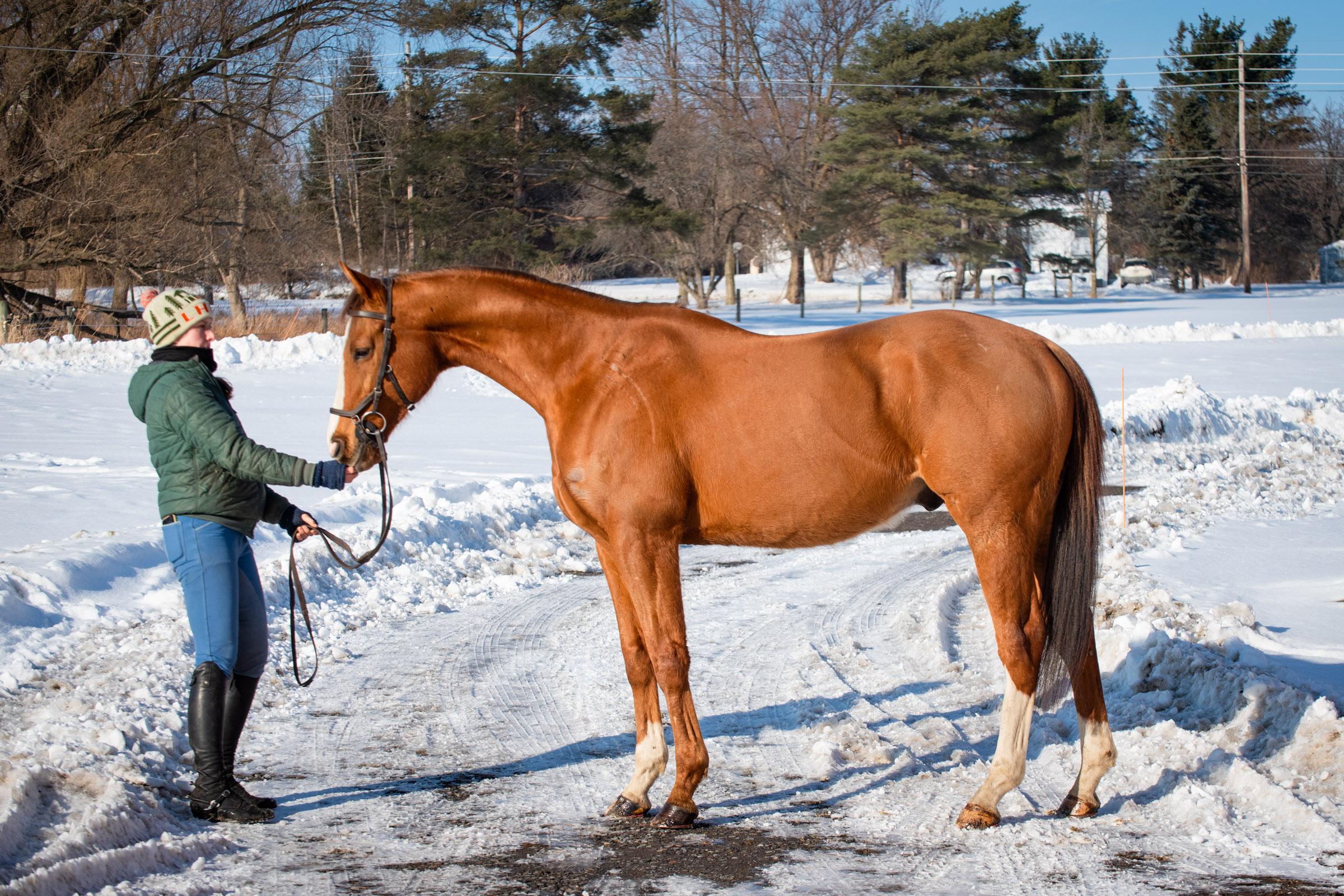
I bought Fig on a whim in the winter of 2024. He might not have been the soundest purchase I have made, but I certainly don’t regret bringing him in. Ekati’s Verve featured here a year later. Photo by Lily Drew.
But I realized something else, too. By reaching out and talking to the rehomers whose reputations I liked, I might be told, “Sorry that big bay sold quickly, but I do have this other one coming in.” The contact and existing conversation is how Forrest (Don’t Noc It) landed at my barn, for better or worse. No really, I love that horse, but he’s the biggest dingus out there.
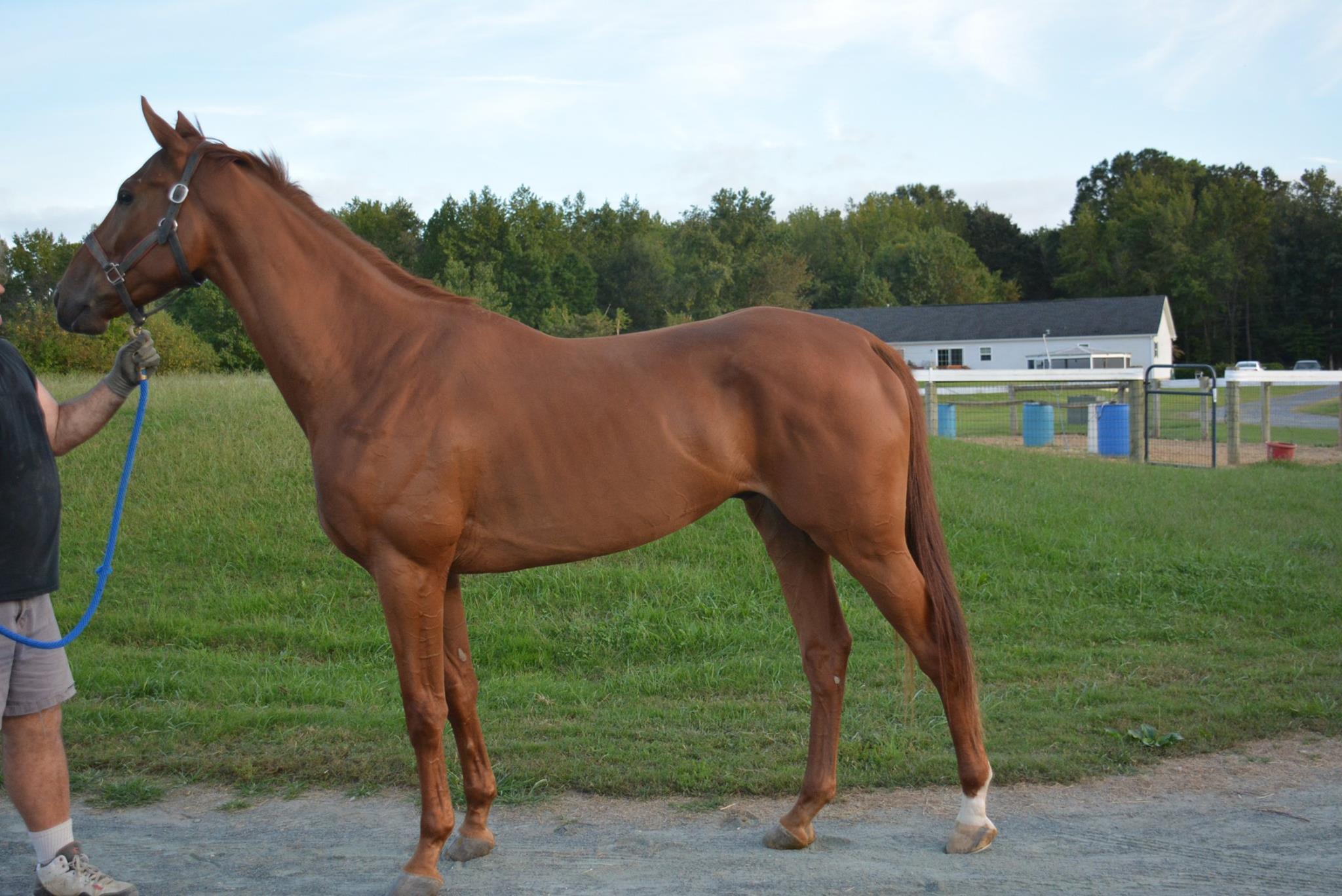
Forrest (Don’t Noc It) conformation photos that went up as I was deciding to buy him from Jessica Redman. Photo by Benchmark Sporthorses.
I have learned a ton about buying and selling (and definitely had some blunders) since acquiring Forrest. But the need for speed hasn’t changed. Thankfully, these days, I have a good bit more knowledge, a few more tools, and have also gotten really comfortable trusting my gut.
I still buy off Facebook like the rest of us. But I also have spent time cultivating positive interactions with sets of track trainers, which might mean that they let me know when they have a horse retiring from running before it hits the public domain. With them, it’s pretty simple. I like to see a photo or two and a jog video just to make sure we’re ll on the same page, but if I trust the connection, I willingly take the horse. It is that simple.
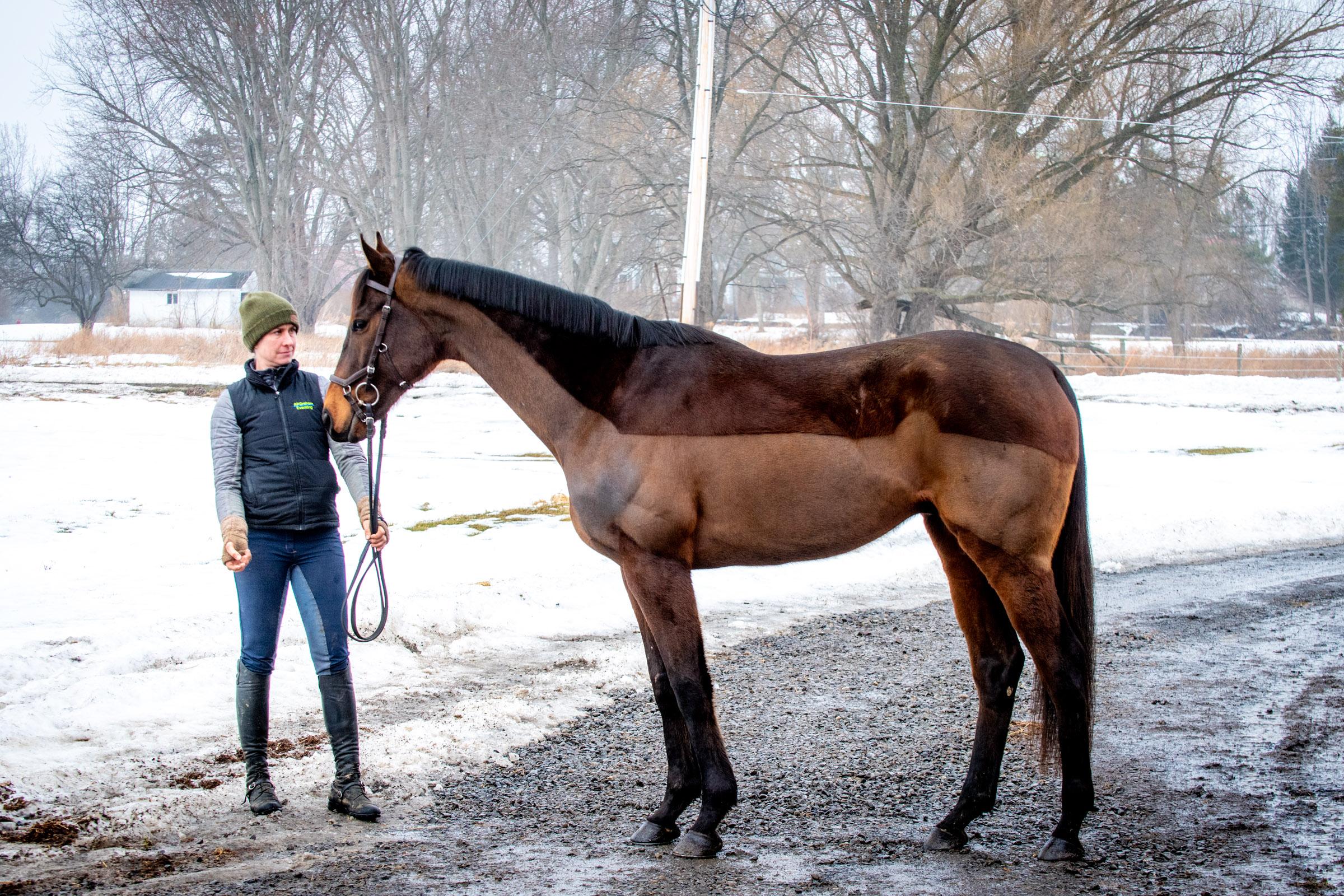
Tide (JC Moonset) is one of my more recent Facebook impulse buys. Despite my face in this pic, I’m certainly not sad about this one. What a lovely horse. Photo by Lily Drew.
I don’t pre purchase or vet them.* And I don’t usually have radiographs for them, unless there is a known injury or issue. If so, I make sure the risk, potential and investment in the horse all make sense. I’ll absolutely buy something with a well-placed screw, or with minor arthritis or an outside-of-joint-space osselet. Those don’t particularly bother me. But as always, the more information the better.
*To be clear, this is not an approach I would recommend to new horse owners, those who do not purchase horses regularly, and/or those who aren’t prepared to address issues that may arise due to purchasing on instinct alone. I have purchased enough horses off the track and rehabbed enough feet and injuries to have a fairly good idea of what I am committing to when I purchase using these criteria. More on that here.
So when folks say, “Jeeze, you always have such nice horses,” I appreciate the compliment, but don’t really get to take the credit. Much of that goes to the trainers who trust me enough to help make sure their nice race retirees make it here. And it ends up being a pretty positive cycle. The more nice horses they send me, the more horses I can get into excellent post-track homes, the more everyone trusts each other, and the more nice horses I get sent and get to rehome. Rinse, repeat, super.
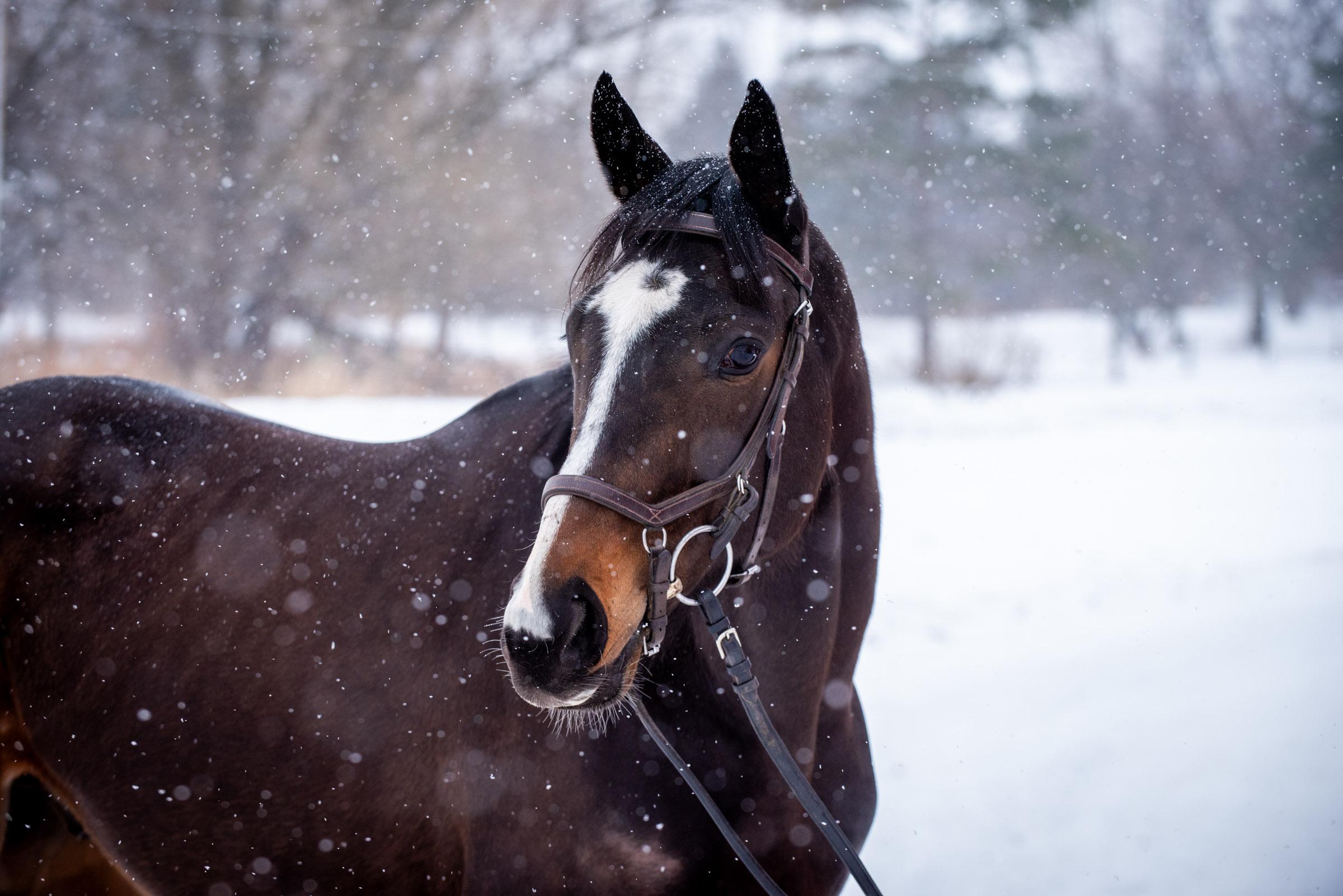
Shorty (JC Corrected Pedigree) also came from a trusted connection. I haven’t had a poor horse from them yet -they’re all this talented and lovely. Photo by Lily Drew.
Outside of being pitched nice horses, like many of the folks who do this professionally, I love looking for the diamonds in the rough. The horses whose conformation photos might not be particularly interesting or eye catching, but you can see that they have all the right elements to come together nicely. Most of the time, I’m not meaning to horse shop, but it happens anyway — on a lunch break warming up in the house, or procrastinating writing or layering up to head out in the cold.
Here’s the process:
Scroll Facebook. Trust my instinct. Avoid the sellers that I find to be dishonest, even if the photos are enticing.
Basically, I’ll see a conformation photo that looks nice enough. I’m usually looking at the angle of the shoulder, the matching angle of the hip and where the neck attaches. If those things tick the boxes, I’ll check the legs for lumps and bows or obvious effusion, take a quick gander at the feet (knowing that this is something we can fix so not a big deal). And then I’ll look at the eye. I’m always game for a lovely young horse with either the “look of eagles” or the settled kind eye of a good egg. But I’ll usually pass on even very good conformation if the eye is hard or absolutely wild.
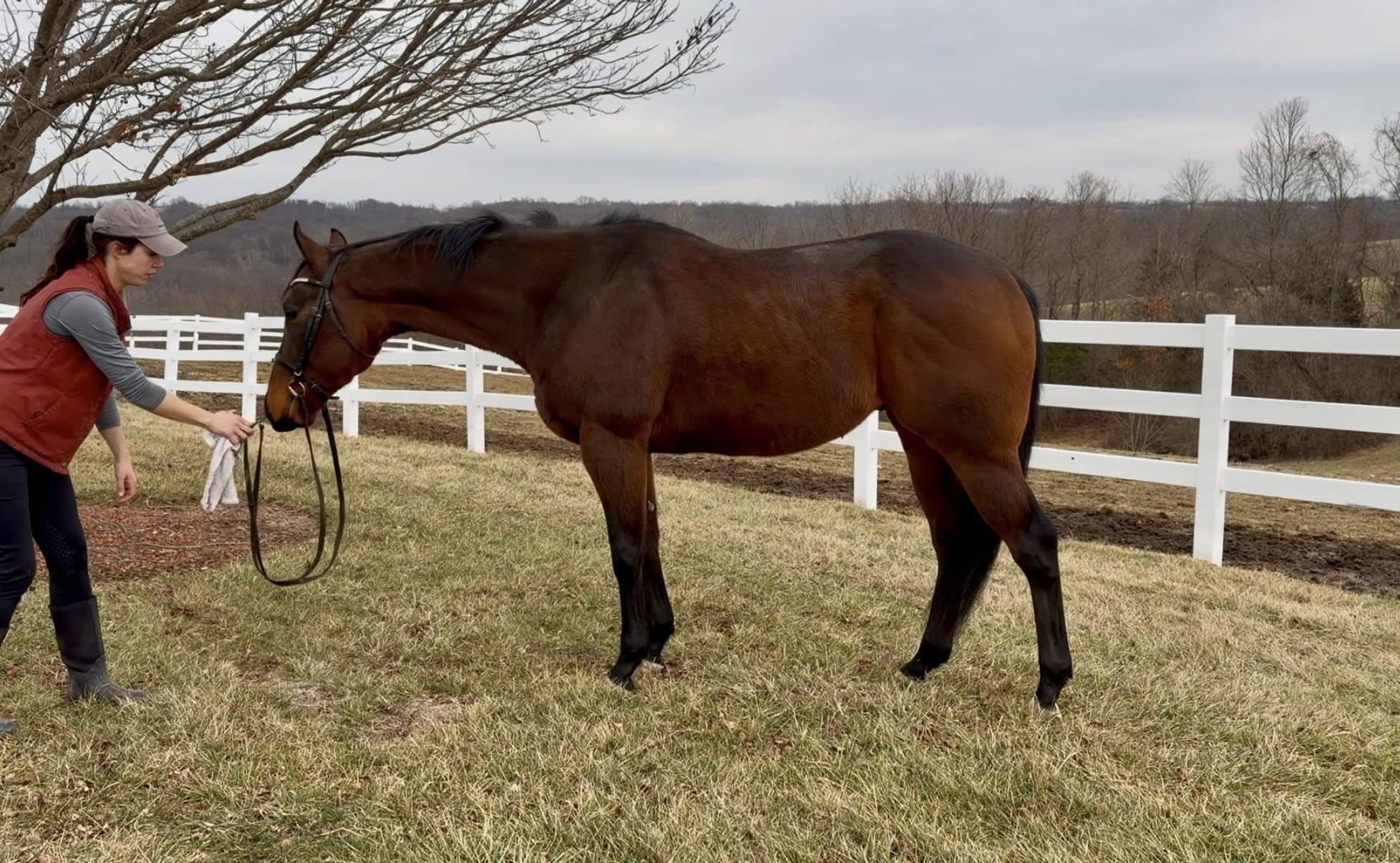
I recently used this process to pick up this kiddo, Price of Peace, from my friend Alice Beckman. There’s a lot of potential talent packed in that conformation, and a kind, mischievous eye. He ships to me today. Just wait for the glow up. Photo by Alice Beckman.
If the horse passes my “oh nice” quick check, I look for trot video — either straight line jog or ridden trot.* I don’t care how talented the rider is on their back, or how sound their handler is jogging alongside. I don’t even really care how they move, knees up and stabby or fluid through the shoulder and toe flicking. Honestly, track tight is expected and all of that will change with time and letdown. I’m still more interested in even footfalls and no apparent baseline lameness.
*I will do this same process on the backside of the track, too. Just superimpose the idea of looking at the horse in the stall and stood up outside and a quick straight-line jog to confirm soundness.
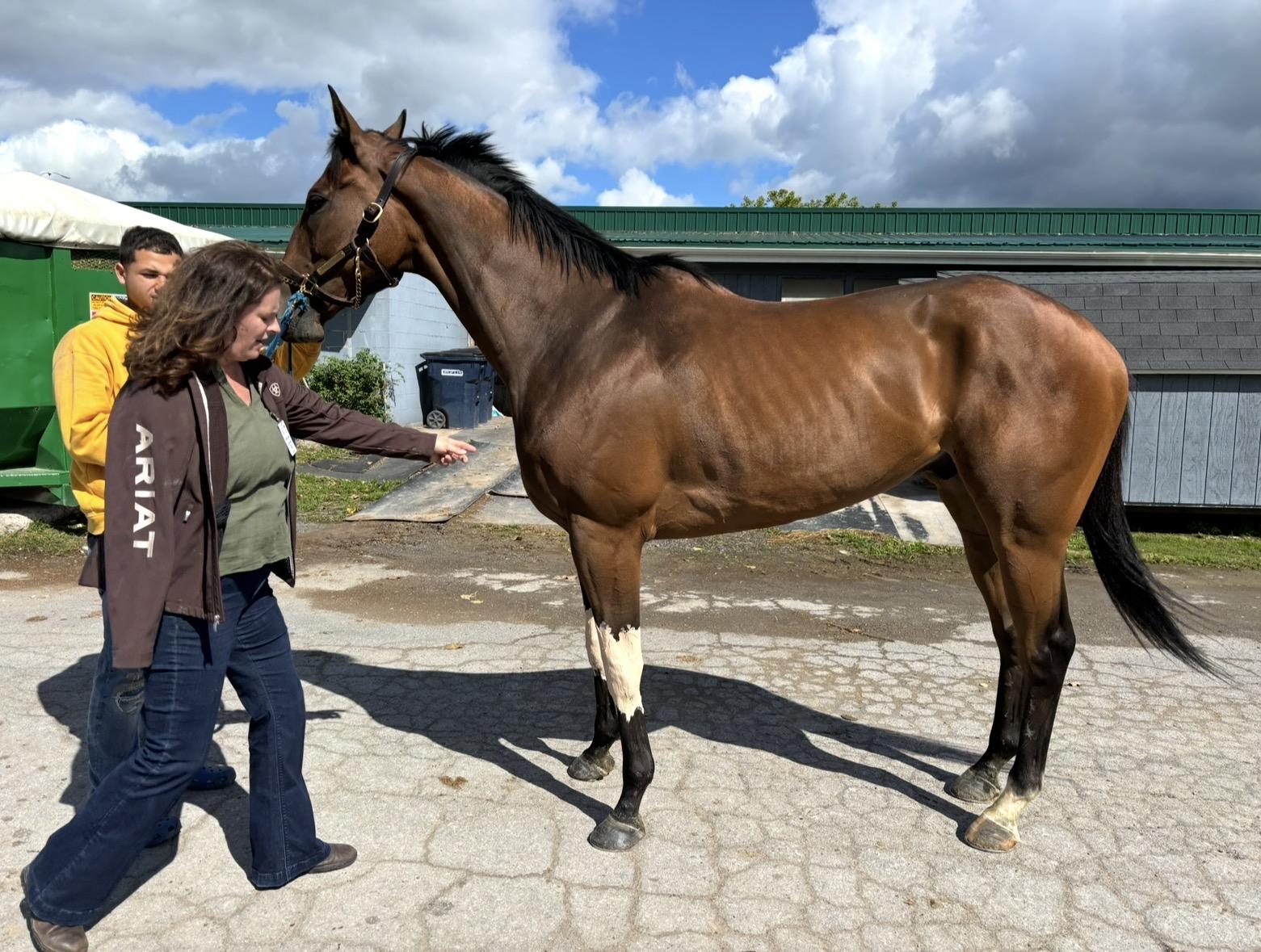
Checking out Knight of the Crown with Sarah Hepler while helping to list horses for Finger Lakes Finest Thoroughbreds on the backside at Finger Lakes Race Track. I didn’t have the upfront cash for him at the time, but under different circumstances, this kiddo would have come home with me. Photo by author.
And from there, I’ll check their Equibase page. I’m usually looking to make sure there are no recent glaring gaps in their race record. I have written a lot about this in the past (you can find my articles about “good race records” here). So all I’m looking for when they retired, the number of races run, and the consistency of performance in their last few races . Does their level of tight line up with the fact that they may have recently raced? Were they still running consistently? And, if they did not run, or did not return for a season when expected, is there a narrative that I trust to explain it?
And then a quick glance at the pedigree and dosage and I’ll be on my way to a new pony. The pedigree just gives me an idea of personality and talent. Sure, there are a few lines that I prefer over others, but more often than not, I use it as data about bloodlines and what to expect the horse will look like, move like, and ride like once they’ve settled into their new off-track lives. Certain bloodlines are more ammie friendly, some are quirky as all get out, some shape lovely event horses, and others are prone to create more solid western prospects.
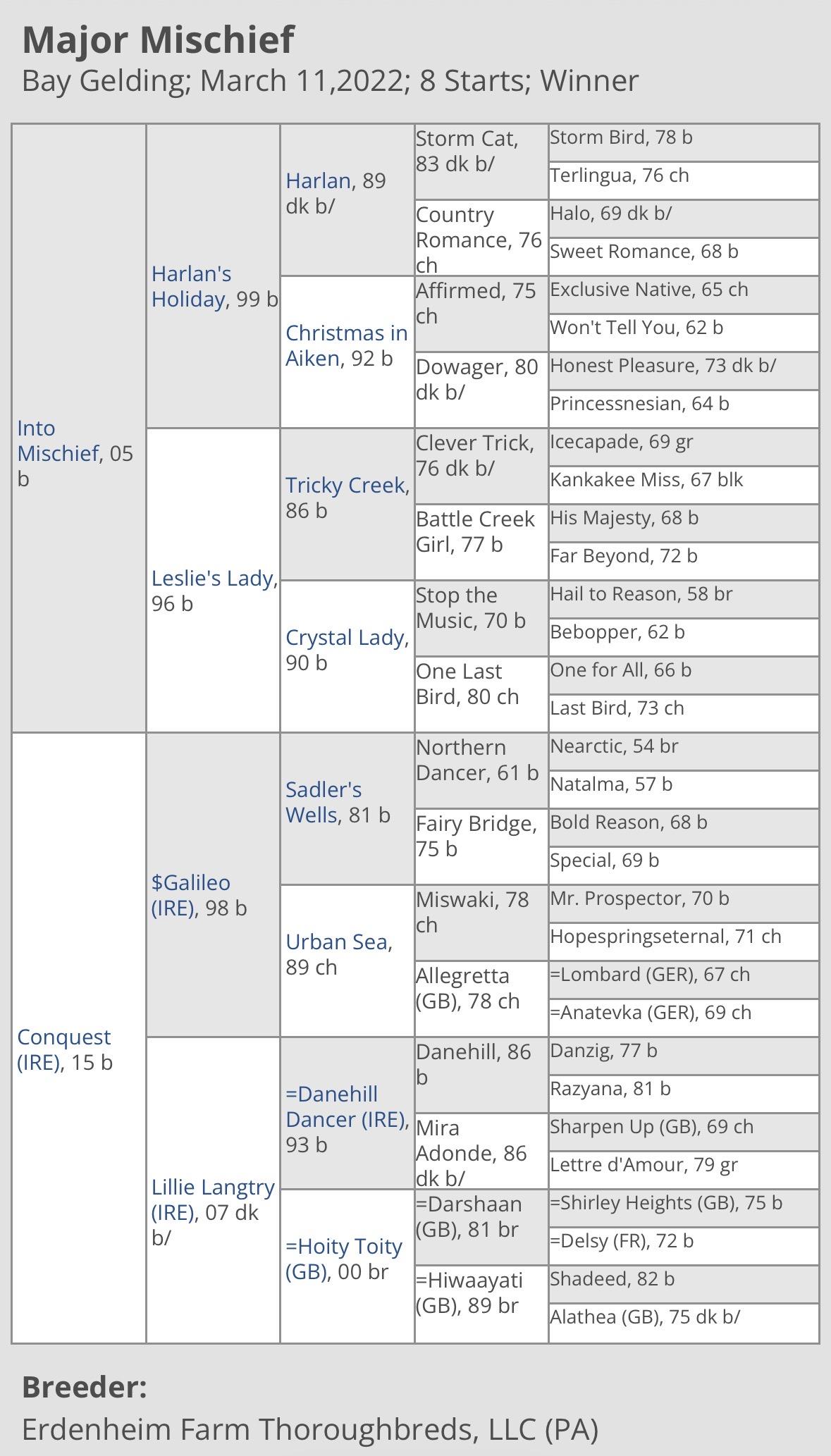
Nothing not to love here. Wow. Pedigree from Equineline.com
And for a final glance to satisfy my nerd brain, I usually peek at the dosage profile. I’ll rely on those numbers more if I’m unfamiliar with the pedigree. Dosage, in all its complexity is explained here, and honestly this short explanation by Team Valor is pretty useful, too. Basically, as an eventer, I’m looking for higher numbers — or any numbers, frankly — in the last two slots. Long explanation made short, what you need to know is that dosage is a set of five numbers; each corresponds to the strength of a horse’s pedigree relative to a particular race type, starting with short sprint races and finishing with long-style multiple mile runs.
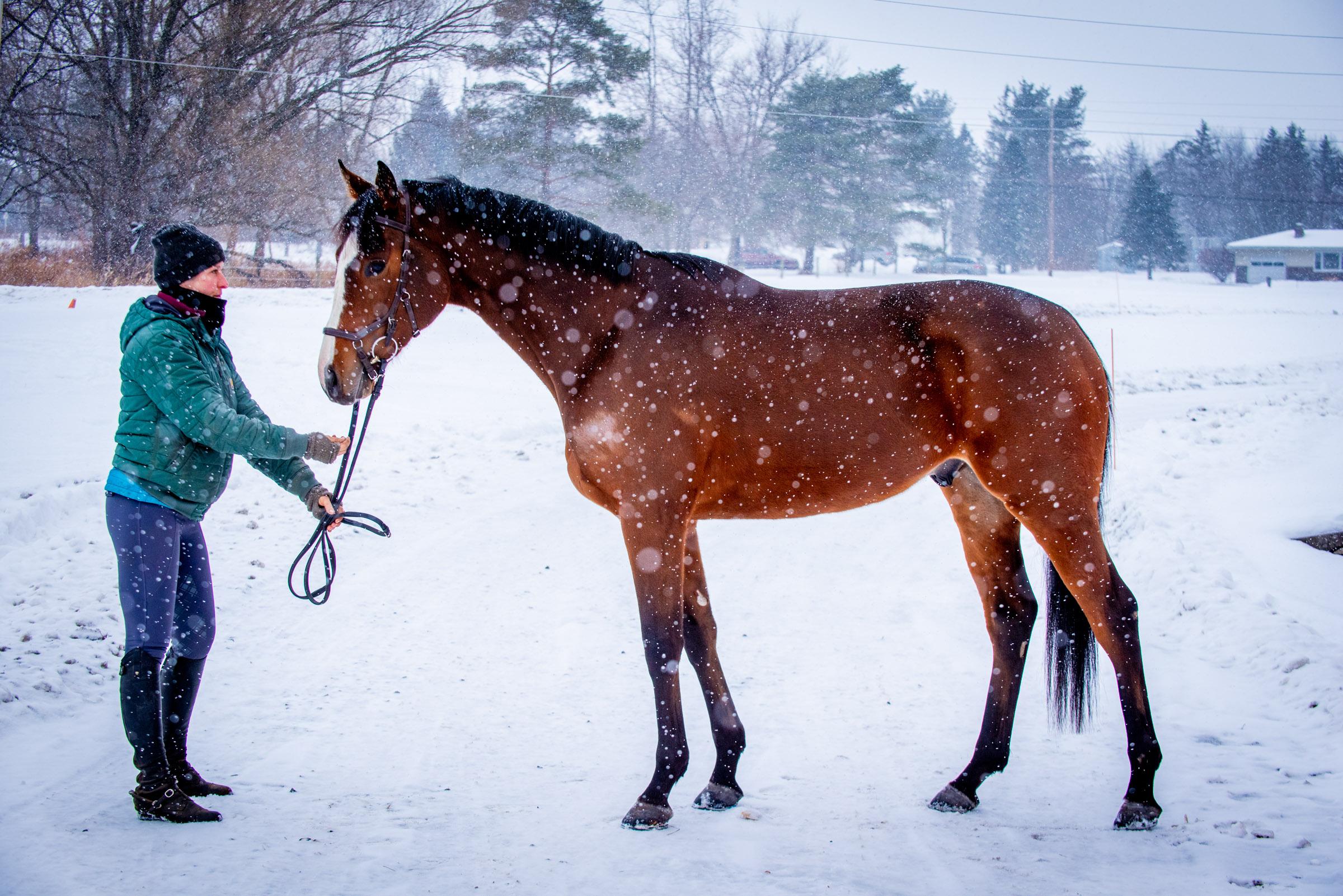
Puck (Major Mischief) has a great dosage profile of 1 0 7 8 0. An 8 in that fourth slot indicating breeding for stamina and the 1.5 to 2 mile races is pretty rare in American racing. Puck’s big bone, huge shoulder and general uphill conformation fit the expected nerdy bill. Photo by Lily Drew.
Dosage is confusing. But maybe it is useful to think of it simply in that horses with the highest numbers in the first slot are built for short explosive speed; horses with numbers in the latter categories are bred for stamina. Certainly one can’t perfectly predict a horse by the numbers, but one can take a pretty good guess if they will finish out short-coupled and downhill (built to sprint), small boned and efficient (built to do sprints to mid-distances), or long-shouldered and thicker-boned with a sizable often uphill moving stride (built for stamina and the longer races over more varied terrain). I prefer horses shaped like the latter, so I look for the statistics to point in that direction. Often, it is pretty spot on.
So, how do we end up with so many nice horses here? Thanks again to those who ask. The answer is, generally, luck and doing this for enough years to be able to glance in a few quick places and make a decision that a decade ago would have been largely unfathomable. About two minutes into looking at a horse, with all curiosity and nerd checks in place, I either buy the horse or I hem and haw and let someone else nab the opportunity. It is a game of risk and reward built on the art of being able to pull the data together, squint, and decide if something is worth the gamble. Usually, the answer is absolutely.
So go ride folks, and if you’re shopping… godspeed. It’s a wild and fast out there.
About Kentucky Performance Products, LLC:
Do you know the signs of seasonal vitamin E deficiency? Researchers have confirmed that horses may need additional vitamin E when not consuming fresh, high-quality pasture grasses, such as over the winter months (Blakley et al., 1994). Vitamin E is crucial to maintain healthy muscle and nerve function, and immune response.
If your horse is stiff during warm-up, sore after work, lacking energy, and/or struggling to develop topline muscling, he could have a vitamin E deficiency. Elevate® is a highly bioavailable source of natural vitamin E that is preferentially absorbed and retained in a horse’s tissues compared to synthetic versions. Ask your veterinarian about supplementing with natural vitamin E.
Kentucky Performance Products creates scientifically proven supplements for your horse. Our supplements provide solutions to the everyday challenges facing your horse. The horse that matters to you matters to us®. Learn more about KPP at kppusa.com.

