



From the Frontier to the City Streets: How Buffalo Soldier Horsemanship Lives On in Modern Mounted Units
From frontier cavalry to city streets and ceremonial ranks, the horsemanship standards of the Buffalo Soldiers still shape modern mounted policing and military tradition.
Yesterday, we published a piece on the Buffalo Soldiers and the American Horse, we looked at how the 9th and 10th Cavalry Regiments helped shape American military history through disciplined, demanding horsemanship. But history doesn’t stop when the textbooks do.
The cavalry era may have ended, and the frontier may have closed, but the standards those soldiers upheld in the saddle did not disappear. They evolved. And if you’ve ever watched a mounted police unit move calmly through a festival crowd or seen a ceremonial cavalry troop ride in tight formation at a state event, you’ve witnessed the living legacy of Buffalo Soldier horsemanship in action.
The uniforms may look different. The mission may have shifted. But the mounted discipline remains.
And if you’ve ever watched a mounted police unit navigate a crowded parade route or seen a ceremonial cavalry troop ride in perfect formation, you’ve seen the modern echo of the Buffalo Soldiers in motion.
The Cavalry Standard: Precision, Discipline, Control
Embed from Getty Images
The 9th Cavalry Regiment and 10th Cavalry Regiment weren’t just frontier patrol units. They operated under strict cavalry doctrine that emphasized:
- Formation riding
- Immediate responsiveness to rein and leg
- Calmness under pressure
- Endurance over long distances
- Impeccable horse care
Cavalry horses weren’t simply mounts — they were trained partners expected to function in chaos. Gunfire. Crowds. Sudden movement. Harsh terrain.
Sound familiar?
Modern mounted units operate under remarkably similar expectations.
Modern Mounted Policing: Order Through Horsemanship
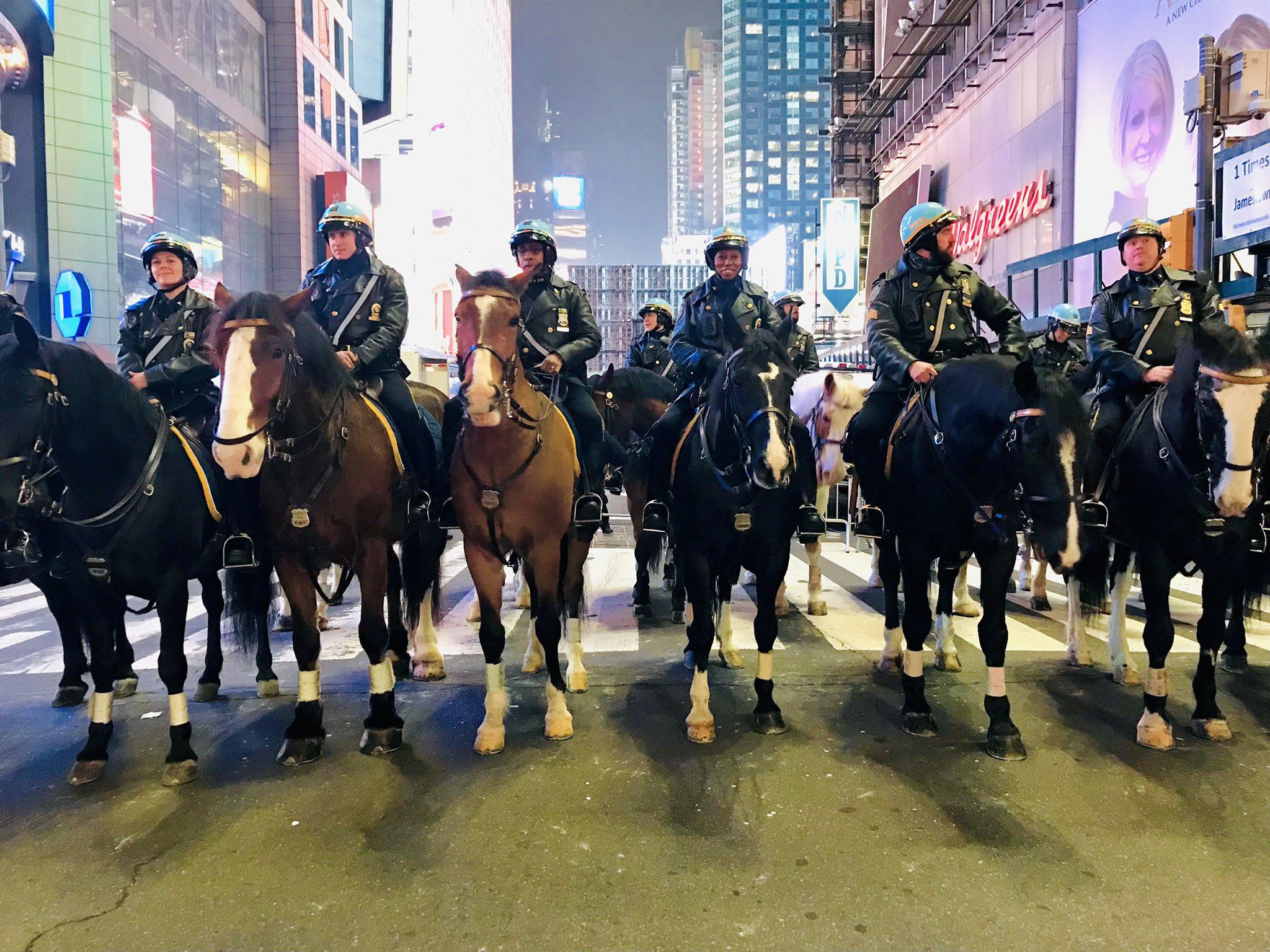
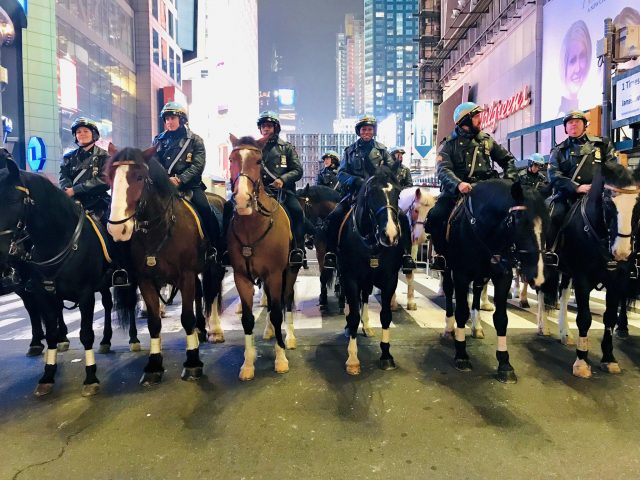
Line of NYPD Mounted Unit officers on horseback in Times Square during New Year 2022. Photo by New York City Police Department, CC BY-SA 4.0 via Wikimedia Commons.
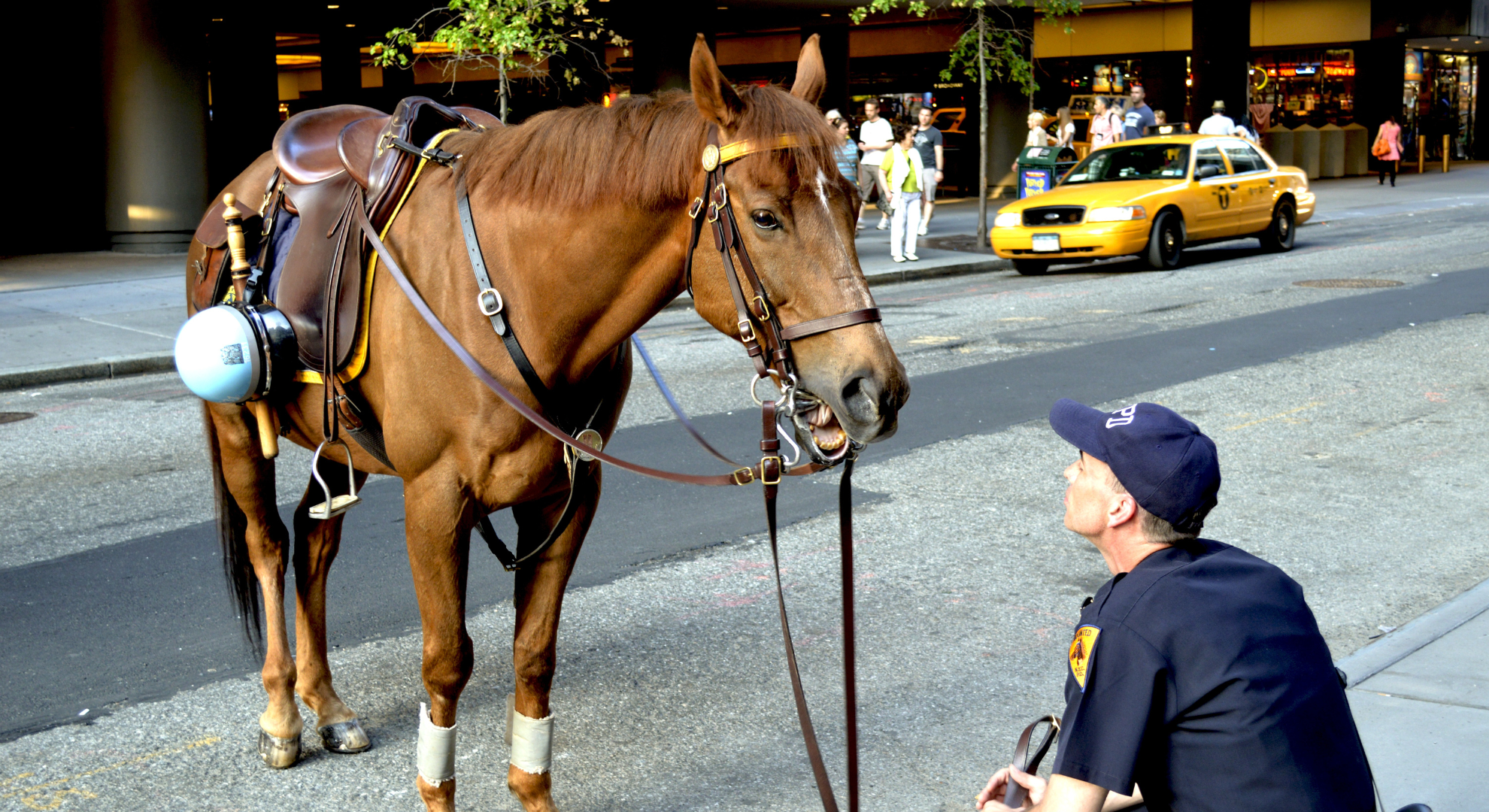
Mounted police units exist in cities across the United States and around the world. From urban patrols to major events, mounted officers rely on horses for one key advantage: presence.
A mounted officer sits higher, sees farther, and commands attention. But that advantage only works if the horse is steady.
Mounted police horses must:
- Remain calm in loud, crowded environments
- Respond instantly to subtle cues
- Hold formation during crowd control
- Trust their riders completely
This is cavalry discipline, translated into modern policing.
The foundational philosophy — that a mounted unit must move as a cohesive, controlled body — mirrors the training principles developed in 19th-century cavalry units like the Buffalo Soldiers.
Ceremonial Cavalry: Precision as Heritage
Embed from Getty Images
In addition to mounted policing, ceremonial cavalry units continue to preserve traditional cavalry riding techniques.
These units emphasize:
- Uniform tack standards
- Synchronized riding
- Military seat and posture
- Inspection-based grooming and turnout
If you attend a military parade or national commemoration and see mounted troops riding in coordinated lines, you’re watching living horsemanship history.
The culture of inspection — checking tack, grooming, conditioning, turnout — was deeply embedded in cavalry life. Soldiers of the Buffalo regiments were held to rigorous standards of both personal and equine readiness.
That expectation of discipline didn’t fade with mechanization. It transitioned into ceremonial units that preserve mounted military tradition as part of national memory.
Care Under Pressure: A Shared Ethic
One of the most overlooked aspects of Buffalo Soldier horsemanship was horse care.
Army regulations detailed feeding schedules, watering protocols, grooming standards, and stable management expectations. Cavalry soldiers were accountable for the health, soundness, and readiness of their mounts.
Modern mounted units operate under the same principle:
A mounted officer’s effectiveness is inseparable from the welfare and training of the horse.
Today’s mounted police horses receive:
- Structured desensitization training
- Fitness conditioning
- Regular veterinary oversight
- Careful tack fitting
The ethic remains the same: the horse is a working partner, not an accessory.
That philosophy was upheld daily by Black cavalrymen who operated in extreme conditions while facing discrimination and systemic inequality.
Their horsemanship wasn’t symbolic. It was practical, disciplined, and foundational.
The Psychological Power of the Mounted Unit
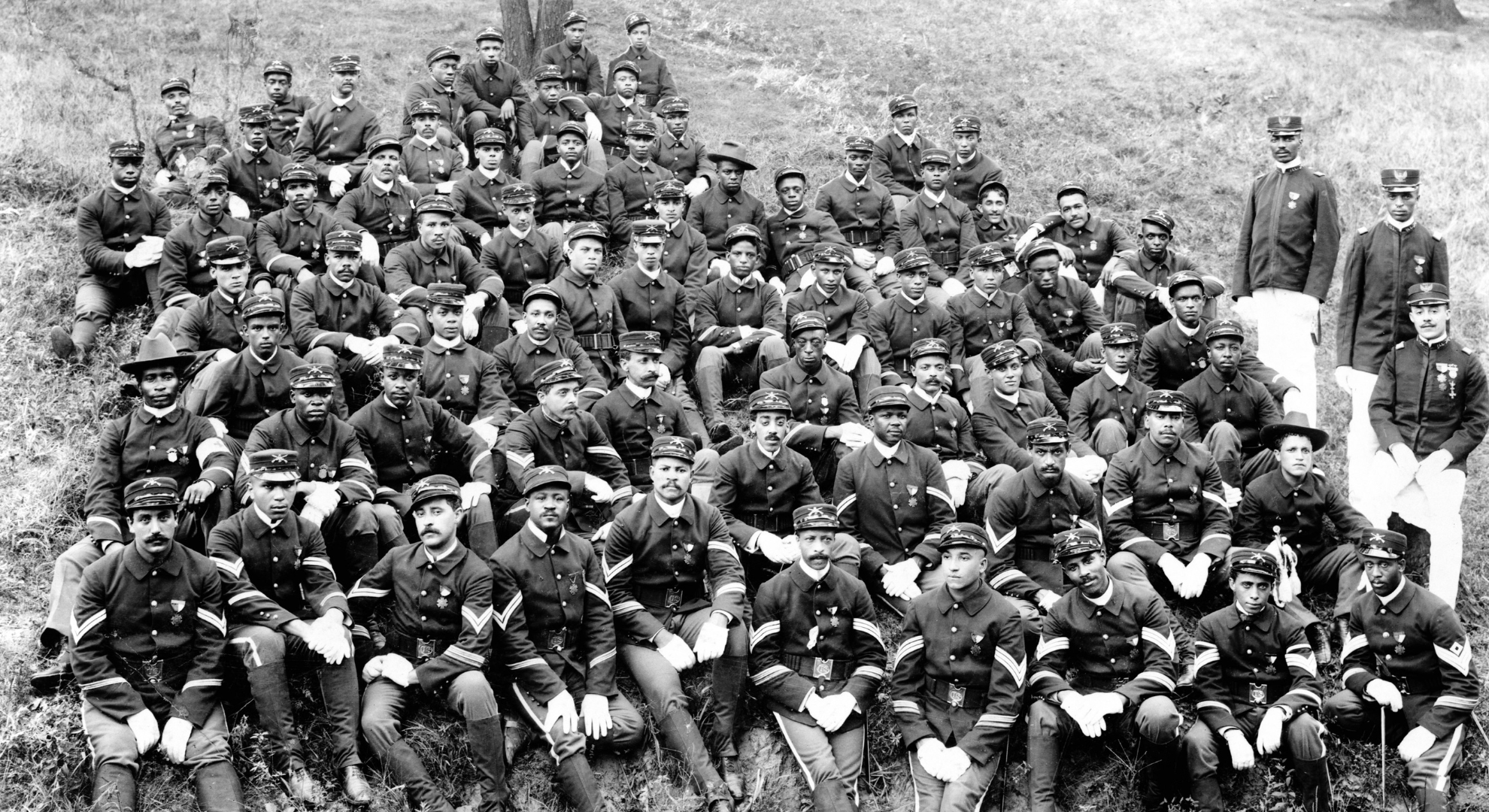
Buffalo soldiers of Company D, 8th Illinois Volunteer Regiment. ca. 1899. Photo from The Everett Collection, via Canva/CC.
Cavalry units historically projected authority and stability. The mounted presence conveyed control without immediate escalation.
Modern mounted policing uses the same psychological dynamic.
A calm horse can move a crowd without force. A steady line of mounted officers can create order simply through positioning and visibility.
This is not accidental. It is the inheritance of cavalry strategy — the understanding that height, mobility, and coordinated movement create influence.
Buffalo Soldiers rode under that doctrine.
Today’s mounted units still apply it.
The Shift From Combat to Community
Of course, there is an important distinction: modern mounted police and ceremonial cavalry units do not function as frontier combat forces.
But the skill set remains strikingly similar.
Balance. Coordination. Composure. Communication between horse and rider.
These are not skills that emerge casually. They are trained — historically in cavalry manuals, today in academy programs and specialized mounted training courses.
And when we talk about cavalry horsemanship in the American West, the Buffalo Soldiers are part of that lineage.
Why This Connection Matters
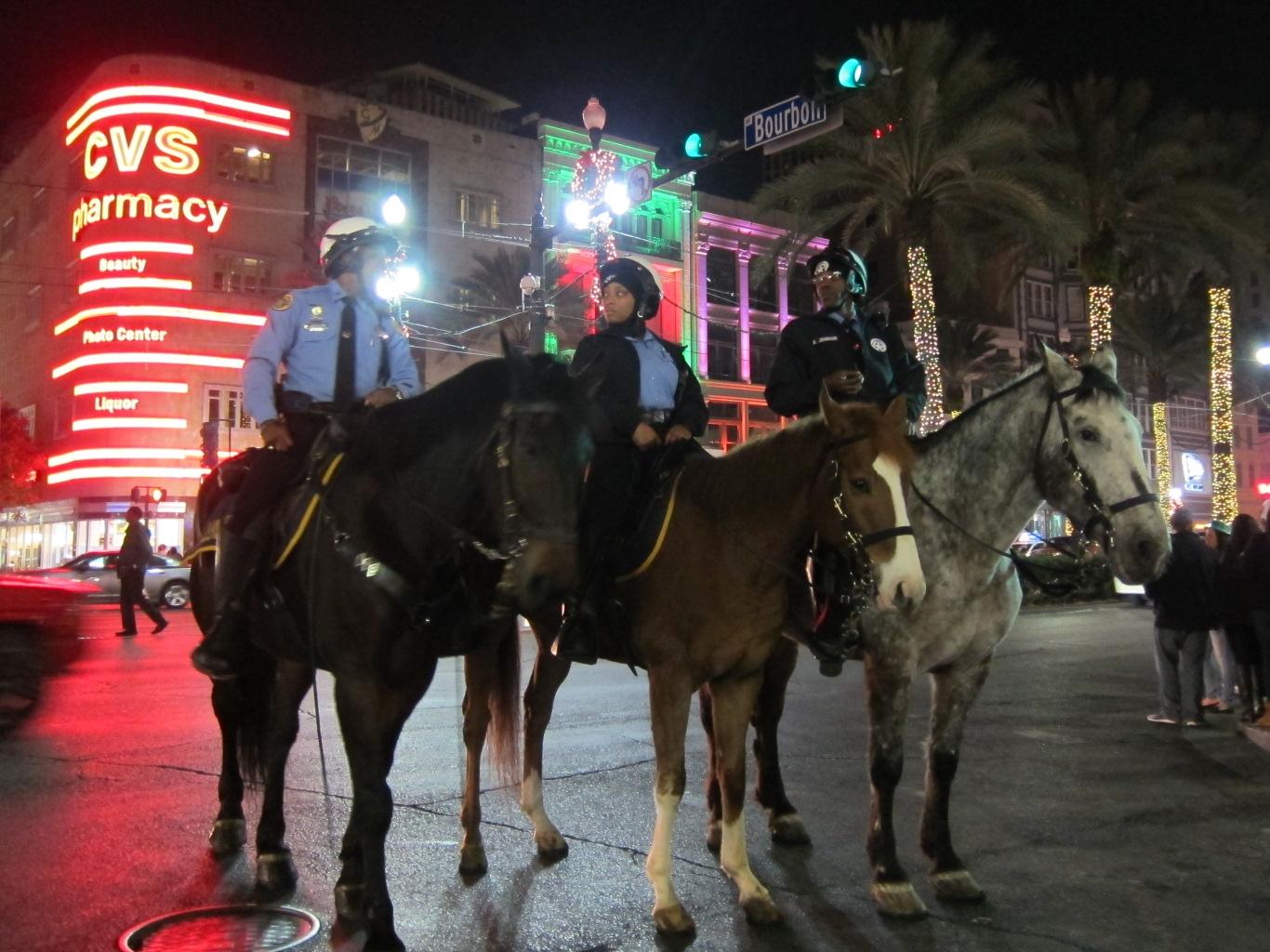
Bourbon & Canal, Mounted Police, New Orleans December 2014. Photo by snickclunk, CC BY 2.0, via Wikimedia Commons.
This isn’t simply about acknowledging that Black cavalry units existed. It’s about recognizing that their expertise shaped American mounted standards in ways that persist today.
The story of the American horse includes:
- Ranch work
- Rodeo
- Racing
- And military-mounted service
The Buffalo Soldiers of the 9th and 10th Cavalry were not footnotes in that story. They were practitioners of elite, disciplined horsemanship under extraordinary circumstances.
Modern mounted policing and ceremonial cavalry units may look different from frontier regiments — but their foundation rests on the same principles:
Control. Care. Cohesion. Readiness.
The horses may now patrol city streets instead of open plains.
But the lineage runs straight through.
The Living Legacy
If you see a mounted unit at a parade, a state ceremony, or quietly patrolling downtown during a festival, pause for a moment.
Behind that steady horse and upright rider is a tradition more than 150 years old.
And embedded in that tradition are the Buffalo Soldiers — men who rode with discipline and professionalism in a country that often refused to recognize their service.
The American horse helped build military infrastructure.
The Buffalo Soldiers helped define mounted excellence.
That legacy didn’t vanish.
It’s still riding.
Canva/CC
