



Thoroughbred Logic, Presented by Kentucky Performance Products: When They Jump the Fence
“I don’t want horses … going through the fence. That is never fun … But their quick thinking says a lot about how they are going to handle adversity and the unexpected under saddle.”
Welcome to the next installment of Thoroughbred Logic. In this weekly series, Anthropologist and trainer Aubrey Graham, of Kivu Sport Horses, offers insight and training experience when it comes to working with Thoroughbreds (although much will apply to all breeds). This week ride along as Aubrey shares her logic on what you learn by watching horses’ reactions when they get into tricky situations.
I have found that you can tell a lot about a person when they’re under high stress and have to make a quick decision. Some fold and allow the decision to happen to them, some size up the issue and take action. And then there are some who hesitate, waffle, and generally wind up in a bit of a pickle. Working in a conflict zone for quite a while, I learned to trust folks who I knew would move fast and make a good call — people who I had no doubt would get both of us out of trouble and at speed if needed.
Horses are no different. (Though, sure, they’re not piloting motorcycles quickly away from potential danger. Nope, they’re usually the mode of transportation both getting us into and out of said pickle.)
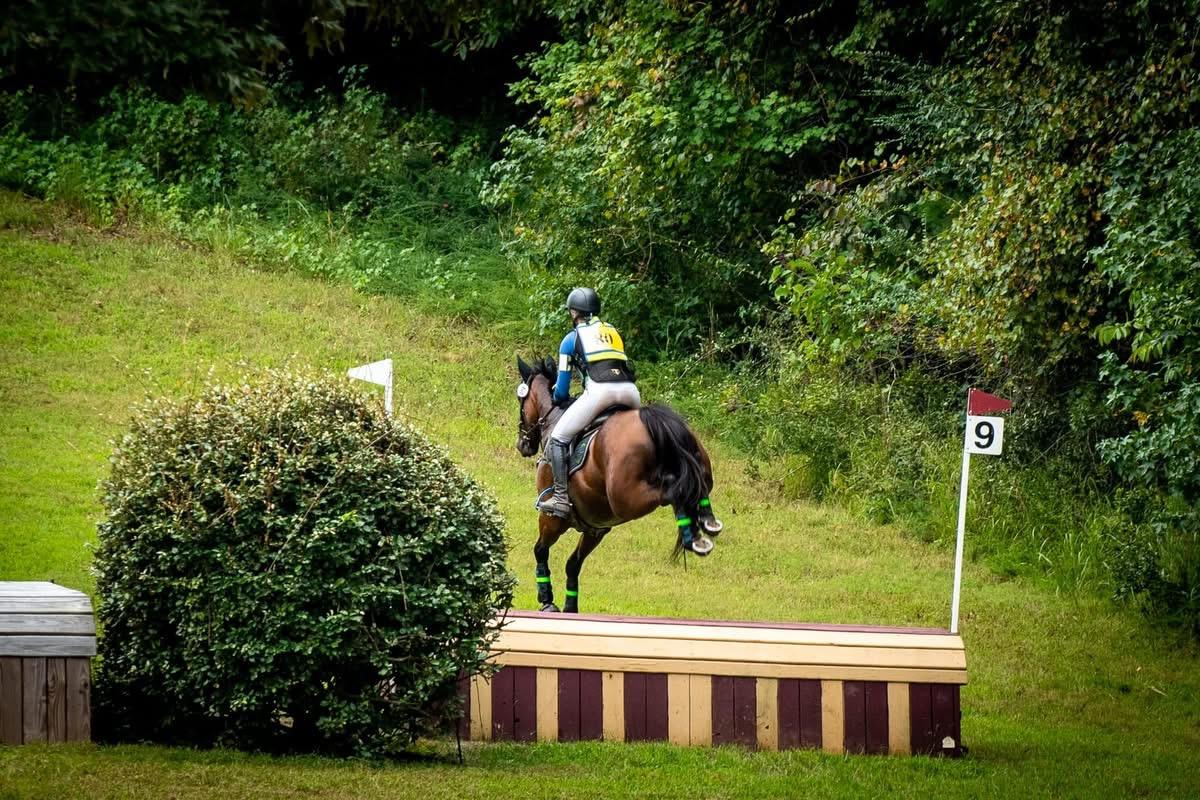
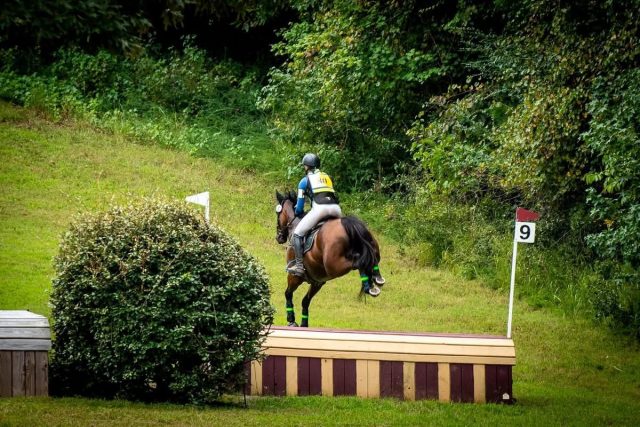
Rhodie (Western Ridge) has always been good on his feet. Regardless of how bad our dressage score, or how wild stadium was, I knew he’d always make good, safe, confident decisions out on XC. Photo by Cora Williamson Photography.
Snow — and the New York arctic — unfortunately creates a situation for horses where we accidentally get to test how they handle stress and potential danger. I wish it didn’t, but I also wish we weren’t in eternal winter. Apparently what I want is not on order this time of year.
Last year, I watched two horses get in proverbial pickles with my fence. One, a big lankly good-brained gelding, got going a bit too fast on the snow and ice on his long legs. He sized up my three-strand coated hotwire fence and said… “Sh*t”. He braked, braked harder, and then literally sat down, sliding his chest just into the fence. He took a deep breath and backed up slowly, without any harm.
I didn’t love the situation, but I appreciated that when he realized danger was immanent, he didn’t waffle, give up, and just plow through it. He made a call, stuck to his guns, and managed to walk away without a scratch.
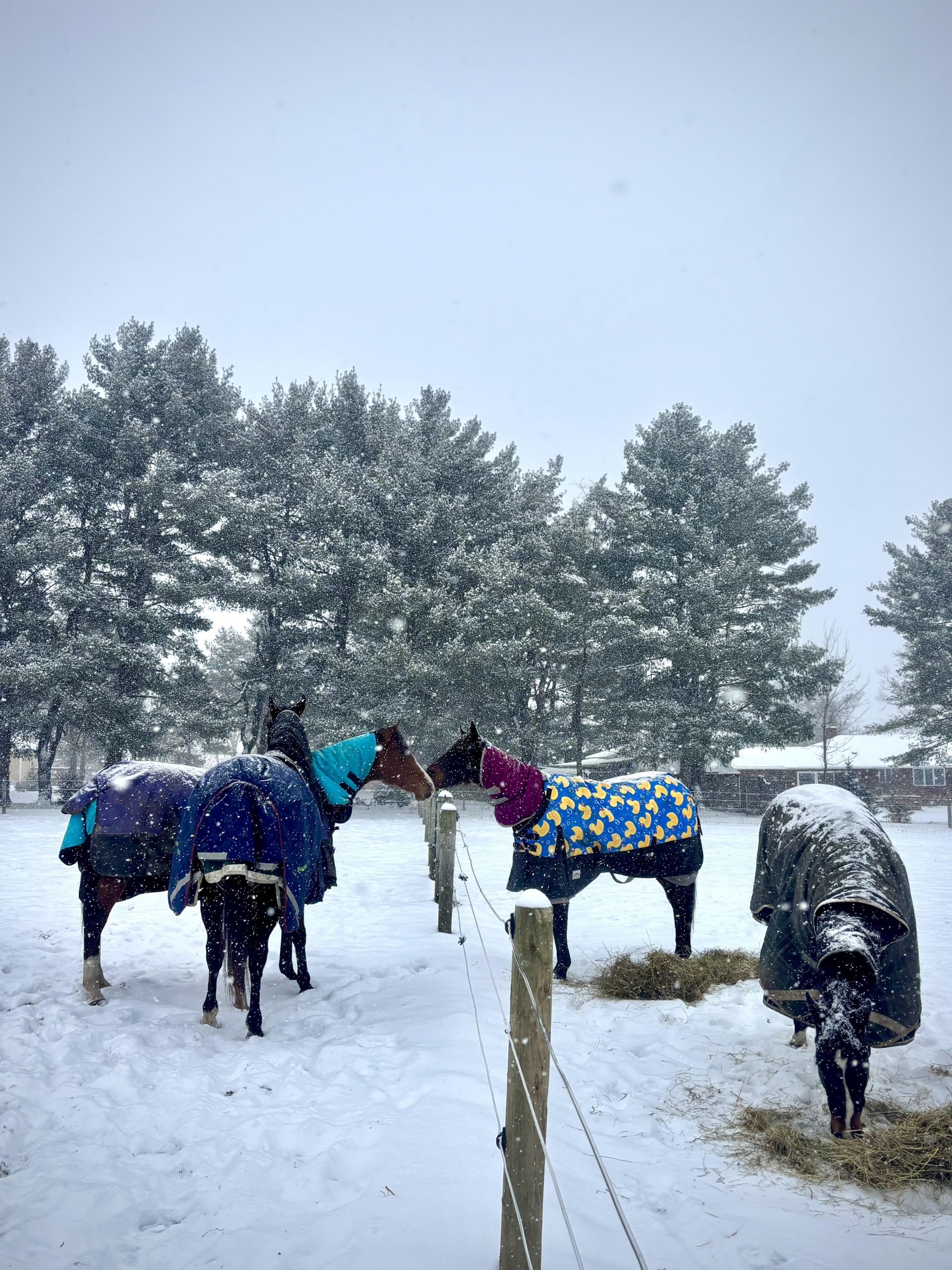
The fence in question and the snow that makes me question my sanity. Photo by author.
Another did waffle. She got a good gallop on with her friends in the snow, tried to pull up before the fence, but didn’t have the brakes she needed. She thought about it a little too long and, at the last minute, made one very uncoordinated leap through the top wire and into the side field. She was no worse for wear and we had about an hour of repair to manage. But frankly, it could have been a lot worse, so fine. However, the waffle cost her the ability to clear it or fully pull up.
Being that I mostly bring along event horses, I’m not a huge fan of the waffle. I don’t mind the self-respecting stop or the full send, but the waffle can get you in a lot of hot water out on XC. So when I see horses make mistakes in the field, I spend a lot of time thinking about how they handle it. And when they handle it well, their career starts to write its own paths.
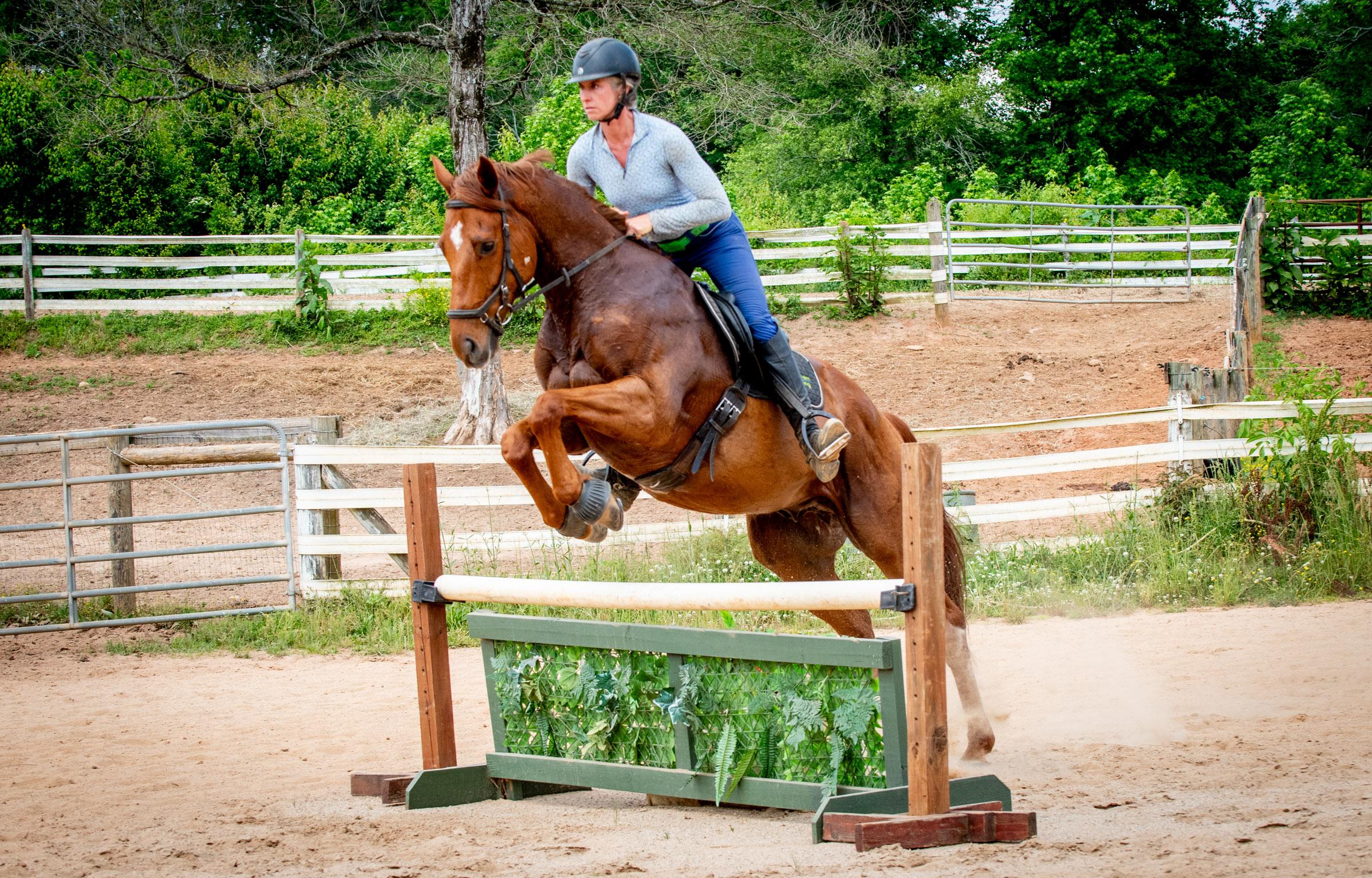
Ramen (Plamen) is a fantastic example of brave and quick thinking. Unsurprisingly, he has developed into a brilliant fox hunter. Photo by Alanah Giltmier.
This is all front of my mind because of Bruce (Scotty Silver). Two days ago, I was lucky to have AM turnout help, so was sat working on the book in my office. It was sunny and going to be in the 20s — so a full blown heat wave for upstate NY this time of year. I allowed the toddler field (full of fresh off-tracks and recent arrivals who are all pretty mild-mannered) to head to the bigger field immediately visible from the window next to my computer. Those kids are a good distraction. They messed about with each other, trotted from the wood board part of the fencing down into the adjoining south field of three-strand coated hot wire and back, explored the shed, and found their water trough. All good.
Then they decided to take a little canter down to the clump of trees. Most of them got half way down the field before turning around and returning to the known safety of the wood board. Bruce, on the other hand, set out leading his own adventure. He milled about further than everyone else and when he turned around and realized that they had all returned to the top field, he did what any self-respecting Thoroughbred does. He blasted off after them. Except he put his eye on the field across the fence line — not his herd of goofy youngsters.
My typing paused. I knew what was going to happen. “Sh*t.”
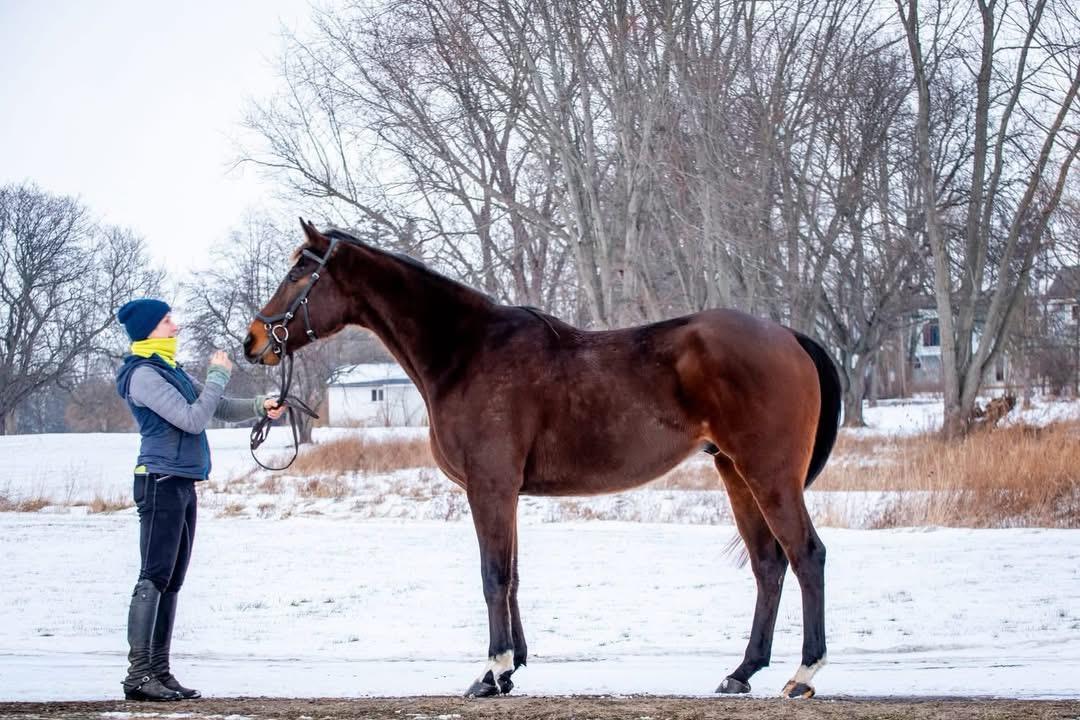
Bruce (Scotty Silver) — the quick-thinker in question. Photo by Lily Drew.
Five strides out from the hotwire where the two fields connect, he hit the brakes and found he had none — oh hey, snow. His ears flicked sideways. That gallop momentum coupled with the deep snow probably doubled his stopping distance. I held my breath.
His ears went right back to forward. You could literally see Bruce go, “Alright, plan B it is.” He sized up my fence, measured his stride and in four more good takes, simply up and lofted out of the foot of snow and over the 3’6″ hotwire, safely into the adjoining field. Perfect form, excellent knees, no waffling, no added stress. He landed well in the powder, slowed easily, and trotted over to make friends with my show string (not his original field). After a hurried call to Marlie (my amazing AM help) and me sprinting to pile on snow pants and the 37 layers needed to exit the house as fast as possible, we brought him in, checked him over, and returned him to his field absolutely no worse for wear.
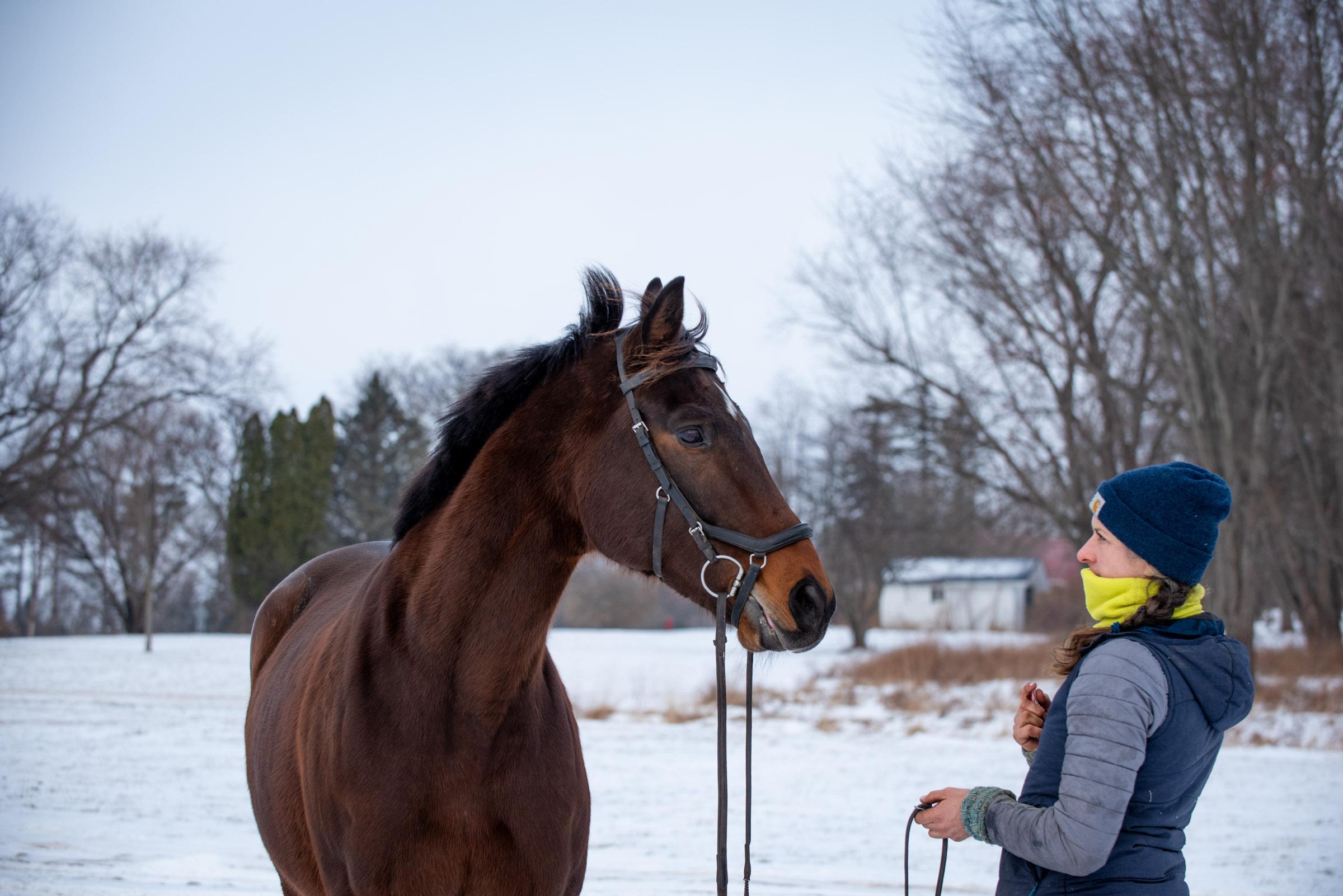
Bruce is like, What? Don’t worry. I got this. Photo by Lily Drew.
I think I’m the only one who had a minor heart attack. Bruce seemed to think it was a grand adventure.
Minor cardiac failure aside, I’m impressed. I always liked Bruce quite a bit, but now I like him a whole lot more. The added appreciation is not because he had the scope to clear 3’6″ in the snow (though that doesn’t hurt). It is that he made a set of decisions quickly and confidently that led to him staying perfectly safe in a situation that otherwise could have been pretty dicey. That is one hundred percent the type of ride I know I can trust when galloping down to a big corner in unsure footing. It’s the type of horse who is bold without being stupid. So today I’ll go hop on Bruce again and maybe set some fences since he has clearly chosen his career.
Similarly, somewhere we have video of a very fresh off-track Velvet (Funnystastic) doing the same type of thing at her initial owner’s farm. Her friends were in an adjoining field, there was a top rail partway down on a hilly fence line, and the filly lined up, saw the opening, and read the terrain and fence naturally — landing well clear of the wood fencing and uphill into the other field without missing a beat. To say that I’m thrilled that mare landed at a home that will school her up the eventing levels is a huge understatement. The brain and the body are there to go do big things.
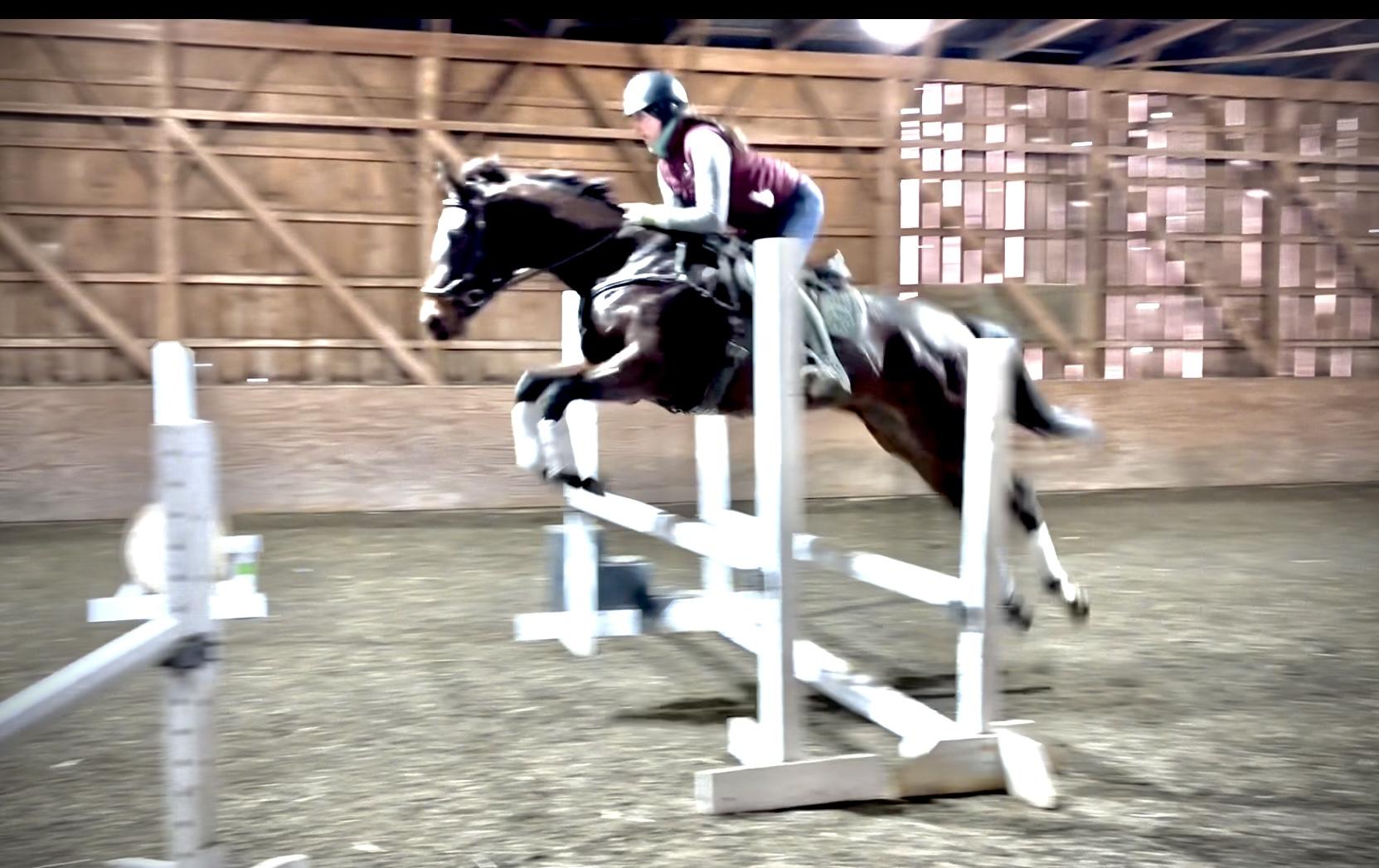
Velvet (Funnystastic) properly reading the oxer in the grid at home. Screenshot from Lily Drew.
And no, again, I don’t want horses jumping out or missing the mark and going through the fence. That is never fun, regardless of whether or not one has plastic fencing, wood board, or some form of wire. But their quick thinking says a lot about how they are going to handle adversity and the unexpected under saddle.
Look, I have had horses who would have waffled and then just hail Mary-ed through it with a “hold my beer” war cry (ahem, Forrest). But if you want to get around the seriously bigger fences on XC, you want something that thinks quickly and has that ability to measure terrain and keep the structural integrity of both the obstacle and their body in tact. Sure, this might not be a fail-proof way to know if you have a good event horse in the making, but it sure doesn’t hurt to know if they make good decisions under pressure.
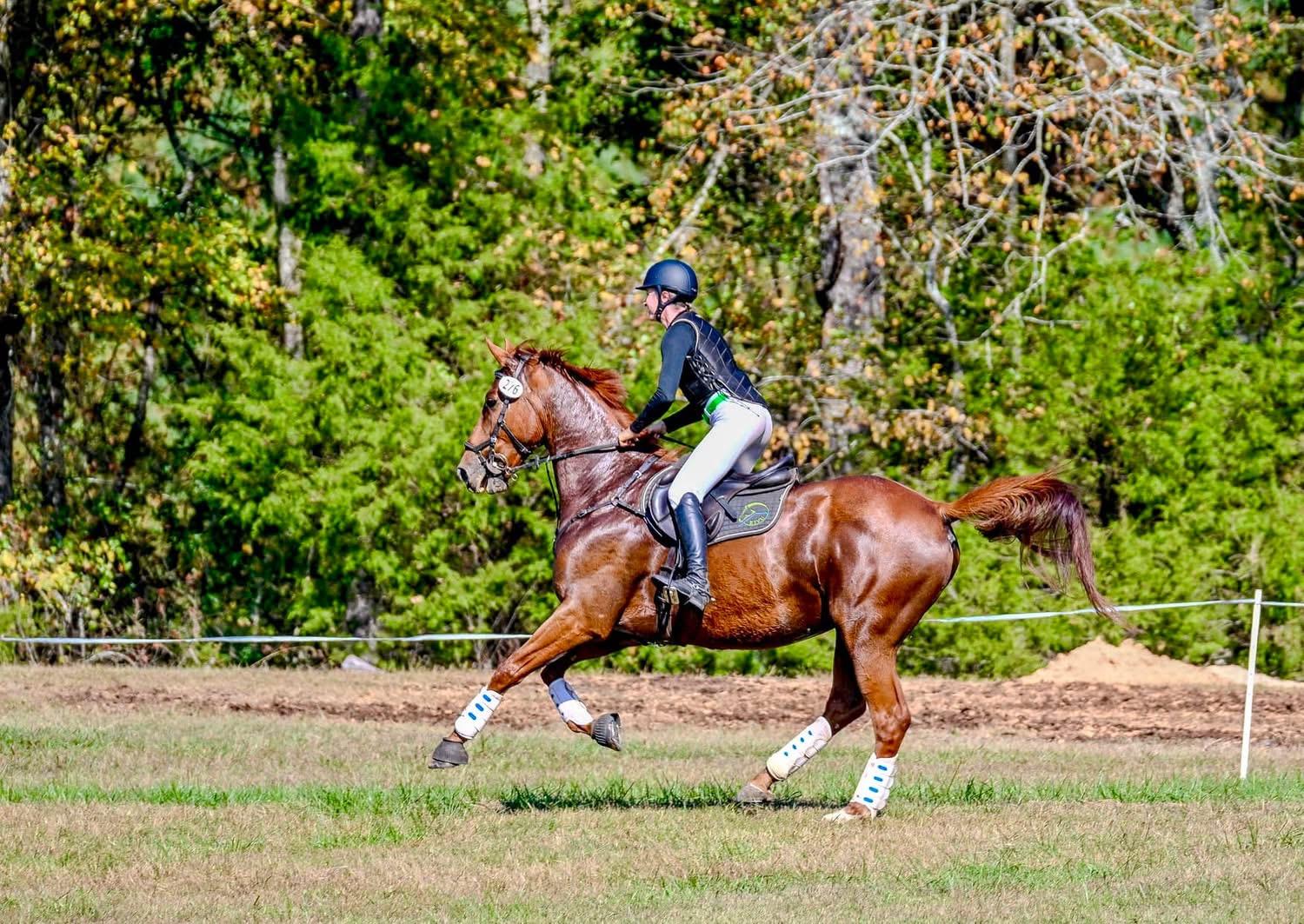
And then there is this kid, who does not waffle but might have more power than brains. (I can pick on him because I love him). Good Forrest (Don’t Noc It). Photo by Cora Williamson Photography.
Go ride folks… or just curl up by the fire and stay warm. In this mess of a winter, that by far might be the smarter option.
About Kentucky Performance Products, LLC:
Do you know the signs of seasonal vitamin E deficiency? Researchers have confirmed that horses may need additional vitamin E when not consuming fresh, high-quality pasture grasses, such as over the winter months (Blakley et al., 1994). Vitamin E is crucial to maintain healthy muscle and nerve function, and immune response.
If your horse is stiff during warm-up, sore after work, lacking energy, and/or struggling to develop topline muscling, he could have a vitamin E deficiency. Elevate® is a highly bioavailable source of natural vitamin E that is preferentially absorbed and retained in a horse’s tissues compared to synthetic versions. Ask your veterinarian about supplementing with natural vitamin E.
Kentucky Performance Products creates scientifically proven supplements for your horse. Our supplements provide solutions to the everyday challenges facing your horse. The horse that matters to you matters to us®. Learn more about KPP at kppusa.com.

