



Training in the Right Way: Test Riding Before a Competition
Yes, show season is upon us. And, also yes, you should indeed be practicing your test in its entirety BEFORE you compete. Here’s why.
Dressage training is supposed to be the process of training ANY horse to be a better riding horse. The more the horse learns, in theory, the easier it is to communicate with and therefore complete more complex tasks with. Although competition dressage training often is more focused on training for the dressage test, that is not what the original intention (and original judging requirements) were for competitive dressage. Initially, it was designed to give riders and trainers a way to determine how their training measured up to the theoretical ideal of the training process. That said, it is critically important to understand the meanings and reasons for some of the terms we use to describe dressage training and what to look for when observing training and competition (and videos and photos), regardless of whether you intend to compete or just train your horse to be a better whatever you do with him. That, ultimately, is the main purpose of my articles. To provide education and knowledge for riders to understand and improve their eye and understanding of what dressage training is supposed to be. While there will always be some differences in practice and theory, good horse training is always recognizable to the educated eye. That said, it absolutely is necessary that we remember and understand that limited knowledge is limited judgment.
* * *
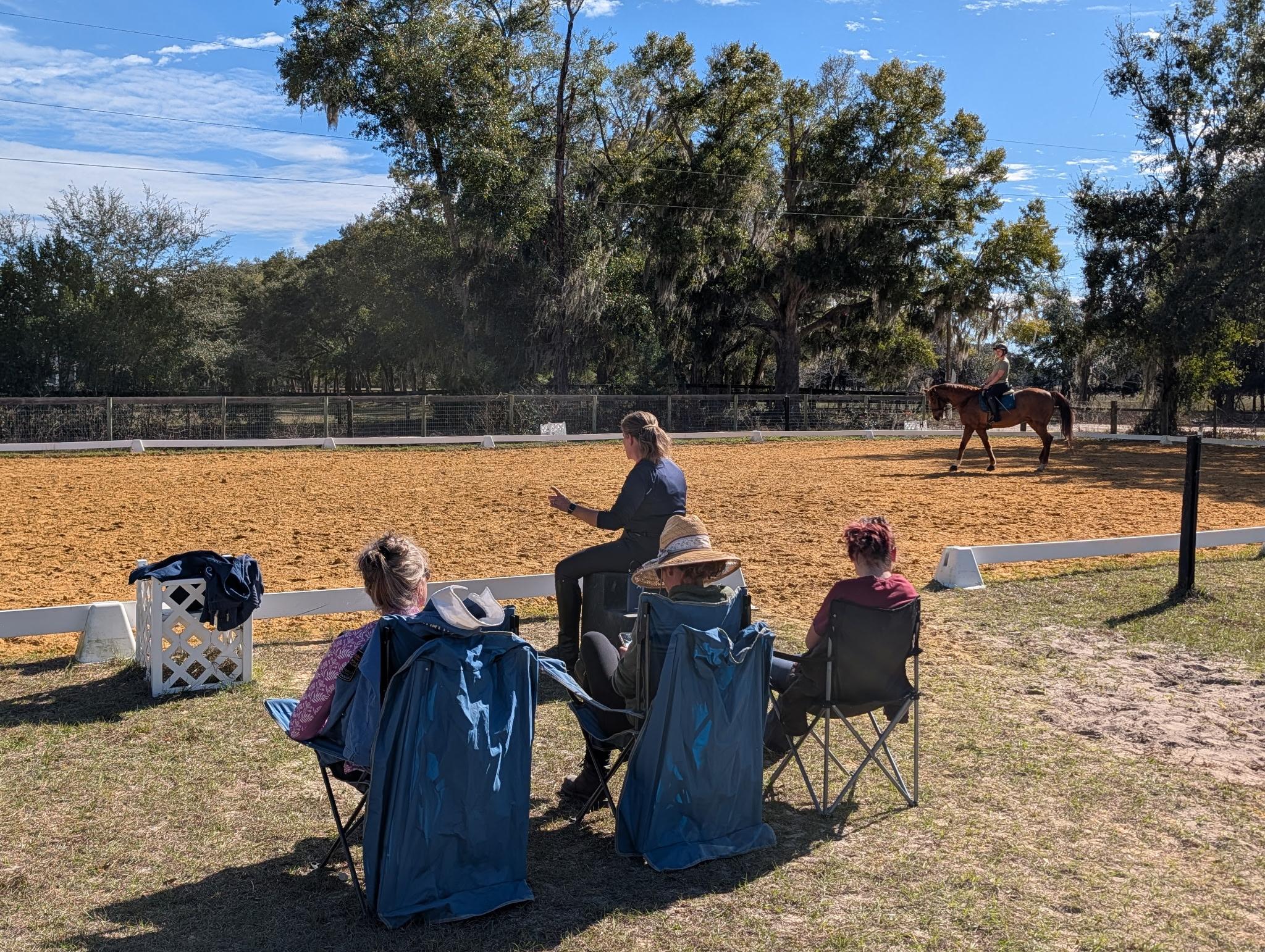
In spite of the visit from winter this week, my riders here in Florida are preparing for their first competition of 2026. As part of that preparation, I have them riding their test pretty much daily so that by the time they go down the center line, they will have ridden the same test in so many different ways (different weather, different warm ups, different feelings from their horse) that they will be familiar with most of the potential problems that might arise during the test, and — more importantly — they will have practiced what to do about it.
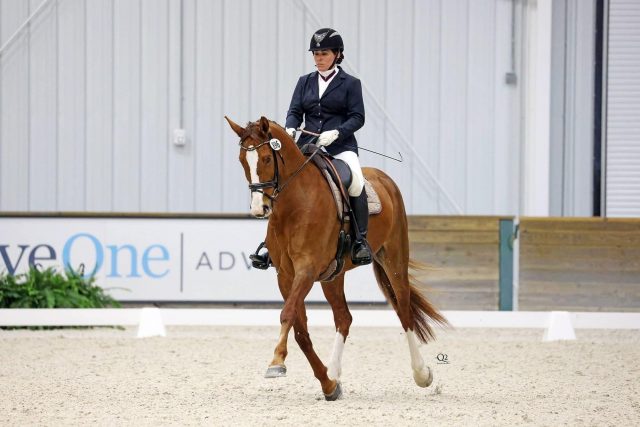
It doesn’t matter if you are a seasoned competitor or a rider starting out at Training Level, knowing your test and how to ride it is an essential part of competition. Photo (c) Morgane Schmidt
While some people claim that they avoid practicing the entire test as their horse anticipates too much (more on why this is sketchy thinking below), there are actually quite a few excellent reasons to do so in order to improve your performance at the competition. I was taught that regularly riding your test all the way through before competition allows you to experience how the horse feels when he has to do the movements in order. It also allows you to experience and ride through the problems that riding through the test produces (by nature of not being able to stop and go back, or circle and try it again).
Additionally, for more seasoned riders, practicing your test in its entirety allows you to memorize the more nuanced aspects that can help you produce a really polished, accurate test. Things like how many strides it takes to typically bring your horse back from extended canter, or what feelings in the piaffe may not feel energetic enough but look great and would be ruined if you tried to correct the feeling. For the less experienced riders, repeating a Training level test from start to finish can give them a great deal of confidence in being able to pilot the horse through the pattern.
I am always surprised when I hear riders say that they have never ridden the test before, or that they are trying to ride two to three different tests at the show as both situations don’t set the pair up for maximum success. Sure, there are reasons that a seasoned competitor will ride multiple tests at a competition. And there may be a necessity to ride a couple different tests on one horse (in a CDI the Grand Prix horses do a Grand Prix test and then either a Grand Prix Special or a Freestyle, for instance). In those instances, it is necessary, but of course those horses and riders are very seasoned if they are there doing that.
Let’s take a step back and look at two truths about dressage shows. First of all, a dressage show is a place where we have our previous training evaluated by a judge (a person who is educated in dressage and can tell us if we are meeting the standards of training for that level). Secondly, it is a competition, where the judge tries to score the tests in such a way that the best rides are the best presented and best trained-appearing horses, and that these rides are in the top placings. And they try to score all riders in a way that they can look at the rest of the class and maybe deduce what was missing from their ride that made them not place as well. Yes. I know that there are some inherent problems in this system. I’m just saying that this is how it is SUPPOSED to work.
So, considering this from the sports psychology/competition preparation side of things; any competitor in any sport can only be good at something that they have done before. I mean that a competitor in downhill skiing has practiced skiing at speed, on the same or similar hill, on the same or similar course. They don’t just “wing it and see what happens.” Swimmers don’t just try out a new stroke in a race. Skaters don’t make up their routine the day before they compete. So why do so many riders consistently not ride through their tests before competition? The answer is almost always “so the horse doesn’t anticipate in the test.”
Yes. Horses do anticipate movements in the test. This is a double-edged sword. But with proper training, and keeping the horse on the aids, it can be a real advantage. Currently I have a horse schooling the GP and he anticipates cantering from the passage at E. On the one hand, I don’t really want him to canter before the letter. On the other hand, I pretty much never have to worry that he won’t canter from the passage at that letter. Also, I have never ridden that transition anywhere else, so he doesn’t think about doing it anywhere else. Over time and repetition, he will get better at waiting for the aid. Sometimes I passage a little past E before cantering. Sometimes I walk before E to help him think about staying on the aids. But, when it’s time to ride the test in front of the judge, he will know that the canter starts there, and I will know all the different ways he feels as we approach E in the passage, giving me more opportunity to keep him on the aids and wait until I tell him to canter.
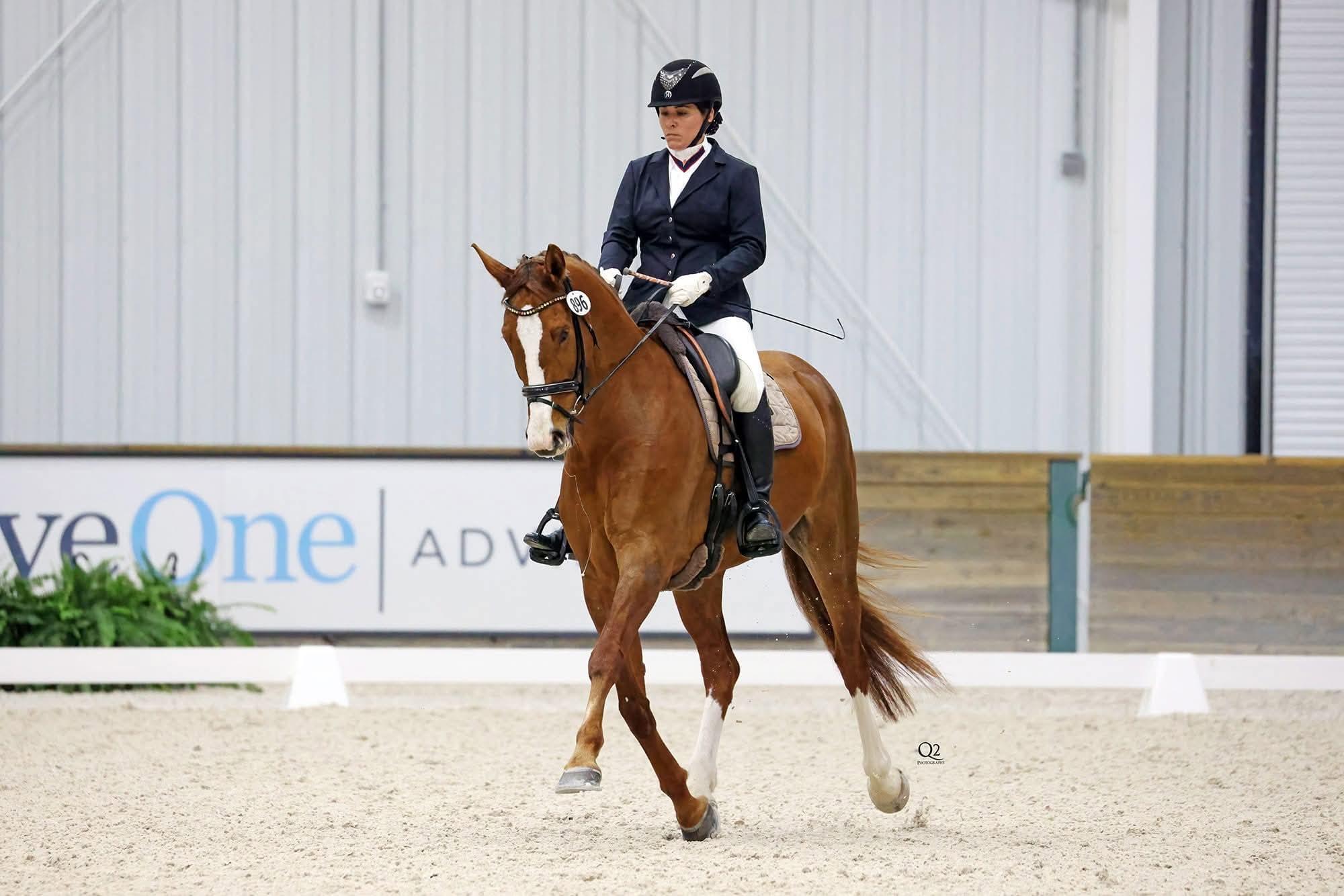
Horses do anticipate movements in the test. This can work to your advantage if you have practiced how to manage it. Photo (c) Morgane Schmidt
In that vein, riding through the test at home allows the rider to learn where these challenges are in the test and develop and practice ways to manage them. Each repetition of the test gives the rider insight to where the horse might need more guidance, and what types of interventions might be needed. Dealing with anticipation is part of this process. You will learn how often and how many times riding through the test is optimal for your horse at his level of training. This can change throughout the season and throughout his lifetime. Maybe you can only ride your test through during the week before the show. Maybe you have to ride it almost every day through the whole season. Maybe you only ride it through two weeks before the show, but not in the week right before. The only way you know the answer to this is to start doing it.
So, regardless of what you may have heard or perhaps thought, you and your horse will benefit from practicing riding your test before the competition. Knowing the test well in advance and being able to predict where and how you deal with the particular challenges you and your horse have in the test, will help create a polished presentation and give you a better chance at scoring and placing well.
Remember: limited knowledge is limited judgment.

Gwyneth and Flair in competition at Grand Prix. (c) flatlandsfoto.
Gwyneth McPherson has over 35 years experience competing, training, and teaching dressage. She began her education in in the late 1970s, riding in her backyard on an 11 hh pony. Her first instructor introduced her to Lendon Gray (1980 and 1988 Olympian). who mentored Gwyneth for a decade during which she achieved her first National Championship in 1984, and her Team and Individual Young Rider Gold Medals in1987.
In 1990 Gwyneth began training with Carol Lavell (1992 Olympian) who further developed Gwyneth as an FEI rider and competitor. Gwyneth achieved a Team Bronze in 1991 and a Team Silver in 1992 in the North American Young Riders Championships, and trained her stallion G’Dur to do all the Grand Prix movements while riding with Carol.
In 2008, while Head Trainer at Pineland Farms, Gwyneth began training with Michael Poulin (Olympian 1992). Michael was trained by Franz Rochowansky (Chief Rider for the Spanish Riding School 1937-1955). Michael has shared much of Rochowansky’s knowledge and wisdom with Gwyneth, completing her education as a Grand Prix rider, trainer, and competitor.
Gwyneth’s teaching and training business, Forward Thinking Dressage,is based in Williston, FL. In addition to teaching riders and training, Gwyneth also loves sharing her knowledge of the sport and art of dressage as well as discussing relevant topics pertaining to the training itself and the current competitive landscape.

