



NFR Insider: Pickup Men, the Unsung Heroes of Rodeo
The most important riders you’re not watching: the role of pickup men at the NFR.
Every December, the eyes of the rodeo world turn to Las Vegas for the Wrangler National Finals Rodeo. The brightest lights, the best stock, and the top 15 competitors in each event converge inside the Thomas & Mack Center for 10 nights of elite competition. Fans come to watch championship rides, record-breaking scores, and million-dollar dreams unfold. Yet woven into every bareback and saddle bronc ride is a group of professionals whose work is so seamless it often goes unnoticed: the pickup men.
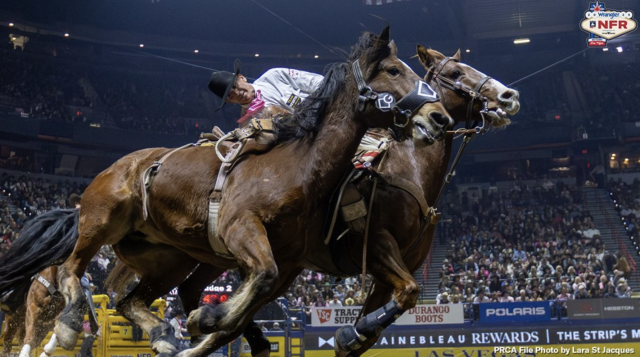
Pickup men are among the most skilled horsemen in all of rodeo. Their job begins the instant the gate cracks and doesn’t end until horse, rider, and arena are all safely under control. In the roughstock events, once a cowboy completes his required eight seconds, the danger is far from over. The horse is still bucking, the rider is fatigued and adrenaline-charged, and the arena is full of movement. That is where the pickup men come in.
Mounted on highly trained horses, pickup men ride directly alongside a bucking bronc at full speed, often within inches. Their primary responsibility is to give the rider a safe way to dismount, either by riding close enough for the cowboy to step onto the pickup horse or by stabilizing the situation so the rider can safely reach the ground. At the same time, they are responsible for removing flank straps and back cinches and then guiding the bucking horse calmly out of the arena. Every move must be precise. A split-second misjudgment can mean injury to the rider, the horse, or the pickup man himself.
At the National Finals Rodeo, only a select few earn the opportunity to work. Unlike contestants who qualify based on season earnings, pickup men are chosen by vote. The top bareback and saddle bronc riders from the regular season cast ballots for the pickup men they trust the most. From those votes, two primary pickup men are selected, along with an alternate. Being chosen is one of the highest honors in rodeo, because it means the very athletes whose safety depends on the job have placed their confidence in those riders.
The trust between roughstock competitors and pickup men is earned over years, sometimes decades. Many pickup men grew up in rodeo families, learning horsemanship at a young age and working rodeos long before they ever dreamed of the NFR. They spend countless nights riding in chaos, under arena lights, loud crowds, unpredictable livestock, and high-pressure situations, perfecting the ability to read both horse and rider instantly.
The pickup men don’t always come out unscathed. Due to the rough nature of their job, they face danger and injuries on a regular basis.
Their horses are just as critical as the men who ride them. Pickup horses are not ordinary mounts. They must be fast enough to match a bucking bronc stride for stride, brave enough to ride into unpredictable situations, and calm enough to respond instantly to subtle cues. Most pickup men bring several horses with them to the NFR, often anywhere from four to seven. Over the course of ten nights, horses are rotated to prevent fatigue and maintain peak performance.
In most cases, pickup men own their horses outright. These horses are bred, trained, and cared for by the pickup men themselves, often over many years. A great pickup horse is developed slowly, starting with exposure to livestock, noise, and pressure, and advancing to full rodeo work only when the horse is mentally and physically ready. Some pickup horses become so exceptional that they earn national recognition, including honors like Pickup Horse of the Year; an award that acknowledges the horse’s courage, consistency, and contribution to the sport.
The partnership between pickup man and horse is built on trust. The horse must be willing to run into rank rodeo situations repeatedly, while the rider must trust the horse to respond without hesitation. In many ways, pickup horses are among the bravest athletes in the arena. They don’t get scorecards or prize money, yet they perform night after night in some of the most demanding conditions in professional rodeo.
Beyond assisting dismounts, pickup men are responsible for maintaining order in the arena. If a bronc becomes difficult to turn or reluctant to exit, the pickup men step in. If a rider stumbles or falls, they position their horses to shield the cowboy from harm. They work in coordination, one focusing on the rider while the other manages the livestock. Their ability to anticipate problems before they happen is what keeps the rodeo running smoothly.
Despite the importance of their role, pickup men rarely seek the spotlight. Their success is measured by what doesn’t happen – injuries avoided, close calls handled quietly, chaos turned into control. It’s a job that demands humility as much as skill. When everything goes right, most fans never realize how much expertise was involved.
There are also honors specifically recognizing these professionals. The PRCA’s Pickup Man of the Year award celebrates excellence in a role that is foundational to the sport. Receiving such recognition places a pickup man among the elite horsemen in rodeo, respected by contractors, competitors, and fans alike.
Perhaps one of the most remarkable aspects of pickup men is their consistency. Night after night, rodeo after rodeo, they show up ready to perform in high-risk situations with calm focus. Some pickup men work hundreds of rodeos a year, traveling thousands of miles with their horses, maintaining conditioning, soundness, and mental sharpness for both themselves and their equine partners.
At the National Finals Rodeo, where every second is televised and every ride scrutinized, pickup men operate under the greatest pressure the sport can offer. Yet they perform with the same quiet professionalism they bring to small-town rodeos and county fairgrounds across the country.
So while champions are crowned and buckles awarded under the bright lights of Las Vegas, the pickup men continue doing what they have always done – protecting riders, managing livestock, and making the impossible look effortless. They are not just part of the show; they are the backbone of roughstock rodeo. And without them, the National Finals Rodeo simply could not happen.
