



Training in the Right Way: The Process vs. The Practitioner
“Dressage training is a systematic process that anyone can learn, however, the quality of the training is in the practitioner.”
Dressage training is supposed to be the process of training ANY horse to be a better riding horse. The more the horse learns, in theory, the easier it is to communicate with and therefore complete more complex tasks with. Although competition dressage training often is more focused on training for the dressage test, that is not what the original intention (and original judging requirements) were for competitive dressage. Initially, it was designed to give riders and trainers a way to determine how their training measured up to the theoretical ideal of the training process. That said, it is critically important to understand the meanings and reasons for some of the terms we use to describe dressage training and what to look for when observing training and competition (and videos and photos), regardless of whether you intend to compete or just train your horse to be a better whatever you do with him. That, ultimately, is the main purpose of my articles. To provide education and knowledge for riders to understand and improve their eye and understanding of what dressage training is supposed to be. While there will always be some differences in practice and theory, good horse training is always recognizable to the educated eye. That said, it absolutely is necessary that we remember and understand that limited knowledge is limited judgment.
* * *
I love dressage. I love training horses. I love teaching riders. And, I love competing. But I’m not sure I want to be participating in a sport that allows a serial abuser to continue to be involved in horse training. I am dismayed that the result was simply suspension from competition. Not banned. Not restricted from handling animals (in fairness, this is beyond the federations’ control). Just suspended.
Dressage training is a systematic process that anyone can learn, however, the quality of the training is in the practitioner.
If you assemble five different trainers, who have all been taught by the same person who has learned the system of dressage training and is considered a true master, you will still have five different styles of training. Given the exact same information, each of the five will teach and train from the same knowledge base, but with different interpretations.
The student will never ride exactly like their teacher because they are a completely different person with different life experiences, a different physique, and a different temperament. A physically strong, even-tempered person will produce a different result than someone who is short-tempered and equally strong with the same education.
Inherent talent is not the same as education, but is often confused as being the same thing. There are individuals who are more physically, mentally, and emotionally suited to training a horse. This is often referred to as talent. A talented rider looks like someone who is physically fit for riding, has empathy for the animal, is psychologically tough enough to stick to their convictions whether being questioned by a person or a horse, and has the creativity (artistry) to use the system to create something of beauty.
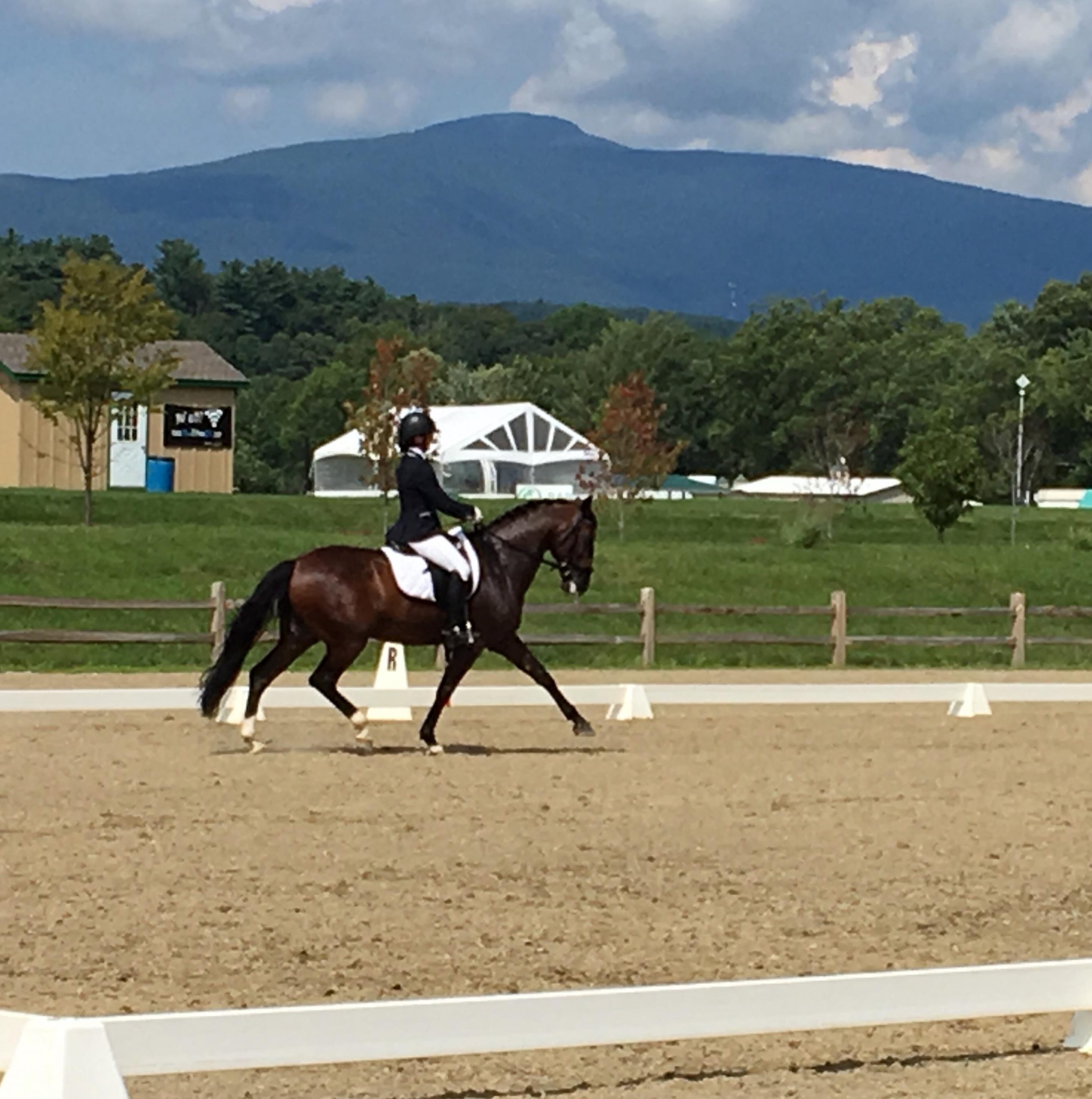
Whether dressage training is for sport or for art, the process is supposed to produce something beautiful. Photo (c) Gwyneth McPherson
Some of the best riders and trainers have overcome a lack of talent through education and practice to become exceptional (and you would know of some of them if I mentioned them here). They learned that talent is a great thing to have and use, but knowing how to read and communicate with a horse is far more important.
In a similar vein, some riders and trainers have used their inherent talent without knowledge. These folks may or may not have had a chance to learn a real system, but they have relied on their inherent strength and balance, and ability to influence a horse to create success. You might ask yourself what is wrong that? And largely the answer is nothing*, if it’s done with kindness and empathy.
But by nothing*, I don’t entirely mean NOTHING. If the rider’s goals are simply their own riding, then there isn’t much wrong with not having a system — at least in the short term or with a specific horse (though I would argue that their success will be limited and that will ultimately create the need for them to seek the education, or devolve into riding that is NOT done with an appropriate amount of kindness and empathy for the horse). However, if that rider seeks to train others or additional horses, that’s problematic as a rider with success based on inherent talent of themselves and their horses will not be able to TEACH someone else how to train a horse. You cannot teach someone else your talent.
In addition to those subsets, there is also a group of riders and trainers that have had the best of both worlds, but do not have the right temperament for training. They (I am thinking of a specific individual as I write this) resort to using barbed wire nosebands, and training devices that take away the horse’s natural balance to create submission, and they create so much fear in their horses that they have to have grooms back the horse into the warm up ring at competitions because the horse is terrified to go to work.
It doesn’t matter who they trained with, or how many classes they managed to win with this style of “training,” they missed the whole point of the exercise and chose to destroy the animals they were given to educate. Yes. Chose. And, somehow, even after they have been videoed and investigated, and they threatened officials and other competitors and people who reported them, and were suspended from competition, they still get to touch horses and inflict their style of training on them. But I digress….
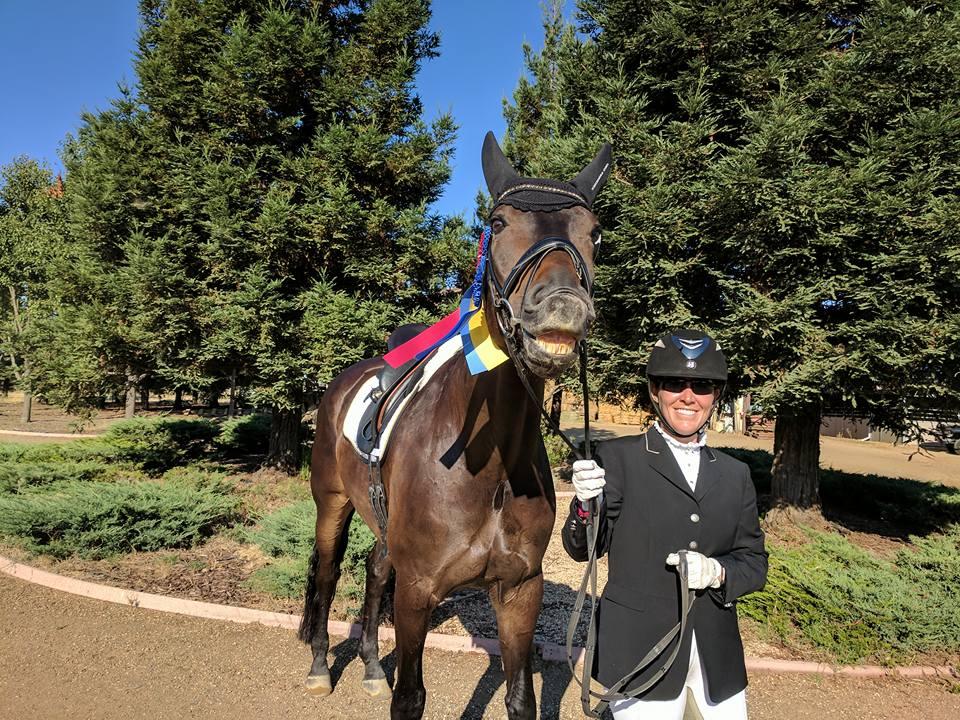
While horses may or may not love the process of being trained, when done in the right way, the end result is that they can find some joy in it, or at least not be made miserable by it. Photo (c) Morgane Schmidt.
In most professions, the basic structure of the system is taught universally. Physicians and lawyers are good examples of this. In both of these fields, all entry-level students have to learn the same basic prerequisites for their chosen profession before they are allowed to progress to post-graduate education (med school or law school). In both of those post graduate educations, they learn the basic framework of their chosen field. At this point they are given very little room for interpretation and opinion. Only then, do they move on to working in their field.
In both cases, they work under more educated professionals with experience to guide their practice. THIS is where they start to develop their personal interpretations and opinions, but still very much within the widely accepted framework of their profession. Both professions have some very clear red lines that, when crossed, require the individual to no longer practice. I realize many people may not want to hear this, but anything that is done well has to be taught similarly, whether it is a science, an art, or a sport.
Remember: limited knowledge is limited judgment.

Gwyneth and Flair in competition at Grand Prix. (c) flatlandsfoto.
Gwyneth McPherson has over 35 years experience competing, training, and teaching dressage. She began her education in in the late 1970s, riding in her backyard on an 11 hh pony. Her first instructor introduced her to Lendon Gray (1980 and 1988 Olympian). who mentored Gwyneth for a decade during which she achieved her first National Championship in 1984, and her Team and Individual Young Rider Gold Medals in1987.
In 1990 Gwyneth began training with Carol Lavell (1992 Olympian) who further developed Gwyneth as an FEI rider and competitor. Gwyneth achieved a Team Bronze in 1991 and a Team Silver in 1992 in the North American Young Riders Championships, and trained her stallion G’Dur to do all the Grand Prix movements while riding with Carol.
In 2008, while Head Trainer at Pineland Farms, Gwyneth began training with Michael Poulin (Olympian 1992). Michael was trained by Franz Rochowansky (Chief Rider for the Spanish Riding School 1937-1955). Michael has shared much of Rochowansky’s knowledge and wisdom with Gwyneth, completing her education as a Grand Prix rider, trainer, and competitor.
Gwyneth’s teaching and training business, Forward Thinking Dressage,is based in Williston, FL. In addition to teaching riders and training, Gwyneth also loves sharing her knowledge of the sport and art of dressage as well as discussing relevant topics pertaining to the training itself and the current competitive landscape.

