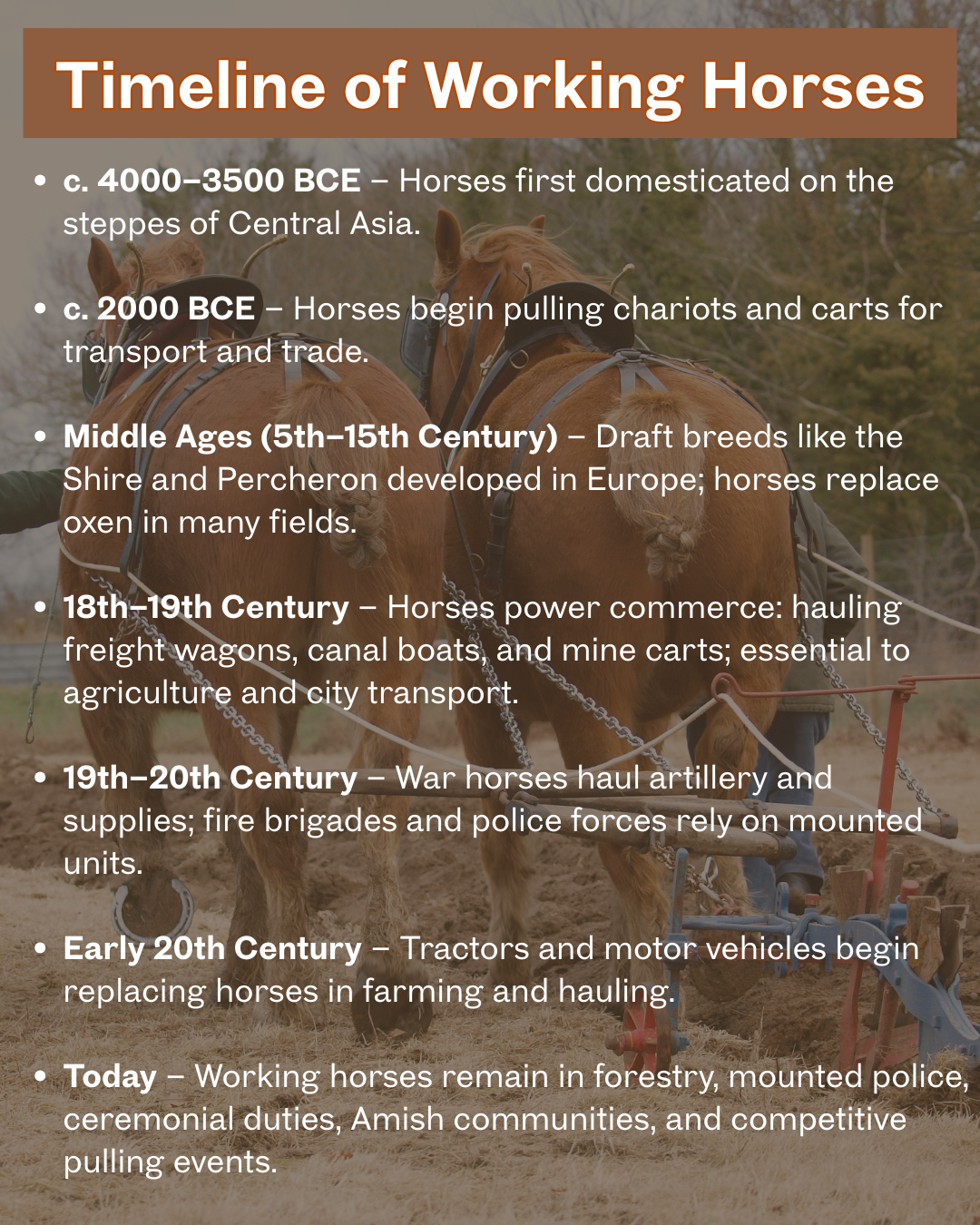
Honoring Labor Day: The History of Working Horses
From plowed fields to firehouses, from battlefields to parades, working horses embody the spirit of Labor Day: dedication, endurance, and the dignity of hard work.
Labor Day is a celebration of the workers who built, shaped, and sustained our communities. But it’s worth remembering that not all the laborers of history walked on two legs. For centuries, working horses stood shoulder-to-shoulder with people, providing the strength, stamina, and partnership that powered farms, fueled industry, and carried societies forward.
Early Days of Work and Partnership
The story of working horses begins thousands of years ago. Domesticated around 4,000 BCE, horses were first prized for speed and mobility, pulling chariots and transporting goods. But as agriculture took root, their true labor potential emerged. Draft breeds — massive, muscled animals like the Shire and Percheron — were bred to pull plows, haul wagons, and cultivate fields. In many ways, these horses were the original “engines” of human progress.
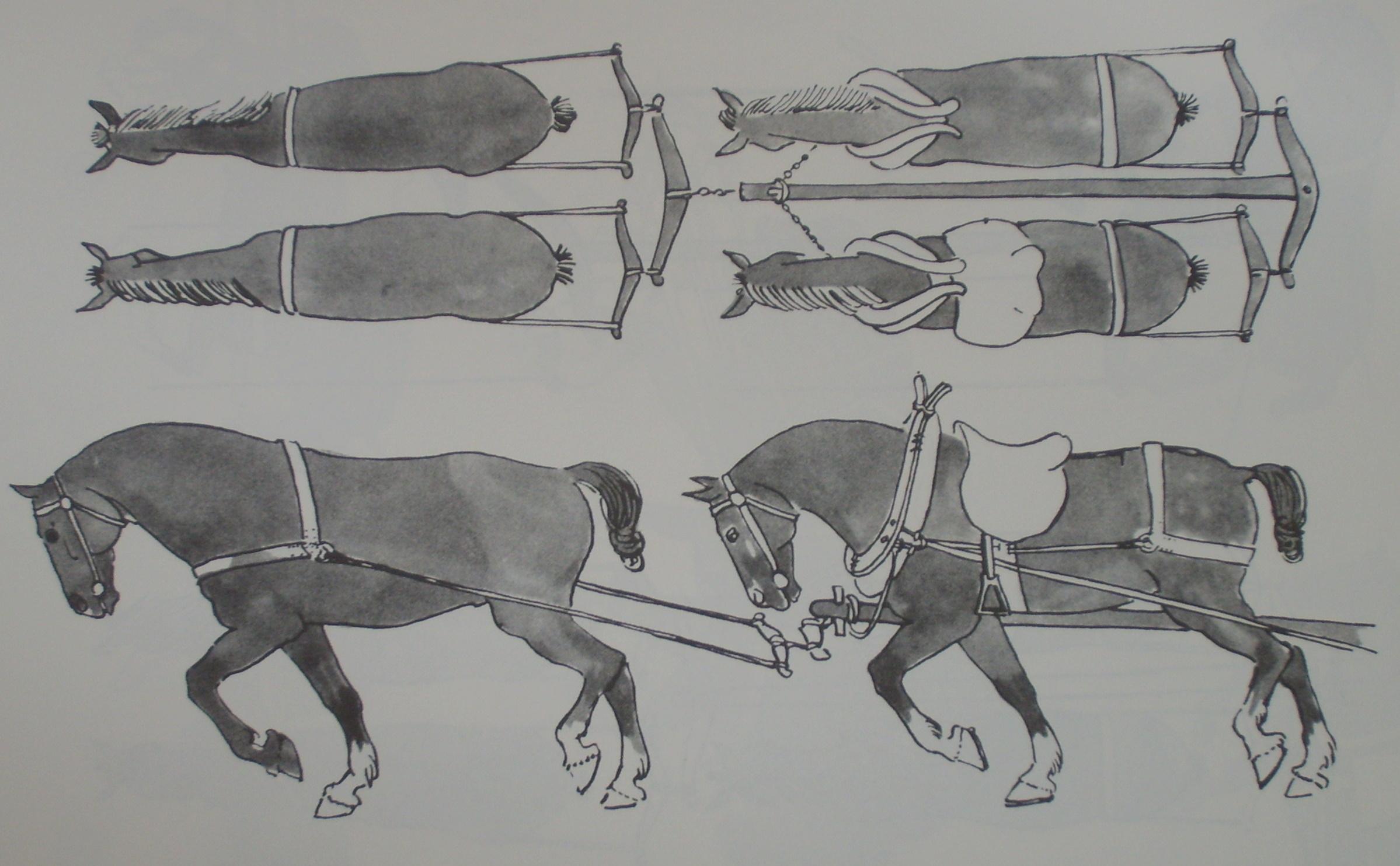
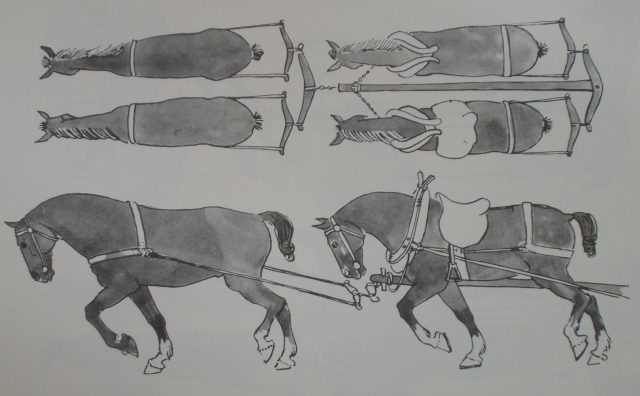
A medieval horse team, the lead pair have breast collars, while the trace pair wear horse collars. Photograph of illustration in Wagner, Eduard; Drobiná, Zoroslava; Durdik, Jan; (2000). By Gwinva. Public Domain, Wikimedia Commons.
Feeding the World
On farms across Europe and North America, horses became indispensable partners in food production. They plowed fields, harvested crops, and transported produce to markets. Unlike machines, they required care, training, and companionship, forming bonds with the farmers whose livelihoods depended on them. For many families, the farm horse was both a co-worker and a cherished member of the household.
Hauling, Building, and Protecting
In the cities, working horses took on different roles. They pulled heavy freight wagons loaded with timber, textiles, and coal. They hauled streetcars and fire engines through crowded avenues. Even underground, ponies worked tirelessly in coal mines, hauling carts in conditions no machine could yet manage. On battlefields, horses carried supplies, pulled artillery, and sometimes even saved lives by hauling wounded soldiers to safety.
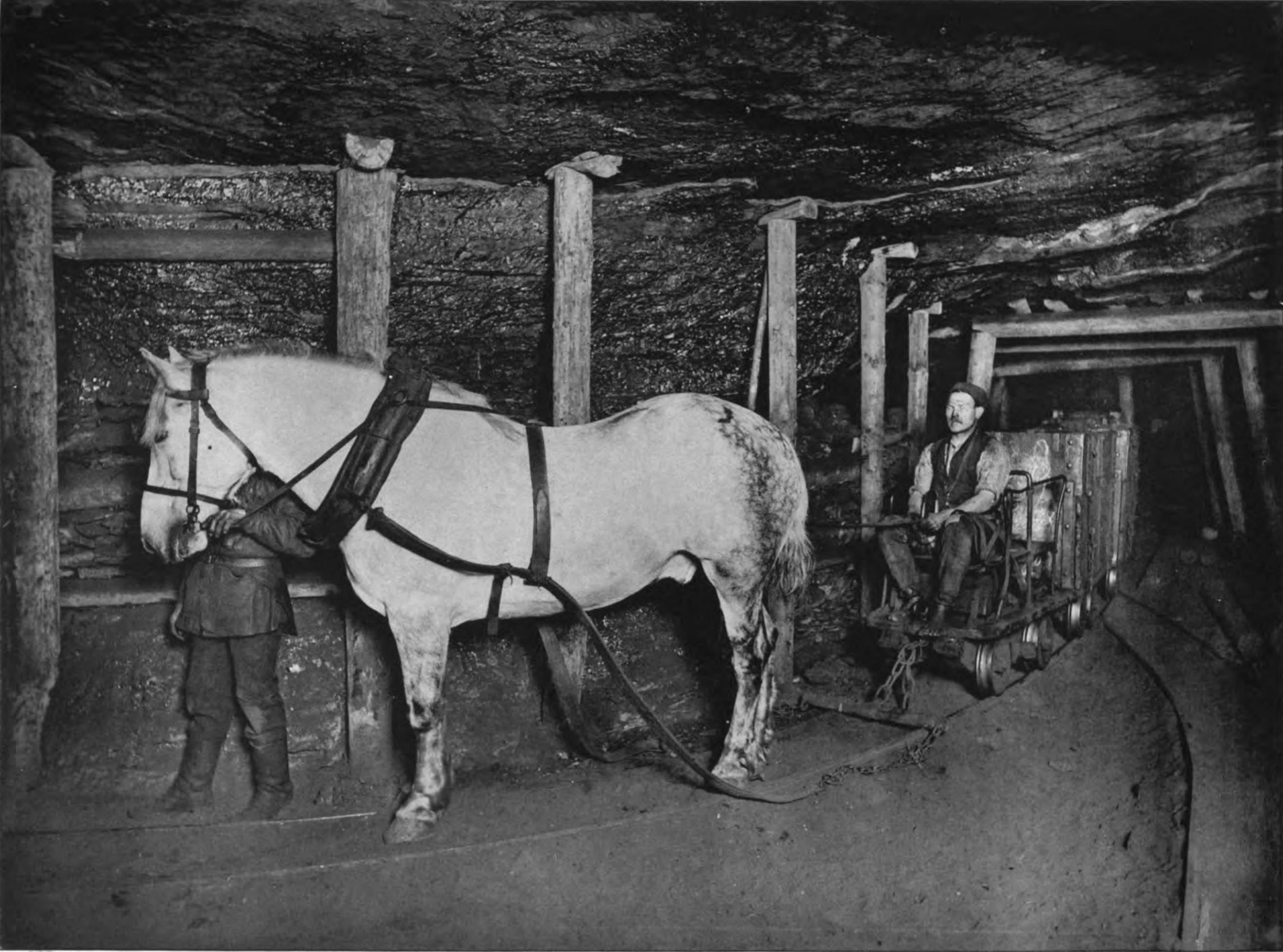
Pit pony in the coal mines in German, 1894. By Heinrich Börner (1864 – 1943). Wikimedia Commons.
A Changing World
With the rise of the Industrial Revolution and the invention of engines, the role of the working horse began to change. By the mid-20th century, tractors had largely replaced farm horses, and trucks handled the freight once hauled by draft teams. Yet their impact on the labor force — and on human history — remains undeniable.
Modern-Day Working Horses
Though no longer the backbone of daily labor, horses still serve in meaningful ways. They are trusted partners in mounted police units, ceremonial events, competitive pulling contests, and sustainable logging operations where machines cannot go. They remind us that “horsepower” isn’t just a figure of speech — it’s a tribute to the centuries of sweat and muscle that built our world.
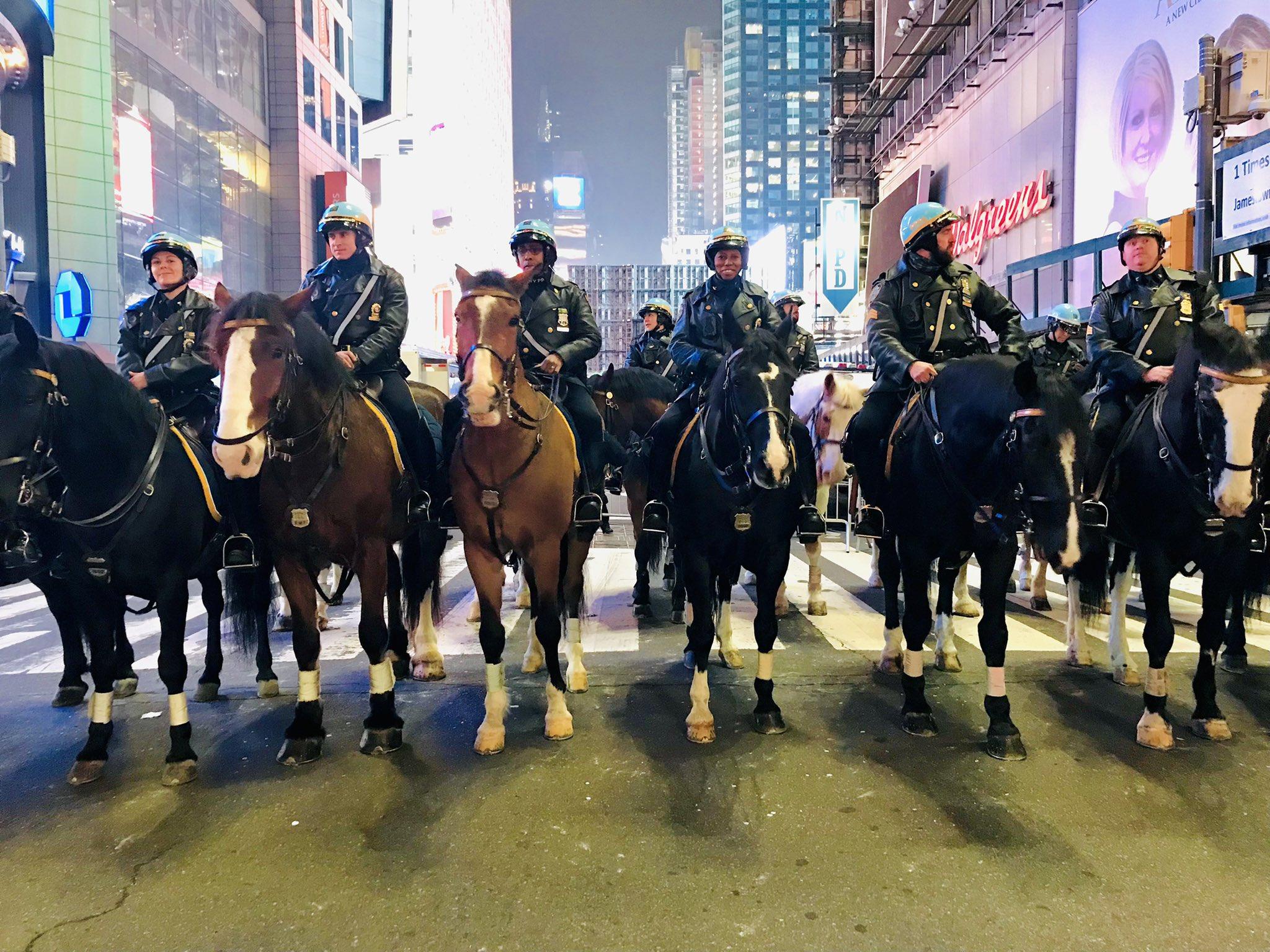
Line of NYPD Mounted Unit officers on horseback in Times Square during New Year 2022. By New York City Police Department. Wikimedia Commons.
Labor Day Legacy
As we honor the workers who keep our communities running, let’s also tip our hats to the millions of horses whose labor helped make human achievement possible. They plowed the fields that fed nations, hauled the goods that built cities, and carried the burdens of war and peace alike. This Labor Day, we celebrate not only the human hands that shaped history, but also the hooves that walked beside them.