



Belgium’s Shrimp-Fishing Horsemen: A Living Tradition of the North Sea
At the start of summer, I came come this post as part of my social media scrolling:
I won’t lie. Was intrigued. And, of course, I was curious to see if this actually WAS a thing or if it was my Facebook algorithm feeding me fake posts (because clickbait). Low and behold, it’s true — and totally cool.
So I figured if I thought it was cool, the band of misfit horse lovers who follow Horse Nation probably would, too. Here’s what I found out about paardenvissers (don’t ask me to pronounce it), or horse fishermen.
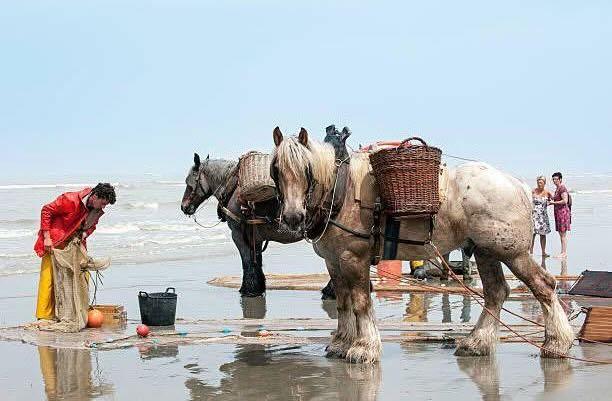
There’s a coastal village in western Belgium called Oostduinkerke, and there an ancient and rare tradition still thrives: fishermen riding draft horses into the North Sea to harvest gray shrimp. This practice is the last of its kind in the world. Once common along the coasts of Northern Europe, the tradition has nearly disappeared everywhere else, making Oostduinkerke a living link to a maritime past.
We can trace the roots of shrimp fishing with horses in Belgium back to at least the 15th Century. In the past, horse-drawn shrimping was a common sight along the North Sea coasts of Belgium, the Netherlands, northern France, and southern England. Over time, technology and more industrial fishing methods took over, as they are want to do. Today, only Oostduinkerke preserves the tradition, where a dedicated group of fishermen keeps it alive.
The technique is as impressive as it is symbolic. The fishermen ride massive Brabant draft horses, known for their strength and steady temperament. The horses wade chest-deep into the North Sea, dragging a funnel-shaped net behind them, attached to a wooden sledge or cart. The drags stir up the sea floor to dislodge shrimp, which are then funneled into the net.
Fishing takes place during low tide, usually in the spring and summer months, when the shallow water and sandy seabed make it easier to navigate. Each fishing session lasts around 30 minutes, after which the fisherman returns to shore, where the catch is immediately sifted and sorted on the beach.
You can see what the practice looks like here:
Today, only around a dozen fishermen — including a few women — continue the tradition in Oostduinkerke. Many are descendants of generations of shrimp fishers. Their craft is not driven by profit since modern shrimping is far more efficient, but by a deep cultural pride and commitment to preserving a way of life.
While horse-drawn shrimp fishing is no longer a major source of income, many practitioners combine it with other work or participate in demonstrations and festivals, where tourists can watch the unique spectacle and even taste freshly caught gray shrimp, often boiled and served right on the beach.
View this post on Instagram
Oostduinkerke has embraced the practice not just as a tradition, but as a cornerstone of local identity. The National Fishery Museum (NAVIGO) in the town offers exhibits on the history of shrimp fishing, maritime tools, and the Brabant draft horse. Throughout the summer, visitors can attend live demonstrations, where horse fishermen in yellow oilskins ride into the surf as curious crowds watch from the shore.
Each year, the Shrimp Festival draws thousands to the coast, featuring processions, horse demonstrations, local seafood, and cultural performances. This combination of heritage and tourism has helped sustain the tradition, offering both educational value and economic opportunity.
In recognition of its cultural importance, UNESCO added this tradition to its Intangible Cultural Heritage list in 2013, praising it as a “living heritage” that demonstrates a deep connection between human, animal, and sea. There is hope that this recognition in combination with local dedication will keep the tradition going well into the future. Local schools now offer programs to teach young people about their heritage, and a few apprentices have begun training to carry on the practice.
